© Shutterstock
 Votre guide Ryo
De Wallen, Amsterdam's Red Light District: Complete Guide 2026
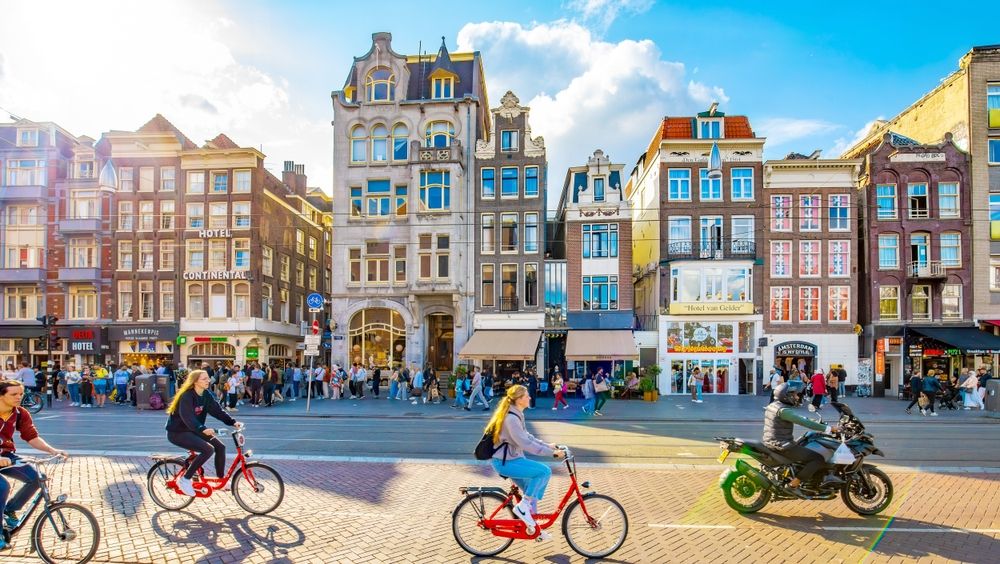
There's something dizzying about emerging into De Wallen on an ordinary Tuesday morning: 17th-century gabled facades lean over the canal, bikes glide silently on wet cobblestones, and twenty meters to the left, the first red neons light up behind fogged windows. No sign warns you that you've just entered Amsterdam's red light district, the most famous red light district in Europe. The district blends into the city, and that's precisely what makes it bewildering for those arriving with movie images in their heads.
This guide gives you the keys to understanding De Wallen as it is in 2026: its seven-century history, the legal operation of the windows, coffee shop regulations, museums that no competitor really details, etiquette rules that the city enforces with fines, and ongoing transformations that were still reshaping the district as you read these lines. To explore Amsterdam beyond De Wallen with the same level of historical detail, the Ryo audio guide of Amsterdam covers the entire city with audio stops at intersections that most guides ignore. But let's start with the alleys.
De Wallen: The Real Name of a Misunderstood District
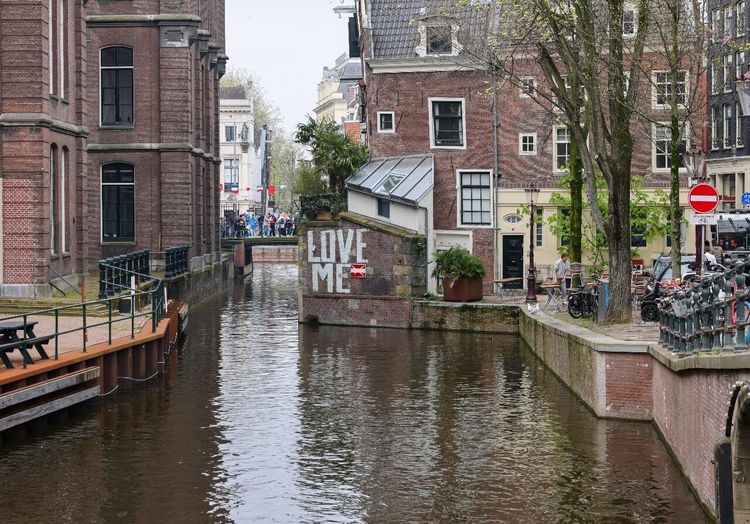
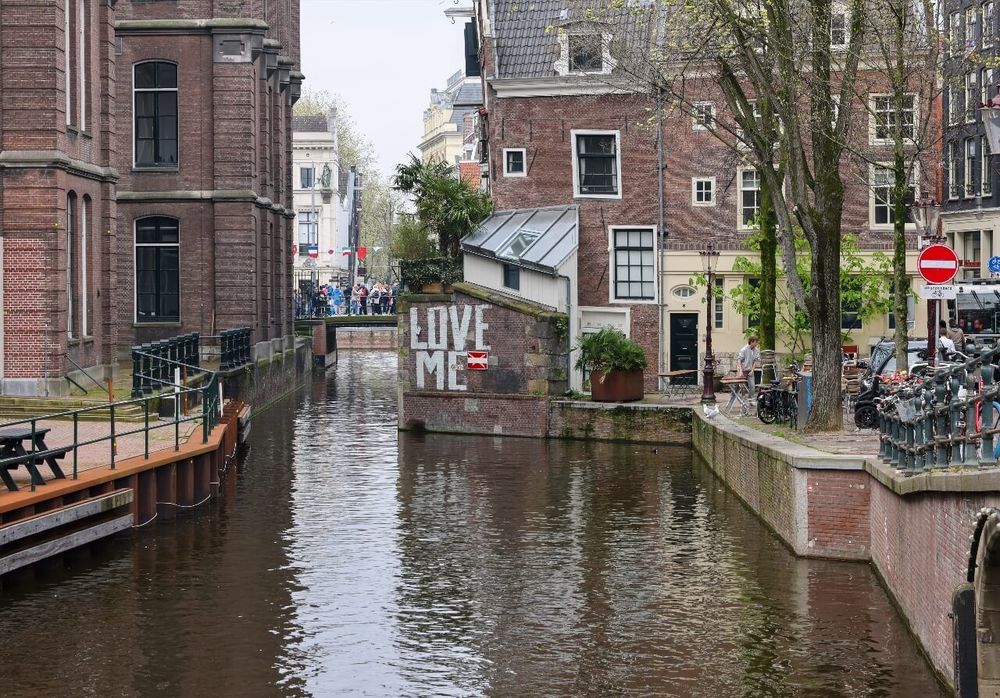
Amsterdamers never use the expression "red light district." They say De Wallen (Oudezijds Achterburgwal, 1012 Amsterdam, rated 4.4/5 on Google for 181 reviews), "the ramparts" in Dutch, a direct reference to the old medieval walls that bordered this sector at the edge of the Amstel. The term "Red Light District" is an invention of English-speaking tourist jargon, popularized in the 1970s by the first English-language travel guides. In Dutch, you also find Rosse Buurt (the "shameful district"), but the expression is perceived as vulgar and almost abandoned in current usage.
De Wallen covers about 0.5 km² in the historic center, between Central Station to the north, Nieuwmarkt to the east and Dam to the southwest. This isn't an area surrounded by fences or walls: the window alleys open directly onto residential streets where several thousand permanent residents live, with restaurants, art galleries, two of Amsterdam's oldest churches and a neighborhood library. This interweaving of the mundane and extraordinary is what strikes attentive visitors most.
History: From Medieval Port to Red Light District
The history of De Wallen begins in the 12th century. Fishermen settled by the Amstel and built the first dikes, the famous wallen, to protect their houses from floods. Amsterdam obtained its city rights in 1306, and De Wallen immediately became its commercial heart: the port, warehouses, taverns that welcomed passing crews.
Prostitution has been documented there since the 15th century. Municipal records from 1413 already mention "tolerance houses" near the quays. The authorities then applied a pragmatic policy inherited from Hanseatic cities: concentrate and control rather than prohibit and disperse. This logic, maintained with variations for six centuries, is the direct origin of the licensing system in use today.
The 17th century, the Dutch Golden Age, radically transformed the district. Amsterdam became the world's leading port, brick canal houses rose on the quays, Dutch East India Company (VOC) warehouses densified the banks. The stepped gable facades you see today mostly date from this period. Some lean slightly forward, an effect intended by architects to facilitate hoisting goods through attic windows.
The 19th century brought a long decline. The port moved west, warehouses emptied, poverty settled in the alleys. Prostitution remained present but in a context of great social misery. It was in the 20th century that the window model truly took shape: in the 1960s, under the influence of counterculture and a liberalization movement carried by progressive parties, Amsterdam decided to regulate rather than repress. In 2000, prostitution was officially legalized in the Netherlands, giving sex workers the status of independent contractors with social rights and tax obligations.
Since the 2000s, the city has led an active transformation policy, project 1012 (named after the district's postal code). The number of windows has gone from about 480 in the early 2000s to about 230 licenses today, a reduction of more than half in two decades.
Geography: How to Find and Navigate the District
De Wallen is located ten minutes' walk from Amsterdam Central Station (Amsterdam Centraal). Exiting on the south side, cross Damrak to the right and head down toward the first alleys east of Dam: you enter the district without any sign or visible border.
The two main axes are the Oudezijds Voorburgwal canal (the outer canal) and Oudezijds Achterburgwal (the inner canal), connected by a series of perpendicular alleys, the stegen. Some of them, like Molensteeg or Trompettersteeg (Trompettersteeg, 1012 Amsterdam, rated 3.8/5 on Google for 1.2K reviews), concentrate the densest window alignments. The Nieuwmarkt square (Nieuwmarkt, 1011 JM Amsterdam, rated 4.5/5 on Google for 12K reviews), to the east, marks the district boundary and is the best landmark for orientation.
From Schiphol airport, take the direct train to Amsterdam Centraal (17 minutes, about €5.40) then walk southeast. By tram, lines 4, 14 and 24 serve the immediate surroundings. By bike, the most natural way to get around Amsterdam, allow five minutes from the station.
For a first discovery, start with Oudezijds Voorburgwal canal: wider, tree-lined, it offers an unobstructed perspective on 17th-century architecture before diving into the inner alleys.
What to See While Walking: Canals, Alleys and Architecture
Forget movie representations. De Wallen during the day first resembles an ordinary canal district: bikes chained to bridge railings, cats on window ledges, tourists who stop at alley entrances while checking their phones. The red light district's red neons exist, but they concentrate on a few specific stegen. The main quays mainly offer restaurants, souvenir shops, coffee shops and galleries.
The windows themselves are small cabins lit in red or purple, housed on the ground floor of 17th-century houses. The women who work there are independents licensed by the municipality. Photographing the windows has been strictly prohibited since the 2020 municipal ordinance, punishable by a fine of at least €150 (and up to €300 for paparazzi-type behavior), enforced by security agents permanently present in the alleys.
In the rest of the district, several buildings deserve attention. The Oude Kerk (Old Church) occupies the exact center of De Wallen, its square directly bordering some active windows. The Waag, on Nieuwmarkt, is the old medieval city gate converted into a restaurant, its squat silhouette with corner turrets is one of Amsterdam's most photographed. On the pavement of Oudekerksplein, look for small bronze plaques signed Felíx Pols, inaugurated in 2007: two joined hands on a breast, a discreet tribute to the dignity of sex work integrated into public space.
In the evening, the atmosphere shifts. The alleys fill with groups, music comes out of bars, all windows light up. The human density can become overwhelming on weekends after 10pm. For a more serene experience, a Monday or Tuesday evening is significantly preferable.
The Oude Kerk: A Medieval Church at the Heart of the Windows
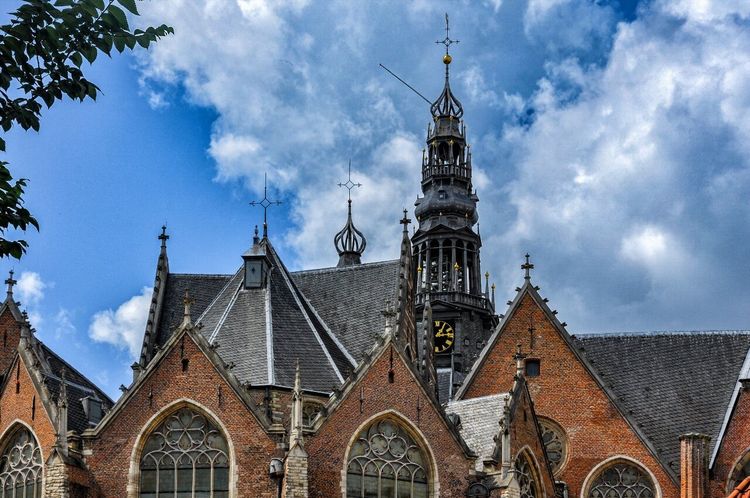
There's probably no place in Europe where the contrast between sacred and profane is so physical. The Oude Kerk (Old Church) stands at the exact center of the red light district, surrounded on three sides by active windows. Its cobblestone square, Oudekerksplein, is also the space where working women take their breaks, where tourists sit for lunch, and where district residents pass by bike without looking up.
Founded around 1213 in wood, enlarged in stone in the Brabantine Gothic style between 1370 and 1571, the church survived the Protestant Reformation of 1578 by becoming Calvinist. Dutch Catholics then retreated to clandestine buildings hidden in attics, one of which is still visible two minutes' walk away (see next section). The interior of Oude Kerk is remarkable: 16th-century stained glass windows, funeral slabs including that of Saskia van Uylenburgh (Rembrandt's wife), and the great Vater-Müller organ from 1724, classified as a national monument.
An additional particularity: the church regularly programs cutting-edge contemporary art exhibitions, in a deliberate dialogue between sacred and profane that reflects Amsterdam's spirit well. Entry: €12 (free for under 13s). Open Monday to Saturday from 10am to 6pm, Sunday from 1pm to 5:30pm.
Ons' Lieve Heer op Solder: The Hidden Church in the Attic
Two minutes' walk from Oude Kerk, at number 38 Oudezijds Voorburgwal, hides one of Amsterdam's most unexpected architectural curiosities: Ons' Lieve Heer op Solder, literally "Our Lord in the Attic." This is a complete Catholic church, with nave, altar, balconies and organ, concealed in the top three floors of a 17th-century canal house.
Built in 1663 after Catholics were banned from public worship during the Reformation, this clandestine sanctuary operated discreetly for two centuries. The exterior facade is that of an ordinary merchant house. The interior is stunning: a sizeable single-nave church with capacity for about 150 people, nestled under the rafters 15 meters high. Entry: €18 (2026 rate; open Monday to Saturday from 10am to 6pm, Sunday from 1pm to 6pm). One of De Wallen's best museums, often forgotten by guides.
The Window System: Operation, Licenses and Rights
Since the 2000 legalization, sex workers operating in De Wallen's windows must possess a valid Dutch work permit and rent their window from a municipality-licensed owner. Window rent runs around €80 to 150 per eight-hour shift, depending on location, with the most frequented alleys commanding the highest prices. Window owners must hold an annually renewable municipal license.
Most women working in the windows come from Eastern Europe (Romania, Bulgaria, Hungary) or Latin America. Associations like Proud (sex workers' union) and SWAC (Sex Workers Advocacy and Resistance Collective) actively campaign for their rights recognition. Their position on the municipal project to reduce licenses is unambiguous: closing windows doesn't make prostitution disappear, it makes it invisible and therefore more dangerous.
The legal framework imposes a series of obligations on workers: tax declaration, access to social rights, regular health checks. In theory, the Dutch system is Europe's most protective for people practicing this work. In practice, associations document situations of economic coercion that complicate the ideal picture. Human trafficking obviously remains illegal and is actively pursued by Amsterdam's specialized police brigade.
As a visitor, the rule is simple and non-negotiable: no photography, no knocking on windows, no crowding in masses in front of windows. Private security agents (hosts) who patrol the alleys are trained to intervene quickly. The district is a workplace before being a tourist attraction, and authorities insist this priority be visible.
To explore Amsterdam with this same depth of perspective on its social and architectural history, the Ryo audio guide of Amsterdam integrates audio stops in the historic districts surrounding De Wallen.
Project 1012: The Ongoing Transformation
It's the question everyone has been asking for a decade: will De Wallen disappear? The short answer is no, not in the foreseeable future, but the district is changing profoundly, and this change is visible to the naked eye.
Project 1012, launched by Amsterdam City Hall in 2008, aims to transform the district by reducing its dependence on the sex and cannabis industry. Tools used: municipal buyback of window licenses, conversion of windows into craft shops or art galleries, subsidies to attract alternative businesses. In fifteen years, the number of windows has gone from about 480 to about 230 licenses. Some bricked-up windows have become fashion storefronts or design showrooms.
The controversy is intense and positions well-defined. Sex worker associations denounce a hypocritical policy: removing visible windows doesn't reduce prostitution, it moves it to apartments and online platforms where people are less protected. In 2021, the UN CEDAW Committee questioned the Netherlands on this precise point.
From city hall's side, nuisance tourism has become a central concern. Successive measures have restricted access: closing certain alleys to organized groups after 7pm, banning guided tours in the narrowest stegen, limiting new coffee shop licenses. A more radical project carried by Mayor Femke Halsema aims to relocate part of the windows outside the center, in a new building called the "erotic center". In December 2023, the city selected Europaboulevard, in the south district (Zuid), as the preferred location, and the city council adopted the project file in early December 2025. The center, which would group about a hundred of the some 230 licensed windows with windows facing inward to discourage voyeurism tourism, wouldn't open before 2031. The project remains strongly contested: a coalition of residents, merchants and sex worker associations filed a petition with over 22,000 signatures against this relocation.
What you'll notice visiting De Wallen today: bricked-up or converted windows, local craft signs where there were red neons, and in some streets, a district that increasingly resembles an ordinary European historic center, with, around a corner, the brutal reminder that De Wallen remains De Wallen.
Coffee Shops: Regulations, Addresses, Precautions
Amsterdam has around sixty coffee shops in De Wallen and its immediate surroundings, out of about 150 in the entire city. The Dutch tolerance policy (gedoogbeleid) allows cannabis sale and consumption in these licensed establishments, under strict conditions: no sales to under-18s, no alcohol sales in the same establishment, maximum 5 grams per transaction, and no advertising visible from the street.
What the law doesn't tolerate: consuming cannabis on the street (fine), buying from street dealers (illegal sale and often contaminated products), and, since the ban came into effect on May 25, 2023, smoking cannabis in De Wallen and central Amsterdam streets (Dam, Damrak, Nieuwmarkt). The fine is €100. Smoking on a coffee shop terrace remains authorized. Signs are discreet but control is real.
Among the district's best-known addresses: The Greenhouse on Oudezijds Voorburgwal is renowned for its selection quality and relaxed atmosphere. Dampkring, in adjacent streets, has a more mixed clientele and remarkable interior decoration. Establishments like Bulldog, an omnipresent tourist chain, are often cited but rarely recommended by regulars for their product quality.
Practical advice: if you're not a regular user, start with very small amounts. Varieties sold in Amsterdam are significantly more potent than what most European tourists know. Stay seated, stay hydrated, and avoid mixing with alcohol. In case of discomfort, coffee shops are obligated to call emergency services on simple request.
Red Light District Museums
De Wallen houses several museums that allow exploring the district with real historical and social depth, far from the voyeuristic stance that the name "red light district" sometimes inspires.
The Red Light Secrets (Oudezijds Achterburgwal 60, 1012 XL Amsterdam, rated 4.2/5 on Google for 21,115 reviews) (Prostitution Museum) is the most visited. Located directly in a window building on Oudezijds Achterburgwal, it lets you enter a real window seen from inside, listen to testimonials from women who worked here, understand the concrete conditions of work behind the neons. The exhibition is sober, documented, often moving, and significantly more interesting than its tourist title suggests. Entry: €14.50. Open daily from 11am to 11pm.
The Amsterdam Erotic Museum is older and much more oriented toward ribald humor: five floors of engravings, objects, photographs and erotic sculptures from the 18th century to today. It's more a cabinet of curiosities than an academic museum, but the building itself, a 17th-century canal house, merits the entry. Entry: €7. Ideal if you're looking for an hour of lightness after Oude Kerk.
The Hash Marihuana & Hemp Museum, founded in 1985, is the world's oldest cannabis museum. It traces hemp history through art, botany, medicine and popular culture over two millennia. Less kitsch than feared, with rare pieces on hemp's medical and industrial use before its 20th-century prohibition. Entry: €9. Allow one hour for the visit.
Finally, the Oude Kerk itself (see dedicated section) offers temporary contemporary art exhibitions of often surprising quality, international names regularly invited into the Gothic space of the nave. Check the church's website program before visiting. Our audio walking tour threads through the same canals and puts the church back into its neighborhood.
Live Erotic Shows: Casa Rosso and Cabarets
De Wallen houses three establishments offering live erotic shows, a regulated unique feature in Western Europe.
Casa Rosso, on Oudezijds Achterburgwal, is the oldest and most famous. Open since 1970, it offers several shows per evening in a hundred-seat hall. Entry: about €60, drink included. The audience is mainly tourist, mix of couples and groups. The establishment is licensed and subject to regular municipal inspections.
Amsterdam's Moulin Rouge (not to be confused with its Parisian namesake) is smaller, less known, with a more intimate atmosphere. The Bananen Bar mainly attracts bachelor party groups. These establishments are legal, their artists work under contract, but their future is uncertain in the context of project 1012 reforms.
Practical advice: shows from 9pm, online reservation recommended on weekends. Establishments refuse entry to visibly intoxicated persons.
District Curiosities: Condomerie, Pavement Bronzes, Tattoo Artists
De Wallen reserves some surprises for visitors who leave the main axes.
The Condomerie, open since 1987 on Warmoesstraat, is the world's first condom specialty store: entire walls of shapes, colors and variations presented as design objects, some pieces reaching limited edition prices. The address has become a district institution, visited as much for its collection as for its commitment to STI prevention.
On Oudekerksplein pavement, look for small bronze plaques signed Felíx Pols, two joined hands on a breast. Inaugurated in 2007, they constitute one of the rare tributes to sex work integrated into European public space, without ostentation or irony.
In adjacent streets, several contemporary art galleries coexist with tattoo shops among Amsterdam's most reputed. Small Thai and Indonesian restaurants run by families for several decades testify to the presence of the Dutch Indies in the district's history, another layer of history that tourists seeking neons often pass without seeing.
Visiting Day vs Night: Two Very Different Atmospheres
De Wallen is a profoundly different place depending on the time, not just in atmosphere, but in what's accessible and in the experience you get from it.
During the day (10am-5pm), the district more closely resembles an ordinary historic district. Museums are open, restaurants welcoming, alleys lightly frequented. Some windows operate but not all. It's the best time to photograph architecture (not windows), explore museums and understand district geography without being jostled. Oude Kerk and Ons' Lieve Heer op Solder can be visited in ideal conditions.
In the evening (6pm-10pm), the district begins to come alive without being saturated yet. Coffee shops fill up, restaurants show full, windows gradually light up. It's the most balanced moment to feel the atmosphere without suffering weekend crowd density.
At night (10pm-2am), especially Friday and Saturday, De Wallen can become difficult to cross. Lines in front of sex shops, bachelor party groups occupying alleys, street vendors at the edges. The city has deployed host agents in the most sensitive streets, but density remains a real problem. If you're looking to understand the district rather than party there, prefer a weeknight.
The Ryo audio-guided tour of Amsterdam integrates audio stops in several historic districts, with explanations on 17th-century urbanism that provide precious context for understanding why De Wallen is organized as it is.
Rules to Respect Before Setting Foot There
De Wallen is not a lawless zone. The city of Amsterdam has significantly tightened its regulations over the past ten years, and private security agents patrol the alleys permanently. Here are the essential rules.
Absolute prohibition on photographing windows and workers. The fine is at least €150 since the 2020 ordinance (up to €300 for behavior likened to paparazzi). This applies to photos, selfies and videos, even from an alley entrance. Agents don't hesitate to intervene and check phones. This rule is the most important and most systematically verified.
Don't knock on windows or disturb. Any unsolicited interaction can result in district expulsion by hosts, or police intervention for repeat offenses.
No street drugs. Cannabis consumption is tolerated inside licensed coffee shops, but prohibited on public roads in De Wallen and the center since May 2023. Street dealer sales often concern uncontrolled products, cocaine, MDMA, ketamine, illegal and particularly risky in terms of contamination.
Don't urinate outside designated facilities. Public urinals (pissoirs) are installed at several district locations. The fine for offenders is €150.
Respect permanent residents. Several hundred people live in De Wallen. Nighttime disturbances, noise, gatherings under windows, shouting, are sanctioned.
One last useful piece of information: if you observe a situation that seems to involve distress or coercion, you can contact the Scarlet Cord association or dial 0900 1010 (human trafficking victim helpline, available 24/7).
Safety and Practical Precautions
De Wallen is generally safe for tourists, day and early evening. The visible presence of police and private security agents maintains a high surveillance level. But some precautions are necessary.
Pickpocketing is the most common risk. Narrow alleys create high-density zones where pickpockets operate easily. Keep your wallet in a front pocket, your phone in a zipped pocket, and avoid brandishing expensive cameras in the densest areas.
Never buy drugs from street dealers. Beyond illegality, products sold this way, often presented as ecstasy or cocaine, are frequently cut with unknown substances. Amsterdam emergency services regularly see tourists intoxicated this way.
Avoid groups of touts at sex shop entrances offering discounted entries: prices displayed inside are often very different from what was promised. Check prices online before entering any district establishment.
Where to Stay Near De Wallen
Sleeping in De Wallen itself is possible, several hotels and guesthouses are located on the quays, but weekend night noise can be a real problem if you're not warned. 17th-century canal house walls weren't designed for modern sound insulation.
The Exchange, on Damrak, is one of Amsterdam's most original design hotels: each room is decorated like haute couture clothing by Fashion Academy students. Five minutes' walk from De Wallen. Price: from €150 per night.
Youth hostels on Warmoesstraat, Stayokay and St. Christopher's, offer ideal location for small budgets, from €30 in dormitories.
If you prefer quiet, the Jordaan or De Pijp districts are 15-20 minutes' walk from De Wallen and offer quality hotels on canals in a significantly more residential atmosphere. Amsterdam Centraal is accessible from almost any district in less than 30 minutes by bike or tram.
Indicative 2026 prices: double room between €90 (economical) and €280 for canal boutique hotels in high season. High season corresponds to April-May (tulips) and July-August months.
Where to Eat and Drink in the District
De Wallen is not renowned for its gastronomy, mass tourism has long favored mediocre restaurants on main axes. But some addresses resist and are worth the detour.
In de Waag, installed in the medieval Waag tower on Nieuwmarkt, offers an incomparable architectural experience for lunch or dinner. Eating surrounded by 15th-century city gate stones, with wrought iron chandeliers, is an experience in itself. Reservation essential in the evening. Price range: €25-45 per person for a complete meal.
Café Bern, on Nieuwmarkt, has been an institution since 1970: cheese fondues in an atmosphere of dark wood and Dutch beer, reasonable prices, evening queues without reservation. The kind of address that locals recommend without hesitation.
For a quick break, crêperies and chip shops (snackbars) in side alleys are often more honest than facade restaurants on main quays. Patatjes (Belgian fries) with fritessaus (thick Dutch mayonnaise) remain the reference snack.
For drinks, Café de Engelbewaarder (Kloveniersburgwal 59, 1011 KD Amsterdam, rated 4.4/5 on Google for 1,077 reviews) on Kloveniersburgwal is a traditional bruine kroeg (brown café) without frills, meeting place for Amsterdam journalists and intellectuals since the 1970s. Draft beer, live music Sunday afternoons, no bachelor parties. In contrast, tourist bars on Warmoesstraat attract crowds but offer little local interest.
FAQ
Is Amsterdam's Red Light District dangerous?
De Wallen is generally safe for tourists during the day and early evening. Police and private security presence is significant and visible. Real risks include pickpocketing in narrow alleys and buying drugs from street dealers, whose products can be seriously contaminated. Friday and Saturday after 11pm, the density of crowds can make certain alleys uncomfortable. Staying alert with your belongings and avoiding interactions with street touts is sufficient in the vast majority of situations.
Can you visit the Red Light District with children?
Dutch law does not prohibit minors from entering the district. In practice, the window alleys are difficult to avoid in certain areas. During the day, the district is less explicit and a walk remains possible for teenagers. The Oude Kerk, Ons' Lieve Heer op Solder and the Nieuwmarkt side are perfectly suitable for family visits. Coffee shops, the Red Light Secrets Museum and live shows are strictly reserved for people aged 18 and over.
Is prostitution legal in the Netherlands?
Yes, since the 2000 law that officially legalized prostitution. Sex workers have the status of independent contractors: they pay taxes and can contribute to social security. To work in De Wallen's windows, they must have a valid residence and work permit in Europe. Window owners must hold a municipal license. Human trafficking obviously remains illegal and is actively pursued by the Dutch police.
Can you smoke cannabis freely in the district?
No. Consumption is tolerated inside licensed coffee shops, not on the street. Since May 25, 2023, smoking cannabis in the streets of De Wallen and central Amsterdam is prohibited. Offenders face a €100 fine, but consumption remains tolerated inside and on coffee shop terraces. Buying from street dealers is illegal and strongly discouraged for health reasons.
How long does it take to visit the Red Light District?
A complete walk covering the two main canals, the alleys, Oudekerksplein and Nieuwmarkt takes about 45 minutes to an hour. Add two to three hours if you visit the Oude Kerk and Red Light Secrets Museum. To also cover Ons' Lieve Heer op Solder and the Hash Marihuana & Hemp Museum, count on a complete half day. A full day if you want to explore coffee shops, unusual shops and end with dinner at the Waag.
Will the Red Light District close?
No, not in the foreseeable future. The municipal project 1012 has been gradually reducing the number of windows since 2008, but no decision for total closure has been made. In 2026, the district remains fully active with about 230 licensed windows, around sixty coffee shops and its museums. The transformation is slow and subject to intense political debates between city hall, workers' rights advocacy associations and permanent district residents.
What's the difference between De Wallen and the Red Light District?
None, they are two names for the same place. De Wallen is the historic Dutch name, "the ramparts." Red Light District is the English term popularized by international tourism since the 1970s. Amsterdamers use De Wallen or simply de buurt (the neighborhood). "Red Light District" is the direct English translation. Some texts also mention Rosse Buurt, a vulgar Dutch term that has almost disappeared from common usage.
Conclusion
De Wallen is a place unlike any other in Europe. Not a lawless zone, not a simple tourist attraction: a living medieval district that spans seven centuries of port history, Golden Age and tolerance policy, and is reinventing itself today under the pressure of complex social debates that its inhabitants haven't finished settling.
You can come here for curiosity, for museums, for 17th-century architecture or to understand how a city manages what others prefer to conceal. Whatever your reason, De Wallen deserves more than a ten-second glance from an alley entrance. The Oude Kerk, an hour at Red Light Secrets, a brown café at day's end, and you might think differently about what the word "tolerance" truly means.
If Amsterdam intrigues you beyond De Wallen, the Ryo audio guide of Amsterdam takes you to the Jordaan, Plantage and canal ring districts, the other faces of a city that has always known how to make realities coexist that others carefully separate.
À lire également