© Shutterstock
 Votre guide Ryo
Amsterdam and Its Surroundings: the Ultimate Activities Guide 2026
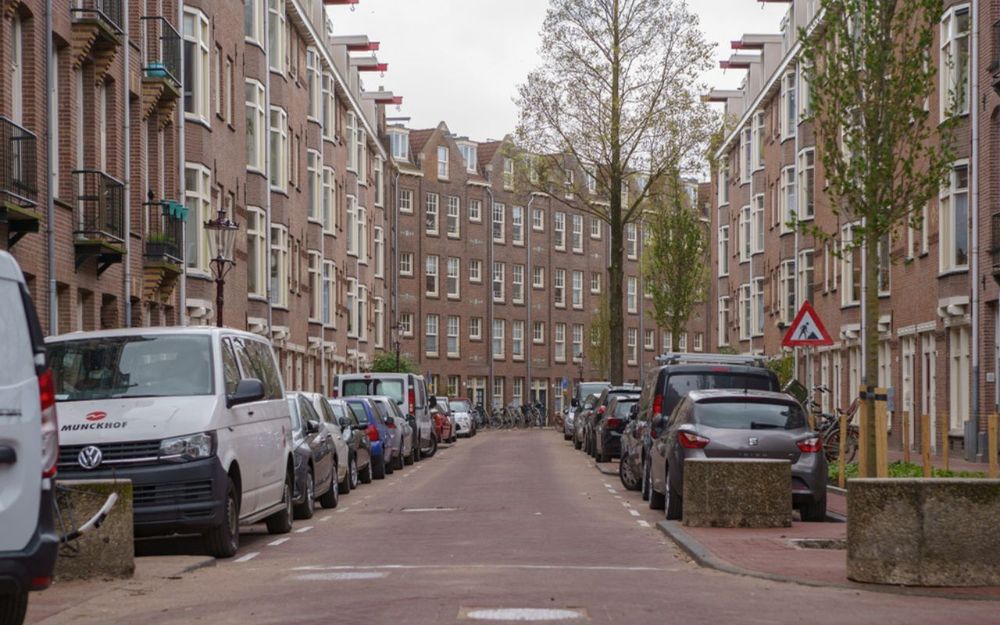
Amsterdam is unlike any other European city, and the list of things to do in Amsterdam and its surroundings is almost endless. The Dutch capital packs more than 165 canals, 1,500 bridges and a museum density per capita that rivals Paris into just a few square kilometres, all set within a network of cobbled lanes, bicycles and gabled houses that lean ever so slightly forward, as if drawn towards the water. This guide covers the best activities in Amsterdam and its immediate surroundings: from the windmills of Zaanse Schans 20 minutes away by train, to the tulip fields of the Keukenhof in spring, the beaches of Zandvoort and the timeless villages on the shores of Lake Markermeer.
To explore the city at your own pace, audio in your ear and without a group, the Ryo Amsterdam audio guide takes you along the canals, through the museums and into the most vibrant neighbourhoods, with stories about local architecture and history.
Getting Your Bearings in Amsterdam Before You Start
Amsterdam is a compact, circular city. The historic centre (the canals, the Jordaan, the Anne Frank House, the Dam) fits within a radius of roughly 3 kilometres. Most visitors stay within this perimeter, but the neighbourhoods that are truly worth the detour lie a little further out: De Pijp to the south, Amsterdam Noord on the other side of the IJ, Westerpark to the west.
The main canal rings (Herengracht, Keizersgracht, Prinsengracht) form concentric arcs around the old centre. Memorise these three names: they will serve as your compass throughout your stay. The museum quarter (Museumplein) lies to the south of these rings, the Jordaan to the west.
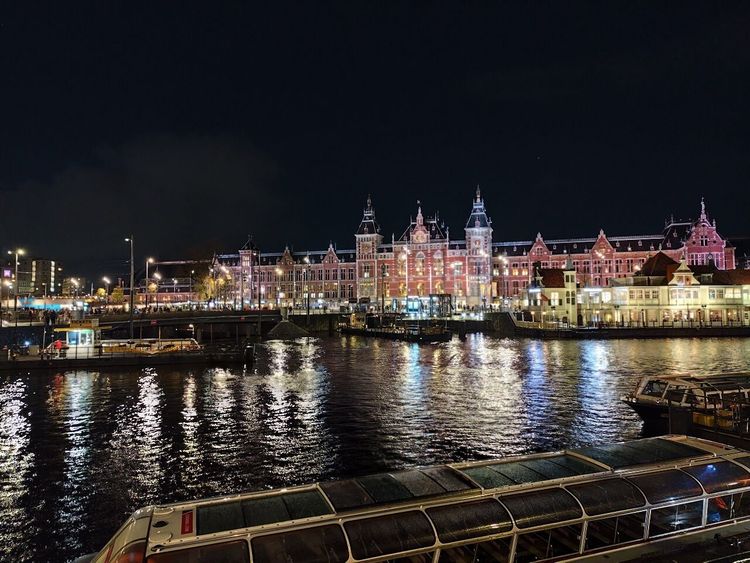
For the surrounding area, everything is organised from Amsterdam Centraal, the main railway station. Direct trains serve Haarlem (20 min), Utrecht (30 min) and Zaanse Schans (17 min towards Alkmaar). Regional buses and boats complete the network for reaching Volendam and Marken.
The Canals and the Historic Centre
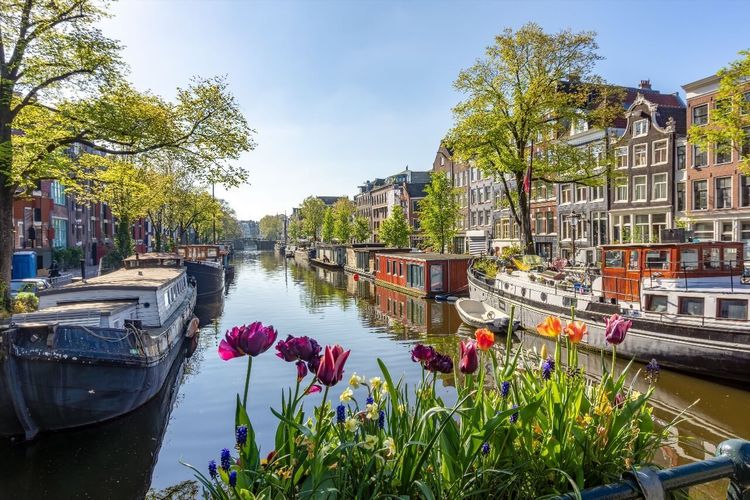
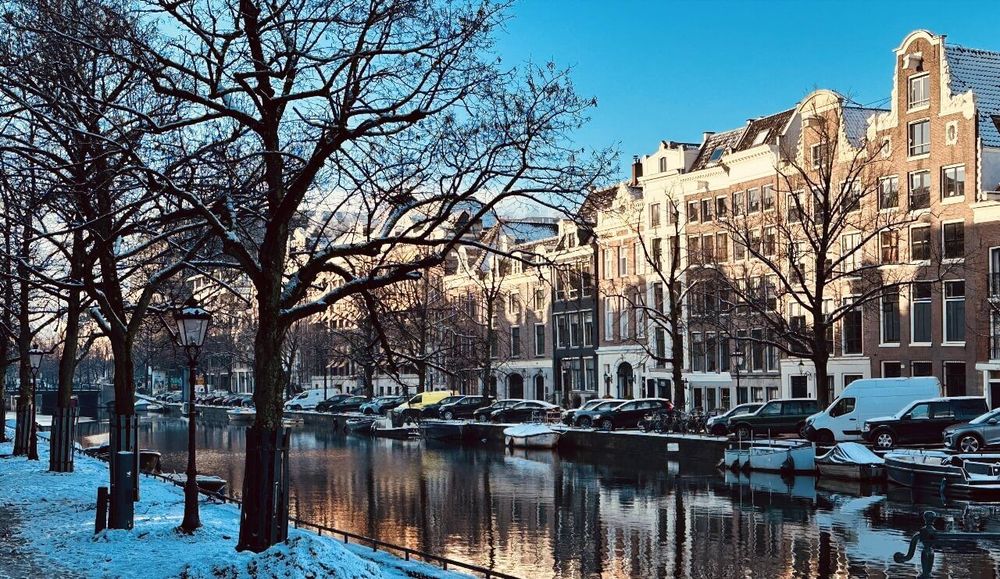
There is no real bad time to stroll along Amsterdam's canals. But early in the morning, when mist still skims the water and the bicycles have not yet poured out en masse, the city takes on a particular quality. The UNESCO-listed canal network since 2010 is built around four major waterways dug in the 17th and 18th centuries to funnel goods for the Dutch East India Company.
The Herengracht, nicknamed the 'Gentlemen's Canal', is lined with the city's most elegant houses. Take the time to count the gables: every facade is different, from step gables (trappengevel) to bell gables (klokgevel). At number 605, the Houseboat Museum (Woonbootmuseum) gives access to an inhabited canal boat, its 1960s interior still intact.
A boat tour remains the most efficient way to take in the scale of the city. Allow 1 to 1.5 hours for a classic circuit that passes under around a hundred bridges. Several companies offer departures from the quays along Damrak or Prinsengracht. For more freedom, electric boats can be hired by the hour at various locations: no licence required for small craft in the Netherlands.
The Dam gives access to the Royal Palace (Koninklijk Paleis), open to visitors when the royal family is not in residence. Built in 1655 as the town hall of the young Republic, it is one of the most imposing Baroque buildings in the Netherlands. Opposite, the Nieuwe Kerk has hosted temporary exhibitions and concerts since the 15th century.
The Begijnhof is one of the hidden treasures of the centre: a medieval inner courtyard surrounded by 17th-century houses, accessible from the Spui through a discreet gate. Amsterdam's oldest wooden house (dating from 1528) stands in this courtyard. The atmosphere is peaceful and entry is free.
The Flower Market (Bloemenmarkt), set on barges moored along the Singel since 1862, is worth a detour even if you buy nothing. It is the only floating flower market in the world, selling tulip bulbs and plants all year round. Our audio-guided tour reaches it from the Royal Palace, a few canals away.
The Jordaan: the Neighbourhood Worth the Detour
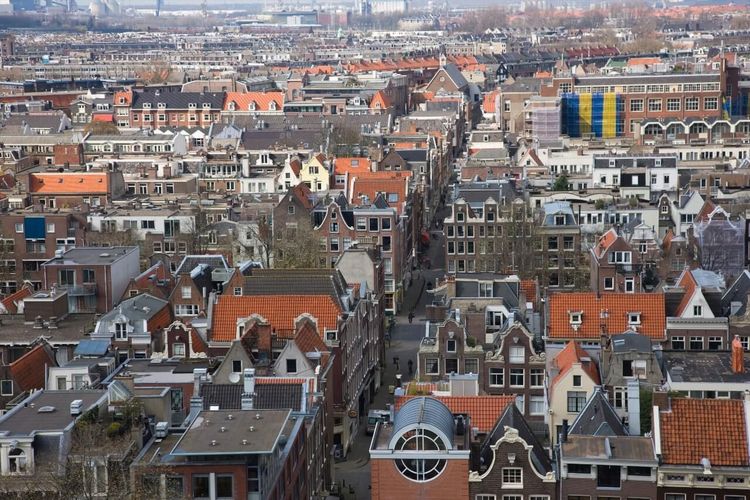
The Jordaan was once the neighbourhood of craftsmen, immigrants and the less well-off. Today it is one of the most sought-after areas in the city, with its art galleries, brown cafés (bruine kroegen) with dark wood panelling, hidden interior gardens and designer boutiques. Yet it has retained its neighbourly character: residents actually live here, children cycle to school, and shop owners still greet you in Dutch before switching to English.
The Westerkerk, whose tower stands 85 metres tall and dominates the neighbourhood, is one of the few steeples you can climb in Amsterdam. The ascent rewards you with a 360° view over the rooftops and canals. Rembrandt is buried in this church, although his grave has never been located with precision.
The Negen Straatjes (the Nine Little Streets) run perpendicularly across the main canal rings from the Singel to the Prinsengracht. Nine cobbled streets of around a hundred metres each, lined with vintage shops, specialist bookshops and tea rooms. This is where you will probably find the leather bag or woollen coat you were not looking for.
The Ryo Amsterdam audio guide covers this neighbourhood with audio stories about the gabled houses and the history of 17th-century merchants, turning a simple stroll into a genuine immersion in the Dutch Golden Age.
The hofjes (inner courtyards) are a Jordaan speciality: former almshouses founded by merchant guilds in the 17th and 18th centuries, accessible through discreet doors in the facades. The Karthuizerhof and the Sint Andrieshofje offer a more preserved atmosphere than the Begijnhof, with far fewer tourists.
The Museumplein and Its Three Museums
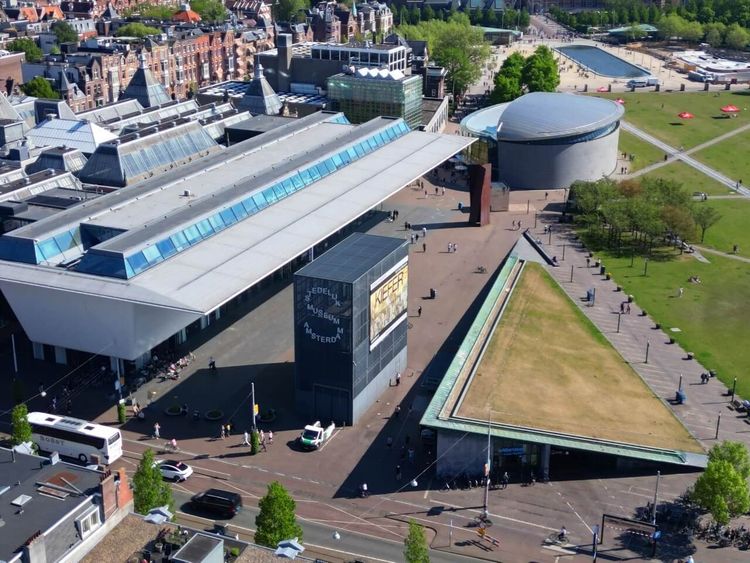
The Museumplein is Amsterdam's densest concentration of museums: three major institutions face each other around a large green park, ten minutes' walk from the Jordaan. It is practically impossible to see everything in a single day; you need to choose according to your interests.
The Rijksmuseum holds the largest collection of Dutch art in the world: 8,000 works displayed across some 80 galleries. Rembrandt's The Night Watch and Vermeer's The Milkmaid are the most photographed pieces, but don't miss the scale models of East India Company ships or the 17th-century decorative arts collections. Allow at least two to three hours and book online to avoid queuing.
The Van Gogh Museum (Museumplein 6, 1071 DJ Amsterdam, rated 4.6/5 on Google from 106,665 reviews) is the second most visited museum in the Netherlands with 2 million visitors per year. It holds the largest collection of Vincent van Gogh paintings and drawings in the world: 200 paintings and 500 drawings, drawn largely from the family collection. Advance online booking is essential, as time slots often sell out weeks ahead in July and August.
The Stedelijk Museum completes the picture with a modern art collection ranging from Mondrian and Malevich to contemporary installations. More eclectic than its two neighbours, it regularly puts on temporary exhibitions that attract a different audience.
Between museums, the Museumplein park itself is a pleasant spot for a break. In winter, an ice rink is set up there; in summer, open-air concerts draw in local residents.
The Anne Frank House
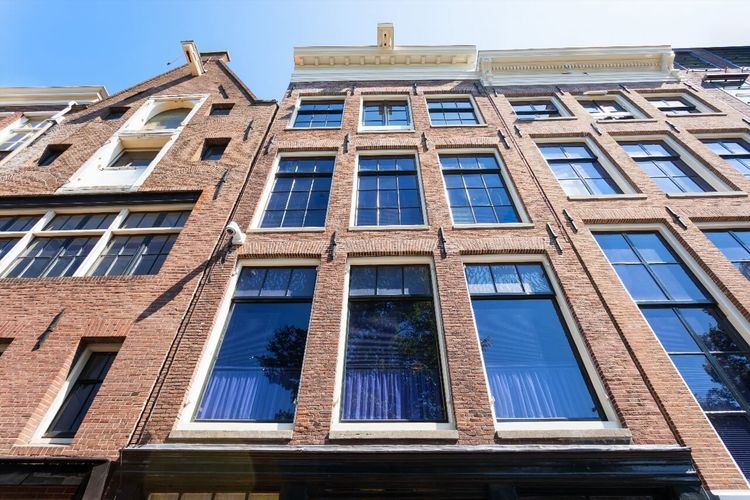
The Anne Frank House (Anne Frank Huis) is one of the most visited memorial sites in Europe, with 1.4 million visitors annually. The building at Prinsengracht 263 houses the secret annex where Anne Frank and her family lived in hiding from July 1942 to August 1944. The visit follows the exact route of that period: the spaces are narrow, the staircases steep, and the atmosphere is gripping from the very first rooms.
Online booking is mandatory and tickets sell out weeks in advance, especially between June and September. The museum completely renovated its exhibition route in 2018 to incorporate more historical context and survivor testimonies. Allow around 1.5 hours for a visit without rushing.
If tickets are sold out when you search, the museum offers a virtual reality experience available through certain partners, allowing you to recapture the atmosphere of the annex. That said, nothing replaces a physical visit to the actual rooms, with their particular proportions and their silence laden with history.
Amsterdam Noord: the Creative Bank of the IJ
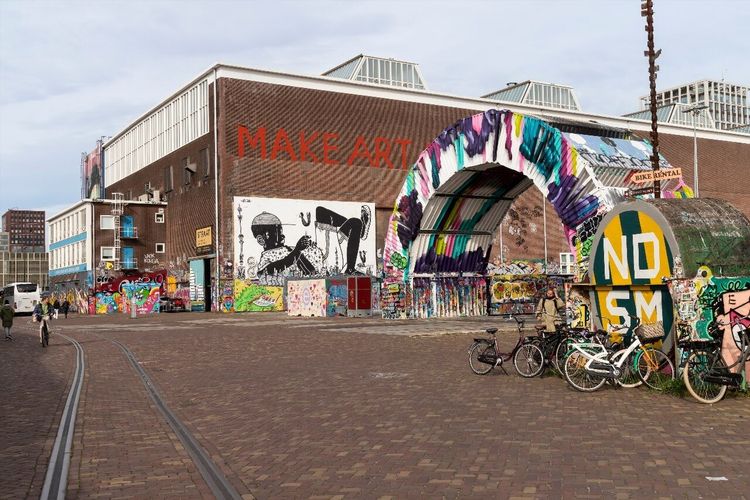
On the other side of the IJ, Amsterdam Noord barely existed in the tourist imagination twenty years ago. It was a territory of declining shipyards, industrial wastelands and a handful of farms. Today it is one of the city's most creative neighbourhoods. Access is free: a free ferry departs every 5 to 7 minutes from the back of the central station, and the crossing takes 5 minutes.
The NDSM Werf (former shipyard) now hosts artists' studios, galleries, pop-up restaurants and a large monthly flea market, the IJ-Hallen, considered the largest flea market in Europe. On the quayside, a vast mural covers the facade of the main hall.
The A'DAM Tower offers a panoramic view from its rooftop terrace on the 22nd floor, complete with a swing suspended in mid-air above the IJ. The building also houses music studios, a hotel, restaurants and an events venue. The Ryo audio guide explores the transformation of this industrial neighbourhood into a creative hub, with stories about the 19th-century shipyards and their conversion.
Cycling Around Amsterdam
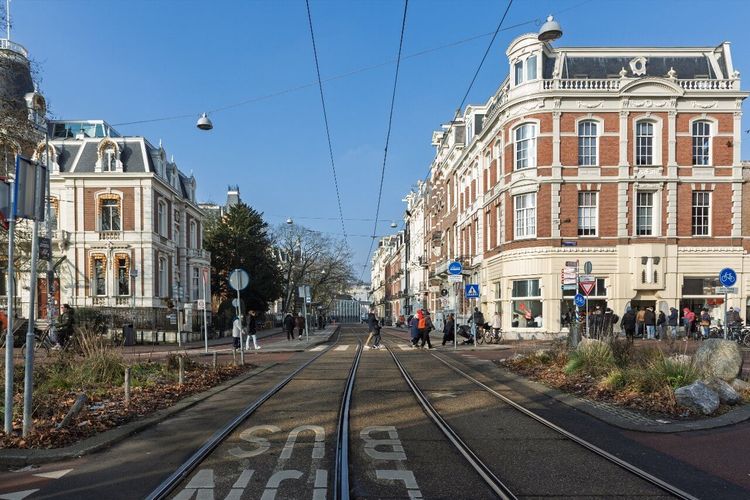
Amsterdam is a city designed by and for cyclists. The network of cycle lanes spans 880 kilometres across the urban area, roughly the distance between Amsterdam and Munich. There are more bicycles than residents in the city (900,000 bikes for 870,000 inhabitants), and local logic consistently gives priority to two-wheelers.
You will find bike rental shops all around the central station and along Damrak. Budget €12 to €15 per day for a standard bike, more for cargo or electric models. The first rule to remember: look both ways before crossing a cycle lane. Cyclists do not stop for pedestrians, even at marked crossings.
To explore the surrounding area on two wheels, the route to Amstelpark in the south of the city or along the Amstel dykes offers a bucolic alternative to the dense centre. In around 2 hours of cycling, you can reach Ouderkerk aan de Amstel, a village of windmills and waterside terraces, entirely different from the bustle of the Dam. Our article on cycling routes in Amsterdam details several itineraries depending on the time available and your level.
Markets, Street Food and Gastronomy
Dutch gastronomy is often underestimated. Amsterdam is a city of 180 different nationalities and its culinary scene reflects this diversity in a striking way. But there are also local specialities that are well worth experiencing.
Dutch herring (nieuwe haring) is eaten on the go, held by the tail, accompanied by chopped onions and pickles. Herring stalls (haringkraam) are dotted all over the city. The season begins in late May or early June, when the year's first catch is ceremonially put on sale: a genuine local event.
A stroopwafel is best enjoyed balanced on top of a hot cup of tea for a few seconds, to soften the caramel centre. Avoid the industrial versions sold at the airport: those from the bakery Van Wonderen Stroopwafels or the Albert Cuyp market are in a different league altogether.
The Foodhallen, housed in a former tram depot in the De Baarsjes neighbourhood, brings together around twenty street food stalls under one roof: tacos, ramen, local cheeses, craft burgers. Open until 11pm at weekends, it is also one of the liveliest social spaces outside the summer terraces. Our article on Amsterdam's culinary specialities gives a full rundown of addresses by neighbourhood.
De Pijp and the Albert Cuyp Market
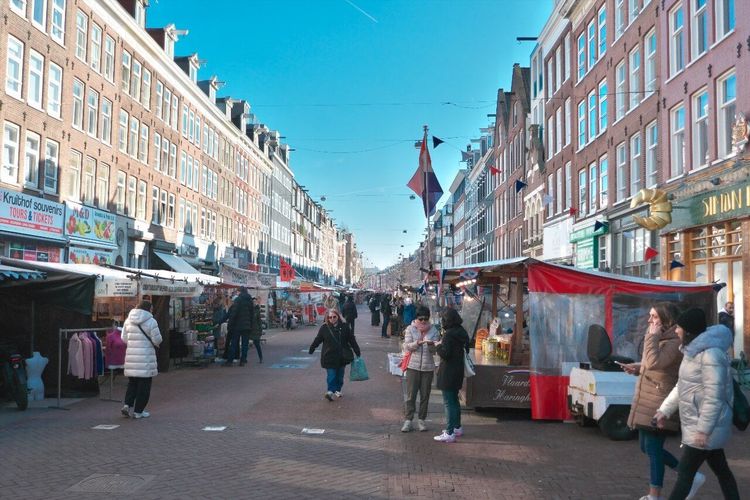
The De Pijp (the Pipe) is Amsterdam's bohemian neighbourhood: a young, cosmopolitan population, a remarkable density of affordable restaurants and independent cafés on just a few streets. It is also the neighbourhood where Van Gogh lived for several years before leaving for France.
The Albert Cuyp market (Albert Cuypstraat, 1072 CX Amsterdam, rated 4.5/5 on Google from 1,337 reviews) is Amsterdam's largest open-air market, with more than 260 stalls stretching over 1.2 kilometres. Open Monday to Saturday from 9am to 5pm, it offers a lively mix of cheeses, flowers, textiles, exotic fruits and fresh herring. It is the ideal spot for a budget picnic.
The Heineken Experience is also located in this neighbourhood, housed in the original brewery founded in 1867 on the Stadhouderskade. The visit (around €25) includes tastings, interactive immersions in the brewing process and a rooftop terrace with views over the neighbourhood.
Westerpark and the Westergasfabriek
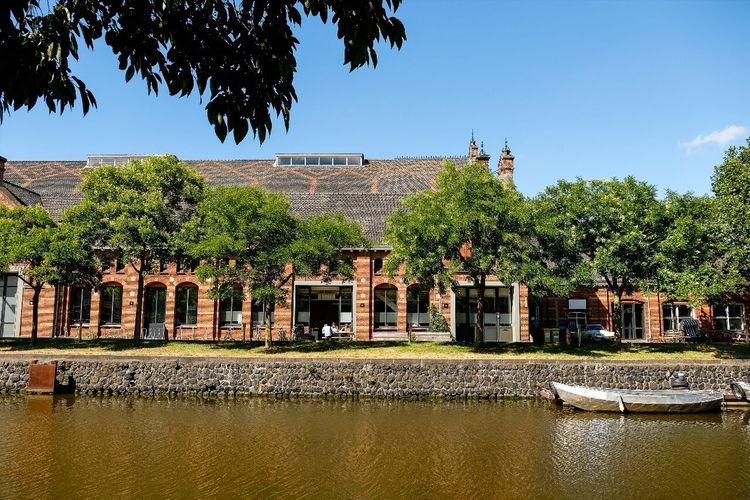
The Westerpark is Amsterdam's most convivial green space on the west side. Surrounding a classic park with a pond and pathways is the Westergasfabriek, a cultural complex housed in a former 19th-century gasworks. The red-brick industrial buildings now host restaurants, an independent cinema, organic markets and open-air concerts.
The Noordermarkt is held every Saturday morning on the square of the same name, at the edge of the Jordaan. It is one of the city's most popular organic markets, with local producers, crafts and second-hand books. Unlike the markets in the tourist centre, it draws mainly local residents.
The walk between Westerpark and the start of the Jordaan is ideal in the late afternoon: the Westergasfabriek terraces come alive, the light on the canals in this part of the city turns golden, and the atmosphere is thoroughly local. It is the kind of moment no printed guide plans for, but one you will carry with you long after.
Amsterdam After Dark
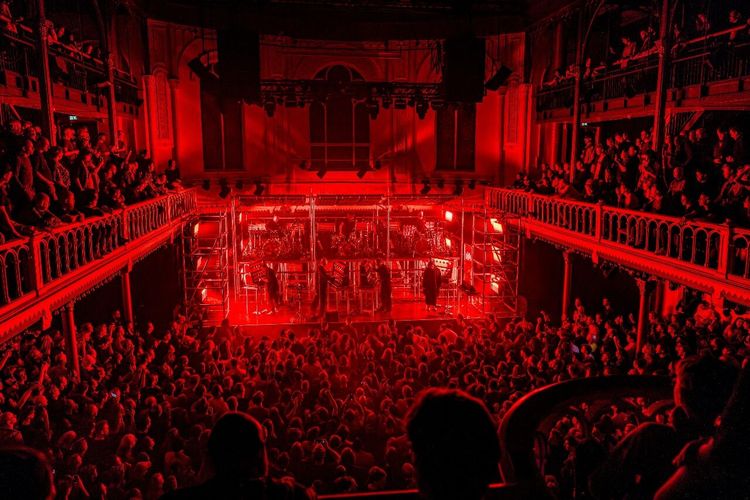
Amsterdam's nightlife goes far beyond the clichés associated with mass tourism. The Leidseplein neighbourhood is home to the major entertainment venues: the Melkweg and Paradiso are two legendary venues that host both independent rock acts and electronic music nights. Paradiso is housed in a former neo-Gothic church, and the acoustics are remarkable.
The bruine kroegen (brown cafés) scene is a local institution: dark-panelled pubs with worn woodwork where you drink beer accompanied by bitterballen (deep-fried breadcrumbed balls served hot with mustard). The Jordaan is the neighbourhood with the highest density of authentic bruine kroegen. Brouwerij 't IJ, housed in a windmill in Amsterdam East, serves craft beers brewed on the premises and has a terrace open in fine weather.
For elevated views, several rooftop bars offer a panorama over the canals at sunset. The A'DAM Tower terrace, the Sir Adam Hotel terrace and the spaces at Ara on the Herengracht are among the best-known options.
Zaanse Schans: Windmills Within Train Reach
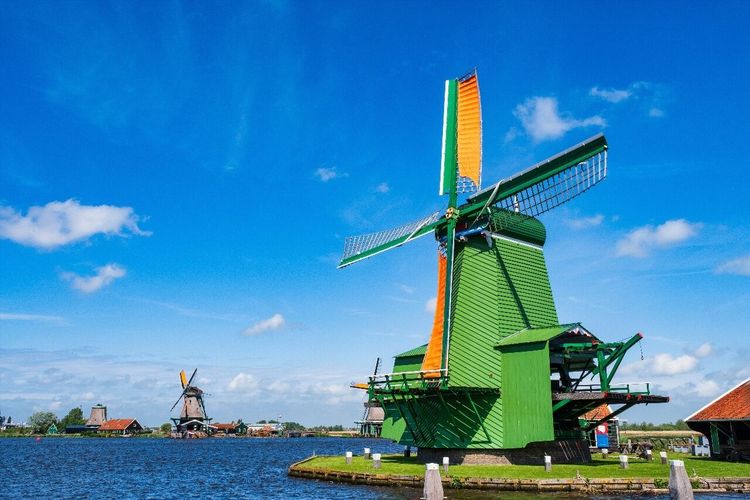
Just 20 minutes north of Amsterdam by train (direction Alkmaar, stop at Zaandijk-Zaanse Schans then 10 minutes on foot), the site of Zaanse Schans (Schansend 7, 1509 AW Zaandam, rated 4.3/5 on Google from 28K reviews) is the most immediate answer to the desire for windmills. This open-air village museum brings together several still-operational 18th-century windmills, lined up along the river Zaan, with their green wooden frames and their sails turning slowly when the wind blows.
Entry to the site is free. You only pay to enter individual windmills (allow €5 to €7 per windmill). Oil (molen De Kat), paint, paper and flour are still produced here using traditional methods. The working windmills are identified by their moving sails.
The site also includes a clog museum, a cheese farm and craft shops. Avoid summer weekends between 10am and 1pm, when tourist density becomes significant. On a weekday morning, the light on the river Zaan is particularly beautiful.
A small ferry allows you to cross the Zaan from the site: a pleasant way to see the windmills from the water before catching the train back.
Volendam and Marken: Waterside Villages
Volendam (Haven, 1131 TK Volendam, rated 4.3/5 on Google from 9K reviews) and Marken are two former fishing villages overlooking Lake Markermeer, around 30 kilometres north-east of Amsterdam. They represent two very different facets of traditional Holland and can easily be combined in a half-day.
Volendam is the most accessible by bus from Amsterdam Centraal (line 316, around 30 min) and the more visited of the two: traditional costumes available to hire, a colourful harbour and plenty of fish restaurants. The atmosphere on the quayside is distinctly touristy, but the lanes heading away towards the back of the village recover a quieter pace.
Marken is a former island (connected to the mainland by a dyke since 1957) whose historical isolation has preserved a unique architecture: dark green wooden houses on stilts, arranged around a circular harbour. The Volendam–Marken ferry shuttle (around 20 min, tickets sold on site) is highly recommended for combining both villages without going back through Amsterdam.
The best time to visit both villages is on a weekday outside the summer season: the atmosphere is far more authentic, and you may see local residents in traditional costume going about their daily lives without the backdrop of tourist groups.
Keukenhof and the Tulip Country
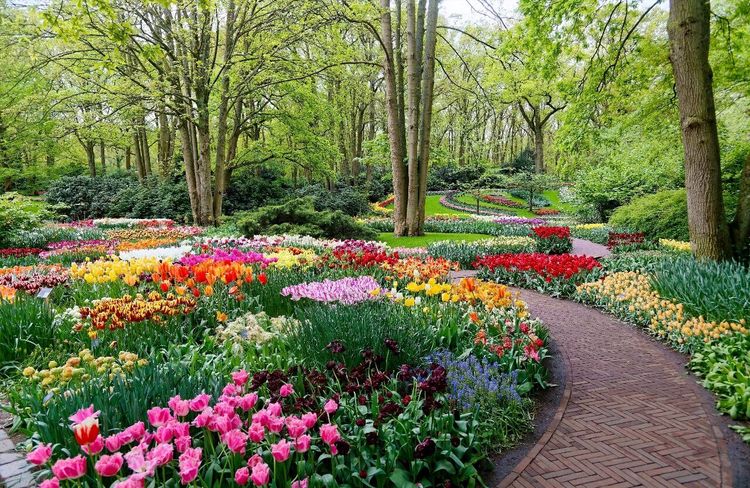
If you visit Amsterdam between late March and mid-May, the Keukenhof is the absolute priority among nearby attractions. This 32-hectare park in Lisse, 40 km south-west of Amsterdam, is considered the world's largest flower garden in terms of visitor numbers: 7 million bulbs bloom there every spring in a succession of colourful displays that change from week to week.
Access is by direct bus from Amsterdam Centraal or from Schiphol airport (the Keukenhof Express bus, around 35 min). Tickets must be purchased online in advance: the park operates with controlled visitor numbers and often sells out on April weekends.
Outside the park, the surrounding tulip fields can be explored by bike along the roads that run through the polders between Haarlem and Lisse. The varieties change week by week: hyacinths in late March, tulips through April, narcissi a little earlier. Our article on visiting the Keukenhof from Amsterdam details the best periods, cycling itineraries through the polders and tips for avoiding the weekend crowds.
Haarlem, 20 Minutes from Amsterdam
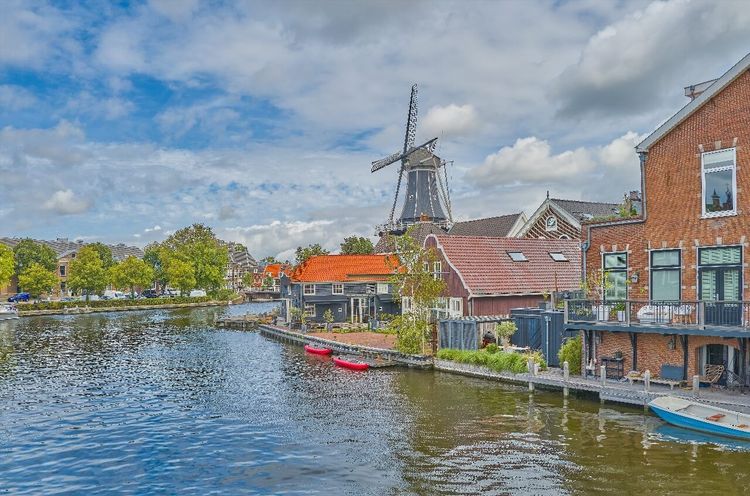
Haarlem is perhaps the most satisfying day trip from Amsterdam. Just 20 minutes by direct train (trains every 7 to 10 minutes from Centraal), it is a medium-sized city that has kept its medieval centre intact, with fewer crowds than Amsterdam but a comparable architectural and cultural quality.
The Grote Kerk (Sint-Bavokerk) has dominated the main square since the 15th century. Its Müller organ of 1738 was played by Handel and by Mozart, who visited Haarlem at the age of ten. Free concerts are given on certain Thursdays and Fridays between May and October.
The Frans Hals Museum presents the group portraits of Haarlem's 17th-century master as well as a very comprehensive Golden Age art collection. It occupies two sites in the city: Hof for old masters and Hal for contemporary art. The Jopenkerk is worth a stop: a craft brewery set inside a 14th-century Gothic church, with copper vats visible from the tasting room.
Haarlem deserves at least half a day. With a full day, you can cycle to the Bloemendaal beaches, 7 kilometres west of the centre.
Utrecht as a Day Trip
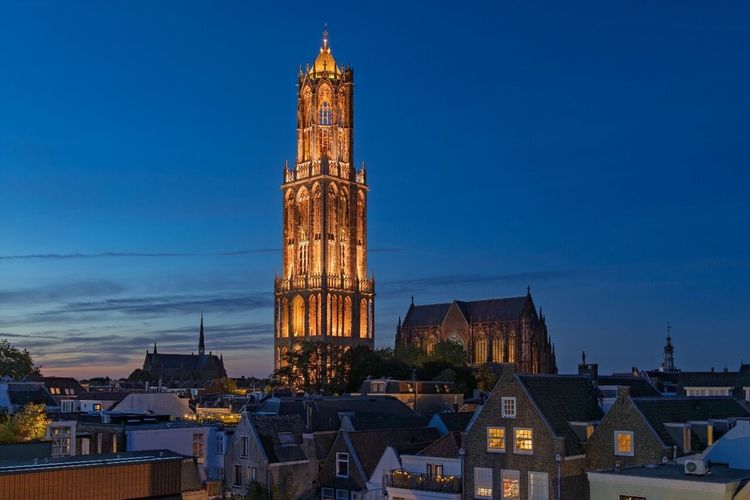
Just 30 minutes by train from Amsterdam Centraal, Utrecht is the fourth largest city in the Netherlands, with a university founded in 1636 and a historic centre dominated by the Dom Tower (Domtoren), standing 112 metres tall.
The werfkelders are Utrecht's architectural speciality: medieval cellars dug beneath the canal quays, converted into restaurants and cafés that descend to water level. You literally dine at canal level, inside vaulted 13th-century spaces. It is hard to find a comparable experience anywhere else in Europe.
The Centraal Museum is the oldest municipal museum in the Netherlands still in operation. It holds the most complete Rietveld collection in the world, including the famous Red and Blue Chair of 1917. The Rietveld Schröder House (10 min by bike from the centre) is a UNESCO World Heritage Site.
The Beaches of Zandvoort
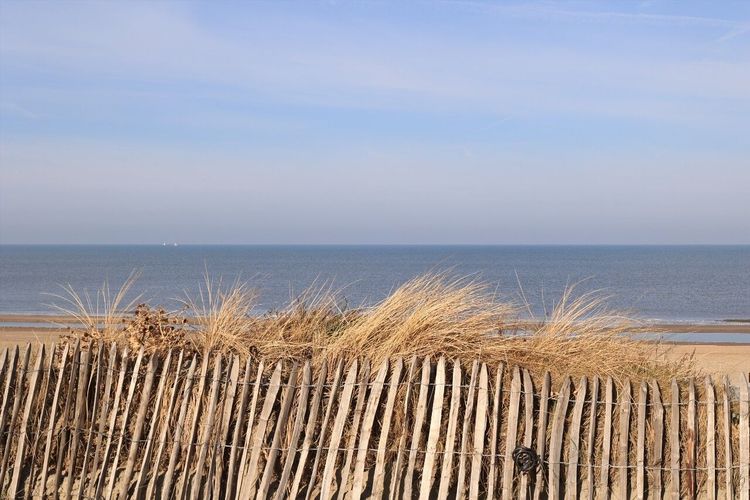
Zandvoort aan Zee is 30 minutes by train from Amsterdam Centraal via Haarlem. The seaside resort is the closest to Amsterdam and receives several million visitors a year for its 9 kilometres of sandy beach on the North Sea.
The water is cool even in summer (18 to 20 °C in July–August), but the numerous strandpaviljoen (beach pavilions) offer sun loungers, restaurants and showers. This is where Amsterdammers come to swim as soon as the temperature exceeds 22 °C, sometimes bringing their bicycles on the train.
Zandvoort is also known for its racing circuit, which has hosted the Dutch Formula 1 Grand Prix since its return to the calendar in 2021. Race tickets sell out within hours each year, but the town remains very accessible at other times.
Getting Around Amsterdam and Its Surroundings
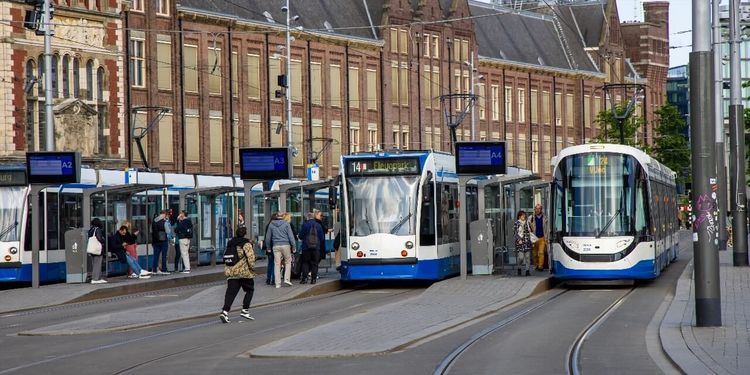
In Amsterdam, cycling remains the fastest and most enjoyable option for the centre. The tram network (lines 1, 2, 5, 9) serves the main neighbourhoods with a high frequency. The metro is useful for reaching Amsterdam Noord (line 52) or the southern districts.
The GVB Day Ticket (daily pass for trams, buses and metro within Amsterdam) costs €9.50 per day. For the surrounding area, the OV-chipkaart (rechargeable contactless card) works across the entire national network: trains, buses and ferries. A multi-day pass may be cost-effective if you are planning several day trips.
If you are arriving by car from France, our article on parking in Amsterdam lists the cheapest options by neighbourhood. Parking in the centre is among the most expensive in Europe, with rates reaching €7 per hour in some areas.
Budget and Practical Information
Amsterdam is one of the most expensive cities in Europe for accommodation: budget on average €130 to €200 per night for a decent hotel in the centre. Well-equipped hostels offer beds from €30 to €50. The neighbourhoods of De Pijp, Westerpark and Oost offer good options at more reasonable prices, 15 to 20 minutes from the centre by bike.
For museums, the Museumkaart (valid for one year, around €70) gives free access to more than 400 museums in the Netherlands: worth it from 3 museums visited. The I Amsterdam City Card (from €55 for 24 hours) includes museums, transport and a boat tour.
The most pleasant period remains spring (April–May) for the tulips and the light, or autumn (September–October) for museums without queues and the colours of the canals. Summer is lively but very crowded. Winter can be bitterly cold, but the December illuminations transform the canals into a fairy-tale setting.
The Ryo app also offers an audio guide to help you plan your itinerary before you even arrive in the city, with interactive maps and neighbourhood-by-neighbourhood stories.
FAQ
What are the best free activities in Amsterdam?
The canals are the main attraction and cost nothing: a walk along them reveals the city's architecture and atmosphere without a ticket. The Begijnhof (free entry), the ferry crossing to Amsterdam Noord, the Albert Cuyp market and the Jordaan markets are all experiences you can enjoy without spending a penny. The parks (Vondelpark, Sarphatipark) are also very popular with locals for picnicking.
How much time do you need to visit Amsterdam and its surroundings?
A minimum of 3 days allows you to cover the city's essentials (canals, Museumplein, Jordaan, Anne Frank House) and one or two day trips such as Zaanse Schans or Volendam. 5 days allow you to include Haarlem, the Keukenhof in spring and an evening exploring the local nightlife. A week is ### Do you need to book museums in advance in Amsterdam?
Yes, for the Van Gogh Museum and the Anne Frank House, booking online is practically essential during high season (June–August) and strongly recommended at other times of the year. The Rijksmuseum handles visitor flow better, but booking still helps you avoid queuing. The Museumkaart makes entry easier but does not guarantee priority access in all cases.
Is it better to visit Amsterdam by car or by public transport?
Public transport or cycling are far preferable to a car. Parking is among the most expensive in Europe and access to the city centre is restricted. For day trips to the surrounding area, Dutch trains are fast and affordable. A car can, however, be useful for exploring the polders and tulip fields at your own pace.
When can you see the tulips in Amsterdam and its surroundings?
The season generally runs from mid-March to mid-May, with a peak around 10 to 20 April for classic tulips. Hyacinths bloom in late March, tulips through April. The Keukenhof is the most accessible site, but the cycling routes between Haarlem and Lisse show the fields at their best.
What to Do in Amsterdam for a Weekend?
The ideal weekend combines the canals and the Jordaan on Saturday morning (before the crowds), a museum at the Museumplein in the afternoon and an evening in a bruine kroeg in the Jordaan. On Sunday, the Waterlooplein flea market or a day trip to Zaanse Schans makes a great contrast. For more detailed ideas, our article on what to do in Amsterdam for a weekend covers the best options by season.
Can you visit the red-light district in Amsterdam?
The red-light district (De Wallen) is freely accessible on foot. The city council has reduced its perimeter in recent years as part of the 'Project 1012' programme and banned guided group tours of the area since 2020. Individual visits are still possible. Our article on Amsterdam's red-light district provides historical context and practical tips, and our audio walking tour picks up nearby, from the Dam to the quiet courtyards around the Begijnhof.
Conclusion
Amsterdam and its surroundings make up one of Europe's richest regions for the curious traveller. The canals, the museums and the Jordaan fill the first day effortlessly. After that, it is the diversity that takes over: a morning among the windmills of Zaanse Schans, an afternoon cycling through the polders, a fishing village on the shores of Markermeer or an hour in a brewery housed inside a Gothic church.
To find your way around and discover the neighbourhoods at your own pace, the Ryo Amsterdam audio guide accompanies you through the streets and along the canals with stories about history, architecture and local anecdotes, with no group and no set schedule.
À lire également