© Shutterstock
 Votre guide Ryo
30 Activities and Visits Without Spending a Euro in Madrid (2026)
Madrid lies about its prices. The Spanish capital is seen as expensive, while a significant part of its treasures can be visited for free. This selection of free activities in Madrid covers world-class museums, huge parks and neighborhoods steeped in history, without ever taking out your bank card. Start by exploring the city through the Ryo audio guide tour of Madrid, which connects the Royal Palace to La Latina in 23 audio stages: a way to give substance to street names before diving alone into the neighborhoods.
What you'll find in the following lines: a 2,200-year-old Egyptian temple set facing the sunset, a tropical garden growing at 650 meters altitude in a former train station, a collection of Goya, Velázquez and Greco accessible without reservation on certain evenings, and Europe's largest flea market that invades 100 streets every Sunday morning. Madrid awaits you, and it doesn't wait for your bank card.
1. Puerta del Sol
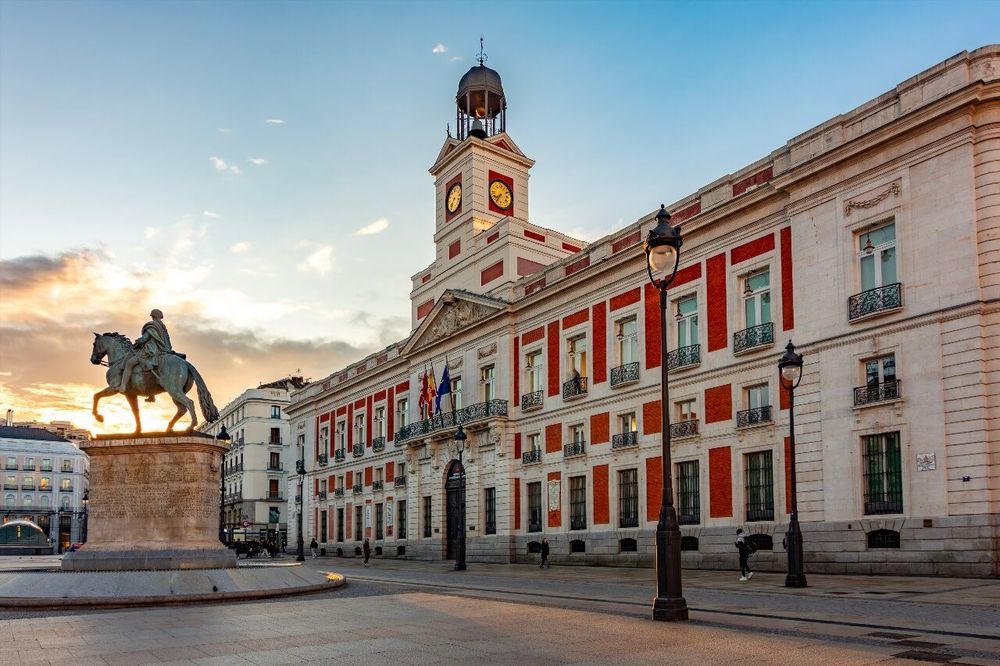
The Puerta del Sol is Spain's ground zero, literally, since kilometer 0 of Spanish national roads is engraved in the ground of this square. All journeys in Spain are measured from this stone slab. The square is lively at all hours, but it's in early morning or evening that you'll appreciate it best, when groups disperse and Madrileños reclaim their benches.
2. Plaza Mayor
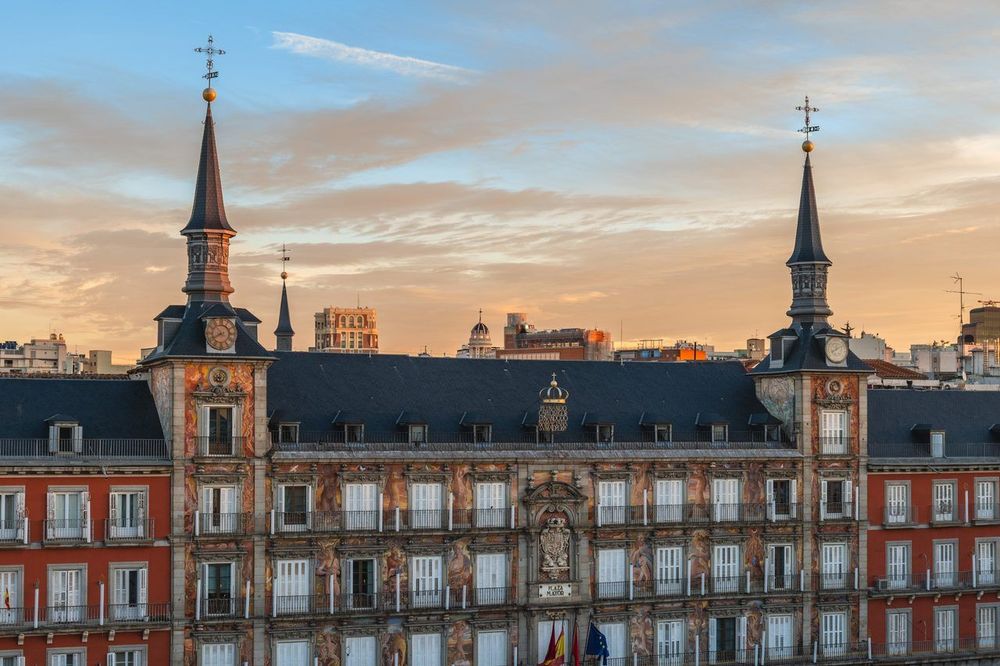
Built between 1617 and 1619 under Felipe III, the Plaza Mayor is one of the best-preserved Baroque squares in Europe. Its 237 meters length by 129 meters width make it an imposing rectangle, framed by 237 balconies and allegorical frescoes on the Casa de la Panadería. The equestrian statue of Felipe III has stood in the center since 1616.
For centuries, the plaza was the scene of bullfights, Inquisition trials and weekly markets. Today, it mainly attracts churros merchants and street painters, but the stone arcades still offer remarkable architectural framing at sunrise, before the tourist influx.
3. The Royal Palace Viewed from Outside
The Palacio Real is the largest royal palace in Western Europe by area: 135,000 m², 3,418 rooms. Interior entry is paid, but no one stops you from walking completely around the building from the Plaza de la Armería and the esplanade overlooking the Casa de Campo. The Guadarrama granite and Colmenar limestone facade is well worth the walk. Come in late afternoon to see the ochre stone turn gold under the light.
4. The Sabatini Gardens
Just north of the Royal Palace, the Sabatini gardens occupy what were once the royal stables. This neoclassical garden, open to the public since 1978, offers a privileged viewing angle on the palace's north facade. The trimmed boxwood parterres, basins and statues of Spanish kings create a refined setting, and it's one of the few places where you can sit on a bench in full view of the building without being squeezed between two buses. Our audio-guided tour of historic Madrid pauses at the Royal Palace before opening onto these gardens, with the story of their stable years.
5. The Egyptian Temple of Debod
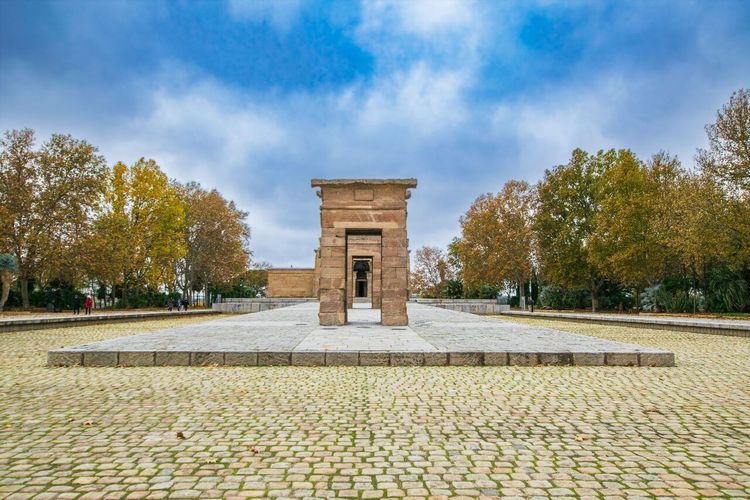
This temple's story is among Madrid's most improbable. The Templo de Debod (Calle de Ferraz 1, 28008 Madrid, rated 4.4/5 on Google for 67,925 reviews) was built in Egypt in the 2nd century BC, dismantled stone by stone in 1968 and given to Spain in thanks for its help during construction of the Aswan Dam, which would have flooded its original site. It is now reassembled in Parque de la Montaña, steps from Plaza de España.
Entry into the temple itself is free on weekends and holidays, and weekdays from 6pm. But the essential is outside: positioned on a perfect axis facing west, the temple offers the best sunset panorama over Madrid from the city heights. Arrive 30 minutes before sunset, photographers know it, the spot gets crowded.
6. Parque del Buen Retiro
With its 350 hectares, Parque del Buen Retiro (Plaza de la Independencia, 28001 Madrid, rated 4.8/5 on Google for 212,056 reviews) is Madrid's central lung and one of Europe's most beautiful urban parks. Former royal property opened to the public in 1868, it has been inscribed on UNESCO's World Heritage list since 2021 as part of the "Landscape of Light", the same perimeter covered by the Ryo audio guide of the Landscape of Light, with 19 stages over 7.3 km.
The park concentrates several remarkable sites accessible without tickets. The Palacio de Cristal, glass and iron pavilion inaugurated in 1887 for a colonial exhibition, now serves as temporary exhibition space for the Reina Sofía museum, with systematically free access. Nearby, the Palacio de Velázquez hosts exhibitions from the same museum in another Victorian architecture building, again at no cost.
The central large pond offers paid boat rides, but you can perfectly walk along its banks and observe the boats from shaded ramps. On weekends, the central area transforms into an open stage: jugglers, street musicians, plein air painters. In May and June, the rose garden La Rosaleda reaches its peak with more than 4,000 varieties in bloom.
7. The Retiro Lake and Its Boats
At the heart of Retiro, the Estanque Grande is a 40,000 m² basin dominated by an equestrian monument to Alfonso XII. Boat rental is paid, but the walk around the basin takes twenty minutes and places you facing Madrid's best reflections. Sunday mornings, the lake sees families, early morning athletes and chihuahuas in raincoats parade by. A place where nothing happens, and where everything occurs.
8. Atocha Station
Since 1992, the former wrought iron nave of Estación de Atocha (Glorieta del Emperador Carlos V, 28045 Madrid, rated 4/5 on Google for 26,001 reviews) houses a 4,000 m² tropical forest under a glass vault. Ficus, giant turtles, palm trees, banana trees: the atmosphere is that of a luxury botanical greenhouse, at 650 meters altitude, in central Madrid. Entry is free for anyone crossing the hall, even without a train ticket.
The station also has important memorial significance: a permanent commemorative space recalls the March 11, 2004 attacks, which killed 193 victims in four suburban trains in Madrid. The visit is sober and moving, in a glazed corridor under the main hall.
9. Gran Vía
Opened between 1910 and 1931 to relieve Madrid's medieval center, Gran Vía (Gran Vía, 28013 Madrid, rated 4.8/5 on Google for 10,387 reviews) is simultaneously a commercial artery, an open-air architecture museum and symbol of Spanish modernity from the early 20th century. In a single two-kilometer walk, you encounter early eclecticism (Edificio Metrópolis, 1911), mid-period Art Deco (Edificio Telefónica, 1929, Europe's first skyscraper) and late monumentalism (Capitol, 1933).
Take time to look up: the upper facades, often ignored, are filled with sculpted details, atlantes and cupolas that shop windows don't reveal.
10. Calle de Alcalá
At 14 kilometers long, Calle de Alcalá (Calle de Alcalá, 28014 Madrid, rated 4.5/5 on Google for 8K reviews) is one of Europe's longest streets and crosses Madrid from Puerta del Sol to the eastern suburbs. Its central segment concentrates a series of remarkable buildings: the Real Academia de Bellas Artes (see section 25), the Puerta de Alcalá and headquarters of several major Spanish banks installed in neoclassical palaces. An urban walk to do early morning, when the street still belongs to delivery drivers and joggers — and the same axis our Landscape of Light audio walking tour follows, from Puerta del Sol to the Puerta de Alcalá.
11. San Isidro Museum
Less known than its neighbors in the art triangle, the Museo de los Orígenes, known as the San Isidro museum, traces Madrid's history from prehistory to the 17th century in the very building where Saint Isidore, the city's patron saint, lived. Access is entirely free, and the collections are surprisingly rich for a public unfamiliar with this name. The entrance gives access to the courtyard and miraculous well which, according to tradition, restored sight to the blind.
You'll also find a scale model of 17th century Madrid that gives a precise idea of what the city was before the great Spanish Haussmannian works. Allow one hour for a quiet visit, preferably on weekdays.
12. Madrid's Moorish Wall
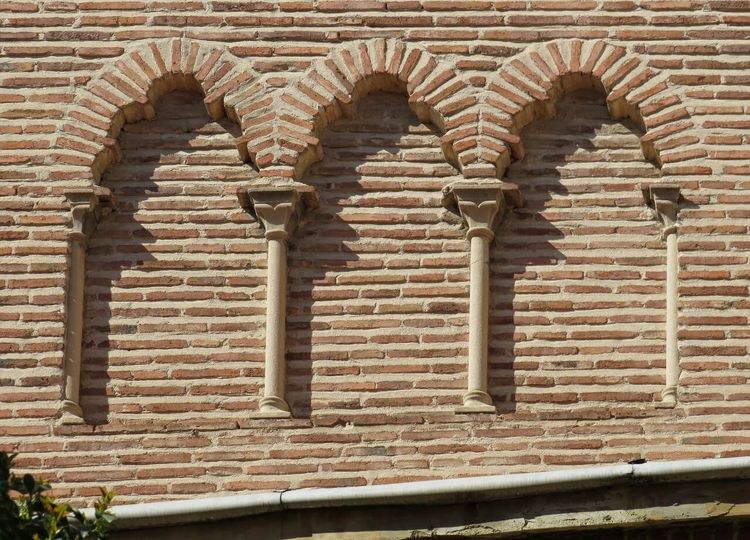
Few visitors seek the remains of Madrid's Arab wall, and that's precisely what makes it an interesting discovery. These wall fragments dating from the 9th century, built to defend the fortress of Mayrit (the Arabic ancestor of Madrid), are found in Parque Emir Mohamed I, steps from La Almudena cathedral. The park is below street level, accessible by a discreet staircase.
Archaeologists have uncovered two square towers and a section of curtain wall over 120 meters length. Panels explain the site's history in Spanish and English. Few tourists stop here, many pass on the bridge above without suspecting what lies below.
13. Puerta de Alcalá
Commissioned by Carlos III and inaugurated in 1778, the Puerta de Alcalá is the first monumental neoclassical gate built in Europe after the fall of the Roman Empire. It marked the main entrance into Madrid for travelers from France and Aragon. Today, it stands in the center of a crossroads at the beginning of Paseo del Prado, illuminated at night, photographed at all hours. Five pink granite arches, allegorical sculptures and a Latin inscription dedicated to Carlos III make it a perfectly proportioned monument.
14. Museo del Prado, Permanent Collections
The Museo del Prado is one of the world's ten greatest museums and the main reason some travel to Madrid. Entry is paid during the day (standard entry €15), but two time slots make it accessible without tickets: Monday to Saturday from 6pm to 8pm and Sundays and holidays from 5pm to 7pm, last entries 30 minutes before closing.
Two hours aren't enough to see everything, but they're amply sufficient for the masterpieces. Focus on three rooms: Las Meninas by Velázquez (room 12), the Black Paintings by Goya (rooms 67-68) and the Garden of Earthly Delights Triptych by Hieronymus Bosch (room 56A). These three ensembles alone represent an artistic density that few museums worldwide can match.
Practical tips: arrive at opening of the evening slot, preferably on weekdays. On weekends, lines begin forming 45 minutes early. Once inside, rooms gradually empty, visitors concentrate at slot opening, then spread through the galleries.
15. Museo Reina Sofía, Free Evening Access
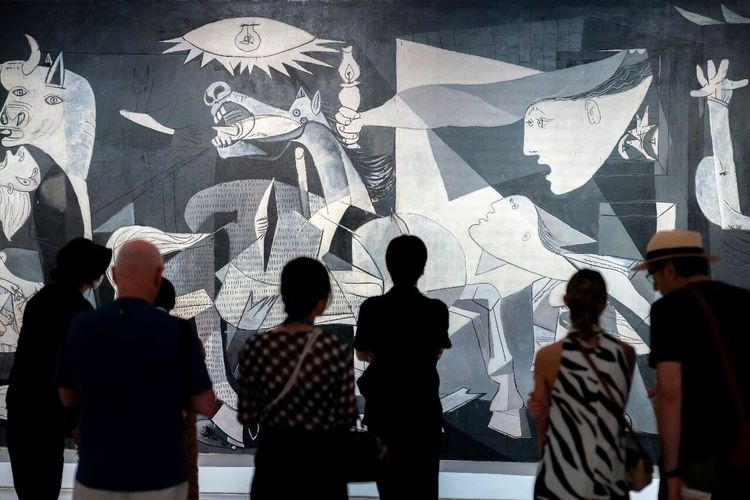
Like the Prado, the Museo Reina Sofía (Calle de Santa Isabel 52, 28012 Madrid, rated 4.5/5 on Google for 70,203 reviews) opens its permanent collections without tickets at end of day: Mondays and Wednesdays to Saturdays from 7pm to 9pm, and Sundays from 12:30pm to 2:30pm. It's the opportunity to approach Guernica by Picasso, displayed on the ground floor of the Sabatini building. The canvas measuring 776 cm wide by 349 cm high is larger than imagined in reproductions, and much darker.
During evening slots, rooms dedicated to Spanish surrealism (Dalí, Miró) and 1930s avant-garde are often less crowded. It's the moment to take the time one doesn't take during the day.
16. Museo Thyssen-Bornemisza, on Mondays
The third summit of the art triangle, the Museo Thyssen-Bornemisza (Paseo del Prado 8, 28014 Madrid, rated 4.7/5 on Google for 47,196 reviews), follows the same logic: access to the permanent collection is free all day Monday. The collection covers eight centuries of European painting with remarkable coherence, from 15th century Flemish primitives to American abstract expressionists, passing through Holbein, Caravaggio, Hals and Hopper rarely seen elsewhere in Spain.
The building, the Palacio de Villahermosa, is itself an intelligently renovated 18th century edifice. The Thyssen collection is more accessible than the Prado's for visitors without specific artistic training: labels are detailed, chronological progression is respected. Allow minimum two hours. To deepen your discovery of neighborhoods around Paseo del Prado, our Landscape of Light audio-guided tour covers precisely this perimeter with 20 audio commentaries.
17. Museo Cerralbo
The Museo Cerralbo (Calle Ventura Rodríguez 17, 28008 Madrid, rated 4.6/5 on Google for 9,366 reviews) is one of the least guarded secrets among Argüelles district residents, and one of the most ignored by standard tourist circuits. The Marquis of Cerralbo's collection - paintings, weapons, coats of arms, tapestries, sculptures, porcelain - is presented in his original house, a 19th century neoclassical palace preserved in its original state. The effect is of a house inhabited last week.
Entry is free on Thursdays from 5pm to 8pm and Sundays from 10am to 3pm. Other days, the rate is €3. Allow an hour and a half to see everything.
18. Ermita de San Antonio de la Florida
Away from classic circuits, near the Manzanares, the Ermita de San Antonio de la Florida (Glorieta de San Antonio de la Florida 5, 28008 Madrid, rated 4.7/5 on Google for 2,872 reviews) houses a unique work: the frescoes by Francisco de Goya created in 1798 on the cupola and pendentives of this small neoclassical chapel. Goya represents a miracle scene with a crowd of real characters, Madrileños of his era, some identified. The artist himself is buried under the cupola he painted.
The hermitage is open Tuesday to Sunday, entry costs nothing. The building's dimension is small, but the proximity to the frescoes, without glass or barriers, is unique for works of this value.
19. Museo Taurino
Whether you're a bullfighting enthusiast or simply curious about a Spanish tradition that has crossed centuries, the Museo Taurino at Las Ventas Arena merits a detour. It traces bullfighting history since the 18th century: suits of lights, portraits of legendary toreros, heads of famous bulls, original posters. Museum entry is free every day, except bullfighting days.
The Las Ventas Arena itself, inaugurated in 1931 in neo-Mudéjar style, is considered the world's largest plaza de toros with capacity for 23,798 seats. The exterior, entirely in red brick with blue and white ceramic decoration, is well worth the trip outside any museum visit.
20. El Rastro
Every Sunday morning, from 9am to 3pm, the La Latina neighborhood transforms into a flea market labyrinth that invades more than 100 streets and alleys. El Rastro has existed since the 16th century in various forms, originally it was a leather and animal skin market, hence its name (meaning "trail"). Today, some 3,500 stalls sell everything: vinyls, Art Deco lamps, antique books, old cameras, clothing, tools, trinkets.
Even without buying, the walk is justified by the atmosphere: sloping streets, terraces that come alive from 10am, Castilian conversations rising from everywhere. Arrive before 11am to avoid the compact crowd. Then, the cafés of Calle de la Cava Baja await you for a vermouth or café con leche.
21. La Latina Neighborhood
Next to El Rastro, La Latina is Madrid's best-preserved medieval neighborhood. Its sloping streets, tiny squares and facades with wrought iron balconies give an idea of what Madrid was before Gran Vía and Haussmannian renovations. The Plaza de la Paja, former medieval vegetable hall, now a quiet small square, and Plaza de la Cebada are the two hubs worth stopping for more than five minutes.
Getting lost in La Latina is an activity in itself. The streets south of Plaza Mayor to Cava Baja form a dense network where each street corner reserves a Romanesque church, a 17th century fountain or a wine bar open since 1900.
22. Lavapiés and Its Wall Murals
Lavapiés is Madrid's most cosmopolitan neighborhood, and most lively regarding street art. Its facades have welcomed large-scale mural works for a decade, commissioned as part of the Muros Tabacalera festival (Calle de Embajadores 51, 28012 Madrid, rated 4.4/5 on Google for 4,460 reviews) and other initiatives. Result: an open-air art gallery of several hundred meters, which you walk through between Senegalese grocery stores, Bangladeshi restaurants and tapas bars run by Spanish families for three generations.
Particularly remarkable: frescoes around the Tabacalera, former 18th century royal tobacco factory converted into a self-managed cultural center, with access open to all on weekends. To extend the walk, the Ryo audio guide tour of Madrid goes up from La Latina to the Royal Palace and passes through most of these historic neighborhoods.
23. Malasaña
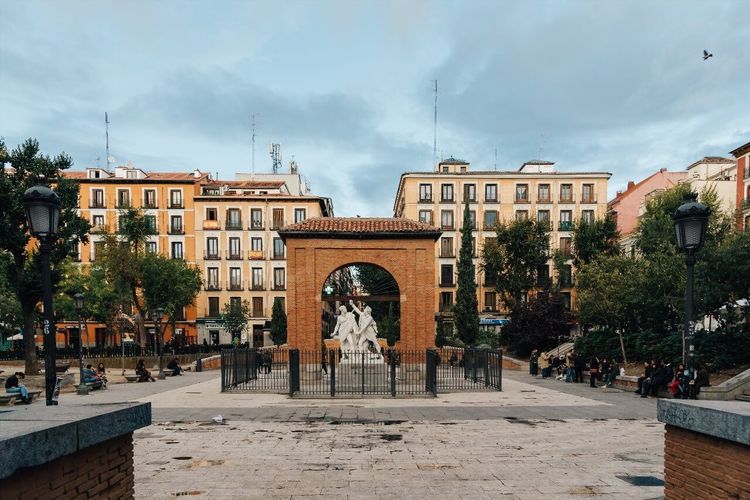
The Malasaña neighborhood owes its name to Manuela Malasaña, a 15-year-old seamstress who died during the May 2, 1808 uprising against Napoleonic troops. Today, the neighborhood is the bastion of Madrid's alternative scene: second-hand bookstores, cat cafés, vinyl bars, tattoo studios. The Plaza del Dos de Mayo (Plaza del Dos de Mayo, 28004 Madrid, rated 4.2/5 on Google for 13,498 reviews) bears commemoration of the insurrection, and its square is one of Madrid's most popular gathering places on weekday evenings.
24. Palacio de Cibeles, View from Outside
Nicknamed "the cathedral of posts" upon its 1919 inauguration, the Palacio de Comunicaciones, now Madrid city hall headquarters and renamed Palacio de Cibeles (Plaza de Cibeles 1, 28014 Madrid, rated 4.7/5 on Google for 924 reviews), is one of the city's most spectacular buildings. Its architecture is a synthesis of Gothic, Plateresque and Baroque elements in a reinforced concrete structure covered with white stone. The view from Plaza de Cibeles, with the fountain in foreground, is one of Madrid's most emblematic postcards. The building's panoramic terrace (Mirador Madrid) is paid, but the forecourt is public.
25. Real Academia de Bellas Artes de San Fernando
Founded in 1752 by Fernando VI, the Real Academia de Bellas Artes de San Fernando (Calle de Alcalá 13, 28014 Madrid, rated 4.6/5 on Google for 4,395 reviews) possesses a permanent collection of often underestimated value: works by Goya (including several rarely exhibited paintings), Rubens, Zurbarán, Murillo and Velázquez. Access is free all day Wednesday. Other days, entry is €8.
The building itself, an 18th century palace on Calle de Alcalá, merits the stop for its intact presentation rooms, high molded ceilings, period parquet, natural lighting from skylights. It's the type of museum where you'll find yourself alone before a Rubens canvas without anyone jostling you.
26. Parque de Juan Carlos I
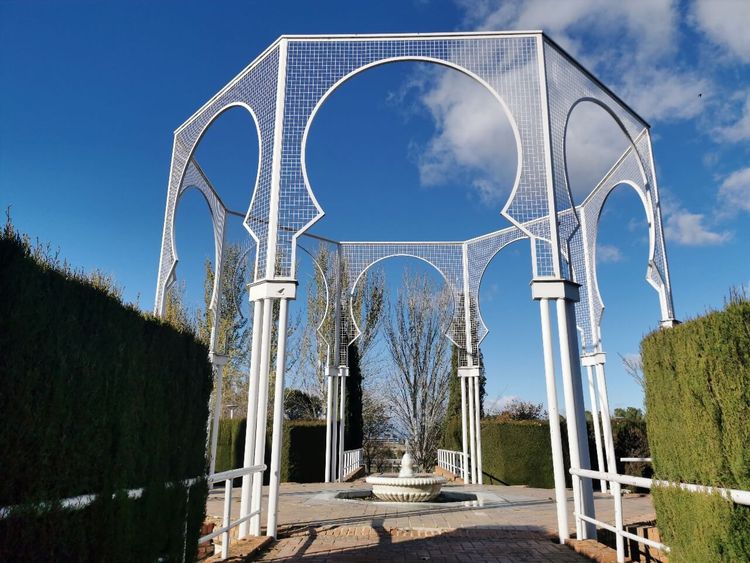
Located in the Alcobendas district, east of downtown, Parque de Juan Carlos I extends over 160 hectares and is one of the parks least frequented by tourists. This doesn't prevent it from housing monumental sculptures by Chillida, Tàpies and other top-tier Spanish artists, scattered throughout the paths. A two-hour walk combines green spaces and contemporary sculpture collection in the open air, without tickets.
27. Campo del Moro Gardens
In the shadow of the Royal Palace, the Campo del Moro gardens (Paseo de la Virgen del Puerto, 28013 Madrid, rated 4.6/5 on Google for 9,082 reviews) are surprisingly little visited despite their beauty and location. These 19th century English gardens extend on slopes descending toward the Manzanares, at the foot of the palace's western facade. Shaded paths, free-roaming peacocks, Victorian fountains and rolling lawns: the atmosphere is that of a country park in the capital's heart.
Entry is via Paseo de la Virgen del Puerto, riverside. Closed on royal audience days, but open the rest of the time to all walkers.
28. Cibeles and Neptune Fountains
The two monumental fountains of Paseo del Prado are central elements of Madrid identity, to the point that Real Madrid fans celebrate their titles at the Cibeles Fountain and Atlético Madrid fans at the Neptune Fountain, 400 meters away. Commissioned in the 18th century as part of a grand Madrid beautification project wanted by Carlos III, both fountains are illuminated at night and offer architectural framing that is both classic and lively. They structure one of the city's most animated pedestrian axes.
29. Madrid's Viewpoints
Madrid offers several viewpoints with free access that give unprecedented perspectives on the city. The most spectacular is the Parque de la Montaña viewpoint, already mentioned regarding the Debod temple, but two others merit the detour: the Las Vistillas viewpoint (Calle Bailén, 28005 Madrid, rated 3.8/5 on Google for 12 reviews), on La Latina heights, with a view of La Almudena cathedral and historic center rooftops; and the Cerro del Tío Pío viewpoint (nicknamed "Seven Hills" by locals), in Vallecas neighborhood, which offers the best overall view of Madrid's night skyline.
This last viewpoint is totally ignored by standard tourist guides, making it a perfect place to see Madrid at night without fighting for a viewing angle. Bring something to drink, it's Madrileños' favorite spot for sunset aperitif. To discover Madrid with an audio and contextualized perspective, the Madrid audio-guided tour takes you in 24 audio commentaries from Puerta del Sol to La Latina neighborhood.
30. Madrid's Covered Markets
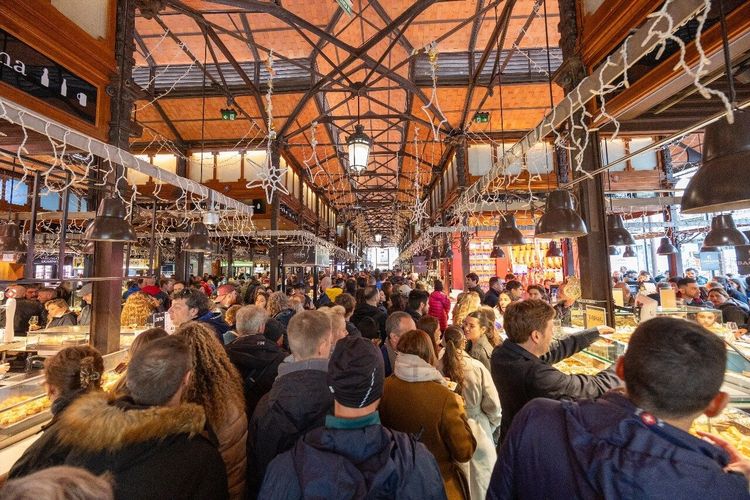
Madrid has about ten historic covered markets, some remarkably renovated over the past fifteen years. The Mercado de San Miguel (Plaza de San Miguel, 28005 Madrid, rated 4.4/5 on Google for 160,602 reviews), built in 1916 in metal and glass structure, is the most touristy, but looking at stalls suffices without buying. The Mercado de San Antón, in Chueca neighborhood, offers a more local version with its pintxos bar on the top floor. The Mercado de la Paz, in central Salamanca, is the bourgeois neighborhood's market, with its fishmongers, butchers and cheese makers who have practiced their craft for generations.
None of these markets charge entry. This is living, noisy, fragrant Madrid, that of inhabitants before travelers.
FAQ
Which Museums Are Really Free in Madrid?
Several museums offer free entry time slots. The Museo del Prado opens freely Monday to Saturday from 6pm to 8pm and weekends from 5pm to 7pm. The Museo Reina Sofía offers its permanent collections for free access on Mondays and Wednesdays to Saturdays from 7pm to 9pm, and Sundays from 12:30pm to 2:30pm. The Museo Thyssen-Bornemisza is open without tickets all day Monday. The Museo Cerralbo is free Thursday evenings and Sunday mornings, and the San Antonio de la Florida hermitage every day.
Is Madrid an Expensive City for Travelers?
Madrid is cheaper than Paris, London or Amsterdam for most daily expenses. Public transport is among Europe's cheapest (metro ticket at €1.50), lunch menus range between €11 and €15, and, as this article shows, a very substantial part of cultural heritage opens for free. The main expense in Madrid remains accommodation during high season.
Is El Rastro Open Year-Round?
Yes. El Rastro takes place every Sunday and every public holiday of the year, from 9am to about 3pm, in La Latina neighborhood around Ribera de Curtidores. On very hot days in July-August, some stalls open later and close earlier. It's never cancelled except in exceptional weather.
Can You Visit Retiro for Free?
Yes, entirely. Parque del Buen Retiro is open to the public for free, every day of the year, from 6am to 10pm in winter and until midnight in summer. Temporary exhibitions at Palacio de Cristal and Palacio de Velázquez, managed by the Reina Sofía museum, are also free. Only boat rental on the lake is paid.
How to Optimize a Day of Free Activities in Madrid?
Start the morning with El Rastro on Sunday (9am-11am), continue with a walk in La Latina and the Moorish wall, lunch near Cava Baja. In the afternoon, go to Retiro with Palacio de Cristal exhibitions. In the evening, join the Prado or Reina Sofía for the evening slot (6pm-8pm). End at Debod temple for sunset. It's a complete day, without tickets, and without compromising on quality.
Conclusion
Madrid is not stingy with its best offerings. In one week, you can have seen Guernica and Goya's Black Paintings, crossed through a 2,200-year-old Egyptian temple, watched sunset from a viewpoint only locals know, and wandered through a flea market that has existed since the 16th century, without taking out your bank card once to enter anywhere.
To go further in discovering the city, our Madrid audio walking tour offers 24 audio commentaries that connect the Royal Palace to La Latina in 2h30 on foot, with anecdotes and historical contexts that give new depth to what you've already seen.
À lire également