
Créé par Emilie, le 17 nov. 2026
Votre guide Ryo
Madrid, Spain
Heart of the Old City
Parcours audioguidé pour visiter Madrid en 1 jour
Madrid is a city you feel from the very first moments. With every step, the rhythm shifts between lively streets, everyday corners, and an energy that never quite fades. Here, everything invites you to linger a little longer—to slow your pace, settle onto a terrace, and simply go with the flow. Without trying too hard, the capital wins you over with its open spirit, its warmth, and that rare ability to make you feel at home almost instantly.
Quand partir à Madrid ?
Jan.
9°
5
Feb.
11°
4
March
14°
5
April
17°
7
May
22°
8
June
28°
4
July
34°
1
Aug.
34°
1
Sept.
27°
3
Oct.
21°
5
Nov.
15°
6
Dec.
10°
5
Madrid is a city you can enjoy year-round. However, its Mediterranean continental climate means summers can be very hot, with average highs around 33°C in August. Winters are milder but cooler, with the coldest temperatures typically in December and January, when lows can dip to around 10°C. The best times to visit are during the shoulder seasons: autumn brings colourful scenery and mild weather, while spring often sees temperatures climbing above 20°C — perfect for soaking up the sun and enjoying the city’s outdoor terraces.
Départ conseillé
No need to worry about where to begin! Our tours are designed as a loop, so you can jump in wherever you are. The navigation system and audioguide will automatically adjust to your location. However, if you happen to be nearby, we do have a preferred starting point: Puerta del Sol.
Parking à proximité
Parking Plaza del Carmen : Entrance Plaza del Carmen, C. de la Salud, 2
Madrid has Low Emission Zones, known as Zonas de Bajas Emisiones or ZBE. The main restricted area is called Madrid Centro. You cannot drive into or park on the street in this zone unless your vehicle is classed as 0 or Eco — meaning fully electric or hybrid. You are allowed to drive through the city centre to reach a hotel or a private car park, but this doesn't include street parking. Even in that case, your vehicle must meet Euro 3 standards (for petrol cars registered after January 2000) or Euro 4 (for diesel vehicles registered after January 2006). If your car doesn’t meet these standards, you’ll need to park outside Madrid Centro and take public transport into the city. Also watch out for coloured road markings — they indicate time limits and restrictions. Yellow lines mean stopping is forbidden. ¡Suerte!
À savoir
Our tour of Madrid includes a stop at the Temple of Debod. Entry is free, but keep in mind that the surrounding park closes at 7 PM and is always closed on Mondays. If your visit falls on one of those days, you’ll need to head straight to Plaza de España from the Royal Palace.
If you want to visit several paid attractions, it’s worth looking into the Madrid City Pass. It’s more cost-effective than buying individual tickets — best of all, it gives you fast-track access, helping you skip the queues and make the most of your time.
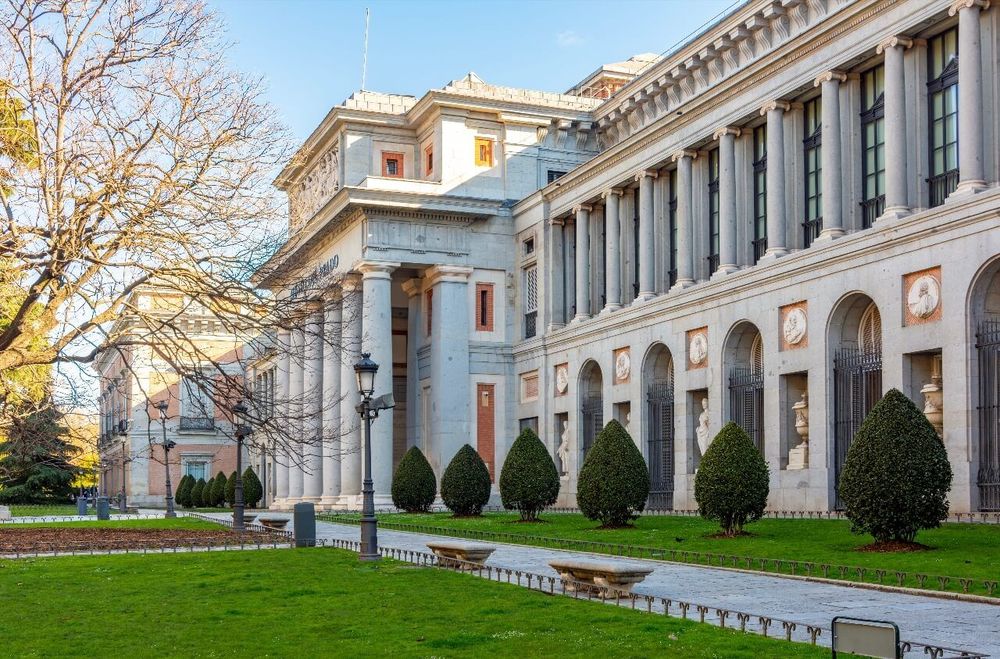
If you’re short on time but still want to visit the Prado Museum, note that entry is free every day from 6 PM to 8 PM.
Découvrez 24 lieux d'intérêt pour visiter Madrid



What to see in Madrid on your 2h30 tour?
This 6.1 km loop takes about 2 hours 30 minutes and links 23 sights in the heart of Madrid. From Puerta del Sol, it climbs the Gran Vía to Plaza España, crosses the Príncipe Pío park and its Egyptian temple, skirts the Royal Palace and its cathedral, then dives into Habsburg-era old Madrid, between La Latina and Plaza Mayor, down to the San Ginés chocolate shop. With the Ryo app in your ears, every square tells a different century of the Spanish capital.
Information checked in October 2026 and subject to change.
1 - Puerta del Sol
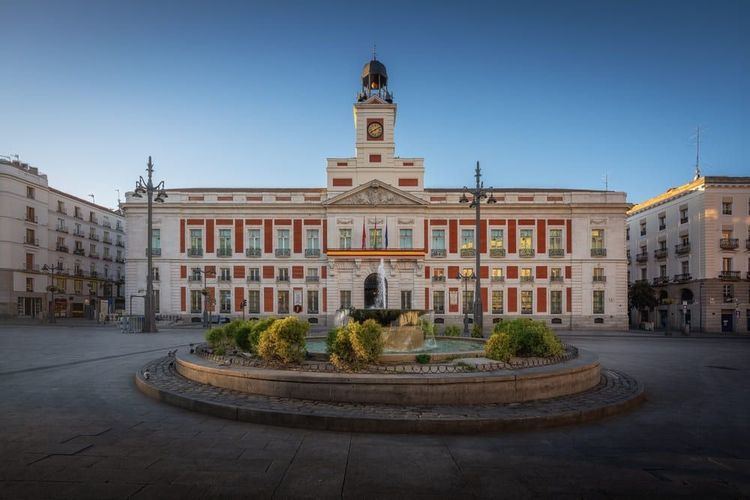
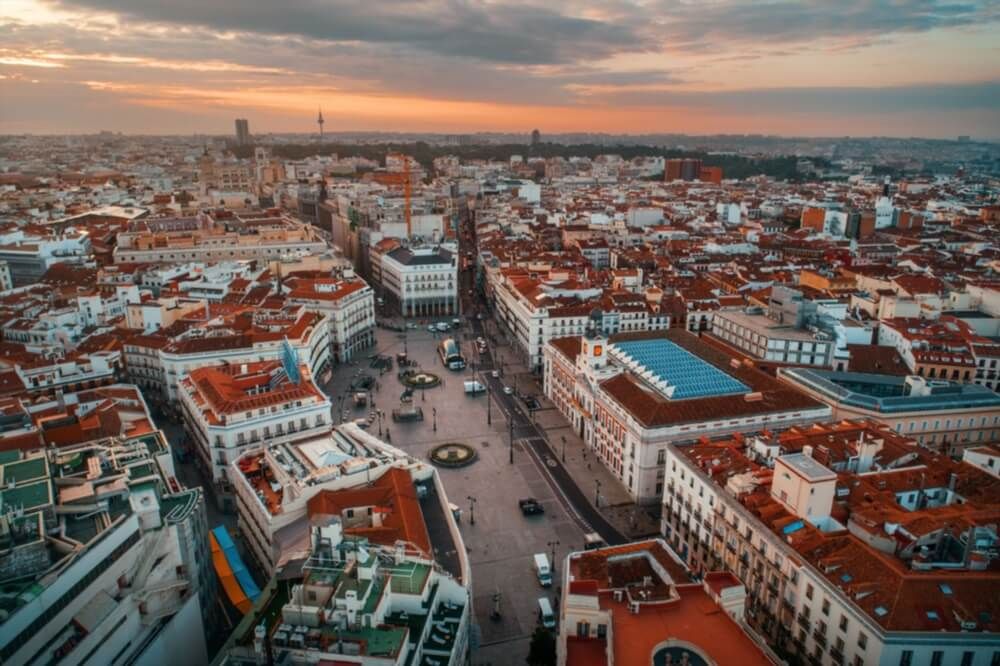
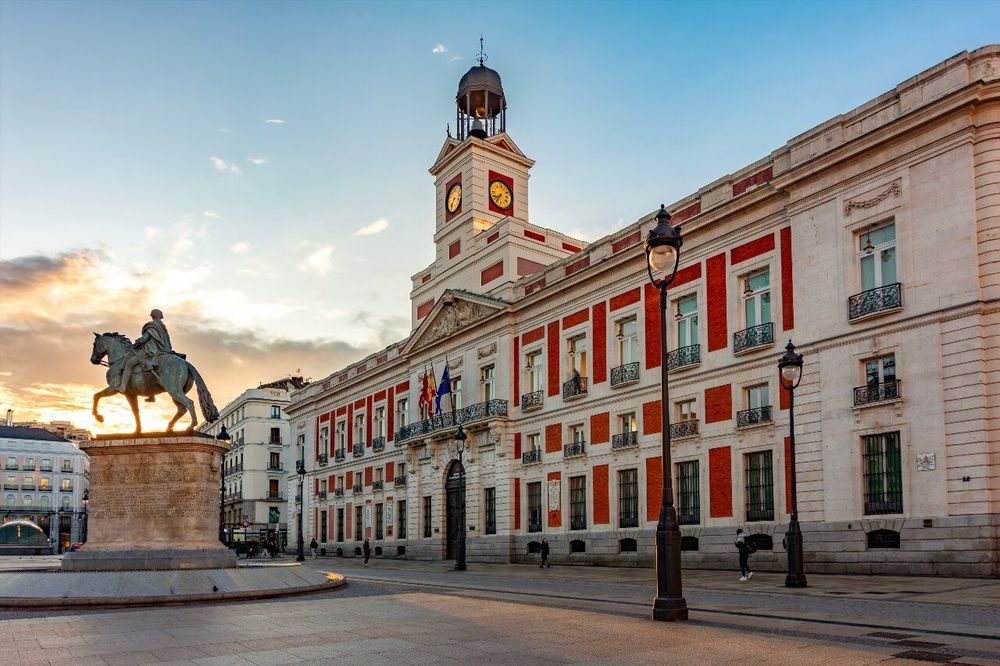
This square, Madrid's most famous, owes its two-part name to an old gate once set into the 15th-century walls and topped with a sundial, both long gone. It gathers three symbols dear to locals: the kilometre-zero plaque, starting point of every Spanish road, the bronze bear climbing a strawberry tree, the city's emblem born of a legend, and the clock on the Casa de Correos, whose twelve midnight chimes mark New Year's Eve, one grape swallowed per stroke for good luck.
Free entry
2 - Broadway panorama from the Gran Via
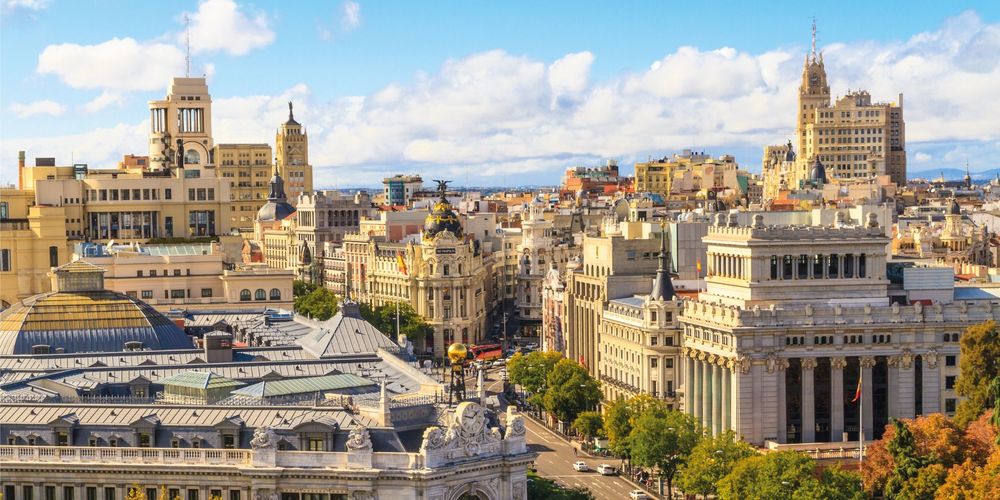
Built at the start of the 20th century, the Gran Vía earned its nickname of Madrid's Broadway right at this spot, facing Plaza Callao, once home to the city's grandest cinemas. The Callao cinema and the Schweppes building, two survivors of that golden age, are still enough to send the imagination to New York. Lined with buildings mixing eclectic styles and Art Deco, the avenue remains one of the capital's liveliest streets, especially after dark.
Free entry · Best in the evening
3 - Madrid’s Rooftop Terraces
At the end of the Gran Vía stand several towers, now converted into luxury hotels, which share a trait common to many Madrid buildings: rooftop terraces open to everyone, where visitors climb for a drink and unexpected views over the capital. The boldest can step onto the glass walkway installed atop the Riu hotel, suspended over thin air for a guaranteed thrill of a photo. This taste for life at height rounds out, in its own way, Madrid's wider love of outdoor terraces.
Free entry · Best late in the day
4 - Plaza España
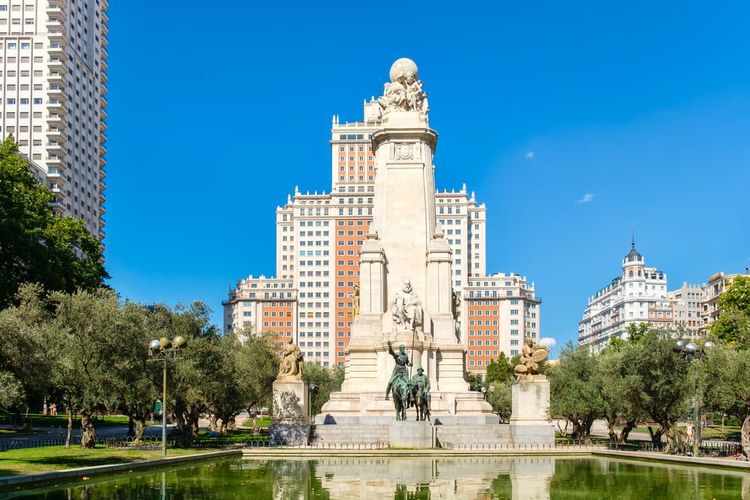
At 36,900 m², Spain's largest square is dominated by Madrid's most photographed monument: the tribute to Cervantes, commissioned in 1915 for the third centenary of Don Quixote. In front of the seated writer, bronze figures of Don Quixote and Sancho Panza charge forward on horseback, while a woman personifying Spanish literature sits behind, surrounded by five statues bearing a globe. Around the square, the red-brick Edificio España and the Torre Madrid, once the world's tallest concrete building, have framed the view since the 1950s.
Free entry
5 - War Memorial
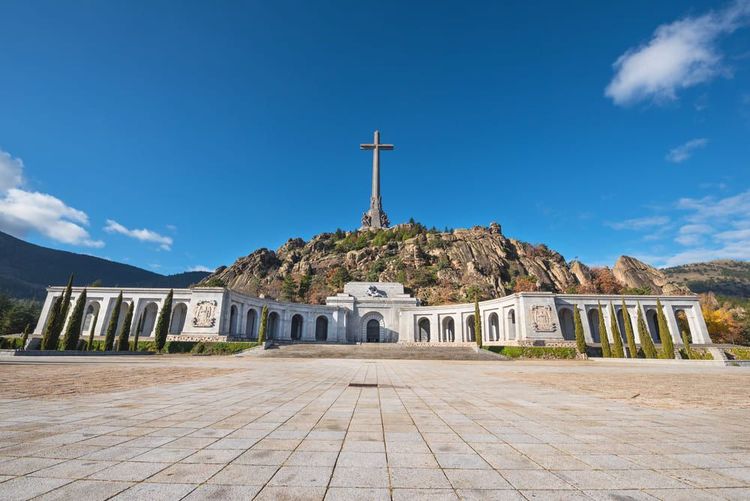
At the foot of this hill, named after the long-vanished palace of the Prince of Savoy's Pio family, a monument depicts a fallen soldier against a brick wall recalling sandbags, created by Joaquín Vaquero Turcios in memory of the victims of the civil war's first clashes. The site also carries an older memory: on 3 May 1808, forty-three Madrid patriots were shot here by Napoleon's troops after the uprising of 2 May, a scene Goya immortalised in his painting "El tres de mayo."
Free entry
6 - The Temple of Debod
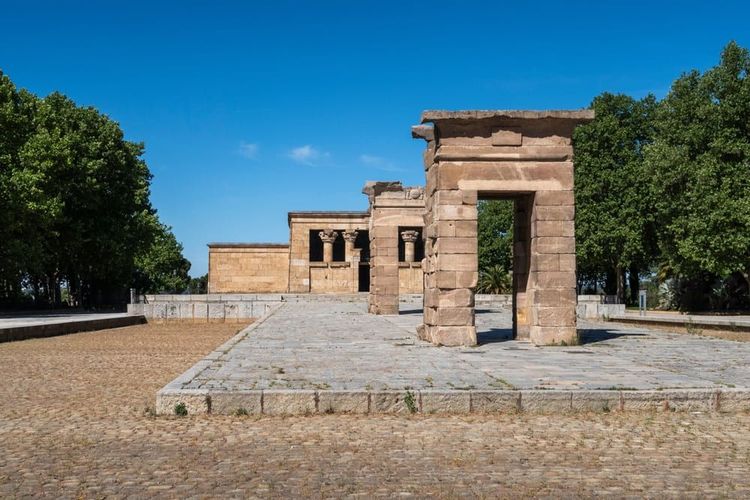
This Nubian temple dedicated to the god Amun, over two thousand years old, once stood on the banks of the Nile, threatened with disappearing under the waters of the Aswan Dam that Nasser pushed through in the 1950s. Rescued during a vast international campaign led by UNESCO, alongside the famous Abu Simbel temple, it was given to Spain in gratitude for its part in the effort, then rebuilt stone by stone in this Madrid park, surrounded by pools that double its silhouette at sunset.
Free entry · Best in the evening
7 - View of the Almudena Cathedral
Whoever comes to admire the Temple of Debod also gets access, not always knowingly, to a viewpoint famous for one of Madrid's finest images: the Almudena Cathedral and the Royal Palace framed together. Locals love to gather here at sunset, when the golden light sweeps across both monuments' facades. Few spots in the city offer such a perspective on this pairing, central as it is to the capital's identity.
Free entry · Best in the evening
8 - Sabatini Gardens
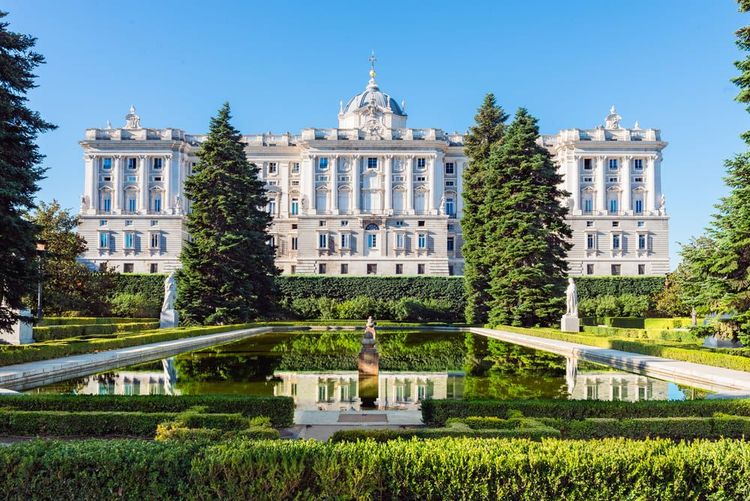
These geometric gardens, planted in the 20th century on ground once occupied by the royal stables, are not named after their designer but after the Italian architect who had drawn up those vanished stables. Clipped hedges, a pool and statues line up with classic rigour, opening onto a clear view of the palace's north-facing wall. Free to enter, they make for a cool, quiet break from the bustle of the nearby avenues.
Free entry · Best in the evening
9 - Royal Palace
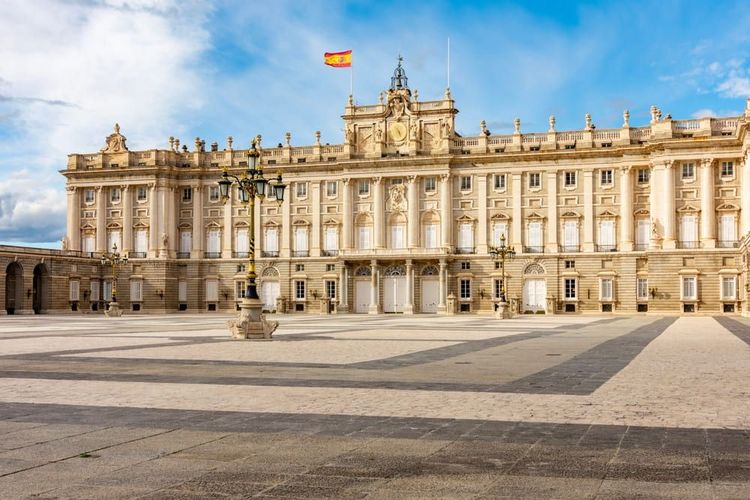
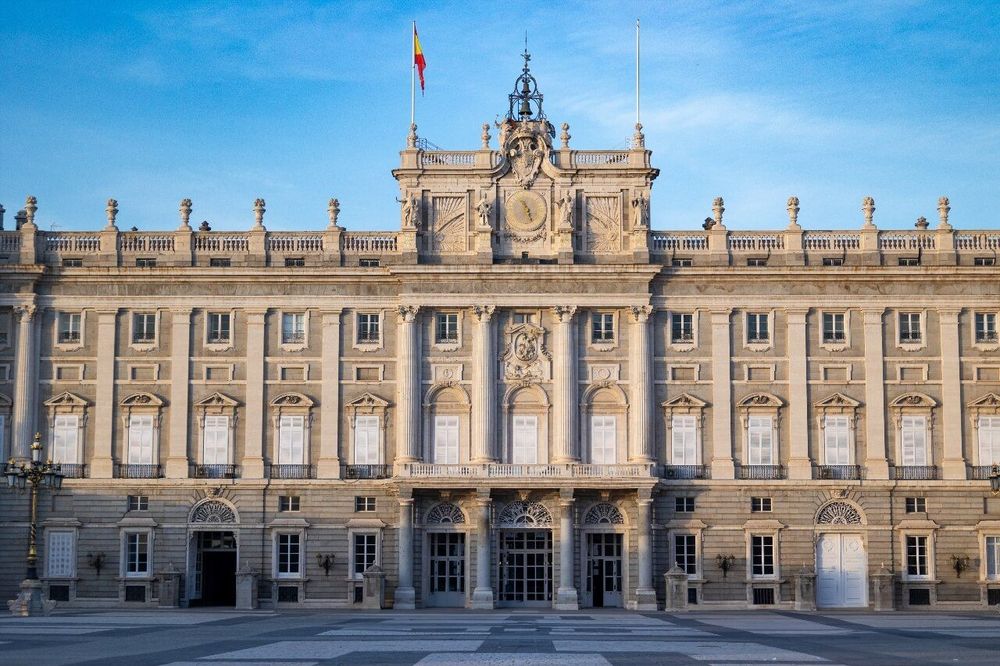
Roughly twice as large as Versailles or Buckingham Palace, this palace, commissioned by Philip V in 1738, rises on the ruins of the old Alcázar, a fortress born from a 9th-century Arab watchtower and destroyed by fire in 1734. The crown's official residence from Charles III to Alfonso XIII's exile in 1931, it now holds, among three thousand rooms, five Stradivarius instruments and countless tapestries. Reserved for state ceremonies, it mostly showcases the splendour of a monarchy restored under Juan Carlos.
Paid entry (about €18) · Allow 45 min
10 - Royal Palace Viewpoint
Opened in late 2022 alongside the Royal Collections Gallery, this viewpoint on the Plaza de Armas offers, free of charge, a clear panorama between the cathedral and the palace: gardens below, the Casa de Campo park and mountains on the horizon. Few cities let you take in such a dense monumental ensemble in a single glance, with no ticket or queue required. Sunset over the surrounding hills makes it a favourite moment for neighbourhood regulars.
Free entry · Best in the evening
11 - Almudena Cathedral
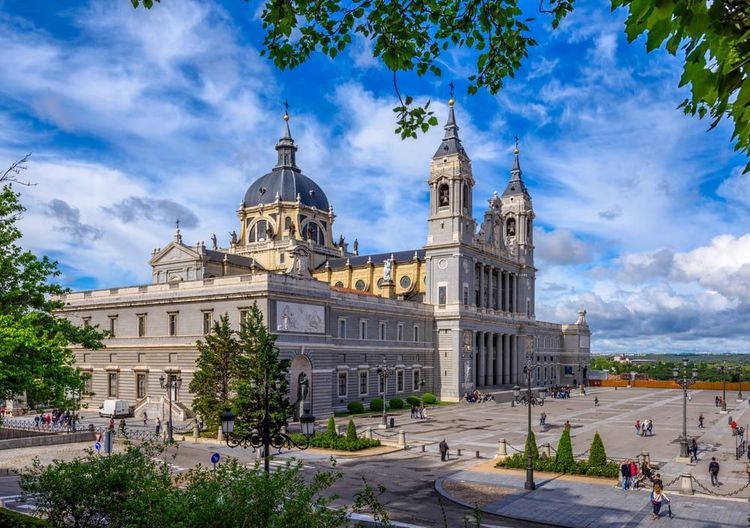
Unusual among Spanish cathedrals for not dating back to the Middle Ages, this one took over a century to rise: a first plan from the 16th century, under Philip II, came to nothing, and work only truly began in 1883, with consecration by Pope John Paul II following in 1993. That slow build explains its mix of styles, neoclassical outside and neo-Gothic inside, where colourful geometric ceilings and modern stained glass surprise visitors. Legend holds that a Marian icon, walled up for centuries, miraculously reappeared here in 1083.
Free entry
12 - Plaza de Oriente
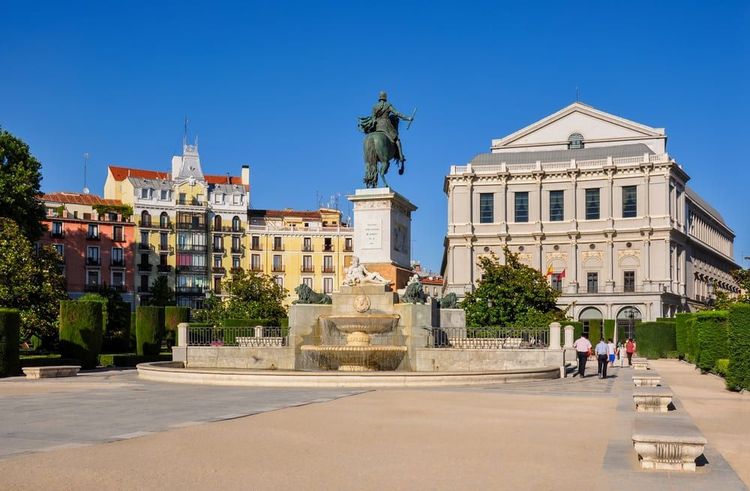
Named for facing the palace's eastern wing, this square lines up twenty statues of Spanish kings which, originally meant to decorate the palace roofline, ended up here instead. At its centre, the equestrian statue of Philip IV, by Pietro Tacca after a drawing by Velázquez, stays upright thanks to a stability calculation credited to Galileo. Lined with cafés and the Royal Theatre, the square ranks among the best spots to watch the palace's white facades glow at sunset.
Free entry
13 - Royal Theatre
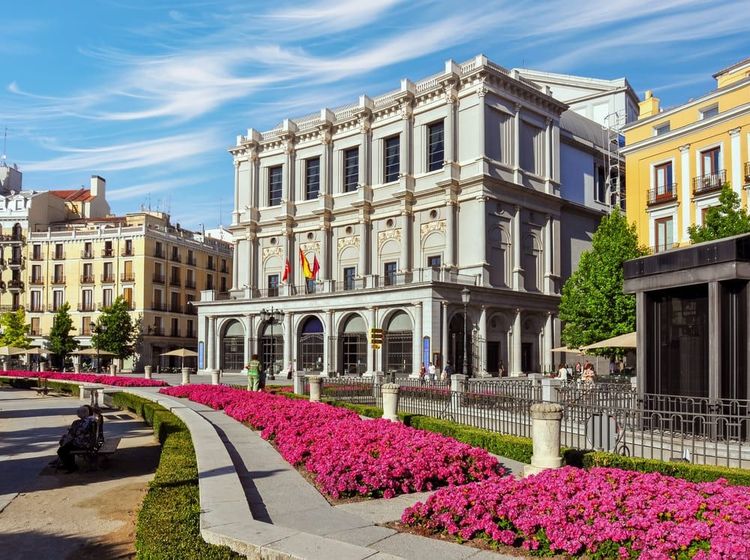
Commissioned by Queen Isabella II, whose statue stands on the neighbouring square, this theatre opened in 1818 and welcomed Verdi himself as early as 1863. Its distinctive feature lies not in its facade but in its stage: nearly 1,500 m² spread across eighteen jointed platforms, able to transform a set within minutes. Having become Spain's leading national opera house, it won an international award in 2021 honouring the quality of its lyrical programme.
Free to see from outside
14 - Plane Crash
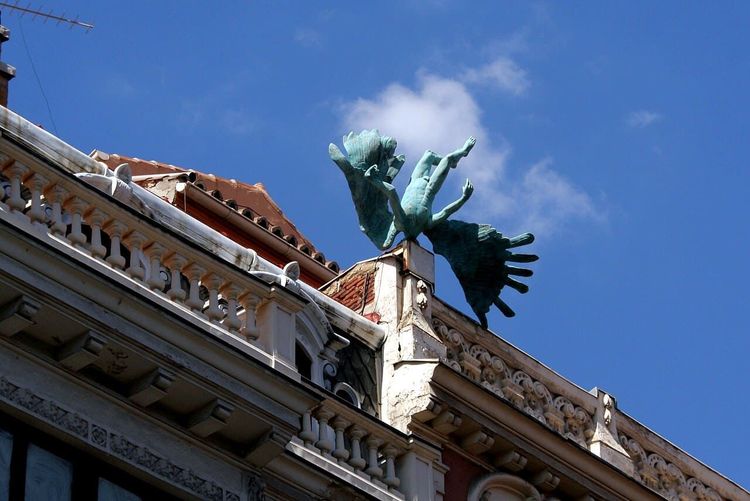
Look up at the roof of the corner building with the glazed balconies: a pair of upside-down giant wings reveal an unexpected sculpture, a bird-man crashed head-first onto a Madrid rooftop. Artist Miguel Ruiz tells his own tale, far from the usual references to Icarus or a fallen angel: a winged traveller from ten thousand years ago, blinded by the setting sun, simply failed to notice that a city had sprung up on his usual landing spot.
Free entry
15 - San Miguel Market
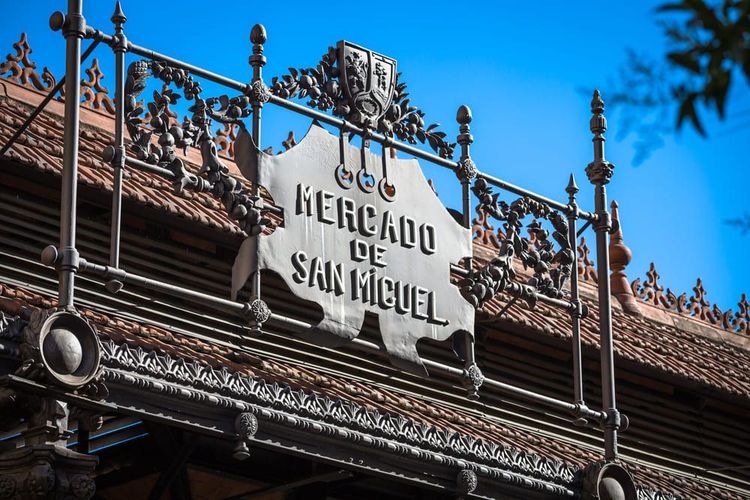
This iron-framed hall, a rare example of its kind in Madrid, already hosted a market in the Middle Ages, long before its conversion into a covered structure in 1916. Visitors come today less to shop than to graze: Iberian ham, aged cheeses, olives, seafood and Spanish wines are enjoyed standing, stall after stall, in an atmosphere that barely ever quiets down, whatever the hour.
Free entry
16 - Casa de la Villa
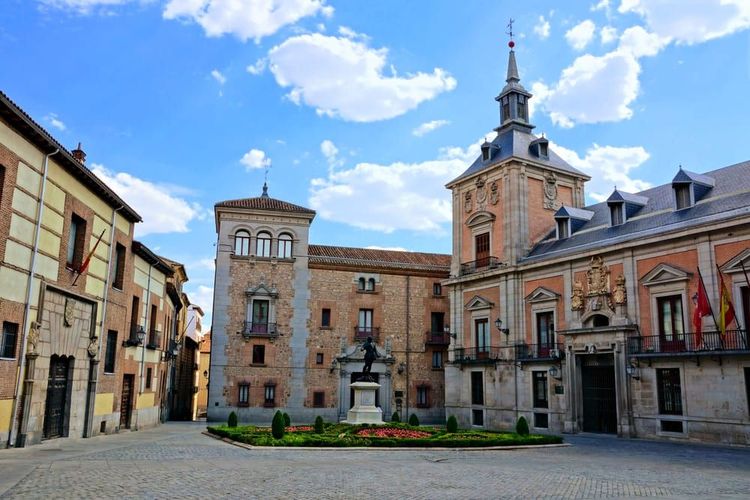
This paved square, the best-preserved ensemble in the city, marks one of the earliest residential cores of medieval Madrid: three streets still branch off it along their original course. Juan Gómez de Mora, who also designed the Plaza Mayor, built the Casa de la Villa in 1640, long the town hall after starting life as a prison. Opposite, the Mudéjar-style Luján tower and the Casa de Cisneros, a rebuilt Renaissance facade, complete this backdrop, at the centre of which stands a statue of the Marquis of Santa Cruz.
Free to see from outside
17 - Church of San Pedro el Viejo
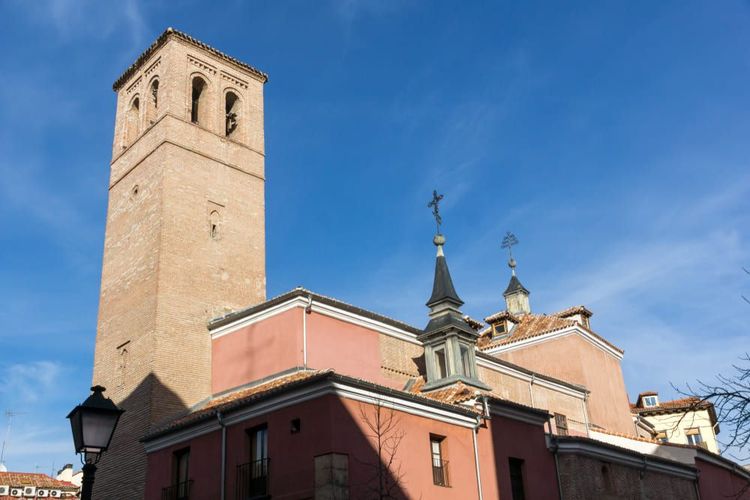
Its name already appears in Madrid's 1202 charter, but the current building, rebuilt in brick in the 14th century, blends layers from several periods. Only its tower kept its original Mudéjar style, pierced by two Arab-Byzantine windows found nowhere else in the city, while the neighbouring portal dates from the Renaissance. Local legend tells of a bell, too heavy for any man to lift, that appeared on its own at the top of the tower, with the power to ward off storms.
Free entry
18 - The Church of San Andrés and the Museum of Saint Isidore the Farmer
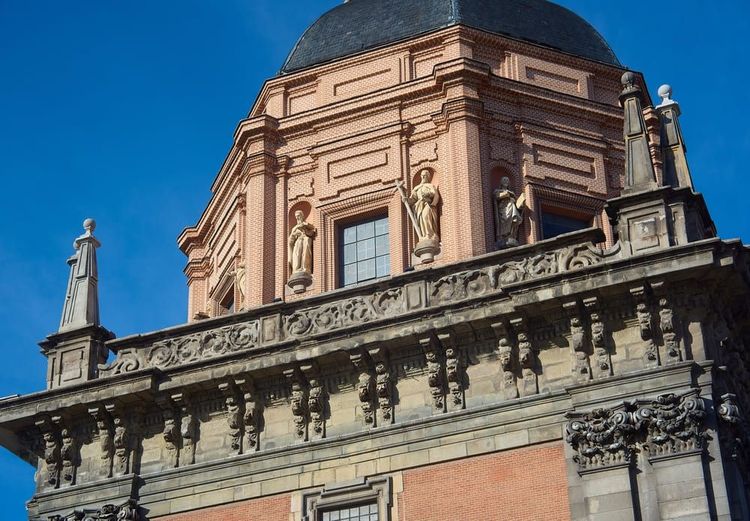
The current building dates from the late 17th century, but the original 12th-century church was built over a mosque from Islamic-era Madrid and held the tomb of Saint Isidore the Labourer, now the city's patron saint. Its original Mudéjar style resulted from the meeting of Arab craftsmen and Christian patrons, an alliance whose most famous example remains Seville's Alcázar. The small chapel next door holds the saint's relics, while the adjoining museum traces Madrid's history back to prehistoric times.
Free entry
19 - La Latina District
The winding lanes of this district, now one of Madrid's liveliest, once formed the outskirts where merchants settled to sell their goods: squares named after barley, straw or carts still recall it. The name La Latina honours Beatriz Galindo, a humanist scholar and tutor to the queen, who, together with her husband, set up a hospital on this spot. Today people mostly come for a round of tapas bars, or for the neighbourhood festivals of San Isidro in May and La Paloma in August.
Free entry · Best in the evening
20 - Sobrino de Botín Restaurant
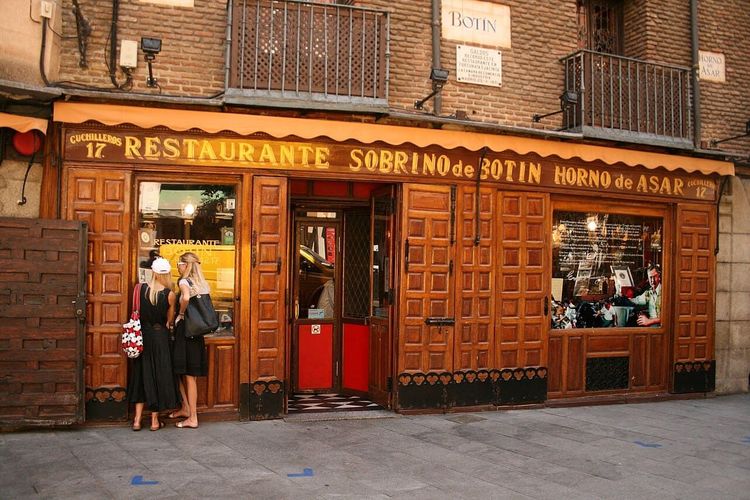
A document from 1590 already attests to this establishment's existence, which would make it the world's oldest eatery still serving today. Until the mid-18th century, the law forbade inns from selling meat, bread or wine to protect the guilds: customers had to bring their own ingredients to be cooked. In 1765, a then-unknown man named Goya washed dishes here. The current name comes from the nephew, "sobrino" in Spanish, who took over the business for lack of a direct heir.
Free to see from outside
21 - Arche de los Cuchilleros
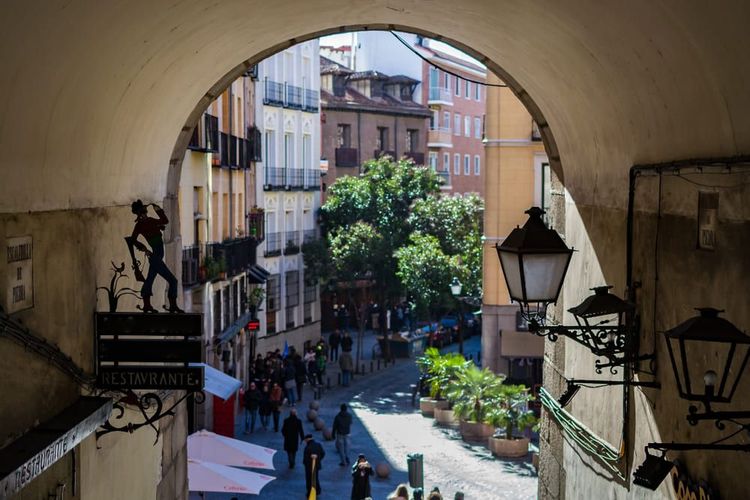
This arch was cut through after the fire that ravaged the Plaza Mayor in the 17th century, in order to fully close the square in on itself. Its surprising height comes from the sharp drop between the square and the street it connects to, the Cava de San Miguel. Its name, meanwhile, goes back to the knife-makers who settled on that street to stay close to the square's butchers, "cuchillo" meaning knife in Spanish.
Free entry
22 - Plaza Mayor
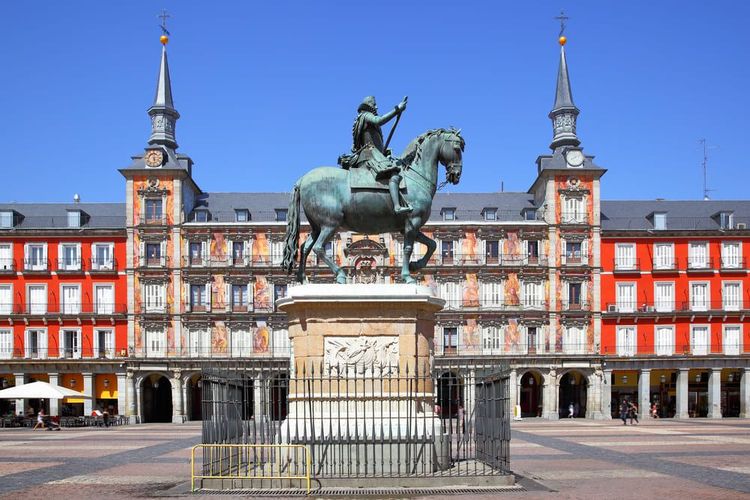
Commissioned by Philip II to replace the chaotic Arrabal square, it was only inaugurated in 1619, under his son Philip III, whose equestrian statue now stands at its centre. Renamed with every change of regime, from Constitution Square to Royal Square and then Republic Square, it took back its original name after the civil war. Plays, Inquisition trials and executions all took place in turn beneath its red arcades, overlooked by the frescoes of the Casa de la Panadería, a former municipal bakery now housing the tourist office.
Free entry
23 - San Ginés chocolate shop
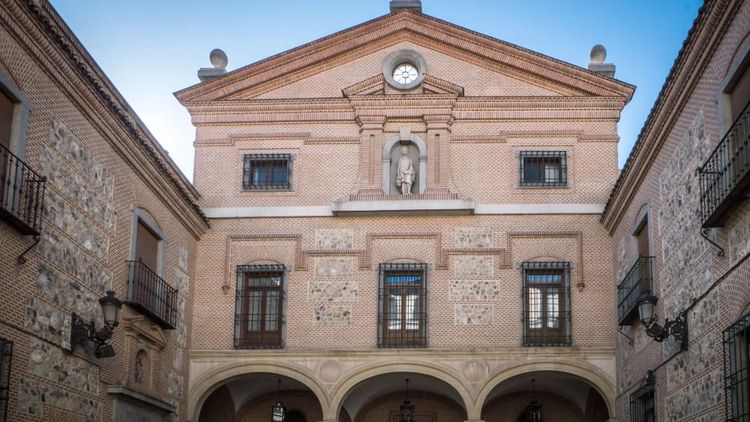
Tucked away in a lane near Puerta del Sol, this chocolate shop owes much of its success to audiences from nearby theatres, who came to warm up here after performances. Its unchanged decor inspired Valle-Inclán's play "Luces de Bohemia" and earns it protected historic status today. People drop by at any hour, often early morning after a night out, to dip hot churros into chocolate thick enough to eat with a spoon.
Free entry
What to do in Madrid in 2 or 3 days?
A 6.1 km loop links 23 sights in about 2 hours 30 minutes, from Puerta del Sol to the Royal Palace by way of the Gran Vía. With 2 or 3 days on the ground, Madrid is best seen museum by museum and district by district.
The next day, give the morning to the art triangle: the Prado Museum holds over 8,000 paintings, among them works by Velázquez and Goya, before the Reina Sofía and its Picasso Guernica. The afternoon winds down in Retiro Park, a UNESCO World Heritage site since 2021, in front of the Crystal Palace, an iron-and-glass pavilion built in 1887. To fit all three museums in without rushing, our guide to visiting Madrid in 3 days lays out the order hour by hour.
The third day leaves the capital: 68 km away, Toledo sits perched above the Tagus River, where Christian, Muslim and Jewish heritage mix along its lanes. The Toledo audio-guided tour continues the walk once you arrive.
Which neighbourhoods does the tour cross?
In one loop, the route crosses several faces of Madrid, from the royal 18th-century city to the medieval old town.
It starts at Puerta del Sol, climbs the Gran Vía past its cinemas and rooftop terraces, then opens onto the vast Plaza España, dominated by the monument to Cervantes (stops 1 to 4).
The Príncipe Pío hill comes next, with the Egyptian Temple of Debod and its view of the Almudena Cathedral, before Sabatini Gardens and the Royal Palace, among the largest royal palaces in Europe (stops 5 to 13).
Below the palace, the lanes of Habsburg Madrid drop toward La Latina, where tapas bars line up square after square, down to Plaza Mayor and the San Ginés chocolate shop (stops 14 to 23). Our guide to Madrid's neighborhoods covers the mood of each district further on, from Malasaña to Chueca.
How much does it cost to visit Madrid?
Of the 23 stops on the route, only one needs a ticket: the Royal Palace, for a little over €18 and a visit of about 45 minutes. Nineteen are freely open, and the last three are seen only from the street:
- the Royal Theatre, whose façade is admired from the Plaza de la Ópera;
- the Casa de la Villa, best seen from its small pedestrian square;
- the Sobrino de Botín restaurant, whose front and history are taken in without going inside.
For the city's other paid sights, the Madrid City Card costs around €10.30 a day and bundles discounts, fast-track access and the zone A tourist transport pass. And to keep going without spending more, our pick of free things to do in Madrid lists further ideas.
Information checked in October 2026 and subject to change.
Where to stop for a bite along the tour?
The route passes some of old Madrid's best food stops, from the covered market to the century-old chocolate shop.
The San Miguel Market (stop 15), under its 1916 iron hall, lines up Iberian ham, cheese and tapas to pick at standing between stalls. A little further on, the La Latina district (stop 19) strings together bar after bar for madrileño specialities, down to the Rastro flea market that takes over its streets on Sundays.
For a local classic, huevos rotos (fried eggs, often eaten at breakfast) are best spotted by checking what the next table ordered, the best tip from Madrileños themselves; our pick of 14 Madrid culinary specialities rounds up plenty more. To end on something sweet, the San Ginés chocolate shop (stop 23) has served thick hot chocolate for dunking churros since the late 19th century.
What to do in Madrid with children?
The historic centre works well for a family outing, between squares to run around in and a covered market to snack in between visits.
The changing of the guard at the Royal Palace, on Wednesday and Saturday mornings, is the moment children remember best, stepped up with cavalry and a brass band on the first Wednesday of the month at noon. Across the square, the Almudena Cathedral's colourful ceiling usually catches their eye more than its façade.
To close the visit gently, sunset at the Temple of Debod draws strollers and couples alike, and churros picked up on the way always make a fitting reward.
What should you know before visiting Madrid?
One stop on the route keeps its own hours, which can mean a short detour late in the day.
The park around the Temple of Debod closes at 7 PM and stays shut all day on Mondays; if that happens during your visit, head straight to Plaza de España from the Royal Palace.
Spain's weather service has flagged a higher risk of heavy rain and flooding this autumn, so it is worth checking the official forecast before heading out for the day.
What to see around Madrid?
Madrid makes a good base for getting away, between day trips by train and nearby cities worth exploring on foot.
Cuenca is under an hour away by train, Seville under 2.5 hours on the high-speed AVE, and Granada about 3 hours, three options for a day away from the capital.
For an excursion that keeps the same walking pace, Toledo, 68 km away, sits perched above the Tagus River, where Christian, Muslim and Jewish heritage mix along its lanes.
What's on in Madrid right now?
As the year winds down in 2026, several events keep Madrid busy, from a festival to a big stage show:
- the JAZZMADRID26 festival fills several venues across the city through November 30;
- at the Prado Museum, the exhibition on painter Ricardo de Madrazo runs through January 17, 2027;
- from November 10 to 27, the Teatro Real stages Mozart's The Marriage of Figaro, directed by Robert Carsen;
- the Circo Price puts on its Christmas circus show from November 20 to January 6;
- the band Duran Duran plays the Movistar Arena on November 6.
Between music, art and theatre, there is plenty to close out the year in Madrid.
Information checked in October 2026 and subject to change.
Le plein d'inspirations
Explorez le monde en totale liberté, à pied au cœur des villes ou au fil des routes. Nos guides audios transforment chaque destination en une découverte culturelle immersive et unique.
FAQ for visiting Madrid
When is the best time to visit Madrid?
Madrid welcomes you all year round, but spring and autumn remain the ideal seasons. Between April and June, temperatures pleasantly exceed 20°C and the city dons its finest colours. The terraces reopen, the mood is festive and you can fully enjoy Madrid's energy without the summer crowds. Autumn, especially October and November, offers a perfect mildness for strolling through the streets. Summer can be stifling, with temperatures nearing 33°C in August, while winter stays mild but sometimes chilly, especially in December and January. Each season nonetheless has its own charm, depending on your preferences.
How many days do you need to visit Madrid?
For a first taste of Madrid, plan at least three full days. This time lets you explore the emblematic neighbourhoods, visit the main museums and soak up the capital's unique atmosphere. In four or five days, you'll have the luxury of slowing down, getting lost in the less touristy lanes and truly living Madrid-style by taking the time for long terrace breaks. With a week, you can even consider excursions to Toledo or Segovia. The Ryo audioguide is there to help you optimise your routes and miss none of the highlights, whatever time you have available.
What transport can you use to get around Madrid?
Madrid has an exemplary public transport network that easily takes you everywhere. The metro, with its many lines, remains the fastest way to cross the city. Buses perfectly complement the network, notably for reaching certain areas less well served by the metro. For short distances, the BiciMAD bike-sharing scheme is handy and lets you enjoy the fine weather. The historic centre is ideally explored on foot, with reasonable distances between the main sites. Taxis remain affordable compared with other European capitals. Remember to get a rechargeable transport card as soon as you arrive to make getting around easier.
How can you save money during a stay in Madrid?
Madrid remains an affordable capital where you can keep your budget in check without sacrificing the experience. Opt for the set lunch menus in restaurants, usually offered at midday at very reasonable prices. Covered markets like San Miguel offer a tasty alternative to tourist restaurants. Many museums offer free time slots, often at the end of the day. Magnificent parks such as the Retiro are free havens of peace where you can spend hours. For accommodation, neighbourhoods slightly away from the centre but well served by the metro offer excellent value. Finally, wandering through the working-class districts lets you discover Madrid's authenticity without breaking the bank.
What are the must-see museums in Madrid?
Madrid shines with its cultural wealth, with three major art museums forming the famous Golden Triangle. The Prado holds one of the finest collections of European painting in the world, with masterpieces by Velázquez and Goya. The Reina Sofía Museum immerses you in modern and contemporary art, notably with Picasso's Guernica. The Thyssen-Bornemisza perfectly complements the other two with its eclectic collection. Beyond this prestigious trio, the Royal Palace impresses with its splendour, while more intimate spaces such as the Casa de Lope de Vega or the Sorolla Museum are well worth the detour. The Ryo audioguide weaves these cultural visits into its routes to enrich your discovery of the city.
How can you avoid the queues at the museums?
To enjoy Madrid's museums with peace of mind and without wasting time, planning ahead remains your best ally. Booking your tickets online, even a few days in advance, guarantees you quick access. The first opening hours and the late afternoon are generally less busy. Some museums offer less crowded evening openings. Tourist passes can include useful skip-the-line access if you plan several visits. Absolutely avoid weekends and public holidays for the major museums. On weekdays, particularly Wednesday and Thursday, the crowds thin noticeably. Also consider the audioguides available on smartphone, which save you waiting at the on-site rental counters.
Which neighbourhoods should you visit first in Madrid?
Each Madrid neighbourhood has its own soul and deserves your attention. The Madrid de los Austrias, the historic heart around the Plaza Mayor, concentrates the city's monumental essence. La Latina charms you with its winding lanes and authentic working-class atmosphere. Malasaña buzzes with alternative energy, with its vintage shops and bohemian cafés. Chueca embodies Madrid's modernity and diversity. The Barrio de las Letras breathes culture, with its quotations engraved in the streets. Salamanca represents elegance with its luxury boutiques. The Ryo audioguide guides you through these emblematic neighbourhoods, revealing their secrets and their best addresses along carefully designed routes.
Where can you eat authentic tapas in Madrid?
The best tapas are enjoyed where Madrileños themselves gather. La Latina is full of traditional bars where the atmosphere counts as much as the food. Around the Cava Baja, you'll find an impressive concentration of authentic tabernas. The San Miguel market, though touristy, offers a fine variety for discovering different specialities. The historic ham bars near Sol serve timeless classics. Lavapiés offers a more modern and multicultural take on tapas. The ideal approach is to follow the locals: a bar packed with Madrileños is always a good sign. Don't hesitate to ask for the house specialities rather than sticking to the tourist classics.
Which historic monuments should you see in Madrid?
The old heart, known as the Madrid of the Habsburgs, can be covered on foot in a few hours. The Plaza Mayor, an enclosed arcaded square lined with balconied façades, is its centre; the Puerta del Sol, just nearby, marks kilometre zero of the Spanish road network. Between the two, narrow streets lead to the covered market of San Miguel, old taverns and convents hidden behind discreet doorways.
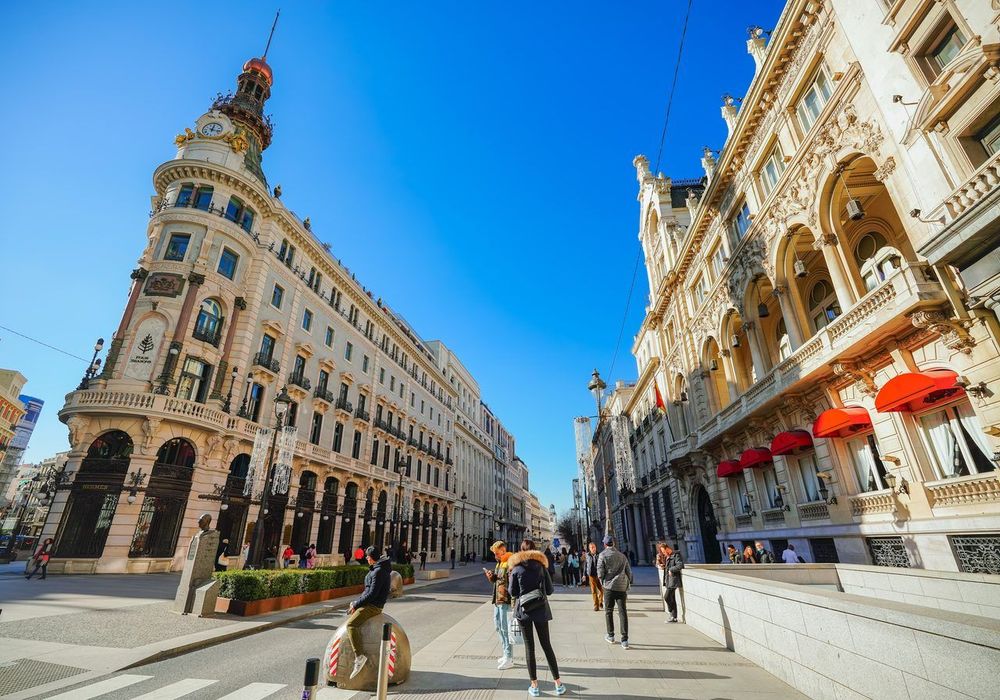
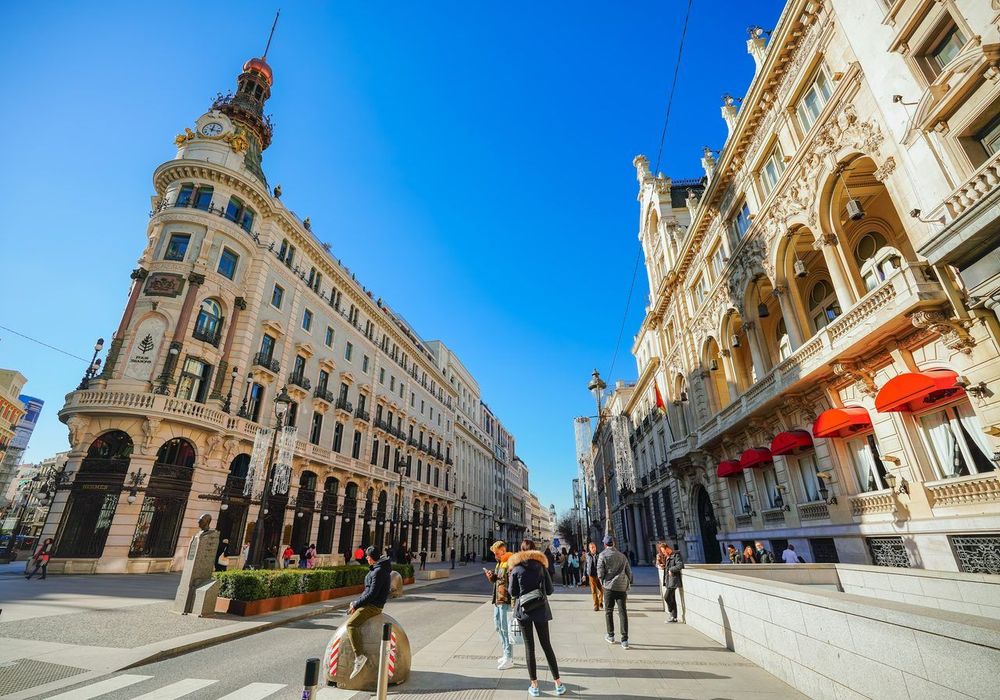
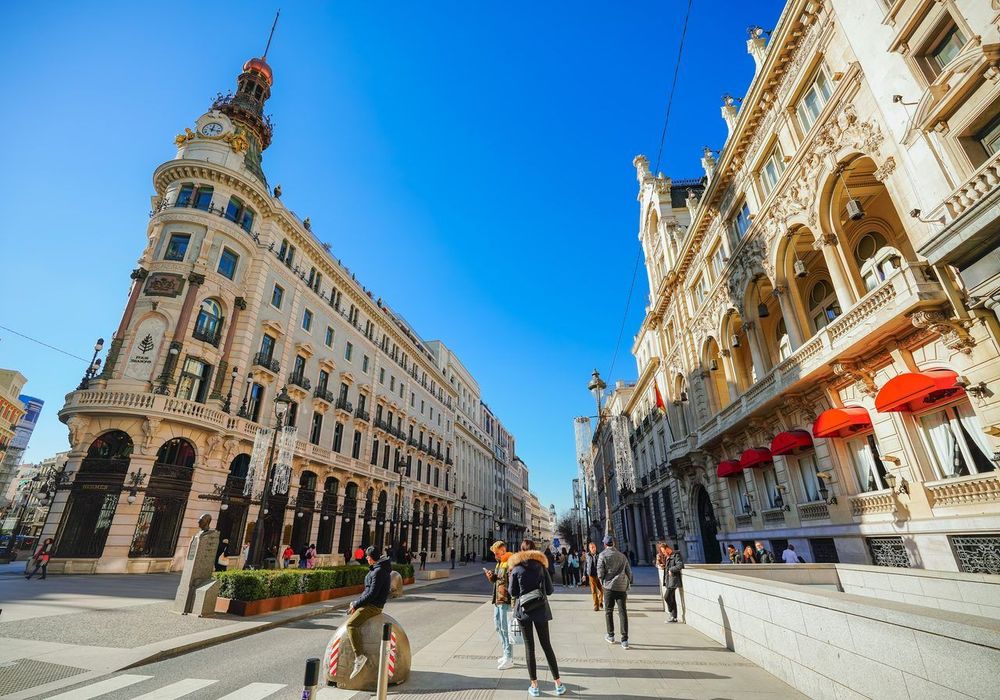
To the west, the Royal Palace spreads its huge granite façade opposite the Almudena cathedral and the Sabatini gardens; it is one of the largest palaces in Europe still in official use. Heading up towards Cibeles, the great buildings of the early twentieth century, banks, the former post office turned city hall and the signs of the Gran Vía, tell the story of another Madrid. The Ryo audio guide offers a dedicated Madrid route linking these monuments of the historic centre.
What day trips can you take from Madrid?
Madrid's central position puts several historic towns within a day's reach, by train or coach from the city-centre stations. Toledo, perched in a bend of the Tagus, gathers a Gothic cathedral, synagogues and a mosque within a maze of lanes; Segovia lines up its Roman aqueduct, its alcázar and a late Gothic cathedral; Alcalá de Henares, the university town where Cervantes was born, is closer still.
A little further north, the monastery of El Escorial imposes its granite austerity at the foot of the sierra, while Aranjuez, to the south, is visited above all for its palace and riverside gardens. It is worth setting off early: the heat can be fierce in summer and the sites fill up around the middle of the day. One destination per day is usually enough, as these towns do not lend themselves to being rushed.
What can you visit for free in Madrid?
Much of Madrid's treasure can be enjoyed without a ticket. Stroll across Puerta del Sol, kilometre zero of Spain's roads, take in the baroque Plaza Mayor, or walk all the way around the Royal Palace from the Plaza de la Armería and the Sabatini Gardens. The Egyptian Temple of Debod offers the city's finest sunset, while the Retiro gives free access to the Palacio de Cristal. The 4,000 m² tropical garden inside Atocha station is also open to anyone, train ticket or not.
Find all 30 ideas in our guide to free activities and visits in Madrid.
Can you visit Las Ventas bullring in Madrid?
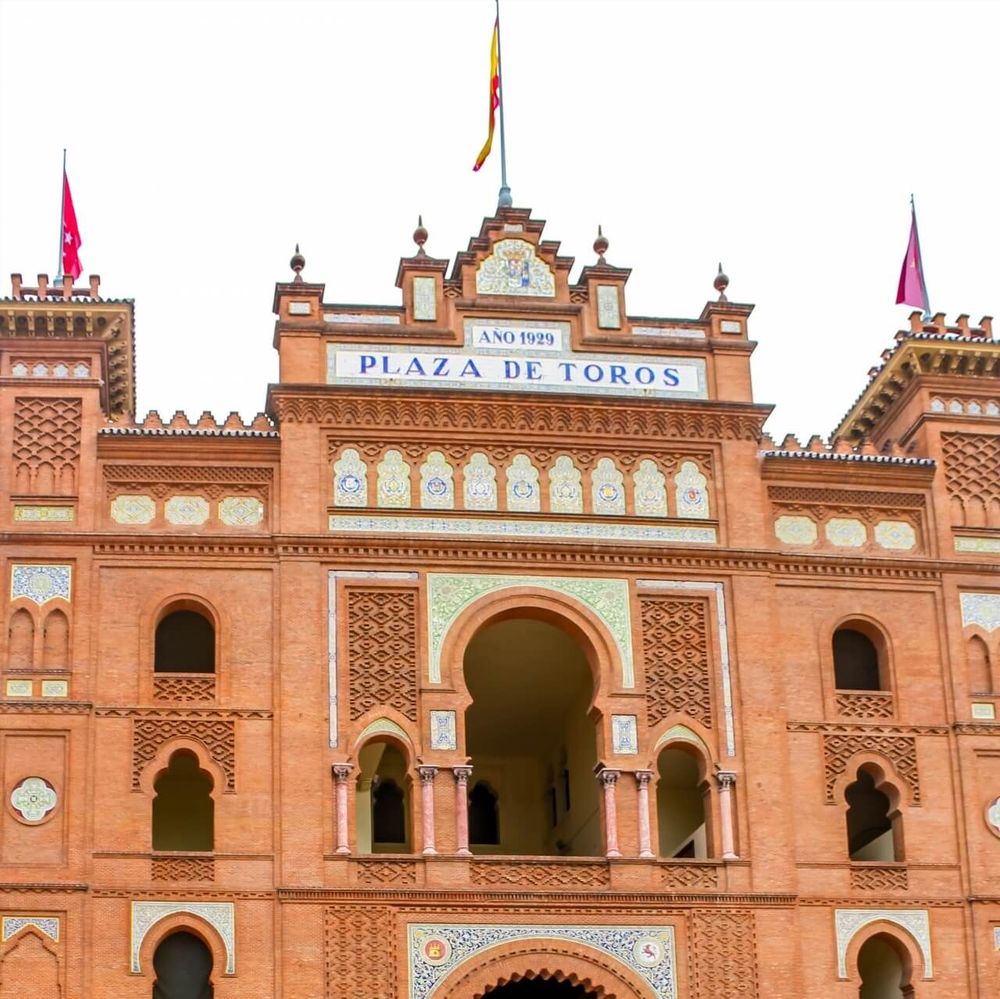
Yes, and it is a chance to step inside Europe's largest bullring: 23,798 seats and an arena 60 metres across. Opened on 17 June 1931 after nine years of works, it has a neo-Mudéjar red-brick facade decorated with azulejos made in Seville. The Bullfighting Museum, housed in its basement, is included in the guided tour. If you attend a bullfight, especially during the San Isidro Fair in May, bear in mind that shaded seats (sombra) cost two to four times more than sunny ones.
Plan your visit with our complete guide to Las Ventas bullring.
What is there to see at Atocha station in Madrid?
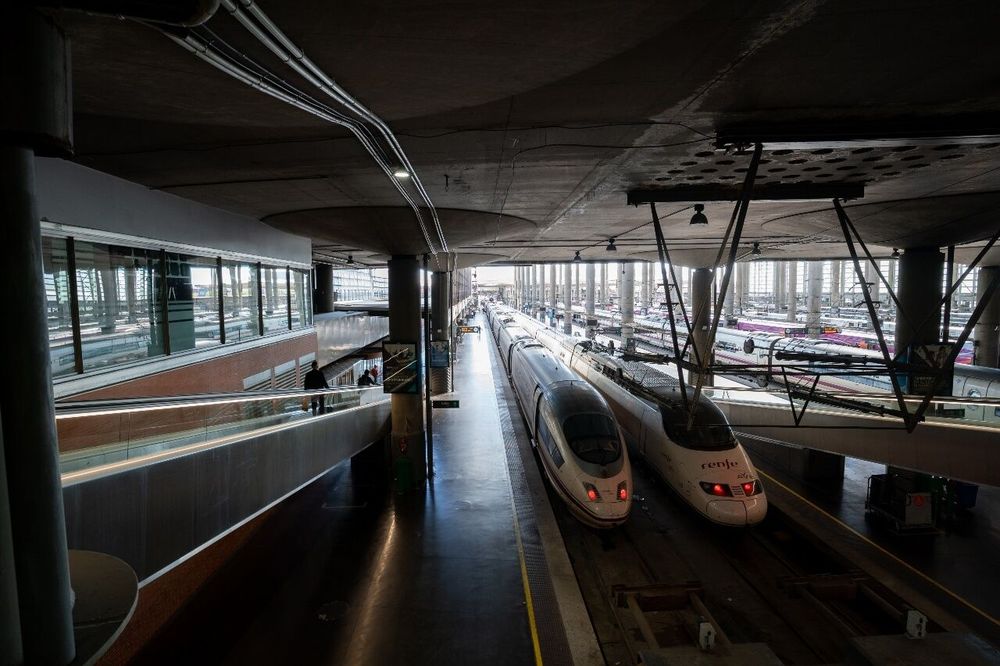
Atocha, Madrid's oldest station, hides a 4,000 m² tropical garden beneath its 1892 glass roof: over 7,000 plants from 260 species and hundreds of turtles in the ponds, at a steady 22 to 24 °C. Entry is free, no train ticket needed. The station is also home to the memorial to the 11 March 2004 attacks. On the practical side, Rafael Moneo's modern terminal handles AVE trains to Seville, Barcelona and Valencia, with a security check before the platforms, and connects underground to the Cercanías and the metro.
Get ready before you arrive with our guide to Atocha station.
How should you plan a visit to the Royal Palace and the Prado in Madrid?
The Royal Palace has over 3,400 rooms, against 700 at Versailles: allow one and a half to two hours, arrive before 9.30 am, and don't miss the Throne Room painted by Tiepolo or the Royal Pharmacy. Tickets cost €12. At the Prado, which displays around 1,700 works, focus on the first floor: Velázquez's Las Meninas and Goya's Black Paintings. Tickets are €15, the last two hours are free, and the Goya entrance is less crowded than the main one.
See every landmark worth your time in our guide to Madrid's must-see monuments.
Which local dishes should you try in Madrid?
Madrid's cooking is hearty and down to earth. For breakfast, huevos rotos combine fried eggs and chips; at tapas time, try soldaditos de Pavía, battered cod sticks, or oreja a la plancha, grilled pig's ear. The bocadillo de calamares is the city's signature sandwich, cocido madrileño is served in three courses in winter, and tripe-based callos are a Sunday family dish. For an afternoon treat, churros con chocolate are a must. The best tip: follow the locals to the table.
Discover all 14 dishes in our list of Madrid's culinary specialities.
Which Madrid neighbourhood suits you best for staying, going out or wandering?
The Sol, Plaza Mayor and Royal Palace triangle holds the major landmarks and can be walked in half a day. Malasaña, around Plaza del Dos de Mayo, keeps the spirit of the Movida alive with vintage shops and cocktail bars, while Chueca is the city's lively LGBTQ+ heart. Bohemian, multicultural Lavapiés hosts the Rastro on Sundays. La Latina and its taverns liven up the evenings, Salamanca lines up luxury boutiques and Michelin-starred tables, and Retiro offers its vast park.
Compare them with our article on which neighbourhood to visit in Madrid and our barrio-by-barrio guide to Madrid's neighbourhoods.
What unusual activities can you try in Madrid beyond the big sights?
Once you've ticked off the essentials, Madrid reveals itself through its people. Catch a flamenco show in a tablao, with drinks or dinner as an option, or even take a class at a flamenco school, open to all levels. Food lovers will enjoy a wine and tapas tour of four of the city's oldest bars, drinks included, or a tasting of three Spanish wines led by passionate professionals. For something quirky, you can also explore Retiro Park by Segway.
Find these ideas in our top 5 activities in Madrid.
What should you do in Madrid if you love art, parks and markets?
Madrid, Europe's highest capital at 657 metres, has three world-class art museums within a 15-minute walk of each other. At the Prado, allow at least three hours for Las Meninas, Goya's Majas and Bosch's Garden of Earthly Delights; free evening entry is popular, so book a timed slot. Retiro, a 125-hectare park, holds the Palacio de Cristal and a rose garden that peaks in May. Add the Royal Palace, Plaza Mayor early in the morning and the Sunday flea market.
Explore all 35 ideas in our guide to things to do in Madrid.
How should you plan a three-day itinerary in Madrid?
Day one covers royal and historic Madrid: the Royal Palace, with more than 3,000 rooms, the Almudena Cathedral and the Sabatini Gardens, then Plaza Mayor, Puerta del Sol, lunch at the Mercado de San Miguel and churros at the Chocolatería San Ginés, before an evening in the Barrio de las Letras and on Plaza Santa Ana. Day two is for the art triangle, Prado, Reina Sofía and Thyssen-Bornemisza, and the Retiro park; the Prado is free from 6 pm to 8 pm. The third day leaves room for the Sunday flea market or a day trip to Toledo.
Follow the day-by-day programme in our guide to visiting Madrid in 3 days.
Vos commentaires, idées et suggestions
Aucun avis pour le moment