© Shutterstock
 Votre guide Ryo
Madrid Neighborhoods 2026: The Complete Barrio by Barrio Guide to Stay, Go Out, and Wander
Madrid isn't one homogeneous block: its neighborhoods change character every ten minutes by metro. Searching "Madrid neighborhoods" in a search engine mostly returns lists of Spanish names without ever telling you which one matches your way of traveling. On one side, the baroque grandeur of the Plaza Mayor; on the other, the bohemian lanes of Malasaña, then the terraces of Lavapiés where fifteen nationalities cross paths on a single square. Understanding Madrid's neighborhoods before arriving completely changes the way you experience the city — far more than any list of monuments to tick off. The Ryo audio-guided tour of Madrid, from the Royal Palace to La Latina, follows exactly that logic: connecting the neighborhoods in the order in which they truly reveal themselves, on foot.
In this guide, you will discover why Chueca became, as early as the 1990s, the gay-friendly epicenter of all of Spain long before Madrid Pride grew into one of Europe's largest LGBTQ+ gatherings; why the Rastro market draws more visitors every Sunday than some national museums; how a former metro platform closed in 1966 became the city's most unusual attraction in Chamberí; and which street concentrates more luxury boutiques than any other thoroughfare in Spain. From Sol to Moncloa, this guide covers ten Madrid neighborhoods, each with its own rhythm, its own crowd, and the opening hours you need to know before you book. The Ryo audio-guided tour links the Royal Palace with Plaza Mayor to kick off the visit.
Sol and the Historic Center
Before diving in barrio by barrio, a clarification is in order: Madrid officially has 21 distritos, its administrative districts, themselves subdivided into 131 barrios. But the list of official neighborhoods almost never matches the one found in travel guides. Malasaña, Chueca, and La Latina are not administrative units: they are living neighborhoods, zones whose boundaries shift depending on who you ask. Sol, at the exact geographical center of Spain (the famous Kilómetro Cero), remains the most logical starting point for any visit: all other Madrid neighborhoods radiate outward from it in concentric circles.
Puerta del Sol and Plaza Mayor, the Beating Heart of the City
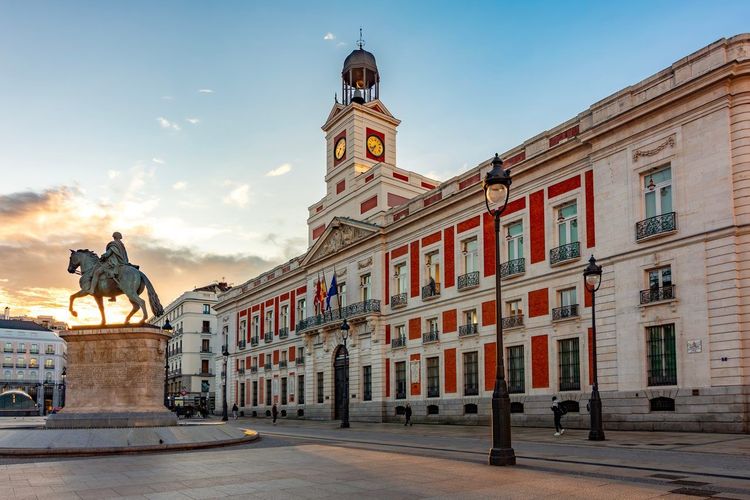
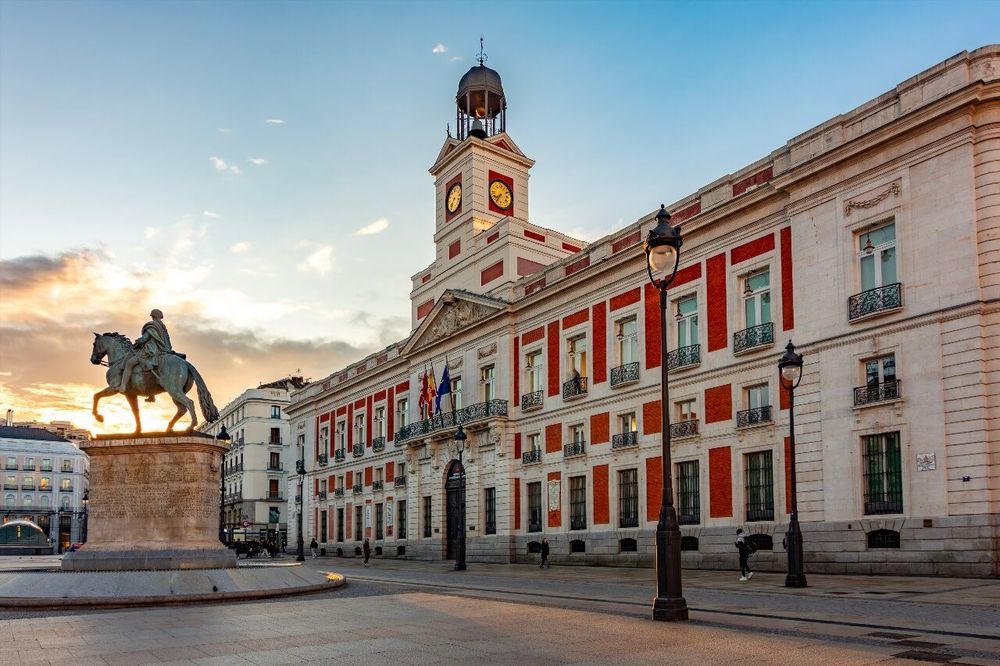
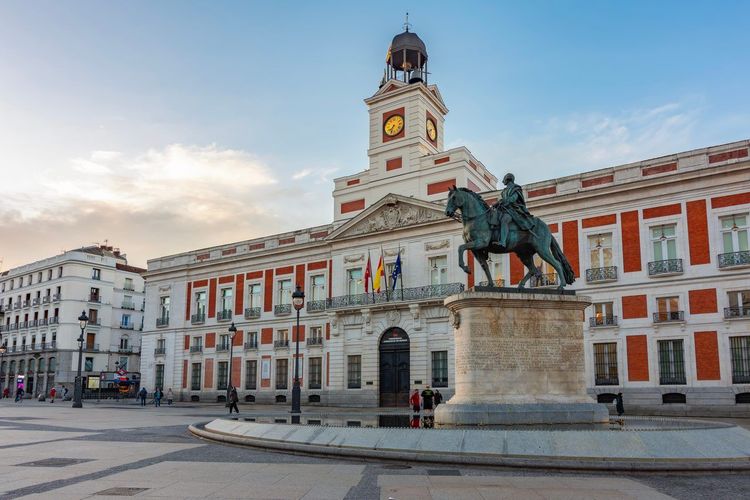
The Puerta del Sol is the square where all Madrileños meet, and where, every December 31st, tens of thousands of people swallow twelve grapes on the twelfth stroke of midnight in front of the Real Casa de Correos clock. Look for the ground plaque marking Kilómetro Cero of Spain's road network, or the statue of the bear and the strawberry tree (the Oso y el Madroño), the city's emblem since the 13th century.
Five minutes' walk away, the Plaza Mayor shifts to an entirely different register: stone arcades, uniform ochre facades commissioned by Philip III in the early 17th century, and nearly a hundred balconies that have witnessed public executions, bullfights, and today mostly tourists seated at the tabernas. The Casa de la Panadería, with its colorful frescoes repainted in the 1990s, closes off the north side of the square. Avoid the terraces pressed against the arcades, where a coffee can easily cost double the price found two streets away.
Just steps away, the Mercado de San Miguel (Plaza de San Miguel, s/n, 28005 Madrid, rated 4.4/5 on Google with 163,129 reviews), a 1916 iron structure fully restored, has been transformed into an upscale food market where you graze on tapas and vermouth standing up, among tourists and Madrileños stopping in after work. It's noisy, often packed after 8 p.m., but also the easiest place to sample croquetas, jamón ibérico, and seafood in a single evening without booking anywhere.
Habsburg Madrid and the Royal Palace
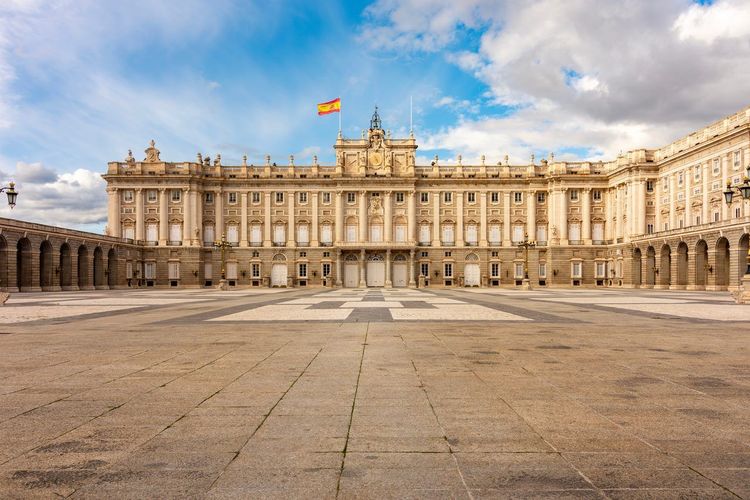
Continuing westward, the Royal Palace (Palacio Real) imposes its 3,418 rooms, a record in Western Europe ahead of Buckingham or Versailles, even though the royal family has not lived there since the 1960s and prefers the Palacio de la Zarzuela. The solemn changing of the guard, complete with cavalry and fanfare, takes place on the first Wednesday of the month at noon (except in January, August, and September); a more modest version is held on Wednesday and Saturday mornings. In both cases, admission is free: take your position on Calle de Bailén a good half hour before to get a clear view.
Directly opposite, the Almudena Cathedral surprises with its neo-Gothic interior in vivid colors, consecrated only in 1993 by John Paul II after more than a century of interrupted construction. The contrast with the classical sobriety of the neighboring palace is intentional.
Between the two buildings, the lanes of Habsburg Madrid (Madrid de los Austrias) retain an almost medieval layout: uneven cobblestones, 17th-century facades, and a few convents still inhabited by cloistered nuns who sell pastries through a wooden turnstile. This Sol–Mayor–Palacio triangle can be covered entirely on foot in half a day and serves as a reference point for locating all the neighborhoods that follow. The Ryo audio-guided tour follows this same triangle, from Puerta del Sol to the Royal Palace.
Malasaña and Chueca, Madrid's Arty and Cosmopolitan Spirit
Ten minutes' walk north of Gran Vía, the scenery changes radically. Malasaña and Chueca form two adjacent Madrid neighborhoods where history fades behind record shop windows, cocktail bars, and one of Europe's most vibrant LGBTQ+ scenes. This is where Madrid invented the Movida in the 1980s, the post-Franco cultural explosion that redefined the identity of an entire generation.
Malasaña, Bohemian Streets and an Independent Scene
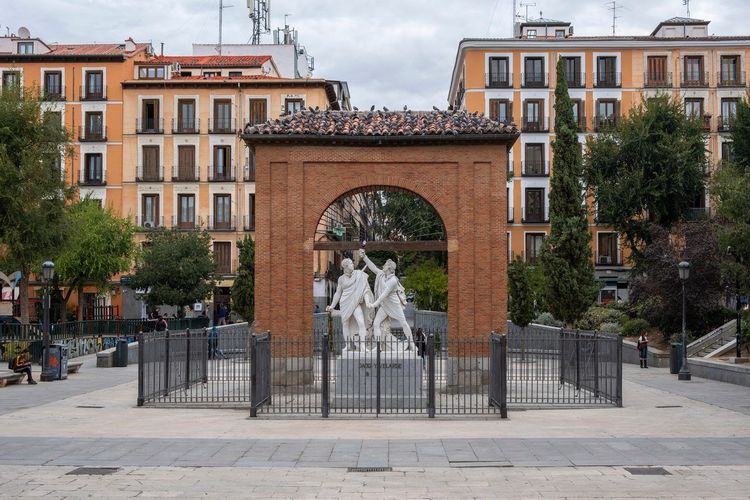
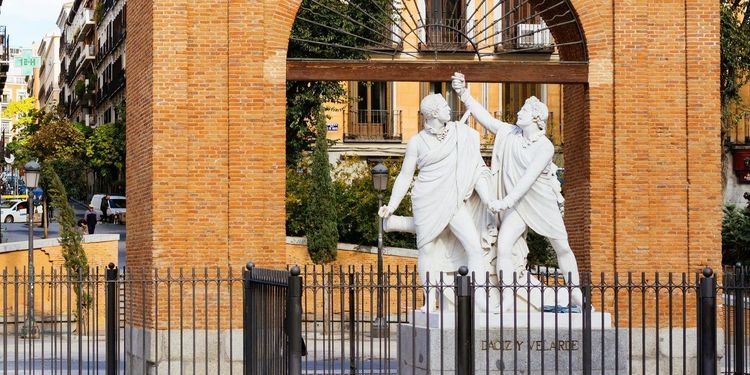
The heart of Malasaña beats on the Plaza del Dos de Mayo, where a miniature triumphal arch commemorates the uprising of May 2, 1808 against Napoleonic occupation, an episode immortalized by Goya in his most celebrated paintings. The square itself, with its benches occupied from aperitif hour onward, has been the neighborhood's gathering point for decades.
Around it, a maze of narrow streets concentrates vintage shops, vinyl record specialists, and secondhand clothing stores that have built the neighborhood's counter-cultural reputation since the Movida era of the Almodóvar years. Calle del Pez and Calle de la Palma are among the densest in cocktail bars and small independent galleries; you'll find just as many thirty-something Madrileños working remotely from a café as tourists drawn by the nightlife.
The neighborhood also hosts a notable concentration of independent bookshops and tattoo studios established since the 2000s, a sign of an acknowledged gentrification that has not entirely driven out historic businesses: a few centuries-old haberdasheries and hardware stores survive, wedged between concept stores. On Saturday mornings, before the bars open, it's the best time to wander without the crowds and spot the murals that regularly adorn the facades, renewed by local artist collectives.
During the day, Malasaña lends itself particularly well to a late brunch: its specialty coffee scene is one of the richest in the city, driven by a generation of baristas who returned from Australia or the UK with their machines. In the evening, the atmosphere shifts completely: by 11 p.m., terraces spill onto the roadway and the neighborhood becomes one of the capital's liveliest until 3 or 4 a.m., particularly on Thursdays — traditionally busier than Saturdays for locals, who tend to leave the weekends to the tourists.
A tip if you are staying in the area: choose streets perpendicular to Calle San Vicente Ferrer rather than the street itself — noticeably quieter at night while still just two minutes on foot from the action.
Chueca, a Festive and Cosmopolitan Neighborhood
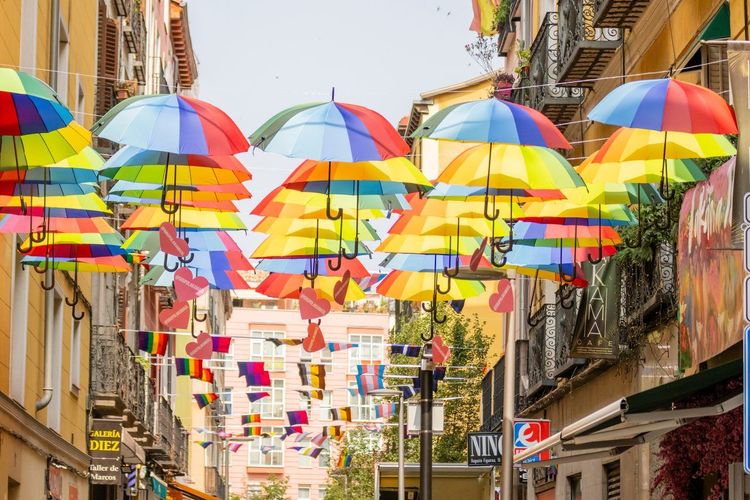
East of Malasaña, Chueca has established itself since the mid-1990s as Spain's reference gay-friendly neighborhood, driven by a community that literally transformed what was then a run-down area into one of the most sought-after in the capital. Every year in early July, Madrid Pride floods several of its streets with hundreds of thousands of people, making the event one of the largest LGBTQ+ pride celebrations in continental Europe.
The Mercado de San Antón (Calle Augusto Figueroa, 24, 28004 Madrid, rated 4.3/5 on Google with 23,247 reviews), a covered market on three floors opened in 1945 and fully renovated in 2011, captures the neighborhood's spirit: ground floor for everyday shopping, middle floor for counter tapas, and a rooftop with views over the rooftops for a more refined dinner. It is also one of the few Madrid markets open late into the evening.
Chueca cultivates a resolutely cosmopolitan identity: restaurants from around the world packed into a few city blocks, independent fashion boutiques, and a density of bars and clubs that makes it, alongside Malasaña, one of the two major nightlife hubs in the center. Unlike its more bohemian neighbor, Chueca pays more attention to its shop windows and terraces, with a clientele that is on average more international and a slightly higher going-out budget. The two neighborhoods actually complement each other very well in a single evening: tapas aperitif on the Chueca side, then a move to the Malasaña bars after midnight.
Budget-wise, expect to pay generally 20 to 30% more than in Lavapiés or La Latina for an equivalent dinner — the trade-off for often more attentive service and a more international culinary offer, from Japanese ramen to Lebanese cuisine and organic brunches. Boutique hotels have multiplied here in recent years, progressively replacing older residential buildings: a shift that worries some long-term residents, who are unsettled by rising rents.
If you're looking for where to stay to make the most of Madrid's nightlife without depending on public transport, Malasaña and Chueca remain the best central choices: everything is walkable, including Gran Vía and Sol just ten minutes on foot.
La Latina and Lavapiés, Working-Class and Multicultural Madrid
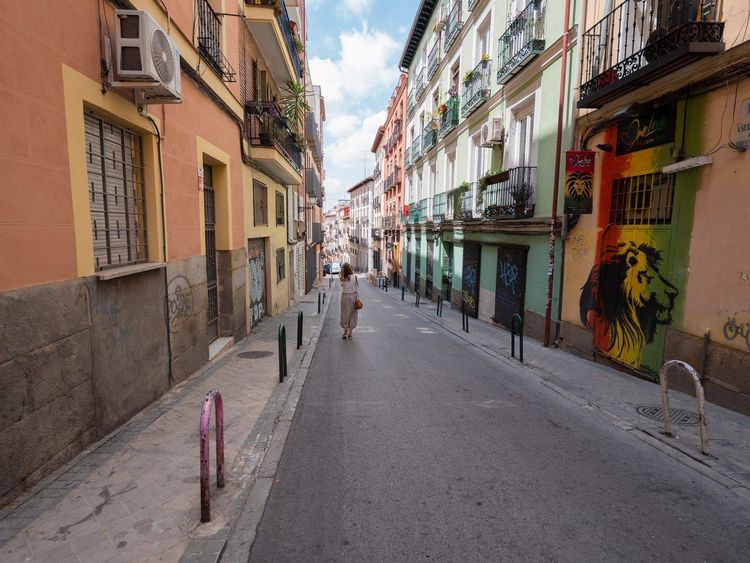
Heading south from Plaza Mayor, La Latina and Lavapiés rank among Madrid's oldest and most working-class neighborhoods — the ones that Madrileños themselves consider the most authentic. Here, there are few Haussmann-style buildings: the architecture is low-rise and irregular, inherited from a medieval layout that neither the major works of the 19th century nor recent property speculation has managed to fully erase.
La Latina, Tapas, Rastro, and Taberna Atmosphere
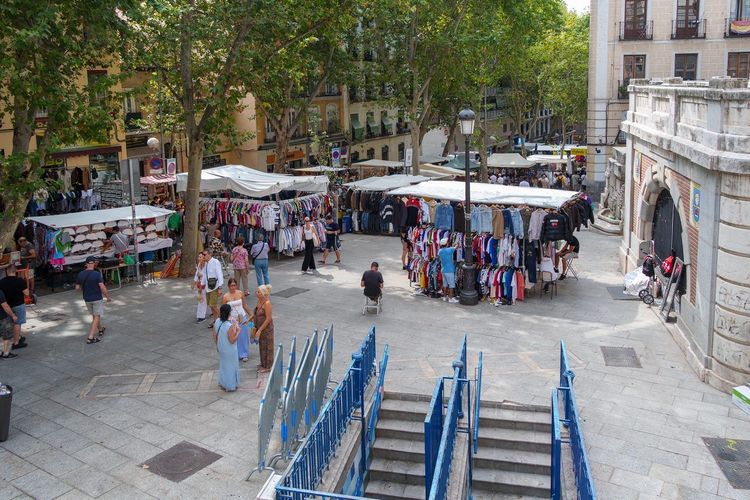
Calle Cava Baja alone concentrates around thirty century-old tabernas in under 400 meters, a record density even for Madrid. You eat standing up at the counter — raciones of callos or croquetas — in an atmosphere that never really quiets down between 1 p.m. and midnight. Sunday mornings change everything, however: that's the day of the Rastro, one of Europe's oldest flea markets, documented in this form since the 16th century and still open on Sundays and public holidays from 9 a.m. to 3 p.m.
Stretching nearly a kilometer along Calle de la Ribera de Curtidores, several hundred stalls sell vintage clothing, antiques, vinyl records, and all manner of bric-a-brac, drawing more weekly visitors than some national museums. Arrive before 10 a.m. if you want to avoid the crush and leave with real finds rather than the latest tourist T-shirts.
The local practice of tapeo involves moving through several bars in an evening, having a tapa or two at each stop rather than settling in one establishment for long. La Latina is perfectly suited to it given the concentration of its venues: in an hour and a half, you can easily visit four or five tabernas without ever walking more than two minutes between stops. To explore this facet of Madrid culture more deeply, our Ryo guide to Madrid's culinary specialties details the dishes not to miss, from callos a la madrileña to croquetas de jamón.
For the rest of the week, La Latina settles into a quieter pace, punctuated by the bells of the Basílica de San Francisco el Grande, whose 33-meter dome remains one of the largest in Spain, decorated with frescoes painted in part by a young Goya before he became the official court painter.
Lavapiés, Melting Pot and Street Art
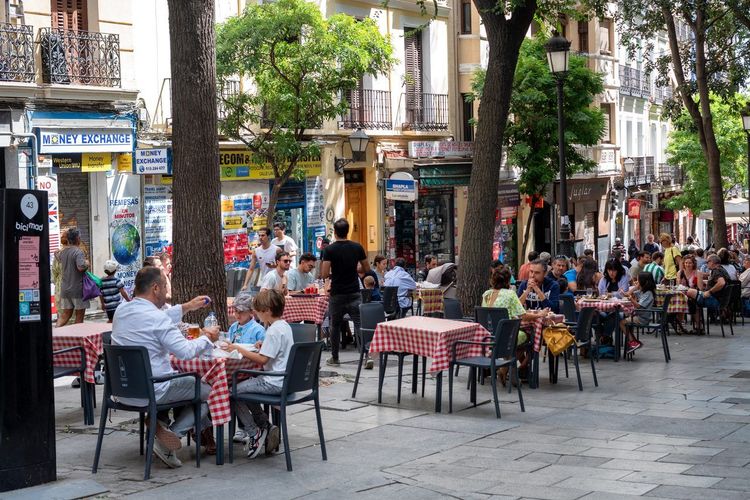
Adjacent to La Latina yet radically different in atmosphere, Lavapiés is arguably Madrid's most multicultural neighborhood: dozens of nationalities are represented here, from Bangladesh to Senegal, China, and Latin America — a diversity rare in a Spanish capital that remains relatively homogeneous elsewhere.
This mix is visible in every shop window: African grocery stores, affordable Indian restaurants, traditional tapas bars, and specialty cafés follow one another along the same streets with no apparent logic. The Plaza de Lavapiés (Plaza de Lavapiés, 28012 Madrid, rated 4.2/5 on Google with 4K reviews), the neighborhood's geometric heart, serves as an impromptu stage for street concerts and outdoor screenings in summer.
The neighborhood has also established itself as one of Madrid's top street art destinations: monumental murals on blank gable walls, political stencils, committed collages. La Tabacalera, a former tobacco factory converted into a self-managed cultural center, regularly hosts free exhibitions that draw a younger, more alternative crowd than the rest of the historic center. Count Lavapiés among the neighborhoods in full transformation: rents have been climbing for several years under the pressure of gentrification that both worries existing residents and attracts a new generation of independent businesses.
This diversity translates directly onto the plate and into the wallet: Lavapiés remains one of the cheapest neighborhoods to eat in Madrid, with full set lunches for around 12 to 15 euros in Indian or Senegalese restaurants on Calle Argumosa, while a comparable meal would easily cost double in Salamanca or Chueca. Calle Argumosa itself, lined with shaded terraces, serves as the neighborhood's open-air living room from the first warm days onward, particularly busy at the end of the week among a mix of long-time residents and young professionals who have recently moved in.
Between La Latina and Lavapiés, the boundary remains porous: many Madrileños use both names almost interchangeably to describe this large working-class neighborhood south of the center, which explains why some tourist maps simply merge the two.
Barrio de Las Letras and Gran Vía, Literary Quarter and Grand Boulevards
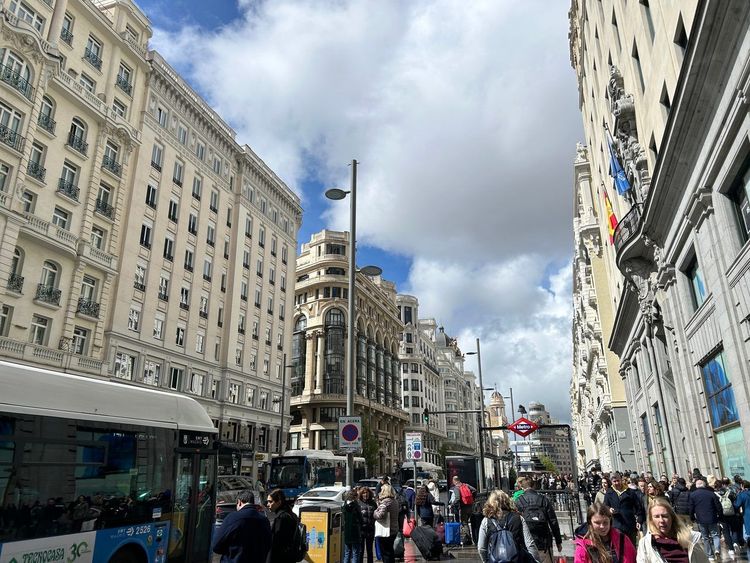
East of Sol, the scale shifts: the Barrio de Las Letras cultivates a quiet literary atmosphere while Gran Vía, five minutes' walk away, stretches its monumental facades across nearly 1.3 kilometers. These two Madrid neighborhoods complement each other perfectly in a single afternoon's walk.
Barrio de Las Letras, in the Footsteps of Cervantes
The Barrio de Las Letras takes its name from the Golden Age writers who lived and are buried in its streets: Cervantes, Lope de Vega, and Quevedo all resided within a few hundred meters of one another in the 17th century. Bronze-lettered quotations are embedded in the pavement of Calle de las Huertas, a free literary trail to follow at leisure through the lanes.
The Casa Museo Lope de Vega preserves the author's home intact, with a garden planted with species mentioned in his own plays — a rare and meticulous reconstruction of daily life in a Golden Age playwright's household. The guided visit is free but must be booked in advance, in slots of just a few people at a time.
One anecdote captures the neighborhood's spirit well: Cervantes and Lope de Vega, notorious literary rivals during their lifetimes, ended up buried a few hundred meters apart — the former in the Convent of the Trinitarias Descalzas, where his remains were located in 2015. Their respective homes can still be visited in about an hour each. The neighborhood name itself only became widely used recently: before that, people simply spoke of the streets around the Prado, with no distinct tourist identity. The neighborhood had long been quieter than its neighbors, but the recent proliferation of wine bars and small creative cuisine restaurants has made it one of Madrid's rising dinner destinations, in a far more intimate setting than Malasaña or Chueca.
Gran Vía, Theaters and Art Deco Architecture
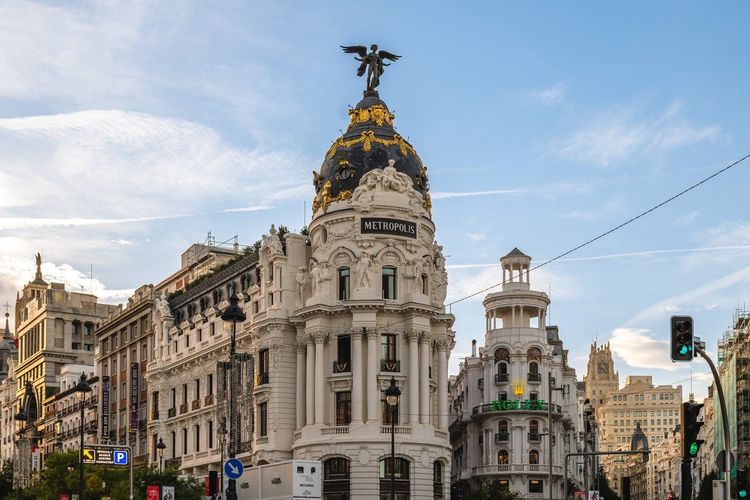
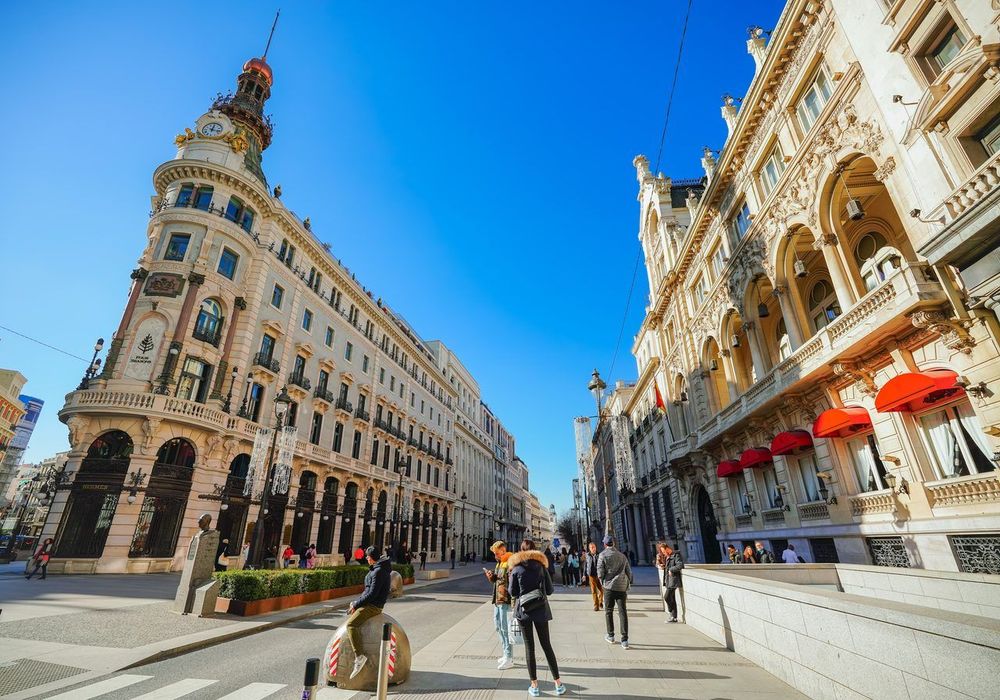
Nicknamed Madrid's Broadway, Gran Vía lines up Art Deco and neo-Baroque buildings constructed between 1910 and 1930, a period of urban transformation so radical that several historic neighborhoods had to be demolished to lay out the avenue. The Edificio Metrópolis, with its gilded dome and winged statue at the top, remains one of the most photographed buildings in the city.
The avenue also concentrates the highest density of theater venues and musicals in Spain, earning this stretch the nickname of the theater district. The Círculo de Bellas Artes (Calle de Alcalá, 42, 28014 Madrid, rated 4.4/5 on Google with 33,974 reviews), with its paid panoramic rooftop accessible without a reservation, offers one of the best views over the city center rooftops for the price of an entry ticket — far more affordable than most of the nearby hotel rooftops.
On the shopping front, Gran Vía clearly caters to the mass market, the polar opposite of Salamanca's exclusivity: international chains, department stores, and sports shops occupy the ground floors of most of the historic buildings, a commercial conversion that has sometimes rankled heritage advocates. At night, the avenue stays lit and busy well after the shops close, sustained by post-show foot traffic that never really dies down before 1 or 2 a.m., even on weekdays.
Salamanca, Madrid's Upscale Shopping Neighborhood
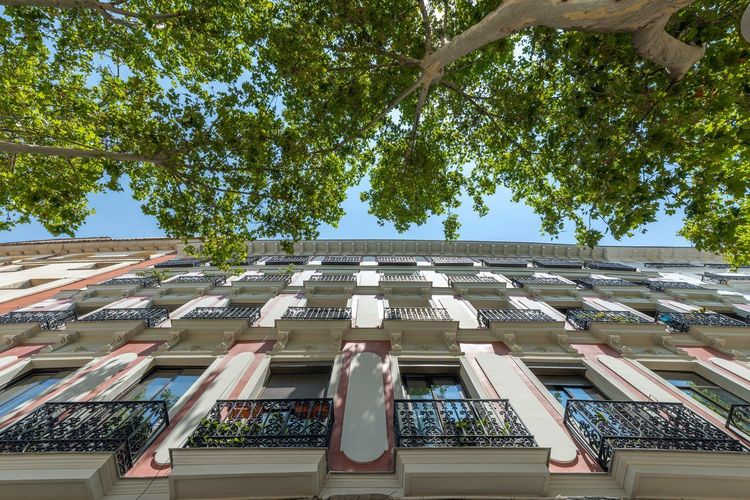
Salamanca holds a singular status in the mental geography of Madrileños: built from 1862 onward on a grid plan far removed from the medieval maze of the historic center, it is the most upscale of Madrid's neighborhoods, where the price per square meter reaches the highest levels in the capital.
The Calle de Serrano (Calle de Serrano, 28001 Madrid, rated 4.5/5 on Google with 10K reviews) is home to the famous Milla de Oro, the golden mile of Madrid shopping: Loewe, Hermès, Chanel, and virtually every major international luxury house have boutiques here within under two kilometers, alongside more discreet Spanish designers. Allow a full morning to walk the street without rushing.
The atmosphere is radically different from La Latina or Lavapiés: facades are impeccably maintained, sidewalks are wide and tree-lined, and you are more likely to encounter well-to-do families walking their dogs than groups of tourists. The neighborhood is also home to some of the city's best fine-dining restaurants, several Michelin-starred, as well as the Museo Lázaro Galdiano, a private collection bequeathed to the state that remains one of the least-visited and most underrated museums in the center.
Salamanca is not suited to every budget or travel style: it is a sound choice if you want residential calm, maximum security, and proximity to major brands, but far less so if you are coming to Madrid for its nightlife or its working-class energy. The contrast with the historic center neighborhoods, barely twenty minutes' walk away, encapsulates the social diversity of the Spanish capital.
On the accommodation front, Salamanca concentrates a large share of the capital's five-star hotels, with rates that regularly exceed double the Madrid average for an equivalent room. It is also one of the best-served neighborhoods by the metro (lines 4, 5, and 9), which partly offsets the lack of local nightlife: there is nothing stopping you from sleeping in Salamanca and going out in Malasaña or Chueca, fifteen minutes away by metro. Families with children also appreciate this area for its relative calm, away from the tourist bustle of the center, while still within ten minutes' walk of the great museums of the Art Triangle near the Retiro.
Retiro and the Art Triangle
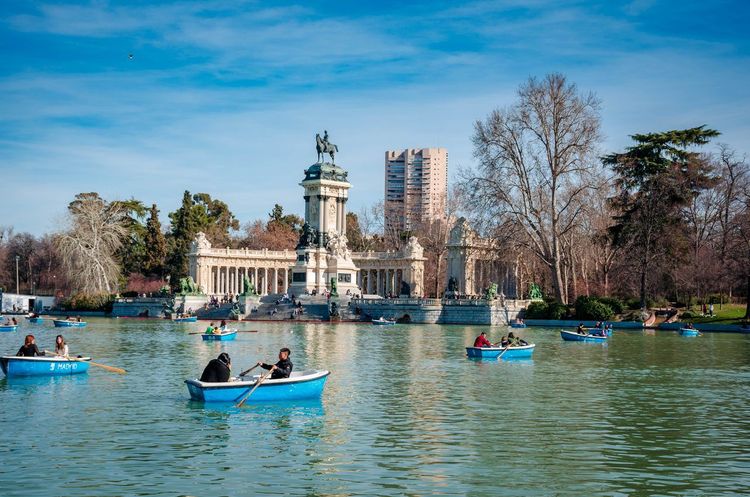
Between Las Letras and Salamanca stretches one of Europe's most culturally dense ensembles: this is the area that gives Madrid's neighborhoods their cultural reputation, with a 125-hectare royal park flanked by three museums that, on their own, would justify a trip. The city's lung and brain, united in under one square kilometer.
Retiro Park, Madrid's Green Lung
Handed over to the city in 1868, the Parque del Retiro remains one of the rare large royal parks in Europe with completely free and open access, from sunrise until midnight in summer. Its 125 hectares welcome more visitors every year than most of the capital's paid monuments, and the park has been a UNESCO World Heritage Site since 2021 as part of the "Landscape of Light," alongside the neighboring Paseo del Prado.
The Palacio de Cristal (Paseo de Cuba, 4, 28009 Madrid, rated 4.5/5 on Google with 47,811 reviews), a vast iron-and-glass greenhouse built in 1887 for an exhibition on the Philippines, then a Spanish colony, now serves as a temporary exhibition space for the Reina Sofía, generally free and without reservation. Nearby, the Retiro pond offers rowboat rentals for around 7 euros for 45 minutes on weekdays, slightly more at weekends — an activity popularized by a famous Sorolla painting depicting it.
On Sunday mornings, head toward the bandstand near the Puerta de Alcalá: Madrileños gather there with their families, among joggers, impromptu tai-chi classes, and street musicians, in an atmosphere that feels far more local than touristy.
The Art Triangle: Prado, Thyssen-Bornemisza, and Reina Sofía
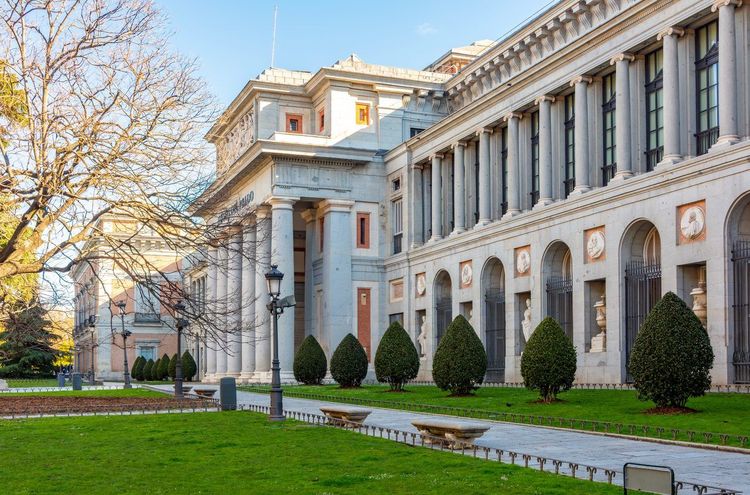
To the west of the park, three museums form what Madrileños call the Art Triangle, aligned along less than 1.5 kilometers of the Paseo del Prado. The Prado Museum houses one of the world's greatest collections of European painting, with more than 8,000 works including the must-sees by Velázquez, Goya, and Hieronymus Bosch. Admission is free at the end of the day: Monday to Saturday from 6 p.m. to 8 p.m., and Sunday from 5 p.m. to 7 p.m.
The Thyssen-Bornemisza Museum, a private collection ceded to the Spanish state in the early 1990s, intelligently fills the Prado's gaps with Impressionism and modern art — a more digestible route in an hour and a half.
Finally, the Reina Sofía Museum closes the triangle with 20th-century art, dominated by Picasso's Guernica, the single work for which some visitors cross the city without seeing anything else. To explore this monumental ensemble in greater depth, our Ryo article on Madrid's essential historic monuments outlines a complete itinerary through these three collections and the surrounding heritage.
On the practical side, the Paseo del Arte combined ticket at around thirty euros grants access to all three museums during the same period — a real time-saver in high season when the wait at the Prado can exceed 45 minutes without a reservation. Plan a full day if you genuinely want to appreciate all three collections rather than rushing through them: museum fatigue sets in by the second hour, and the Reina Sofía deserves better than a quick dash before closing time. The area around the Retiro is also among the most sought-after for accommodation, combining residential calm, immediate greenery, and direct access to the great museums — at the cost, however, of some distance from the nightlife of the center. The Ryo audio-guided tour for this itinerary swings by the Prado Museum and Puerta de Alcalá, useful for spacing out the walk.
Chamberí, Authentic and Residential Madrid
North of Malasaña, Chamberí is among the Madrid neighborhoods least frequented by tourists, yet it harbors one of the city's most unusual attractions: Andén 0, a metro station closed in 1966 and converted into an underground museum, with its period advertising posters and wooden ticket booths preserved intact. Admission is free, by reservation, and the visit lasts around forty minutes.
Residential and quiet, Chamberí wins people over primarily through its neighborhood life: local markets, traditional bakeries, and a remarkable concentration of good classic Spanish cuisine restaurants, without the tourist pressure weighing on equivalent addresses in the historic center. The Mercado de Vallehermoso (Calle Vallehermoso, 36, 28015 Madrid, rated 4.4/5 on Google with 6,875 reviews), smaller and more authentic than its counterparts in Chueca or San Miguel, is frequented primarily by local residents.
The neighborhood also houses the Sorolla Museum, set in the studio-home of the Valencian painter, with its Andalusian garden and canvases bathed in Mediterranean light: one of Madrid's most intimate museums, rarely crowded even in August, and one of the few where you visit both an artwork and a lived-in space simultaneously.
If you want to understand how Madrileños actually live rather than simply following the classic tourist circuit, an afternoon in Chamberí is well worth the detour — all the more so since the neighborhood is very well connected to the rest of the city by metro. It is also one of the areas where rents remain more reasonable than in Salamanca or the historic center, an argument that is attracting a growing number of long-term expat residents.
Moncloa-Argüelles, Student Neighborhood and Panoramic Viewpoints
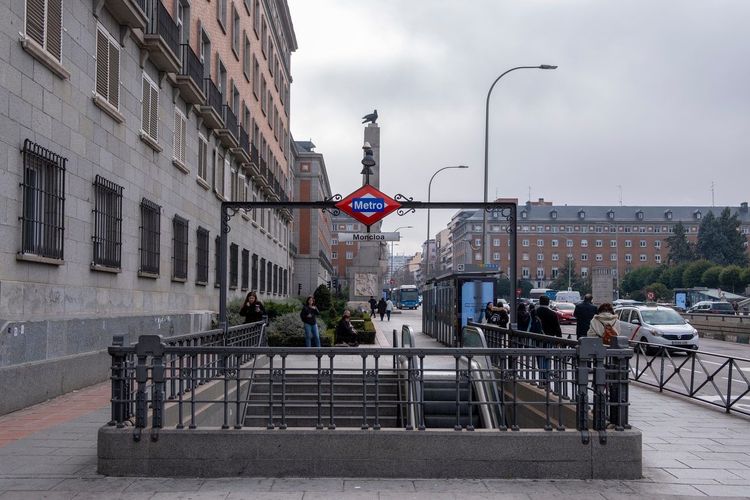
West of the center, Moncloa and Argüelles rank among Madrid's most affordable neighborhoods, sustained by the presence of several major university campuses and a student population that keeps prices down.
Moncloa, Student Life and the Ciudad Universitaria
The Ciudad Universitaria (Ciudad Universitaria, 28040 Madrid), the main campus of the Complutense University inaugurated in the 1920s, brings together tens of thousands of students across a vast complex of faculties, residences, and sports grounds with free access. The neighborhood clearly lives to the beat of the academic calendar: lively and noisy during term time, noticeably quieter in summer.
This student population has shaped the neighborhood's offer: budget bars, some of the cheapest set lunches in the city, and a nightlife concentrated on Thursday evenings rather than weekends, in line with university timetables. It is also one of the most affordable areas for staying in Madrid on a tight budget, provided you accept being a little further from the historic center.
Faro de Moncloa, Panoramic Views over the City
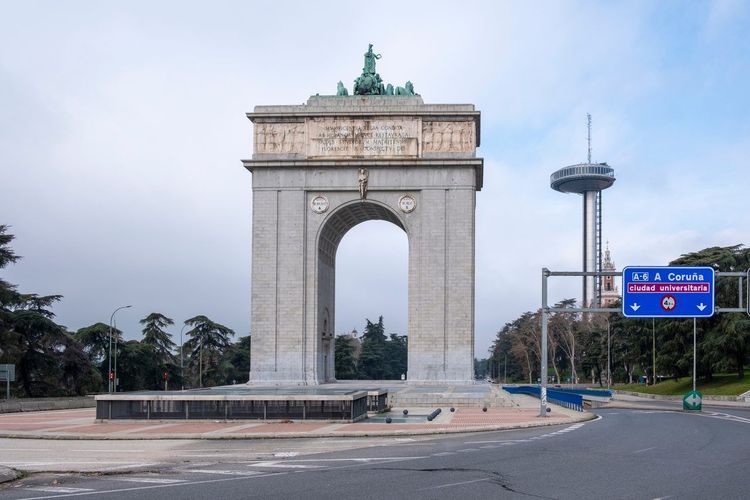
The Faro de Moncloa, a 92-meter observation tower built in 1992, offers one of the most complete 360-degree views over Madrid, often cited ahead of the paid rooftops in the center for its value for money. The elevator takes just a few seconds and the ticket is considerably cheaper than a drink on a hotel terrace.
Nearby, the Templo de Debod (Calle Ferraz, 1, 28008 Madrid, rated 4.4/5 on Google with 69,179 reviews), a 2nd-century BC Egyptian temple gifted by Egypt to Spain in 1968 in thanks for its help during the rescue of the Nubian temples, draws visitors above all at sunset, when the raking light on the stones and surrounding pools produces one of the city's most beautiful free spectacles.
Which Neighborhood to Choose Based on Your Traveler Profile
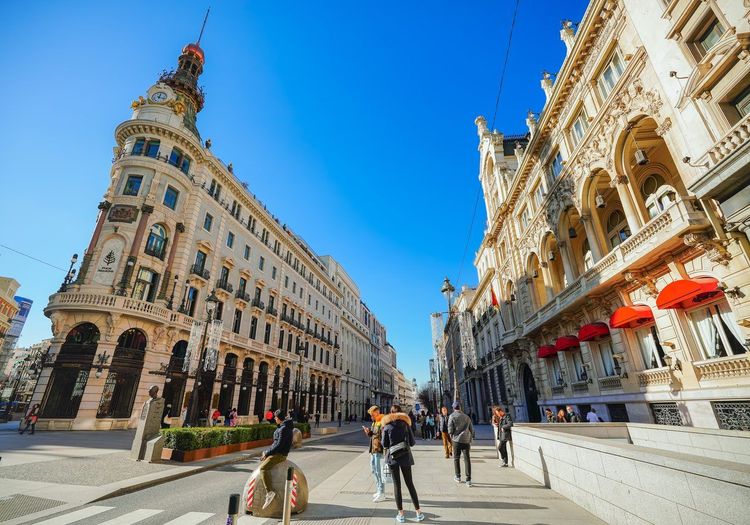
The real question remains the one that arises at booking time: where exactly to put your suitcase down? The answer depends less on a list of monuments to see than on your pace of travel, your budget, and what you expect from your evenings. Keep a simple mental map of Madrid's neighborhoods: the historic center (Sol, Las Letras, La Latina) concentrates short walking distances, while Salamanca, Chamberí, and Moncloa form a second, more residential ring ten or twenty metro minutes from the main sights. There are as many good neighborhoods in Madrid as there are ways to travel there.
You're traveling with family. Salamanca and the Retiro top the list of best neighborhoods for families with children: wide streets, safe sidewalks, parks immediately at hand, and restaurants that accommodate earlier dinner times than those of Madrileños themselves, who rarely eat before 9 p.m. Retiro Park, with its rowboat pond and playgrounds, can easily fill an entire morning without tiring the youngest visitors. Avoid staying directly on the late-night strips of Malasaña or Chueca: terrace noise after midnight is a real issue, even on upper floors, as double-glazed windows are not standard in the center's older buildings. La Latina, less nocturnal despite its reputation as a lively neighborhood, is an interesting alternative if you prefer to stay close to the historic center while keeping quieter nights.
You're between 18 and 25. Malasaña and Lavapiés win hands down for this age group: more affordable youth hostel and shared apartment prices, nightlife within walking distance, and a bar scene varied enough to fill several evenings without ever going back to the same place. Moncloa remains a valid option if budget takes priority over everything else, with the advantage of a local population the same age, but the drawback of being further from the historic center, which mechanically lengthens late-night journeys. Conversely, Chueca suits those looking for a festive but slightly more polished atmosphere, with a marginally higher going-out budget than Malasaña.
You're traveling as a couple. The Barrio de Las Letras and La Latina make a particularly appealing duo for a romantic stay: intimate restaurants, quieter streets than Malasaña in the evening, and a reasonable walking distance from all the major sights, from the Retiro to the Royal Palace. Charming accommodations — often converted apartments rather than chain hotels — have multiplied here in recent years. Chamberí is a less obvious but equally appealing alternative for a couple seeking authenticity over nightlife, with a residential Spanish neighborhood atmosphere well away from tourist bustle.
You're traveling for business. Salamanca and the area around Gran Vía concentrate the majority of business hotels and the best transport connections to Barajas airport and Atocha station, the main rail hub for the rest of Spain and for France by AVE. The AZCA district, further north toward Nuevos Ministerios, rounds out this offer with a concentration of office towers and international hotels, albeit in an architecturally less charming setting than the historic center. For a short business trip, proximity to a metro station remains the number-one criterion, well ahead of the neighborhood's charm.
If none of these profiles matches your situation exactly, our Ryo article dedicated to choosing a neighborhood in Madrid details finer combinations based on the length of your stay. And to turn this theory into a real-life walk, the Ryo audio-guided tour of Madrid, from the Royal Palace to La Latina connects several of these neighborhoods together, with audio commentary that puts each place in its historical context as you walk.
Getting Around Madrid's Neighborhoods and Areas to Be Aware Of
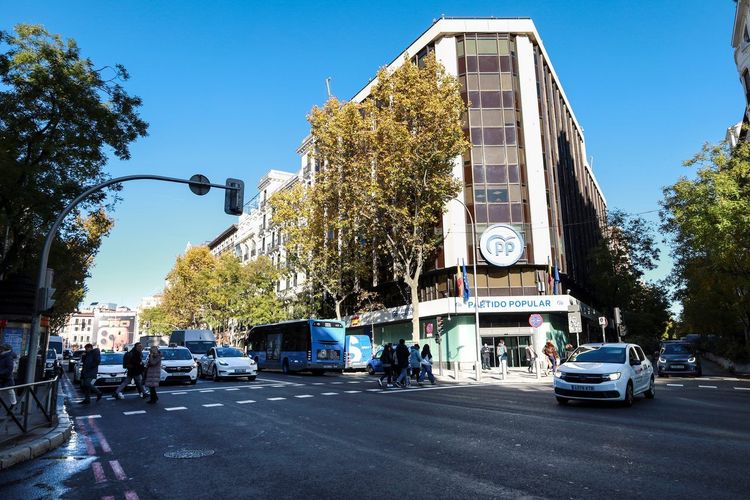
One final practical note before you pack your bags: how to get from one barrio to another, and which areas genuinely warrant your attention.
Metro, Bus, and on Foot: Moving Between Neighborhoods
Madrid's metro network, one of the most extensive in Europe with 13 lines and nearly 300 stations, is by far the fastest way to link neighborhoods that may be several kilometers apart: expect roughly 15 to 25 minutes to cross the city from east to west. A single ticket costs between 1.50 and 2 euros depending on the distance within Zone A, but the tourist pass (Abono Turístico), valid for 1 to 7 days, becomes cost-effective from three journeys a day onward.
For the historic center neighborhoods (Sol, La Latina, Malasaña, Las Letras, Chueca), walking is often faster than the metro once waiting and transfer times are factored in: these five neighborhoods fit entirely within a radius of one and a half kilometers. Urban buses, less used by visitors, nonetheless offer an excellent way to see the city above ground without spending a fortune, particularly the circular lines that serve most of the neighborhoods covered in this guide. The BiciMAD bike-share scheme usefully rounds out the options, with dense station coverage throughout the center, although the hilly terrain in some areas may discourage less athletic riders.
Areas Worth Extra Caution and Safety Tips
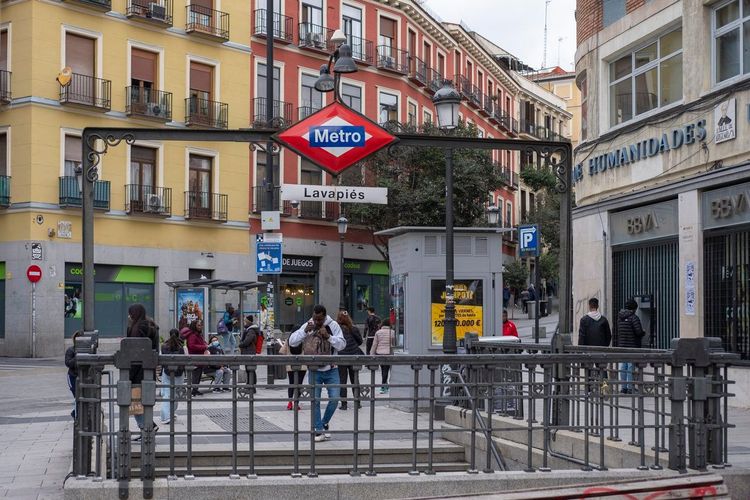
The question of which Madrid neighborhoods to avoid comes up in every pre-trip conversation, and the answer is reassuring: unlike some other European capitals, Madrid has no area that is genuinely dangerous for a visitor who takes the usual precautions. A few spots do warrant extra vigilance after dark, particularly around Tirso de Molina metro station and certain secondary streets in southern Lavapiés, where bag snatching is more common than elsewhere — without this calling into question the neighborhood's daytime tourist appeal.
The area around Atocha station, busy and generally safe during the day, calls for the same standard caution as any major European station in the evening: keep luggage in sight, bags closed in front of you in crowds. More broadly, pickpockets target the busiest tourist areas first — Puerta del Sol, Plaza Mayor, and metro line 5 — rather than the residential peripheral neighborhoods, which are often wrongly perceived as riskier simply because they see fewer foreign visitors. The best protection remains, as everywhere, common sense: bag worn in front on crowded transport, phone not left on show at terrace tables, and normal vigilance after 1 a.m. in any nightlife neighborhood, including Malasaña or Chueca.
FAQ
What Is the Best Neighborhood to Sleep in Madrid?
The best Madrid neighborhoods for sleeping depend on your pace: Sol and Las Letras suit those who want to do everything on foot from a central point, Malasaña and Chueca suit travelers who prioritize nightlife, and Salamanca suits those seeking residential calm. For a first visit, the historic center remains the safest choice, combining short distances with direct access to the main sights.
Which Madrid Neighborhoods Should Be Avoided?
Madrid has no truly dangerous neighborhood for a vigilant visitor. A few streets around Tirso de Molina metro station and certain secondary streets in southern Lavapiés call for extra caution at night, as do the most touristy areas (Sol, Plaza Mayor) where pickpockets remain active during the day. Common sense is more than enough to avoid any trouble.
How Many Neighborhoods Does Madrid Have?
Officially, Madrid has 21 distritos, its administrative districts, themselves divided into 131 barrios. The names most familiar to visitors — Malasaña, Chueca, La Latina, or Lavapiés — are actually informal living zones rather than precise administrative units, which explains why their boundaries vary slightly from one map to another.
Which Is the Liveliest Madrid Neighborhood at Night?
Malasaña and Chueca compete for the title depending on the evening: the former draws a more local and alternative crowd, particularly on Thursdays, while the latter cultivates a more international and festive atmosphere driven by its LGBTQ+ scene. These two neighboring districts combine easily into a single night out.
Where to Stay in Madrid with Children?
Salamanca and the Retiro area remain the most family-friendly choices: wide and safe streets, immediately accessible parks, and restaurants that accommodate earlier dinner times than those favored by Madrileños. Avoid staying directly on the late-night strips of Malasaña or Chueca if children's sleep is a priority.
Which Is the Most Upscale Neighborhood in Madrid?
Salamanca unquestionably holds that title, with its Milla de Oro along Calle de Serrano where all the major international luxury brands have boutiques, some of the highest real estate prices in Spain, and a noticeably more subdued residential atmosphere than the rest of the city center.
Which Neighborhood Should You Visit First in Madrid?
Sol and the Palacio Real–Plaza Mayor triangle form the most logical starting point: it is the geographical and historical center of the city, from which all other neighborhoods radiate in concentric circles easily reached on foot or by metro.
Madrid is not summed up by a handful of monuments: it is a mosaic of barrios, each deserving at least a dedicated half-day. From the historical grandeur of Sol to the multicultural energy of Lavapiés, through the quiet elegance of Salamanca and the sweeping views from the Faro de Moncloa, Madrid's neighborhoods are best discovered on foot, one after another, rather than by ticking off a list of must-see museums.
To turn this guide into a concrete itinerary, the Ryo audio-guided tour of Madrid, from the Royal Palace to La Latina is the simplest way to connect several of these neighborhoods in a single outing, with the history of each street narrated directly in your ear as you walk. Whether you have two days or a week, the order of your visits makes all the difference: Ryo helps you plan it barrio by barrio, without wasting time on unnecessary journeys.
À lire également