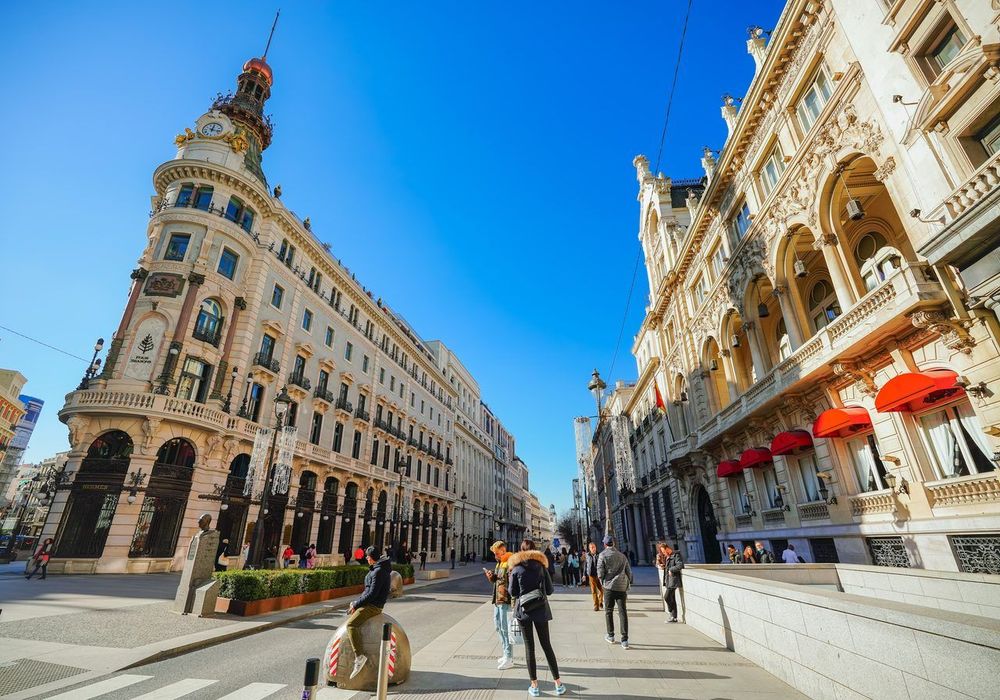
© Shutterstock
 Votre guide Ryo
Visiting Madrid in 3 Days: Complete Itinerary 2026
Three days in Madrid is just enough time to understand why locals dine at 10 pm and still fill the terraces well past midnight. Visiting Madrid in 3 days means choosing an itinerary that alternates royal palaces, world-class museums and neighbourhoods where the city tells its story differently — from Sunday flea markets to unmarked tapas bars. The Ryo Madrid audio guide route traces exactly that thread, from the Royal Palace to La Latina, and serves as the backbone of the itinerary that follows.
In three full days, you can take in a palace of more than 3,000 rooms, three museums you can walk between in a single stroll, a railway station hiding a tropical greenhouse of over 7,000 plants, a flea market centuries old, and a day trip to a UNESCO World Heritage city. This guide breaks it down day by day: what to see, where to eat between visits, where to stay depending on your budget, and how to fit in a day trip to Toledo without disrupting the schedule — everything you need to turn a long weekend into a genuine Spanish city trip without sacrificing the essentials.
Day 1: Historic and Royal Madrid
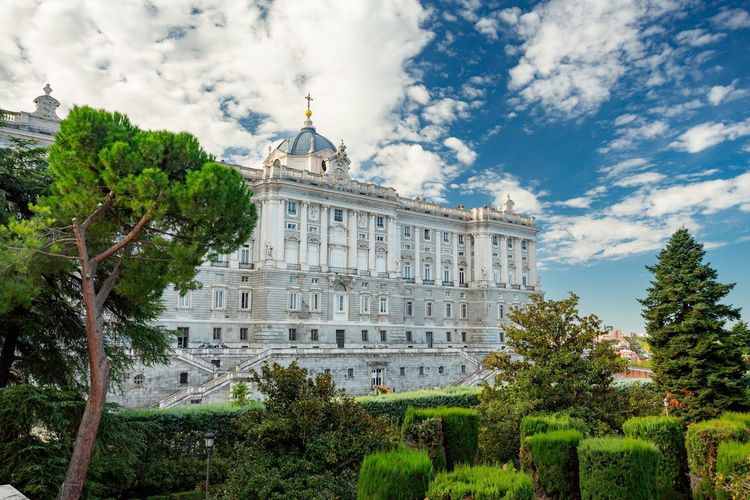
The first day logically starts at the pinnacle of Spanish power, before gradually descending towards the squares and alleyways of the historic centre.
Royal Palace, Almudena Cathedral and Sabatini Gardens
The Royal Palace of Madrid has more than 3,000 rooms spread across nearly 135,000 m², making it the largest royal palace in Western Europe by habitable floor space, surpassing Buckingham Palace. The royal family no longer lives there day to day but uses it for state ceremonies, which leaves the majority of the state rooms open to visitors for most of the year.
Allow an hour and a half for the interior visit, at around 14 euros for a full-price ticket: the Throne Room and the Royal Armoury are well worth seeing, as is the lesser-known Royal Pharmacy — especially early in the morning before the tour groups arrive. Be aware of official ceremony days, which close certain rooms without notice, and of the solemn changing of the guard, spectacular but very crowded. Right next door, the Almudena Cathedral surprises with its polychrome neo-Gothic interior, completed only in 1993 after more than a century of construction interrupted by the Civil War.
For a breather after the visit, the Sabatini Gardens, laid out in French-style terraces below the palace, offer one of the best free viewpoints over the north façade. The Madrid audio-guided tour, le paysage de la lumière extends the visit to this neighbourhood with audio commentary on the palace's architecture and gardens — useful for catching the details you miss when moving quickly.
Plaza Mayor, Plaza de la Villa and Puerta del Sol
Heading east from the Royal Palace, ten minutes on foot is enough to reach the Plaza de la Villa, one of the oldest squares in the capital, flanked by facades dating from the 15th to the 17th century that long housed Madrid's city hall.
Just steps away, the Plaza Mayor impresses with its dimensions — 129 metres by 94 — and the uniformity of its arcades built in the 17th century under Philip III, whose equestrian statue stands at the centre. The square has hosted bullfights, public executions and markets before becoming one of the city's most photographed spots; sitting on a terrace here is expensive, so it's better to walk through and head towards the surrounding pedestrian streets.
The walk ends naturally at the Puerta del Sol, kilometre zero of Spain's road network and the traditional New Year gathering point for Madrid. Here you'll spot the statue of the bear and the strawberry tree, the city's symbol, along with the clock of the Real Casa de Correos that marks the twelve strokes of midnight on New Year's Eve.
Mercado de San Miguel and Churros at Chocolatería San Ginés
For lunch, head to the Mercado de San Miguel, a fully glazed 1916 iron market hall where around thirty stalls offer tapas, Iberian ham and draught vermouth. The place is unapologetically touristy: prices climb quickly, but it's an efficient way to sample many specialities in one stop, standing between counters.
Save room for the evening, or for a late breakfast: the Chocolatería San Ginés, open since 1894, serves churros and porras with thick hot chocolate around the clock, day and night. It's one of the rare Madrid spots where night owls leaving clubs and families coming for an afternoon snack share the same tables.
Barrio de las Letras and Plaza Santa Ana in the Evening
In the late afternoon, head up to the Barrio de las Letras, the literary quarter where Cervantes and Lope de Vega lived, as well as Quevedo a little later, in the 16th and 17th centuries. The cobbled streets still bear verses engraved into the pavement, and independent bookshops are more plentiful here than anywhere else in the centre.
The neighbourhood opens onto the Plaza Santa Ana, arguably Madrid's liveliest square in the evening, surrounded by tapas bars and terraces that fill up from 8 pm. It's a good spot for a first dinner: order several tapas to share rather than a single main course — that's the local custom and it lets you taste more.
To explore the historic centre's heritage further, the article on Madrid's essential historic monuments details other buildings to look out for along the way during this first day. The Heart of the Old City audio-guided tour conveniently links the Royal Palace to the Almudena Cathedral for those who prefer a narrated visit.
Day 2: The Art Triangle and Retiro Park
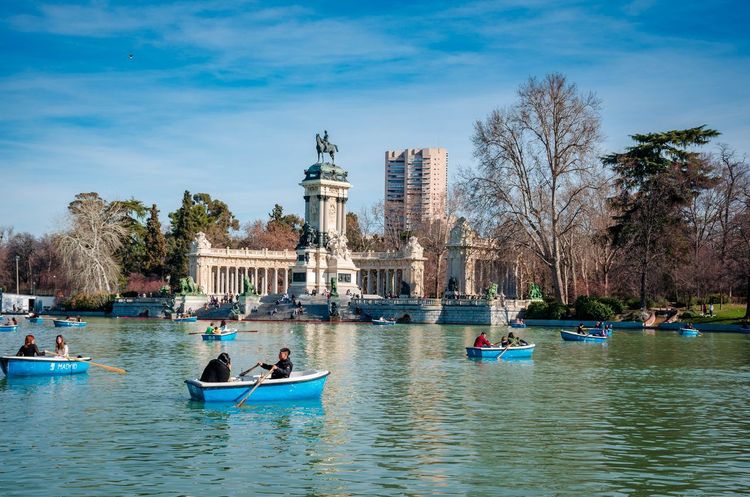
This second day shifts pace: less walking on cobbled streets, more time in the collections and green spaces that earned Retiro Park its UNESCO listing. The Madrid audio-guided tour also follows much of this route, between the art triangle and the surrounding gardens, if you prefer audio commentary to accompany this guide.
The Art Triangle: Prado, Reina Sofía and Thyssen-Bornemisza
The second day is devoted to the art triangle, three museums lined up along less than a kilometre of the Paseo del Prado. The Prado Museum holds more than 8,000 paintings, including the complete collections of Velázquez and Goya as well as works by Bosch and Titian acquired by the Spanish monarchs over the centuries. Velázquez's Las Meninas and Goya's Black Paintings alone justify the visit; allow at least two hours and budget 15 euros for a full-price ticket, bearing in mind that entry is free every day in the late afternoon, from 6 pm to 8 pm (5 pm to 7 pm on Sundays and public holidays). This free slot is very popular: arrive at least twenty minutes before the queue opens.
Ten minutes away on foot, the Reina Sofía Museum picks up the chronological thread with 20th-century Spanish art, anchored by Picasso's Guernica, displayed alone in its own room and always off-limits for photography. The museum also covers Dalí and Miró across several floors, housed in an 18th-century former hospital extended since 2005 by a Jean Nouvel addition whose vast red covered courtyard can be walked through freely, without a ticket. One scheduling detail that matters: the Reina Sofía closes on Tuesdays, unlike the Prado which is open every day.
If time allows, the Thyssen-Bornemisza Museum rounds out the trio at around fifteen euros admission, with a private collection spanning eight centuries, from Italian Gothic to American pop art, in one coherent route that many visitors find more digestible than the Prado. Three museums in a single day is ambitious: it's better to choose two and save the third for another visit rather than rushing through all of them.
Strolling through Retiro Park and Its Crystal Palace
The Retiro Park covers 125 hectares — former royal gardens opened to the public in 1868 and listed as a UNESCO World Heritage Site in 2021, together with the neighbouring Paseo del Prado. Locals gather here on Sundays to row on the large lake, listen to street musicians or simply lie under the avenues of centuries-old trees.
At the heart of the park, the Crystal Palace, an iron and glass structure built in 1887 for an exhibition on the Philippines, reflects in a small pond and today hosts free temporary exhibitions from the Reina Sofía. It's one of Madrid's most photogenic corners, especially in the late afternoon when the light streams through the glass.
Atocha Station and Its Surprising Tropical Greenhouse
A few minutes' walk from the Retiro, the Atocha station hides one of Madrid's most unexpected curiosities: the 19th-century former main hall was converted in 1992 into an indoor tropical garden of more than 7,000 plants, around 260 species spread across some 4,000 m², complete with ponds and goldfish.
Entry is free, making it a welcome break between two museums, especially during Madrid's hot summer hours when the heat drives you to seek shade. The article on Atocha station goes into more detail on the history of this greenhouse and on the memorial dedicated to the victims of the 2004 bombings, located right next door.
Royal Botanical Garden and the Salamanca Neighbourhood
Right across from the Prado, the Royal Botanical Garden (Plaza de Murillo, 2, 28014 Madrid, rated 4.4/5 on Google from 36,973 reviews) gathers more than 5,000 plant species across three terraces, founded in 1755 under Ferdinand VI and moved to its current site in 1781. It's a quieter alternative to the Retiro for ending the day, especially in spring when the roses are in bloom.
For the evening, head up to the Salamanca neighbourhood, fifteen minutes away on foot, known for its luxury boutiques and restaurants that are calmer than the historic centre. It's also one of the recommended neighbourhoods for staying the night if you're looking for a more relaxed trip — a topic covered further on in this guide.
Day 3: Bohemian Neighbourhoods, Flea Market and Alternative Madrid
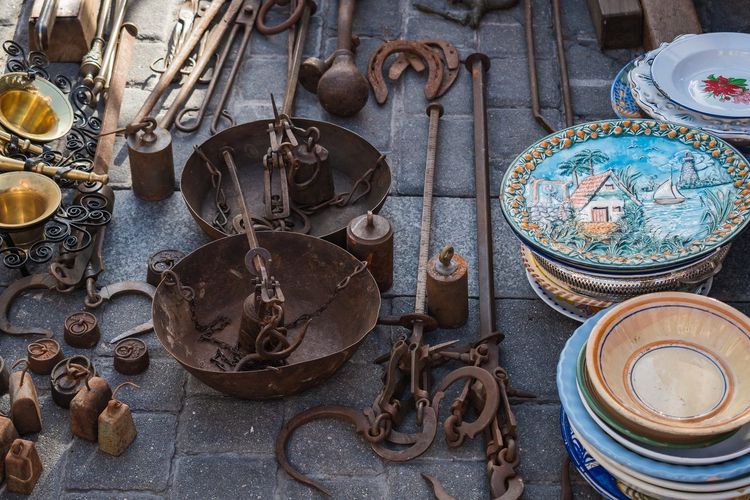
The third day explores a less monumental Madrid — the working-class neighbourhoods that have become trendy without losing their character.
La Latina and the El Rastro Flea Market on Sunday
The La Latina neighbourhood has one of the highest densities of tapas bars in the city, particularly around Calle Cava Baja, where locals graze standing at the counter from midday.
Sunday mornings change everything: the El Rastro flea market has taken over the neighbourhood's sloping streets for centuries, with more than a thousand stalls selling antiques, clothing and bric-a-brac. It's the only day of the week this experience exists in this form, public holidays aside: going on a Tuesday leaves empty streets with nothing of particular interest.
Keep an eye on your belongings — the dense crowds also attract pickpockets — and leave time after the market for a vermouth in one of the historic bars on Cava Baja, a Sunday ritual for the neighbourhood's residents.
Lavapiés, the Multicultural Neighbourhood
Heading south, Lavapiés (Plaza de Lavapiés, 28012 Madrid) stands apart from the rest of the centre with its groceries and restaurants from Latin America, South Asia and North Africa, also visible in the street art covering some of its walls.
It's also one of Madrid's cheapest neighbourhoods for lunch, with a range of world cuisines that contrasts with the more touristy mercados of the historic centre.
Malasaña and Chueca: Street Art, Brunches and Bars
Next, head to Malasaña, a neighbourhood born of the Madrid Movida of the 1980s and still true to that alternative spirit, with vintage clothing shops and record stores beneath façades covered in murals. Plaza del Dos de Mayo is its hub, lined with terraces whose clientele shifts with the hour — families at brunch in the morning, young Madrileños in the evening.
Right next door, Chueca, Madrid's historic LGBT+ neighbourhood, rivals it in energy with creative restaurants and cocktail bars open until late. Lunching in Chueca is a chance to try more contemporary cuisine than in the historic centre, often at comparable prices.
Temple of Debod, Parque del Oeste and CaixaForum at Sunset
To end the day on a high note, head west. The Temple of Debod, an Egyptian temple from the 2nd century BC gifted by Egypt to Spain in 1968 in gratitude for its help in saving the Nubian temples threatened by the Aswan Dam, stands on a hilltop with views over the Casa de Campo. Sunset draws a faithful crowd, seated on the surrounding lawns.
Just behind it, the Parque del Oeste slopes gently down towards the Manzanares river, crossed by a cable car that links the park to the Casa de Campo in about ten minutes — another way to see Madrid from above.
For a final cultural stop, the CaixaForum Madrid (Paseo del Prado, 36, 28014 Madrid, rated 4.5/5 on Google from 24,350 reviews), recognisable by its 24-metre vertical garden on the façade, hosts temporary exhibitions that are often free or reduced-price. The article on which neighbourhood to visit in Madrid helps you decide which of these alternative neighbourhoods deserves the most time based on your interests.
Where to Eat in Madrid: Tapas, Mercados and Specialities

Where to eat in Madrid goes well beyond the touristy mercados of the centre, even if they remain a good starting point. The city invented the culture of the free tapa served with every drink in certain traditional bars — a habit that is fading but still survives in neighbourhoods like La Latina or Chamberí.
What are the typical tapas of Madrid? The cocido madrileño, a generous chickpea and mixed-meat stew served in several courses with vegetables, remains the quintessential winter dish, often reserved for Sunday lunch. Callos a la madrileña (tripe in spiced sauce) and a tortilla de patatas in the runny-centred Madrid style are also must-tries, along with gambas al ajillo and bellota Iberian ham, sliced to order in most bars.
What are the best restaurants in Madrid? For a more refined dinner without straying from the historic centre, the tables around the Barrio de las Letras and Chueca reinvent traditional Spanish cuisine with seasonal produce, while the tapas bars on Cava Baja in La Latina remain the safe bet for a relaxed evening hopping between venues. Budget 25 to 40 euros per person for a decent dinner with drinks in a mid-range restaurant, and under 15 euros for a set lunch menu on weekdays — a very widespread habit in Madrid.
The Mercado de San Antón (Calle de Augusto Figueroa, 24, 28004 Madrid), less well known than San Miguel, is worth a visit for a more local lunch, with its rooftop terrace on the top floor offering views over the rooftops of Chueca.
The Spanish breakfast is light: a café con leche and toast rubbed with tomato are enough before a morning of sightseeing, with the option of a more substantial brunch at the weekend in Malasaña or Chueca cafés. The lunch break itself falls late, between 2 pm and 3:30 pm, and dinner rarely starts before 9 pm — a rhythm to factor into the three-day schedule to avoid finding restaurants still closed at 7:30 pm.
The Sunday midday vermut (vermouth) ritual, served on tap with an olive and a slice of orange, pairs perfectly with a trip to El Rastro or a walk around La Latina, and has made a comeback in many bars across the centre. Fancy stepping outside the city for a while? Discovering the vineyards on Madrid's doorstep is possible in half a day: the Vinos de Madrid appellation, less famous than Rioja, produces garnacha reds and albillo whites appreciated locally, and several estates in the Arganda or Navalcarnero areas offer tours with tastings less than an hour's drive from the centre. The article on unusual flavours of Spanish gastronomy details other specialities not to miss during your stay. For quick meals between visits, the bocadillos de calamares — fried squid sandwiches sold for decades around Plaza Mayor — offer a filling and affordable option.
Where to Stay in Madrid: Neighbourhoods and Hotel Tips
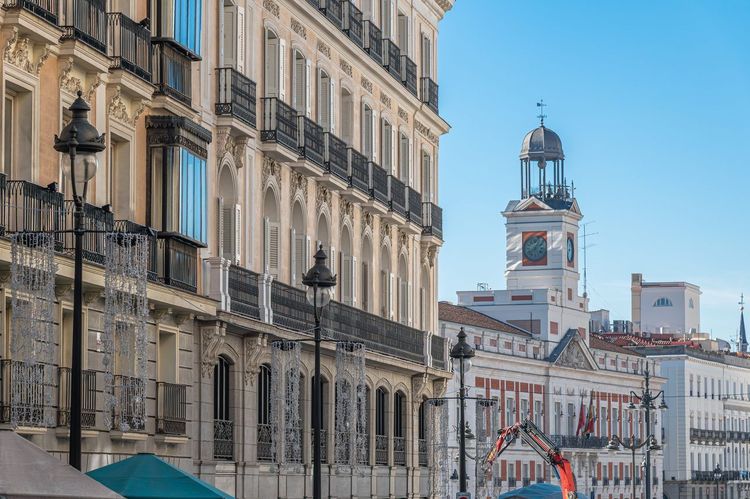
Where to stay in Madrid depends mainly on the pace you want for the three days: maximum proximity to the sights at the cost of night-time noise, or a calmer neighbourhood fifteen minutes' walk from the centre.
Hotel in Central Madrid (Sol, Centro)
The Sol-Centro neighbourhood, around Puerta del Sol and Plaza Mayor, puts all the Day 1 sights within walking distance and concentrates most of the budget and mid-range hotel offer. The downside: night-time noise, especially at weekends, on the liveliest streets such as Calle de la Cruz or around Plaza Santa Ana.
Expect from 60–70 euros a night for a decent hotel in low season, more in summer and during major events like the Feria de San Isidro in May. Booking two to three months ahead generally yields better rates at the best-located addresses, particularly around Gran Vía where supply remains plentiful year-round.
For a livelier evening atmosphere, La Latina and Malasaña offer an alternative to the strict historic centre, with a more local feel and addresses that are often slightly cheaper, while still being fifteen to twenty minutes on foot from the main sights.
Luxury Hotel and a Peaceful Stay in Salamanca or Retiro
For a quieter stay, the Salamanca neighbourhood, east of the Retiro, concentrates Madrid's upmarket addresses, between luxury boutiques and grand 19th-century apartment buildings. It's the classic choice for a romantic city trip or a business trip, with quick access to Retiro Park and the art triangle museums.
Around the Retiro itself, several five-star hotels benefit from immediate proximity to the park and a calm the historic centre simply cannot offer, while remaining fifteen minutes' walk from the Prado. Expect upwards of 200 euros a night for superior categories in these two neighbourhoods, with marked price peaks in May–June and September–October, the most popular periods of the year in the capital. The Landscape of Light audio-guided tour runs right through this area, a pleasant way to reach the Prado on foot from your hotel.
Gran Vía, Cibeles and Rooftops: Madrid from Above
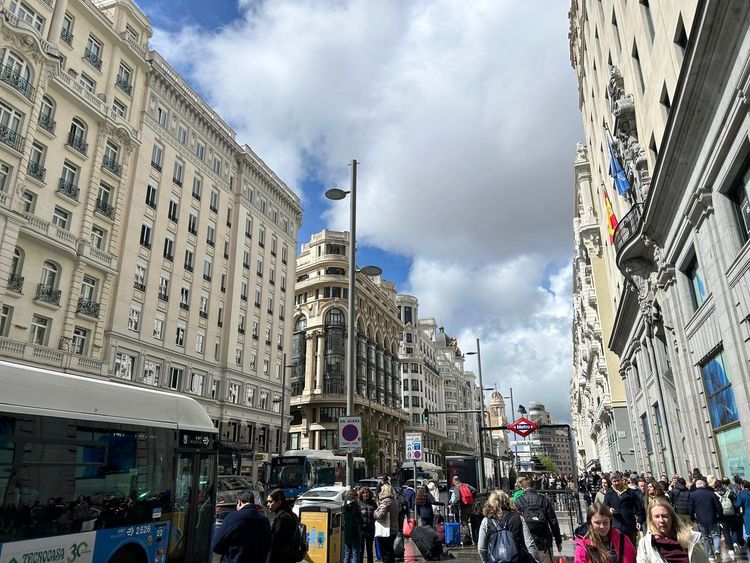
Between two days of sightseeing, one axis will inevitably cross your path: the Alcalá–Gran Vía line, the backbone of early 20th-century Madrid. It's worth dedicating a proper late afternoon to it rather than rushing across it between two museums.
Gran Vía, Plaza de Cibeles and Puerta de Alcalá
The Gran Vía, cut from 1910 along roughly 1.3 kilometres through an entire demolished neighbourhood, lines up facades that draw as much from Chicago as from Paris. The Edificio Metrópolis with its slate dome crowned by a winged victory kicks things off on the Alcalá side; further along, the Edificio Telefónica, completed in 1929, was long Spain's tallest building at 89 metres. The avenue's theatres today host major musicals, making it the best evening plan when fatigue rules out another museum visit.
Then head down to the Plaza de Cibeles (Plaza de Cibeles, 28014 Madrid), where the goddess Cybele has reigned from her chariot pulled by two lions since 1782: this is where Real Madrid supporters celebrate every title, scarf wrapped around the fountain. The palace dominating the square, a former Communications Palace turned city hall in 2007, conceals a panoramic viewpoint on the eighth floor, accessible for a few euros, with a sweeping view over the Paseo del Prado and the Gran Vía.
Five minutes further on, the Puerta de Alcalá, a five-arched granite arch erected in 1778 for Charles III, marks the entrance to the Retiro. Convenient to combine with Day 2 if you'd rather group this area with the museums than make it a separate stop.
The Best Viewpoints to See Madrid from Above
Madrid rewards a bird's-eye view without breaking the bank. The terrace of the Círculo de Bellas Artes (Calle de Alcalá, 42, 28014 Madrid, rated 4.4/5 on Google from 33,964 reviews) is the benchmark: around five euros to access a 360-degree panorama over the rooftops, the Gran Vía and, on clear days, the Sierra de Guadarrama as a backdrop. Go up an hour before sunset — the raking light is spectacular and the queue grows noticeably after.
Another option is the glass platform of the Riu Plaza España hotel, on the twenty-seventh floor above the Plaza de España — pricier but spectacular, with a glass floor for those untroubled by heights. Hotel rooftops in the Sol and Gran Vía area often require an overpriced drink: pleasant for a last round, less so for a photo. And if you've already climbed up to the Temple of Debod, save that budget for a dinner in Chueca instead. The Heart of the Old City audio-guided tour ties this whole area together on foot, from Plaza España onward.
Watching a Flamenco Show in Madrid
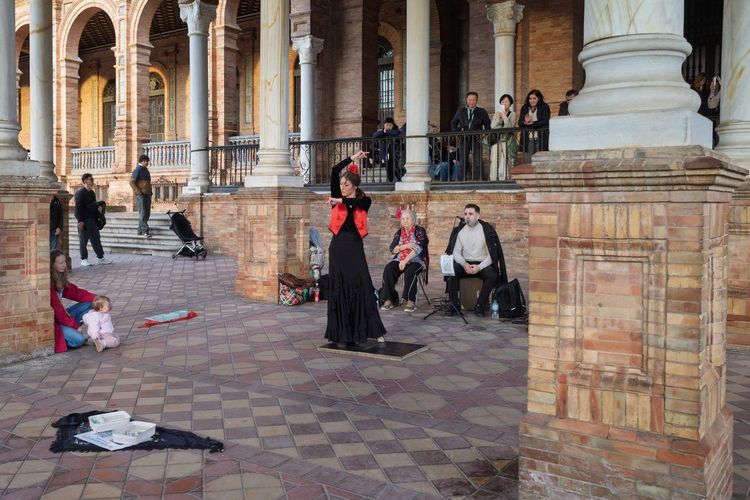
Where to see a flamenco show in Madrid? While flamenco was born in Andalusia, Madrid is home to several tablaos ranked among the best in Spain — the capital has long attracted the genre's finest performers.
The Corral de la Morería (Calle de la Morería, 17, 28005 Madrid, rated 4.4/5 on Google from 4,406 reviews), open since 1956, is considered the most prestigious tablao in the country, with a Michelin star awarded to its adjoining restaurant. Watching this show in such a historic setting, in an intimate venue of fewer than a hundred people, offers rare closeness to the dancers.
Other venues play the intimacy card at slightly gentler prices: Cardamomo, near Plaza Santa Ana, or Tablao Flamenco 1911, set beneath the azulejos of the former Villa Rosa, which claims the title of the world's oldest tablao. Beware, however, of outdated guides still in circulation: Casa Patas, long cited as the reliable choice, has permanently closed. For a complete typical evening, several venues offer a flamenco dinner show combining a Spanish meal and a performance in the same evening, generally between 9 pm and 11 pm. Budget between 45 and 90 euros for the show with one drink, more with a full dinner.
Booking ahead is essential in high season, as these venues deliberately limit capacity to preserve the intimacy of the performance. Scheduling this evening at the end of Day 1 or Day 2, rather than as the final night, leaves a buffer in case of cancellation or fatigue after a long day of walking.
Madrid with Kids: What to Do with Children?
What to do in Madrid with children? The Spanish capital has several family-friendly options to slot between more cultural visits.
The Zoo Aquarium de Madrid, set in the large Casa de Campo park, houses several thousand animals from around 500 species, including giant pandas — one of the few zoos in Europe to keep them. Allow half a day for the full visit, aquarium included.
The Parque Warner Madrid, about thirty minutes from the centre in San Martín de la Vega, offers roller coasters and themed areas based on Looney Tunes or DC Comics — a full-day option rather than a brief pause in the three-day programme. Plan to dedicate the entire day if this park is on the agenda: the bus journeys from the centre take time, and combining it with another visit on the same day is not realistic.
For football-supporting families, a tour of the Santiago Bernabéu stadium (Avenida de Concha Espina, 1, 28036 Madrid, rated 4.7/5 on Google from 697 reviews), Real Madrid's home ground fully renovated in recent years, offers a route through the dressing rooms and players' tunnel, plus the trophy museum at the end — an experience that appeals to children and adults alike. Book online: time slots sell out quickly and the tour is suspended on match days.
Retiro Park, already mentioned for Day 2, is also a reliable choice with children: hiring a rowing boat on the large lake or simply cycling along the paths is enough to fill a late afternoon without overloading the schedule. Seeing a musical in Madrid makes for a great family evening: several Gran Vía theatres stage Spanish versions of major international productions — a show that works even without speaking the language when children already know the story. The article on the Las Ventas bullring presents another, more controversial facet of Madrid's heritage, to be approached according to each family's sensibilities.
Day Trip to Toledo from Madrid
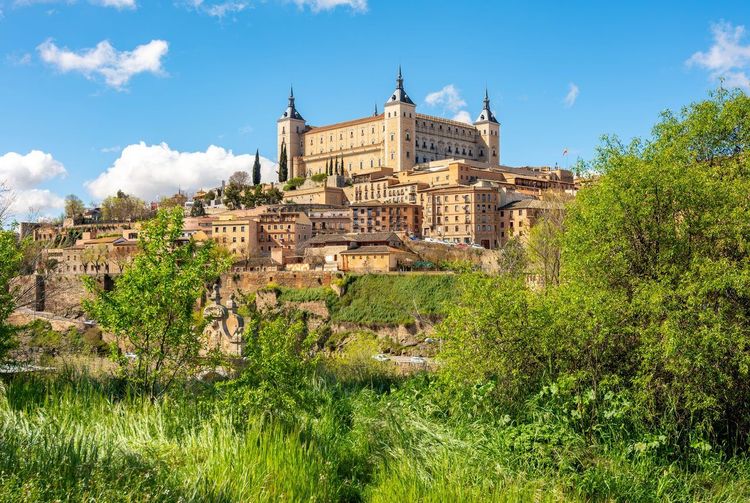
How to Organise Your Day in Toledo (Train, Distance, Timing)
If a fourth day becomes available, or if you prefer to slightly trim the Madrid programme to fit in a day trip, Toledo is very much worth the detour. Listed as a UNESCO World Heritage Site since 1986, the former Spanish capital is only 70 kilometres south of Madrid, connected by a high-speed train that takes around 33 minutes from Atocha station, compared to over an hour by bus.
Trains run roughly every hour from the dedicated platform at Atocha station, with tickets around 15 euros one way if booked in advance, more at the last minute. Taking the first morning train, around 8 am, and returning in the late afternoon leaves plenty of time to explore the old town on foot — the entire area can be visited in a day thanks to its compact size, perched on its rocky promontory surrounded by the Tagus.
On the ground, the city is discovered almost entirely on foot, as the cobbled streets and steep slopes are ill-suited to vehicles. A circular tourist bus also allows a tour of the ramparts for an initial overview, before getting lost in the maze of lanes in the historic centre. Booking your train ticket as soon as your travel dates are fixed is the best approach: the cheapest fares sell out quickly, especially at weekends when many Madrileños make the same day trip themselves. Organised excursions with a guide are also available from Madrid, by air-conditioned coach or with a train ticket included — a practical option for those who prefer not to organise anything on site.
What to See in Toledo in One Day
Toledo owes its reputation to centuries of coexistence among Christian, Muslim and Jewish cultures, still visible in its architecture. The Alcázar of Toledo, a fortress dominating the city from its hill, today houses the Spanish Army Museum and offers one of the best panoramas over the Tagus below.
The Primate Cathedral of Toledo (Calle Cardenal Cisneros, s/n, 45002 Toledo, rated 4.7/5 on Google from 38,825 reviews), one of the largest in Spain, blends French Gothic with Mudéjar details and houses a treasury that includes a gold and silver monstrance nearly three metres tall, carried in procession at Corpus Christi since the 16th century.
Don't miss the historic synagogues of the Jewish quarter either, rare witnesses to the golden age of the Sephardic community in Spain before the expulsion of 1492, as well as the workshops of craftsmen still practising damascening — the technique of inlaying gold into blackened metal unique to the city since the Moorish era. Allow around six hours on site to see the highlights without rushing, a duration that fits comfortably within a return train journey from Madrid in a single day. Toledo marzipan, a local speciality of almonds and sugar protected by a geographical indication, can be tasted in the central pastry shops and makes an easy and delicious souvenir to bring home.
To extend the exploration of Spain beyond Madrid and Toledo, the road trip Andalusia offers an audio-guided itinerary across several cities further south — an option to consider for a longer future trip. The article on the most beautiful places in Spain you absolutely must see lists other destinations to combine with Madrid depending on the time available.
Practical Information: Transport, Budget and Best Time to Go
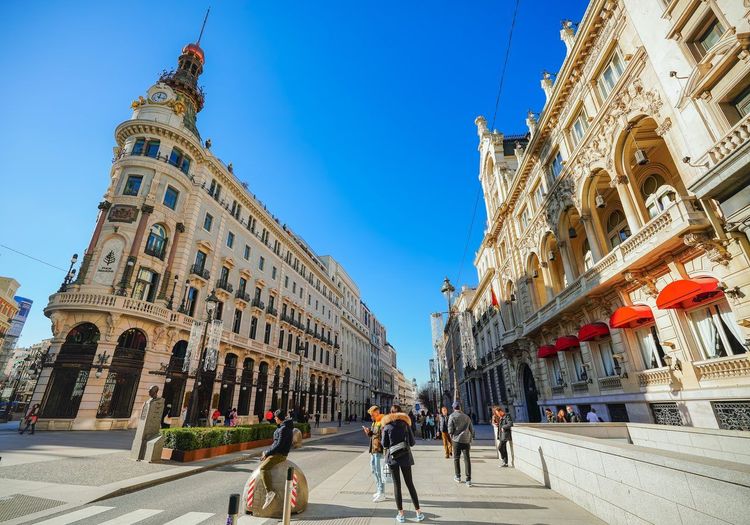
This final practical section brings together everything you need to know before you leave: transport, a realistic budget and the best time to schedule these three days.
Getting Around Madrid Easily (Metro, on Foot)
Can you do everything in Madrid on foot? Largely yes: the historic centre, from Sol to the Retiro, is easy to navigate on foot, with most distances between major sights not exceeding twenty-five minutes' walk. For longer journeys, particularly towards Atocha or outlying neighbourhoods like Salamanca, Madrid's metro — one of the most extensive in Europe — is fast and reliable.
A single metro ticket costs between 1.50 and 2 euros depending on the number of stops, plus the rechargeable Multi card, around 2.50 euros on first purchase — don't forget to factor this into Day 1's budget. For three days of intensive sightseeing, the Tourist Travel Pass, valid for 1 to 7 days on all Madrid Community transport, often works out cheaper, provided you don't count on it for Toledo: the city is in Castile-La Mancha, outside the covered zone, and the train ticket must be purchased separately. Buses effectively complement the network, especially at night when the metro closes, between 1:30 am and 6 am.
Average Budget for 3 Days in Madrid
For a three-day stay, budget an average of 90 to 150 euros per person per day, including accommodation, visiting the main museums and dining in mid-range restaurants. This figure rises quickly with flamenco, organised excursions or upscale hotels in Salamanca.
A few tips can trim the bill without cutting corners: take advantage of the Prado and Reina Sofía free entry time slots, opt for the set lunch menu rather than à la carte dinners, and book your Toledo train ticket several weeks in advance. Travelling alone or solo doesn't fundamentally change this budget in a city considered safe for solo travellers, provided you stay alert in the evening in less-frequented streets around Lavapiés or Embajadores.
When to Go: The Best Time of Year
Spring (April to June) and autumn (September–October) offer the most pleasant conditions, with mild temperatures around 20°C and fewer crowds than in summer. July and August regularly exceed 35°C — a dry heat that drives Madrileños themselves to flee to the coast, with many businesses closed in August.
Winter remains a valid option, especially for budget travellers: hotels are cheaper and the city is less crowded, even if some days in December–January drop below freezing at night. Is Madrid dead on Sundays? Not really: it's actually the day of El Rastro and vermouth, though many non-food shops close — something to plan around if shopping is part of the programme.
FAQ
Is Madrid Worth Visiting?
Absolutely: Madrid combines a rich royal heritage, three world-renowned museums within less than a kilometre of each other, a lifestyle built around tapas and vermouth, and a nightlife that starts late but goes on for a long time. Unlike Barcelona, the city remains less saturated with tourists outside a few hotspots like Plaza Mayor, making everyday visits feel more authentic.
How Many Days Do You Need to Visit Madrid?
Three full days are enough to cover the essentials: the historic centre and the Royal Palace, the art triangle and Retiro Park, then alternative neighbourhoods like La Latina or Malasaña. Adding a fourth day allows you to include a day trip to Toledo at a leisurely pace — an option many visitors wish they had planned.
What Are the Must-Sees in Madrid in 3 Days?
The Royal Palace, Plaza Mayor, the Prado Museum and Retiro Park form the essential foundation of any first visit. Add to that the Mercado de San Miguel for tapas, the Temple of Debod at sunset, the view from the rooftop terrace of the Círculo de Bellas Artes, and ideally a Sunday morning at El Rastro flea market if your schedule allows.
Can You Visit Madrid on Foot?
Yes, most of the historic centre and the art triangle are easily walkable, with distances between major sites rarely exceeding twenty-five minutes on foot. For longer journeys towards Atocha or outlying neighbourhoods, the metro efficiently complements walking without ever becoming strictly necessary day to day.
What Budget Should You Plan for 3 Days in Madrid?
Budget between 90 and 150 euros per person per day, including accommodation, meals and entrance fees, for a mid-range stay. This figure rises with a luxury hotel in Salamanca, a flamenco dinner show or an organised day trip to Toledo, and drops noticeably by taking advantage of daily lunch menus and free museum time slots.
What Is the Best Time to Visit Madrid?
Spring and early autumn offer the most pleasant conditions, with mild temperatures and moderate crowds. Madrid summers are very hot and can be stifling in August, prompting many residents to leave the city, while winter, though cooler, allows you to benefit from lower hotel rates.
Is Madrid Dead on Sundays?
Not at all, just different: many non-food shops remain closed, while the El Rastro flea market and the midday vermouth ritual bring La Latina to life. The main museums stay open, sometimes with reduced afternoon hours, making it a good day for cultural visits and strolls through the parks.
Three days in the Spanish capital leave enough time to grasp what makes the city tick: a fairly rare blend of classical art, wide green spaces and streets that stay lively late without ever feeling aggressive. By focusing the itinerary on one neighbourhood per half-day rather than zigzagging across the map, the programme outlined here fits comfortably within the 72 hours of a city trip, with room to improvise an extra tapas bar or a nap in the Retiro.
To plan the stay in detail, neighbourhood by neighbourhood, the Madrid audio-guided tour guides your visit with audio commentary to listen to on the spot, from the Royal Palace all the way to La Latina — enough to turn these three days into a true Spanish city trip, without missing the details that make the difference between passing through Madrid and truly discovering it.
À lire également