© Shutterstock
 Votre guide Ryo
The 25 Most Beautiful Places in Spain Not to Be Missed in 2026
Choosing the best places in Spain is nearly impossible — this country constantly surprises even those who think they know it well. You expect beaches and flamenco, and instead you find a Roman city better preserved than Rome itself, a lunar plateau covered in rock formations that look like a science-fiction set, or a lost village in Andalusia where whitewashed houses cling to a 100-metre cliff. This country of 505,000 km² conceals a density of wonders unmatched anywhere else in Western Europe. To start discovering the best places in Spain from the moment you arrive, Ryo's audio-guided tour of Madrid is an ideal starting point to begin understanding what the country has to offer.
In this selection of 25 destinations, you will find places that appear in every guidebook and others that even regular visitors to Spain discover with surprise: a former Visigothic capital whose alleyways hold three religions in stone, a volcanic island where the night sky is listed as a UNESCO World Heritage Site, a city whose university is older than some European kingdoms, and a beach accessible only at low tide whose rock forms breathtaking natural arches. From the great Andalusian cities to the deserts of Navarre, these best places in Spain cover every facet of the country. Spain in 2026 has not finished surprising us.
1. Barcelona, Architecture in Its Purest Form
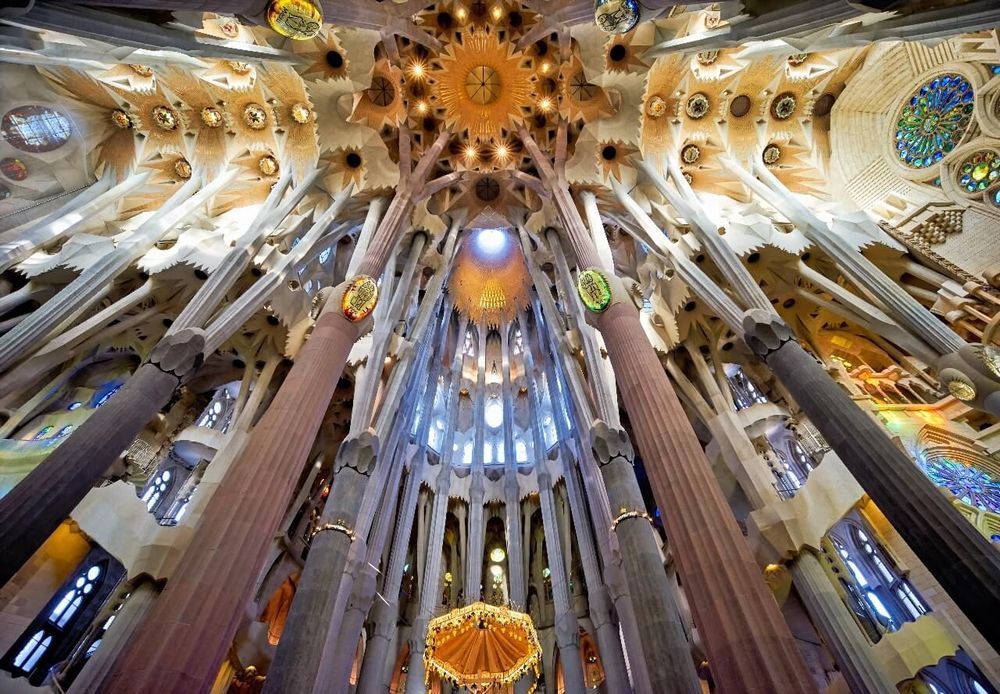
Barcelona is not merely Spain's second city — it is an architectural laboratory unlike any other on the planet. The Sagrada Família (Carrer de Mallorca 401, 08013 Barcelona, rated 4.8/5 on Google with 326,511 reviews), under construction since 1882, is expected to see its final towers completed by 2028, making it one of the longest construction projects in human history. Each year, around 4.5 million visitors pass through its doors, but few take the time to look up at the ceilings: inside, the fan-shaped columns mimic the structure of a forest, filtering the light of coloured stained-glass windows to create an atmosphere bordering on the sacred.
Beyond Gaudí, Barcelona offers the Gothic Quarter, where some stone blocks date back to the 1st century BCE — the Romans had established their Barcino here. The Carrer del Bisbe runs alongside a neo-Gothic bridge, the Palau de la Generalitat opens to the public a few days a year, and the Boqueria market remains one of the most photographed covered markets in the world despite its reputation as a tourist trap. The real Barcelonian tends to shop at the Mercat de Santa Caterina across the street.
The city also breathes through Parc Güell, where Gaudí envisioned a garden city that was never inhabited, and through the Passeig de Gràcia, a boulevard on which three of the architect's most photographed buildings stand side by side: Casa Batlló, Casa Milà (La Pedrera), and Casa Lleó Morera. To explore all of this on foot with context, Ryo's Barcelona audio-guided tour offers a route of 26 audio stops over 6.4 km linking the great Modernista works.
2. Madrid, Unfiltered Energy
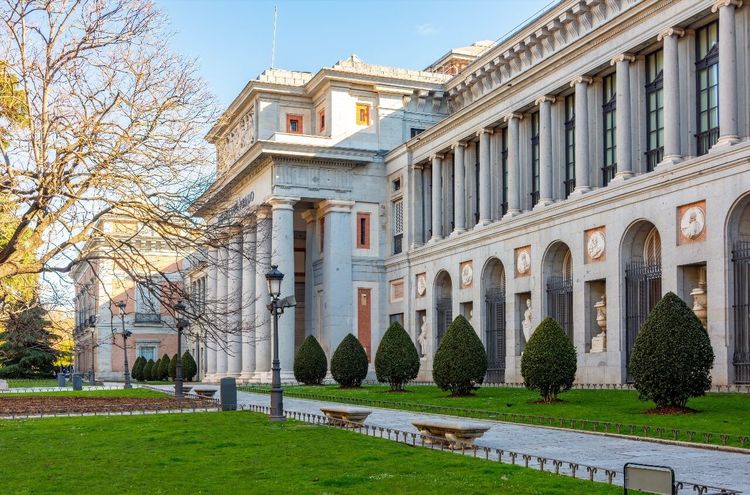
Madrid is the European capital that sleeps the least. Madrileños rarely dine before 10 pm, terraces close at 2 am on weeknights, and nightclubs run until sunrise. But the city is not all nightlife: it is home to the golden triangle of museums, an exceptional cultural concentration where the Prado, the Reina Sofía, and the Thyssen-Bornemisza are within less than 800 metres of one another.
The Prado Museum alone holds 8,200 paintings, including major works by Goya, Velázquez, and El Greco. Picasso's Guernica is displayed at the Reina Sofía Museum in a dedicated room that gives it an almost commemorative presence. On the architectural side, the Palacio Real is the largest royal palace in Western Europe by floor area — 135,000 m², twice the size of the Palace of Versailles — even though Spain's monarchs no longer live there.
For visitors who prefer to explore at their own pace, the Rastro, a Sunday flea market in the La Latina neighbourhood, brings together up to 3,500 stalls every Sunday morning between the Plaza de Cascorro and the Ribera de Curtidores. The Retiro, a 125-hectare park in the heart of the city, deserves a full half-day, particularly for the Palacio de Cristal and its free contemporary exhibitions.
3. Séville, the Andalusian Capital of Splendour
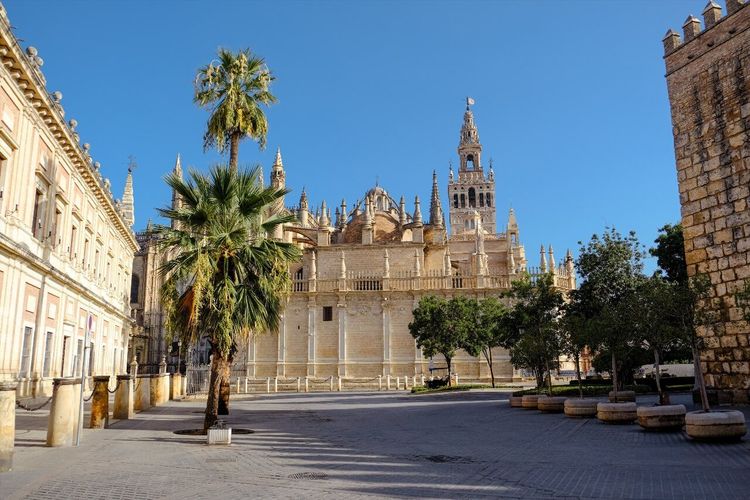
To say that Séville is beautiful would be an understatement. The city possesses the third-largest cathedral in the world, after St Peter's in Rome and St Paul's in London, as well as the Giralda, a former Almohad minaret transformed into a bell tower in the 16th century. The transition between Islam and Christianity can be read in every stone: Arabic geometric motifs sit alongside Gothic arches on the same wall.
The Alcázar de Séville is the oldest royal palace still in use in Europe — Spain's monarchs still stay here during official visits to Andalusia. Its terraced gardens, fountains, and gilded stucco reception rooms served as a backdrop for major film productions, including the series Game of Thrones. To see why Séville fascinates filmmakers, the Ryo audio guide to Séville takes you there step by step.
The Triana neighbourhood, on the other side of the Guadalquivir, is home to the flamenco tradition in its caves — not the tourist shows in the city centre, but the peñas flamencas frequented by local residents. The Barrio de Santa Cruz, the old Jewish quarter, unfolds its flower-lined alleyways in a labyrinth of a few hundred square metres where getting lost is inevitable — and entirely the point.
4. Granada, the Nasrid Masterpiece
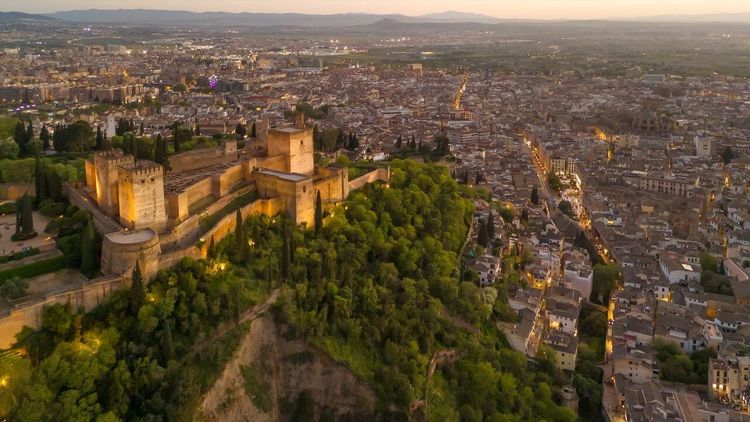
Granada owes its worldwide reputation to a single monument, and that monument lives up to it. The Alhambra, the Nasrid palace and fortress complex built between the 13th and 14th centuries, is the best-preserved medieval Islamic architectural ensemble in the world. The Nasrid Palaces within, with their finely carved geometric stucco decoration, interior fountains, and interplay of light on water, reduce most visitors to spontaneous silence.
But Granada is more than the Alhambra. The Generalife, the sultan's summer gardens, rises up the hillside in a series of flowered terraces and channels. Below, the Albaicín neighbourhood, a UNESCO World Heritage Site, winds along cobbled alleyways up to the Mirador de San Nicolás, a viewpoint from which the Alhambra is framed against the snow-capped Sierra Nevada. This panorama, especially at sunset, remains one of the most photographed in Spain. Ryo's audio-guided tour of Granada allows you to walk through the Albaicín while understanding the successive layers of the city's history.
Book the Alhambra several weeks in advance during high season: tickets to the Nasrid Palaces are capped at 8,000 visitors per day and often sell out before the official release date.
5. Cordoue, the City of Three Cultures
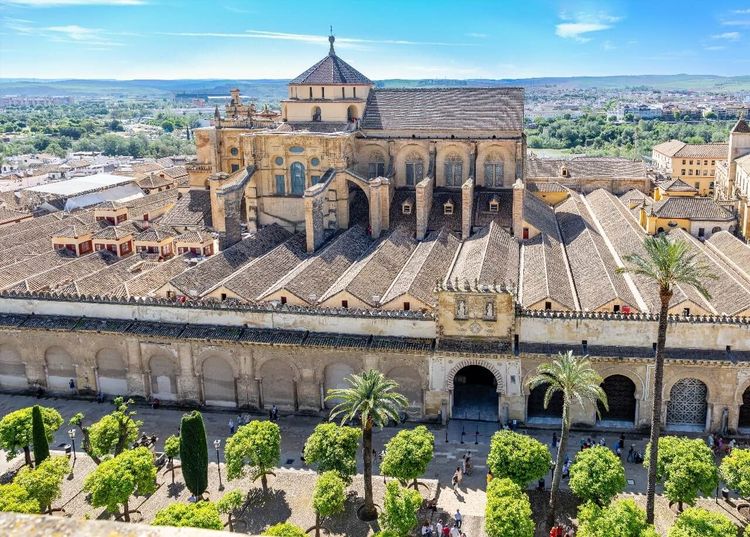
In the 10th century, Cordoue was the largest city in Western Europe, with a population estimated at 500,000 inhabitants at the height of the Umayyad Caliphate. This power crystallised in the Mezquita-Catedral, an Umayyad mosque whose construction began in 786 and into which a Renaissance cathedral was literally built in the 16th century — an architectural juxtaposition that initially shocks, then fascinates. The 856 columns of marble, jasper, and granite supporting the prayer hall form a hypnotic forest.
The Jewish Quarter of Cordoue, the Judería, is home to the Synagogue, one of only three medieval synagogues preserved in Spain, built in 1315. During the Festival of the Patios in May, dozens of private inner courtyards open to the public, covered in geraniums and bougainvillea in an annual competition listed on UNESCO's Intangible Cultural Heritage. If you wish to explore the old town with an audio guide, Ryo's audio-guided tour of Cordoue covers 23 stops over 8.2 km.
6. Tolède, the Suspended City beyond Time
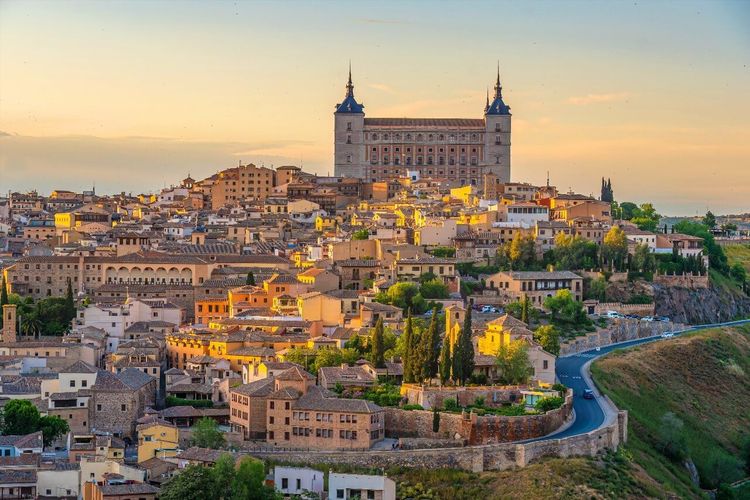
Tolède is best revealed from the outside: set on a rock surrounded by the Tagus on three sides, the city forms a perfect medieval silhouette. It is this image that El Greco painted in his famous work View of Toledo, and the city has changed little since. Within the ramparts, the alleyways of the former Visigothic, then Islamic, then Christian capital bear witness to a religious coexistence unique in Europe.
The Catedral Primada, built between 1226 and 1493, holds the richest art collection in Spain after the Prado: Goyas, Rubenses, Van Dycks, and an entire room devoted to El Greco, who spent his entire Spanish career here. The Mosque of Cristo de la Luz, a 10th-century mosque converted into a church, is one of the few Mudéjar buildings still standing in Tolède.
Just 70 km from Madrid, Tolède can be visited as a day trip, but it deserves at least one overnight stay to enjoy the old town after the tour groups have left — the alleyways in the evening, candlelit in the restaurants, offer a rare medieval atmosphere.
7. Santiago de Compostela, the End of the World
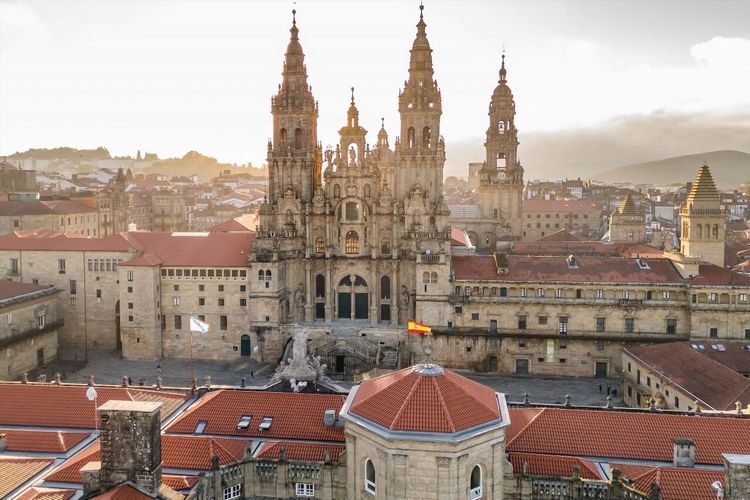
Each year, more than 400,000 pilgrims pass through the Puerta del Camino to enter Santiago de Compostela after travelling between 100 and 2,000 kilometres on foot, by bicycle, or on horseback. But the city deserves a visit well beyond its religious context: the Baroque old town is one of the most homogeneous and best-preserved in Spain.
The Cathedral of Santiago de Compostela, whose construction dates back to the 12th century and whose Baroque Obradoiro façade dates from 1750, occupies a central square surrounded by colleges, palaces, and royal hotels that together form an architecturally coherent ensemble of exceptional quality. The Botafumeiro ceremony, a giant censer weighing 80 kg swung beneath the vault during the pilgrims' masses, is one of the most impressive Catholic rituals to witness in Europe.
Beyond the cathedral, the covered Abastos market, one of the oldest in Galicia, and the medieval alleyways around Rúa do Franco, with its pulpo bars and market restaurants, offer a gastronomic experience that Galicia excels at: Galician-style octopus, tetilla cheese, and tarta de Santiago.
8. Valencia, between Sea and Modernity
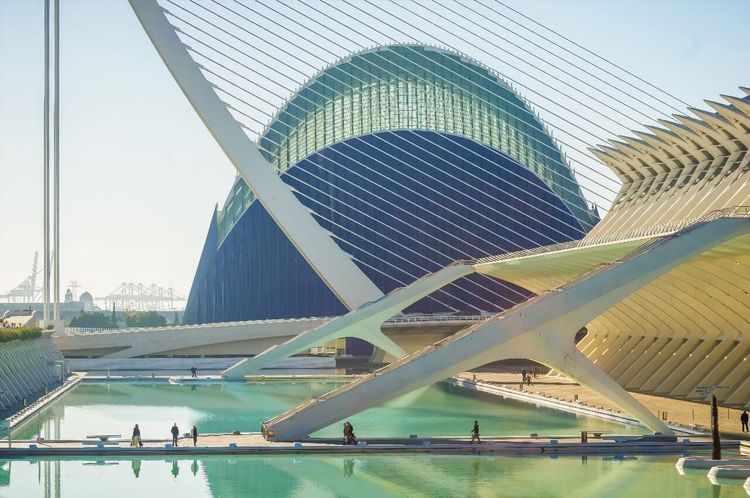
Valencia has pulled off a rare feat: transforming its former floodplain into the Jardí del Turia, an urban park 9 km long that runs through the city from east to west. At one end stands the City of Arts and Sciences, Santiago Calatrava's architectural complex that has become the image of the modern city — the Hemisfèric, the Oceanogràfic (Europe's largest aquarium, with 110,000 marine animals), and the Palau de les Arts.
The old town holds the bulk of the historical heritage: the Valencia Cathedral is said to house the Holy Grail, a red agate chalice from the 1st century AD displayed in the Chapel of the Holy Chalice. The central market, the Mercat Central de Valencia, built in 1928, is one of Europe's largest covered markets with 1,200 stalls beneath its Art Nouveau stained glass. To explore the city on foot with an audio guide, the Ryo audio guide to Valencia offers 26 audio stops over 7.1 km to explore the Mediterranean city.
And then there is paella: invented here, in the Albufera region, it bears no resemblance to what is served abroad. Traditional Valencian paella is made with rabbit and green beans, without seafood — something the Valencians never tire of explaining to astonished visitors.
9. Bilbao, Urban Renaissance through Art
Bilbao has achieved one of the most spectacular urban transformations in Europe. In 1997, the inauguration of Frank Gehry's Guggenheim Museum — 33,000 m² of rippling titanium on the banks of the Nervión — transformed a declining industrial city into a global cultural destination. This phenomenon has even been coined the "Guggenheim effect" in urban studies.
But Bilbao is more than a museum. The Casco Viejo, the lively old town with its narrow streets, concentrates the best pintxos bars in the Spanish Basque Country — Basque pintxos are to gastronomy what tapas are to Andalusia, but with the sophistication of Michelin-starred cuisine served standing at a counter. Calle Ledesma and the streets around the Plaza Nueva host a nightly neighbourhood stroll where residents and visitors mingle naturally. Discovering Bilbao with the Ryo audio guide covers 21 stops over 7.3 km.
10. San Sebastián, Gastronomy Elevated to an Art Form

San Sebastián (Donostia in Basque) boasts one of the highest densities of Michelin stars in the world. Two triple-starred restaurants, Arzak and Akelarre, in a city of 190,000 inhabitants, and an old town where simply strolling from bar to bar sampling pintxos is in itself a top-tier gastronomic experience.
The Playa de la Concha (Paseo de La Concha s/n, 20007 San Sebastián, rated 4.7/5 on Google with 23,438 reviews) is regularly ranked among the most beautiful urban beaches in Europe: horseshoe-shaped and sheltered by two hills, it offers near-perfect swimming in July and August. Monte Igueldo, reachable by funicular since 1912, overlooks the bay from 181 metres above sea level and offers a panorama over both beaches and the Santa Clara rock. To explore the Old Town with anecdotes and context, the Ryo's audio-guided tour of Donostia-San Sebastián guides you through the Pearl of the Cantabrian Coast.
11. Ronda, Suspended above the Precipice
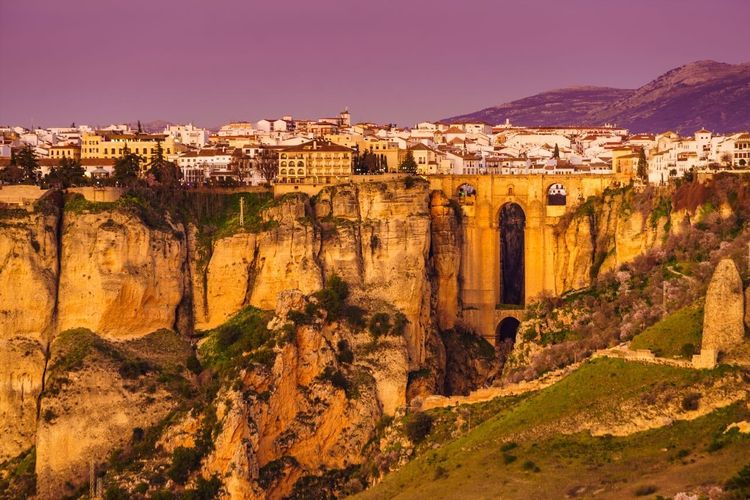
Ronda defies topographical comprehension. The city is literally split in two by a gorge 120 metres deep — the Tajo de Ronda — spanned by the Puente Nuevo, a bridge built between 1751 and 1793. Its construction claimed the lives of 50 workers, and a chamber fitted out in its central pier served successively as a prison and a warden's office before being turned into a museum.
Ronda is also the birthplace of modern bullfighting: the Plaza de Toros in Ronda, built in 1785, is one of the oldest and most beautiful in Spain. The corrida a la rondeña, a codified form fought on foot without the mounted caracol, was invented here by Pedro Romero, who fought 5,600 bulls without ever being injured. Both Hemingway and Orson Welles loved to spend time in this town, and the regulars of another era still meet in the cafés around the Plaza del Socorro.
The old town (la Ciudad) holds the bulk of the heritage: the Palacio de Mondragón, the Collegiate Church of Santa María la Mayor with its blend of Gothic and Mudéjar styles, and the 13th-century Arab baths, among the best-preserved in Andalusia. The views from the Paseo de los Ingleses over the gorge below remain one of the most powerful images of inland Spain. To explore this vertiginous site with an audio commentary, Ryo's Ronda audio walking tour is available on the app.
12. Mallorca, the Island of Nuances
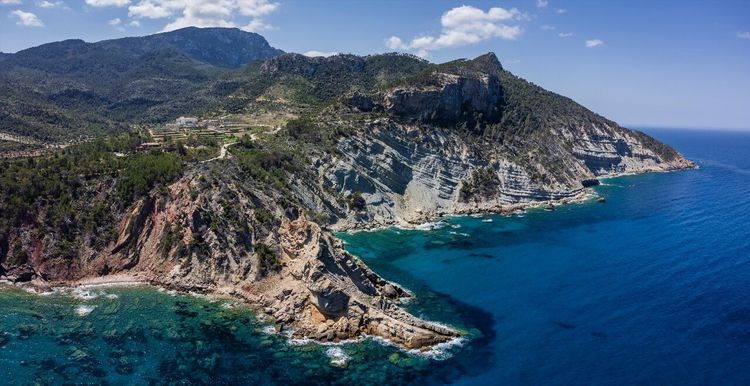
Mallorca is the largest of the Balearic Islands at 3,640 km², and its reputation as a mass beach destination conceals a far more complex reality. The Serra de Tramuntana, a UNESCO World Heritage mountain range running along the north-west coast, is home to villages of breathtaking beauty: Valldemossa, where Chopin and George Sand spent the winter of 1838–1839; Deià, with its golden stone houses overlooking a turquoise cove; and Sóller, reachable from Palma by a steam train dating from 1912.
Palma de Mallorca itself deserves more than a bus transfer to the beach. Its Cathedral of La Seu, Gothic and flamboyant, has dominated the harbour since the 14th century; Gaudí himself modified its interior lighting at the start of the 20th century. The Palau de l'Almudaina, a former Arab castle converted into a royal residence, can be visited a few days a week. The Sant Pere neighbourhood, in the midst of artistic gentrification, is packed with galleries and creative restaurants in former fishing shops.
On the nature side, Cala des Moro, at the south-eastern tip of the island, is accessible only on foot (20 minutes from the car park), and its electric-blue waters are among the finest swimming spots in the Mediterranean. The Ryo audio guide to Palma de Mallorca offers 25 audio stops over 5 km to explore the island's capital.
13. The Canary Islands, Volcanoes and Eternal Spring
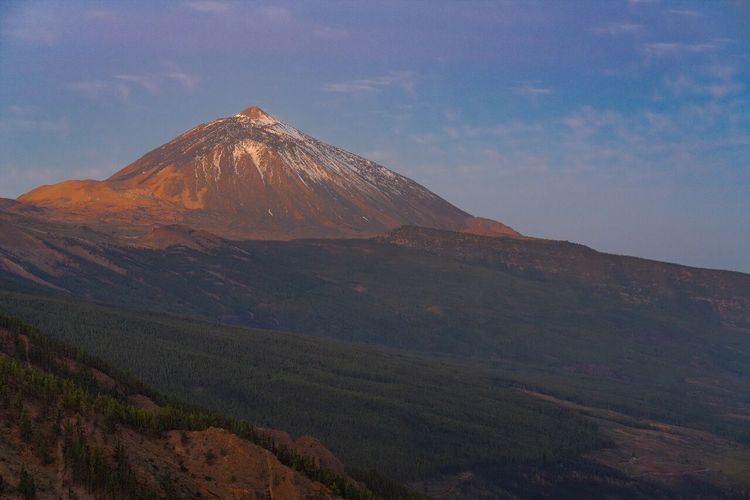
The Canary Islands archipelago has 8 main islands within less than 4 hours' flight from most European capitals, yet each one offers a radically different experience. Tenerife, the largest, is dominated by the Teide, a 3,718-metre volcano and the highest mountain in Spain (and in the Atlantic), whose lunar landscape of black lava is a national park and a World Heritage Site. The cable car climbs to 3,555 metres; a separate permit is required to reach the summit, granted to a maximum of 200 people per day.
Gran Canaria packs landscapes that change every 20 kilometres: fine sand dunes at Maspalomas, deep ravines in the Barranco de Guayadeque, troglodyte cave villages at Acusa, and ancient laurel forests in the Tamadaba nature reserve. Las Palmas, the capital, has the remarkably well-preserved old town of Vegueta and a 3-km urban beach, Playa de Las Canteras, right in the city centre. Ryo's Las Palmas audio guide is an "eternal spring" of 18 audio stops to explore the city.
The Canary Islands enjoy an average temperature of 22°C year-round — what locals call their "eternal spring" — making them the only Spanish destination where the sea remains swimmable in December and January.
14. Salamanca, the Golden City of Scholars
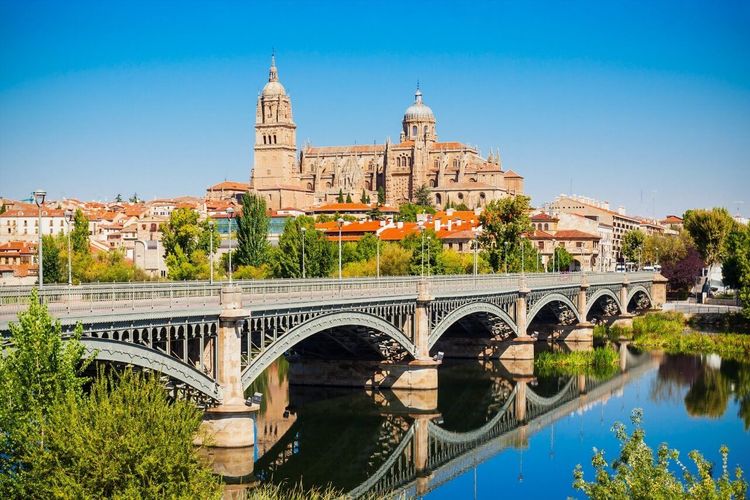
Salamanca owes its colour to its golden stone: the yellow sandstone used in almost all its monuments turns orange at sunset, giving the entire city a warm, uniform tone rare in Spain. This visual coherence earned its historic centre UNESCO World Heritage status in 1988.
The University of Salamanca, founded in 1218, is one of the oldest still active in Europe — older than the Sorbonne. Its Plateresque façade, covered in low-relief carvings, conceals a frog whose discovery is said to bring students good luck in their exams. The Plaza Mayor, designed by Alberto de Churriguera between 1729 and 1755, is regularly cited as one of the finest Baroque squares in Spain. The 30,000 students enrolled at the university keep the bars and terraces lively until dawn, making Salamanca one of the most vibrant cities in Castile-León.
Two neighbouring buildings deserve a lingering visit: Salamanca's two cathedrals — the old (Romanesque, 12th century) and the new (late Gothic and Baroque, 16th–18th century) — stand side by side and are accessible on the same ticket, offering a striking shortcut through five centuries of religious architecture. For those who enjoy climbing, the Ieronimus tower allows you to walk across the terraces and bell towers of the cathedrals and take in the city's golden rooftops. If Madrid follows on the same trip, our audio-guided tour of the capital chases its own light across twenty stops.
15. Cádiz, the Old Lady of the Atlantic
Cádiz claims the title of the oldest continuously inhabited city in Western Europe, founded by the Phoenicians around 1100 BCE. The entire city sits on a peninsula of just 12 km², surrounded by water on three sides, which gives it a particular quality of light, reflected by the Atlantic. Its white houses with miradores (watchtowers used by merchants to spot their ships) and its gilded domes create a unique silhouette against the blue sky.
The Carnival of Cádiz, held in February, is one of the largest and most creative in Spain, featuring satirical musical groups (the chirigotas) that mock national politics in rhyming verse. The Ryo audio guide to Cádiz takes you through "the city of the sea and freedom".
16. Málaga, Mediterranean Andalusia
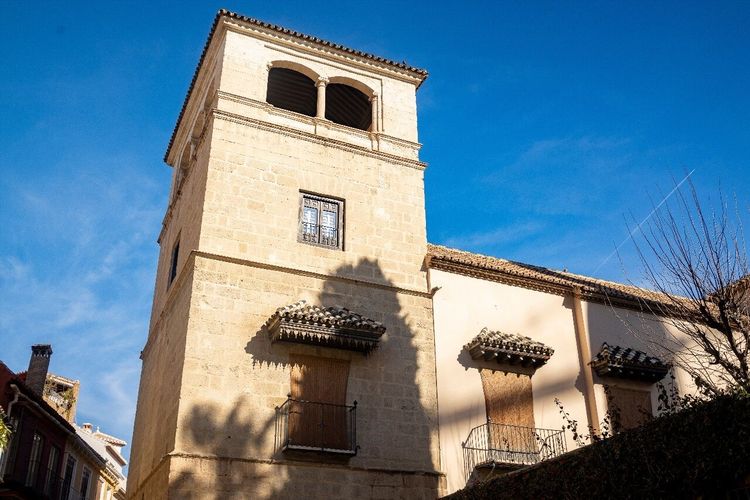
Málaga long lived in the shadow of Séville and Granada, but the capital of the Costa del Sol has reinvented itself over the past decade. The Picasso Museum, inaugurated in 2003 in the Palacio de Buenavista, brings together 233 works from family donations and covers the painter's entire career — he was born here in 1881. The Carmen Thyssen Museum of Málaga, opened in an 18th-century palace, rounds out the museum offering with a collection focused on 19th-century Andalusian painting.
The city has also reclaimed its historic centre: Calle Larios, the fully pedestrianised main avenue, and the alleyways around the Alcazaba (an 11th-century Arab fortress) now host a bar and restaurant scene that attracts Spaniards themselves for weekend breaks. Above, the Gibralfaro Castle, connected to the Alcazaba by a rampart walkway, offers the finest view over the harbour, the Malagueta bullring, and the Mediterranean — one of the most underrated panoramas in Andalusia. To explore Picasso's city with an audio guide, the Ryo audio guide to Málaga offers 24 stops over 5.3 km.
17. Ordesa National Park, the Wild Pyrenees
The Ordesa y Monte Perdido National Park, created in 1918 (one of the oldest in Europe), holds within its 156,000 hectares some of the most spectacular Pyrenean landscapes on the continent. The Ordesa Canyon, carved by the Ara river, plunges 1,000 metres deep with vertical walls reminiscent of the Dolomites at their wildest. The Cotatuero waterfalls and the Cola de Caballo (Horsetail Falls), a 70-metre waterfall at the foot of the Soaso cirque, are the park's iconic images.
Protected species can be observed here: the griffon vulture, the bearded vulture (reintroduced in the 1990s), the Pyrenean chamois, and, more rarely, the brown bear in the Aneto massif. Monte Perdido, at 3,355 metres, is the third-highest peak in the Pyrenees and one of the few remaining Pyrenean glaciers still visible, retreating rapidly due to climate change. The park's base is the village of Torla-Ordesa, the starting point for the main hikes.
18. The Beach of the Cathedrals, Galicia's Coast at Its Most Dramatic
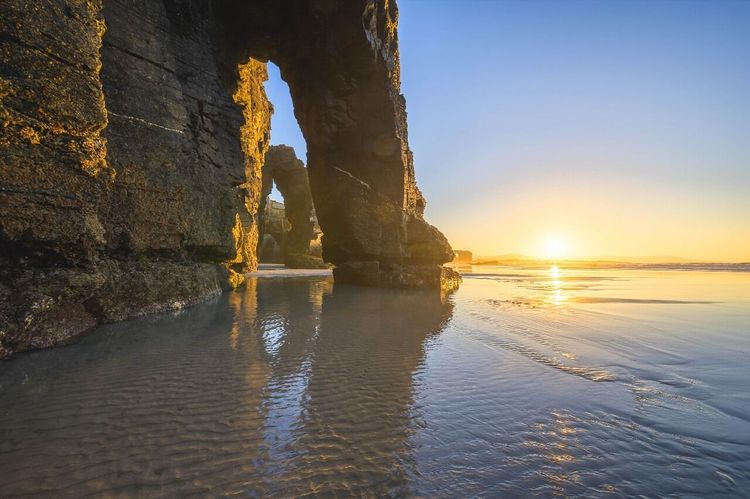
The Playa de las Catedrales (Beach of the Cathedrals), in Galicia, is only fully accessible at low tide. That is its unique character: when the sea retreats, it reveals natural rock arches reaching 32 metres high, caves, and tunnels sculpted by Atlantic erosion over millions of years. The resemblance to Gothic naves is striking, and UNESCO has listed the site as a coastal protection area.
The beach is officially named Praia de Augas Santas (Ribadeo, 27700 Lugo, rated 4.8/5 on Google with 21 reviews) and lies a few kilometres from Ribadeo, in Galicia. During the summer months (June–September), access is regulated and requires a free online booking — the site welcomes up to 5,000 visitors per day. Arriving 1 hour before low tide is recommended to make the most of the spectacle before the sea rises again. Checking the tide tables before descending is absolutely essential — the risk of being trapped by the incoming tide is real.
19. Mérida, Rome in Extremadura
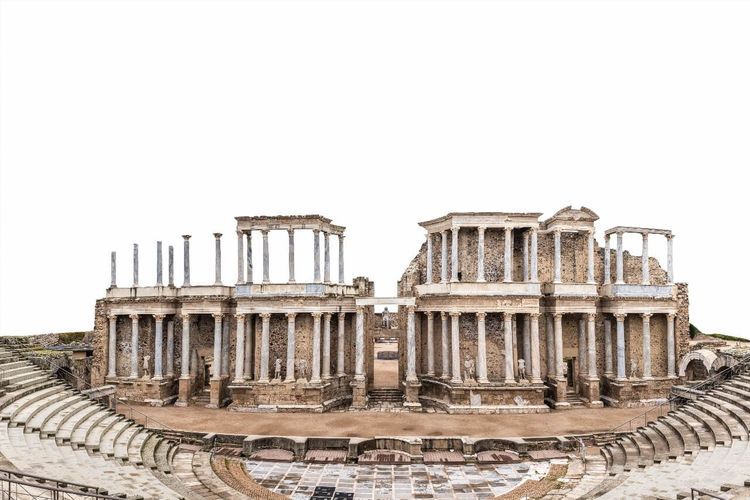
Mérida is a city of 60,000 inhabitants that is home to the largest collection of Roman remains in Spain. The former Augusta Emerita, founded in 25 BCE for veteran legionaries from the Cantabrian Wars, was the capital of the Roman province of Lusitania. Its Roman Theatre, built between 16 and 15 BCE, has been restored as an open-air venue and hosts the International Classical Theatre Festival every summer before its marble columns — attending a performance here is a unique experience in time.
The adjacent Roman Amphitheatre could hold 15,000 spectators. The Temple of Diana, whose Corinthian columns rise in the middle of the city's historic centre alongside modern buildings, creates a strange yet fascinating cohabitation. To explore these ruins with historical audio context, Ryo's Mérida audio-guided tour offers 18 stops over 6.5 km through this "well-kept Roman secret".
20. Úbeda and Baeza, the Renaissance in the Heart of Andalusia
Úbeda and Baeza, two towns in the interior of the province of Jaén, share an exceptional Renaissance heritage jointly inscribed on the UNESCO World Heritage List in 2003. The Plaza Vázquez de Molina (Plaza Vázquez de Molina s/n, 23400 Úbeda, rated 4.7/5 on Google with 8K reviews) in Úbeda, surrounded by 16th-century palaces and churches in ochre stone, is considered by architectural historians to be the finest Renaissance square in Spain — perhaps even in southern Europe.
Both towns remain surprisingly off the beaten tourist track, which makes it possible to visit them in relative calm even in high season. Úbeda is also known for its artisan potters, a tradition of green copper-oxide ceramics dating back to the Arab era. To explore Úbeda with an audio narrative, Ryo's Úbeda audio-guided tour takes you to discover this "hidden gem of the Spanish Renaissance".
21. The Bardenas Reales Desert, Lunar Spain
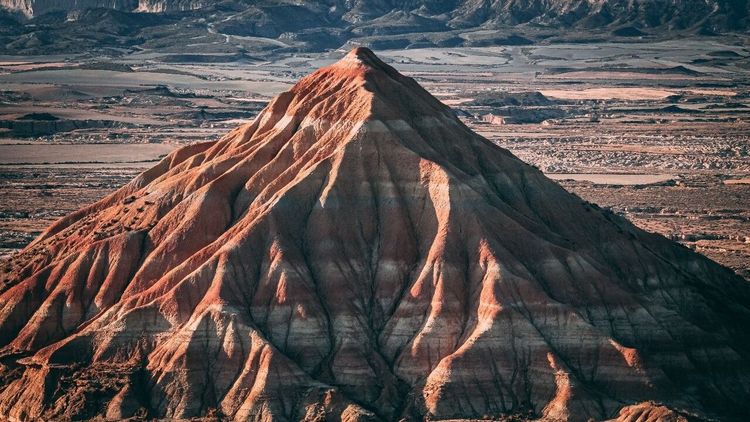
Spain is home to the only desert in Western Europe, yet few travellers know it. The Bardenas Reales (Parque Natural de las Bardenas Reales, 31500 Tudela, Navarra, rated 4.7/5 on Google with 4,318 reviews), in Navarre, are a 42,000-hectare biosphere reserve where wind and rain have sculpted clay and sandstone into needles, tables, and pyramids — a landscape that served as a backdrop for several episodes of Game of Thrones (the Dothraki Wastelands). The Cabezo de Castildetierra, the park's most iconic mushroom-shaped formation, rises some fifteen metres against an Aragonese sky.
The desert is ideally explored by motorbike or 4x4 on the tracks, but cycling routes of 18 to 40 km allow you to cross the most spectacular areas. Tutera (Tudela), the gateway town for the Bardenas, is worth a stop for its renowned produce — cardoons, asparagus, and artichokes from the region supply the tables of Spain's finest restaurants.
22. Antequera, Where Andalusia Begins
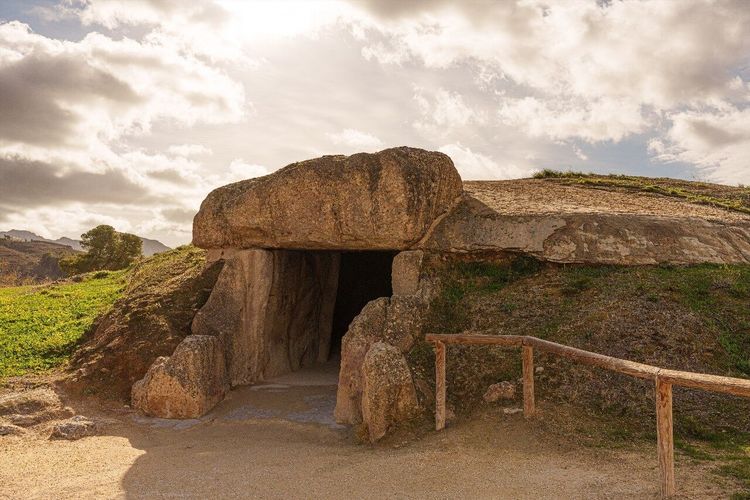
Antequera is known to archaeologists worldwide: its Antequera Dolmens — the Dolmen de Menga (Avenida de Málaga s/n, 29200 Antequera, rated 4.5/5 on Google with 3,673 reviews), the Dolmen de Viera, and the Tholos del Romeral — constitute one of the oldest and best-preserved megalithic complexes in Europe, dating back 4,500 to 5,000 years BCE. The main chamber of the Dolmen de Menga measures 25 metres long and its stones weigh up to 180 tonnes — how they were transported and put in place remains a mystery.
Beyond its prehistory, the medieval town of Antequera, dominated by its Nasrid Alcazaba, offers views over the Andalusian plain and the rock formation known as La Peña de los Enamorados (the Lovers' Rock) — a human face in profile stretched along the horizon. Ryo's Antequera audio guide offers 17 audio stops over 4.7 km through this discreet yet fascinating town.
23. The Costa Brava, the Catalan Coast with Character
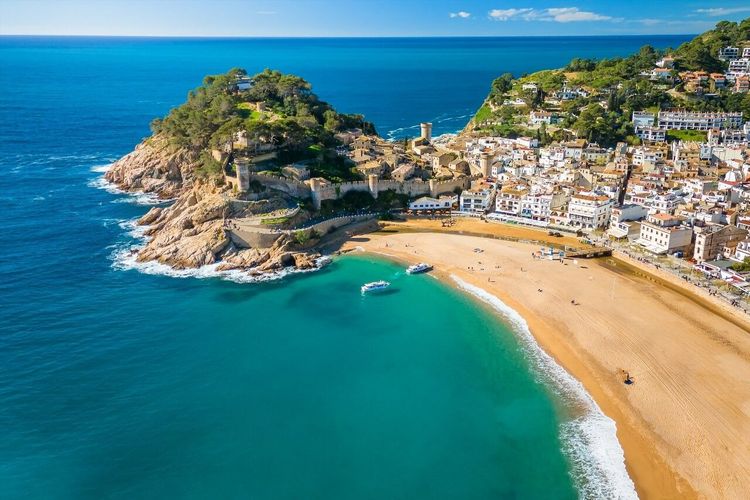
The Costa Brava stretches for 214 km of Catalan coastline, from Blanes to the French border, with an alternation of deep coves, rocky headlands, and fishing villages that hold their own against tourist pressure better than most. Cadaqués (Cadaqués, 17488 Girona, rated 4.6/5 on Google with 11K reviews), a whitewashed village on an isolated bay, was home to Salvador Dalí at his studio-house in Portlligat (open to the public by reservation) — the Surrealist movement has left lasting traces throughout the region.
Pals, a medieval village inland, and Peratallada, whose houses and alleyways are carved directly from the golden rock, rank among the most photographed villages in Catalonia. The coves of Cap de Creus, a nature park at the north-eastern tip of the Iberian Peninsula, offer unusually clear water for the Mediterranean, ideal for diving.
24. La Orotava, Tenerife off the Beaten Track
La Orotava, on the slopes of the Teide in Tenerife, represents the Tenerife that coastal tourists never see. With its colonial houses featuring carved wooden balconies, its flowered patios, and its cobbled streets descending to the sea, the town showcases Canarian architecture at its finest. Each year in June, during the Corpus Christi Festival, residents decorate the streets with carpets of flowers and brightly coloured volcanic ash — a craft tradition whose most intricate designs require months of preparation.
The Casona del Patio, an 18th-century manor house open to the public, is the finest example of Canarian architecture on the island. To discover La Orotava through the story of its streets, Ryo's La Orotava audio walking tour offers 16 audio stops over 2.5 km.
25. Salamanca and Its End-of-Day Light
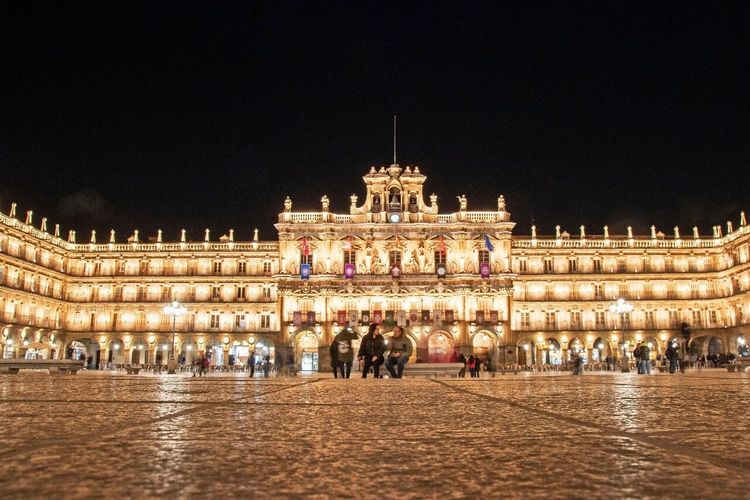
We return to Salamanca — not out of forgetfulness, but because this city has a characteristic that deserves to be named explicitly: it looks different in the morning and in the evening. The grès dorado stone changes hue with the light, shifting from cream to burnt orange at sunset. Travel photographers know it well: the Plaza Mayor between 6 pm and 8 pm in summer may offer the finest golden light on a monumental square anywhere in Spain.
If you are exploring northern Spain, spend at least two nights in Salamanca to enjoy the evening light, and dedicate half a day to the art galleries of the Colegios Mayores, the University collections, and the Convent of San Esteban, whose Baroque altarpiece is one of the most imposing in the country. To explore the luminous city with an audio guide, Ryo's Salamanca audio-guided tour takes visitors through "Viva la Dorada".



FAQ
What is the most beautiful place to visit in Spain?
The Alhambra in Granada is often cited as the most impressive site in Spain, and it is hard to dispute that title. The Nasrid Palaces, with their finely carved geometric stucco decoration, interior fountains, and the gardens of the Generalife, make up the best-preserved medieval Islamic architectural complex in the world. Barcelona (for its architecture), Ronda (for its spectacular bridge over the gorge), and Tolède (for its historical coherence) round out the podium of the most beautiful places in Spain.
Which region of Spain is best to visit?
It depends on your preferences. Andalusia (Séville, Granada, Cordoue, Ronda, Málaga) offers the greatest density of historical and cultural sites. Catalonia (Barcelona, Costa Brava, Girona) combines architecture, gastronomy, and sea. For natural landscapes, the Canary Islands and the Aragonese Pyrenees are unrivalled. The Basque Country (Bilbao, San Sebastián) is the country's top gastronomic destination.
What are the best seaside places in Spain?
San Sebastián is home to one of Europe's most beautiful urban beaches, the Playa de la Concha. The Catalan Costa Brava (Cadaqués, the coves of Cap de Creus) offers the clearest waters of the Spanish Mediterranean. Formentera, in the Balearic Islands, is regularly ranked among the most beautiful beaches in the world. In the Canary Islands, the beaches of Fuerteventura and the dunes of Maspalomas on Gran Canaria are among the most spectacular in the Atlantic.
What is the best time to visit Spain?
Spring (April–May) and autumn (September–October) are the best periods: pleasant temperatures (18–25°C), thinner crowds, and remarkable festivals such as the Feria de Abril in Séville or the Festival of the Patios in Cordoue in May. Summer is best avoided in inland cities (Madrid, Séville, Cordoue: over 40°C in July–August). The Canary Islands and the Costa del Sol are enjoyable even in winter.
What is the most beautiful natural landscape in Spain?
The Ordesa National Park in the Aragonese Pyrenees is often cited as the country's most spectacular natural landscape, with its gorges 1,000 metres deep and its waterfalls. The Bardenas Reales in Navarre offer a complete change of scenery with their desert of lunar formations. The Beach of the Cathedrals in Galicia, accessible only at low tide with its rock arches 32 metres high, is among the most photographed. The Teide in the Canary Islands, the world's third-largest volcanic structure by volume, is in a category of its own.
Is Spain a good destination for families?
Yes, particularly certain destinations. Barcelona combines the Sagrada Família, Parc Güell, and the city's beaches. The Canary Islands offer a guaranteed climate and quality theme parks (Loro Parque in Tenerife, Siam Park). Valencia has the Oceanogràfic, the largest aquarium in Europe. Mallorca offers calm beaches and water activities for all ages. Spain is generally very family-friendly, with flexible dining and late hours that are culturally accepted.
In Summary: Planning Your Itinerary
The best places in Spain cannot be reduced to a list of monuments. This country is an accumulation of layers — Roman, Visigothic, Arab, Christian, modern — that coexist within the same square metre of cobbled street or the same millimetre of carved stucco. Every city in this selection can be visited in a day, but each deserves far more: several days to feel its rhythm, to eat in the right places, to encounter locals rather than tourists. If you had to follow just one guiding thread, do it by region: Andalusia for its Moorish heritage, the Atlantic north for its gastronomy and green landscapes, the islands for their volcanoes and sea.
To plan your stops one by one with an audio guide, the Ryo audio-guided tours of Spain accompany you through the country's richest cities and regions, with the anecdotes and historical facts that printed guides rarely have space to develop. Download the route for your first destination, slip in your earphones, and let Spain tell you a thousand years of history as you walk. Buen viaje.
À lire également