© Shutterstock
 Votre guide Ryo
Las Ventas Bullring in Madrid: Complete Guide 2026
In Madrid, there is a place where 23,798 people can hold their breath at the same time. The Plaza de Toros de Las Ventas (the Las Ventas bullring) is not only the largest bullfighting arena in Europe: it is a listed neo-Mudéjar monument, inaugurated in the midst of the Spanish political crisis of 1931, and since then established as the world temple of bullfighting. Most travelers pass by on the metro without ever going inside.
This guide takes you inside. You will find the story of its chaotic construction (ten years of works, three successive architectural projects), the layout of the stands where shade is worth three times the price of sun, the types of visits available in 2026 with their exact prices, and everything you need to know to attend the Feria de San Isidro, with its twenty consecutive corridas that make this monument the most closely watched bullfighting stage in the world every May.
A Decade-Long Construction: the History of an Exceptional Arena
The foundation stone of the arena was laid in 1922, but work dragged on for nine years due to irregular public funding and successive changes of government. The monument was finally inaugurated on 17 June 1931, under the freshly proclaimed Second Spanish Republic, in a country going through a period of intense social and political tension. The first event was held under precarious conditions, as the structure was not entirely finished by the inauguration date.
The project's lead architect was José Espelius, succeeded by Manuel Muñoz Monasterio for the finishing works. The original brief was ambitious: an arena capable of surpassing all others in Spain, with a capacity exceeding 20,000 spectators and a façade that would leave a lasting mark on the Madrid skyline. The chosen site, in the eastern part of the city which was then sparsely developed, made it possible to build on a scale impossible in the already densely packed central districts.
Before this new venue, Madrid relied on the Plaza de Toros de la Carretera de Aragón (Calle de Alcalá 237, 28028 Madrid, rated 4.5/5 on Google with 41,468 reviews), built in 1874 and no longer adequate for the growing demand of the early twentieth century. The transition between the two arenas was gradual, with some events continuing to be held in the old facility until its demolition in the 1930s.
Since its opening, the monument has acquired a unique status in the bullfighting world. A matador may excel in Seville, in Pampelune, or in Latin America, but without a successful confirmation in Madrid, his career remains incomplete in the eyes of aficionados. This unwritten but universally respected rule makes this arena a place apart within the global circuit.
Neo-Mudéjar Architecture: When Red Brick Speaks of Spain
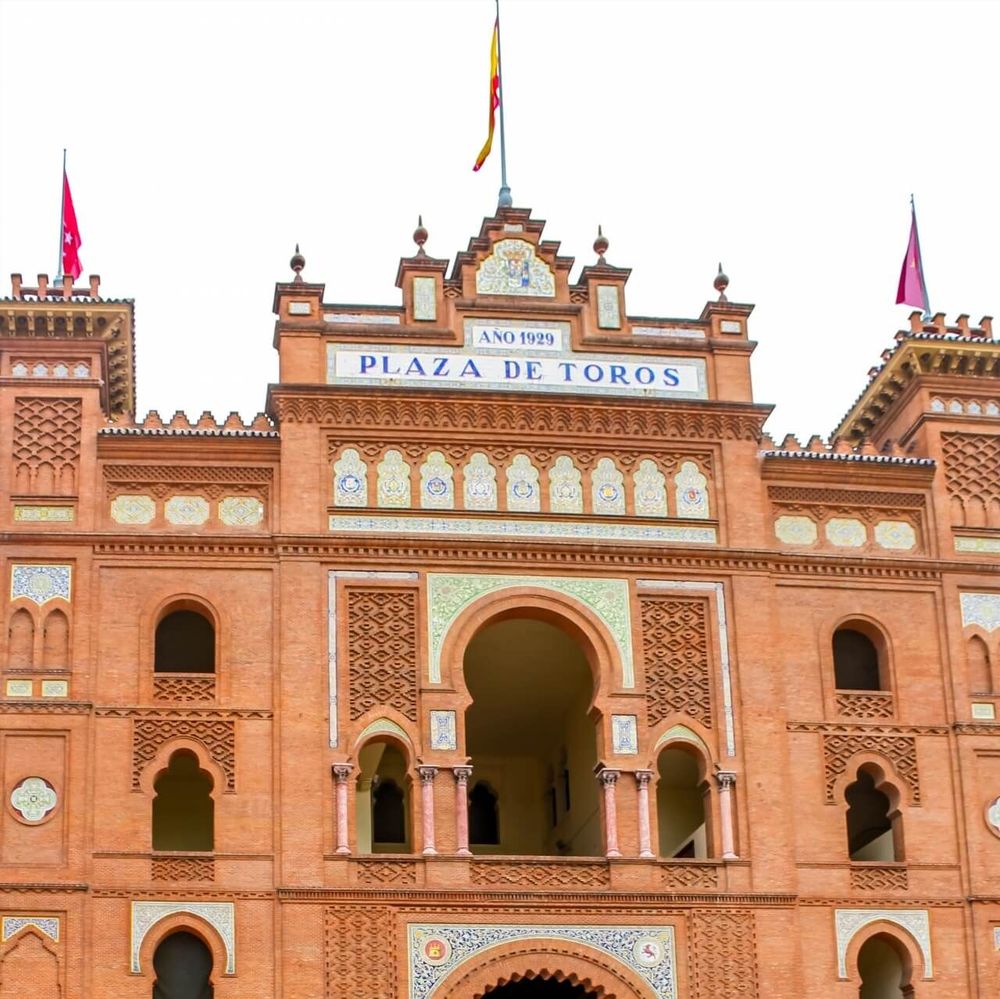
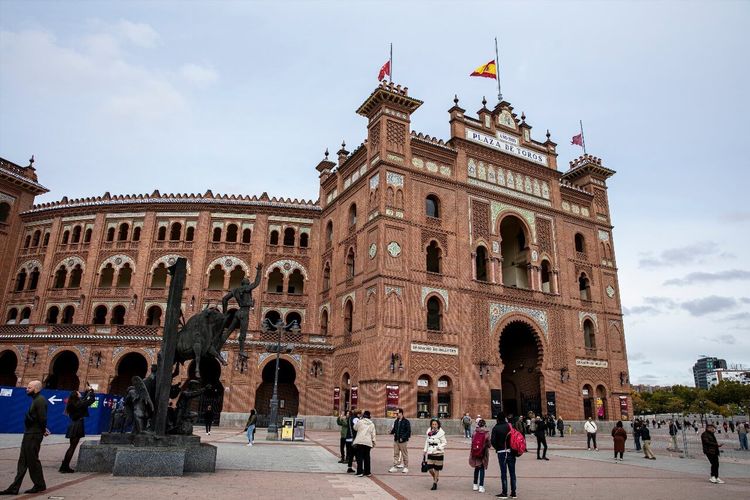
The building's façade is a lesson in Spanish architecture that can be read from the opposite pavement. The neo-Mudéjar style, born in the nineteenth century as a contemporary reinterpretation of medieval Islamic art, is expressed here through horseshoe arches, coloured ceramic friezes, and a red-brick ornamentation characteristic of this movement in Madrid.
This style is no accident: it belongs to a Spanish architectural movement seeking to assert a distinct identity, separate from the dominant French neoclassical influence elsewhere in Europe at the same period. The building is one of the most accomplished examples of this movement applied to a large-scale public structure, and one of the few conceived from the outset as a full-fledged urban monument.
The main façade faces the Calle de Alcalá. It is flanked by two chapels, dedicated respectively to the Virgen de la Paloma and the Virgen de las Angustias, where matadors can pray before entering the ring. The azulejos (glazed ceramic tiles) adorning the doorways and friezes were made in Seville, the birthplace of this craft tradition. Their presence reinforces the Andalusian roots of a building constructed in the heart of Madrid.
Capacity and Dimensions: Figures That Are Hard to Grasp
The monument's statistics are difficult to take in without comparison. The arena has an official capacity of 23,798 seats, making it larger than several top-flight football stadiums. The main ring measures 60 metres in diameter, the widest in Europe among bullfighting arenas still in active use.
Compared to other major Spanish arenas, the Madrid venue surpasses the Real Maestranza de Séville (12,500 seats) and the Pampelune arena (19,500 seats), its two main rivals in the ranking of the circuit's most prestigious venues. Yet even this colossal capacity is not always sufficient during the Feria de San Isidro: tickets for the most sought-after dates sell out within hours of going on sale.
The Seating Plan: Sol, Sombra, and the Different Zones
For those considering attending a bullfight, the distinction between sol and sombra is essential. These terms refer to whether seats are in the sun or shade: shaded seats (sombra) cost two to four times more than sunny ones (sol), since a June afternoon in Madrid at 36 degrees can turn a cultural experience into a physical ordeal.
The arena is divided into several distinct zones. The tendido is the main seating section, subdivided into tendido bajo (close to the ring) and tendido alto (higher up). Most tickets sold for ordinary corridas are in this zone, and it is where the atmosphere is most intense during major events.
The palcos are the private boxes on the upper level. Some have been owned by Madrid families for generations; others are rented by the season. The royal box (palco real) occupies a central position and offers the best overall view of the ring. It is reserved for officials and is not accessible to the general public.
The andanada refers to the highest rows of the arena, beneath the arches of the upper structure. These are the cheapest seats and the viewing angle is very steep: you see less detail of the ring, but the overall view of a venue packed with 23,000 people is spectacular in its own way. For a first visit, seats in the tendido bajo on the sombra side offer the best value for the experience, even if they are expensive during the Feria.
The Bullfighting Museum of Madrid
Housed in the arena's basement, the Bullfighting Museum (Museo Taurino de Madrid (Calle de Alcalá 237, 28028 Madrid, rated 4.3/5 on Google with 1,626 reviews)) is one of the most comprehensive in Spain. It is included in the guided tour ticket and can also be visited independently with a separate ticket.
The museum traces four centuries of bullfighting history through a collection of exceptionally rare objects: trajes de luces (the embroidered costumes worn by matadors) donated by some of the greatest names in world bullfighting, capas de brega, bullfighting posters dating back to the eighteenth century, and several paintings by Spanish artists whose work is directly linked to the bullfighting world. The chronological layout is clear and well documented, making the visit accessible even to the uninitiated.
Among the most remarkable pieces is the taxidermied head of the bull Islero, displayed in a room entirely dedicated to him. This is the bull that killed the legendary matador Manolete on 28 August 1947 in Linares, during a corrida that remains one of the most significant dates in bullfighting history. The room dedicated to Manolete is one of the most visited in the museum, even by travellers who had never heard the name before entering.
Bullfighting in Madrid: How a Show Unfolds
Attending a corrida without knowing its codes is like watching a chess game without knowing the rules: you see pieces moving, but you miss what really matters. Here is the structure of an event at the Madrid arena.
A standard programme consists of six bulls and three matadors, each facing two bulls over the course of the afternoon. The corrida is structured in three parts called tercios.
The first tercio is the suerte de varas. Mounted picadors enter the ring and use a lance to test the bull's resistance and weaken the muscles of its neck. This phase determines the animal's power and behaviour for the rest of the event. It is often criticised by opponents of bullfighting for its bloody nature, and appreciated by aficionados for the information it provides about the quality of the bull.
The second tercio is the suerte de banderillas. Three banderilleros each plant two banderillas (decorated sticks adorned with coloured paper) in the bull's back by running directly towards it. The execution requires remarkable precision and timing: the banderillero must reach his target while dodging the horns of a bull charging at full speed. This is often the most spectacular phase in terms of pure technique.
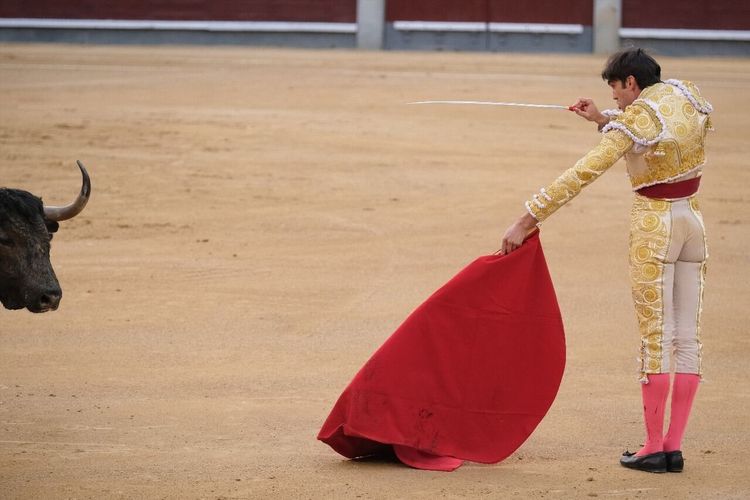
The third tercio is the heart of the show: the faena. The matador works alone with the bull and the muleta (the red cape), in a series of passes that define the torero's style and courage. It is in this phase that the great moments of a corrida play out — the ears awarded by the president as a mark of distinction, and the ovations of the crowd. The faena ends with the final estocada.
The total duration of a corrida is approximately two hours. Events generally start at 6:30 pm or 7:00 pm, avoiding the hottest hours of the day. Plan to arrive 30 minutes early if you are attending a corrida during the Feria, as the area around the monument is swamped with crowds and ticket touts from early afternoon.
The Feria de San Isidro: the World's Most Anticipated Bullfighting Event
Every spring, Madrid lives to the rhythm of bullfighting for nearly a month. The Feria de San Isidro is the largest concentration of corridas in the world: almost one bullfight every day, featuring the best toreros and the finest ganaderías (bull-breeding estates) on the circuit. For aficionados from around the world, attending several corridas during the Feria is an annual pilgrimage that requires months of planning.
The central date is 15 May, the feast of San Isidro, patron saint of Madrid. In 2026, the Feria runs from 8 May to 7 June, with around twenty corridas de toros punctuated by a few rest days, followed by special corridas (In Memoriam and Beneficencia) in early and mid-June. The official programme, announced at the start of the year, can be consulted on the Madrid city hall website and on the arena's own site. Booking tickets several weeks in advance is essential for the most eagerly awaited dates, with some selling out within hours of going on sale.
Even for visitors indifferent to bullfighting, the Feria period is worth paying attention to: open-air concerts, street entertainment, and a collective festive atmosphere that extends well beyond the arena's walls. The neighborhood transforms into a cultural epicentre during these weeks, with restaurants fully booked from lunchtime and terraces that don't close until dawn.
Visiting the Arena Without Attending a Bullfight
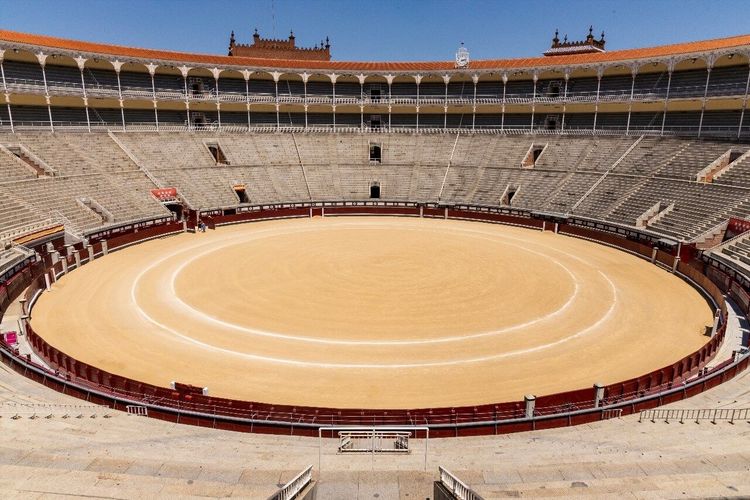
The monument is not reserved for bullfighting enthusiasts. The guided tour of the arena is one of the most unusual experiences Madrid offers its visitors, and it is available all year round (except on days when a corrida is scheduled).
The standard tour lasts approximately 1 hour 30 minutes and includes access to the main ring (you stand exactly where the corridas take place) as well as the backstage areas normally closed to the public: the corrales (bull pens), the patio de caballos (courtyard for the picadors' horses) and the infirmaries where injured matadors are treated. Descending into these spaces gives a radically different perspective on the building, far removed from the ordinary spectator's viewpoint.
360° virtual reality tours have been available since 2025, allowing visitors to relive historic corridas from the matador's perspective. This option is particularly appreciated by visitors who want to understand the atmosphere of an event without attending one directly.
To explore more of Europe's great historic arenas, the Ryo audio guide dedicated to the Nîmes arena offers a deep dive into the history of the largest preserved Roman arena in the world, with content that puts two monuments built twenty centuries apart into perspective.
The Different Visit Options in 2026

Several options are available for visiting the monument depending on your budget and interests.
The self-guided visit (museum entry only) is the most affordable option. It gives access to the Bullfighting Museum and the peripheral galleries, but not to the ring or the backstage areas reserved for matadors.
The standard guided tour includes the ring, the museum, and the backstage areas. English-language tours are available on certain days of the week. It is advisable to check the schedule on the arena's official website before booking.
The private tour is aimed at small groups who want to visit at their own pace with a dedicated guide. It is more flexible in terms of timing and duration, and can include areas rarely accessible on group tours.
The 360° VR experiences can be combined with the guided tour or booked separately. They last approximately 20 minutes and recreate iconic moments from the venue's history from viewpoints impossible to achieve on a standard visit.
Bullfight tickets are purchased separately, on the arena's official website or via Entradas.com. Touts who gather near the entrances on feria days charge two to three times the official prices. It is far better to plan ahead, and to fill the day with our Landscape of Light audio-guided tour, which unfolds the Madrid of the Prado across 20 stops.
Prices and Opening Hours in 2026
Guided tour hours (on days without a bullfight):
Tuesday to Sunday, from 10:00 am to 5:30 pm (last entry at 5:00 pm). Closed on Mondays. On days when a corrida is scheduled, the monument is closed to tourist visits.
Indicative prices for 2026:
The self-guided visit with museum access is priced at around €10 to €14 per person. The standard guided tour costs between €16 and €22 depending on the language and group format. Private tours are available from €50 to €60 for a group of six. Discounts are available for children under 12, seniors, and holders of the Tarjeta Joven from the Community of Madrid.
For corridas, prices vary widely depending on position in the arena and the date. The cheapest seats (andanada sol) start at around €10. Box seats in the sombra section during the Feria de San Isidro can exceed €200 per ticket. For an ordinary corrida outside the feria, a good seat in the tendido sombra costs between €30 and €70. Groups of ten or more benefit from preferential rates on the standard guided tour.
How to Get to the Las Ventas Bullring
The arena is served directly by the Madrid metro. The Las Ventas station (lines 2 and 5) is just a few metres from the main façade. From the Puerta del Sol, allow 8 to 12 minutes by metro depending on connections.
By bus, several lines run along the Calle de Alcalá and stop at Las Ventas. By car, parking is difficult on corrida days and strongly discouraged during the Feria: the streets immediately around the monument are closed to traffic. The metro remains the only truly reliable option on these dates.
Where to Eat and Drink in the Neighborhood
The neighborhood has several addresses frequented by aficionados before and after corridas, along the Avenida de Toreros and in the side streets off the Calle de Alcalá.
Bar El 7 is a local institution, open for several decades. The tapas are unpretentious but generous: jamón ibérico and boquerones en vinagre, homemade tortilla. The atmosphere is particularly lively on corrida evenings.
For a more elaborate meal, Restaurante Los Torreznos (Calle de Alcalá, 28028 Madrid, rated 4.2/5 on Google with 4,368 reviews) serves traditional Madrid cuisine: cocido madrileño and rabo de toro (braised oxtail, a dish directly linked to bullfighting tradition). The restaurant is often fully booked on corrida evenings and throughout the Feria period. Reservations are recommended.
What to Do Around Las Ventas
The neighborhood is an authentic residential area, less touristy than central Madrid. Walking through it is an opportunity to see the city off the beaten track.
The Mercado de Ventas, located a few minutes' walk from the arena, is a typical Madrid indoor market. You will find local charcuterie and cheeses for putting together a picnic, as well as delicatessens and fishmongers frequented by local residents.
The Parque del Retiro (Paseo del Retiro, 28009 Madrid, rated 4.8/5 on Google with 212,924 reviews), Madrid's largest park, is accessible from the neighborhood in 15 minutes on foot or three metro stops (line 2 towards Cuatro Caminos, alight at Retiro). A stroll through this green lung of the capital makes a pleasant complement to a morning or afternoon spent at the arena.
If you wish to extend your exploration of Spanish heritage beyond Madrid, the Ryo audio guide for Las Palmas offers an immersion in a city whose colonial architecture contrasts sharply with the neo-Mudéjar Madrid of the corrida.
Practical Tips Before Your Visit
A few concrete points to avoid unpleasant surprises on the day.
Book your bullfight tickets in advance. Box offices generally open two weeks before each event. For the Feria de San Isidro, some dates sell out within hours of going on sale. Official platforms (the arena's website or Entradas.com) are the most reliable and the cheapest.
Come prepared for an outdoor bullfight. The stands are made of stone or concrete. Sun-exposed seats are very uncomfortable in strong heat. A cap and sunscreen are essential for sol seats. A rented cushion (available on site for €1 or €2) significantly improves comfort on the stone stands.
Arrive early for the guided tour. Morning slots (10 am to noon) are less busy than afternoons, allowing for a more relaxed visit. For a commentary in English, check the schedule on the official website before making the trip.
Photography is freely permitted. The guided tour allows photos in all accessible areas, including the ring and backstage. During corridas, non-professional cameras are permitted; video cameras and tripods are, however, often prohibited depending on the date and type of event.

FAQ
What is the capacity of the Las Ventas bullring?
The arena can hold 23,798 spectators, making it the largest bullfighting venue in Europe. For comparison, the Real Maestranza de Séville has 12,500 seats and the Pampelune arena holds around 19,500. During the Feria de San Isidro, the stands are regularly full for the most anticipated corridas.
Can you visit the monument without attending a bullfight?
Yes, and in fact that is what the majority of visitors do. The guided tour (approximately 1.5 hours) gives access to the main ring, the Bullfighting Museum, and the backstage areas normally closed to the public. It is available Tuesday through Sunday all year round, except on days when a bullfight is scheduled.
When does the Feria de San Isidro take place in 2026?
The Feria de San Isidro 2026 runs from 8 May to 7 June, centered around 15 May, the feast day of San Isidro, patron saint of Madrid. The official programme is announced at the start of the year by the Madrid city hall. This is the liveliest period in the neighborhood and when tickets are the hardest to obtain.
How much does a seat for a bullfight in Madrid cost?
Prices vary depending on the position in the arena and the date. The cheapest seats (andanada sol) start at around €10. Box seats in the sombra section during the Feria can exceed €200. For an ordinary corrida outside the feria, a good seat in the tendido sombra costs between €30 and €70.
How do you buy official tickets?
Tickets are available at the venue's box offices (open approximately two weeks before each event), on the arena's official website, and via Entradas.com. Touts who position themselves near the entrances on feria days often charge two to three times the official prices — it is far better to book in advance.
Is the venue accessible to people with reduced mobility?
The arena has several adapted access points and reserved seats for people with reduced mobility in the tendido. The guided tour can be adapted upon request. It is advisable to contact the venue directly to find out the exact arrangements depending on the type of visit you wish to make.
Conclusion
The Las Ventas bullring resists easy simplification. An architectural monument, a landmark of Spanish popular culture, and a stage on which one of the world's most singular spectacles has been performed since 1931, the arena deserves a thoughtful visit — whether you are a long-standing aficionado or simply curious about a living tradition.
To explore other historic monuments and prepare your visits with cultural context in hand, the Ryo app offers audio-guided tours across several cities in Spain and Europe. Ryo audio guides accompany you at your own pace, with stories and anecdotes that bring meaning to what you see before you. Enjoy your visit to Madrid.
À lire également