© Shutterstock
 Votre guide Ryo
Game of Thrones: Filming Locations to Visit in 2026
When Game of Thrones ended in 2019, it left behind something unexpected: a redrawn map of the world. From the cliffs of Northern Ireland to the alleyways of Dubrovnik, from the Saharan ksour of Morocco to the Icelandic lava plains, the series transformed real destinations into televisual myths. Today, hundreds of thousands of visitors a year seek to walk the same stones as Cersei, Jon Snow, or Daenerys. This guide lists the main Game of Thrones filming locations, country by country, with practical information for visiting them, the scenes that were filmed there, and a few tips to avoid getting lost in a sea of fans during peak season.
You will discover that Croatia alone concentrates a good ten or so recognisable sites, that Northern Ireland is the country where the series kept its cameras the longest, and that Morocco played the entire 'Essos' portion, from Meereen to Qarth. The Ryo app also offers audio guides for several of these cities, perfect for extending the experience once you are on the ground. Let's go.
Croatia: Dubrovnik, the Real King's Landing
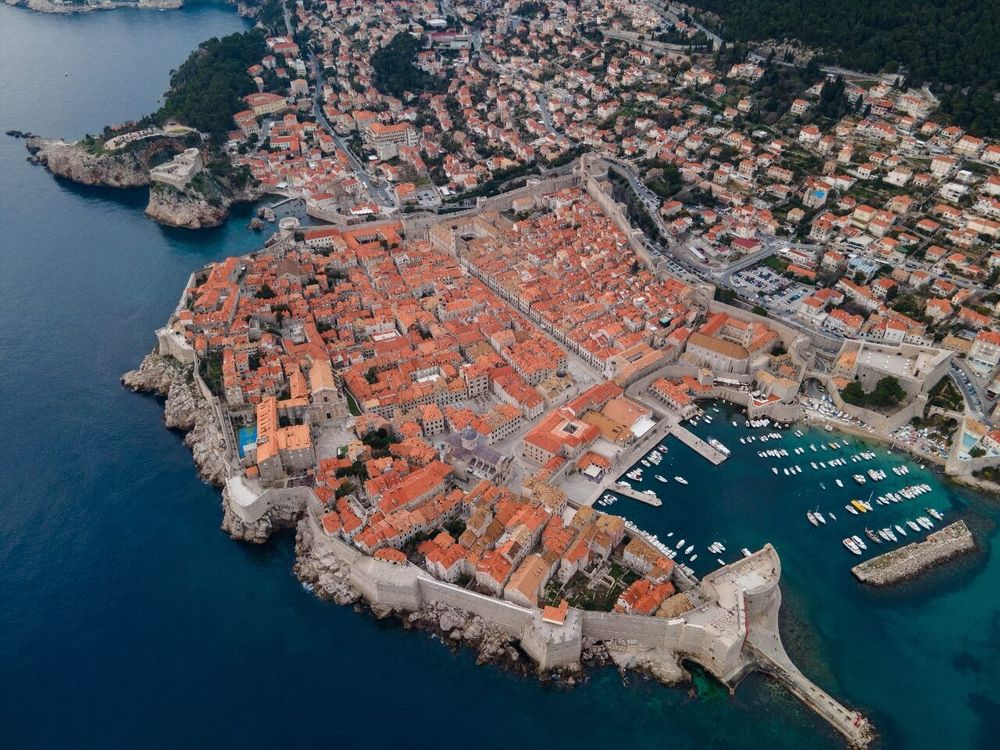
Dubrovnik is undoubtedly the most iconic setting in the series. The Croatian old town, a UNESCO World Heritage Site since 1979, portrayed King's Landing, the capital of the Seven Kingdoms, from season 1 through to season 8. Its medieval walls, white limestone streets, and fortifications overlooking the Adriatic make it a setting almost too perfect to have been invented.
On the walls themselves, you will literally walk in the footsteps of Cersei Lannister's Walk of Shame (season 5, episode 10), filmed in the alleyways of the old town. Fort Lovrijenac, perched outside the walls on a sheer rock, played the Red Keep in several key scenes in seasons 2 and 3. The Pile Gate, the main entrance to the old town, appears in many crowd scenes. Walking along the seaward side of the walls, you will recognise the camera angles used for the sweeping views of the capital.
The city has offered an official Game of Thrones Walking Tour since 2016, lasting around 2 hours and covering some fifteen sites. If you prefer to explore at your own pace, the Ryo app is a useful companion for Croatian cities: it contextualises the monuments beyond their role in the fiction. Allow at least a full day in Dubrovnik to cover the sites without rushing, or two days if you also want to enjoy the beaches and the panorama from Mount Srd (Dubrovnik, rated 4.8/5 on Google from 731 reviews).
A word of warning: Dubrovnik suffers from severe overcrowding between June and August. The old town has imposed a limit of 8,000 simultaneous visitors since 2018, and cruise ships are subject to quotas. Opt for April–May or September–October for a less overwhelming experience, and so that your photos look more like what you see on screen.
Croatia: Split and Šibenik, Two Other Faces of Essos
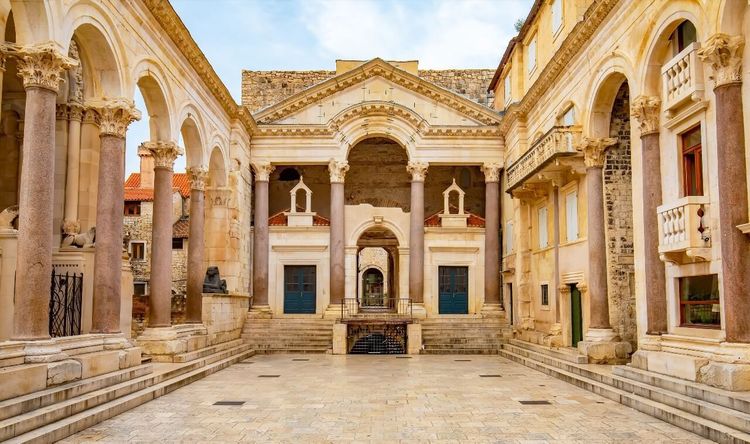
Split played the role of Meereen, the great slave city conquered by Daenerys in seasons 4 and 5. Filming took place largely in the Cellars of Diocletian's Palace (Dioklecijanova ul. 1, 21000 Split, rated 4.7/5 on Google from 90,566 reviews), a labyrinth of vaulted rooms built in the 4th century AD and listed as a World Heritage Site. On screen, these cellars served as cages for Daenerys's dragons — an eerie realisation when you find yourself standing inside them.
The cellars are easy to visit independently (paid entry, around €10). The rest of the palace, which today forms the historic centre of Split and is home to thousands of residents, is freely accessible. Head up to the Peristyle, the large central courtyard, to recapture the atmosphere of the outdoor Meereen scenes.
Šibenik, an hour north of Split, portrayed the city of Braavos, the city of the Braavosi and the House of Black and White where Arya Stark learns to become 'no one'. The Cathedral of St James, a 15th-century Gothic-Renaissance masterpiece and UNESCO World Heritage Site, appears in several scenes in season 5. The medieval town of Šibenik is far less overrun by tourists than Dubrovnik, which is another good reason to stop there.
These three Croatian cities (Dubrovnik, Split, Šibenik) are ideally visited as a circuit over 5 to 7 days along the Dalmatian coast. Buses and ferries connect the cities year-round.
Northern Ireland: the Country Where Game of Thrones Grew Up

If Croatia embodies King's Landing on screen, Northern Ireland is its true home. The series filmed there from season 1 and never really left. The Titanic Studios in Belfast housed almost all of the interior sets: the Great Hall of Winterfell, the Small Council chamber in King's Landing, the dungeons. But it is outdoors that the region is most impressive.
Doune Castle in Scotland started things off, but it is above all Castle Ward, in County Down, that embodies Winterfell and draws the pilgrimages. The estate (National Trust) has offered themed experiences since 2012: medieval costumes, archery, and tours of the recognisable sets from the Stark stronghold.
The Giant's Causeway, a World Heritage Site, was used for the coastal scenes of the Iron Islands, the territory of the Greyjoys. Its hexagonal basalt columns, formed 50 to 60 million years ago by intense volcanic activity, do genuinely look like something built by giants. Some 25 km to the east, the Cushendun Caves served as the setting for the scene where Melisandre gives birth to the shadow in season 2, one of the most disturbing sequences in the entire show.
The Tollymore Forest (Tollymore Forest Park, Tullybrannigan Road, Newcastle BT33 0PW, rated 4.8/5 on Google from 5,247 reviews), in County Down, is recognisable from the very first minutes of the pilot: it is here that the Night's Watch patrol encounters the White Walkers. The forest, with its ancient beech trees and stone footbridges, is today one of the most visited nature parks in Northern Ireland.
To cover the series' main locations, allow 3 to 4 days with a rental car from Belfast. The city itself is worth a day's stop, if only for the Titanic Quarter and the mural commissioned by Tourism Ireland: 10 glass panels six metres tall, scattered across the country and depicting iconic scenes.
Iceland: Beyond the Wall
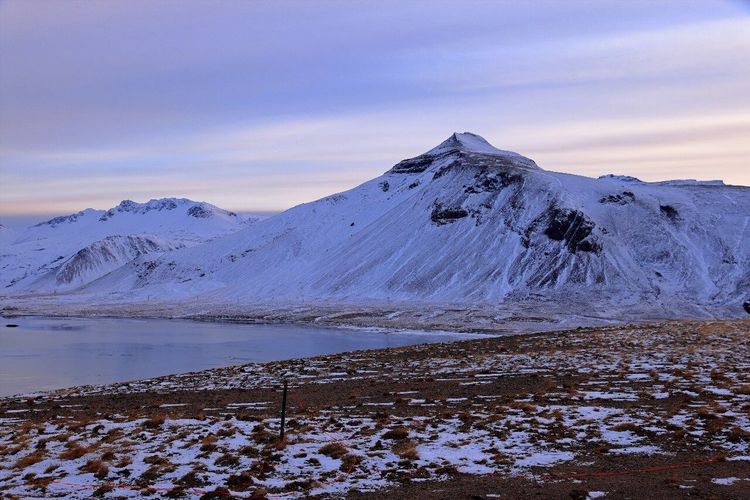
In the series, everything that takes place 'beyond the Wall' was generally filmed in Iceland. The island's volcanic landscapes — glaciers, lava fields, black ash plains, geysers — correspond exactly to the cold, desolate aesthetic of the wilderness of the Far North.
The Þingvellir National Park (roughly pronounced 'Thingvétlir') hosted several scenes from season 4, including Jon Snow's journey through the wilderness. The Snæfellsnes Peninsula and the Vatnajökull glacier provided settings for the marches through the snow beyond the Wall. The lava fields of Dimmuborgir (Mývatn, 660 Mývatn, Iceland, rated 4.6/5 on Google from 1,277 reviews), near Lake Mývatn, embody the territories of the White Walkers in certain episodes of season 3.
Iceland is also one of the countries where it is most difficult to visit these sites independently in winter: the F-roads (mountain tracks) are closed from October to May, and certain glaciers require a certified guide. In summer, the country attracts impressive crowds at its natural sites: here again, shoulder season (May, September) offers the best compromise between accessibility and visitor numbers.
Morocco: When the Desert Becomes Essos
The entire 'Essos' portion — the slave cities, the port cities, the slave markets — was filmed in Morocco. Three cities share the bulk of the filming.
Ouarzazate, nicknamed the 'Hollywood of the Desert', portrayed the city of Pentos. The Atlas Corporation film studios, established here since the 1980s, served as the backdrop for many interior scenes. But it is above all the region around Ouarzazate that is impressive: the kasbahs, the palm groves, and the ochre hues of the town integrate perfectly into the visual world of Essos.
Aït Ben Haddou, 30 km from Ouarzazate, is a fortified ksar listed as a UNESCO World Heritage Site. It played Yunkai, the 'Yellow City' where Daenerys frees the slaves in season 3. The place is spectacular: hundreds of mud-brick structures rise up a hillside, some dating from the 17th century. A handful of families still live there.
Essaouira, on the Atlantic coast, played Astapor (season 3). The port town, with its white and blue wind-battered walls, its fishing harbour and its labyrinthine alleyways, offers a cosmopolitan atmosphere very different from the arid settings of Ouarzazate. Place Moulay Hassan and the Skala ramparts (Place Moulay Hassan, 44000 Essaouira, Morocco, rated 4.8/5 on Google from 170 reviews) are recognisable in several scenes.
These three Moroccan sites combine very well as a one-week circuit from Marrakech: Ouarzazate and Aït Ben Haddou are connected by the same road, and Essaouira is 3 hours from Marrakech by bus. If you are looking for ideas to complement your trip with other offbeat destinations, the guide to unusual places in PACA by Ryo can give you some inspiration for your return to Europe.
Spain: Seville and Dragonstone
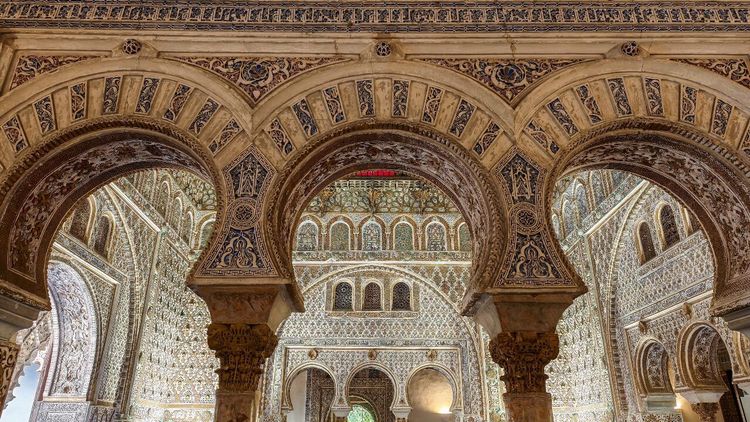
Spain is home to two of the most visually striking settings in the series.
In Seville, the Alcázar Palace, the former residence of Moorish and later Christian kings, founded in the 10th century and still the official residence of the Spanish royal family, portrayed Dorne, the Mediterranean kingdom of the Martells. Its gardens, fountains, ceramic tilework, and horseshoe-arched columns make it one of the most sumptuous settings in the entire production. It appears mainly in seasons 5 and 6.
The Alcázar is the most visited monument in Andalusia after the Alhambra. Queues can exceed two hours in summer: book your tickets online well in advance. The Ryo app offers an audio guide to Seville that covers the Alcázar in its full historical context, far beyond its on-screen role.
For the later seasons (7 and 8), the production crews set up their cameras at Gaztelugatxe, in the Spanish Basque Country. This rocky headland connected to the mainland by a winding path of 241 steps played Dragonstone (Dragonstone), the ancestral castle of the Targaryens. The site has existed since the 10th century; the hermitage that crowns it has welcomed pilgrims since the Middle Ages.
Gaztelugatxe is accessible year-round but requires a mandatory reservation in July and August (daily quota). The climb takes around 20–25 minutes. The panorama over the Basque coast from the top alone makes the trip worthwhile.
Portugal: the Lesser-Known Settings
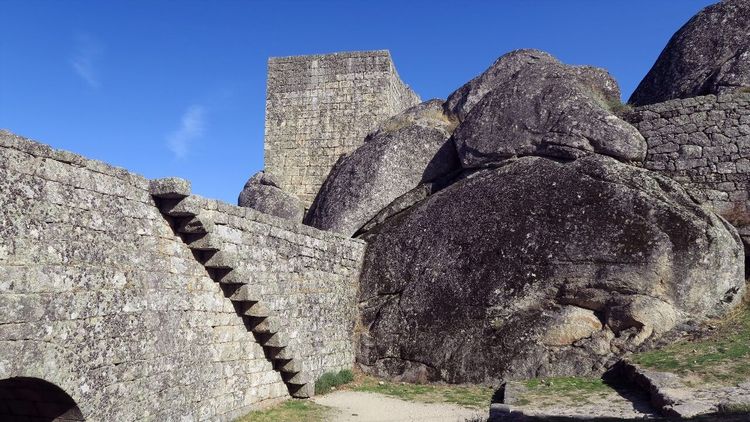
Portugal is rarely mentioned in guides dedicated to the series, but the country hosted several days of filming, notably for coastal landscape and fortified village scenes. Monsanto, a village perched on giant granite boulders in the Beira Baixa region, was used for general scenes evoking the villages of the Westerlands. The Serra da Arrábida, south of Lisbon, provided coastal landscapes for certain maritime sequences. These locations, less signposted and less frequented than their Croatian or Irish counterparts, are ideal for fans in search of a more authentic experience, in a country with excellent tourist infrastructure and still reasonable prices. On the Spanish side, our Madrid audio-guided tour offers the same kind of on-foot itinerary, from the Puerta del Sol to the Prado Museum.
Scotland, Malta, and Other Settings
Doune Castle, in Scotland, played Winterfell in the unaired pilot of the series, before being replaced by Castle Ward. It also appears in several episodes for other locations within the fiction. The 14th-century castle, managed by Historic Environment Scotland, is easy to visit from Stirling or Edinburgh.
Malta played a crucial role in season 1, before the country was gradually replaced by Croatia for logistical reasons. Valletta, the capital, portrayed King's Landing in the early scenes; Fort Manoel (Manoel Island, Gżira, GZR 1710, Malta, rated 4.2/5 on Google from 1,258 reviews) and the Citadel of Victoria (island of Gozo) provided additional settings. Since then, Malta has developed a tourism offer oriented towards TV and film tourism.
Other countries appear in a more anecdotal fashion: Spain (Cabo de las Huertas in Alicante for season 7), Greece (the island of Skiathos for a few shots), and Estonia (Tallinn, for its highly cinematic medieval centre). These sites are harder to identify precisely, as productions do not always disclose all of their secondary locations.
How to Visit the Game of Thrones Filming Locations
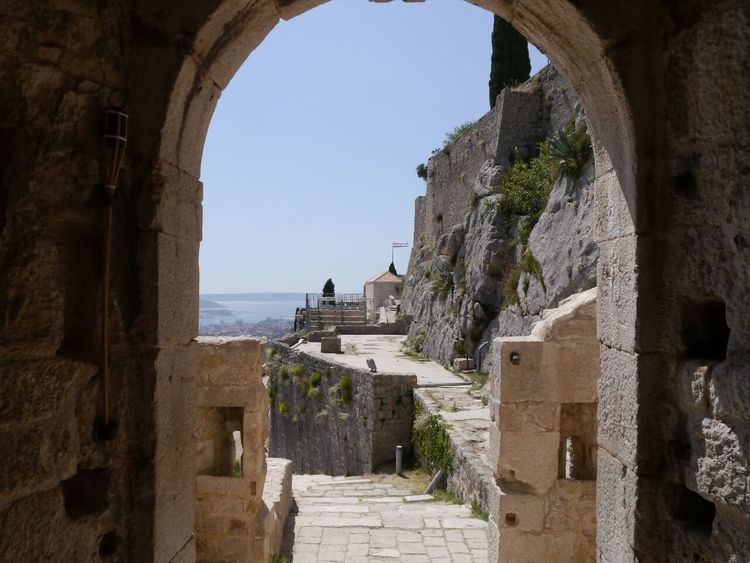
Organising a trip around the series requires different logistics from a standard holiday, as the sites are spread across at least 7 countries and 4 continents. Several approaches are possible:
- By country: focus a trip on a single destination (Croatia, Northern Ireland, Spain) and cover all its sites in depth. This is the most logistically coherent option.
- By themed circuit: organise a road trip across several countries following a geographical logic — Mediterranean (Croatia, Malta, Spain) or Far North (Northern Ireland, Iceland).
- Via organised tours: Tourism Ireland, Visit Dubrovnik, and the Spanish tourism board all offer mapped-out itineraries with guides and transfers included.
For planning, the Ryo app enriches your visits in the cities covered by its audio guides: contextualising a monument with its real history before viewing it through the lens of fiction quite radically changes the experience. Remember to download the guides in offline mode before you leave, particularly for Iceland and the rural areas of Northern Ireland where network coverage can be patchy.
Map and Practical GOT Itinerary
There is no official 'trail' dedicated to the series, unlike what was done for The Lord of the Rings in New Zealand. But several maps have been developed by fans and tourism boards.
The interactive maps from Visit Croatia and Discover Northern Ireland are the most comprehensive for their respective countries. They indicate the episodes, seasons, and scenes associated with each site — useful for checking whether a location truly matches what you are looking for.
If you are planning a multi-country trip, estimate the distances: between Dubrovnik and Split, allow around 3 hours of coastal road. Between Belfast and the Giant's Causeway, 1h30. Between Ouarzazate and Essaouira, 3h30 via Agadir or 2h45 via the mountain passes (best avoided in winter). These journey times directly affect how many sites you can visit in a single day.
If you are passionate about cultural travel with a film and TV theme, the guide to visiting Oxford for Harry Potter fans on the Ryo blog explores a similar approach for another major fictional universe.
FAQ
What is the main filming location of Game of Thrones?
The most iconic and most-used location in the series is Dubrovnik, in Croatia, which portrayed King's Landing throughout every season. The city features around fifteen identifiable sites, from the medieval walls to the alleyways of the old town. In terms of total filming volume, it is Northern Ireland that comes first: the series filmed there for eight consecutive seasons, across dozens of natural locations and in the Belfast studios.
Can you visit the Game of Thrones filming studios?
The Titanic Studios in Belfast, where most of the interior sets were built, are not open to the public: they are active production studios. However, the Titanic Belfast Museum next door dedicates a permanent section to the making of the series, featuring original costumes and models. In Ouarzazate, the Atlas Corporation Studios offer guided tours with sets left in place.
How many countries hosted the filming of Game of Thrones?
The series filmed in at least 9 countries: Northern Ireland, Iceland, Croatia, Spain, Portugal, Malta, Morocco, Scotland, and Greece. Some sources also mention cutaway shots filmed in the United States, but the bulk of the European and African production is well documented. Northern Ireland and Croatia together account for approximately 60 to 70% of exterior filming days.
Where was King's Landing filmed in Game of Thrones?
King's Landing (King's Landing) was filmed primarily in Dubrovnik, in Croatia. For season 1, scenes were also filmed in Valletta, in Malta. From season 2 onwards, Dubrovnik became the exclusive location for King's Landing. The interior sets of the Throne Room and the Red Keep were built in the studios in Belfast.
Where was Dragonstone filmed?
Dragonstone (Dragonstone), the ancestral castle of the Targaryens, was filmed at Gaztelugatxe, in the Spanish Basque Country, for seasons 7 and 8. This rocky headland with its 241 steps forms a real site dating from the 10th century, recognisable by its island shape connected to the mainland by a narrow isthmus. For earlier seasons, shots of Dragonstone had been created in the studios in Belfast.
Can you visit Qarth, the Game of Thrones city?
Qarth, the wealthy city of the Summer Seas where Daenerys arrives in season 2, was filmed primarily in the gardens of Dubrovnik Castle and in certain palaces of the old town. The interior scenes of the House of the Undying were, however, filmed in the studio. Unlike Meereen or Astapor, Qarth has no single dominant site: it is an assembly of several Dalmatian locations and built sets.
Conclusion
Game of Thrones did something rare: it made the real world even more beautiful than it already was. Knowing that the walls of Dubrovnik served as the backdrop for the Walk of Shame, that the columns of Diocletian's Palace caged dragons, that the Giant's Causeway welcomed White Walkers — all of this transforms an ordinary visit into something almost narrative. You are no longer simply looking at a monument: you are stepping into a scene.
To go further in your exploration, the Ryo app offers audio guides for several of the cities mentioned in this guide — Seville, Dubrovnik, and the other major European stops. These guides allow you to combine the cinematic dimension of travel with the real history of the places, which is often even richer than what fiction has made of them. Happy travels, and may the Seven Kingdoms be with you.