© Shutterstock
 Votre guide Ryo
Unusual Weekend in PACA: 20 Unique Places and Experiences in 2026
Looking for an unusual place in PACA for a weekend opens up an immense field of possibilities today, yet the majority of visitors still miss out. The Provence-Alpes-Côte d'Azur region breaks tourism records — 34 million visitors per year, 900 kilometres of coastline, the second most visited regional nature park in France. But behind the packed beaches of July and the Christmas markets, there is another PACA: one of nearly empty gorges in September, hilltop villages where no one ventures, lavender fields that begin in Apt and end nowhere in particular. The good news? The region concentrates an exceptional density of accommodations and activities that truly go off the beaten track — treehouses above the ochre cliffs of Roussillon, transparent domes facing the Alpilles, bivouacs in the calanques, yurts lost among the Var vineyards. This guide reviews twenty concrete experiences, zone by zone, with addresses and pitfalls to avoid. To go even further in discovering the region, the article the must-sees in PACA covers the major sites worth including in your itinerary.
Luberon: Sleeping Among the Ochres, Between Roussillon and Saignon
The Luberon is arguably the area with the highest concentration of unusual accommodation options at a national level. Within a thirty-kilometre radius, you will find tiny houses set against the ochre cliffs of Roussillon, suites carved directly into the rock at Saignon, and a handful of wine estates that have converted their cellars or barns into extraordinarily characterful bed and breakfasts.
The village of Roussillon draws its singularity from its subsoil: twenty-two shades of ochre, from pale yellow to deep red, colouring the cliffs and the facades of the houses. Staying here means waking up in a landscape that looks like a Provençal western set. Several properties have embraced architectural integration: red ochre terraces, raw stone walls, west-facing bay windows so that the sunset turns the bedroom into a giant darkroom. Expect to pay between 120 and 250 euros per night depending on the season; May and September weekends are the most sought after.
Less than fifteen kilometres away, Saignon offers a more discreet version of the same landscape. The village perched above Apt is home to a few characterful houses converted into accommodations, including an old shepherd's farmhouse whose rooms have been arranged in 17th-century vaulted cellars. Summers are cooler here than on the plain thanks to the altitude (around 500 metres), and the hikes departing from the village reach the Colorado Provençal of Rustrel in under an hour.
If you are travelling with family, the Gordes area offers gîtes with natural rock-carved pools, just a short distance from the Village des Bories (Route des Imberts, 84220 Gordes, rated 4.2/5 on Google based on 4,831 reviews) — those centuries-old dry-stone structures that resemble shepherd's igloos. Accommodation in Gordes with direct access to the Village des Bories remains one of the most singular experiences in the entire region.
Practically speaking, the ideal season for the Luberon runs from April to June and from September to October. In July and August, temperatures regularly exceed 38 degrees and accommodations are fully booked months in advance. If you come in winter, some properties close, but the dormant vines and near-deserted villages have a particular charm that postcards never capture.
Camargue: A Night in a Cabin Among the Flamingos
The Camargue is one of the rare places in metropolitan France where you can observe wild flamingos from less than a hundred metres away, watch black bulls grazing in flooded meadows, and cross landscapes that evoke Louisiana more than Provence. And yet, most visitors settle for a day trip and head back to Arles or the beaches of Saintes-Maries-de-la-Mer without ever truly immersing themselves in the delta.
Spending a night in the greater Camargue changes everything. Unusual accommodations are concentrated around two types of experience: converted guardians' cabins and equestrian estates with caravan lodging. Guardians' cabins are the low-roofed reed-thatched cottages once used by Camargue bull and horse breeders. Several properties have restored a few of these into self-contained gîtes, often without WiFi by choice, to encourage a true digital detox. One of the most photographed stands on the shores of the Étang de Vaccarès, the largest natural lake in the region at 6,500 hectares.
Equestrian estates offer a different formula: arriving on horseback, caravans pulled by Camargue horses, dawn equestrian rides through the sansouïres (the typical salty meadows of the Camargue). Several estates between Aigues-Mortes and Saintes-Maries-de-la-Mer offer this type of experience at rates ranging from 80 to 180 euros per night depending on the package. The most spectacular period for flamingos is spring, from March to May, when the colonies nest in the delta.
A must-know address for a cultural stop: Arles is thirty minutes by car from the deep Camargue and offers a range of museums and restaurants that perfectly complement a night in the heart of nature. The city was the setting for Van Gogh's stay in 1888–1889 — he painted more than 200 works in under a year — and the streets around the Arènes d'Arles remain among the most beautiful in Provence.
For families, the Camargue is particularly well suited thanks to its diverse activities: birdwatching at the Parc ornithologique de Pont-de-Gau (Route d'Arles, 13460 Saintes-Maries-de-la-Mer, rated 4.6/5 on Google based on 12,426 reviews), swimming in the canals, and Camargue horse riding initiation from age six. Pack an effective mosquito repellent, especially in May and June, as the wetlands can make evenings on the terrace rather uncomfortable.
Gorges du Verdon: Cliff Bivouac and Kayaking Under the Stars
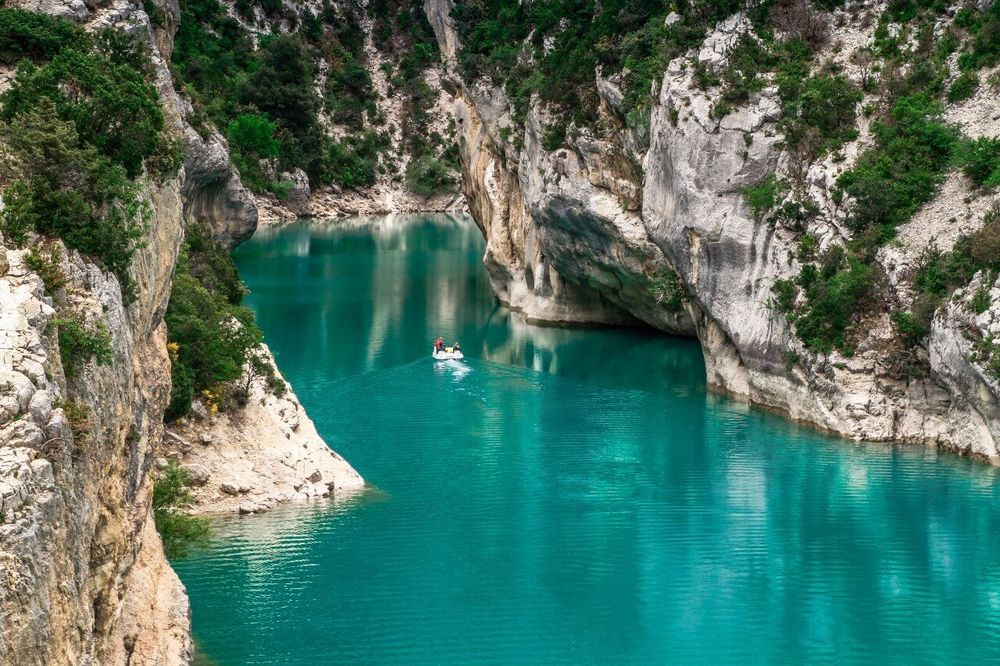
The Gorges du Verdon are often dubbed the European Grand Canyon. The figures speak for themselves: up to 700 metres of elevation difference between the limestone plateaus and the turquoise river below, over some twenty kilometres. What competing articles lack is precise detail about the most singular experiences — not just 'it's beautiful', but exactly where, how, and at what cost.
Bivouacking on the viewpoints of the Corniche Sublime (RD71) is legally permitted at certain marked spots between the Col d'Illoire and the Point Sublime. Waking at dawn on these cliffs, with the raking light gilding the vertical rock faces and the silence broken only by bearded vultures gliding overhead, is an experience hard to match anywhere in France. Bring a warm sleeping bag (even in summer, nights drop quickly at 900 metres altitude) and a sleeping mat. Water must be found at marked springs, as the limestone absorbs everything.
For those who prefer minimal comfort, the hilltop villages around the Verdon offer unusual alternatives. In Moustiers-Sainte-Marie, listed among the most beautiful villages in France, a handful of bed and breakfasts have set up terraces suspended above the ravine with a direct view of the gorges. The village itself is famous for a golden star suspended between two cliffs since the 14th century — nobody knows exactly how it was first hung.
Night kayaking in the gorges is an activity offered by several local providers from June to September. Lake Sainte-Croix, formed by the downstream dam, offers perfect conditions for beginner paddlers: calm, turquoise water with temperatures around 20 degrees in July. Kayak or pedalo rental is available directly on the shores at very accessible prices (8 to 15 euros per hour). The most spectacular launch point remains the Pont du Galetas, where the river exits the gorges and widens into the lake.
For accommodation, the Valensole plateau (Route de Valensole, 04210 Valensole, rated 5/5 on Google based on 7 reviews) just north of the gorges offers a very original option: transparent bubbles set in lavender fields, operational from June to early July when the lavender is in bloom. Some estates offer stargazing evenings with a telescope and sky interpretation. For those looking for something more structured, the gîtes in the village of Castellane, the gateway to the gorges from the national road 85 (the Route Napoléon), are well equipped and less expensive than those directly on the corniche.
Note that the Gorges du Verdon are busy from June to late August. If you can shift your visit to September or even October (before the first frosts close certain access routes), you will find clear roads, available accommodations, and prices reduced by 20 to 30%.
Inland Var: Yurts, Caravans, and Treehouses Among the Vines
The Var is the French department with the most wine estates — over 500 châteaux and domaines under the Côtes-de-Provence appellation. This unprecedented concentration has sparked a remarkable creativity in accommodation: to diversify their revenues, dozens of estates have installed yurts, caravans, tiny houses, and tree cabins in the middle of their vineyards. The result: you can sleep fifty centimetres from the ground between two rows of grenache and wake up for a private tasting in the wine cellar.
The Maison dans les Vignes in Salernes, in the Haut-Var, is the most frequently cited example by bloggers. But there are many alternatives that are far less well known. Around Lorgues, several estates offer horse-drawn caravan rides to a bivouac in the heart of the vineyard, with dinner prepared by the estate. The 'viticultural glamping' format also exists in the Cotignac area — a village built beneath a tufa cliff riddled with troglodyte dwellings — and in the hills around Draguignan.
The Provençal yurts deserve a paragraph of their own. Unlike classic Mongolian yurts, those in the Var are often fitted with polished concrete floors, reversible air conditioning, and private bathrooms — nomadism in premium comfort. Prices hover around 90 to 160 euros per night, positioning them between a rural gîte and a boutique hotel. For families, some estates offer communicating yurts or parent-child yurts connected by a shared common space.
The hilltop village of Tourtour (Place des Ormeaux, 83690 Tourtour, rated 4.4/5 on Google based on 800 reviews), nicknamed the 'village in the sky' at 635 metres altitude, is a perfect stop for a day's hiking between two unusual accommodation nights. From the main viewpoint, the panorama stretches to the Alps to the north and the Mediterranean to the south on clear days. A restaurant on the village square serves local charcuterie and Var terroir wines in an authentic atmosphere.
The inland Var is accessible year-round, but autumn is the connoisseurs' favourite season: the grape harvest (mid-September to mid-October) sometimes allows guests to participate in the estate's work in exchange for a complimentary night, and the colours of the vines as they turn red are spectacular. Check before booking that the accommodation is not closed during the harvest — some estates shut their gîte to focus the entire team on the picking.
Côte d'Azur: Nice and the Hinterland, Off-the-Beaten-Track Experiences
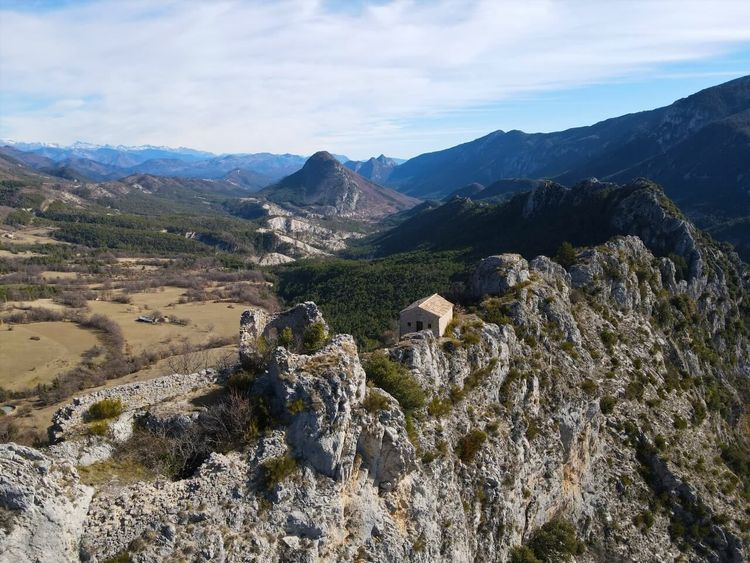
On the Côte d'Azur, reputation cuts both ways. People think of palaces and yachts, but Nice and its hinterland offer experiences that are far less expensive and considerably more original than the seaside cliché. Twenty minutes from the waterfront, the Nice hinterland plunges into limestone gorges, hilltop villages, and chestnut forests that seem to belong to another era.
The Gorges de la Vésubie and those of the Cians are the two flagship destinations for a hiking and bivouac weekend. The Vésubie offers natural freshwater pools with electric-green hues reminiscent of the Verdon's colour, but in an even more secluded setting. Several mountain gîtes in the villages of Saint-Martin-Vésubie or Roquebillière offer rooms with direct views of the summits, less than an hour from Nice.
In Nice itself, accommodations are reinventing themselves. A few addresses offer capsule-style studios, troglodyte rooms carved into the foundations of the old town, or apartments in fully restored Belle Époque buildings. The Parc du Château de Nice (Montée du Château, 06300 Nice, rated 4.7/5 on Google based on 25,072 reviews), reachable on foot from the Promenade des Anglais, offers spectacular views over the Baie des Anges and the rooftops of the old town — an artificial waterfall, Roman fountains, 180-degree panoramas over the Mediterranean — yet most tourists never make the climb.
For a truly memorable night, the medieval village of Èze, clinging to a 427-metre-high cliff between Nice and Monaco, is home to an exotic cactus garden with a sea-view belvedere. Characterful bed and breakfasts here offer nights with views over Cap-Ferrat and, on clear days, over Corsica.
Les Alpilles and Les Baux-de-Provence: Troglodyte Night and Starry Skies
The Alpilles form a compact limestone massif, barely twenty-five kilometres long, yet of extraordinary heritage and landscape density. Les Baux-de-Provence, their emblematic village, attracts two million visitors a year despite having only 22 permanent residents. What is rarely mentioned is that just outside this village, several troglodyte houses carved into the limestone have been converted into discreet accommodations.
A troglodyte night in the Alpilles means a room at a constant temperature (16–17 degrees year-round), walls of stone polished by centuries of erosion, and near-total silence. The absence of artificial light on the surrounding plateaus makes the Alpilles a reference site for astronomical observation. The Carrière des Lumières at Les Baux — the immersive sound-and-light show installed in a former bauxite quarry — is one of the most singular artistic experiences in France: monumental projections on fourteen-metre-high rock faces, spread across more than 7,000 square metres of stone.
The centuries-old olive trees of the Alpilles serve as the backdrop for several farmsteads converted into eco-lodges. Around Maussane-les-Alpilles and Mouriès — two villages at the heart of the Vallée des Baux olive appellation (AOC since 1997) — you will find bed and breakfasts set in 18th-century oil mills, with a first-press olive oil tasting served as breakfast. The hike along the GR6 between Les Baux and the Val d'Enfer is ideally done at sunrise, before the heat sets in.
Saint-Rémy-de-Provence, ten kilometres north of Les Baux, is the birthplace of Nostradamus and the site of the Saint-Paul-de-Mausole monastery (Avenue Edgar Leroy, 13210 Saint-Rémy-de-Provence, rated 4.5/5 on Google based on 1,696 reviews), where Van Gogh voluntarily committed himself from May 1889 to May 1890. The painter's room has been reconstructed and can be visited — one of the rare places where you can truly imagine how The Irises, The Starry Night (painted on-site in June 1889), and nearly a hundred and fifty other canvases came to life.
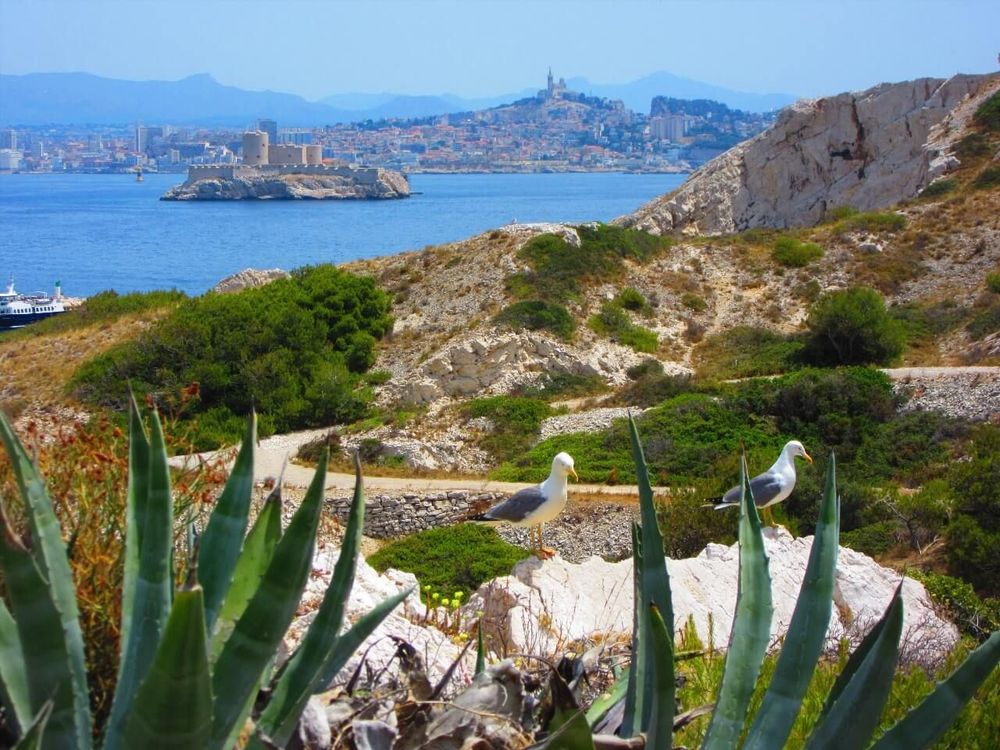
Marseille and Its Calanques: Wild Bivouac at the City's Doorstep
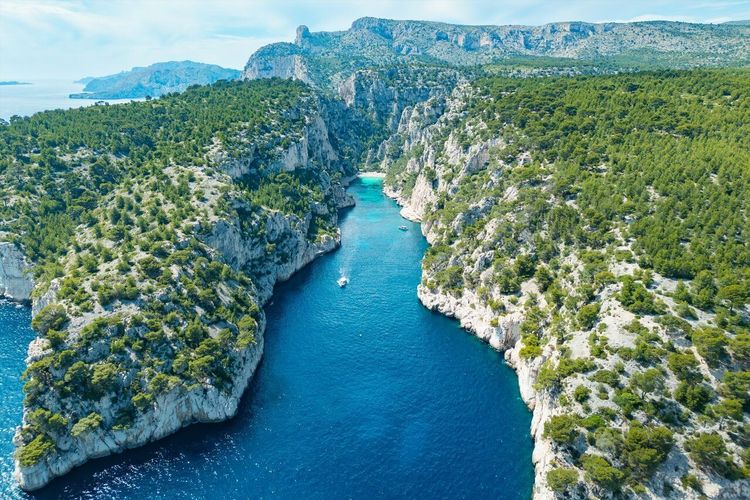
Marseille is the only major city in France to have a national park right on its doorstep. The Parc national des Calanques covers 520 square kilometres between Marseille and Cassis, with white limestone cliffs plunging into a cobalt-blue sea. Bivouacking here is strictly regulated: it is only tolerated in the calanques of Sormiou and Morgiou, with prior authorisation from the national park, and access to the massif is controlled every summer (generally from 1 June to 30 September) due to fire risk. Always check with the park before setting out.
The most accessible calanques from Marseille — Calanque de Sormiou and Calanque de Morgiou — can be reached on foot from the Mazargues district. The hike to Sormiou takes about 1h30 from the nearest bus stop and offers sweeping views over the coves. Sleeping in the calanques out of season, with the mistral pushing clouds aside to reveal a crystal-clear sky, is an experience unlike anything else in the region. Bring water, food, and warm clothing — the wind can drop the perceived temperature by 10 degrees in under an hour.
For a more comfortable stay in the area, Cassis offers bed and breakfasts with views over the calanques in a more relaxed setting. The port of Cassis is three-quarters of an hour from Marseille by train. Shuttle boats allow access to the more distant calanques (En-Vau, Port-Pin) without hiking.
Marseille itself deserves an extra night in your programme. The Panier district — one of the oldest neighbourhoods in the city, founded by the Greeks in the 6th century BC — is home to charming hotels in colourful houses overlooking small squares. The MuCEM (7 Promenade Robert Laffont, 13002 Marseille, rated 4.4/5 on Google based on 24,145 reviews) (Museum of European and Mediterranean Civilisations) on the port is one of the most spectacular architectural achievements in France over the past twenty years.
Hautes-Alpes: Transparent Domes and Mountain Refuges
The Hautes-Alpes is the least densely populated department in PACA, with fewer than 145,000 inhabitants across 5,500 square kilometres. This human emptiness is a treasure: night skies among the least light-polluted in metropolitan France, high-altitude landscapes completely different from the rest of the region, and an unusual accommodation offering that is rapidly growing around astrotourism.
The transparent domes and bubbles of the Hautes-Alpes are the region's most sought-after accommodations. Set at altitudes between 1,000 and 1,800 metres in mountain settings, they allow guests to observe the stars while lying in bed. Full-moon nights in a dome at Vars or Orcières-Merlette completely transform one's perception of space. The clarity of the atmosphere at these altitudes makes the Milky Way visible to the naked eye virtually all year round.
The cabins in the Hautes-Alpes (and around Saint-Julien-en-Champsaur) combine forest immersion with spa facilities that make all the difference at altitude — outdoor jacuzzis with views of the peaks, Finnish saunas, Nordic baths. Several estates offer all-inclusive packages with a Provençal dinner delivered to the cabin. The Cabanes du Pas de la Louve site at Serres is among the most frequently cited in France for this type of experience.
For hiking enthusiasts, the Queyras massif, on the Italian border, is accessible from the national road 94 departing from Briançon. The villages of Abriès and Château-Queyras (Route Nationale, 05350 Château-Queyras, rated 4.5/5 on Google based on 500 reviews) offer refuge-style accommodations converted into bed and breakfasts with modern comfort, while retaining the atmosphere of a mountain stopover. The GR58, which circuits the Queyras in six days, is considered one of the ten most beautiful trails in France.
Transparent Bubbles and Domes: Sleeping Under the Stars in PACA
The transparent bubble has become the most searched-for accommodation on booking platforms in France since 2020. In PACA, the concentration of these installations is particularly high, thanks to the quality of the night sky in areas far from light pollution. Understanding the differences between formats helps in choosing the right one.
The igloo bubbles (rigid plastic spheres or inflatable PVC) are the cheapest (60 to 100 euros per night) but also the least comfortable in terms of thermal insulation. In summer, they can reach 35 degrees inside during the afternoon; in winter, they behave like cold greenhouses. The best ones are equipped with reversible air conditioning and a blackout curtain for sleeping in the morning.
The geodesic domes represent the top of the range. Built on a metal frame with transparent polycarbonate panels, they maintain a stable temperature and offer decent soundproofing. The bed is positioned to maximise the sky view; a telescope is often set up on the outdoor platform. The wine estates of the Valensole plateau were the first in PACA to adopt this format, combining views of the lavender fields (June–July) with astronomical observation.
Several properties in the Vaucluse (Saignon, Viens area) and in the Var (Roquebrune-sur-Argens (Place du Général de Gaulle, 83520 Roquebrune-sur-Argens, rated 4.8/5 on Google based on 385 reviews), Saint-Julien-le-Montagnier) offer domes or bubbles with a private jacuzzi integrated into the outdoor platform. This is the most popular unusual accommodation format in PACA for couples, ahead of treehouses and caravans. Expect between 150 and 280 euros per night depending on the season and amenities. Booking well in advance is essential — several weeks ahead during peak lavender season (20 June to 10 July) or in the high beach season.
For an even more immersive experience, some providers offer dome nights with a guided astronomy programme: constellation identification, shared telescope, introduction to astrophotography. These packages are particularly suited to family stays with children aged eight and above. The optimal period for stargazing falls between November and March, when the sky is most often clear and light pollution is naturally reduced.
Treehouses: The Most Beautiful in the Trees Across the Region
Treehouses in PACA are available in overwhelming numbers — several hundred on booking platforms. Distinguishing the good from the mediocre is not immediately obvious. Here are the criteria that make the difference: real height (at least 3–4 metres for a genuine sense of elevation), a view over a natural landscape (and not the estate car park), and access to private facilities (toilet, shower inside the cabin or on a private platform).
The Esterel massif in the Var offers the most visually spectacular cabins, perched in maritime pines above the red porphyry rocks. The colours at sunset — the red of the rocks, the dark green of the pines, the blue of the Mediterranean — create a unique contrast. As the Esterel forest is protected, accommodations are few but of high quality.
In the Maures (the Var massif between Fréjus and Hyères), centuries-old cork oaks serve as supports for family cabins that can accommodate up to six people. Cork, the emblematic material of the Maures, is sometimes used for the exterior cladding — a local touch that makes all the difference between a generic treehouse and one truly rooted in its territory.
In the Luberon, downy oaks and wild cherry trees provide supports for hillside cabins with views over the perched villages. The area around Bonnieux (Rue de la Mairie, 84480 Bonnieux, rated 4.5/5 on Google based on 1K reviews) and Ménerbes is particularly well stocked. Average prices: 120 to 200 euros per night for a properly equipped cabin, outside July–August when prices climb by 30 to 50%. An hour's drive away, Marseille reveals another side of itself on our 25-stop audio-guided tour.
Caravans and Provençal Yurts: A Nomadic Night in the Garrigue
The caravan and the yurt represent two different philosophies. The PACA-style caravan takes inspiration from the Romani tradition but with refined finishes: wooden flooring, high-end bedding, Provençal decor with dried lavender and boutis fabric. The yurt, for its part, embraces nomadic minimalism — a circular structure, a zenith opening (the tono), welcoming natural light at every hour of the day.
The best caravans in the region are found in the Luberon (around Buoux and Saignon in the Vaucluse), the Haut-Var (Salernes, Draguignan), and the Camargue (Saintes-Maries area). Some owners offer a horse-drawn caravan to reach the pitch from the farm — an hour of slow travel along garrigue tracks that resets one's pace to the rhythm of the plant world.
Provençal yurts distinguish themselves from 'camping-style' yurts through their careful integration into the landscape and their amenities: driftwood or compacted earth flooring, a wood-burning stove for winter, a private terrace with garden furniture. The Pays de Forcalquier (Place du Bourguet, 04300 Forcalquier, rated 4.4/5 on Google based on 900 reviews) (Alpes-de-Haute-Provence) is one of the densest areas for this type of accommodation, close to the lavender fields of the Valensole plateau.
A practical tip: before booking, check that the site has 4G/5G coverage if you need it (many of these rural accommodations are in dead zones) and that the bathroom facilities are private — sharing showers with other guests can quickly ruin the total-disconnect experience.
Unusual Activities to Complete Your Weekend
An original accommodation alone does not make for a memorable weekend. Unusual activities in PACA are numerous, and some are little known even among local residents. Here is a selection of the most striking.
The canyoning in the Gorges du Loup (Alpes-Maritimes) is one of the most engaging activities in the region. The Loup gorge, between Gourdon and Le Bar-sur-Loup, offers waterfalls, natural slides, and freshwater pools in a spectacular limestone setting. Local providers offer guided half-day sessions for all levels from around a hundred euros per person, with equipment provided. The season runs from April to October.
The night visit to the Grotte de Thouzon in the Vaucluse is an experience that works particularly well with children. Discovered in 1902, the cave is home to stalactites as thin as straws (known as 'excentriques') that defy the laws of gravity. Evening visits, under amber lighting, transform geology into a spectacle.
The night hike in the Dentelles de Montmirail (Route de Gigondas, 84190 Beaumes-de-Venise, rated 4.8/5 on Google based on 512 reviews) (Vaucluse) is a little-known option that local providers are beginning to structure. These jagged limestone ridges, which form the backdrop of the Gigondas and Vacqueyras vineyards, offer panoramas over Mont Ventoux at sunrise that daytime trails cannot reach as early. Bring a head torch, hiking boots, and a local guide.
An introduction to land art in the natural landscapes of PACA is an emerging activity offered by local artists in the Var and the Alpes-de-Haute-Provence. Spending half a day building an ephemeral installation with stones and dried flowers in a garrigue landscape, guided by an artist, is a way of looking at the territory differently. Several associations organise weekend workshops in the Luberon and Verdon areas.
To deepen your knowledge of local culture during your stay, the Ryo audio guide offers a selection of the region's must-see sites with historical and artistic context. The Ryo audio guide covers several key cities in PACA with narrative routes that allow you to understand the history of places as you walk.
Unusual Seaside Accommodations: Houseboats, Fishermen's Cabins, and Bubble Villas
The Provençal Mediterranean offers its own unusual accommodation formats. The fishermen's cabins — those small stone or wooden structures that Marseillais have used as weekend retreats since the 19th century — are increasingly being converted into tourist rentals. A cabin between Marseille and La Ciotat, with direct access to a private cove, is one of the most coveted (and rarest) experiences on the French Mediterranean coast. Prices reflect this rarity: 300 to 600 euros per night in high season.
The houseboats on the Camargue canals and the lagoons of the Languedoc-Provençal coastline (Berre, Bolmon, Bages) offer a little-known floating alternative. Most are moored at a fixed berth, providing the sensation of sleeping on the water without the risks of navigation. Stepping directly into the water from the houseboat's private pontoon remains the most direct water experience imaginable.
Along the Var coastline, between Hyères and Saint-Raphaël, several charming hotels and residences offer suites or villas with so-called 'bubble' architecture, inspired by the organic architecture of the 1970s, with curved forms and glazed facades oriented toward the sea. The most famous is the Palais Bulles in Théoule-sur-Mer (Avenue de Miramar, 06590 Théoule-sur-Mer, rated 4.4/5 on Google based on 1K reviews), designed by architect Antti Lovag in the late 1970s and completed in the early 1980s for industrialist Pierre Bernard, then purchased by Pierre Cardin. Listed as a historic monument since 1999, it is a private property that can only be visited on exceptional occasions, during a handful of events.
Avignon and the Vaucluse: A Historic Night in a Convent or a Bastide
Avignon and its surroundings offer a very different type of unusual accommodation compared to bubbles and treehouses: a night in a historic monument. Several convents, bastides, and 17th- or 18th-century townhouses have been converted into tourist accommodations with remarkable architectural care. Sleeping in a renovated monk's cell, with a barrel-vaulted ceiling and views over a silent cloister, is an experience that very few places in France can offer at this level of quality.
The Chartreuse de Villeneuve-lès-Avignon (60 Rue de la République, 30400 Villeneuve-lès-Avignon, rated 4.7/5 on Google based on 171 reviews), just across from Avignon on the other bank of the Rhône, is one of the best-preserved medieval monasteries in the south of France. Part of the site is managed as an artists' residence (the CIRCA), and some of the former cells can be rented during creative stays or residencies. Access to the main site (listed as a historic monument) is on foot from the Pont Daladier.
In rural Vaucluse, 17th- and 18th-century bastides have often been transformed into upscale bed and breakfasts. These large fortified farmhouses, with their inner courtyards, stone wells, and formal French gardens, offer a setting of absolute tranquillity. Some retain their agricultural activity (olives, truffles, lavender) and offer estate tours and tasting workshops.
Family Weekend in PACA: Tips and Addresses
Travelling as a family in PACA with an unusual accommodation angle requires a few extra precautions. The main one: verify that the accommodation is genuinely child-friendly. Some of these unusual accommodations are designed for couples and prohibit children under twelve (mainly romantic bubbles and certain cabins with outdoor jacuzzis).
The most family-friendly formats for children are family yurts (with connecting spaces), two-bedroom caravans with separate rooms, and nature-based accommodations with on-site activities (educational farm, natural pool, wildlife observation). The Camargue is the number-one choice for families with children under ten, thanks to the variety of accessible experiences.
The Parc naturel régional du Luberon offers themed family stays around geology (the ochres of Roussillon), wildlife (cliff-dwelling raptors), and botany (lavender, truffles). Nature guide associations organise night outings to observe bats (the Luberon has one of Europe's largest colonies) or shooting stars in August.
Practically speaking, plan for family trips:
- Accommodation budget: 100 to 200 euros per night for a family yurt or caravan format outside school holidays
- Minimum age: some canyoning providers require age 8, night hiking age 6
- Equipment: individual head torch for each child, rain gear even in summer
- Booking: at least two months in advance for yurt or treehouse accommodations in July–August
Romantic Weekend in PACA: A Romantic Selection
For a couples' weekend, PACA offers a range of natural settings perfectly suited to an extraordinary romantic escape. The accommodations that work best for couples are those that combine seclusion and comfort — neither too rustic (to the point of being uncomfortable) nor too hotel-like (to the point of resembling any ordinary stay).
For an unusual night for couples in PACA, the domes with jacuzzis on the Valensole plateau during lavender season (15 June–10 July) represent the most sought-after experience for couples. The combination of mauve flowers stretching to the horizon by day, a starlit sky by night, and a warm bath beneath the constellations explains why these accommodations are fully booked ten months in advance. Book in September for the following year's lavender.
The troglodyte suites of the Luberon (Saignon, Bonnieux) offer a more discreet alternative — less photographed on social media, and therefore more intimate. The natural coolness of the rock in summer is an added bonus for couples escaping the July heat.
The medieval village of Gordes with its Renaissance château and blonde stone alleyways is often cited as one of the most romantic settings in France. Several hotels offer rooms with private terraces facing the Luberon and the sunset. An evening stroll through the deserted village (most shops close at 6pm) is free and spectacular.
For couples wishing to extend their escape to other regions of France, you can consult our guides on the unusual weekend in Aquitaine or on the romantic unusual weekend in Burgundy for more ideas of extraordinary accommodations across France.
When to Go and How to Plan Your Weekend
For an unusual weekend in PACA, the region has four faces depending on the season, and each period offers different experiences.
Spring (April–June): the best season for discovery. Mild temperatures (15–22°C), countryside in bloom, accommodations available. The Camargue is at its peak for flamingos and migratory birds. The Luberon starts to fill up but remains manageable.
Summer (July–August): peak tourist season, intense heat (35–40°C during the day), sea at 24–25°C. Unusual accommodations are fully booked at their maximum rates. Best avoided if you are sensitive to heat or working with a tight budget.
Autumn (September–October): the second good season. Temperatures become pleasant again (20–28°C), the sea remains warm, accommodations free up with prices falling by 20 to 30%. This is the grape harvest period in the Var and the Vaucluse.
Winter (November–March): the connoisseurs' season for the interior. The Luberon, Verdon, and Alpilles are nearly deserted. The Hautes-Alpes switch into ski mode (Vars, Orcières, Serre-Chevalier). Astronomical domes are at the peak of their appeal.
For practical organisation, a car remains indispensable outside Marseille, Nice, and Avignon. The rail network serves the main cities, but unusual accommodations are almost always in rural areas inaccessible by public transport. Rent a car in Marseille or Nice and plan 2–3 nights in the same area to make the most of your travel.
FAQ
What is an unusual accommodation in PACA?
An unusual accommodation in PACA refers to any form of lodging that goes beyond the classic hotel, gîte, or traditional campsite. This includes treehouses, transparent bubbles and domes, yurts, gypsy caravans, troglodyte suites, houseboats, fishermen's cabins, and authorized bivouac nights in nature parks. The PACA region is one of the richest in France for this type of offering, thanks to the diversity of its landscapes (sea, mountains, garrigue, vineyards, wetlands) and the creativity of local property owners.
What is the best season for an unusual weekend in PACA?
Spring (April–June) and autumn (September–October) are the best periods for an unusual weekend in PACA. The heat is manageable, accommodations are available at reasonable rates, and the landscapes are at their finest — lavender begins in June, the grape harvest in September. Summer (July–August) is technically possible but prices skyrocket and availability collapses. Winter is perfect for stargazing in the Hautes-Alpes or the Verdon.
Where to sleep in a bubble with a jacuzzi in PACA?
The best areas for a bubble night with a jacuzzi in PACA are the Valensole plateau (Alpes-de-Haute-Provence), the Saignon-Viens area in the Vaucluse, and Roquebrune-sur-Argens in the Var. These three zones combine low light-pollution night skies with properties equipped with domes or bubbles featuring a private jacuzzi on an outdoor platform. Book two to three months in advance, or even ten months ahead for the lavender season (June 15–July 10).
What is the budget for an unusual weekend in PACA?
Expect to pay between 80 and 300 euros per night depending on the type of accommodation and the season. Entry-level caravans and yurts can be found around 80–120 euros. Domes and bubbles with jacuzzis range between 150 and 280 euros. Well-equipped treehouses vary between 120 and 200 euros outside July–August. Also budget for activities (canyoning around 100 euros per person), meals (favour table d'hôtes included in the price), and fuel for car travel.
Are unusual accommodations suitable for families with children?
Not all of them. Some accommodations (romantic bubbles, certain cabins with jacuzzis) refuse children under twelve. The most family-friendly formats are yurts with connecting spaces, caravans with separate sleeping areas, and farm-based accommodations with on-site activities. The Camargue is the most accessible area for families thanks to its diverse activities (horseback riding, birdwatching, swimming). Always check child admission policies before booking.
How to book an unusual accommodation in PACA?
The main platforms (Airbnb, Booking, Glamping Hub, Gîtes de France) list the majority of unusual accommodations in PACA. For the most exclusive addresses (seaside cabins, astronomical domes on wine estates), booking is often done directly with the owner via the property's website. Always read recent reviews (less than six months old) and verify that photos are authentic — some listings use misleading angles or retouched images.
Conclusion
PACA is not defined by its July beaches. From the Valensole plateau to the Gorges du Verdon, from the Esterel cliffs to the alleyways of Avignon, the region offers an exceptional playground for anyone seeking something beyond sunbathing on a towel. The twenty experiences presented in this guide are so many entry points into a less visible PACA — that of stars above a high-altitude dome, the scent of vines at dawn from a Var caravan, the silence of the calanques outside the season.
To prepare your cultural visits in the region's major cities, the Ryo audio guide on PACA's must-sees and the Ryo audio-guided tours available for Marseille and Nice will allow you to explore these cities with the right historical and artistic context. The audio walking tour of Marseille, in particular, covers the least-known neighbourhoods of the Phocaean city, well beyond the port and the MuCEM.
À lire également