© Shutterstock
 Votre guide Ryo
20 Must-See Things to Do in PACA in 2026
Search "what to do in PACA" and you'll inevitably land on the same clichés: the Croisette and lavender fields. Yet knowing what to do in PACA means first accepting an embarrassment of riches: the Provence-Alpes-Côte d'Azur region packs in more than 1,000 km of coastline, two national parks, some of Europe's deepest canyons and a constellation of medieval villages that travel guides have taken decades to exhaust. This partial view of a far larger territory deserves to be corrected. Before you begin exploring the PACA region, know that our Ryo app offers audio-guided tours in the major cities, with historical content and anecdotes that information panels never mention.
This selection covers twenty very different experiences: swimming in turquoise waters a few kilometres from Marseille, navigating the floor of a canyon 300 metres deep, stepping inside the largest Gothic palace in Europe, crossing a nature reserve where flamingos and semi-wild bulls share the same salt-white sky. From the Calanques to the mountain pastures of the Mercantour, via the burnt ochre of the Luberon and the Baroque streets of Nice, twenty reasons to understand why PACA is far more than a seaside destination.
1. Dive into the Parc National des Calanques
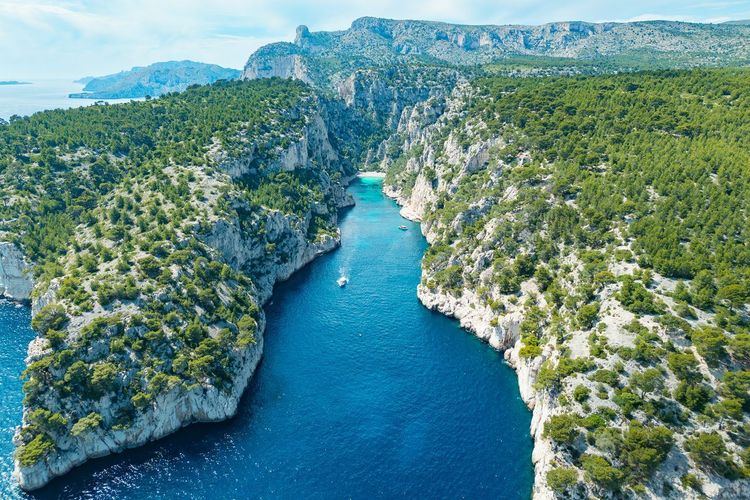
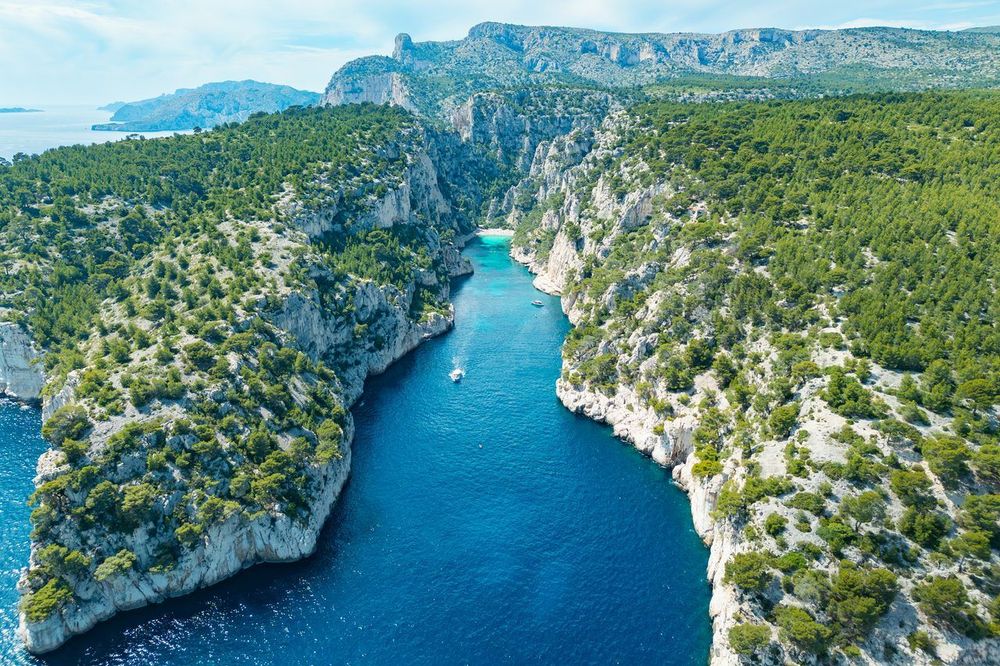
Between Marseille and Cassis, the Calanques carve one of the most singular landscapes in the Mediterranean basin: a succession of white limestone fjords that plunge sheer into a sea whose blue turns turquoise in summer. The park, created in 2012, protects 520 km² of land and sea, a figure that does no justice to the visual intensity of these places.
The Calanque d'En-Vau remains the most spectacular. Its pebble beach, framed by 150-metre cliffs, is accessible on foot from Cassis in around 2 hours one way via the marked trail from Cap Canaille, or by boat from Cassis for those less keen on hiking. Entering En-Vau from the sea gives you the full measure of the setting: the cliffs gradually close in above you, and the beach appears as if at the far end of a limestone cathedral.
More accessible, the Calanque de Morgiou has a beach and a restaurant open from May to October, the only one in the park. This is where Marseille locals come to picnic on Sundays, in an atmosphere worlds away from mass tourism. To drive there, a permit is required between 1 June and 30 September; outside that period, the road remains open.
Since 2023, the park has imposed mandatory online booking for the busiest calanques between 15 July and 15 August, with a quota of 400 people per site per day. In April or October, you'll avoid this constraint while enjoying a far more flattering lateral light on the cliffs than in high summer.
Experienced hikers can chain several calanques in a single day. The Sentier des Crêtes, which runs along the ridge from Marseille to Cassis, offers plunging views at regular intervals over the 28 km full route, with a cumulative elevation gain of 1,200 metres. There are no water sources along the trail: bring at least two litres per person.
Snorkelling in the park's waters is also well worth the attention. Posidonia, the seagrass meadow that oxygenates the Mediterranean, forms dense underwater prairies visible to the naked eye from the surface. Angelsharks, white seabream and moray eels weave through the crevices of the limestone rocks. Rent a mask and snorkel in Cassis or at Les Goudes (Marseille) and choose a quiet calanque on a weekday for an experience free of engine noise.
2. Stroll around the Vieux-Port de Marseille
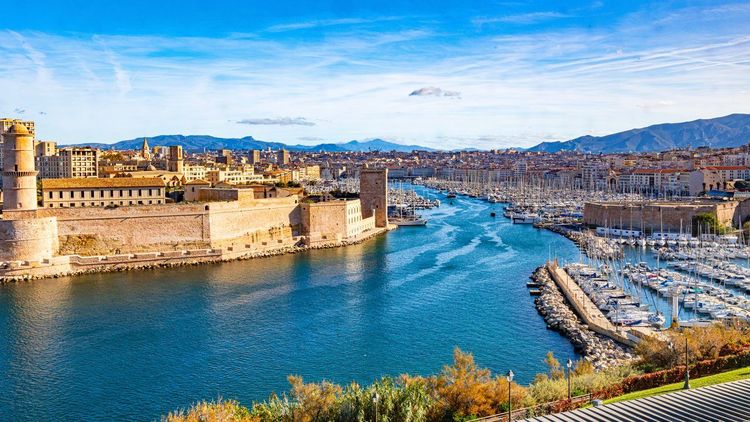
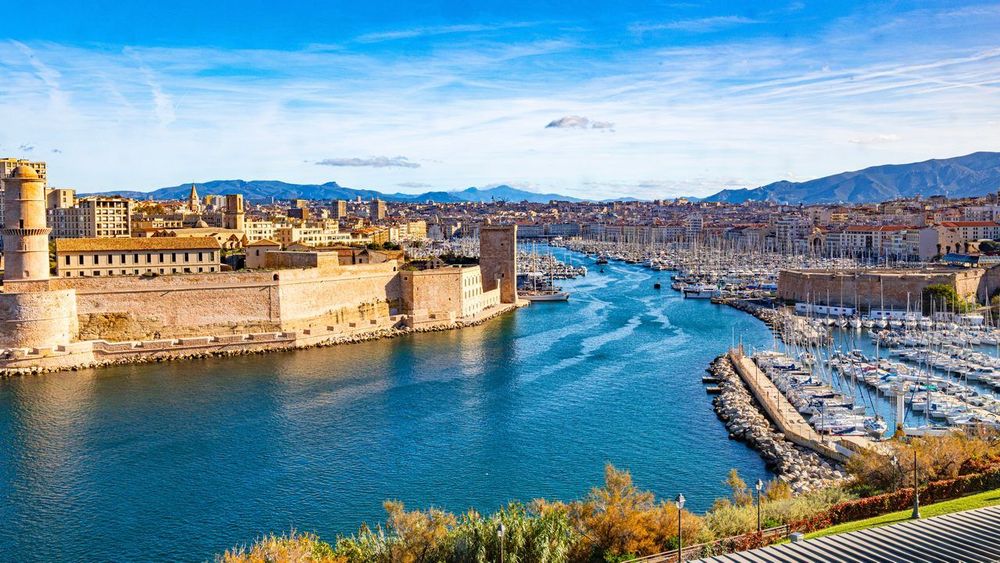
The Vieux-Port of Marseille is more than a postcard backdrop: it is a working harbour active since 600 BC, which for centuries was France's leading commercial port before the industrial docks of La Joliette took over. Today, pleasure boats have replaced Roman galleys, but the morning bustle — fishermen unloading their catch, the fish auction, the smell of sea spray — remains intact.
Arrive before 7:30 am if you want to watch crates of sea bream, scorpionfish and rainbow wrasse change hands beneath the shouts of the vendors on the Quai des Belges. The fish market runs until 1 pm. The bouillabaisse you order that evening at a Vieux-Port restaurant will often have been made from fish bought here that very morning.
Fort Saint-Jean, rebuilt in the 17th century by Louis XIV to keep the city in check, dominates the western entrance to the harbour. Access is free via the footbridge linking the fort to the MuCEM (Museum of European and Mediterranean Civilisations). The latter, inaugurated in 2013 when Marseille was European Capital of Culture, features a concrete lattice façade that filters the Mediterranean light. Its permanent collections are free on the first Sunday of the month.
On the heights above, the Basilique Notre-Dame de la Garde has watched over the city since 1853. The walk up on foot from the Vieux-Port takes around twenty minutes. The interior, covered in mosaics and maritime ex-votos, is a time capsule: model ships suspended from the ceiling honour the fishermen who went to sea and returned safely thanks to the Bonne Mère. Entry is free, and the view from the forecourt over the bay of Marseille and the Îles du Frioul is unmatched anywhere in the city.
For your evening, the Plaine neighbourhood (around Place Jean Jaurès) is packed with bars, independent restaurants and the energy of a city that tourism has not sanitised. This is where Marseille eats and goes out, well away from the tourist menus of the waterfront. To connect all these points with their historical context, Ryo's audio-guided tour of Marseille unfolds the history of the Phocaean port as you walk.
3. Navigate the Gorges du Verdon
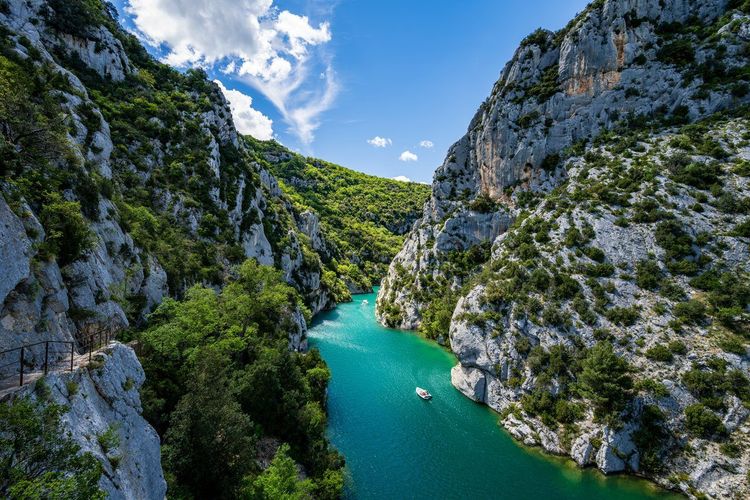
The Gorges du Verdon form one of Europe's great canyons: 25 km long, with vertical walls rising to 700 metres and an emerald-green river far below. The effect is striking even from the road — from the viewpoints along the D71 or D952, the eye plunges into a void that takes the breath away. But the gorge is meant to be experienced from within, not from the tarmac.
Descending by kayak or canoe from Castellane to Lac de Sainte-Croix (Les Salles-sur-Verdon, 83630 Aiguines, rated 5/5 on Google with 1 review) is the benchmark experience. It takes 2 to 3 full days, with overnight camping on the pebble beaches at the canyon floor. Several local operators offer rental with return transport. Book ahead in July–August: the bivouac beaches are allocated by daily quota.
Hikers opt for the Sentier Blanc-Martel: 14 km from La Palud-sur-Verdon, with passages through tunnels carved into the rock and sections fitted with metal cables. Some stretches in complete darkness last several minutes — a headtorch is essential. Allow 5 to 7 hours depending on pace. It is one of the most impressive hikes in PACA, widely underestimated by visitors who stop at the roadside viewpoints.
The Lac de Sainte-Croix, technically an artificial lake created by the EDF dam in 1974 yet disarmingly beautiful, can be explored by pedalo, rowing boat and kayak hired at Les Salles-sur-Verdon. Sea kayaks allow you to enter the first metres of the gorge from the lake, where the cliffs begin to close in. Prefer June or September over July–August, when hundreds of thousands of visitors crowd the banks.
The village of Moustiers-Sainte-Marie, at the entrance to the gorge, deserves a stop. Its faience pottery has been made here since the 17th century. A metal star suspended between two cliff faces above the village is the subject of a persistent legend: a Crusader is said to have hung it there on his return from captivity in the 14th century. True or not, the symbol suits perfectly a village that also seems to hang suspended between sky and earth.
4. Visit the Palais des Papes in Avignon
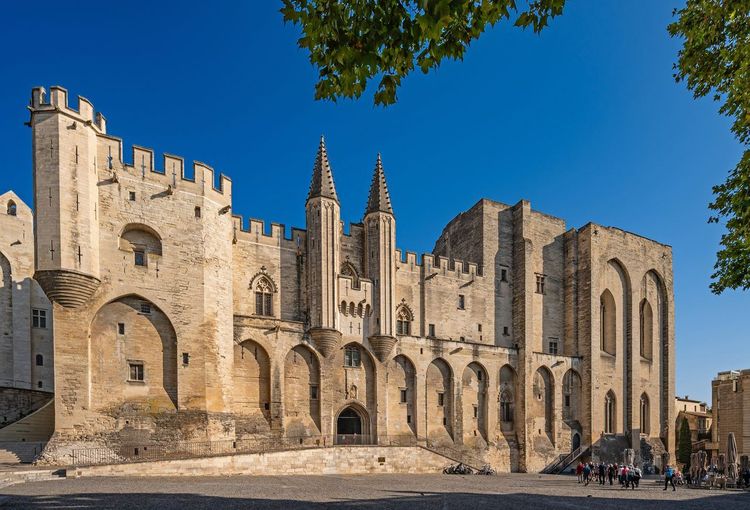
Avignon packs the densest concentration of medieval heritage in Provence into just a few pedestrian streets. At the centre of it all: the Palais des Papes, the largest Gothic building in Europe, seat of the papacy for 68 years (1309–1377), when Western Christendom decided that Rome was too dangerous for its pontiffs.
The palace is visited with an interactive digital tablet, the Histopad, provided free at the entrance (ticket €12 in 2026). The rooms of the Palais Vieux, built by Benedict XII, are strikingly Cistercian in their austerity: bare, soaring volumes, barrel vaults, walls two metres thick. The Palais Nouveau of Clement VI is, by contrast, an explosion of Gothic luxury. The Chambre du Cerf, covered in hunting frescoes commissioned in 1343, is one of the rare surviving secular paintings from the 14th century — an absolute rarity in medieval Europe.
Nearby, the Pont Saint-Bénézet, the famous bridge of Avignon, now has just four arches remaining of its original twenty-two. The dance attributed to it was not performed on the bridge but beneath it, on the Île de la Barthelasse. The entrance ticket (€5.50) includes an exhibition on its history. For photography, the bridge looks more elegant from the Rocher des Doms or from the Rhône quayside on the Villeneuve-lès-Avignon side.
The Rocher des Doms garden (free entry, open year-round) offers a 180° view over the bridge, the palace and the Rhône plain. This is where the people of Avignon come for a late-afternoon stroll, with swans on the small lake and the Alpilles on the horizon on clear days. Ryo's audio-guided tour of Avignon links the palace, the bridge and the rock in a narrated itinerary, ideal for grasping the city's role in medieval Christendom.
5. Swim in the Coves of Cassis
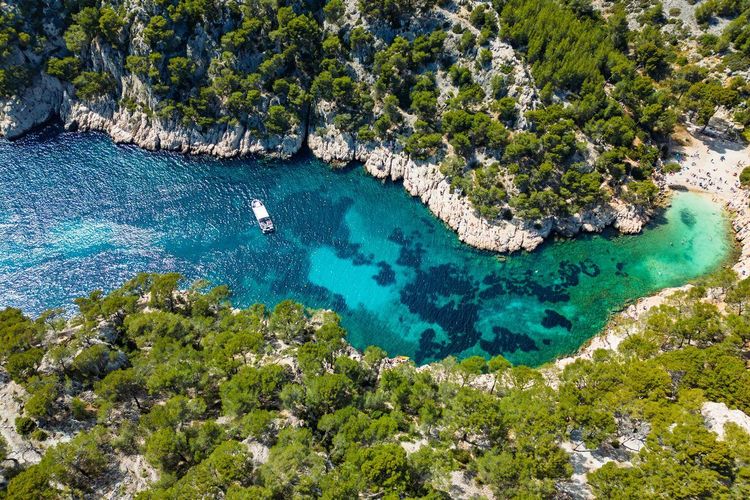
Cassis is just thirty kilometres from Marseille, but its scale — 7,000 inhabitants, a fishing harbour, whitewashed old streets — gives it a village atmosphere that Marseille lost long ago. The town is known for its AOC white wines (the vines grow on the limestone slopes above the harbour) and for its access to the Calanques.
The Plage de la Grande Mer (sandy, lively) suits families well. Nature lovers will prefer Port-Miou, reachable from the centre in 20 minutes on foot — the largest calanque in the park, long used as a white-stone quarry. Swimming there is excellent, with the seabed visible several metres down.
Water taxis departing from the harbour (around €17 return) reach in twenty minutes calanques that are inaccessible on foot, including En-Vau. It is the most efficient logistical option for visitors who don't want to hike, and the most spectacular, since you enter the calanque from the sea.
6. Hike the Montagne Sainte-Victoire
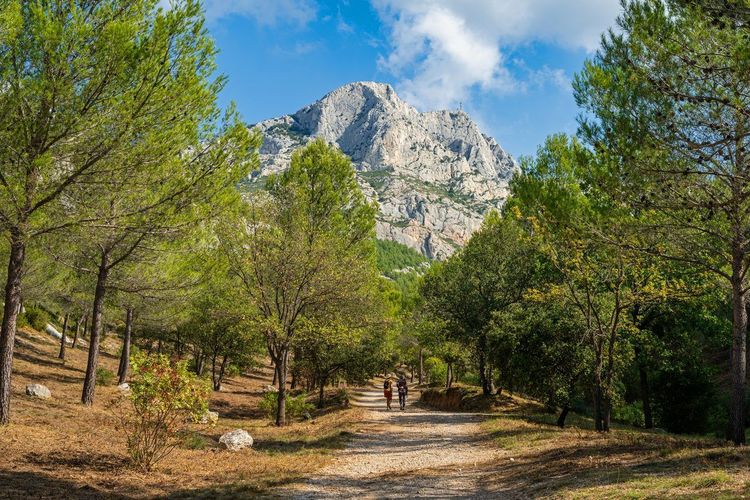
The Sainte-Victoire is not the tallest mountain in PACA — its highest point, the Croix de Provence, tops out at 1,011 metres. But no other mountain in the region has been painted as often: Paul Cézanne depicted it in more than 80 paintings from the 1870s until his death in 1906. Seen from Aix-en-Provence on a clear day, its limestone cliffs shift from blue-white at noon to fiery orange at sunset.
The classic hike ascends from the Barrage de Bimont to the Croix de Provence: 4 hours return with an elevation gain of 650 metres. The trail first follows the reservoir, then climbs through a pine forest before reaching the barren limestone plateau — scrubby garrigue, white stones, silence. The Croix, a metal cross planted in the 17th century by monks, is visible from Aix.
At the summit, a priory-refuge run by scouts offers basic overnight accommodation. Outside summer, the plateau is often deserted — this is where the Sainte-Victoire reveals its absolute mineral quality, stripped of all vegetation.
To round off the day on a cultural note: the site of Bibémus, 5 km from Aix, is the quarry where Cézanne rented a hut to paint directly in front of the mountain. Guided visits (booking required, €8) allow you to see the orange limestone blocks that appear in some twenty of his canvases — a striking confrontation between the actual landscape and the way Cézanne broke it down.
7. Wander through Aix-en-Provence
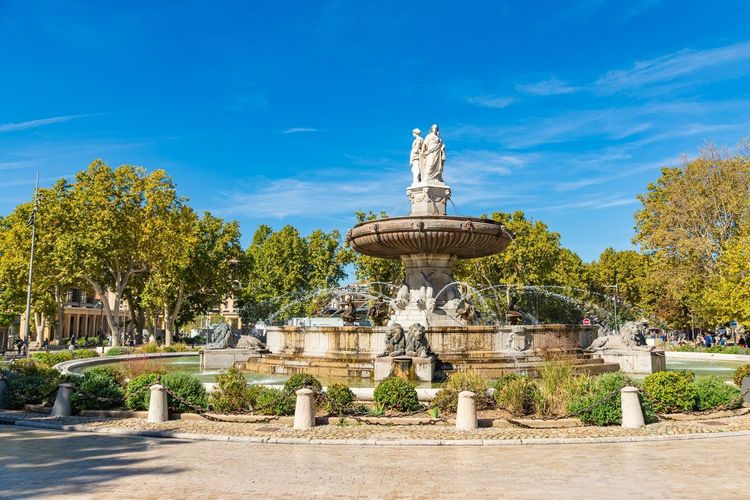
Aix-en-Provence is a university city — 40,000 students out of a total population of 140,000 — and you feel it in the atmosphere: cafés full at every hour, independent bookshops in the backstreets, a nightlife spread between jazz bars and late-opening restaurants. The city is also one of France's finest Baroque towns. Ryo's audio-guided tour of Aix-en-Provence traces its grand townhouses and fountains through a narrated walk.
The Cours Mirabeau, the main thoroughfare, lined with century-old plane trees and 18th-century fountains, remains the best entry point. Settle on the terrace of one of the historic brasseries along the cours for a morning coffee — ideally before 10 am or after 4 pm in July–August, when the sun beats down full force. The legendary Café des Deux Garçons, open since 1792 and devastated by a fire in 2019, remains closed to this day, but its listed façade still bears witness to the literary golden age of the cours.
The old town (north of the Cours) is a labyrinth of cobbled lanes animated by daily markets. The Place Richelieu market (fruit, vegetables, flowers) is held every morning except Monday. Calissons, the local confection made from almond paste and candied melon peel, can be found at artisan sweet shops around the Place des Trois Ormeaux. Try them at Béchard or Léonard Parli, two houses that have been making them for over a century.
The Musée Granet houses an exceptional permanent collection — works by Rembrandt, Cézanne, Picasso and Giacometti in a 17th-century convent. Entry is €6 (reduced rate); free on the first Sunday of the month. The Cézanne section, with nine paintings by the Aix-born artist, is the best-documented in the museum.
8. Contemplate the Abbaye de Sénanque
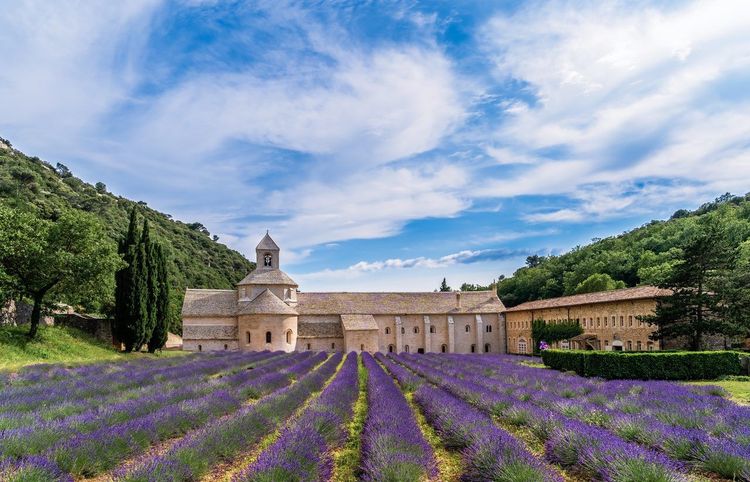
The Abbaye de Sénanque is one of the most reproduced images of Provence: rows of violet lavender in the foreground, and behind them the grey-ochre buildings of a Cistercian monastery founded in 1148. In reality, this lavender blooms for only a few weeks a year, generally between late June and mid-July — the exact dates vary from year to year depending on the weather.
Cistercian monks still live in the abbey. Guided tours (at fixed times, entry €8.50) allow you to see the Romanesque cloister, the chapter house and the abbey church. Independent exploration is not permitted; respect the scheduled time slots, and note that photography inside the church is forbidden by monastic rule.
Outside the flowering season, the road that descends towards the abbey from Gordes remains beautiful: a sunken lane between dry-stone walls, surrounded by truffle oaks. The abbey is 4 km from Gordes via the D177.
9. Explore the Colorado Provençal de Rustrel
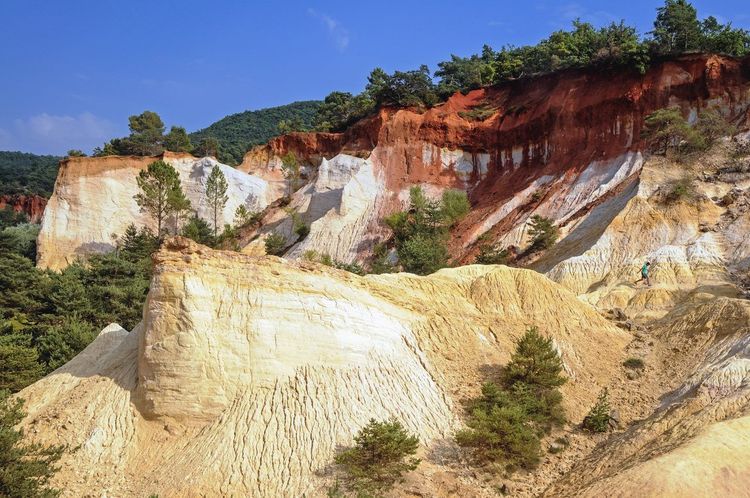
An hour from Avignon, the Colorado Provençal (Route de Rustrel, 84400 Rustrel, rated 4.5/5 on Google with 835 reviews) of Rustrel is a geological accident: deposits of ferrous ochre have coloured the rock formations in a palette of red, orange, yellow and white. The result resembles an American canyon set down in the heart of the Luberon.
The site is covered by two marked circuits from the car park: the Grand Circuit (6 km, 2 hours) and the Petit Circuit (3 km, 1 hour). The most spectacular formations — the Fairy Chimneys and the Blood Cliffs — are found within the first hour of the Grand Circuit. Wear closed-toe shoes: the ochre permanently stains light-coloured clothing and cannot be washed out.
The light in the early morning (7–9 am) and late afternoon (5–7 pm) is most flattering for photography. Avoid midday in summer: the site is exposed and the heat reflected off the rocks is intense. On weekdays, even in July, the site remains reasonably quiet.
10. Attend the Festival d'Avignon in July
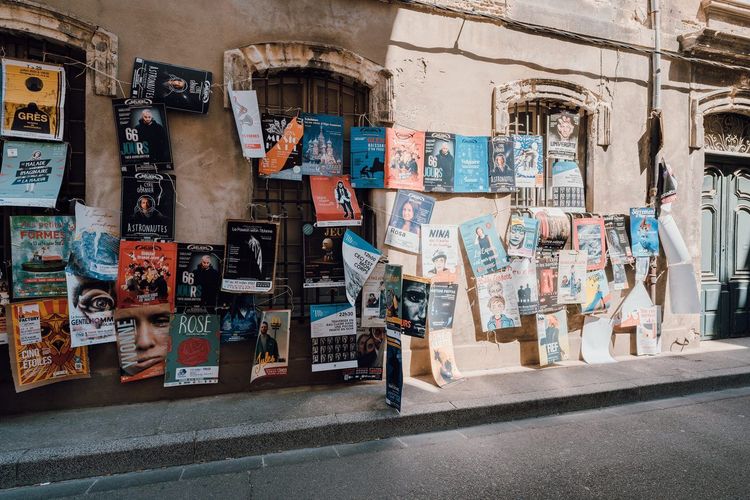
Every July, Avignon becomes for three weeks the world capital of live performance. The Festival d'Avignon, founded in 1947 by Jean Vilar, draws thousands of spectators to improbable venues: convent courtyards, open-air quarries, gymnasiums transformed into stages.
On the "off" side, more than 1,400 companies perform across dozens of venues. Tickets range from €5 to €15 for most shows, with performers handing out their own flyers in the streets from 9 am. It is one of the rare festivals where access to live culture remains financially affordable. Book accommodation 6 months in advance if you are coming during this period.
11. Cross the Camargue on Horseback or by Bike
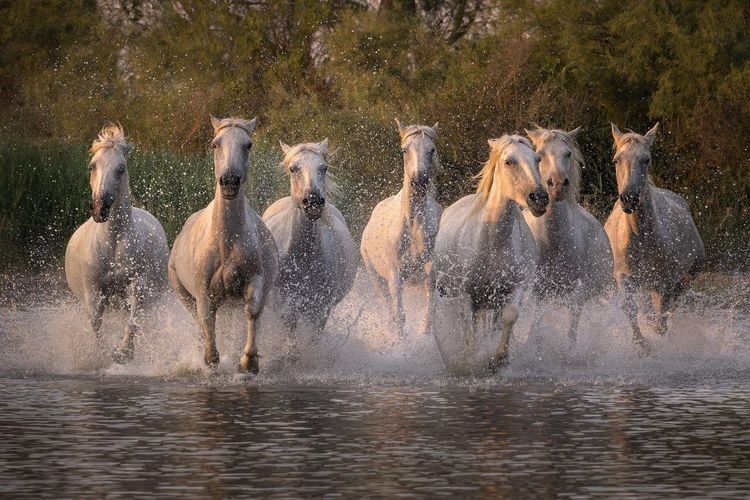
The Camargue is one of France's most unusual natural environments: 145,000 hectares of marshes, salt pans and lagoons between the arms of the Rhône and the Mediterranean, home to semi-wild bulls, white horses and dozens of migratory bird species. The mistral can blow fiercely, mosquitoes are relentless in summer, and the roads meander through a horizontal landscape that can be disorienting at first.
That is precisely why the Camargue captivates. Crossing it on horseback — astride the white Camargue horses — is the most immersive experience. Several manades (traditional ranches) around Saintes-Maries-de-la-Mer offer horse-riding excursions lasting 2 hours to a full day. The Camargue horse, hardy and sure-footed, crosses flooded zones without difficulty; you move through end-of-the-world scenery beneath an immense sky.
For cyclists, a marked route of 60 km links Arles to Saintes-Maries-de-la-Mer through the lagoons. The track is generally flat, but factor in the wind — the mistral can blow head-on for hours. Stop at the Parc Ornithologique du Pont de Gau to observe flamingos, herons and avocets just metres away from the wooden boardwalks.
Arles, at the northern gateway to the Camargue, deserves a full day. The Roman arena (1st century, still used for bullfighting spectacles), the Alyscamps (a Roman necropolis that inspired Van Gogh and Gauguin in 1888), the Musée Départemental Arles Antique (collections of Roman mosaics and an ancient barge raised from the Rhône): the city layers 2,000 years of archaeology within a walkable perimeter.
The Domaine de la Palissade (a reserve managed by the Conservatoire du Littoral, 7 km from Saintes-Maries) is the most pristine and least visited spot in the Camargue. Only walkers on foot can access it; groups of more than 25 must book in advance. Flamingos are present in large numbers in the lagoons in spring and autumn.
12. Step inside the Théâtre Antique d'Orange
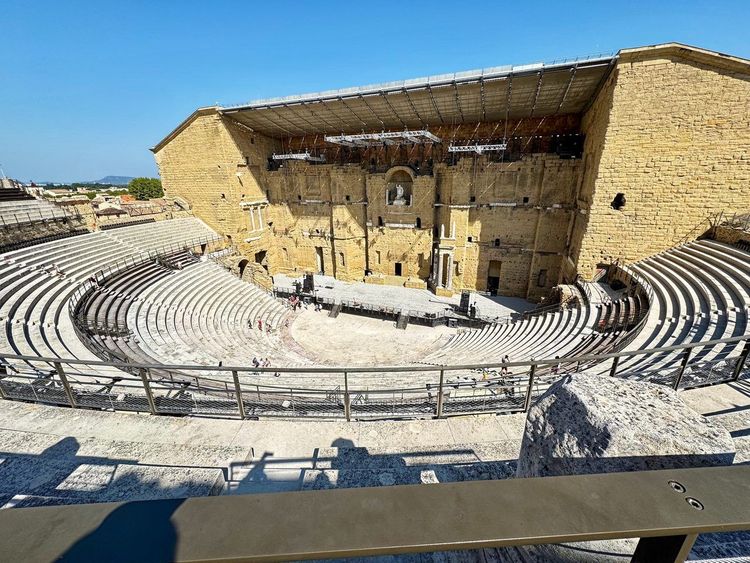
The Théâtre Antique d'Orange (Rue Madeleine Roch, 84100 Orange, rated 4.6/5 on Google with 12,392 reviews) is one of the best-preserved Roman theatres in the world: its stage wall, standing 37 metres high, is still intact — an exceptionally rare survival given that almost all ancient theatres lost theirs centuries ago. Louis XIV called it "the finest wall in my kingdom".
The theatre can seat 9,000 spectators in its limestone tiers. The reconstructed statue of Emperor Augustus, rendered in its original polychromy — red and gold — stands at the back of the stage. The audio-guided visit (€13.50 with museum) reveals the site's exceptional acoustics: whisper from the orchestra pit and you will be heard from the top rows.
In summer, the Chorégies d'Orange (opera festival, generally late July to early August) turn the theatre into an open-air opera stage. Tickets go on sale in December and sell out quickly for the flagship productions. A 5-minute walk away, the Arc de Triomphe d'Orange (1st century BC) is the best-preserved surviving Roman triple-arched triumphal arch. If Marseille is on the same trip, its audio-guided loop threads 25 commented stops from the Vieux-Port to the Panier district.
13. Explore Nice and Its Old Town
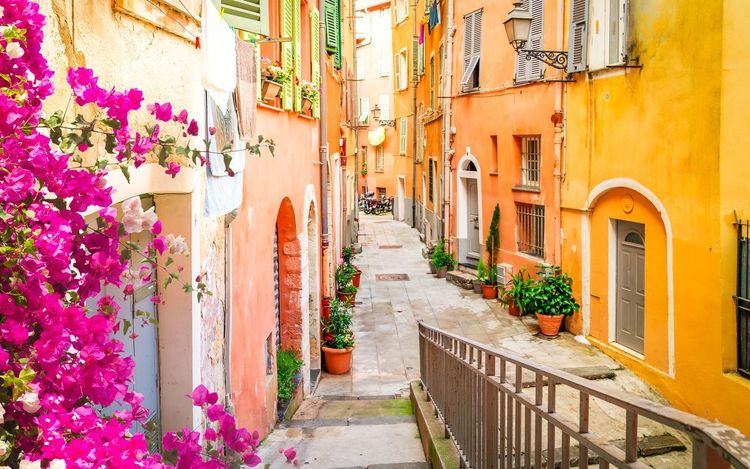
Nice resembles no other city in PACA. Italian until 1860 (the city was annexed by France under the Treaty of Turin), it has retained that ambivalence in its architecture, its cuisine and its local language (Niçard, still spoken by a few thousand people). The Baroque façades in ochre and rose of the Vieux-Nice recall Genoa or Turin, not Marseille or Avignon.
The Cours Saleya market is held every morning except Monday in the heart of the Vieux-Nice. Flowers, fruit, socca (the grilled chickpea pancake cooked on a griddle, a Niçoise speciality), seasonal vegetables and Provençal herbs fill the stalls beneath the Baroque façades. Socca is best eaten hot, straight from the wood-fired oven — arrive before 10 am for the finest pieces.
The Promenade des Anglais is Nice's showcase: 7 km of seafront between beaches and grand hotels. Built in 1822 at the initiative of the expatriate English community and now listed as a UNESCO World Heritage Site alongside the rest of the city since 2021, it is the Sunday-morning ritual for the people of Nice. Shared bikes are available at regular intervals along the route.
The Colline du Château, east of the Promenade, is a free public park offering the most complete view of Nice, the Baie des Anges and the first Alpine peaks. The medieval castle was demolished in 1706 by the troops of Louis XIV; only foundations remain. You can walk up in 15 minutes from the Vieux-Nice or take a free lift at the foot of the Tour Bellanda.
The Musée Matisse (in Cimiez, on the heights of Nice) occupies a 17th-century Genoese villa. It holds the largest collection of the artist's work: 130 paintings, 200 drawings and prints, and cut-paper maquettes. Entry is €10, free for under-18s. Matisse lived in Nice from 1917 until his death in 1954; the Mediterranean light and the arabesque motifs he bought at Nice markets are central to his late work. If you prepare your visit with Ryo's audio-guided tour of Nice, the Cimiez section includes anecdotes about Matisse's studios and the models who posed for him in this very villa.
For food, two dishes sum up Niçoise cuisine: the pissaladière (a tart of caramelised onions, Niçoise olives and anchovies) and the official salade niçoise — without cooked beans (raw green beans instead), with anchovies or tuna and olives. Restaurants in the Vieux-Nice that venture away from the Cours Saleya are generally more authentic and cheaper than those in the front row.
14. Sail to the Îles de Lérins
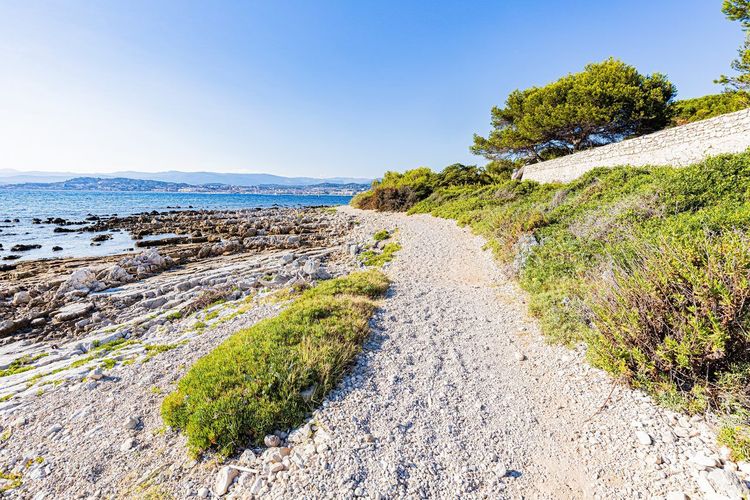
Just 15 minutes by boat from Cannes, the Îles de Lérins form a two-island archipelago (Sainte-Marguerite and Saint-Honorat). No cars, no hotels on Sainte-Marguerite, fine sandy beaches between pine trees: the islands offer a breath of fresh air away from the bustle of the Croisette.
The Île Sainte-Marguerite is known for its Fort Royal, built by Richelieu and enlarged by Vauban. The fort holds a famous cell: the one where, from 1687, the Man in the Iron Mask was imprisoned — the mysterious prisoner whose identity was never confirmed and who fuelled the speculation of Voltaire and Dumas. The cell can be seen at the Musée de la Mer (€6), along with graffiti left by the detainee on the stone walls.
Saint-Honorat has been home to a monastic community since AD 410. The monastery, still active, produces a white wine and several liqueurs (including "Lérina") sold at the abbey shop. The island can be walked in its entirety in 1h30; the coastal path offers views of the Alps on days when the tramontane blows.
Boats to Sainte-Marguerite depart from the Vieux-Port de Cannes every 30 minutes in season. Return fare: around €17 per adult. For Saint-Honorat, 3 to 4 departures per day — check the return schedule before you board.
15. Travel Back in Time at Les Baux-de-Provence
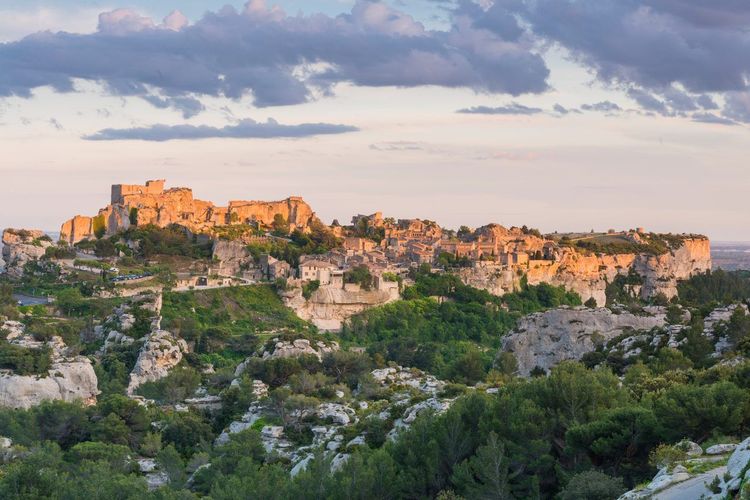
Les Baux-de-Provence occupy the tip of a limestone spur in the Alpilles — a medieval village perched at 245 metres altitude, half in ruins and half home to art galleries and restaurants. It is one of the most photographed places in Provence: arrive before 9 am or come out of season to enjoy it without the crowds.
The Citadelle des Baux (ruined castle, open 9 am–8 pm in summer) is visited with an audio guide included in the ticket. The reconstructed war machines — trebuchet, battering ram — are operated during daily demonstrations in July and August. The view from the keep ruins takes in the Alpilles to the north, the Crau plain to the south and Mont Ventoux on clear days.
At the entrance to the village, the Carrières de Lumières project monumental image shows onto the walls of former limestone quarries (vaults 14 metres high). The production changes each season. Ticket: €16 adult. The natural coolness of the quarries (13°C in summer) is a welcome bonus after the heat of the Alpilles.
16. Browse a Provençal Market
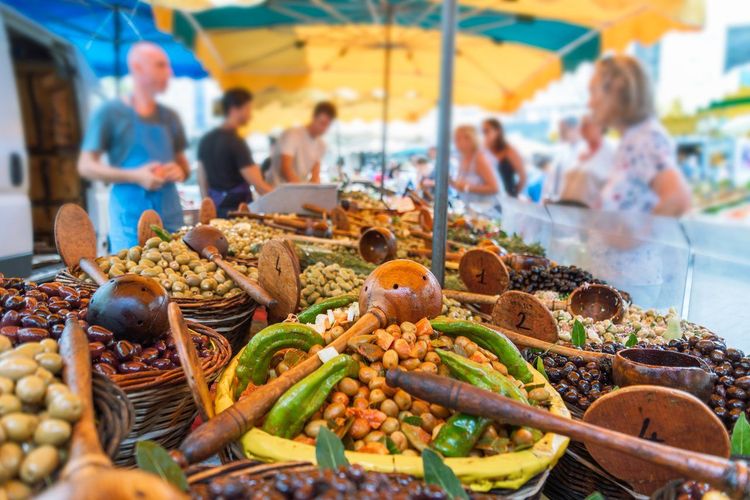
Provençal markets are an institution, not a tourist spectacle — they have brought together local producers and regular buyers for centuries. Apt (market on Saturday, one of the largest in the Luberon) gathers dozens of producers of candied fruit, lavender honey, olive oil and goat's cheese. The Arles market (Saturday, Boulevard des Lices) stretches for over a kilometre — arrive before 9 am for the best finds.
Lourmarin (Friday) and Cucuron (Tuesday) are more intimate, more local, less visited. The L'Isle-sur-la-Sorgue market (Sunday) is celebrated for its antique dealers and bric-a-brac sellers — around thirty permanent shops doubled by temporary stalls at the weekend, with the Sorgue river flowing between the houses.
17. Discover the Parc National du Mercantour
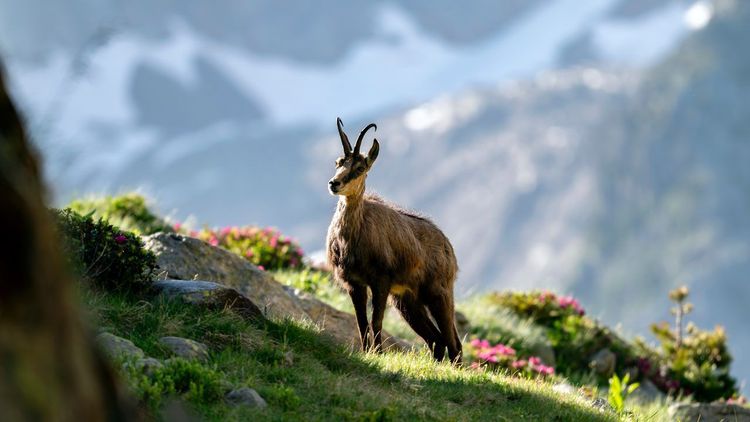
The Mercantour is the most isolated national park in PACA and arguably the least known to visitors. Wedged between the Nice Alps and the Italian border, it protects 685 km² of wild mountains inhabited by wolves, ibex, chamois, golden eagles and, more rarely, lynx. Its average altitude exceeds 2,000 metres; some summits top 3,000 metres.
The Vallée des Merveilles (Saint-Dalmas-de-Tende, 06430 Tende, rated 4.8/5 on Google with 217 reviews) is the park's jewel: a glacial cirque at 2,300 metres altitude containing more than 40,000 Bronze Age rock engravings dating from 1800–1500 BC. The motifs depict cornides (a divine figure), halberds, ox-drawn ploughs and anthropomorphic figures. Access is via a 6 km trail from Saint-Dalmas-de-Tende (3 hours' ascent). A certified mountain guide is compulsory to approach the engravings; guides operate from Saint-Martin-Vésubie and Tende.
The Vallée de la Roya is accessible by the Nice–Tende train, one of the finest mountain rail lines in France. The journey (€4, 1h45) follows gorges, passes through tunnels hand-carved in the 19th century and runs past villages clinging to cliff faces. Tende is home to a remarkable Musée des Merveilles, with casts and originals of the rock engravings (€7).
For self-sufficient hikers, the GR52 (Grande Traversée du Mercantour) links Saint-Martin-Vésubie to Menton in 12 to 14 days along the ridges. CAF mountain huts are dotted along the route; booking is essential in July–August. Nights at altitude at 2,500–2,800 metres give access to starry skies of rare quality: the Mercantour is one of France's few certified dark-sky reserves.
The park's wildlife is best seen at dawn and dusk. The ibex on the cliffs of Mont Bégo can be approached to within 30 metres away from busy trails. Wolves, which recolonised naturally from Italy in the 1990s, are present but elusive; around a hundred individuals live in the park and its surrounding zones.
18. Explore the Luberon and Its Hilltop Villages
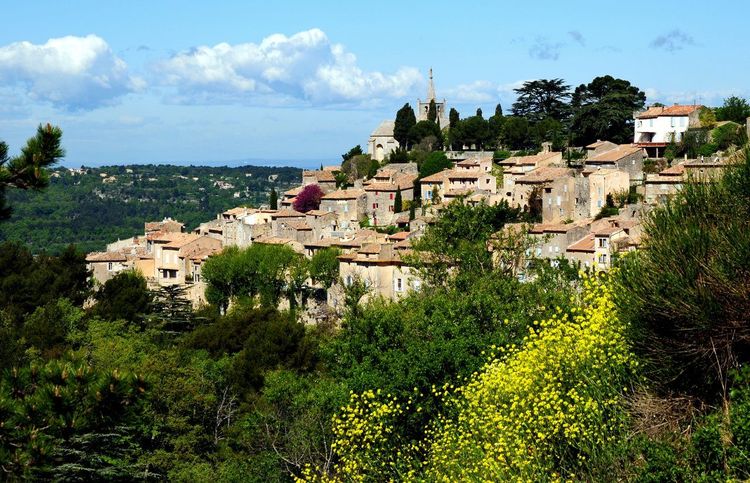
The Luberon is a massif around 60 km long that separates the Vaucluse plateau to the north from the Durance plains to the south. Between its two slopes, a constellation of hilltop villages, each with its own character: Gordes (Place du Château, 84220 Gordes, rated 4.5/5 on Google with 8,696 reviews) (the most spectacular, listed among the "Plus Beaux Villages de France"), Bonnieux, Lacoste, Ménerbes, Lourmarin (the village where Albert Camus is buried).
Gordes overlooks the Calavon valley from 372 metres altitude. Its honey-coloured stone houses step down in tiers from the Renaissance château to the plain. Some 4 km below, the Village des Bories is a cluster of dry-stone constructions without mortar (shepherds' huts, enclosures, sheepfolds) dating from the 16th to 18th centuries, perfectly preserved. Entry €7.
Bonnieux has a double distinction: its upper church (12th century, panoramic view over the Luberon) overlooks a cedar forest planted under Napoleon III — Atlas cedars of remarkable colour in autumn. The Musée de la Boulangerie (baguettes and ancestral ovens, entry €3.50) is one of the most unusual museums in Provence.
The Sentier des Ocres in Roussillon (a loop of 2.5 km, 1 hour, entry €3) is the Provençal counterpart of the Colorado de Rustrel. The red-orange ochre cliffs bordering the village are accessible via a marked path. The road between Apt and Cavaillon allows you to string together Ménerbes, Lacoste (whose ruined castle once belonged to the Marquis de Sade), Bonnieux and Roussillon in a single day.
19. Go Sea Kayaking on the Mediterranean
Sea kayaking is one of the best ways to approach the Provençal coastline. From La Ciotat or from Cassis, guided excursions let you hug the shore at water level, enter sea caves inaccessible on foot and see the coastline as sailors do from the open sea. Operators offer half-day rentals (€35–55) and guided outings with snorkelling.
The stretch between Pointe Grenier and the Calanques de Figuerolles (near La Ciotat) is one of the most beautiful sections of coast accessible by kayak. The cliffs plunge directly into the sea, the clear waters reveal posidonia meadows below, and seagulls glide fearlessly within arm's reach of a paddle. For beginners, introductory sessions are offered by coastal sailing clubs; a good level of comfort in open water is recommended for offshore outings.
20. Roam Le Panier, Old Marseille
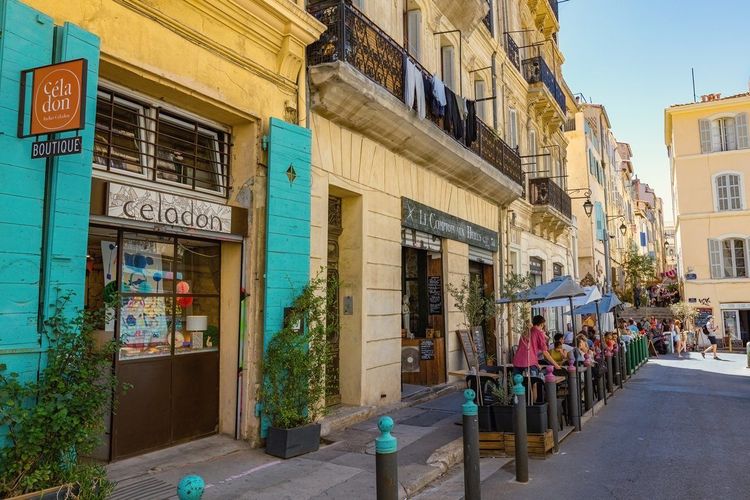
Le Panier is Marseille's oldest neighbourhood — a steep hill between the Vieux-Port and La Joliette, draped in narrow lanes where laundry hangs between buildings. This is where Marseille was founded by the Phocaean Greeks in 600 BC; archaeologists have unearthed Greek remains beneath the Place de Lenche.
The neighbourhood is simultaneously working-class and in full transformation — contemporary art galleries sit alongside Arab grocery stores and Marseille soap workshops. The Vieille Charité (a 17th-century convent by Pierre Puget) is the Panier's landmark monument: its Baroque chapel, crowned by an oval dome, houses the Musée d'Archéologie Méditerranéenne (collection of Egyptian mummies, prehistoric weapons, €6) and the Musée d'Arts Africains, Océaniens et Amérindiens.
For curious visitors: genuine Marseille soap has to this day no protected designation (neither AOC nor IGP, despite several attempts), but the traditional recipe requires a minimum of 72% olive oil and a cauldron-cooking process following an ancestral method. The Savonnerie La Licorne, still active in the neighbourhood, offers workshop visits. To go further with lesser-known addresses, the Ryo selection of unusual spots in PACA lists several locations in and around the Panier that few visitors ever find.
La Friche la Belle de Mai (a former tobacco factory converted into a cultural hub, 10 minutes' walk from the Panier) is Marseille's most dynamic venue for emerging arts — concerts, exhibitions, a skatepark, rooftop restaurants. Entry is free for most events.
FAQ
What is the best time to visit PACA?
The spring (April–May) and autumn (September–October) offer the best balance of weather and crowd levels: pleasant warmth, thinner crowds, cheaper accommodation. Lavender typically blooms between late June and mid-July; if that's your main goal, plan accordingly. Winters are mild on the coast (Nice rarely drops below 0°C in January), but some high-altitude natural sites such as the Mercantour are snow-covered and partially closed.
What can I do in PACA this weekend without a car?
Nice, Marseille, Avignon and Aix-en-Provence are all served by TGV from Paris in under 3h30. From these cities, regional trains reach Cassis, Arles, Orange or Cannes. The Gorges du Verdon and the Mercantour remain difficult without a car; plan a rental on site or an organised excursion departing from Nice or Aix.
What free activities can I do in PACA?
There are plenty: the Vieux-Port and Notre-Dame de la Garde in Marseille, the Promenade des Anglais and the Colline du Château in Nice, the Cours Mirabeau in Aix-en-Provence, hiking the Sainte-Victoire, the villages of Les Baux-de-Provence (excluding the citadel), the public beaches of Cassis, and cycling through the Camargue from Arles. Marseille's municipal museums are free on the first Sunday of the month.
Which cities should I prioritise in PACA if I only have 3 days?
For a first 3-day trip: Marseille (Calanques, Vieux-Port, Panier), Aix-en-Provence (Cours Mirabeau, Musée Granet, Sainte-Victoire) and Avignon (Palais des Papes, Pont Saint-Bénézet). This triangle covers three very different personalities of the region and is entirely doable by train. Add a half-day in Cassis if you enjoy swimming.
Are there unusual activities to do in PACA?
Absolutely: bivouacking in the Calanques, night hiking with a headtorch through the Blanc-Martel of the Verdon, visiting the Bronze Age rock engravings in the Vallée des Merveilles, crossing the Camargue on horseback, watching ibex at sunset on Mont Bégo. To go further, the Ryo app offers audio-guided tours at the region's landmark sites, with historical context and anecdotes that information panels never cover.
Is PACA suitable for family travel?
Very much so. The Calanques by boat (no hiking), the Ornithological Park of the Camargue, the reconstructed war machines at Les Baux-de-Provence, the beaches of Cassis and Nice, the Musée des Merveilles in Tende and the Carrières de Lumières are all suitable from age 5–6. For teenagers: sea kayaking, rock climbing in the Verdon, high-altitude hiking in the Mercantour. The Ryo app offers audio-guided content that makes visits interactive, especially at the historic sites of Marseille and Avignon.
PACA in Practice
The Provence-Alpes-Côte d'Azur region is not a single destination — it is a stack of destinations. In two hours by road, you cross landscapes that have nothing in common: the white limestone of the Calanques, the burnt ochre of the Luberon, the deep green of the Verdon, the high pastures of the Mercantour. Each area has its own logic, its own calendar, its own ideal visiting conditions.
To prepare your on-site visits, our Ryo app accompanies travellers with audio guides in the major cities of the PACA region — Marseille, Nice, Avignon, Aix-en-Provence — built on in-depth historical research. Whether you have a weekend or two weeks, the PACA region rewards those who take the time to explore it layer by layer, without stopping at the first pages of the guidebooks.
À lire également