© Shutterstock
 Votre guide Ryo
Heritage Days 2026 in Marseille: the Guide to Exceptionally Open Sites
Every third weekend of September, the city opens doors that stay closed the rest of the year. Heritage Days in Marseille are the only time when the Palais de la Bourse lets the public into its grand gilded-woodwork hall, where a tide gauge perched on the rocks of the Corniche reveals the instrument that sets the zero altitude for all of France, and where a twenty-six-century-old Greek quarry can be visited at the foot of the Saint-Victor district.
The 2026 edition takes place on Saturday, September 19 and Sunday, September 20, with a national theme focused on photography and more than 150 events scheduled across all arrondissements. On the agenda: the long-awaited reopening of the Vieille Major, closed since the late 1980s, the Archives départementales des Bouches-du-Rhône opening their conservation stacks, the bastides of the Château Pastré and the Château Saint-Antoine, and a rare excursion into the Anse de la Réserve, that small fishing harbor wedged between two rocks on the Corniche.
Below we detail the exact dates, the sites worth prioritizing, the visits to book as soon as ticketing opens, and the practical information to get through the weekend without unnecessary queuing. For the rest of the year, the city can also be explored at leisure thanks to the Ryo audio-guided tour of Marseille, which connects the Vieux-Port to the Corniche while delving into the history of each neighborhood.
Heritage Days 2026 in Marseille: Dates and Themes
Mark the dates: Saturday, September 19 and Sunday, September 20, 2026. The event, managed at the national level by the Ministry of Culture under its official name of "European Heritage Days," falls every year on the third weekend of September, and 2026 is no exception.
Two main threads structure this edition. The national theme celebrates the heritage of photography: studio archives, local photographers' collections, printing techniques, buildings that once housed darkrooms. The European theme, titled "Heritage at Risk: Revive, Resist, Reimagine," shines a light on fragile, under-restoration, or narrowly saved monuments. In Marseille, both angles often intersect in the same building: a structure restored after decades of neglect, documented by archival photographs shown during the visit.
Marseille is among the most active cities in the region for this weekend. More than 150 events are announced: guided tours, workshops, concerts, craft demonstrations, exceptional openings. Every neighborhood takes part, from the historic city center to the village cores of the northern arrondissements. You will find the full program on the city hall website, the tourist office website, and the ministry's national platform, but before diving in, here are the sites that genuinely deserve planning your day around.
One piece of advice before rushing in headfirst: many sites limit entries by time slot and reservations go within hours. Aim for rare openings on Saturday morning, and keep Sunday for museums and gardens, which handle crowds more easily.
The Palais de la Bourse: Free Access All Weekend
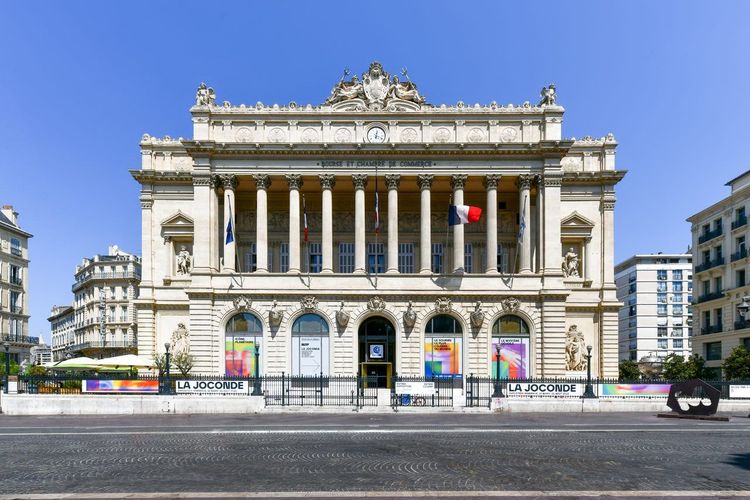
The Palais de la Bourse opens free of charge on September 19 and 20, with no reservation required for a self-guided visit of the spaces normally reserved for professionals. Built between 1852 and 1860 to designs by architect Pascal Coste and inaugurated by Napoleon III, the building houses the headquarters of the Marseille Chamber of Commerce, the oldest in the world, dating back to 1599. Its neoclassical façade overlooking the Canebière conceals a far more spectacular interior: a vast trading hall topped by a glass roof, period woodwork and gilding, and reception rooms you would normally only encounter in institutional brochures.
During this weekend, you can move through spaces closed to the public the rest of the year, including the former council rooms and the upper galleries overlooking the main hall. The building also houses the Musée de la Marine et de l'Économie, normally a paid attraction, which also becomes free for the occasion. Its ship models and paintings of the harbor tell three centuries of Marseille's maritime trade. Allow a good hour to take it all in at a relaxed pace.
Opening hours vary slightly from one edition to the next, but access generally begins mid-morning and runs through to late afternoon, both days. If you could only choose one site in the city center, this one is the most obvious: walkable from the Vieux-Port, rarely overcrowded, and central enough to continue afterward toward the Panier or the Musée d'Histoire.
The Jardin Saint-Nicolas: a Viewpoint over the Vieux-Port Entrance
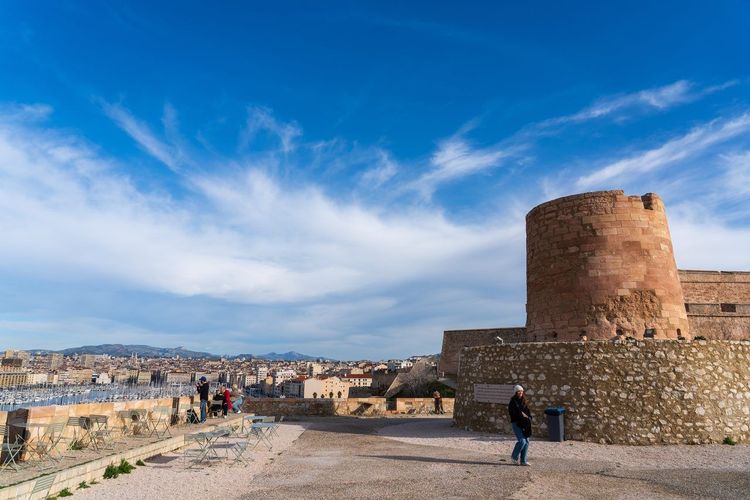
Nestled against the ramparts of Fort Saint-Nicolas, the Jardin Saint-Nicolas (Boulevard Charles Livon, 13007 Marseille, rated 4.7/5 on Google based on 3 reviews) is a terraced space that commands the southern entrance to the Vieux-Port. Getting here in normal times is rarely straightforward: the site falls within a military perimeter and access is restricted for most of the year.
What draws you here is as much the military history of the place, with the fort built by Louis XIV to keep the turbulent city under his cannons, as the view: from up here, the Vieux-Port entrance opens wide, with Fort Saint-Jean opposite, the Major cathedral to the right, and ferries maneuvering slowly below. Plan for late afternoon — the raking light works wonders and the crowds have thinned.
The Ancient Corderie Quarry: the Oldest in Gaul
A few hundred meters away, on Boulevard de la Corderie in the Saint-Victor district, lies one of the most significant archaeological discoveries in Marseille in recent decades. Contrary to what is sometimes written, the ancient Corderie quarry (Boulevard de la Corderie, 13007 Marseille, rated 4/5 on Google based on 15 reviews) is not located beneath the Jardin Saint-Nicolas: it is a separate site, uncovered between April and June 2017 by Inrap during a preventive excavation ahead of a real estate project.
Archaeologists uncovered a quarry face exploited as early as the 6th century BC, when the Phocaeans were founding Massalia, and reused through the Roman period. The pink limestone extracted here was used to build the walls and monuments of the Greek city, and sarcophagi were also carved on site. Specialists regard it as the oldest known quarry in Gaul, and one of the oldest in the Mediterranean basin. The site was listed as a historic monument on September 13, 2018, though only 635 of the 4,200 square meters excavated benefit from that protection, following a civic mobilization that left a mark on the city.
The history of the Corderie site through the ages is precisely what the guides recount during the weekend: Greek extraction techniques still readable in the rock, tool marks, and the successive reuses down to the modern neighborhood that eventually covered it. Access is tightly controlled for the rest of the year, amounting to just a few days annually in small groups, which makes this one of the most sought-after openings in the program. Closed-toe shoes are required, as the ground is uneven.
The Archives Départementales des Bouches-du-Rhône Open Their Doors
The Archives départementales des Bouches-du-Rhône (18 Rue Mirès, 13003 Marseille, rated 3.5/5 on Google based on 89 reviews) hold several dozen linear kilometers of documents, from medieval parchment to 20th-century civil registers, notarial records, and collections from the French Revolution. The building, in the 3rd arrondissement, exceptionally opens its backstage areas for the duration of the weekend.
Two formats usually complement each other. On one side, practical genealogy workshops where archivists show you how to trace a Marseille ancestor through digitized registers without spending three weekends on it. On the other, guided tours of the conservation stacks — those vast climate-controlled shelving systems where the originals sleep — with a stop at the restoration workshop. Children tend to latch on to the damaged-paper restoration process, while local history enthusiasts linger over old harbor plans and 18th-century maritime charts.
With the photographic theme of this edition, the iconographic collections are likely to be front and center: glass plates, press prints, documentary campaigns covering the great port construction projects. Spots on thematic workshops go fast; if a booking slot opens in advance, secure it on the day it becomes available.
The Vieille Major: a Reopening Almost Forty Years in the Making
This is the opening that has generated the most excitement this year. The Vieille Major (Place de la Major, 13002 Marseille, rated 4.7/5 on Google based on 7 reviews), the old Romanesque cathedral tucked against the 19th-century Major, has been closed to the public since the late 1980s. Its squat silhouette in pink Couronne stone, with part of its nave lost when its monumental neighbor was built, has long been part of the Joliette district's skyline without almost anyone having crossed its threshold in a generation.
Opening it for a single weekend checks both boxes of the 2026 edition: a monument at risk, long abandoned, and a building whose interior is now known only through old photographs. If you could do just one thing this entire heritage weekend, this would probably be it. Expect a queue and staggered entry in small groups.
Châteaux and Bastides: Pastré, Saint-Victor, and Saint-Antoine
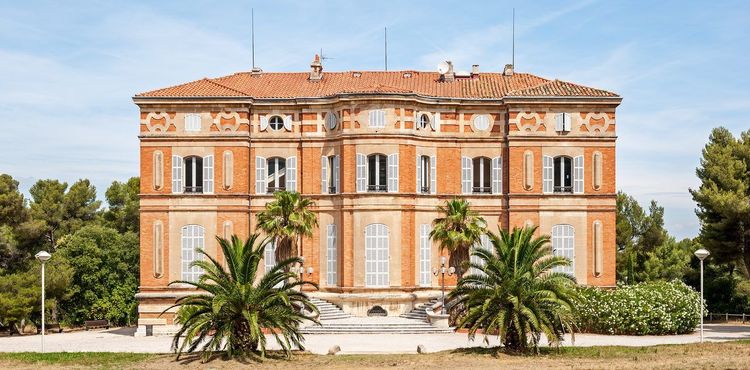
Marseille is a city of bastides, those country houses that merchants had built outside the city walls from the 17th century onward. Several of them reopen for the occasion, and it is often here that the weekend truly takes on a sense of escape.
The Château Pastré, at the foot of the Marseilleveyre massif in the 8th arrondissement, is the grandest of the lot: a 19th-century residence set within a park of over one hundred hectares stretching up toward the calanques. A patron countess, artists' studios that sheltered refugees during the war, faience collections — the place has a rich history, and the park alone makes the trip worthwhile.
The Château Saint-Victor and the Château Saint-Antoine (Traverse du Moulin de Redon, 13015 Marseille, rated 4.8/5 on Google based on 284 reviews) play a more understated role. The latter, a discreet manor house in the 15th arrondissement, appeared on the program of recent editions and remains a curiosity for anyone wanting to see what heritage looks like in the northern neighborhoods: a wooded park, restored façades, and a few rooms preserved as they were with period furniture. Check whether it features in the official program before making the trip, as the list of open bastides changes from year to year. For a broader look at the city, our audio-guided tour, The Phocean City, covers much of central Marseille end to end.
Allow about thirty minutes from the Canebière to reach Saint-Antoine by public transport, a little more for Pastré during peak hours.
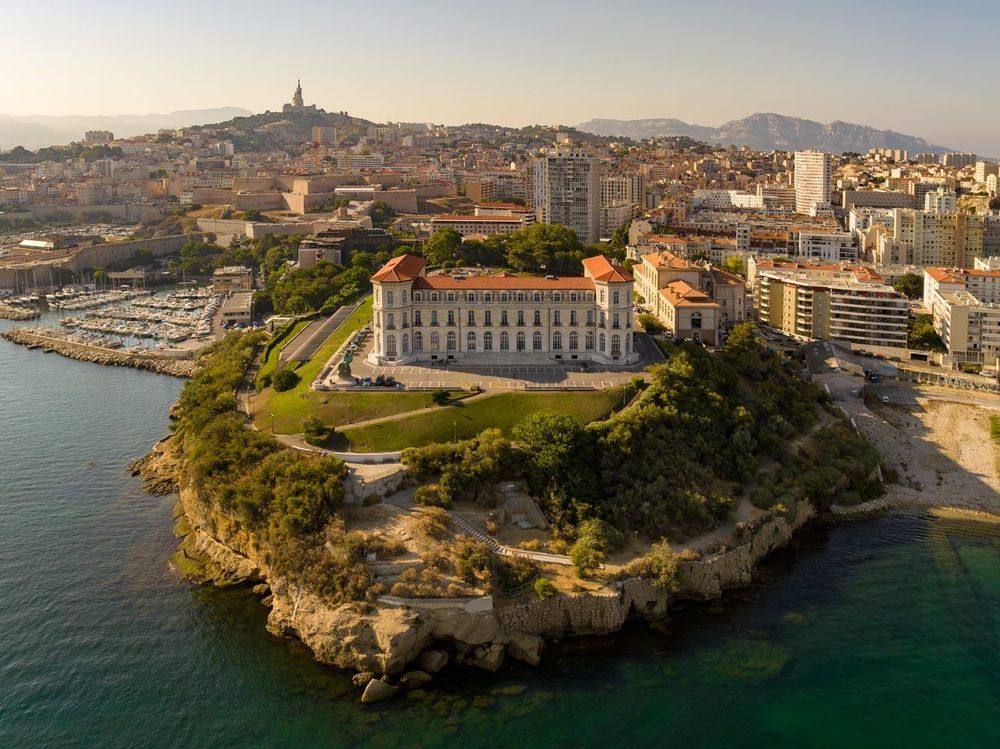
The Palais du Pharo: the Harbor Served on a Silver Platter
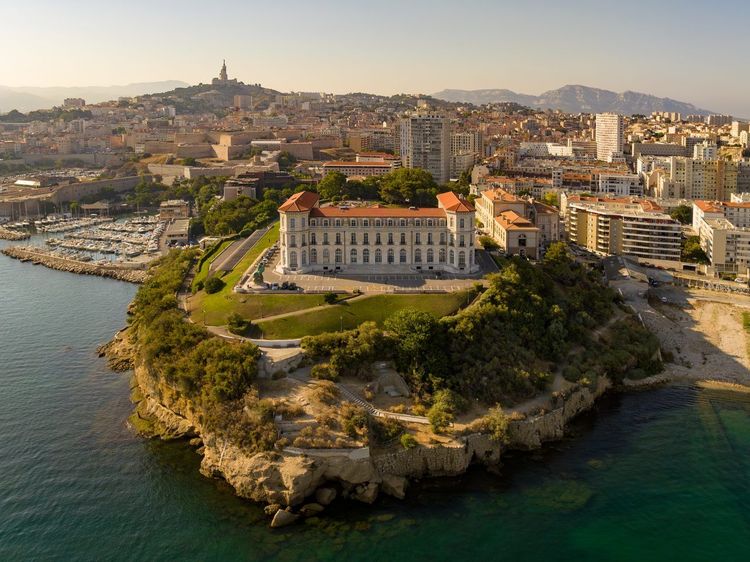
Given to Empress Eugénie by Napoleon III, the Palais du Pharo occupies one of the city's finest promontories, directly opposite the Vieux-Port. Now a municipal convention center, it opens its reception rooms and terraces to the general public only on rare occasions.
The visit pairs easily with the Jardin Saint-Nicolas, a five-minute walk away: two viewpoints overlooking the same harbor entrance, two different stories, one round trip.
The Musée d'Histoire de Marseille and the Photographic Heritage
Located at the heart of the Centre Bourse, the Musée d'Histoire de Marseille (2 Rue Henri Barbusse, 13001 Marseille, rated 4.5/5 on Google based on 2,204 reviews) is one of the largest urban history museums in Europe: twenty-six centuries of remains, including ancient shipwrecks found during excavations of the district, displayed a few meters from the ancient port and its garden of ruins. During the weekend, admission becomes free, making it the natural anchor point for a day in the city center.
In the program for museums, the photographic theme takes several forms: displays of historic collections, presentations of the photography campaigns that documented the Vieux-Port excavations in the 1960s, and workshops on printing processes. Previous editions had set the tone, notably with the exhibition "1944–2024: Marseille, la Libérée," mounted for the 80th anniversary of the Liberation, which brought period photographs face to face with contemporary shots of the same streets. A simple principle, devastatingly effective for measuring what reconstruction erased around the Vieux-Port.
Other municipal institutions follow the same thread during these two days, with itineraries covering the Marseille Resistance, port history, and urban archaeology. Most city museums apply free admission throughout the weekend, including those that are normally paid. To prepare your visit, our Ryo article on the Musée d'Histoire de Marseille details the permanent collections not to miss outside of this weekend.
Guided Tours and Maritime Gems Open for the Occasion
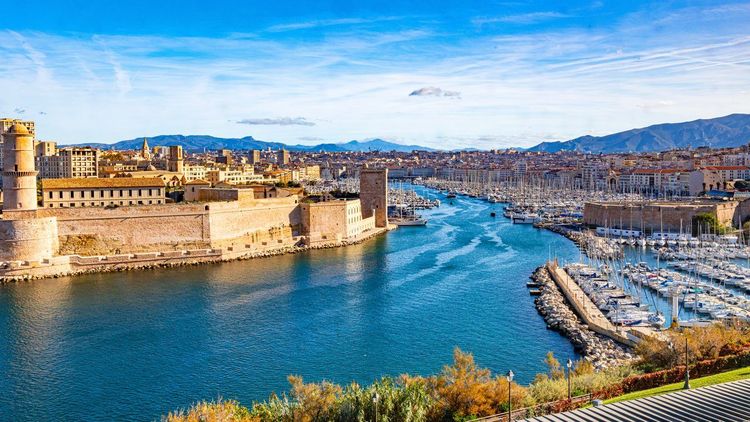
Beyond the major sites, it is the one-off guided tours that give the weekend its real flavor. On September 19 and 20, guides lead small groups along thematic routes refreshed each edition, often capped at twenty or thirty participants and fully booked well before the day.
The discovery of the Port de l'Anse de la Réserve is one of them. This tiny fishing harbor nestled beneath the Corniche Kennedy still shelters a few huts and a handful of traditional Marseille barquettes moored year-round. The tour traces the history of artisanal fishing in Marseille and explains why this type of shelter, once common all along the coastline, has almost entirely disappeared.
Two other addresses are worth the detour for anyone interested in maritime heritage. The Villa Costa, a 19th-century residence on the Corniche, opens its gardens and part of its interiors on certain editions — spaces invisible the rest of the year.
The Marseille tide gauge (174 Corniche Kennedy, 13007 Marseille, rated 4.5/5 on Google based on 193 reviews) is quite simply a national reference point. Built in 1883 and 1884 to designs by engineer Louis-Auguste Sébillotte and fixed to the rocks of the Anse Calvo at 174 Corniche Kennedy, the instrument recorded sea level continuously from February 1885 to December 1896 to establish the zero altitude for France. A fundamental benchmark sealed into a granite block, 1.661 meters above that zero, still materializes the reference. In other words, every altitude printed on an IGN map is ultimately measured from this small scientific hut on the Corniche.
These three addresses illustrate well what the city calls its living heritage: working places rather than frozen monuments, where someone still comes to take a reading, repair a boat, or tend a garden. If the maritime atmosphere appeals to you, the Ryo audio-guided tour of Marseille lets you continue exploring the coastline all year round, long after the weekend.
Prices, Reservations, and Practical Information
On the price side, the rule is straightforward: free admission applies to the vast majority of participating venues, including those that are normally paid such as the Musée d'Histoire de Marseille or the Musée de la Marine at the Palais de la Bourse. Only a few guided tours organized by associations or independent collectives may request a token contribution, generally a few euros.
Reservations, on the other hand, are the real crux of the matter. Tours offered by the tourist office open for booking via the Marseille Expérience platform from September 1, in the early afternoon, and a good portion sells out within the following days. For events organized directly by sites, associations, or institutions, you need to go through the relevant organizer. The tourist office helpline remains reachable for special cases.
Accessibility varies considerably from one venue to the next. Recent or renovated facilities, such as the Musée d'Histoire de Marseille or the Palais du Pharo, are fully wheelchair accessible. By contrast, the ancient Corderie quarry, the terraced Jardin Saint-Nicolas, or certain bastides have uneven surfaces and access constrained by their original layout, which cannot easily be modified without altering the monument. The official program indicates accessibility site by site, with corresponding pictograms. On the ministry's national platform, simply type "journées du patrimoine Marseille" into the search engine to filter the 150 events by neighborhood, theme, or audience type.
Logistically, most flagship sites are concentrated between the 1st, 2nd, and 7th arrondissements, making it easy to chain three or four visits on foot or a few metro stops. The city center is largely pedestrianized this weekend and parking is a serious challenge: opt for the metro, the tram, or the ferry. You can also use the Ryo app to plan the days that follow, spotting in advance the neighborhoods you will want to explore further.
Extending the Discovery: Aix-en-Provence and the Surroundings of Marseille
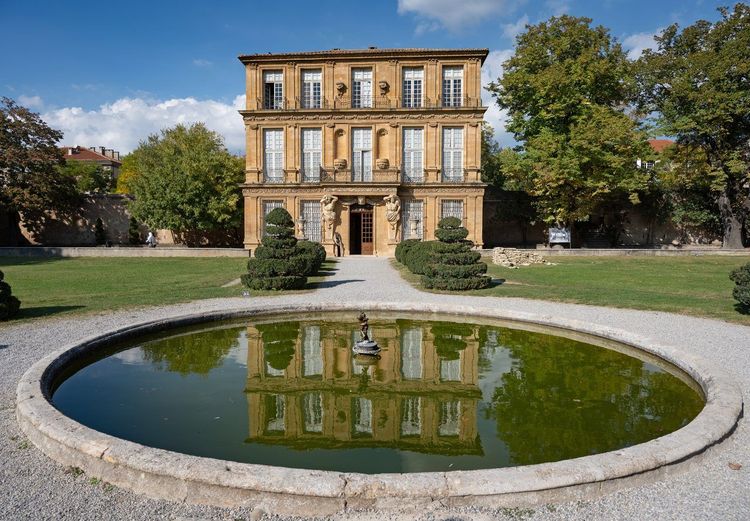
If the weekend leaves you wanting more, Heritage Days in Aix-en-Provence take place on exactly the same September 19 and 20, with an equally packed program: the Pavillon Vendôme, the Hôtel de Caumont, and several private mansions in the historic center open free of charge, less than an hour by road or coach.
The Heritage Days program in Aix-en-Provence traditionally emphasizes 17th- and 18th-century architecture, with its ochre façades, sculpted doorways, and fountains at every corner. It offers an interesting counterpoint to a day in Marseille, which is more port-oriented and industrial in what it reveals. Many visitors dedicate Saturday to Marseille and Sunday to Aix, with the coach from Gare Saint-Charles taking about thirty minutes.
If you feel like broadening the scope even further, several surrounding villages open chapels, mills, and wash houses with local association volunteers as guides. It is more under the radar, often warmer in spirit, and booking is rarely required. Our Ryo article on the most beautiful villages around Marseille offers some ideas for turning these two days into a regional getaway.
FAQ
When do the Heritage Days 2026 take place in Marseille?
Heritage Days in Marseille take place on Saturday, September 19 and Sunday, September 20, 2026, as throughout France, the event being scheduled every year on the third weekend of September.
What is the theme of Heritage Days 2026?
The 2026 national theme is dedicated to the heritage of photography, complemented by a European theme entitled "Heritage at Risk: Revive, Resist, Reimagine." In Marseille, both angles come together in photographic archive exhibitions and in the opening of long-closed monuments such as the Vieille Major.
Are Heritage Days free in Marseille?
Yes, the vast majority of sites open free of charge, including venues that are usually paid such as the Musée d'Histoire de Marseille. A few association-led guided tours may ask for a modest contribution, and booking, even for free visits, remains mandatory for the most popular routes.
Do I need to book for guided tours?
Yes, for the most popular routes, such as those at the Anse de la Réserve, the Corderie quarry, or the Archives départementales. Bookings for the tourist office tours open in early September on the Marseille Expérience platform, and many time slots sell out within days.
What are the must-see sites in Marseille during this weekend?
The Palais de la Bourse, the Vieille Major, the ancient Corderie quarry, the Jardin Saint-Nicolas, the Archives départementales, the Château Pastré, and the Musée d'Histoire de Marseille are among the most anticipated openings of the 2026 edition.
Do Heritage Days also take place in Aix-en-Provence?
Yes, Aix-en-Provence runs its own program on the same September 19 and 20, with monuments such as the Pavillon Vendôme and the Hôtel de Caumont, a great option for extending the weekend beyond Marseille.
Is the program accessible to people with reduced mobility?
It depends on the site. Recently built or renovated buildings, such as the Musée d'Histoire de Marseille and the Palais du Pharo, are fully wheelchair accessible, while the Corderie quarry, the terraced gardens, or certain bastides present constraints due to their original layout. The official program specifies accessibility for each venue.
A heritage weekend in Marseille is a chance to see the city from an angle you will never find the rest of the year: the gilded backstage of the Palais de la Bourse, a twenty-six-century-old Greek quarry open to the sky, a Romanesque cathedral reopened after nearly forty years of silence, and a hut on the Corniche from which all French altitudes are calculated. Book your reservations as soon as ticketing opens, wear good shoes to move between sites, and still keep half a day without a fixed itinerary: that is often where the best surprises happen.
If you feel like continuing once September 19 and 20 have passed, the Ryo audio-guided tour of Marseille lets you set off to discover the Vieux-Port, the Panier, and the Corniche at your own pace, all year long.
À lire également