© Shutterstock
 Votre guide Ryo
What to Do in Marseille When It Rains in 2026: 15 Indoor Activities
Rain drums on the cobblestones of the Vieux-Port and the Phocaean sky, usually an almost aggressively vivid blue, turns lead grey: that is precisely when the question of what to do in Marseille when it rains becomes urgent, wallet in hand and restless children sheltering under a Haussmann porch. Good news: France's second city hides enough golden mosaics, prehistoric cave paintings and gourmet food halls to fill several days without setting foot outside. The Mucem connects its concrete building to Fort Saint-Jean via a footbridge you can cross with your umbrella closed, the Grotte Cosquer Méditerranée recreates a sanctuary decorated 27,000 years ago, and the Palais Longchamp houses a fine arts museum and a natural history museum under one roof. Between downpours, the Ryo audio guide to Marseille connects these cultural refuges without getting lost in the stepped alleyways of Le Panier, headphones on and umbrella tucked away in your bag. Add to that Les Terrasses du Port for sea-view shopping, a spa in a hotel on the Quai de Rive-Neuve, and four indoor activities perfectly suited to keeping children busy from morning to night. Fifteen ideas, almost all reachable on foot or within one metro stop, to turn a gloomy day into a fully-fledged Marseille experience.
1. Visit the Mucem and Its Exhibitions
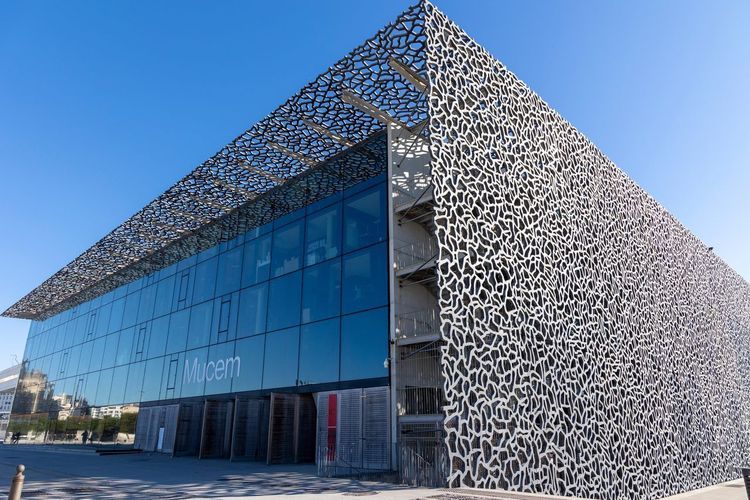
Perched on the former J4 pier at the entrance to the Vieux-Port, the Mucem (Museum of European and Mediterranean Civilisations) is the most visited national museum in Marseille, welcoming over one million visitors a year. Its fibre-reinforced concrete lattice, designed by Rudy Ricciotti, envelops around 3,600 m² of exhibition space spread across several levels, from the air-conditioned basement to the panoramic rooftop terrace. The collections trace the history of Mediterranean societies, from Neolithic farming to contemporary migration routes, through a scenography that blends objects, films and sound installations. A suspended footbridge some twenty metres above the water links the main building to Fort Saint-Jean, allowing visitors to move between the two sites without going back through the street.
The temporary exhibition programme changes several times a year and alone accounts for a good half of the museum's floor space. Expect a section devoted to the contemporary Mediterranean on the ground floor, often accompanied by a photography trail or immersive video installations. Fort Saint-Jean, built from 1660 on the orders of Louis XIV on the site of a Knights Hospitaller commandery occupied since the 12th century, also offers covered spaces: the Chapelle Saint-Jean, the Corps de Garde hall and the Georges Henri Rivière building, which hosts shorter thematic exhibitions. Between the two sites, Mediterranean gardens and open-air walkways alternate with enclosed rooms, making it possible to adapt the visit according to the intensity of the rain.
Allow at least 2h30 to cover the J4 building and Fort Saint-Jean without rushing. The ticket giving access to the exhibitions costs around twelve euros, with free entry for under-26s from European Union countries, as in all national museums. Watch out for the weekly closing day — Tuesday — which regularly catches out visitors who seek shelter without checking the opening hours. Book your slot online on busy weekends: the on-site box office can sell out before early afternoon on rainy days, when beach-goers all descend on the museum at once.
2. Dive into Prehistory at the Grotte Cosquer Méditerranée
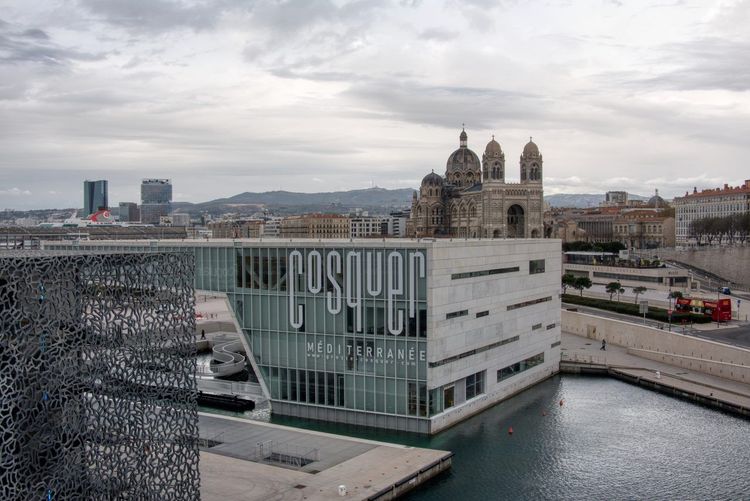
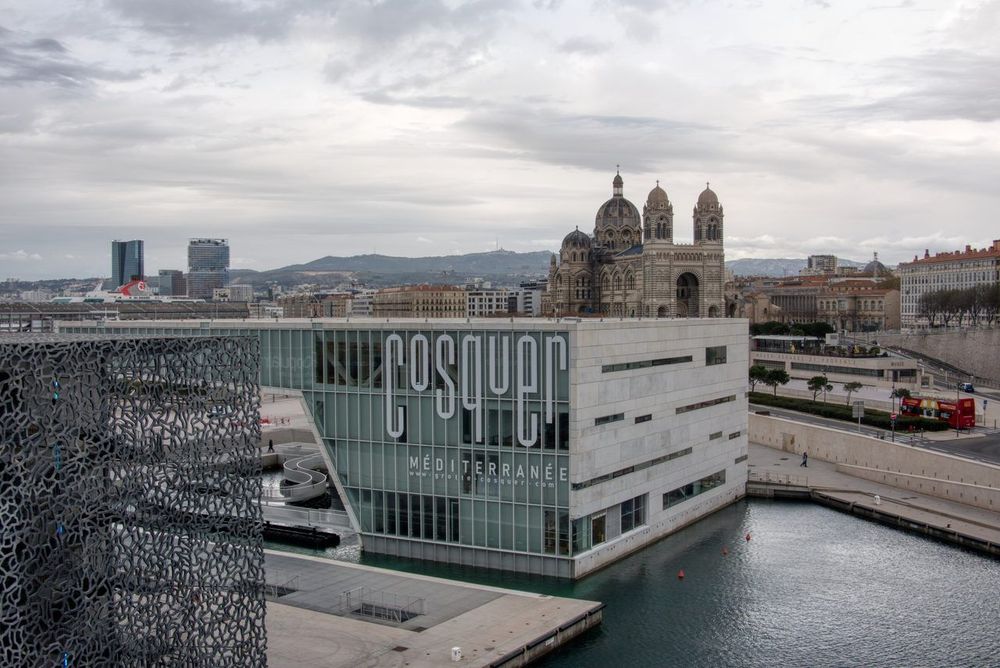
Visiting the real cave is out of the question: its entrance lies 37 metres underwater, beneath the calanque de la Triperie at Cap Morgiou, and access is reserved for scientists. That is precisely what makes the Grotte Cosquer Méditerranée (Promenade Robert Laffont, 13002 Marseille, rated 4.7/5 on Google from 7,533 reviews), which opened in June 2022 on the ground floor of the Villa Méditerranée on the J4 esplanade, so remarkable: a full-scale replica recreates the decorated galleries discovered in 1985 by diver Henri Cosquer. More than 500 cave paintings are visible here — horses, ibexes, razorbills now extinct in the Mediterranean — and above all negative handprints dating back 27,000 years, among the oldest known in the world.
The visit begins aboard rail-guided exploration modules that move slowly along the damp, dimly lit walls while an audio system, available in several languages, contextualises each scene. The atmosphere reproduces the humidity and coolness of a real cave, which often surprises families who arrive in flip-flops on a hot day interrupted by a storm. After the module tour, a complementary exhibition on the upper floor details Henri Cosquer's diving techniques, the rise in sea level that submerged the entrance, and the carbon-14 dating methods used to authenticate the works.
The full visit lasts around 1h15, including the rail tour. A full-price ticket is around 22 euros, with reduced rates for children and free entry for the very young. Demand is high enough that it is worth booking a specific time slot several days in advance, particularly at weekends and during school holidays: this is now one of the most sought-after cultural sites in the city, even more so on rainy days when beaches and calanques lose all appeal.
3. Explore Marseille's History and Archaeology Museums
Located on the Centre Bourse site, the Musée d'Histoire de Marseille covers 26 centuries of urban history across more than 4,000 m², directly above the largest archaeological garden in France, with its Greek harbour remains and a third-century Roman shipwreck displayed exactly as it was found. The museum traces the evolution of the port from its founding by the Phocaeans around 600 BCE to the redevelopments of the 20th century, through scale models, frescoes and everyday objects from antiquity. Close by, the Musée d'Archéologie Méditerranéenne (MAM), housed within the Centre de la Vieille Charité, continues the story with one of the most important Egyptology collections in France after the Louvre: sarcophagi, papyri and animal mummies. For a more detailed overview of these institutions, our Ryo article dedicated to Marseille's history museums lists up-to-date opening hours and admission prices.
The Mémorial des Déportations (Avenue Vaudoyer, 13002 Marseille, rated 4.6/5 on Google from 127 reviews), set inside a former German Second World War blockhouse at the foot of Fort Saint-Jean, a few steps from the Cathédrale de la Major, completes this memorial triptych with a sober, near-silent scenography. It revisits the raids of January 1943, when more than 20,000 residents of the northern quarter of the Vieux-Port were evacuated before their buildings were blown up, and thousands of people were deported to the camps. The visit is free and takes only about twenty minutes, yet leaves a powerful impression. These three sites form a coherent ensemble covering the city's historical and archaeological heritage, and can be visited in a single rainy afternoon since they all lie within an 800-metre radius of the Vieux-Port, each one metro stop apart.
4. Discover Art at the Beaux-Arts, the Palais Longchamp and the Musée Cantini
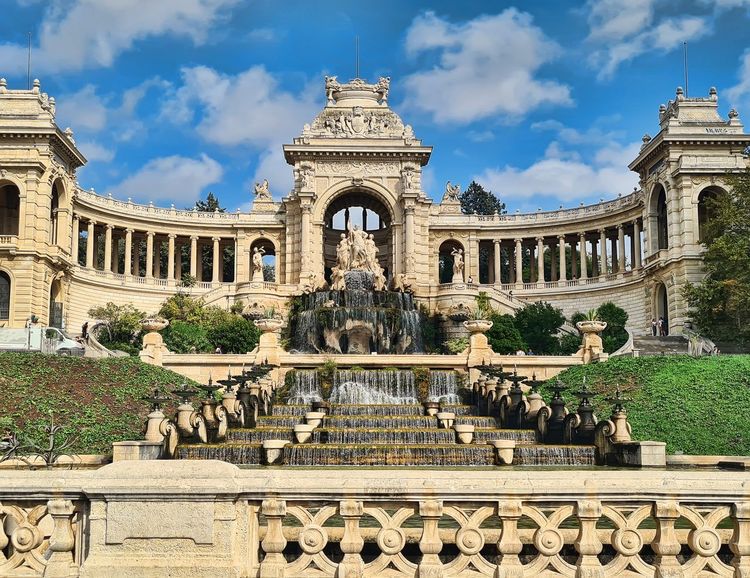
The Palais Longchamp, a water monument inaugurated in 1869 to celebrate the arrival of the Canal de la Durance in Marseille, is worth visiting for its architecture alone, before you even reach the collections: semicircular colonnades, monumental staircases and a water tower frame a spectacular central fountain. In its left wing, the Musée des Beaux-Arts (MBA) holds canvases by Rubens, sculptures by Pierre Puget and a rich section devoted to Honoré Daumier, a Marseille native. The right wing houses the natural history museum, with its zoology gallery and suspended skeletons, which generally captivate children far more than any classical painting.
On the other side of the city, in the 8th arrondissement a short walk from the Parc Borély, the Musée d'Art Contemporain [mac] (rated 4.1/5 on Google from 817 reviews) picks up the chronological thread with works by Ben, César and Christian Boltanski, spread across entirely indoor rooms. Temporary exhibitions here are often immersive, designed for a family audience as much as an informed one, with video installations that can easily fill 45 minutes.
, 69 Avenue d'Haïfa, 13008 Marseille]
Back towards the city centre, the Musée Cantini, installed in a 17th-century townhouse a short walk from Rue Paradis, holds a collection born from the bequest of marble merchant and patron Jules Cantini in 1916, covering modern art from Fauvism to Surrealism, with pieces signed by Matisse, Signac and Ernst. The human-scale rooms offer a more intimate pause after the grand volumes of the Palais Longchamp, and the museum hosts a monographic exhibition each year that is worth the detour on its own.
All of these institutions belong to the municipal museum network: a day pass or annual pass allows unlimited visits, a worthwhile investment from the third entry onwards if the rain sets in for several days.
5. Wander through the Centre de la Vieille Charité
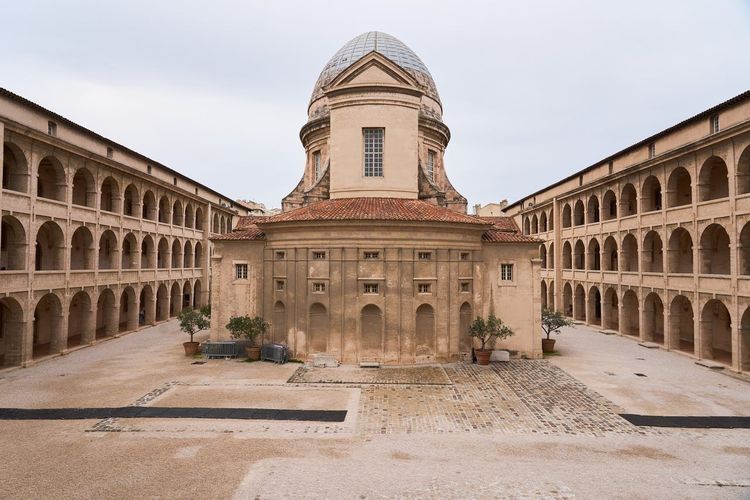
Built between 1671 and 1749 as a hospice for the city's poor and beggars, the Centre de la Vieille Charité is today considered one of the finest baroque ensembles in Provence, with its central chapel topped by an oval dome designed by Pierre Puget. The three storeys of arcaded galleries, entirely covered, encircle a paved inner courtyard where you can linger even in heavy rain, sheltered by the colonnades.
The building houses the Musée d'Arts Africains, Océaniens et Amérindiens (MAAOA), a collection bringing together masks and ritual objects from three continents, frequently cited by local guides as the neighbourhood's must-see, as well as the Musée d'Archéologie Méditerranéenne mentioned above. Allow 45 minutes for the full visit, longer if a temporary photography exhibition is occupying the ground-floor gallery, which happens several times a year. If the rain eases as you leave, the Panier neighbourhood can be explored in a few minutes around the building, among craftsmen's workshops and ochre-coloured facades.
6. Admire the Interior of Notre-Dame de la Garde
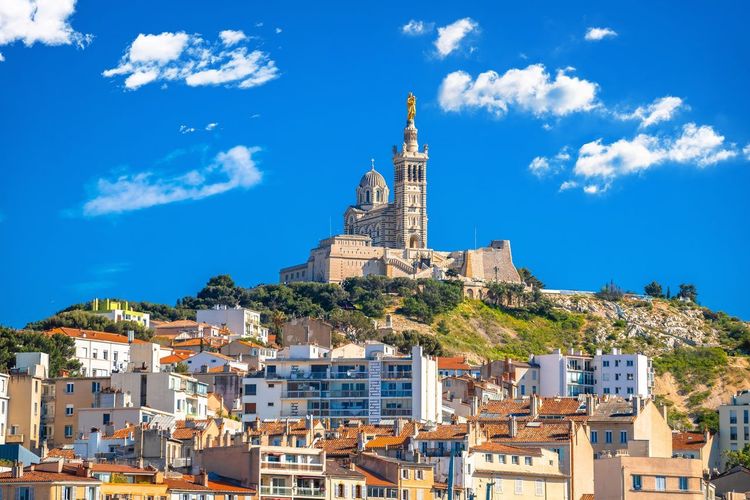
People often associate Notre-Dame de la Garde with its outdoor viewpoint over the harbour, but the interior of the basilica, consecrated in 1864, is equally worth attention on a rainy day. The crypt, carved into the rock beneath the building and barrel-vaulted in a Romanesque style, can be visited freely and stays dry whatever the weather. On the upper level, more than 1,000 m² of golden mosaics cover the vaults and domes, laid in the late 19th century and then fully restored in the early 2000s after decades of exposure to salt and wind.
The marine ex-votos — model ships and thanksgiving plaques hanging on the walls — tell two centuries of Marseille's maritime devotion, an aspect often overlooked by visitors who come up solely for the panorama photograph. Bus 60 from the Vieux-Port spares you the uphill walk in the rain; allow 20 minutes for the interior alone, longer if you take the time to read the inscriptions.
7. Go Shopping at Les Terrasses du Port, the Docks Village and the Centre Bourse
Les Terrasses du Port, a shopping centre that opened in 2014 facing La Joliette, lines up around 190 shops across several floors, with views of cruise ships through the large windows. The long outdoor terrace empties quickly at the first drops of rain, but the interior is more than enough to fill an afternoon among international brands and local concept stores.
Ten minutes' walk away, the Docks Village, former port warehouses converted in 2015, plays on a restored industrial architecture: skylights, covered inner courtyards and around sixty independent boutiques rather than major chains. The atmosphere is noticeably less crowded than the large shopping centres, a smart choice on days when everyone seeks shelter indoors.
The Centre Bourse (Rue Bir Hakeim, 13001 Marseille, rated 3.9/5 on Google from 19,420 reviews), more central as it sits right next to the Vieux-Port, rounds out the offering with around 90 shops and direct access to the Vieux-Port metro station — handy for moving on without pulling out your umbrella again. Its location, directly above the archaeological garden mentioned earlier, makes it a logical stop after visiting the Musée d'Histoire de Marseille.
8. Stroll through the Halles de la Major
Installed beneath the 19th-century vaults supporting the esplanade of the Cathédrale de la Major, the Halles de la Major (Esplanade de la Tourette, 13002 Marseille, rated 4.1/5 on Google from 1,125 reviews) bring together around fifteen food shops in complete shelter from the elements. A fishmonger, cheesemonger, wine cellar and Mediterranean food counters share the stone arches, with large communal tables where you can linger for an entire rainy afternoon without moving the car. The neighbouring vaults house further shops and covered terraces, and the Cathédrale de la Major, directly above, offers an enormous and free interior if the cultural appetite is not satisfied after the food: its 142 metres in length make it one of the largest cathedrals built in France in the 19th century.
9. Relax at a Marseille Spa

Rain gatecrashing a trip is not necessarily bad news: several hotels on the Quai de Rive-Neuve and in the Euroméditerranée district open their spas to day visitors without a room booking. A hammam, heated pool and Camargue salt treatments offer a welcome cocoon between two museums, often with a view of a rain-soaked Vieux-Port through the windows. Budget around 60 to 90 euros for a two-hour session with a treatment, an option to book the day before to secure a slot — they go quickly as soon as the weather turns. The break fits neatly between chapters of the Ryo audio guide, several stages of which run along this very quay.
10. Attend a Show or a Theatre Performance
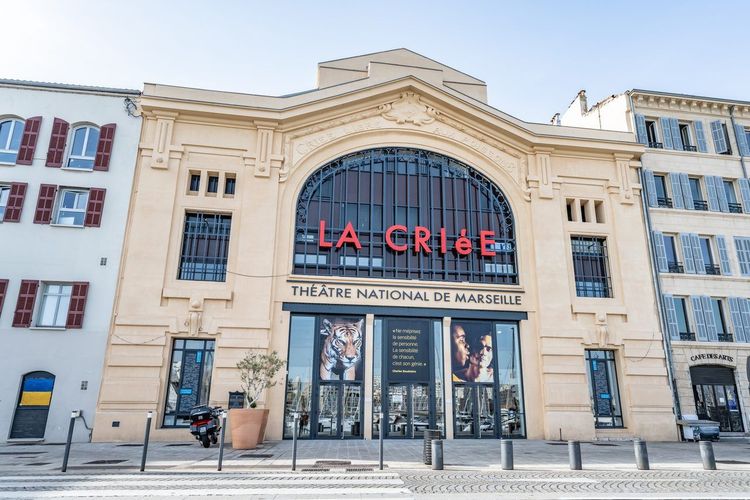
Marseille has around thirty active venues, from the Théâtre National de Marseille La Criée (30 Quai de Rive Neuve, 13007 Marseille, rated 4.5/5 on Google from 970 reviews), housed in the former fish auction house on the Quai de Rive-Neuve, to the small independent stages on the Cours Julien. Programming mixes contemporary creations and revisited classics, with tickets generally priced between 15 and 30 euros. For families, several theatres offer children's shows on Wednesdays and at weekends, often fairy-tale adaptations or shadow theatre suitable from age 4: a reliable option when a shower cancels the outdoor activity planned with the kids. Booking online the day before is advisable, as Marseille's smaller venues rarely seat more than 150 people.
11. Watch a Film or Gaze at the Stars at the Planetarium
The multiplexes at La Joliette and Le Prado screen continuous showings in both original version and dubbed French, a comfortable and affordable shelter — around 7 euros with an early-bird reduced rate — for waiting out a two-hour downpour. Independent cinemas in the city centre, such as Les Variétés near the Canebière or the arthouse screens on the Cours Julien, offer thematic cycles and meet-the-filmmakers events, a more unusual alternative to a mainstream blockbuster.
The Planétarium de Marseille, located in the Parc de la Poudrière in Château-Gombert in the 13th arrondissement, projects astronomy shows under its dome accessible from age 6, covering everything from solar system exploration to the latest space discoveries. Sessions last around an hour and sell out quickly on rainy Wednesdays and Saturdays, when families converge in numbers: booking online is far safer than taking your chances on the door. The site also hosts stargazing evenings with a telescope once the sky clears, a lovely consolation prize at the end of a stormy day.
12. Stay Active Indoors: Swimming Pool, Bowling, Climbing and Trampolining as a Family
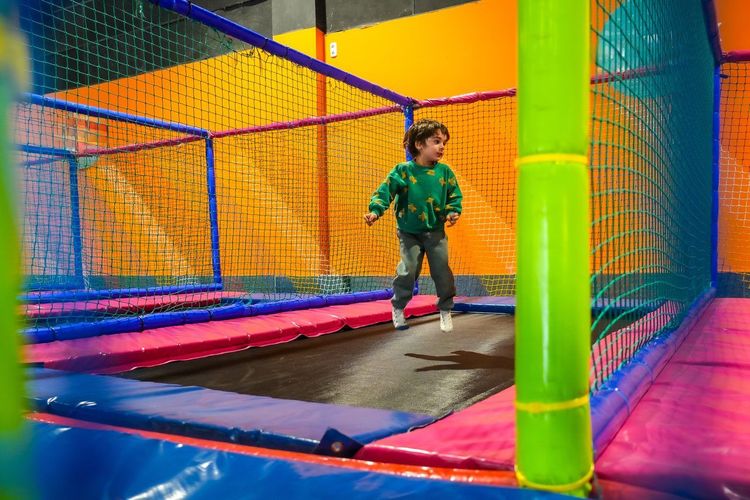
When rain sets in for the whole day, it is sometimes better to burn off the children's energy rather than contain it. Marseille has enough covered sports facilities to turn a thoroughly wet afternoon into a liberating one, with not a single ray of sunshine required.
Wet already, you might as well head to one of the municipal indoor pools, such as the Piscine Vallier near the Gare Saint-Charles or the Bonneveine pool on the southern side, both heated year-round and open to the public outside school swimming slots. Lockers, hot showers and a separate learner pool for younger children make them a reliable choice on rainy Wednesdays, for an entry fee that rarely exceeds a few euros per adult. Check the public opening times for the week before you leave: they change according to school holidays and competitions.
A few kilometres away, the Prado bowling alley lines up around twenty lanes, pool tables and an adjacent games area: enough to keep a group of ten occupied without ever stepping back outside. Family deals including shoe hire and two games come to around 15 euros per player on weekdays, even cheaper before 6 pm.
For older children, the city's indoor bouldering gyms offer routes up to 4.5 metres high, with no harness or rope, accessible from age 6 when accompanied by an adult. A supervised introductory session lasts around an hour and costs between 15 and 20 euros, shoes included. The atmosphere — very different from a standard gym, with music, a coffee bar and a padded seating area — particularly appeals to teenagers reluctant at the prospect of yet another museum.
A final option: the covered trampoline parks in the northern and eastern districts stack up the modules — foam pits, dunk basketball and ninja warrior courses spread across several hundred square metres. A one-hour session generally costs around 12 euros; non-slip socks are compulsory and can be purchased on site for those who forgot to bring their own.
13. Creative Workshops and Sensory Trails for Families
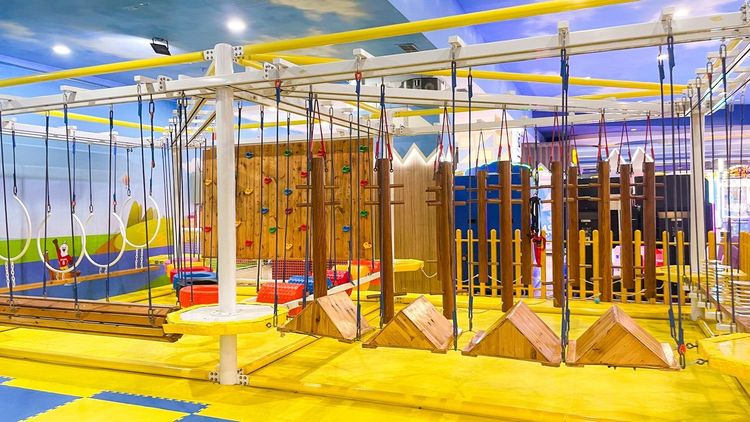
At Sensas, an immersive trail set between the Vieux-Port and Le Panier, young and old alike move blindfolded through a series of ten sound, tactile and olfactory spaces, never knowing in advance what awaits behind each curtain. The experience, designed for family groups, lasts around an hour and relies on surprise rather than explanation — a format that differs from traditional museum rooms and is especially popular with children aged 7 to 12.
Several municipal museums, including the Musée d'Histoire and the natural history museum, also run creative workshops on Wednesdays and during school holidays, from pottery inspired by Mediterranean archaeology to drawing in front of the collections. Places are limited to around fifteen children, so registration is done by phone or online a few days in advance. For more unusual addresses in the region to try on a grey day, this Ryo article on unusual spots in the Provence-Alpes-Côte d'Azur region is a great complement to this list.
14. Sample Marseille Specialities in a Brasserie
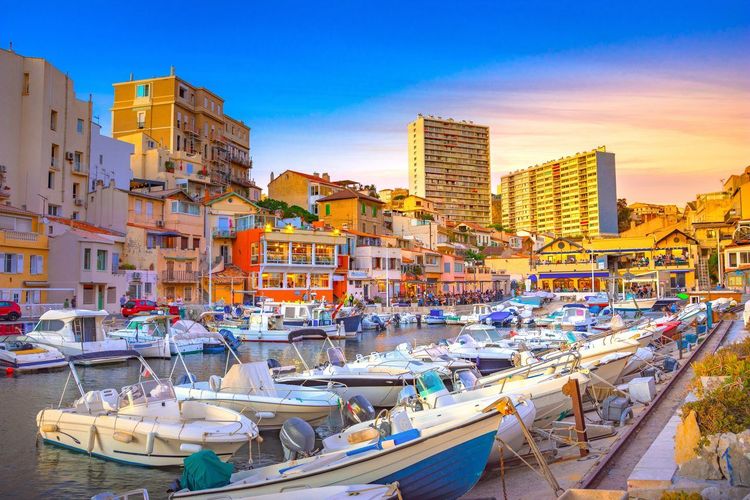
A proper bouillabaisse often requires booking 24 hours in advance at the traditional restaurants in the Vallon des Auffes or around the Vieux-Port, to give the rockfish time to be ordered and prepared according to the charter signed by Marseille restaurateurs. Failing that, crispy panisse, a slow-cooked tripe and trotter dish, or a navette biscuit flavoured with orange blossom can all be enjoyed without a reservation, sheltered in a warm dining room while the shower passes. Brasseries on the Cours Julien and around La Plaine are less touristy than those on the waterfront, generally charge lower prices, and often serve food continuously throughout the afternoon — useful when you take shelter indoors at 3 pm.
Our Ryo article dedicated to Marseille specialities details eleven iconic dishes and the best places to try them, a good complement to this list for days when appetite takes priority over the cultural programme.
15. Our Practical Tips for Enjoying Marseille in the Rain
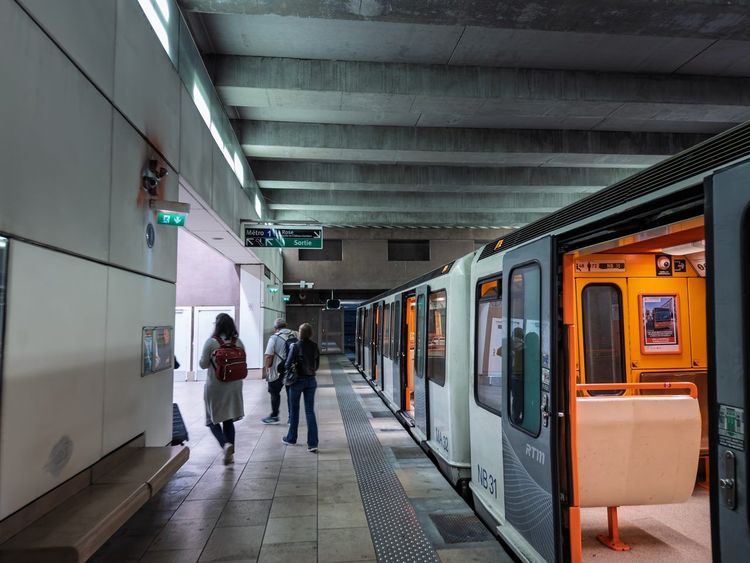
The RTM network (metro, tram and bus) remains the most reliable way to reach these venues without getting too wet: the two metro lines connect the Vieux-Port to La Joliette and Les Terrasses du Port in around ten minutes. A single ticket costs about 2 euros, a day pass around 5 euros, worthwhile from the third journey onwards. Note that the central stations are deep underground and their corridors sometimes lead directly into shopping centres, with the Centre Bourse being the prime example.
The Marseille City Pass, available for 24, 48 or 72 hours, includes entry to around ten municipal museums as well as public transport — a quick calculation worth making if your itinerary covers at least three of the sites listed above. It can be booked online or at the tourist office on the Canebière, a short walk from the Vieux-Port.
These same venues hold up just as well when the temperature drops in winter: museums, food halls and shopping centres stay open year-round without seasonal breaks. If the shower refuses to ease and wanderlust strikes, the Musée Granet in Aix-en-Provence or the santonnier workshops in Aubagne offer covered alternatives for anyone wondering what to do in Provence when it rains or what to do in the Bouches-du-Rhône when it rains, less than an hour's drive from the city centre.
FAQ
What are the best museums to visit in Marseille on a rainy day?
The Mucem, the Grotte Cosquer Méditerranée and the Musée d'Histoire de Marseille top the list for their scale and educational value. The Palais Longchamp and the Centre de la Vieille Charité ideally round out the programme, with different collections housed in architecturally remarkable buildings.
What can you do in Marseille with children when it rains?
An indoor swimming pool, bowling, indoor climbing and trampoline parks all make for a great rainy day with children. The planetarium and the Sensas sensory trail are also a hit with 6–12 year-olds, while several theatres offer children's shows on Wednesdays.
Is the Grotte Cosquer Méditerranée open all year round?
Yes, the Grotte Cosquer Méditerranée is open year-round, with extended hours in summer and occasional one-off closures. The visit lasts around 1h15; booking a time slot in advance is strongly recommended, especially at weekends and during school holidays.
Which museums are free in Marseille?
The Mémorial des Déportations and the crypt of Notre-Dame de la Garde are free to visit all year round. Several municipal museums also offer free admission on select dates, notably the first Sunday of certain months: check the Marseille museum network calendar before you go.
How long should you allow to visit the Mucem?
Allow around 2h30 to explore the J4 building and Fort Saint-Jean at a comfortable pace, linked by the suspended footbridge. Add an extra 45 minutes if a major temporary exhibition is occupying the ground floor of the museum at the time of your visit.
Where can you go shopping under cover in Marseille?
Les Terrasses du Port, the Docks Village and the Centre Bourse are the main covered shopping destinations. Les Terrasses du Port focuses on major brands with harbour views, while the Docks Village favours independent boutiques in a converted industrial setting.
What can you do in Marseille when it is cold in winter?
The same venues work just as well in winter: museums, food halls and shopping centres stay open all year round. A hotel spa or a heated climbing gym also let you combine activity with warmth, a welcome option when the mistral joins the clouds.
Between immersive exhibitions, food halls and heated climbing gyms, Marseille proves that gloomy weather need not confine anyone to boredom behind a hotel window. The city has always excelled at moving from a mineral, wind-swept exterior to sumptuous interiors, from the Palais Longchamp to the vaults of the Major.
To connect these shelters without racking up extra journeys, the Ryo audio guide to Marseille is the most practical companion: a three-hour route, twenty-four audio chapters, designed to adapt to rain that comes and goes without ever interrupting your stroll. With a little preparation, the next Marseille shower will be no problem at all.