© Shutterstock
 Votre guide Ryo
The 11 Best Specialties of Marseille You Absolutely Must Try in 2026
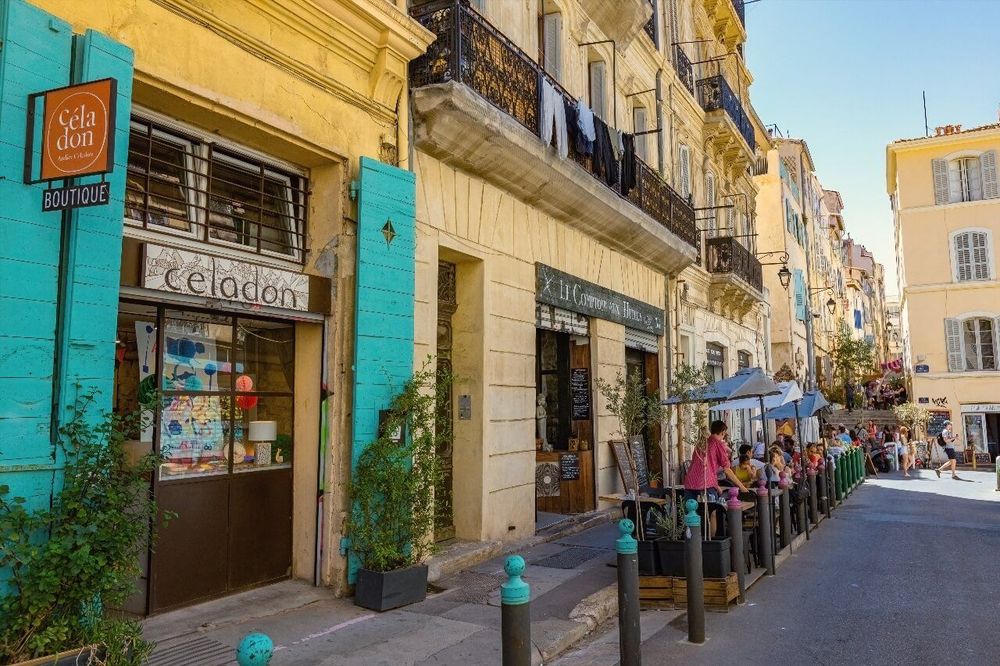
Marseille isn't just visited — it's tasted. Every specialty of Marseille tells a story, and from your very first morning at the Vieux-Port, the scent of saffron, anise and fresh fish makes it clear that food here is not a tourist detail, but the very identity of a city founded 2,600 years ago by Greek sailors from Phocaea. The Ryo audio-guided tour of Marseille takes you through the streets and neighborhoods that shaped this unique culinary culture, between the calanques and the Vieux-Port market.
In this guide, you will find the 11 specialties of Marseille that deserve a plate, a glass or a box to take home. From bouillabaisse, whose official recipe is protected by a charter signed by the city's top chefs, to the navettes from the Four des Navettes founded in 1781 and still open on rue Sainte, to poutargue, a Mediterranean caviar produced for centuries in Martigues, there is more than enough here to satisfy a curiosity well beyond lunchtime. Some of these Marseille specialties are sweet and fit easily into a bag, others are ordered on a paper tablecloth with a view of the water. All of them tell the story of Marseille better than any guidebook ever could.
1. Bouillabaisse: the Grand Dame of the Vieux-Port
Few dishes have their recipe protected by an official charter. Marseille's bouillabaisse is one of them: the Bouillabaisse Charter, drawn up in 1980 and signed by around fifteen restaurants, precisely stipulates the permitted fish, the order of service and even how the broth must be presented separately from the flesh.
Traditionally, authentic bouillabaisse includes at least four varieties of rockfish: rascasse (the centerpiece and almost mandatory), grondin, vive and saint-pierre. Some add conger eel or monkfish. The golden broth, flavored with saffron, olive oil, fennel and bay leaf, is served first with slices of garlic-rubbed toasted bread and rouille, that sauce made from garlic, saffron and olive oil that must be thick enough to hold on the bread without dripping.
The fish flesh then arrives in a large dish, whole or filleted depending on the establishment. It is a meal in itself, generally served for a minimum of two people and priced between €45 and €80 per person at reputable establishments. Beware of "tourist" versions at €15 that often contain nothing more than canned fish soup reheated in a microwave.
Vieux-Port restaurants certified by the charter display the official logo. If you want to understand where this dish comes from, know that originally bouillabaisse was a meal for the poor: Marseille fishermen would cook at sea the fish that couldn't be sold — too small or too bony for the market — in boiling seawater with a few herbs. Its transformation into a celebratory dish perfectly illustrates Marseille's culinary genius.
2. Provençal Aïoli: Far More than Garlic Mayonnaise
In many regions, "aïoli" simply refers to a garlic sauce. In Marseille, it is a dish in its own right, traditionally served on Fridays according to a Catholic tradition dating back to the Middle Ages — a meat-free day, but never a flavorless one.
The aïoli garni consists of a sauce prepared in a mortar (pounded garlic, egg yolk, olive oil drizzled in a thin stream — never in an electric blender), accompanied by a generous selection of poached vegetables including carrots, potatoes, green beans and zucchini, along with desalted salt cod, hard-boiled eggs and sometimes snails. Each element is dipped into the creamy, almost firm sauce, which must hold on the spoon.
The sauce itself carries an Occitan name: "aïoli" comes from "aï" (garlic) and "oli" (oil). Two ingredients, a result that takes twenty minutes to prepare by hand and that, if it fails, cannot be rescued. The people of Marseille know this and do not compromise on the method.
You will find aïoli garni in traditional brasseries in the Vallon des Auffes or the Panier neighborhood. Many families still prepare it at home on Friday evenings.
3. Marseille Navettes: the Biscuit That Has Endured Since 1781
The Four des Navettes (136 Rue Sainte, 13007 Marseille, rated 4/5 on Google with 2,315 reviews), on rue Sainte in the Saint-Victor Abbey neighborhood, is the oldest bakery in Marseille still in operation: it opened its doors in 1781 and has never closed. This fact alone is enough to place navettes among the city's most iconic specialties.
The navette is a dry biscuit, elongated in the shape of a small boat (hence its name — "navette" means small boat in Provençal, a reference to the vessel on which, according to legend, the Holy Marys arrived on the shores of Provence). It is flavored with orange blossom water, slightly crunchy, not overly sweet, and keeps for several weeks — a welcome quality if you wish to bring some home for loved ones.
Tradition holds that the Bishop of Marseille blesses the navettes every February 2nd for Candlemas. The Four des Navettes sells tens of thousands of them on that occasion. Throughout the rest of the year, the shop offers classic navettes as well as variations with citrus, lemon or chocolate. Approximate price: around €10 to €12 for a box of 12 navettes.
If navettes are the quintessential Marseille specialty to give as a gift, it is because they travel well, suit everyone and tell a story that can be summed up in two sentences. It is hard to find a better edible souvenir. They are also the most sought-after Marseille biscuit specialty among visitors.
4. Tapenade and Anchoïade: the Queens of the Apéritif
Before the meal, before anyone has even taken a seat, tapenade and anchoïade take over the counter. These two spreads encapsulate the culinary philosophy of the South of France: few ingredients, impeccable quality, no frills.
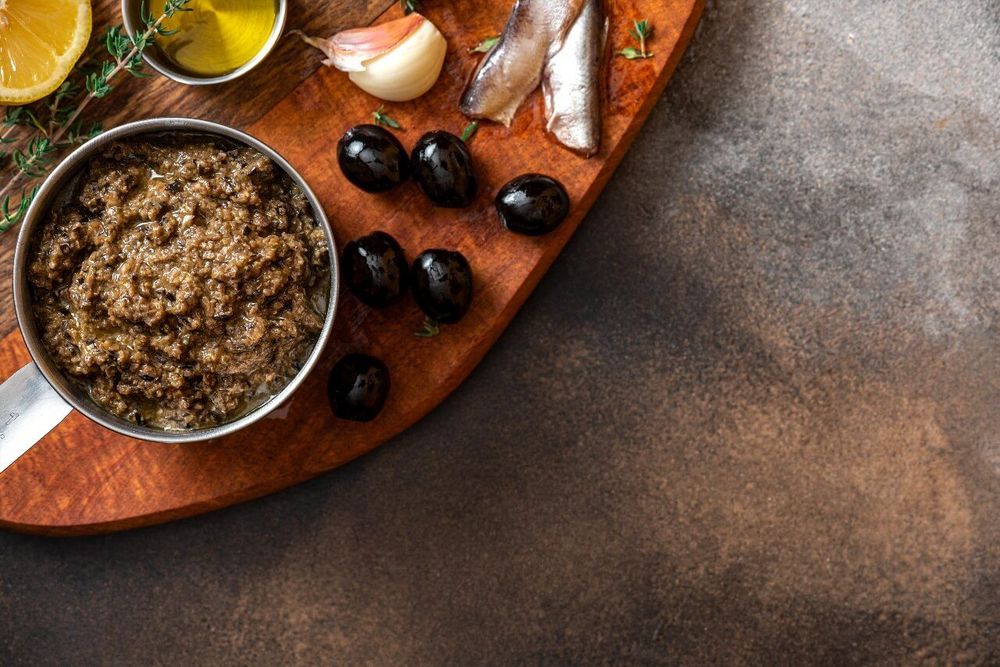
Tapenade (from the Provençal word "tapèno," meaning caper) is a blend of pitted black olives, capers, anchovies and olive oil blended into a thick paste. Black or green depending on the variety of olives used, it is served on slices of garlic-rubbed toasted bread. A well-made tapenade should be neither runny nor overly salty — the quality of the olives makes all the difference. It is an ideal salty Marseille specialty to bring home in a jar.
Anchoïade is its bolder cousin: a paste of salted anchovies crushed with garlic, olive oil and sometimes vinegar, into which raw vegetables are dipped — raw fennel, carrots, radishes and celery hearts. The umami intensity of this sauce can surprise the uninitiated. For regulars, it triggers Pavlovian reflexes the moment the jar is opened.
You will find artisan-quality tapenade and anchoïade at the Vieux-Port market (Quai des Belges, 13001 Marseille, rated 4.3/5 on Google with 552 reviews) (every morning), in the fine food shops of le Panier, or in local supermarkets for industrial versions (less interesting).
5. Panisses: the Fried Snack That Wins Over Even the Skeptics
Panisses are a preparation made from chickpea flour, cooked in water then sliced into rounds or sticks and fried in olive oil. The result: crispy on the outside, soft on the inside, with the slightly nutty flavor of legumes.
Originally from Genoa, panisses crossed the Mediterranean several centuries ago and have perfectly acclimatized to Marseille. They are eaten hot, sprinkled with salt or pepper, sometimes with a squeeze of lemon, at aperitif time or as a side dish with a main course. In the bakeries of some working-class neighborhoods, they are still sold on the counter from 10 a.m. onwards.
For vegetarians in search of an uncompromising local specialty, panisses tick all the boxes: local, flavorful, meat-free, served hot. A great starting point for exploring Marseille's savory specialties.
6. Chichis Frégis: the Seaside Fried Treat
While panisses reign over the aperitif, chichis frégis dominate the seaside promenade. These are elongated choux pastry fritters, fried and dusted with sugar, similar in spirit to Spanish churros but flavored with orange blossom water — a direct gustatory link to the navettes.
The history of chichis is popular and maritime. They were once found on beaches and at funfairs, sold hot in paper cones. Today, the best chichis are still ordered from stalls at the Prado beach or at Les Catalans, freshly fried on the spot.
Their name is said to come from the Arabic "chichi," meaning something curly, and "frégi" (fried in Provençal). The result — golden, hot and lightly fragrant — is eaten without cutlery, standing up, facing the sea. It is a Marseille ritual worth experiencing at least once.
7. Pieds Paquets: the Dish That Demands Patience
Here is a specialty that divides opinions. Pieds paquets are not for the faint-hearted: parcels of sheep tripe (the stomach lining) stuffed with smoked bacon, garlic and parsley, tied into small bundles and slow-cooked for hours with sheep's trotters in a tomato, white wine and Provençal herb sauce.
The cooking takes 5 to 8 hours depending on the recipe, sometimes more. It is a winter dish, one of patience and conviviality — the kind of preparation that starts the night before and fills an entire house with its aroma. In restaurants, you will find it more easily in winter and spring, rarely in summer.
Purists debate its origin: Marseille or Gardanne? The Marseille versus Gardanne debate is a serious dispute among enthusiasts that goes back several generations. What is known for certain is that pieds paquets are among the culinary specialties that set Marseille apart from every other Mediterranean cuisine. If you have an adventurous culinary spirit, don't miss it.
8. Soupe au Pistou: Summer in a Bowl
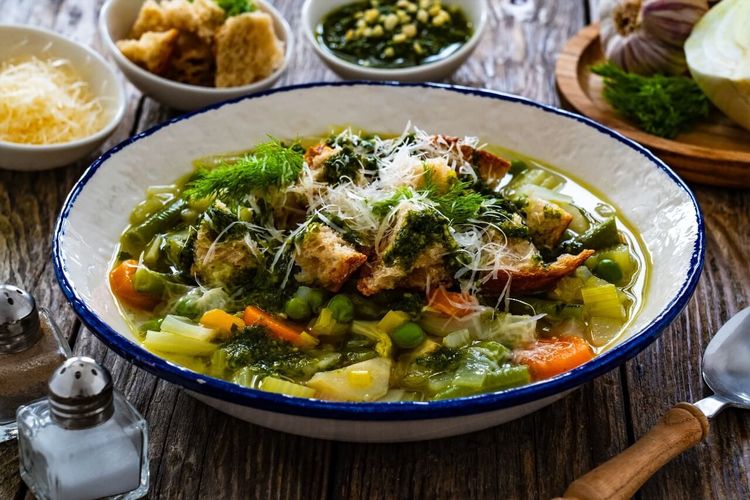
In Provençal families, soupe au pistou signals the arrival of summer. It is a thick soup of summer vegetables — green beans, white beans, zucchini, tomatoes and potatoes — into which a generous spoonful of pistou is stirred at serving time: that herb paste made from fresh basil, garlic, olive oil and sometimes Parmesan or pecorino.
Pistou is not Genoese pesto: there are no pine nuts, and the basil must be local, large-leaved, so that the aroma is powerful and slightly anise-like. Blending in a mortar — strictly forbidden in the blender in traditional households — yields a less smooth but more fragrant texture.
Soupe au pistou is served warm or hot depending on preference. It is vegetarian, nourishing and represents the very best of Provençal cuisine: a seasonal dish, made with whatever the garden provides, lifted by a handful of fresh herbs added at the last moment.
9. Poutargue: the Mediterranean Caviar
Less known to tourists, poutargue (or boutargue) is nevertheless one of the most historically documented gastronomic specialties of the region. It consists of dried and pressed mullet roe, coated in beeswax for preservation, sold as a slab or grated like Parmesan.
Traditional production is centered in Martigues, about thirty kilometers from Marseille, where mullet fishing in the Étang de Berre has sustained a documented industry since the 16th century. Martigues poutargue, nicknamed "caviar martégal," stands out for its intense, slightly briny and deeply umami marine flavor. It is a rare and highly sought-after fish-based specialty of Marseille.
It can be grated over pasta, served in thin slices with butter on bread, or crumbled over scrambled eggs. Its price — €120 to €180 per kilo for artisan quality — makes it a premium gastronomic gift. Fine food shops in the city center offer it in smaller, more accessible packaging. You can work up an appetite for it on our audio-guided tour of Marseille, a seven-kilometre loop through the Panier and the Vieux-Port.
10. Supions à la Provençale: Squid the Marseille Way
Supions are small squid, about the size of a thumb, prepared à la provençale: sautéed in olive oil with garlic, fresh tomatoes, white wine, parsley and sometimes black olives. Quick cooking — 5 to 7 minutes over high heat — is essential to preserve the tenderness of the supions, which become rubbery if left on the heat too long.
It is a simple, colorful dish, ordered as a starter on the terraces of the Vieux-Port or along the Corniche. Fishermen at the Vieux-Port market offer them fresh from 6 a.m. onwards — if you want to cook them yourself, that is where to go.
The name "supion" is itself a regional particularity: in the rest of France, they are called calmars or encornets. In Marseille, they are supions, and the lexical precision matters as much as the recipe. This is a fish-based Marseille specialty that few tourists know by its real name.
11. Oursinade: the Sea Urchin Celebration
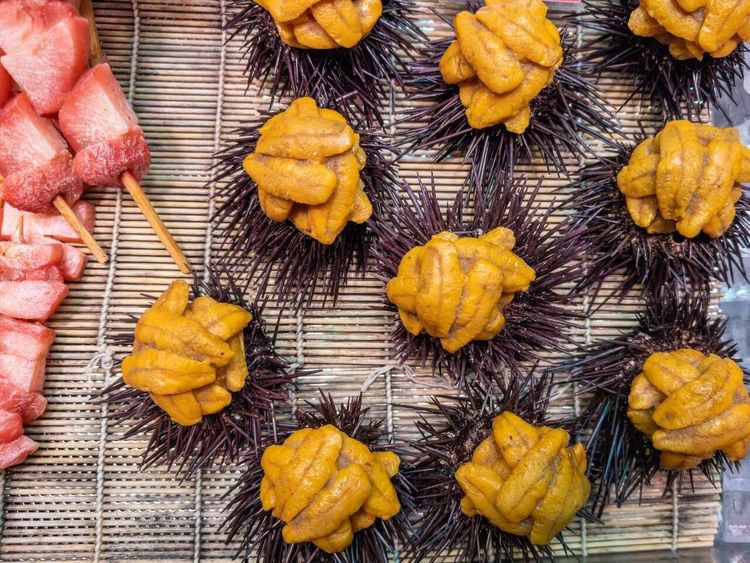
Oursinade is less a dish than a winter ritual. From November to April — the legal sea urchin fishing season in the Mediterranean — restaurants along the Marseille coastline offer platters of fresh sea urchins, opened to order, served with buttered bread and local white wine.
The Mediterranean common sea urchin, called "châtaigne de mer" (sea chestnut) in Provençal, is eaten raw: the orange gonads (the "tongues") are scooped out with a small spoon or directly with bread. The flavor is marine, briny and almost vegetal — some describe it as the sea in concentrated form.
Enthusiasts travel dozens of kilometers to find their favorite seaside spot. Some local associations organize convivial oursinades, with shared platters and Provençal music included. If you are visiting Marseille between December and March, this is the culinary experience not to be missed — far more immersive than most restaurants. To learn more about things to do in Marseille, check out our article on activities in Marseille and surroundings.
Pastis: the Essential Marseille Aperitif
No tour of Marseille's specialties can end without mentioning pastis. This anise-flavored spirit, distilled from star anise, liquorice and Provençal herbs, is the city's signature aperitif. It is served in a tall glass with cold water (approximately 5 parts water to 1 part pastis), and its color shifts from amber brown to a milky pale yellow haze upon contact with the water.
Pastis as we know it today was created in 1932 by Paul Ricard, a native of Marseille, at a time when absinthe production had been banned since 1915. Marseille immediately adopted the aperitif as a cultural symbol, to the point where it is now inseparable from the city's image.
On the terraces of the Vieux-Port, pastis is drunk slowly, in conversation. It is not a drink to be knocked back — it is a moment. Purists order it without ice (which, they argue, kills the aromas) and categorically refuse the mint syrup or orange juice that some bars offer alongside. Welcome to yet another local debate, every bit as serious as the one over pieds paquets.
Where to Taste Marseille's Specialties: the Best Addresses
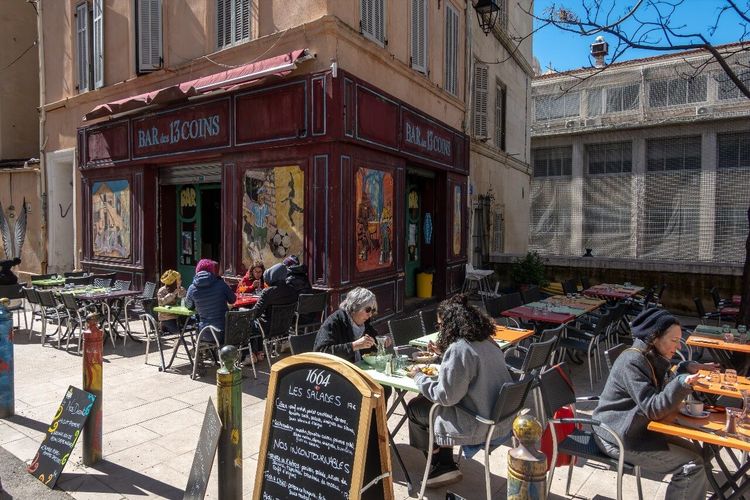
Marseille has hundreds of restaurants, but not all are worth a detour. Here are some key areas and establishments to target depending on what you are looking for.
The Vieux-Port and the quays are home to the bouillabaisse-certified restaurants. Beware of multi-language menus displayed on stands outside the door — the best addresses don't need a tout on the pavement. Restaurant Miramar at 12 quai du Port, and Chez Fonfon in the Vallon des Auffes, are two benchmark addresses for bouillabaisse.
The Panier neighborhood, the oldest in Marseille, is home to fine food shops, artisan tapenade vendors and a handful of unpretentious small restaurants serving market-fresh specialties. Rue du Panier and Place des Moulins are the main streets to explore.
The Cours Julien and its surroundings (6th arrondissement) host a more creative dining scene, with chefs who reinterpret Provençal recipes. This is also where you will find the Wednesday morning organic market, ideal for buying fresh produce — Provençal vegetables, herbs and local cheeses.
For navettes, the Four des Navettes is a must. For poutargue and fine food products, Les Arcenaulx on cours d'Estienne d'Orves offers a carefully curated selection.
Finally, if you would like to combine heritage and gastronomy, the Ryo audio guide to Marseille accompanies you through the historic neighborhoods while pointing out notable addresses along the route. It is an efficient way to ensure you don't miss the best tables on your path.
Which Marseille Specialties to Bring Back as a Souvenir?
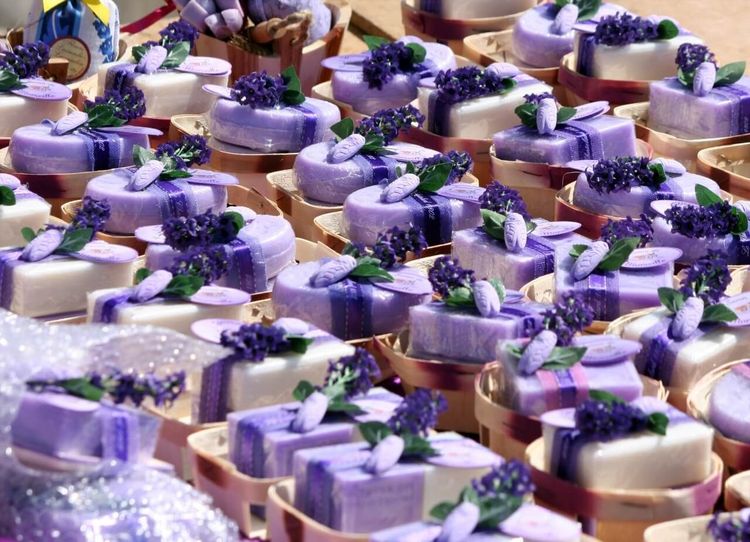
Not every visitor can pack a bouillabaisse in their suitcase (even though canned versions do exist). Here is what travels best if you are looking for a Marseille specialty to bring back as a gift.
To slip into your carry-on:
- Navettes from the Four des Navettes: lightweight, long shelf life, universally appreciated. A box of 12 costs between €10 and €12. They are the quintessential sweet Marseille specialty.
- Jarred tapenade: choose an artisan version from the market or a fine food shop in le Panier, not supermarket brands.
- Miniature pastis: many wine shops in the city center stock miniature bottles of Ricard, Pastis 51 or local artisan brands.
For fine food enthusiasts:
- Martigues poutargue in vacuum-sealed packaging: even small formats (50–80 g) make highly appreciated gifts for food lovers.
- Olive milk soaps from the Panier markets are not a culinary specialty, but they are rooted in the Provençal artisan tradition and travel without any risk.
What doesn't travel: Fresh supions, sea urchins and homemade bouillabaisse. For those, you will simply have to come back.
If you are planning your trip and want to explore the most beautiful neighborhoods of Marseille to combine gastronomic shopping with urban discovery, our dedicated article gives you the essential landmarks by arrondissement.


FAQ
What is the most famous specialty of Marseille?
Bouillabaisse is unquestionably the most widely known specialty of Marseille in the entire world. This rockfish broth, flavored with saffron and served with rouille and toasted bread, has been protected since 1980 by an official charter signed by the city's top restaurants. It is a festive dish, best enjoyed in a certified restaurant to appreciate its authentic version.
What is the sweet specialty of Marseille to give as a gift?
Navettes are the quintessential sweet Marseille specialty to give as a gift. These dry biscuits flavored with orange blossom water have been made since 1781 by the Four des Navettes on rue Sainte. They keep for several weeks, travel very well, and tell a story tied to Candlemas and Marseille's religious tradition.
What is poutargue from Marseille?
Poutargue (or boutargue) is a product made from dried and pressed mullet roe. It is mainly produced in Martigues, about thirty kilometers from Marseille. Its flavor is intensely marine and briny. It can be grated over pasta, served on buttered bread, or used as a condiment. It is one of the oldest gastronomic specialties of the region, sometimes nicknamed "the caviar of the Mediterranean."
Which Fish-Based Specialty of Marseille Should You Try?
Bouillabaisse remains the absolute benchmark among fish-based specialties of Marseille, but supions à la provençale, fish soup and poutargue from Martigues are equally worth the detour. The Vieux-Port market, where fishermen sell their catch from 6 a.m. onwards, is the best place to discover the freshness of these products.
Where to buy the best specialties of Marseille?
For navettes: the Four des Navettes, 136 rue Sainte (since 1781). For artisan tapenade: the Vieux-Port market (every morning) or the fine food shops in le Panier. For poutargue: les Arcenaulx, cours d'Estienne d'Orves, or quality fishmongers at the market. For bouillabaisse: choose a restaurant displaying the official Bouillabaisse Charter logo.
Can you visit Marseille in one day and taste the local specialties?
One day is enough to get a serious taste. In the morning, start at the Vieux-Port market for fresh produce. Have lunch with a bouillabaisse or pieds paquets at a Vieux-Port restaurant. In the afternoon, head to le Panier for shopping (navettes, tapenade, poutargue). At the end of the day, enjoy a pastis on a terrace facing the port. To make the most of your visit, the Ryo audio-guided tour of Marseille organizes your day between historical sites and key gastronomic addresses.
Marseille: a City to Taste at Every Street Corner
Marseille cuisine is not a checklist to tick off. It is a way of being in the city — standing with a hot chichi facing the sea, sitting for two hours over a bouillabaisse, or leaning at the counter with a pastis at 6 p.m. Each of the 11 specialties presented here has a history, a season and a neighborhood of its own.
To discover Marseille beyond the plate, the Ryo audio guide takes you through the streets of le Panier, the Corniche and the Vieux-Port with 24 audio tracks over 7.3 km. A way of connecting places to their culinary, architectural and human history — all at your own pace.
À lire également