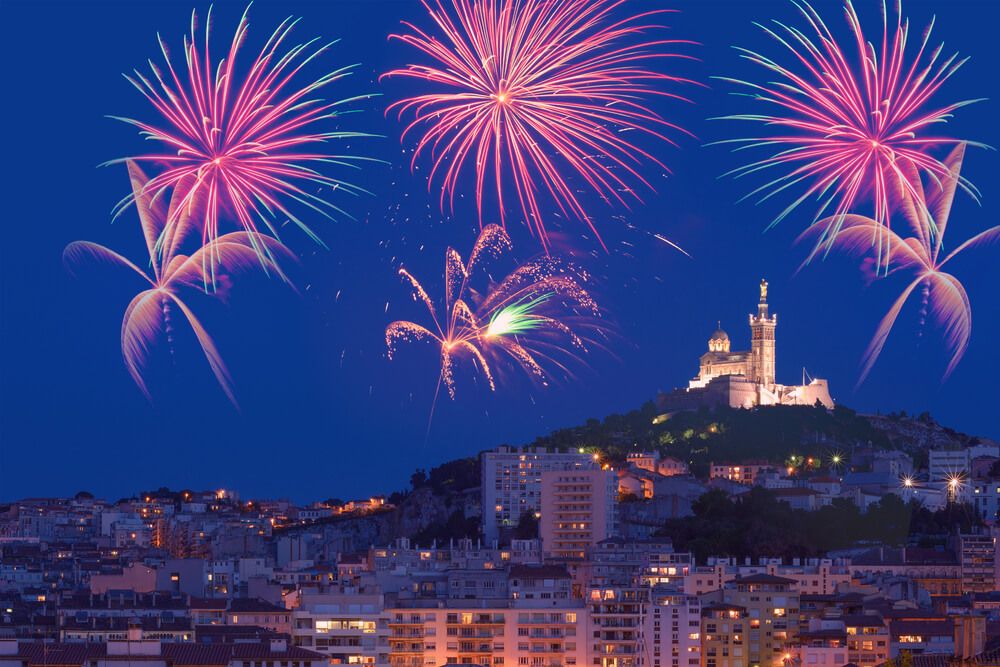
© Shutterstock
 Votre guide Ryo
Activities in Marseille and Surroundings: The Complete 2026 Guide
Marseille doesn't reveal itself right away. The city must be earned, and planning activities in Marseille and its surroundings means accepting that game: in the first few hours, you walk along the Vieux-Port without quite understanding why millions of people come back every year. Then something shifts — perhaps at the turn of a narrow lane in the Panier, perhaps facing the electric blue of a calanque in the midday sun, perhaps over a plate of fish at the Vallon des Auffes. France's second city is not a postcard city: it's a city of lived experience, rough and generous in equal measure.
This guide brings together the best activities in Marseille and its surroundings, within a 60 km radius of the phocaean city: little-known architectural heritage, hikes through breathtaking wild landscapes, secluded beaches, Provençal villages frozen in golden stone. To explore the city at your own pace from the moment you arrive, the Ryo audio guide of Marseille covers 24 audio stops over 7.3 km, from the Vieux-Port to the heights of the Panier, in three hours of narrated walking.
The Vieux-Port and Its Surroundings: Where It All Begins
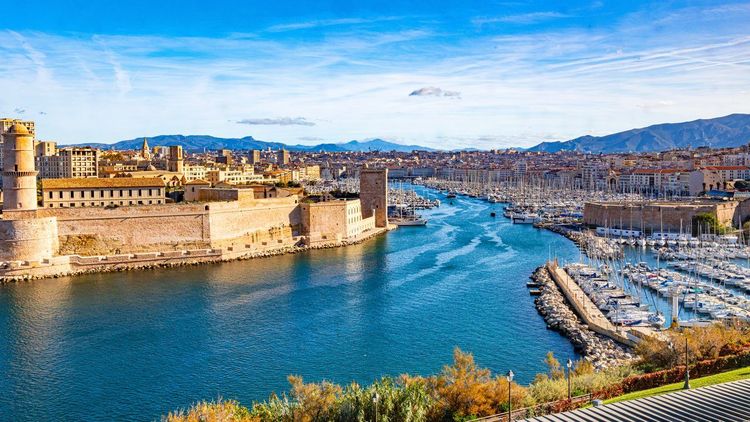
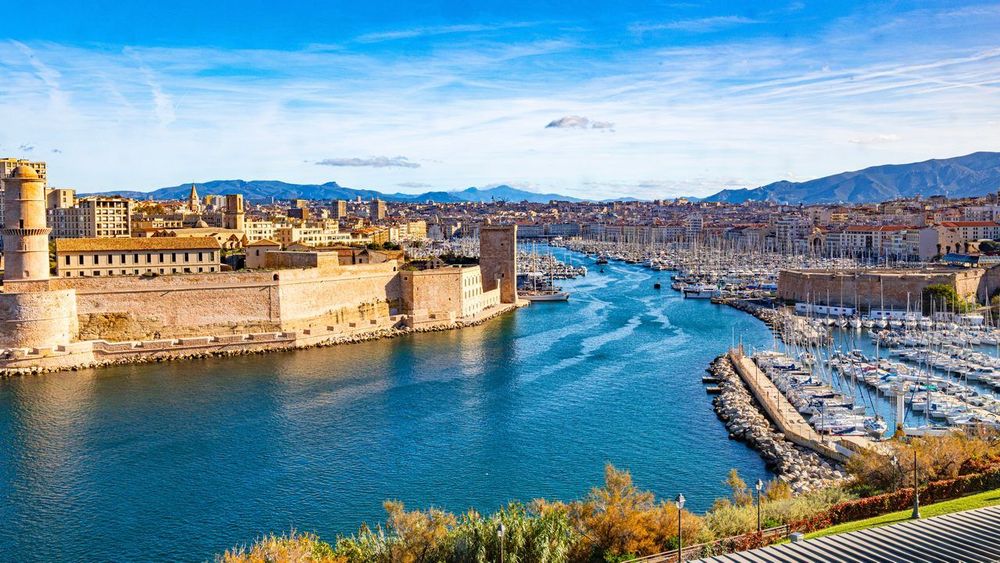
There is something timeless about the bustle of the Vieux-Port. The pointus — those flat-bottomed Provençal boats — still moor at the same rings as they always have, while water taxis cross the basin every twenty minutes for a modest fare. In the morning, the fish market sets up its stalls from 6 a.m. opposite the baroque Hôtel de Ville. It is a spectacle in itself: fishermen sell their night's catch directly, and negotiations often take place in Marseillais dialect.
The Place Thiars, just a short walk away, is the natural starting point for an exploration of the historic centre. Its terraces overflow from the first warm days of March, but the neighbourhood is equally worthwhile in January for its warm bistros and neighbourly atmosphere. On the opposite side of the basin, the Corniche Kennedy stretches 5 km southward: a coastal promenade without equal in France, passing the artificial Prado beaches, the First World War memorial and the beach bars that reopen each spring with the same enthusiasm.
The Vallon des Auffes is an essential detour. This micro fishing harbour is hidden beneath the Corniche viaduct, out of reach of the car crowds: you descend by a discreet staircase. A handful of fish restaurants serve the city's best tielles and bourrides here. This is where you best understand the visceral relationship between Marseille and the Mediterranean: a few boats, nets drying, the sea within arm's reach.
The Fort Saint-Nicolas and the Fort Saint-Jean have framed the entrance to the harbour since the 17th century. Fort Saint-Jean is now integrated into the MuCEM campus and its gardens are free to enter. From there, the view over the basin and Notre-Dame de la Garde is one of the most photographed in the city, and rightly so. In the evening, the Vieux-Port shifts gear: the terraces of the Quai de Rive Neuve light up, and the bars on the Cours Honoré-d'Estienne-d'Orves welcome a mixed crowd of locals, students and visitors. It's a place to stay late, especially in summer when the sea breeze makes the night perfect.
To make the most of the historic centre between the Vieux-Port and the Panier, the most beautiful neighbourhoods of Marseille are covered in detail in our neighbourhood guide, with recommended addresses and viewpoints not to be missed.
Notre-Dame de la Garde: The Panorama That Takes Your Breath Away
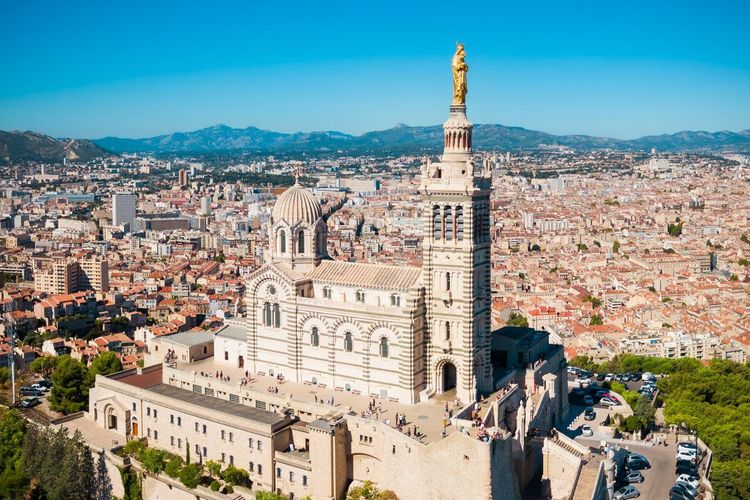
The Basilica of Notre-Dame de la Garde stands atop its promontory at 154 metres above sea level, crowned by an 11-metre gilded Virgin Mary. The people of Marseille simply call it "la Bonne Mère". It is at once their sanctuary, their geographical landmark and their weather barometer: when you can see la Bonne Mère from the sea, the weather will stay fair.
You can reach it on foot (40 minutes from the Vieux-Port via the Montée des Goumiers), by tourist bus or by car with parking on the hillside. The walk up is recommended at least once: the successive views over the city and the Frioul islands are revealed gradually, and each level offers a different perspective over the red rooftops and the blue of the bay.
Inside, the Romano-Byzantine basilica houses hundreds of ex-votos: model boats, crutches, commemorative plaques offered by shipwreck survivors or recovered patients. It is a striking inventory of Marseille's popular history spanning several centuries. From the forecourt, the 360-degree panorama takes in the entire city, the Frioul archipelago, Cap Croisette, and on very clear days the Îles d'Hyères 80 km away.
Entry is free. The site is open every day from 7 a.m. to 6:15 p.m. (until 7:15 p.m. in summer). Opt for an early morning visit: the raking light over the city is exceptional, and you avoid the tourist bus crowds that arrive from 10 a.m. onward. For full planning details, read our complete guide to Notre-Dame de la Garde.
The MuCEM and the Panier: Where History Meets Architecture
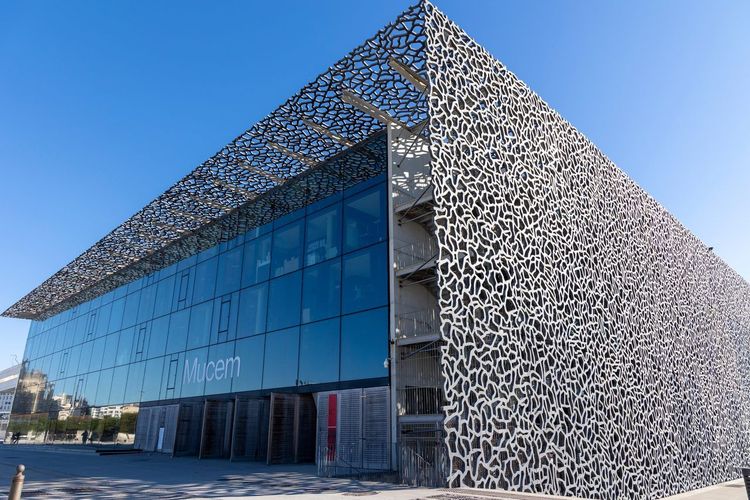
The MuCEM (Museum of European and Mediterranean Civilisations) is one of the most ambitious museums inaugurated in France since the Centre Pompidou. Opened in 2013 during the Marseille-Provence European Capital of Culture year, it is housed in a spectacular building designed by Rudy Ricciotti: a lace-like concrete shell set upon the sea, connected to Fort Saint-Jean by a 130-metre aerial walkway.
The permanent collections explore exchanges between Europe and Mediterranean civilisations across 4,000 years of history. The temporary exhibitions are often of a very high standard — check the programme before you visit, as they are frequently the main reason to make the trip. The rooftop terrace offers an unobstructed view over the sea and the islands. To plan your visit, read our dedicated MuCEM article with all the practical information.
Just behind the MuCEM, the Panier neighbourhood is the oldest in Marseille. Its staircase lanes, colourful houses with sun-bleached shutters, artists' studios and North African grocery shops form a palimpsest of all the waves of migration that have shaped the city since antiquity. The Place des Moulins and the Maison Diamantée (a 16th-century Renaissance mansion) are worth a stop. Allow 1h30 to 2h for a full circuit. Avoid the hottest hours of the afternoon in July and August: the pedestrian lanes offer no shade.
Nearby, the Cathédrale de la Major imposes its neo-Byzantine silhouette, striped green and white against the sea backdrop. The former Sainte-Marie-Majeure church it partly replaced is visible alongside it, illustrating the Second Empire's taste for urban grandeur. The interior of la Major houses a collection of mosaics and polychrome marble rarely matched in the south of France, and entry is free.
The Calanques: The Mediterranean in Its Rawest Form
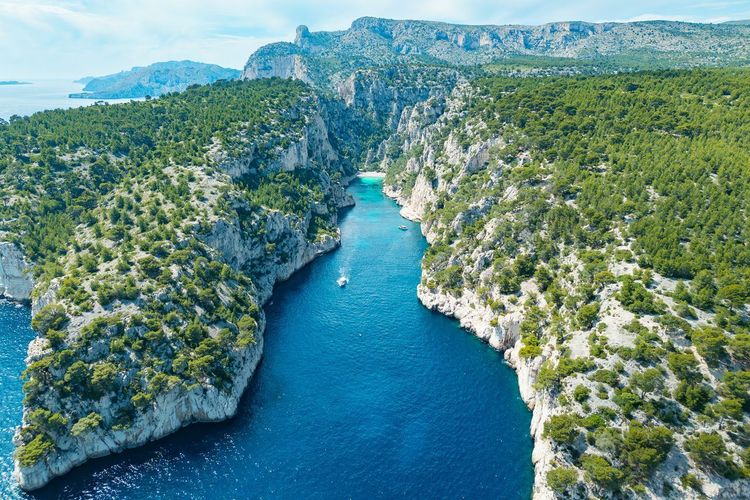
Few landscapes in France produce this effect of immediate awe. The Calanques de Marseille, designated a National Park in 2012 — making it the only marine and terrestrial national park in Europe located on the doorstep of a major city — stretch across 20 km of coastline between Marseille and Cassis. White limestone cliffs plunge straight down into water that shifts between turquoise and deep blue depending on the time of day.
The most accessible calanques from Marseille are Sormiou and Morgiou, located in the southern districts of the city. You can reach them by car (parking at the entrance to the valley, then a 25-minute walk), by bus from the Luminy terminus, or on foot from the Goudes neighbourhood for experienced hikers. The Sugiton calanque, reached from the Luminy university campus via a 40-minute trail, is often cited as the most spectacular in terms of effort-to-reward ratio: a narrow inlet enclosed between white rock faces, with water of an almost unreal clarity.
The En-Vau calanque, between Cassis and La Ciotat, is the wildest in the massif. No road leads there: access is only possible on foot (1h30 from the Port-Miou car park) or by boat from Cassis. Its translucent green waters, sheer cliffs and pebble beach have earned it a reputation as one of the most beautiful in France — deservedly so.
Essential precaution: from June to September, access to most calanques is regulated by the prefecture due to fire risk. Some trails close on weekends and public holidays, with restriction levels that change week to week. Always check conditions on the National Park website before heading out.
By boat, several companies offer excursions from the Vieux-Port: expect €25 to €45 per person for a 3 to 4-hour tour covering five to six calanques. It's a comfortable way to see the highlights without the strain of hiking in summer heat. Our guide to the most beautiful calanques of Marseille and Cassis covers each site with its access conditions and distinctive features.
For committed hikers, the waymarked trails of the GR 98 allow you to traverse the entire park from the southern districts of Marseille to Cassis over several days. It is a rare experience: you walk through an intact Mediterranean landscape just a few kilometres from France's second-largest city, without crossing a road for hours.
The Château d'If and the Frioul Islands
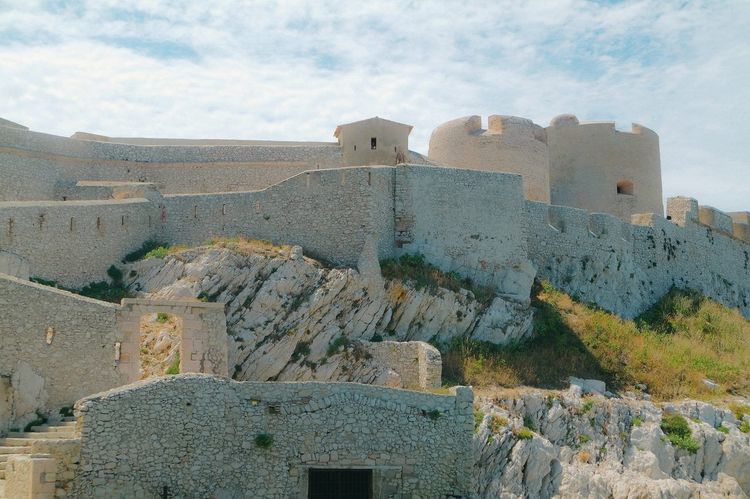
The château d'If is one of the most famous prisons in Europe, even if its most celebrated inmate, Edmond Dantès, existed only in Alexandre Dumas's imagination. The fortress, built in 1524 under François I and originally intended to defend the harbour entrance, became a state prison and later a place of detention for Protestants following the revocation of the Edict of Nantes in 1685.
The crossing from the Vieux-Port takes 20 minutes by ferry (around €11 return). The island is tiny — a few hundred metres of limestone rock battered by the mistral — but the view over Marseille from the ramparts alone justifies the trip. Allow 1h30 to 2h for a full circuit. Our article on visiting the château d'If covers all the practical details: opening times, prices and visiting tips.
The Frioul islands, 4 km from Marseille, form an archipelago of four islands, with Ratonneau and Pomègues connected by a towpath. The atmosphere is radically different from the city: fishing villages, wild coves, crystal-clear water, no cars. In summer, the calanques of Frioul attract divers, kayakers and whole families. Our guide to the must-sees of the Frioul islands gives you all the details you need to plan your day on the archipelago.
The same Frioul If Express ferry serves both destinations, departing from the Quai des Belges. In high season, book your tickets online in advance: departures sell out by 9 a.m. on some July and August weekends.
Marseille's Beaches: From Wide Avenues to Secret Coves
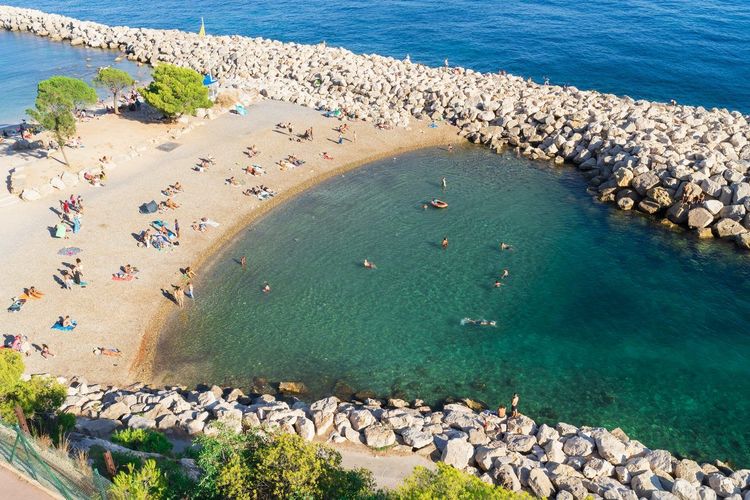
Marseille has 25 km of coastline and around twenty beaches, from the large managed Prado beaches to the wild coves of les Goudes. The split is clear: to the north, popular and lively beaches; to the south, coves accessible only on foot via the National Park trails.
The Plage du Prado is the largest and most popular: its lawns, designated barbecue areas and skate park make it a complete family destination. The beach is supervised from June to September, with children's zones and water sports lessons offered by local clubs. Next to it, Plage Borély is slightly quieter and adjoins Parc Borély (Avenue du Parc Borély, 13008 Marseille, rated 4.5/5 on Google with 14,109 reviews), ideal for a shaded picnic after a swim.
For more unspoilt beaches, head to les Goudes and Callelongue, the two fishing villages at the end of the Calanques road. The road ends there: beyond it lies the National Park. The small fish restaurants in les Goudes charge more reasonable prices than the Vieux-Port for quality that is often superior. For diving enthusiasts, the seabeds between Cap Croisette and the first calanques shelter posidonia meadows, grouper and octopus. Our selection of the most beautiful beaches in Marseille covers all the options with their individual profiles.
La Cité Radieuse and the Creative Neighbourhoods
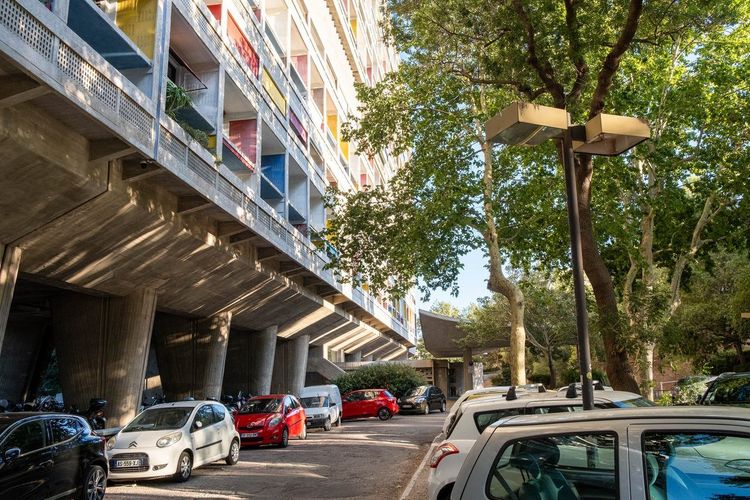
Le Corbusier's Cité Radieuse (officially the "Unité d'Habitation") is not a museum: it is a residential building of 337 apartments listed as a UNESCO World Heritage Site, which also houses a hotel, a gymnasium, a nursery school and a crèche on its rooftop terrace. Built between 1947 and 1952, it revolutionised the design of collective housing and influenced generations of architects.
The rooftop terrace is open to visitors for around €5. From up there, the view over the Calanques and the sea is unobstructed in all directions. The interior of the building can be visited independently or with guides specialising in modern architecture. Our article on the Cité Radieuse Le Corbusier in Marseille goes deeper into the architectural history and the practical details of the visit.
The Joliette neighbourhood and its surroundings embody Marseille in transformation: the Friche Belle de Mai (housed in a 19th-century former tobacco factory) hosts contemporary art exhibitions, concerts, a Sunday market and a multi-level skate ramp. It is the place to take the pulse of Marseille's creative scene, often with free entry depending on the event. For the cultural highlights of the year, check out our calendar of events in Marseille.
Gastronomy: Bouillabaisse, Navettes and Corniche Beach Bars
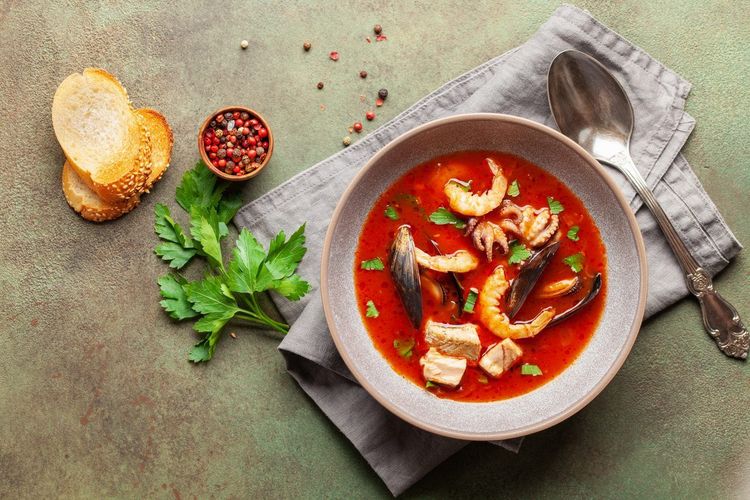
Marseille is above all a city that eats. Bouillabaisse, the rock fish soup served with rouille, croutons and boiled potatoes, is a ritual in its own right: expect to pay €50 to €80 per person at restaurants that make it properly. Establishments displaying the Bouillabaisse Charter (around ten in Marseille) guarantee the use of locally caught fish — a meaningful assurance for a speciality so often let down by imitations.
The navettes are the other unmissable speciality: these small boat-shaped biscuits flavoured with orange blossom water have been produced since 1781 by the Four des Navettes on Rue Sainte. They are sold by the half-dozen and keep for several weeks. The shop is tiny, the queue sometimes long — a good sign.
The beach bars of Marseille deserve their own exploration. These bar-restaurants set up along the Corniche from May to September combine sea views, apéro boards of local charcuterie and a festive atmosphere that runs well into the evening. The best ones are fully booked from the 14 July weekend onward. For a complete overview of addresses, read our guide to the best beach bars around Marseille.
The Marché de la Plaine (Place Jean-Jaurès, Tuesday, Thursday and Saturday) is the city's most vibrant popular market: fruit, vegetables, spices, olives, cheese, second-hand book sellers and vintage clothing traders mingle in an atmosphere that runs until early afternoon. For ideas on what to bring home, our selection of the best specialities from Marseille covers everything from soaps to anchoïade and artisan pastis.
Cassis and La Ciotat: Stopovers Along the Eastern Coast
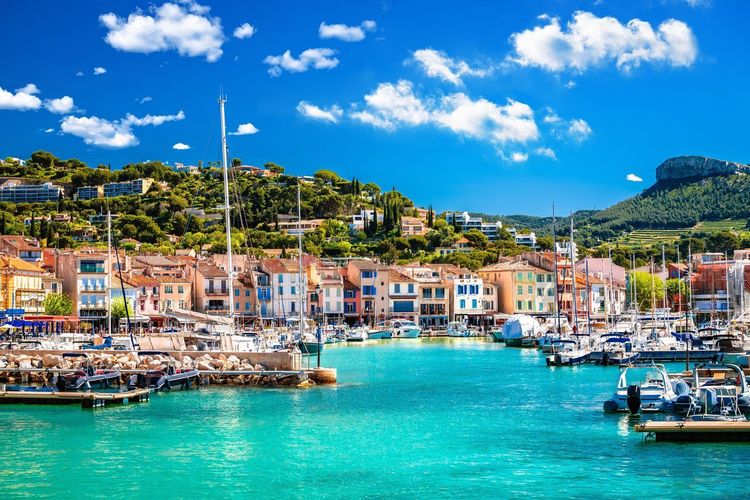
Just 25 km east of Marseille, Cassis is one of the most photogenic fishing villages on the French Mediterranean coast. Its harbour framed by the Cap Canaille — France's tallest sea cliff at 394 metres — its medieval castle overlooking the ochre rooftops and its immediately accessible calanques make it a prime stop for a day trip.
A stroll through the village takes a good hour: the lanes of the pedestrian centre, the harbour-side terraces, the wine shops. Cassis produces a highly regarded AOC white wine, dry and floral, perfect with fish and seafood. The beaches at Cassis are pebbly — better suited to swimming than sandcastles — but the clarity of the water more than makes up for it.
From the harbour, boat excursions to the calanques of En-Vau, Port-Pin and Port-Miou depart hourly in season. Tickets sold at the dock or online (€15 to €25 depending on the itinerary). The Port-Miou calanque is also accessible on foot from the car park in 15 minutes — it's the only calanque reachable by car, with a pleasure boat channel that gives it a distinctive character.
La Ciotat, 15 km from Cassis, is known for two seemingly incompatible things: the invention of cinema and its giant shipyards. The Lumière brothers filmed their first footage here in 1895. The Salle Eden, the world's first cinema (1899), is still in operation — it still screens films, making it the oldest continuously operating cinema in the world. The adjacent Espace Lumière traces the history of the invention in thoughtfully designed rooms.
In the afternoon, the Calanque de Figuerolles (Chemin de Figuerolles, 13600 La Ciotat, rated 4.5/5 on Google with 5,343 reviews), a short distance from the centre, is one of the most accessible on the coast: a 20-minute trail from the Madrague car park leads to turquoise waters framed by tufa cliffs in tortured shapes. The Route des Crêtes between Cassis and La Ciotat, which runs along the summit of Cap Canaille, offers breathtaking views over the sea and the calanques. Allow 40 minutes of leisurely driving with photo stops at the designated viewpoints. Back in Marseille, our audio-guided tour covers the old town in 25 stops.
Aix-en-Provence: Provençal Elegance 30 km Away
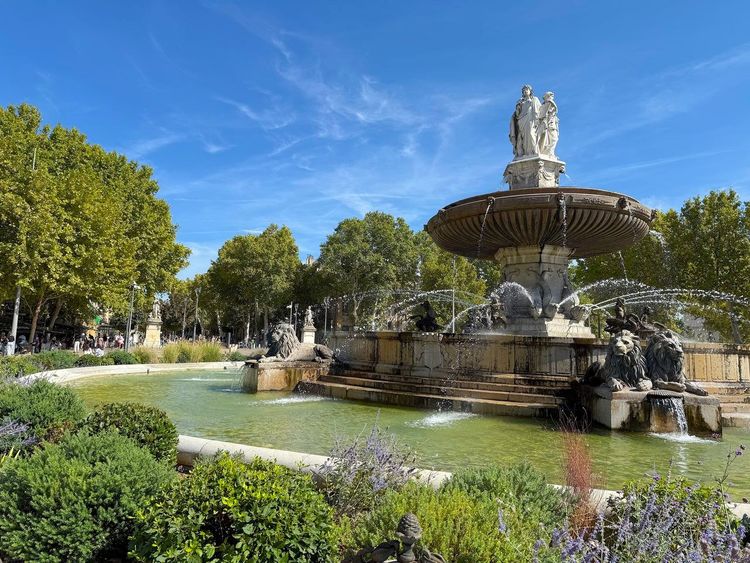
Aix-en-Provence is 30 km north of Marseille — 45 minutes by car or 40 minutes by regional train from Gare Saint-Charles. The capital of the Pays d'Aix is everything Marseille is not: quiet, elegant, with its 17th and 18th-century ashlar stone mansions and plane tree-lined avenues. Two cities that sometimes look the other way but complement each other perfectly when combined in a single trip.
The Cours Mirabeau, lined with ancient plane trees and mossy fountains, is the city's open-air living room. The café terraces, including the legendary Café des Deux Garçons (53 Cours Mirabeau, 13100 Aix-en-Provence, rated 3.7/5 on Google with 949 reviews), once frequented by Cézanne, Zola and Picasso, fill up from morning and never really empty.
The medieval old town around the Place de l'Hôtel de Ville and Place Richelme (daily fruit and vegetable market) can be explored on foot in two hours. The markets of Aix are among the most acclaimed in Provence: the market on Place des Prêcheurs (Tuesday, Thursday, Saturday) brings together cheese makers, market gardeners and craftspeople across several hundred metres.
Paul Cézanne was born in Aix and spent most of his life there. The Atelier Cézanne (Avenue Paul Cézanne, 10 minutes on foot from the centre) is preserved exactly as he left it at his death in 1906: palette, easels, objects that served as models for his still lifes. The Montagne Sainte-Victoire, which he painted more than 80 times, is visible from the northern exit of Aix. Hikes along its slopes starting from the Bimont dam offer striking panoramas over the Crau plain.
Provençal Villages Around Marseille
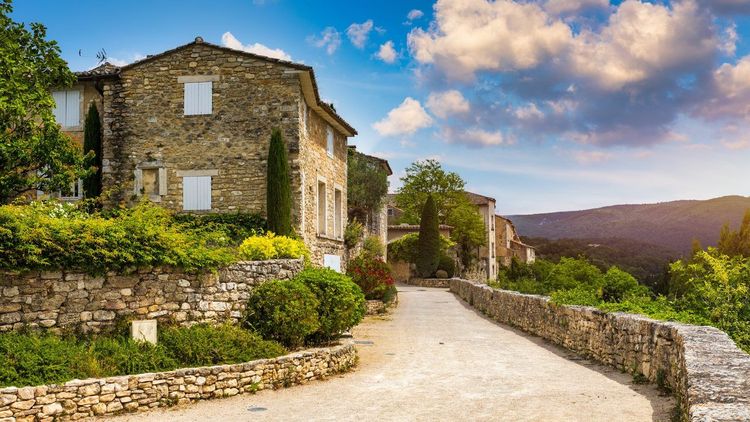
Provence is a mosaic of hilltop villages, bustling markets and garrigue landscapes. Several of them are worth a half-day or a full day from Marseille. Our article on the most beautiful villages around Marseille presents a curated selection with access details and best seasons to visit.
Aubagne (15 km east) is Marcel Pagnol's hometown: born here in 1895, the author of Marius and La Gloire de mon père immortalised the Garlaban hill visible from the town. The workshops of santoniers — craftspeople who make the figurines for Provençal nativity scenes — are open to visitors. The Thursday market is one of the most vibrant in the region, with local producers coming from all corners of the Pays d'Aix.
Les Baux-de-Provence (60 km north), clinging to their limestone spur in the Alpilles, are listed among the Most Beautiful Villages of France. The panorama from the citadel stretches across the Crau plain and the Camargue on clear days. The Carrières de Lumières — a former bauxite quarry converted into a monumental exhibition space where artworks are projected onto 14-metre rock faces — is a unique visual experience in France.
Saint-Rémy-de-Provence (Place de la République, 13210 Saint-Rémy-de-Provence, rated 4.7/5 on Google with 6K reviews) (65 km north) is where Van Gogh stayed at the Saint-Paul-de-Mausole asylum from May 1889 to May 1890, a period during which he painted The Starry Night and more than 150 canvases. The monastery is open to visitors, and the ancient ruins of Glanum, a Gallo-Roman town from the 1st century BC, are 500 metres from the centre.
For a broader overview of the must-sees across the entire PACA region, our article on the must-sees in PACA widens the perspective well beyond the immediate surroundings of Marseille.
Sports and Outdoor Activities
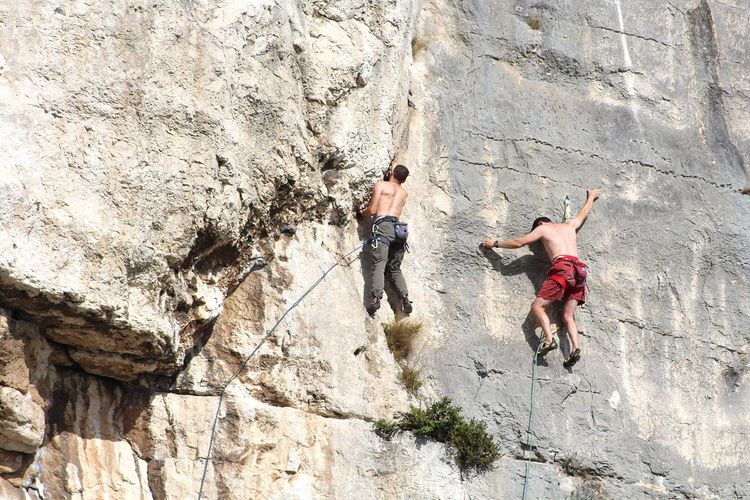
The area around Marseille is one of the most varied outdoor playgrounds in France. Rock climbing in the Calanques attracts climbers from around the world: the limestone cliffs offer routes for all levels, from the beginner-friendly sites at Morgiou to the long coastal routes at Cassis. The quality of the rock and the diversity of configurations (slabs, overhangs, cracks) have forged this spot's international reputation. Several local clubs offer guided outings with full equipment.
Mountain biking (VTT) is widely practised in the surrounding massifs: the Garlaban above Aubagne, the Sainte-Baume massif and the trails around Lac de Peyrolles-en-Provence (45 km from Marseille) are the most popular destinations. Lac de Peyrolles also offers supervised swimming, paddleboarding and windsurfing in summer — a great option for families looking for a natural setting without the difficulty of the calanques trails.
Sailing and water sports are practised from several harbours: the Vieux-Port for day cruises, the port of Borély for water sports, Cassis for sea kayaking in the calanques. Sea kayaking is particularly well suited to exploring the calanques: spots like Morgiou or Sugiton become accessible with a 1h30 paddle from les Goudes, without the constraints of fire restrictions on the trails.
Scuba diving in the National Park is supervised by around ten clubs between Marseille and Cassis. The seabeds between Cap Croisette and the Calanque de Marseilleveyre shelter excellent posidonia meadows, grouper, octopus and, at depth, Second World War wrecks. Discovery dives are offered from les Goudes from the age of 10, with no prior experience required.
For hikers, the network of the GR 98 and the secondary trails of the National Park represents over 100 km of waymarked paths between Marseille, Cassis and La Ciotat. Preparation essentials: always carry more water than you think you'll need (minimum 2 litres per person in summer), high-factor sunscreen and closed-toe shoes — the limestone trail can be sharp underfoot.
Practical Information for Visiting Marseille
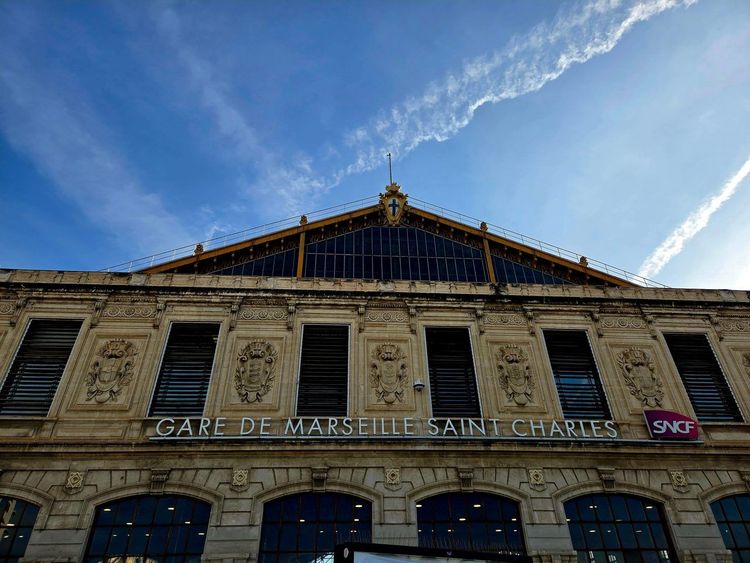
Getting there: Marseille is connected to Paris by TGV in 3h10 from Gare de Lyon (arriving at Gare Saint-Charles, right in the city centre). Marseille-Provence Airport (Marignane) is 25 km from the centre, connected by the Cartreize express shuttle every 20 minutes (€10, 25-minute journey). To explore the region, a car is very useful once you leave the city.
Getting around: the RTM network (metro, tram, bus) covers most of the city. A day pass costs €5.50, valid all day on all services. Vélo'v self-service bikes are available at numerous stations. For the calanques and the southern districts not served by public transport, a car or ride-hailing service is necessary.
Recommended duration: a minimum of 3 days to cover the highlights of Marseille and spend a half-day at the calanques. Allow 5 to 6 days to add Cassis, Aix-en-Provence and a Provençal village. The Ryo audio guide covers the historic centre in 3 hours — an excellent programme for your first morning.
For ideas on organised excursions departing from the city, our guide to day trips from Marseille offers commented itineraries by duration and mode of transport.
When to Visit Marseille
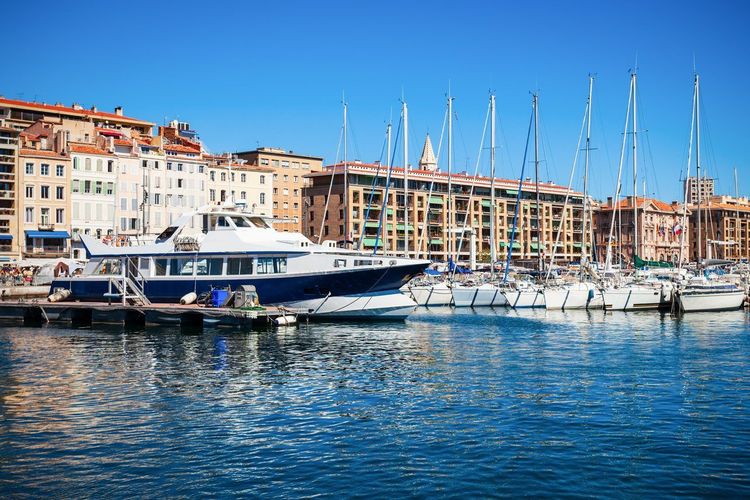
Spring (April–May) is the best period to combine comfort and authenticity: ideal temperatures (20–24 °C), the calanques freely accessible, and beaches coming to life without being overcrowded. Summer is high season: some calanques close on weekends, the beaches are very busy, but festivals, beach bars and nightlife are at their peak. The heat can be intense in July and August (35–40 °C on some days). Autumn (September–October) offers a fine compromise: the sea is still warm, crowds thin out after 15 August, and the Provençal light is particularly beautiful. Winter is mild (10–15 °C during the day) and very sunny: the calanques are deserted, museums are peaceful, and the mistral sometimes blows hard but leaves the skies absolutely crystalline. Check our calendar of events in Marseille for cultural highlights throughout the year.



FAQ
What are the best family activities in Marseille?
Families will find a wide range of options in Marseille for all ages. The Prado beaches, supervised in summer with green spaces and play areas, are the go-to base. The boat crossing to the château d'If is often a highlight for children — the legend of the Count of Monte-Cristo works its magic, especially if you've read the novel beforehand. The MuCEM regularly offers children's workshops and family-friendly guided tours. Outside the city, the leisure base at Lac de Peyrolles (45 km away) offers swimming, paddleboarding, mountain biking and a rope course all in one place, with areas suited to younger children. For the curious of all ages, the morning fish market at the Vieux-Port is a remarkable and entirely free spectacle.
What can you do around Marseille in a day?
Several destinations lend themselves perfectly to a day trip. Cassis (25 km) is the most natural choice: morning in the village and a fish lunch at the harbour, then an afternoon boat trip to the calanques. Aix-en-Provence (30 km) is better suited to a cultural day: market in the morning, museums in the afternoon, and a terrace on the Cours Mirabeau at day's end. Les Baux-de-Provence and Saint-Rémy-de-Provence can be combined into a single day by car (allow 1h30 to 2h in each village). For a fully maritime day, the Frioul islands offer a complete change of scenery just 20 minutes by boat from the Vieux-Port.
Can you visit the calanques year-round?
Yes, with significant variations depending on the season. From November to March, the calanques are freely accessible and often magnificent in clear weather — the winter light on the white limestone is particularly beautiful. From April to May and in October, conditions are ideal: good weather, few crowds, no access restrictions. From June to September, the prefectures of Bouches-du-Rhône and Var set fire risk levels that may close certain trails, sometimes from Thursday to Monday in summer. Restrictions vary according to weather conditions and change from week to week. Always check the Parc National des Calanques website before setting out, especially on summer weekends.
How long does it take to visit Marseille and its surroundings?
A weekend (2 nights) allows you to cover the highlights: Vieux-Port, Notre-Dame de la Garde, MuCEM, the Panier and a half-day boat trip to the calanques. To explore Marseille properly and add an excursion (Cassis or Aix), plan for 4 to 5 days. If you want to cover all the surrounding areas — the calanques of Cassis, Aix-en-Provence, the Alpilles villages, the La Ciotat coast — a week is the right format. The Ryo audio guide of Marseille covers the 7.3 km of the historic centre in three hours, making it a solid foundation for structuring your first day before expanding your exploration.
What free activities can you do in Marseille?
The list is longer than you might think. The walk along the Corniche Kennedy, a visit to the Panier neighbourhood, the hike up to Notre-Dame de la Garde (entry to the basilica is free), the gardens of Fort Saint-Jean, swimming in the coastal coves and the daily spectacle of the fish market are all free of charge. The Musée d'Histoire de Marseille is free on the first Sunday of the month, as are several municipal museums. Parc Borély is open and free all year round. The Prado beaches are public and free (paid parking nearby). Hiking in the calanques and swimming in natural coves are also completely free to access.
What are the best day trips from Marseille?
Beyond Cassis and Aix-en-Provence, several destinations are worth the trip for a day out. The Camargue (90 km) can be done by car: flamingos, bulls and white horses of the nature reserve make up a radically unexpected landscape less than 2 hours from Marseille. Arles (95 km) combines exceptional Roman heritage (arenas, ancient theatre) with high-quality museums. Avignon (100 km) and its Palais des Papes are accessible by TGV in just 35 minutes from Marseille. Our guide to day trips from Marseille offers detailed itineraries with durations and best transport options.
Where can you eat in Marseille on a budget?
Bouillabaisse is delicious but pricey — it's not the only option. The Marché de la Plaine and the bakeries of the Panier offer breakfasts and lunches for under €5. The pastillas and sfenjs from North African grocery shops in Belsunce and on Rue d'Aubagne are an introduction to the city's popular flavours for just a few euros. The restaurants on Cours Julien (bohemian neighbourhood, affordable bars and eateries) offer lunch menus for under €15 at lunchtime, often with very decent quality. For fresh fish at reasonable prices, the restaurants at les Goudes charge lower rates than the Vieux-Port for freshness that is often superior.
Marseille Is Not Told — It Is Lived
The phocaean city resists easy summaries. It is a city of sincere contrasts, without tourist artifice: the brutalist architecture of the Cité Radieuse just a few hundred metres from the lanes of the Panier, wild calanques 30 minutes from the city centre, an intense neighbourhood life that coexists with one of the longest maritime waterfronts in France.
Its surroundings only deepen this richness: Cassis and its wines, Aix and its fountains, the Alpilles and their hilltop villages, the Camargue and its boundless spaces. It takes time to grasp its nuances.
To explore the historic centre at your own pace from the moment you arrive, the audio walking tour of Marseille guides you through 25 audio stops from the Vieux-Port to the heights of the Panier. A solid starting point before broadening your discovery to the calanques, the islands and the Provençal villages that make this region one of the richest and most varied in France.
À lire également