© Shutterstock
 Votre guide Ryo
Visiting the Cité Radieuse by Le Corbusier in Marseille: Complete 2026 Guide
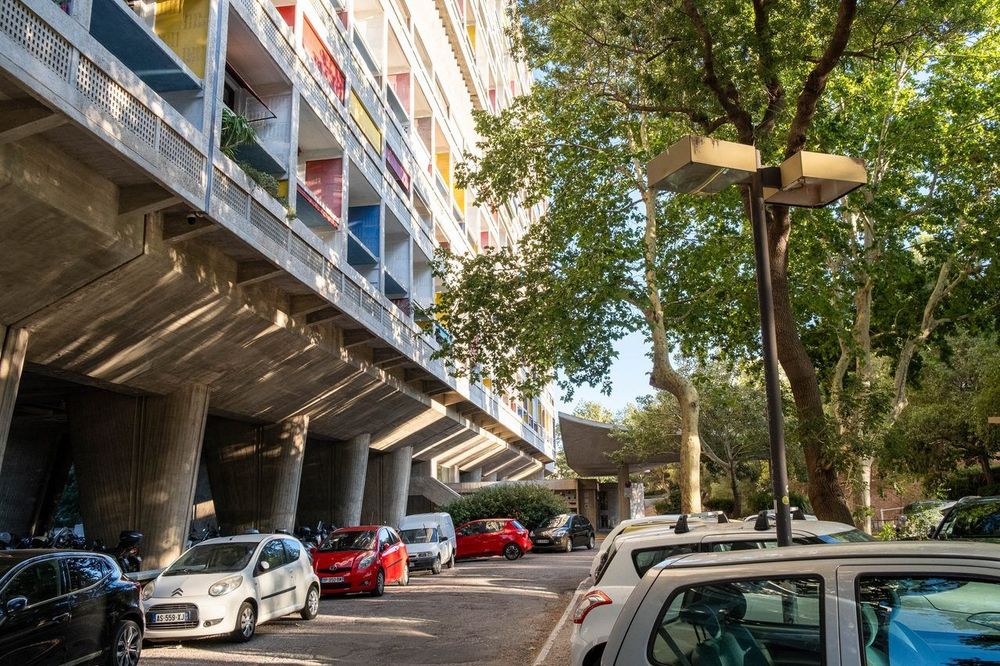
Visiting the Cité Radieuse in Marseille immerses you in Le Corbusier's architectural utopia. Its residents have an affectionate nickname for the building on boulevard Michelet: "la maison du fada" — the madman's house. The madman in question is the Swiss-French architect who, in the immediate post-war years, envisioned an 18-storey building conceived as a vertical, self-sufficient city capable of housing up to 1,600 people under one roof. Inaugurated in 1952, the building is now a UNESCO World Heritage Site and attracts tens of thousands of visitors from around the world every year. If you are extending your stay in Provence, Ryo's audio-guided tours — such as the one covering Orange and its Cité des Princes — will take you well beyond boulevard Michelet.
The building holds many surprises: a model apartment open to the public in its original condition, a rooftop terrace with a former nursery school and a now-vanished swimming pool, an interior street nicknamed the "Via Veneto" by residents, and the MaMo, a contemporary art museum perched at the top of the building. Whether you spend two hours or an entire day, this guide gives you all the practical information you need to plan your visit in 2026: opening hours, prices, guided tours and access from the city centre.
History and Architecture: Le Corbusier's Machine for Living
The project was born from the rubble. In 1945, France needed to rebuild quickly and provide housing on a massive scale for a population devastated by war. Le Corbusier proposed a radical solution: concentrating everything a city produces within a single building — housing, shops, a school, sport and leisure facilities. He called it the Unité d'Habitation.
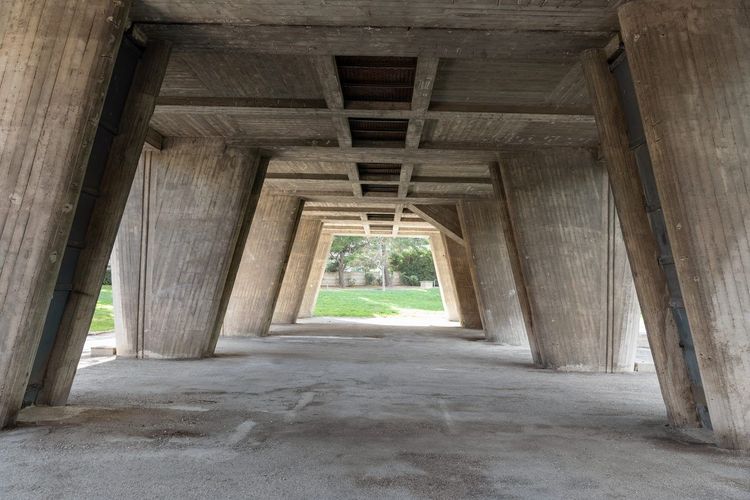
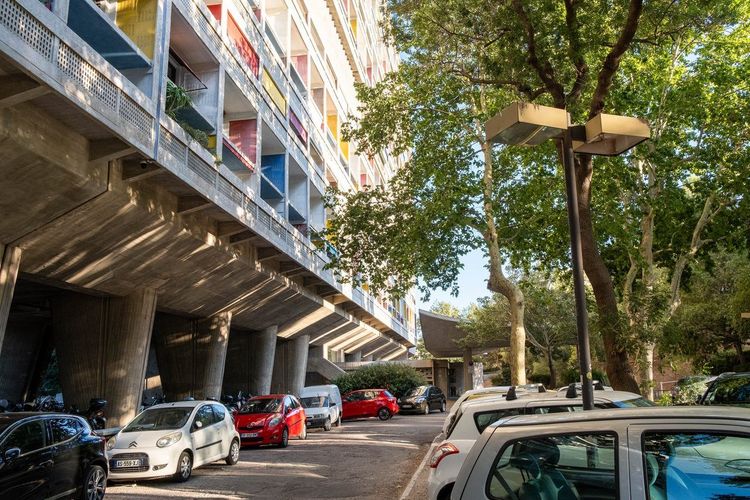
The Cité Radieuse in Marseille was the first to be built, constructed between 1947 and 1952 on boulevard Michelet in the 8th arrondissement. The construction took five years, hampered by material shortages and a degree of hostility from some local elected officials. The result: a building 135 metres long, 24 metres wide and 56 metres tall, set on colossal pilotis that free the ground beneath the structure entirely.
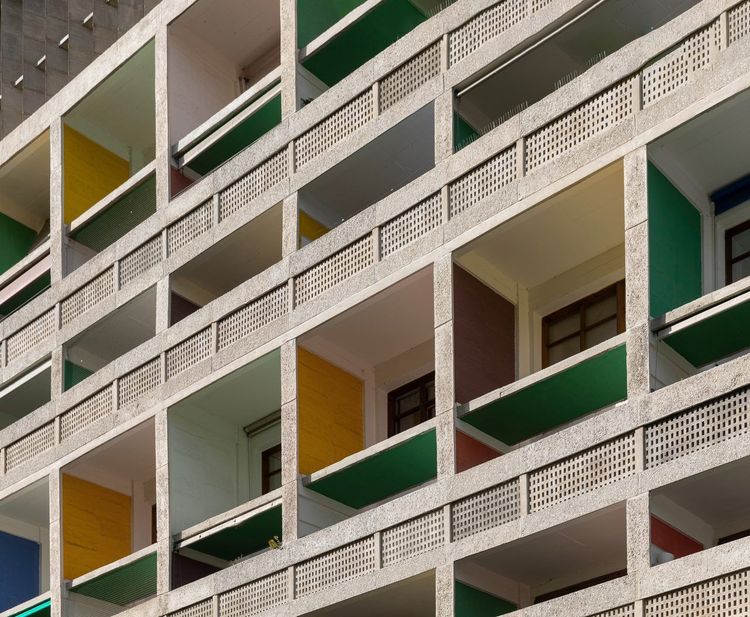
The building contains 337 apartments spread across 23 different configurations, all dual-aspect (oriented east-west) and designed according to the Modulor — a system of proportions based on the human figure that Le Corbusier developed throughout his life. The most typical units span two levels, with a raw concrete facade structured by coloured loggias in yellow, red, green and blue that animate the whole like a pictorial composition.
The building has been listed as a historic monument since 1986 and was inscribed on the UNESCO World Heritage List in 2016 as part of the series "The Architectural Work of Le Corbusier, an Outstanding Contribution to the Modern Movement". It is among 17 sites spread across seven countries — an unprecedented recognition for 20th-century architecture. What you see from the street is already striking. But the essence of the visit unfolds inside.
The Model Apartment: Stepping into the Corbusian Utopia
This is the centrepiece of any visit. The model apartment occupies levels 3B and 4B of the building and has been carefully restored to its original appearance — the one Le Corbusier had intended in 1952. It is the only dwelling in the building open to the public, and only on a guided tour.
You enter through a deliberately low-ceilinged corridor — intentionally oppressive — to better feel the sense of liberation that comes the moment you step into the double-height living room. This contrast between the narrow and the open is a Corbusian signature: the architect played with volumes to create spatial emotion before even thinking about decoration.
The space unfolds over two levels. On the lower floor, the dining room and sitting room connect to the kitchen through a serving hatch — a principle of domestic efficiency Le Corbusier had borrowed from ocean liner cabins, his great formal obsession. The loggia opening onto the Mediterranean landscape completes this living space, flooding the rooms with light at certain times of day.
Upstairs, the bedrooms are integrated using a system of movable partitions that theoretically allowed the layout to be modified according to family needs. In practice, residents made very little use of this flexibility, but the intention speaks volumes about the project's social ambition. Le Corbusier wanted to create spaces that adapt to families, not families that adapt to spaces.
The furniture on display is largely original or faithful reissues: the LC2 chair designed by Le Corbusier and Charlotte Perriand, built-in wardrobes in primary colours, a raised work surface. Every object is designed to the scale of the Modulor.
The visit typically lasts 45 minutes to 1 hour and takes place in a small group, with a guide who explains the architectural intentions and the stories of those who have lived here. Booking in advance is strongly recommended, especially off-season when time slots are less frequent.
The Rooftop Terrace: Marseille from 56 Metres Up
From the heights of boulevard Michelet, the rooftop terrace offers a panoramic view stretching across the hills of Marseille, the Étoile mountain range to the north and, on a clear day, the Frioul archipelago and the Île d'If on the horizon. But what strikes you first is the roof itself.
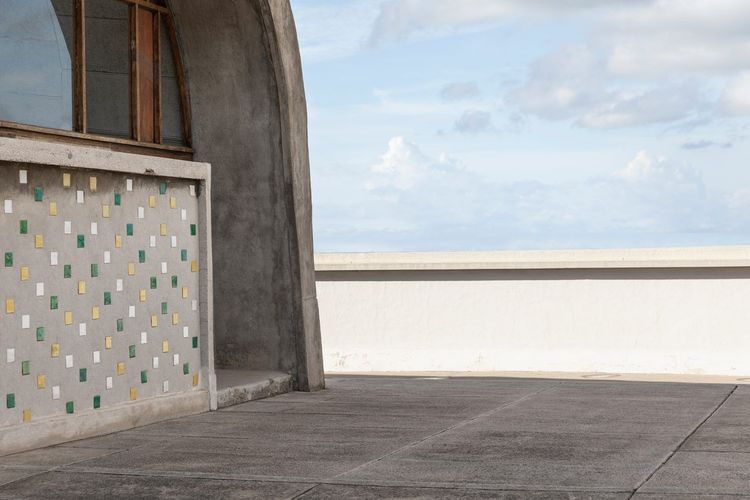
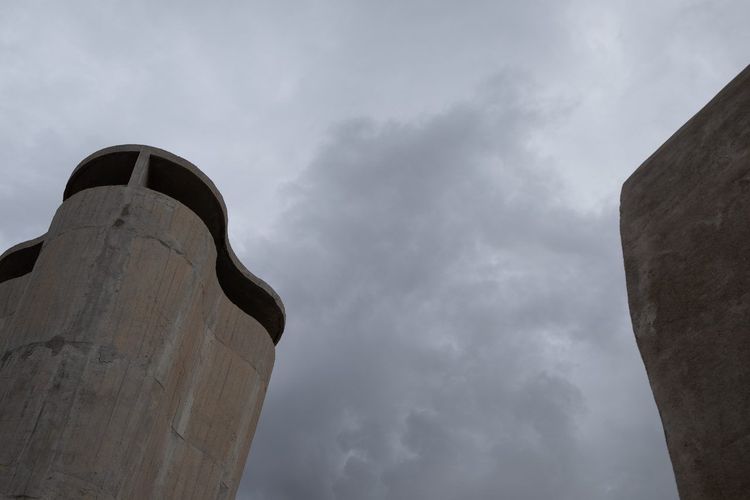
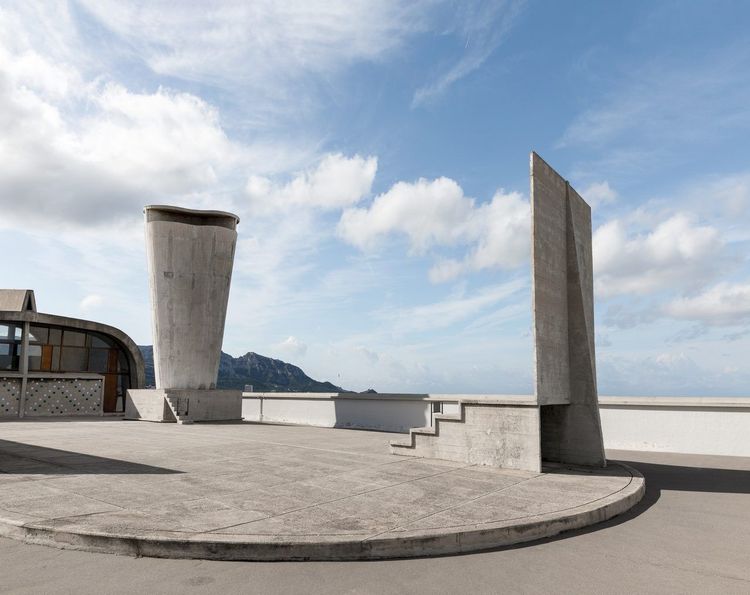
Le Corbusier designed this level as a genuine collective living space. It features a gym with sculptural forms, an athletics track running around the perimeter of the building, and above all the remains of the nursery school integrated from the outset — a volume with curved, coloured walls that resembles an abstract sculpture more than an educational establishment. A swimming pool also existed here, now gone but whose outline remains visible in the floor.
The built volumes on the roof are in painted raw concrete, punctuated by chimneys and ventilation shafts transformed into plastic forms — like a miniature city placed on top of the building. Le Corbusier worked this roofscape as a landscape in its own right, what architects have since called the "fifth facade".
Rooftop access is included in the guided tour. Outside of that, you can reach it via the MaMo (paid ticket) or by staying at the Hôtel Le Corbusier. Concerts, performances and cultural events are regularly held here during the summer season — worth checking the calendar before your visit.
The Interior Street: A Village Suspended on the 7th Floor
In the middle of the building, on the 7th and 8th floors, stretches what Le Corbusier had envisioned as the "interior street": a 135-metre-long corridor that originally housed a grocery, bakery, pharmacy, restaurant and even a laundry. The idea was that residents would never need to leave the building to meet their daily needs.
The people of Marseille nicknamed it the "Via Veneto" for its cosmopolitan feel. Even today, this corridor retains a particular atmosphere — a blend of collective intimacy and village ambiance. Taking in the apartment door numbers painted in primary colours, the period intercoms, the hypnotic rhythm of doors stretching the full length of the corridor: it is already a form of visiting in itself.
The street still hosts shops and services, albeit fewer than at the outset. These include the Restaurant Le Ventre de l'Architecte (280 boulevard Michelet, 13008 Marseille, rated 4/5 on Google from 365 reviews), which occupies the former brasserie thoughtfully redesigned, along with a few designer studios and a bookshop specialising in architecture.
This part of the building is accessible without a guided tour during business opening hours. If you plan to have lunch here, book ahead at weekends. Budget around €25 to €40 per person for a meal in a setting that is worth as much as the food.
The MaMo: Contemporary Art at the Summit
Inaugurated in 2013 by Marseille-born designer Ora-Ïto, the MaMo (Marseille Modulor) occupies the original rooftop gymnasium, transformed into a contemporary art exhibition space. Each season, an international artist installs a monographic exhibition that takes full advantage of the exceptional volumes of the space: high ceilings, raw concrete and overhead light.
Past exhibitions have featured works by Takashi Murakami, Daniel Buren and Zaha Hadid Architects. The programming deliberately plays on the dialogue between contemporary creation and the Corbusian legacy.
The MaMo is open from early April to mid-November approximately (exact dates to be confirmed each season). Entry: €7 to €9 depending on the exhibition. Rooftop access is included in the ticket, making it one of the most affordable ways to enjoy the panorama without having booked a guided tour. An exit shop offers limited editions and publications on art and architecture.
Hôtel Le Corbusier: Sleeping inside the Monument
Nineteen apartments in the building have been converted into hotel rooms, forming the Hôtel Le Corbusier (280 boulevard Michelet, 13008 Marseille, rated 4.2/5 on Google from 976 reviews) — without doubt the most singular place to stay in Marseille. To stay here is to sleep in an original apartment, with Modulor proportions, coloured loggias and raw concrete as décor.
The rooms have been furnished in keeping with the spirit of the 1950s: period furniture or faithful reissues, a primary colour palette, built-in storage set into the walls. Some enjoy an unobstructed view over the hills or towards the sea.
Expect to pay €80 to €160 per night depending on the season and room type. Booking several weeks in advance in summer is essential. The main advantage for enthusiasts: unrestricted access to the building at any hour, allowing you to observe it in radically different light. The facade is bathed in golden light early in the morning, the loggias glow at sunset, and the whole structure takes on an entirely different dimension after midnight.
Guided Tours: Options and Booking
The guided tour remains the most comprehensive way to discover the building. It provides access to the model apartment, which is not available on a self-guided visit, and allows you to gain contextualised explanations of Le Corbusier's intentions.
On-site organised tours are the reference option. They include the model apartment and last 1h15 to 1h30. Groups are limited to around a dozen participants to maintain a sufficient quality of experience in the sometimes tight spaces.
The Marseille Tourist Office offers thematic tours that incorporate the building into a broader itinerary dedicated to Marseille's 20th-century heritage. An ideal format for a first-time exploration of the city.
Architectural mediation associations organise more technical tours aimed at professionals or enthusiasts wishing to deepen their formal analysis. These sometimes include areas not normally accessible to the public.
Prices generally range from €8 to €15 per person depending on the format. Booking is done through the official website or via cultural platforms. Weekend slots sell out quickly from March to October.
To explore the rest of the region with the same depth after your visit, the Ryo app offers audio-guided tours through the historic districts of Marseille — 25 stops from Le Panier to the Vieux-Port — and other towns in Provence, such as Orange, at your own pace.
Visiting the Cité Radieuse without a Guide
Contrary to what you might expect, a good portion of the building is accessible without a ticket or a guide. The entrance hall and the interior street (7th and 8th floors) can be freely visited during business opening hours, generally Tuesday to Saturday from around 10am to 7pm.
This self-guided visit is far from disappointing. The ground-floor hall reveals the fundamental principles of the project: the pilotis, the access ramps to the upper floors, the apartment numbers painted according to Le Corbusier's colour-coding system. The signage itself is a work of graphic art.
The interior street then offers immersion in the daily atmosphere of the building. Observing the apartment doors, the intercoms, the letterboxes — everything has been designed to the scale of the Modulor and constitutes a lesson in applied architecture without a textbook.
To access the rooftop terrace independently, go through the MaMo (paid ticket) or stay at the Hôtel Le Corbusier. In summary: free entry for the hall and interior street; a ticket is required for the model apartment and the rooftop terrace.
Opening Hours and Prices 2026: What You Need to Know
Here is the up-to-date information to help you plan your visit in 2026. Always check opening hours on the official website before you travel, as slots vary depending on the season and the cultural programme.
Model Apartment
- Guided tours on Tuesdays, Thursdays, Saturdays and Sundays
- Price: around €9 per adult, reduced rate for students and under-18s
- Duration: 1h to 1h15
- Online booking recommended (limited places per group)
MaMo
- Open from early April to mid-November
- Generally Wednesday to Sunday, 11am to 6pm (late-night opening on Fridays in July and August)
- Price: €7 to €9, half-price available
- Ticket includes rooftop terrace access
Restaurant Le Ventre de l'Architecte
- Lunch Tuesday to Sunday, dinner Thursday to Saturday
- Reservation advised at weekends
Entrance Hall and Interior Street
- Free access, no ticket required
Closures to note: the MaMo generally closes from mid-November to early April. The model apartment may be closed during certain private events or public holidays. A quick phone call or email to verify before making a long journey remains a sensible precaution.
Languages: guided tours are conducted mainly in French. English-language tours are offered on certain weekends and on request for groups.
How to Get to the Cité Radieuse
The building is located at 280 boulevard Michelet, in the 8th arrondissement of Marseille, 15 to 20 minutes from the city centre.
By metro and bus: take line 2 (blue) to Rond-Point du Prado, then bus 21 or 22 towards Michelet, alighting at the Le Corbusier stop. From the Vieux-Port, bus B3 goes directly to the stop in around 20 minutes with no connections required.
By car: parking is available beneath the building and in the surrounding streets. From the A50 motorway, take the Prado/Michelet exit.
On foot from the Prado beach: around 20 minutes heading north along boulevard Michelet.
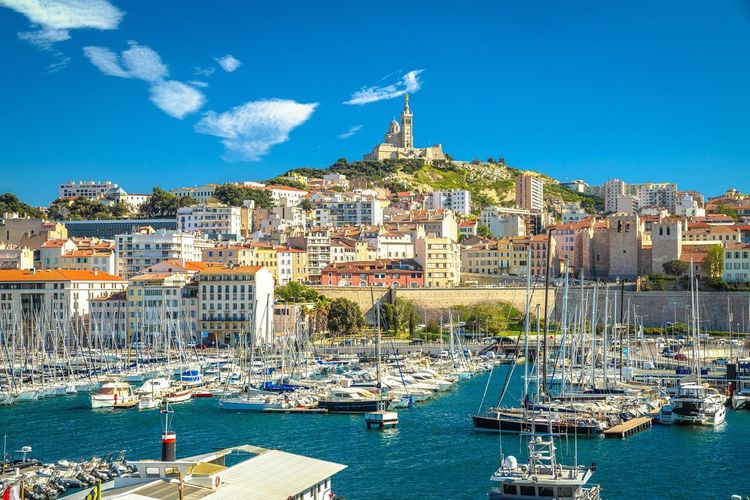
The neighbourhood is a quiet residential area with no major attractions in its immediate vicinity. If you wish to extend your day in Marseille, check out our Ryo guide to visiting Notre-Dame de la Garde, the city's most iconic monument, around twenty minutes away by bus from boulevard Michelet.
The Other Unités d'Habitation: Nantes, Firminy and the Global Legacy
The Marseille unit is not alone. Le Corbusier built a total of five Unités d'Habitation throughout his career, each sharing the same principles — pilotis, interior street, rooftop terrace, Modulor — but with variations tied to local context and the specific constraints of each construction project.
The Unité d'Habitation in Nantes-Rezé (1955) is probably the most visited after Marseille. More compact and set differently within its urban environment, it also features a model apartment and organised visits. It draws a community of enthusiasts keen to compare the two sites and gauge how the concept evolved between the two construction projects.
The Firminy unit (1965–2013, completed after Le Corbusier's death) forms part of the Firminy-Vert cultural complex, along with the Saint-Pierre church and the stadium. This ensemble constitutes the largest Corbusian site in France and is included on the UNESCO list.
The Berlin-Charlottenburg unit (1958), built for the Interbau exhibition, is today a private co-ownership whose visit is difficult to organise for individual visitors.
The Briey-en-Forêt unit (1963) experienced significant management difficulties before being rehabilitated; its history illustrates the social and political challenges of the Corbusian project just as much as its spatial achievements.
Each site has its own personality. Marseille remains the most vibrant and best equipped to welcome visitors, making it the ideal entry point into this architectural world.



FAQ
Is there an admission fee to visit the Cité Radieuse?
Only in part. The entrance hall and the interior street are freely accessible during business opening hours. The model apartment requires a ticket for a guided tour (around €9 per adult), and the MaMo charges an entry fee of between €7 and €9.
Can you visit the Cité Radieuse without a guide?
Yes, partially. The entrance hall, the interior street and the common areas can be explored independently. The model apartment is only accessible on a guided tour. The MaMo can be visited alone with a ticket, and rooftop access is included in that ticket.
How Much Time Should You Allow for the Visit?
Allow 2 to 3 hours for a complete visit including the guided tour of the model apartment, the interior street and the MaMo. If you add lunch at the Restaurant Le Ventre de l'Architecte, plan on a full half-day.
Should You Book the Guided Tour in Advance?
Yes, strongly recommended from March to October and on weekends. Groups are limited in size and available slots can be scarce, especially for French-language tours on Saturday mornings. Booking online through the official website is the most reliable method.
Is the Cité Radieuse Accessible by Public Transport?
Yes, easily. From the Vieux-Port, bus B3 goes directly to the Le Corbusier stop in around 20 minutes. From the Rond-Point du Prado metro station (line 2), several bus routes serve boulevard Michelet in under 10 minutes.
Are There Other Cités Radieuses in France?
Yes. Le Corbusier built five Unités d'Habitation in total. In France, there are those in Nantes-Rezé (1955), Firminy (completed in 2013) and Briey-en-Forêt (1963), in addition to Marseille. Each site offers visits under different conditions and in different formats.
Discovering the Cité Radieuse — and Then What?
This is not a static museum. It is a living, breathing residential building where families cook and children have played on a rooftop terrace for over 70 years. Visiting this place means understanding that architecture can be a political, social and poetic response all at once.
Whether you are passionate about architecture, curious about modernism or simply passing through Marseille, this building deserves a full half-day. To continue exploring the region with the same depth, the Ryo audio guide accompanies you through the historic districts of Marseille, from Le Panier to the Prado, and further south along the coast to a Mediterranean gem like Collioure, at your own pace and with no time constraints.
À lire également