Créé par Camille, le 12 nov. 2026
Votre guide Ryo
Heraklion, Greece
When the Minotaur meets the Venetians
Parcours audioguidé pour visiter Iraklio en 1 jour
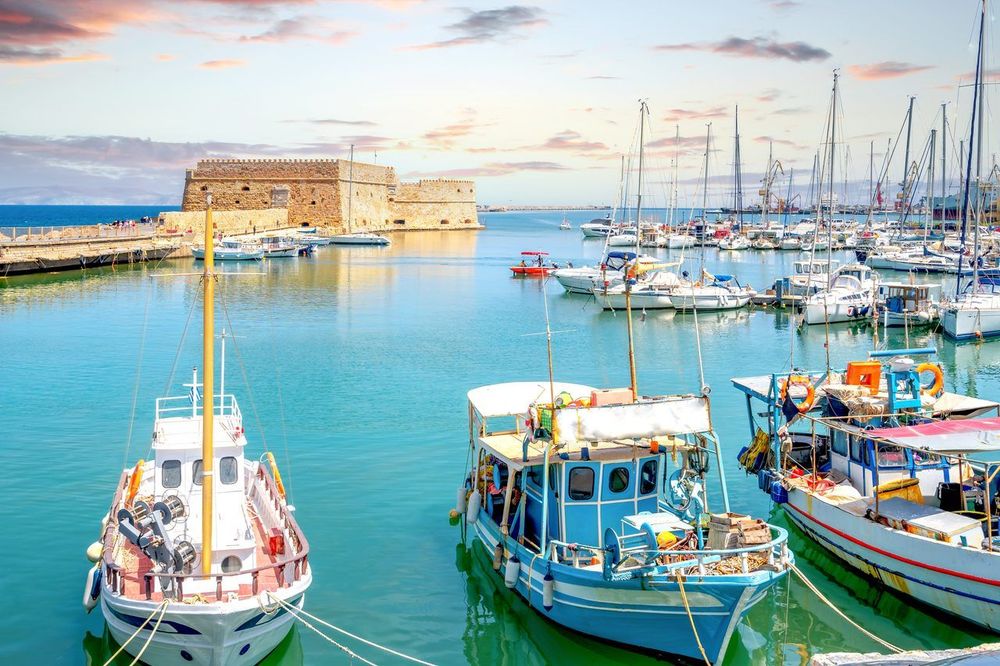
Facing the Mediterranean, Heraklion reveals a dense city shaped by the civilizations that have left their mark on Crete. Behind its present-day bustle, its ramparts, harbor, and monuments tell a story of conquests, reconstructions, and intertwined influences. As you explore it, you discover a singular atmosphere where mythology, Venetian heritage, and Cretan life echo one another at every turn.
Quand partir à Iraklio ?
Jan.
14°
8
Feb.
14°
7
March
16°
6
April
18°
4
May
22°
3
June
26°
1
July
29°
0
Aug.
29°
0
Sept.
27°
1
Oct.
23°
3
Nov.
19°
5
Dec.
16°
7
Heraklion enjoys a Mediterranean climate, with mild winters usually ranging from 10 to 16 degrees Celsius, and long, hot, dry summers where temperatures generally sit between 28 and 34 degrees, although heatwaves can push them even higher. The most pleasant times to visit are typically from April to June, and again from September to October, when the weather stays warm without the intense heat of midsummer. These months offer ideal conditions for exploring archaeological sites, enjoying the beaches, and experiencing the atmosphere of the city without the peak-season crowds.
Départ conseillé
Our tours are designed as loops, so you can easily begin wherever is most convenient for you, with the guidance adapting automatically along the way. If you’re nearby, though, we recommend starting at Eleftherias Square, an ideal point from which to begin exploring the city.
Parking à proximité
Parking Heraklion Port, Leof. Nearchou, Iraklio 712 02
Parking in central Heraklion can quickly become difficult, especially during the high season. The easiest option is usually the car park near Heraklion Port, which is easy to access, inexpensive, and only a short walk from the city centre. If you’re looking for free parking, you can sometimes find spaces in streets farther from the centre, although availability is limited. Parking rules are organised by colour: blue lines indicate paid parking with time limits, white lines are free, and yellow lines mean parking is strictly prohibited. It’s worth checking the signs carefully to avoid fines.
À savoir
While visiting Heraklion, it’s worth keeping a few local customs in mind: dress respectfully when entering churches, stay polite in shops and restaurants, and treat historical sites with care. Driving also requires attention, especially in the city centre and on narrow roads. Tipping isn’t mandatory, but leaving around 5 to 10 percent in restaurants, or simply rounding up the bill, is always appreciated. And above all, settle into the local rhythm — hot summer days, late meals, and a relaxed pace of life are all part of the Cretan experience.
Découvrez 19 lieux d'intérêt pour visiter Iraklio







What to see in Iraklio on your 1h50 tour?
This 4.2 km loop takes about 1 hour 50 minutes and links 18 stops across Heraklion. From Eleftherias Square it heads down Dedalou Street to Lions Square, passing the Venetian Loggia and the Church of Saint Titus, then reaches the Old Harbour, its arsenals and Koules Fortress. It climbs back toward Agios Minas Cathedral and up onto the ramparts, ending at the tomb of Kazantzakis. With the Ryo app in your ears, every stone blends Venice, the Ottoman Empire and Cretan mythology.
Information checked in November 2026 and subject to change.
1 - Eleftherias Square and the statue of the Unknown Soldier
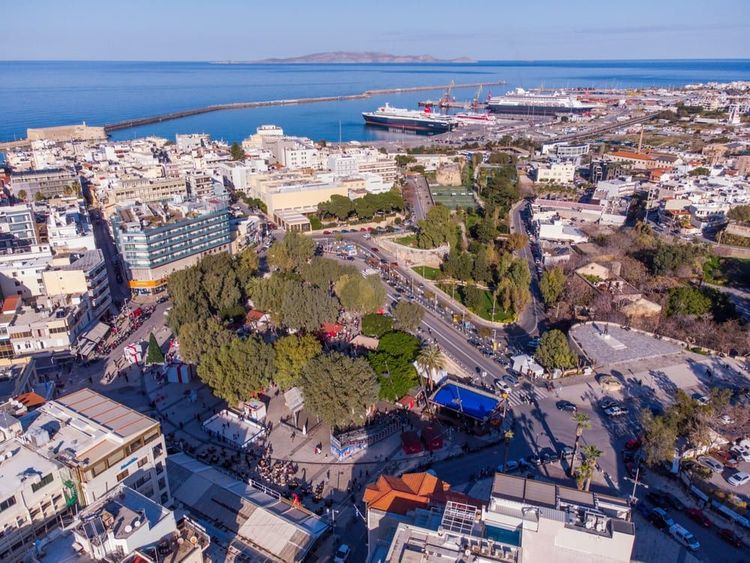
Its name translates as Liberty Square. Under Venetian rule this ground served military drills, known then as Campo Marzio. It once connected to the Saint George Gate, nicknamed the Lazaretto Gate for the contagious-disease hospital it led to outside the walls; only an underground staircase survives today. Close by, a small bastion honors Eleftherios Venizelos, a towering figure of modern Greece whose own name means free. At the center stands a monument to the unknown soldier, erected in 1928.
Free entry
2 - Dedalou Street
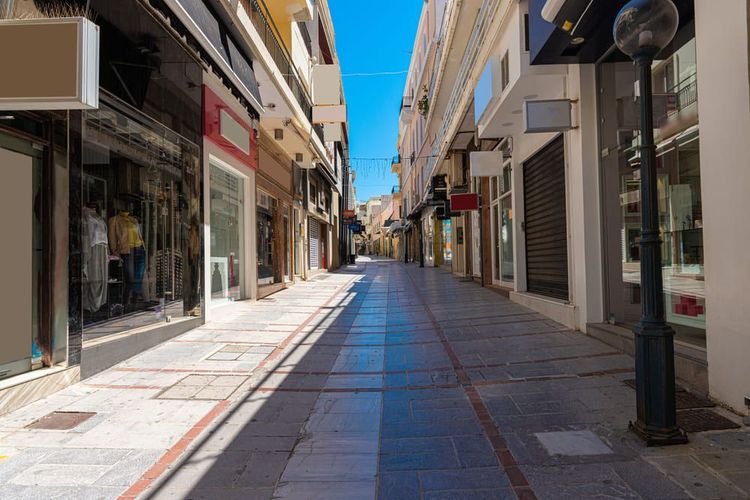
This pedestrian shopping street actually follows a very old route, tracing back to the city's earliest settlement. Its name honors Daedalus, the brilliant inventor who built King Minos's Labyrinth to hold the Minotaur, that fearsome half-man, half-bull creature. Minos regularly sent young Athenians there to be sacrificed, until Theseus, following Ariadne's thread, managed to walk out alive. Daedalus, for all his genius, would unwittingly be tied to the tragic fate that later befell his own son, Icarus.
Free entry
3 - Lions Square and the Morosini Fountain
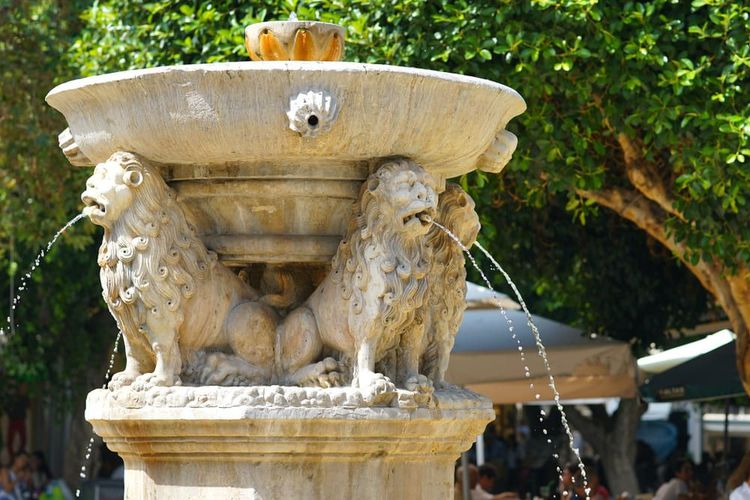
This buzzing heart of Heraklion once served, under Arab control, as the region's biggest marketplace for enslaved people, later becoming the governor's residence and then a grain-trading hub. The fountain lending it its name went up in 1628 under Francesco Morosini, future doge of Venice, to carry fresh water here from the springs of Archanes. Its eight-lobed basin, decorated with dolphins and nymphs, sends water spouting from four lion mouths; a statue of Poseidon once crowned the whole structure.
Free entry
4 - St. Mark’s Basilica
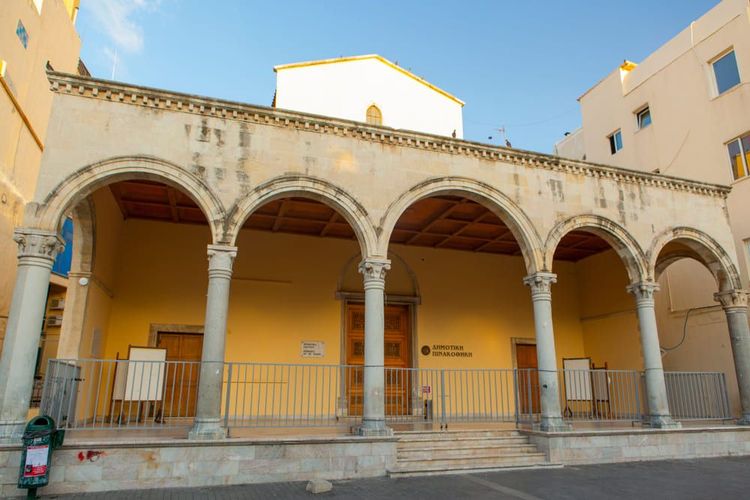
Easy to spot thanks to its five arches, this building went up from 1239 onward, dedicated to Venice's patron saint and asserting Venetian authority over Candia, then capital of the Kingdom of Candia. It doubled as an official venue where the Venetian elite were laid to rest, topped by a tower modeled on Venice's own campanile. After the 1669 Ottoman conquest it became the Defterdar Mosque, its tower swapped for a minaret. Restored from 1956 onward, it now houses Heraklion's municipal art gallery.
Free entry
5 - Venetian Loggia
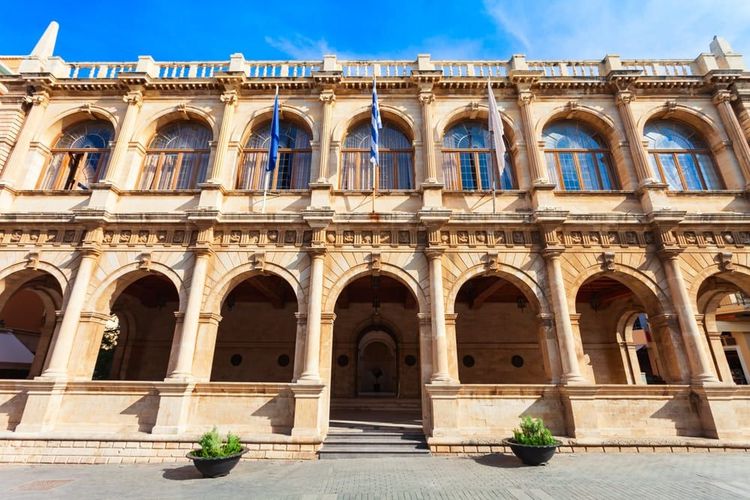
This graceful loggia served, in the Venetian world, as an exclusive gathering spot where the elite discussed politics and trade. Raised around 1628 under Francesco Morosini, it shows off Palladian style: sturdy Doric columns on the ground floor, slimmer Ionic ones above. It lost that role after the Ottoman conquest and spent decades in decline, until a restoration earned the 1987 Europa Nostra award. Today it serves as the town hall.
Free entry
6 - Church of Saint Titus
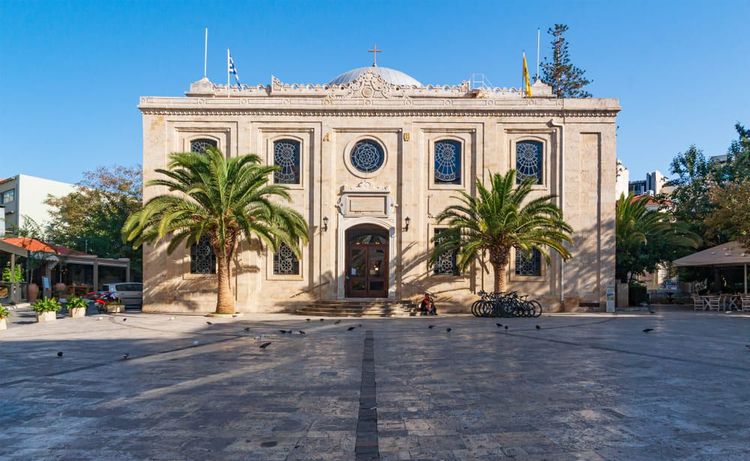
This site dates back to Byzantine times, when the city was called Castro, later renamed Chandax under Arab rule before being retaken in 961. The Venetians raised a Latin church here, turned into a mosque following the 1669 Ottoman conquest, leveled by an earthquake in 1856 and rebuilt in 1869. Only in 1925 did it become a church again, this time Orthodox. Dedicated to Saint Titus, Crete's first bishop, it still holds his skull, brought back from Venice in 1966.
Free entry
7 - 25th of August Street
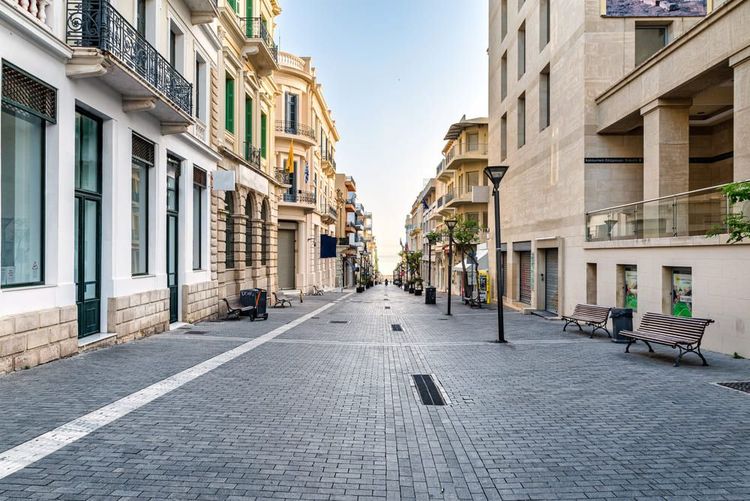
This pedestrian avenue links the Old Harbour to Lions Square, tracing the path of the former Ruga Maistra, the central street of Venetian Candia. Its name commemorates August 25, 1898: amid the transition away from Ottoman control, tension here boiled over into bloodshed, killing hundreds of residents along with several Britons, including the vice-consul. The outcry that followed abroad hastened the final Ottoman withdrawal, opening the path to the island's autonomy and its 1913 union with Greece.
Free entry
8 - Man with daisy flower
This mural shows a coastal worker dressed for fishing, harbor stretching out behind him: from antiquity, when the town supplied the port of Knossos, right through Venetian-era trade, the waterfront has shaped Heraklion's identity. Cradled in his hands is a plain daisy, a flower that simply blankets the island's fields come spring rather than any specifically Cretan emblem. He might be about to pull its petals one by one, the familiar game for testing whether love is returned.
Free entry
9 - Venetian Arsenals
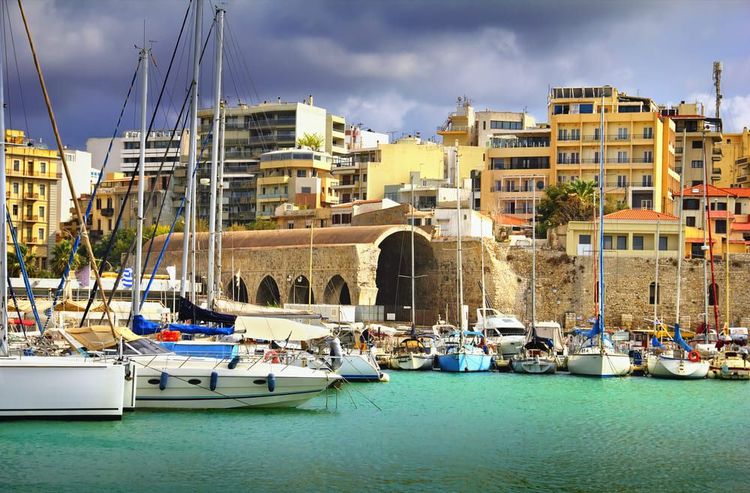
These huge stone-vaulted arches, also called the Neoria, were used to build, repair and shelter Venetian galleys. Raised in stages from the 15th to the 17th century, the arsenals numbered up to nineteen bays at their height; only five or six remain today, much of the rest lost when the coastal road was laid in the 20th century. The harbor also shipped out vast quantities of Malvasia di Candia, a prized sweet golden wine, bound for Venice, France and England.
10 - Koules Fortress
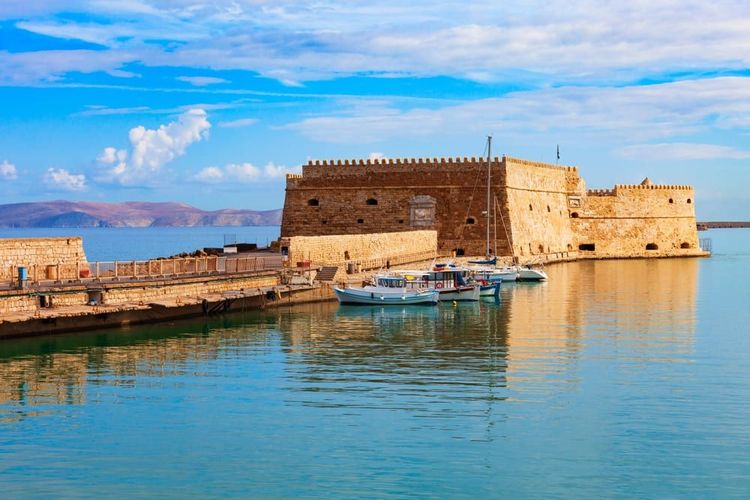
Standing guard at the harbor entrance, this fortress was raised by the Venetians around 1530 to oversee every ship entering the city. The rise of artillery called for low, thick walls instead of tall medieval ramparts. Inside, 26 rooms held food and ammunition, while officers lived upstairs alongside an oven and a mill. Along the jetty you can still make out the winged Lion of Saint Mark. Its current name, simply meaning the tower, took hold under Ottoman rule.
Paid entry
11 - Monastery of Saints Peter and Paul
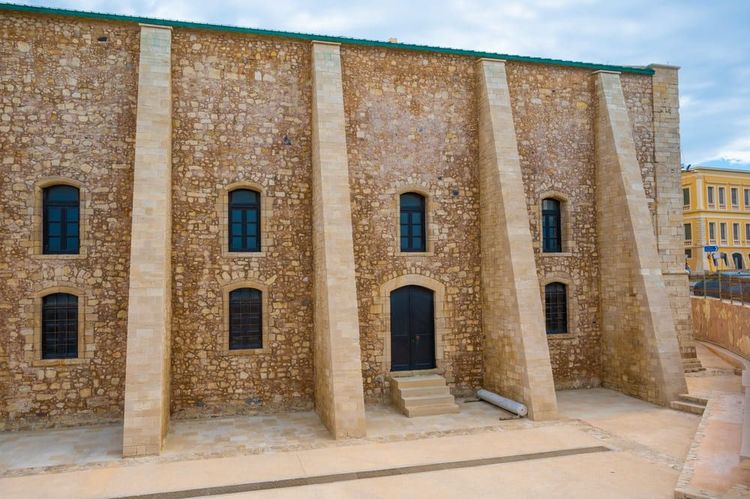
Built by the Dominicans soon after the Venetians settled in Crete, this Gothic church ranked among the city's largest Catholic places of worship and served as a burial ground for the Venetian elite. A severe earthquake damaged it in 1508, and the 1669 Ottoman conquest turned it into a mosque, fitted with a minaret. Excavations have since uncovered older Byzantine graves beneath its foundations, and deeper still, traces of an Arab-era residential quarter: centuries of history stacked beneath your feet.
Free entry
12 - Idomeneas Fountain
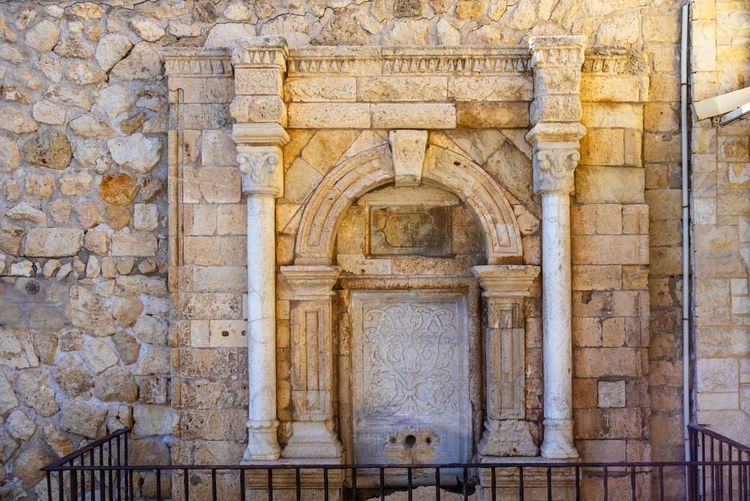
This modest fountain, easy to walk past, dates from the late 17th century, when the city already sat under Ottoman rule. Originally placed in front of the home of physician Idomeneas Markatatis, it was later relocated behind the Historical Museum of Crete. Two columns flank its carved marble panel with its delicate capitals. The neighboring museum traces the island's past from antiquity onward and holds two genuine El Greco paintings, plus a room devoted to Nikos Kazantzakis, displaying his belongings and writing desk.
Free entry
13 - Agios Minas Cathedral
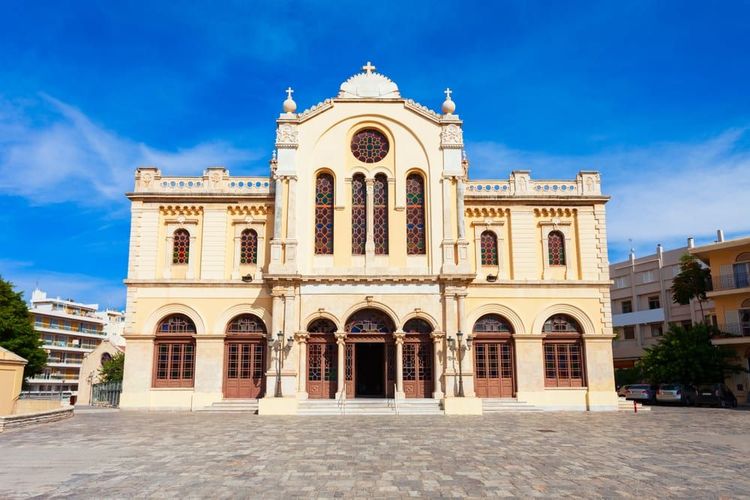
Towering over the center with its dome and twin bell towers, this cathedral stands as one of Crete's great religious landmarks. Building began in 1862 to assert an Orthodox presence inside a city still under Ottoman rule, dragging on past thirty years through repeated Cretan uprisings until it opened in 1895. Right beside it, the small 1735 church long served as home to the Orthodox community, tied to the 1826 legend of Saint Minas appearing on horseback to drive off an attack.
Free entry
14 - Gastronomy in Heraklion
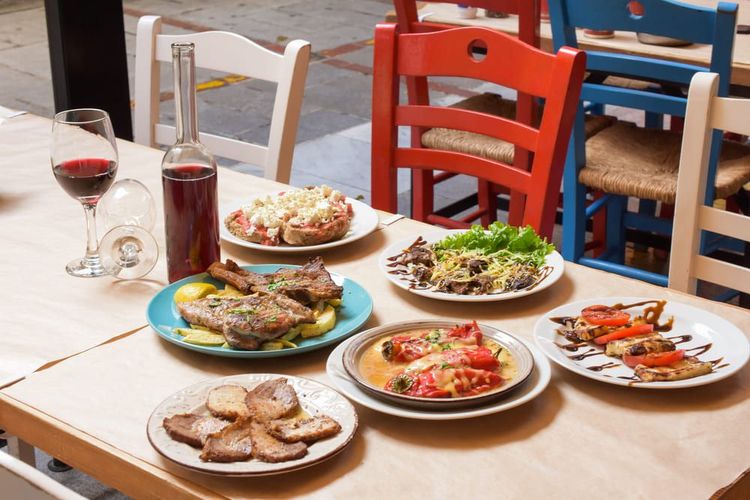
In Heraklion, life unfolds mostly on terraces, and dinner tends to start late, often past nine in the evening. Local cooking keeps things simple: olive oil, vegetables and seasonal herbs. Try dakos, a barley rusk crowned with ripe tomato, crumbled cheese and a trickle of olive oil, or a hearty moussaka layered with eggplant. Dishes land in the middle of the table for everyone to share, mezze-style. Don't skip bougatsa, a flaky pastry sweet or savory. A small glass of raki rounds off the meal.
15 - Saint Andreas Chapel
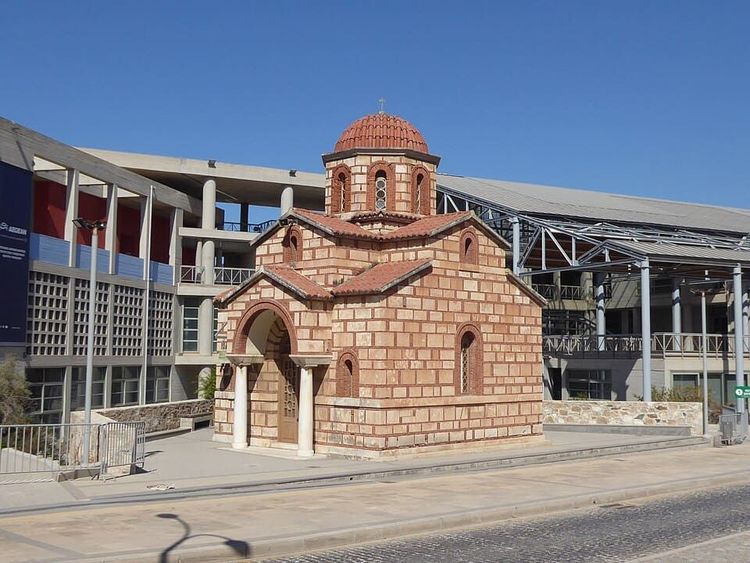
Squeezed between the modern Cultural Centre and the road, this tiny chapel stands out for its plainness: bare stone walls, red roof tiles, a single nave and two small white columns at the entrance. Far removed from the city's grand historic churches, it belongs to everyday Greek life and is used mainly by people living nearby. Inside, religious paintings and icons dedicated to Saint Andrew line the walls; in Orthodox tradition, an icon is never just art, but a genuine aid to prayer.
Free entry
16 - Tomb of Níkos Kazantzakis
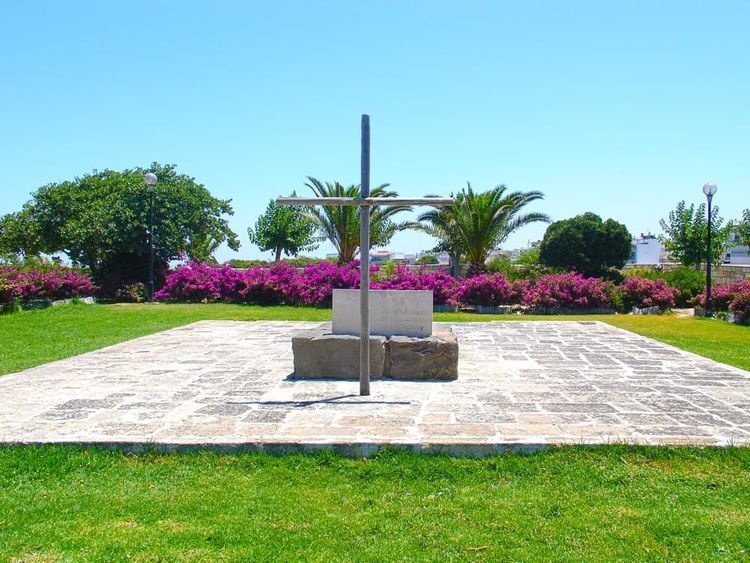
Atop the Martinengo Bastion, the highest point of the Venetian walls, lies the grave of Nikos Kazantzakis, born in Heraklion back in 1883, a time when the island remained under Ottoman control. He studied in Athens, then moved to Paris to attend philosopher Henri Bergson's lectures, before traveling across Europe and Asia. A novelist and poet, he constantly questioned freedom and the meaning of life — his novel Zorba the Greek traveled the globe. His well-known epitaph sums up his outlook: no hope, no fear, only freedom.
Free entry
17 - Cretan Mythology
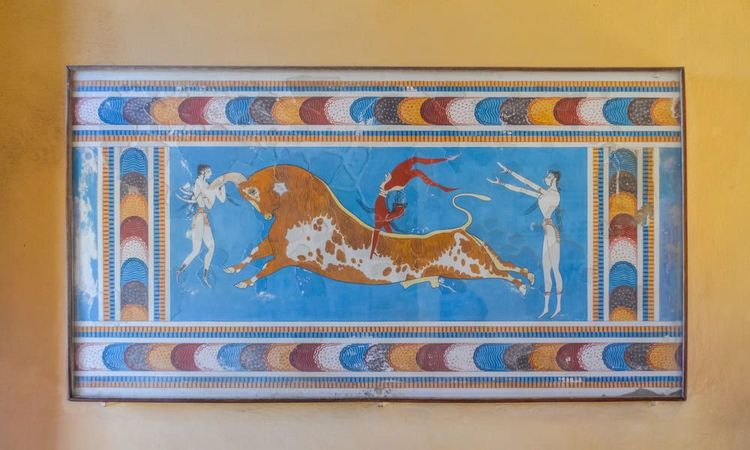
To grasp Cretan mythology you need to look toward the nearby Palace of Knossos: the legendary home of King Minos, son of Zeus and Europa, whom the god carried off after turning himself into a white bull. Once crowned, Minos angered Poseidon, whose revenge drove the king's wife, Pasiphae, to bear the Minotaur. Daedalus then built the Labyrinth to contain it, until Theseus, helped by Ariadne's thread, defeated the beast. These tales echo the genuinely historical Minoan civilization that flourished between 2000 and 1450 BC.
18 - Bembo Fountain and the Ottoman Sebil
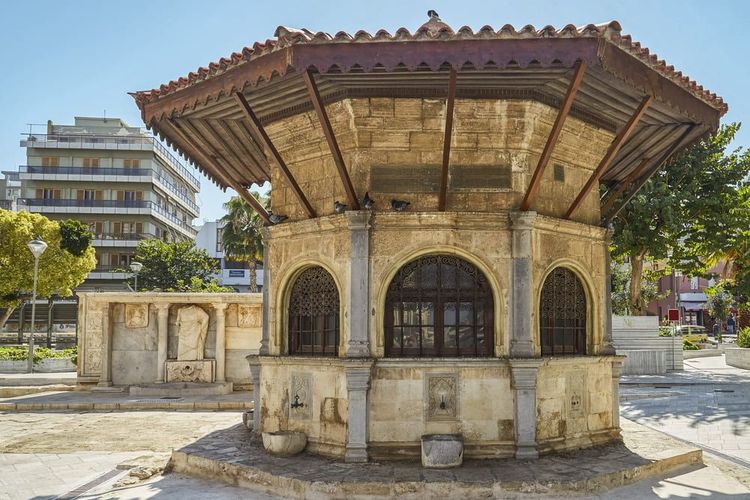
These two neighboring fountains sum up Heraklion's shift, back when it was Candia, from Venice to Ottoman rule at the close of the 1648-1669 siege, among the longest in history. The surrender, signed in September 1669 by Francesco Morosini, let residents leave with their belongings. The Bembo Fountain, a 16th-century Venetian legacy recognizable by its headless statue, was one of the city's earliest piped-water systems. Right beside it, the Ottoman sebil handed out water free of charge, sometimes cooled with snow from Mount Psiloritis.
Free entry
Which neighbourhoods does the tour cross?
In a 4.2 km loop, the route crosses Heraklion's historic centre, from the lively central squares to the Venetian harbour, then up onto the ramparts.
It starts at Eleftherias Square and heads down Dedalou Street, a pedestrian shopping lane, to Lions Square and its Morosini Fountain, the city's beating heart; all around stand St. Mark's Basilica, the Venetian Loggia, now the town hall, and the Church of Saint Titus, which blends Byzantine and Ottoman influences (stops 1 to 6).
The route then reaches the old harbour via 25th of August Street, passes a mural with the port as its backdrop, then the Venetian Arsenals, those great stone arches where ships were built and repaired, before revealing Koules Fortress, stationed at the harbour entrance (stops 7 to 10).
A more inland stretch follows, between the Monastery of Saints Peter and Paul, the modest Idomeneas Fountain and Agios Minas Cathedral (stops 11 to 14). Past the small Saint Andreas Chapel, you climb onto the ramparts up to the Martinengo Bastion, where Níkos Kazantzákis is buried (stops 15 and 16). The way back drops down to the Bembo Fountain and its Ottoman sebil, side by side not far from the starting point (stops 17 and 18).
How much does it cost to visit Iraklio?
Of the route's 18 stops, only one charges admission: Koules Fortress, whose fee isn't specified. Fourteen others can be visited freely, among squares, streets, churches and fountains.
That leaves the Venetian Arsenals, whose great stone arches you walk up to, and two themed stops, devoted to Cretan food and mythology, which are told along the way rather than visited.
Information checked in November 2026 and subject to change.
Where to stop for a bite along the tour?
The route devotes a whole stop to local food, near Agios Minas Cathedral (stop 14). For a coffee, Lions Square (stop 3) has terraces that stay busy from morning until late in the evening, and 25th of August Street (stop 7) is lined with cafés and shops down to the port.
In Heraklion, dinner often starts after 9 pm, with dishes shared in the middle of the table: these are the mezze, meant for conversation as much as for eating. Classics include dakos, barley bread topped with tomato, cheese and a touch of olive oil, alongside grilled souvlaki skewers and moussaka, a hearty bake of aubergine and meat.
For breakfast or an afternoon snack, bougatsa, a sweet or savoury filled pastry, is a speciality Heraklion is especially known for. A small glass of raki, a grape spirit, is often offered at the end of the meal as a gesture of hospitality.
What should you know before visiting Iraklio?
Visiting Heraklion calls for knowing a few local customs and picking the right season, between Mediterranean heat and sometimes tricky traffic.
In churches, modest dress is expected, and politeness goes a long way in shops. Behind the wheel, caution is needed, especially downtown and on narrow lanes. Tipping isn't mandatory, but leaving 5 to 10 percent at a restaurant, or rounding up the bill, is well regarded.
For parking, a colour code applies: blue lines mean paid, time-limited parking, white lines are free, and yellow lines are strictly forbidden; it's worth checking the signs before leaving a car.
The Mediterranean climate brings mild winters, between 10 and 16°C, and hot, dry summers, between 28 and 34°C; April to June, then September to October, offer milder temperatures and smaller crowds at the sites.
What to see around Iraklio?
Heraklion is also a gateway to Crete's Minoan past.
Five kilometres south-east of the centre, the archaeological site of the Palace of Knossos, often presented as the setting for the myth of the Minotaur and Daedalus, makes a natural extension to a day spent in the old town.
Le plein d'inspirations
Explorez le monde en totale liberté, à pied au cœur des villes ou au fil des routes. Nos guides audios transforment chaque destination en une découverte culturelle immersive et unique.
FAQ for visiting Iraklio
How can I plan two days in Iraklio between the old town and Knossos?
Spend the first day on the historic centre, which is walkable: the Venetian harbour and Koules fortress in the morning, then Eleftherias Square, the loggia, the ramparts and the churches (Agios Titos, Agios Minas), followed by the archaeological museum and the 1866 Street market. Keep the second day for Knossos, about 5 km away, and arrive at opening time, 8am, to avoid the heat and the cruise-ship groups.
Seeing the archaeological museum before the palace helps make sense of the site, since the original frescoes are displayed there. An extra activity, such as the aquarium or a beach, can round out the plan.
Find the full day-by-day itinerary in our article "Visiting Iraklio in 2 days".
Vos commentaires, idées et suggestions
Aucun avis pour le moment