

Walk
When the Minotaur meets the Venetians
Iraklio, Grèce
Walk
When the Minotaur meets the Venetians
Iraklio, Grèce
Distance
4.2 kmDurée
1h50Audios
19Parcours
Loop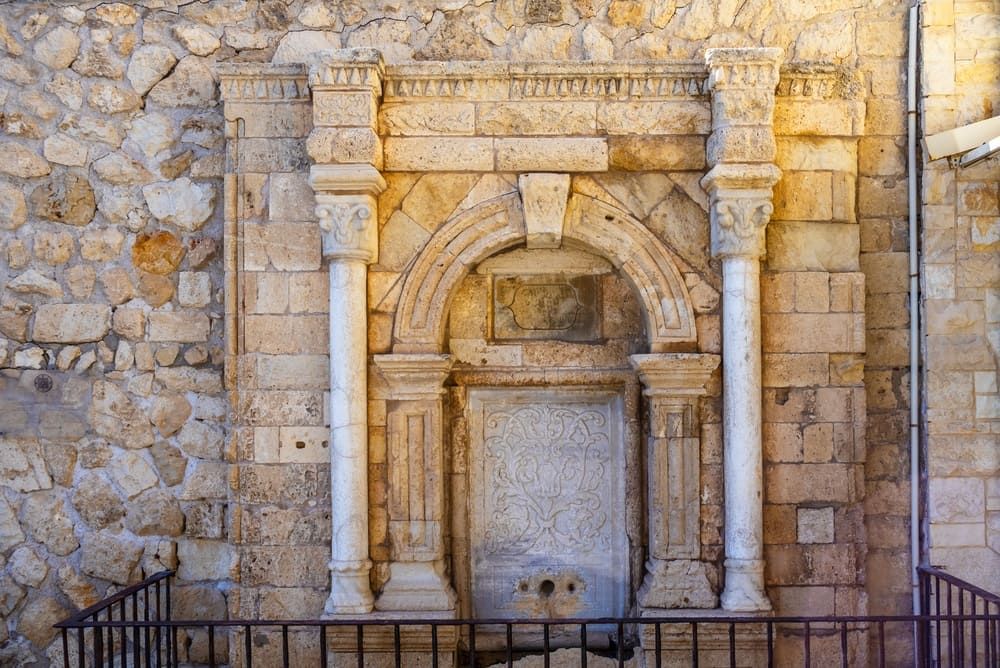
Shutterstock
Just ahead on your right, you’ll find the discreet Idomeneas Fountain, a small monument that many people pass without noticing — yet it reveals another side of Heraklion’s history. Unlike the city’s grand Venetian fountains, this one dates from the late 17th century, when Heraklion was already under Ottoman rule. Originally, it stood in front of the home of a doctor named Idomeneas Markatatis, from whom it takes its name. It was later moved here, behind the Historical Museum of Crete, which explains its somewhat hidden location. Take a closer look. The fountain is framed by two columns surrounding a carved marble panel. Notice the capitals decorated with delicate plant motifs. Water once flowed from an opening near the base into a small basin below. The structure is modest, but elegant in its simplicity. What makes this fountain interesting is not its size, but what it represents. It offers a glimpse into everyday life in Heraklion and serves as a reminder that the city’s story extends far beyond its Venetian past. The Ottoman period also left visible traces throughout the urban landscape. Right behind you stands the Historical Museum of Crete. If you have time, it’s well worth a visit and complements this walk perfectly. The museum focuses on the island’s history after antiquity, covering the Byzantine, Venetian, Ottoman, and modern eras. Among its highlights are two original works by El Greco — something quite rare in Crete — as well as an important collection dedicated to Nikos Kazantzakis, including personal belongings and his recreated workspace. Born in Heraklion, Kazantzakis became one of Greece’s most celebrated 20th-century writers, best known for Zorba the Greek and for works deeply shaped by questions of freedom, faith, and the meaning of life.
Aucun avis pour le moment