

Walk
When the Minotaur meets the Venetians
Iraklio, Grèce
Walk
When the Minotaur meets the Venetians
Iraklio, Grèce
Distance
4.2 kmDurée
1h50Audios
19Parcours
Loop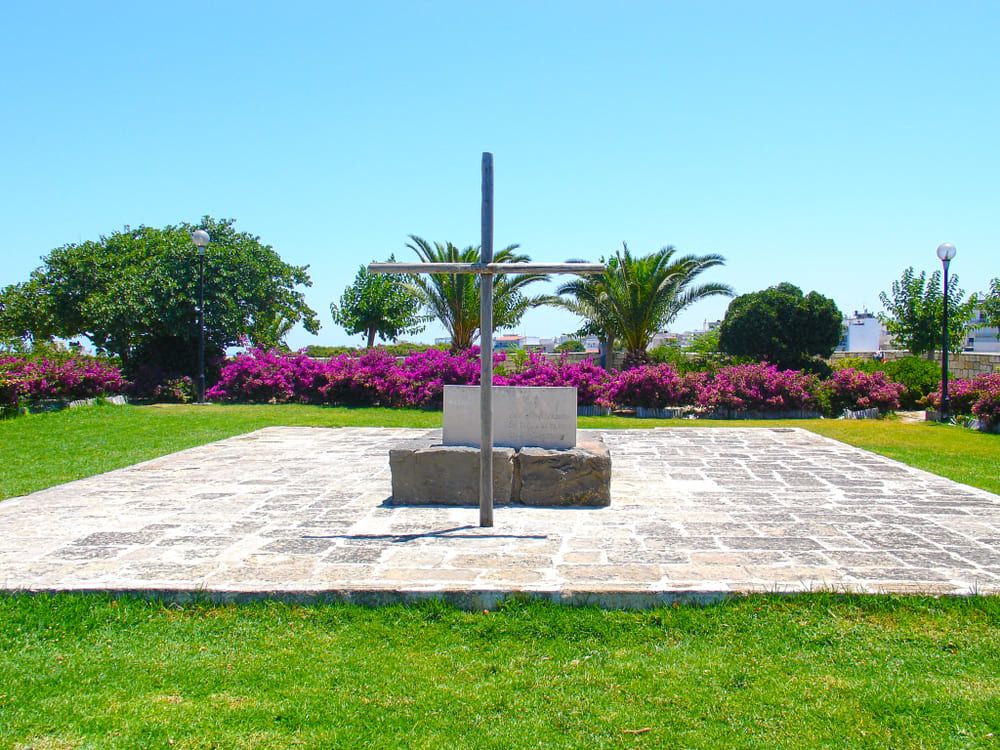
Shutterstock
Climb the last few steps on your right to reach the viewpoint at the top of the Martinengo Bastion, then take a moment to look around. You are standing at one of the highest points of Heraklion’s Venetian walls, with sweeping views across the city and out toward the sea. At the centre of the bastion lies the tomb of Nikos Kazantzakis, one of modern Greece’s greatest writers. Born here in Heraklion in 1883, while Crete was still under Ottoman rule, Kazantzakis grew up in an atmosphere shaped by tension and struggles for freedom. Those early experiences would deeply influence the way he saw the world. He later left Crete to study in Athens and then in Paris, where he attended the lectures of the philosopher Henri Bergson. But Kazantzakis was never the kind of writer to remain in one place. He travelled constantly — across Europe, Russia, the Middle East, and as far as China and Japan — and these journeys profoundly shaped his work. He wrote relentlessly: novels, essays, travel accounts, and poetry. Among his most famous works is Zorba the Greek, which brought him international recognition. For Kazantzakis, literature was never mere entertainment. His writing constantly explored freedom, faith, doubt, suffering, and the search for meaning in human existence. His influence extends far beyond Greece, and today he remains one of the most widely translated Greek authors in the world. The inscription on his tomb captures the essence of his philosophy in just a few words: “I hope for nothing. I fear nothing. I am free.” It was Kazantzakis himself who chose to be buried here on the city walls, overlooking Heraklion. So take a moment to enjoy the view — in the company of the writer’s enduring spirit.
Aucun avis pour le moment