
Walk
When the Minotaur meets the Venetians
Iraklio, Grèce
Walk
When the Minotaur meets the Venetians
Iraklio, Grèce
Distance
4.2 kmDurée
1h50Audios
19Parcours
Loop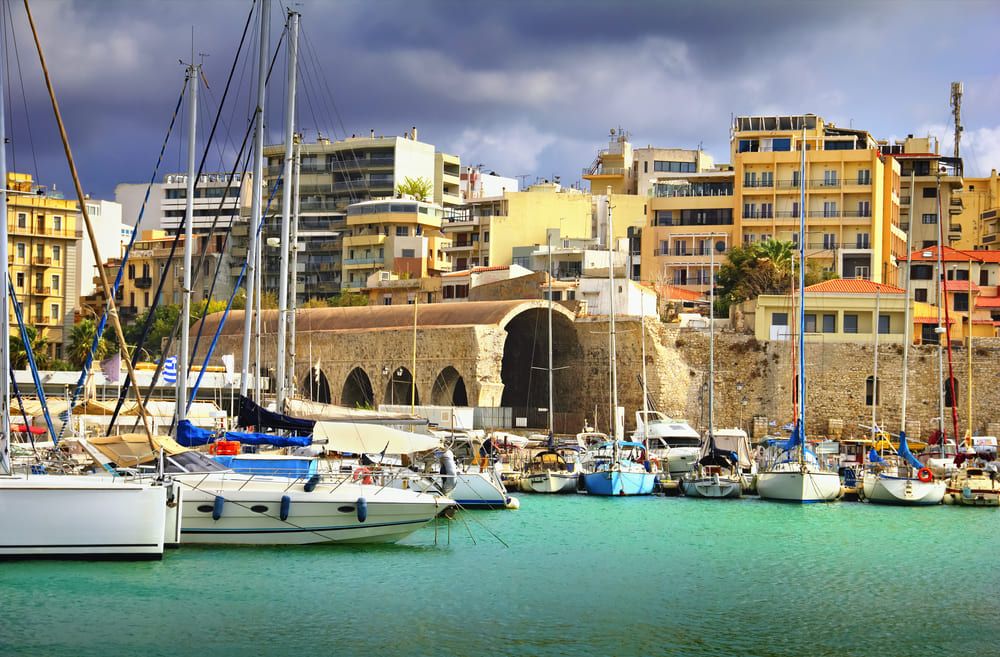
Shutterstock
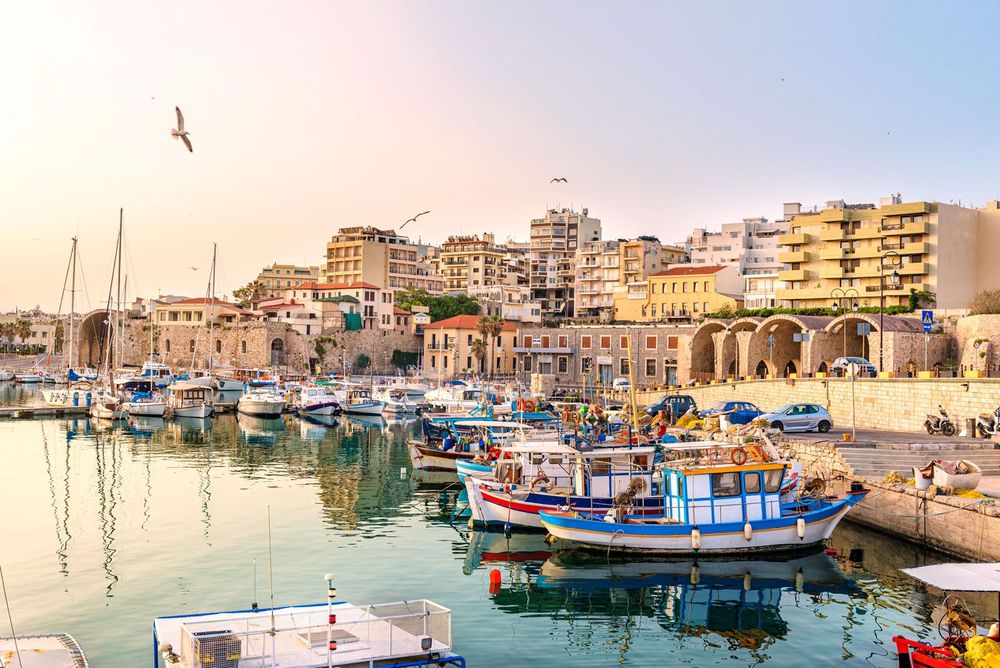
Clearly visible from the sea, these Venetian arsenals — also known as the Neoria — welcome you beneath their enormous stone arches. They date back to the time when Heraklion, then called Candia, was one of the key strategic strongholds of Venice’s maritime empire. Here, everything revolved around the sea. These vast vaulted halls were used to build, repair, and maintain ships. Venetian galleys could be sheltered here, prepared for voyage, and quickly launched back into the water when needed. The arsenals were constructed gradually between the 15th and 17th centuries, and at their peak there were nineteen of them, grouped into several complexes. That gives you an idea of just how important the harbour once was: Heraklion functioned as a major naval base at the centre of Venice’s commercial routes. Today, only five or six survive in partial form. Much of the complex disappeared during the construction of the coastal road in the early 20th century, but the remaining structures are still enough to suggest the remarkable scale of the site. Take a closer look at the vaults — they are wide and deep, designed to accommodate entire ships. Nearby, there were also logistical facilities such as warehouses and large water cisterns, essential for keeping the port running smoothly. During the Venetian period, Heraklion was not only a naval centre but also a major wine-exporting port. The most famous product was Malvasia di Candia, a sweet golden wine with rich aromas, celebrated throughout Europe. Every year, thousands of barrels left this harbour bound for Venice, France, England, and even Constantinople. The trade became so significant that it transformed much of Crete’s agriculture, with large areas devoted to vineyards for export alongside the island’s famous olive groves.
Aucun avis pour le moment