
Walk
When the Minotaur meets the Venetians
Iraklio, Grèce
Walk
When the Minotaur meets the Venetians
Iraklio, Grèce
Distance
4.2 kmDurée
1h50Audios
19Parcours
Loop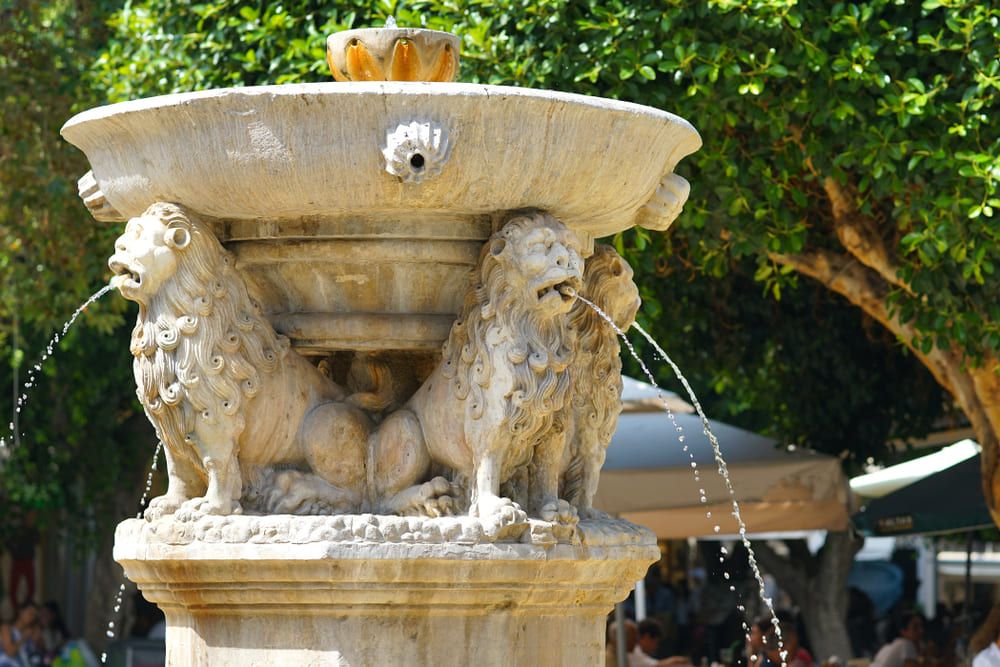
Shutterstock
This is where the heart of Heraklion beats the loudest: Lions Square, named after the famous fountain standing at its centre. From early morning until late at night, locals and visitors constantly pass through here. People meet for coffee on the terraces, stop to watch the bustle of the city, or simply cross the square on their way from one street to another. Yet this has been a place of activity and power for centuries. Under Arab rule, it became the largest slave market in the eastern Mediterranean. Later, during the Byzantine period, the governor’s residence stood here. Then, under Venetian control, the square developed into one of the city’s main commercial hubs, especially for the grain trade. Right in the middle stands the Morosini Fountain, one of Heraklion’s most recognisable landmarks. It was built in 1628 under the supervision of Francesco Morosini, an important Venetian official at the time. The purpose was highly practical: for the first time, the city would finally have a reliable supply of fresh drinking water. Until then, Heraklion had depended entirely on wells and rainwater cisterns. To make this possible, the Venetians created an impressive hydraulic system. Water was brought from the springs of Archanes, around fifteen kilometres away, through an aqueduct. It then flowed into a reservoir beneath the fountain before naturally emerging through the mouths of the lions, powered solely by water pressure created by the difference in elevation. For Heraklion, it was a remarkable achievement. Take a closer look at the structure itself. The basin is shaped like an eight-lobed clover, allowing several people to collect water at the same time. Around it, you’ll notice decorations inspired by the sea — dolphins, nymphs, and mythological figures carved into the stone. The four lions at the centre eventually became the symbol of the square, though at the time they also represented the power of Venice. Originally, the fountain was even more spectacular, crowned by a statue of Poseidon that has since disappeared. And Francesco Morosini himself was far more than the man behind this fountain. He was one of Venice’s leading military commanders during the long wars against the Ottoman Empire, and after an especially influential career, he would eventually become the head of the Venetian Republic near the end of his life.
Aucun avis pour le moment