

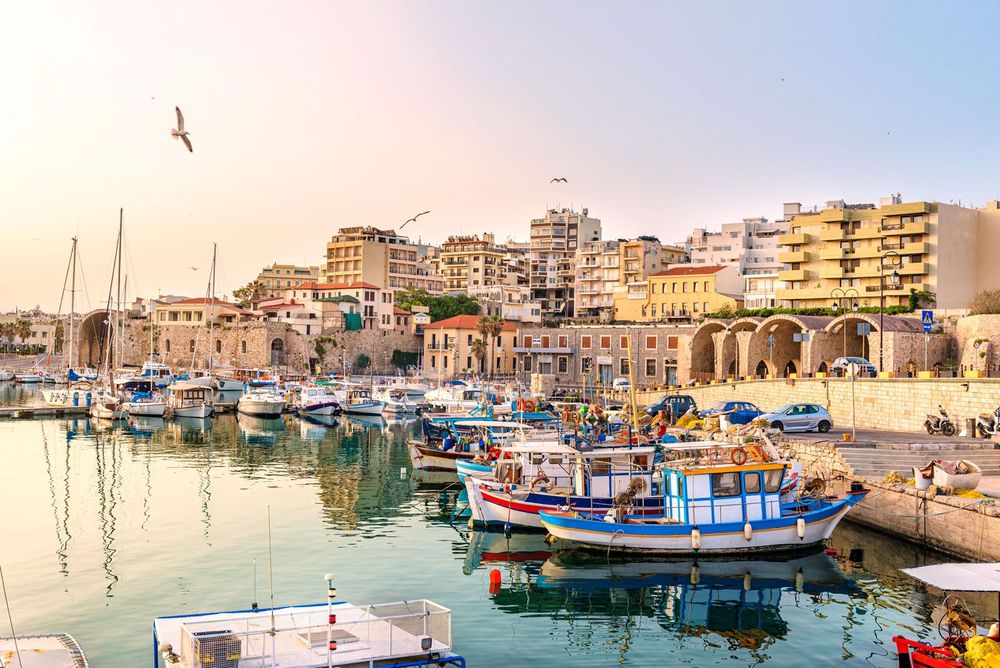
Walk
When the Minotaur meets the Venetians
Iraklio, Grèce
Walk
When the Minotaur meets the Venetians
Iraklio, Grèce
Distance
4.2 kmDurée
1h50Audios
19Parcours
Loop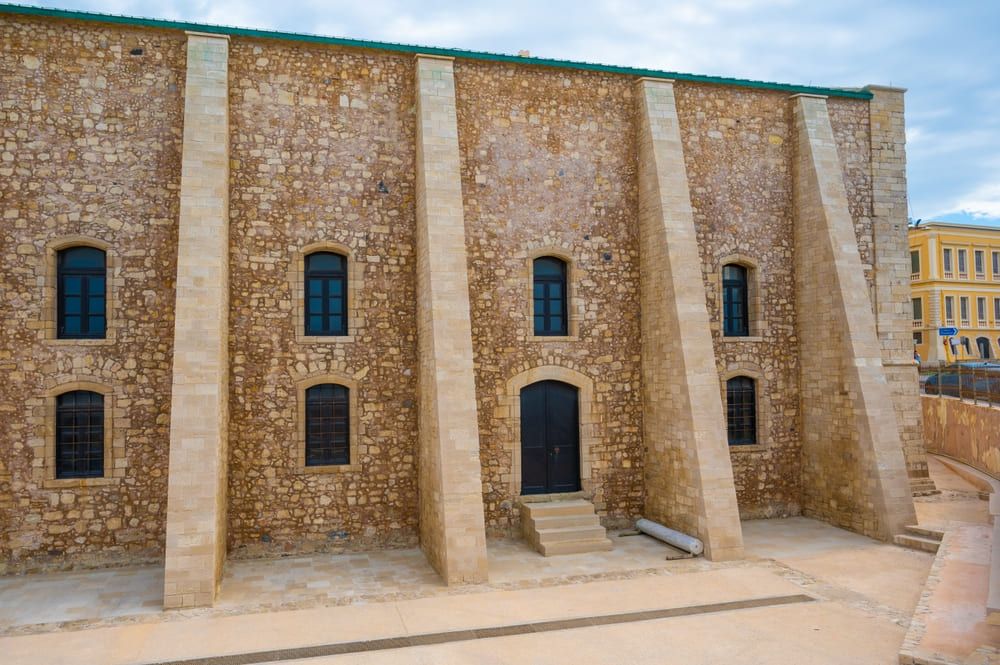
Shutterstock
On your left stands the Monastery of Saints Peter and Paul, built by the Dominicans shortly after the Venetians settled in Crete. At the time, this Gothic church was one of the clearest symbols of Latin power on the island. With its large nave and elongated proportions, it ranked among the biggest Catholic churches in the city. But it was more than a place of worship — it was also a prestigious site where prominent members of Venetian society were buried. Take a moment to look closely at the structure. The building you see today has been shaped by centuries of alterations. Openings were added, chapels were built, and sections of the church were modified over time. The visible remains around it belong both to the former Dominican monastery and its adjoining buildings. The site’s history was also marked by a devastating earthquake in 1508, which caused severe damage to the church. Then, following the Ottoman conquest in 1669, the building was converted into a mosque, complete with the addition of a minaret. But the layers of history here go even deeper. Archaeological excavations around the church uncovered older Byzantine tombs, and beneath those, traces of a residential district dating back to the Arab period were discovered as well. In other words, you are quite literally walking across centuries of history in this very spot.
Aucun avis pour le moment