© Shutterstock
 Votre guide Ryo
Visiting Heraklion in 2 Days: Complete Itinerary Between the Venetian Old Town and the Palace of Knossos (2026)
Under a sun already blazing at eight in the morning, Heraklion's Venetian harbor smells of strong coffee and grilled fish before the first tourist buses reach Knossos. It is in this contrast, between the 16th-century ramparts and the myth of the Minotaur buried five kilometers away, that the whole question plays out: how do you visit Heraklion in 2 days without feeling rushed? The historic center can be covered on foot in a single morning, but the city hides enough museums, churches and shopping lanes to fill two full days. To get your bearings from the moment you arrive, the Ryo audio-guided tour of Heraklion links the main landmarks of the center, from the harbor to the cathedral, with no paper map to unfold.
In two days, you can climb the Venetian ramparts just as easily as stop in front of the Phaistos Disc at the Archaeological Museum, get lost among the stalls of the 1866 Street market, then head off to Knossos, where archaeologists are still debating the true function of King Minos's palace. Between visits, Heraklion offers an aquarium set up on a former American military base, sandy beaches twenty minutes from the center and tavernas where raki flows more easily than water. This guide details, day by day, how to organize these 48 hours, with 2026 prices for the major sites and alternatives for those with a little more time.
Heraklion in 2 Days: The Ideal Format to Discover the Island
The question keeps coming up: how many days do you need to visit Heraklion? Two full days are enough to cover the essentials, provided you accept walking a lot on the first day and renting a car, taking the bus or booking an excursion for the second. The administrative capital of Crete has more museums and Venetian monuments than any other town on the island, while Knossos, barely 5 km to the south, is the most requested excursion in all of Crete.
How much time do you need to visit Heraklion in detail? Allow half a day for the harbor, the fortress and the churches of the center, another half day for the museums and the market, then a full day for Knossos, Archanes and a complementary activity (aquarium, beach or boat trip). This breakdown structures the itinerary proposed here.
If your flight or ferry only arrives late in the morning, tighten the day 1 program to the afternoon and evening, then devote the whole of day 2 to Knossos. And if you leave wanting to extend your stay, you will find below some ideas for visiting Heraklion in 3 days, or even a full week.
Day 1: The Venetian Old Town, the Fortress and the Churches of Heraklion
The first day focuses entirely on the historic center, which fits within a walking radius of about twenty minutes. The natural sequence starts at the harbor, climbs toward the central squares, then ends at the three most visited religious buildings in the city.
A timing that works well in summer: harbor and Koules from 9:00 to 10:30, Lions Square and the loggia until 11:30, the Archaeological Museum in late morning when the heat rises, lunch near the market, churches and ramparts in the late afternoon, when the stone turns ochre.
The Venetian Harbor and the Koules Fortress
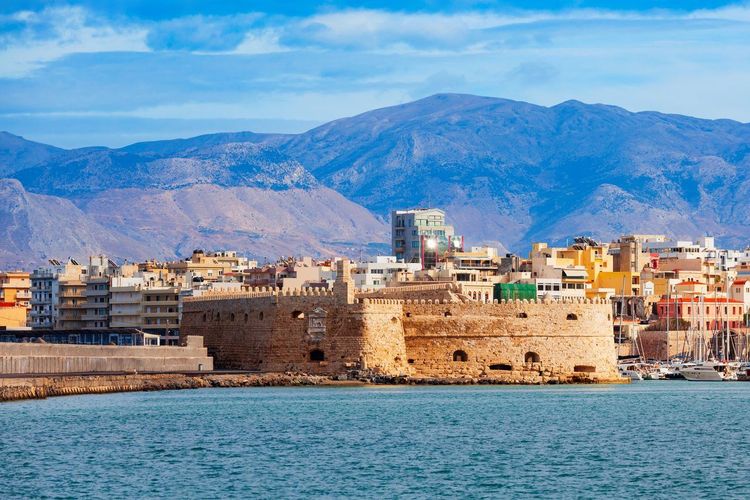
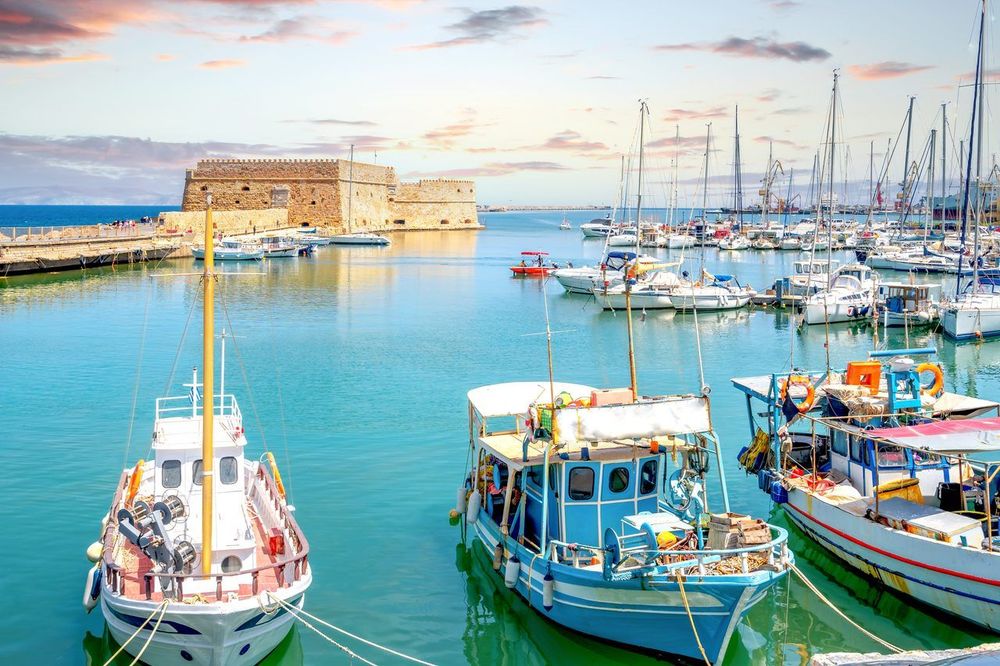
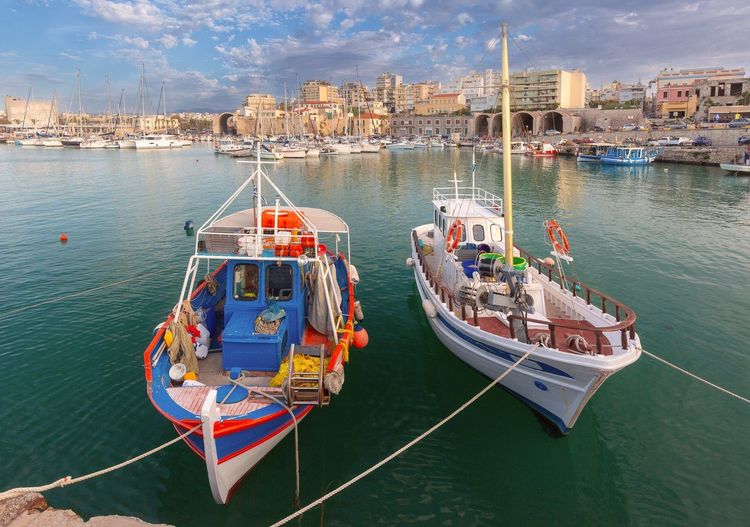
The Venetian harbor of Heraklion eases you into the day: fishing boats still share space with café terraces, and the jetty offers the best overview of the vaulted Venetian arsenals lining the quay, where the galleys of the Serenissima were built and repaired.
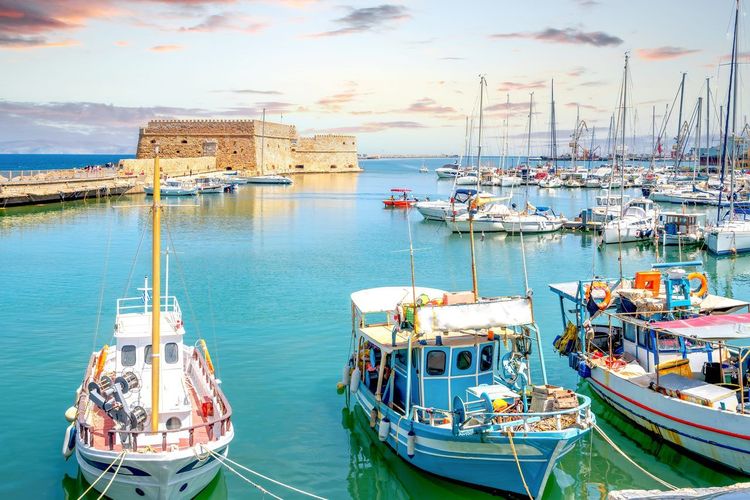
At the harbor entrance stands the Koules fortress, built by the Venetians in the 16th century to protect the city from Ottoman raids. Its rooftop terrace, reached by an interior ramp, overlooks both the bay and the rooftops of the old town. Allow 45 minutes for the visit, a little more if you linger in the vaulted rooms that once served as storehouses and barracks.
Come early if possible: the fortress's limestone heats up quickly under the Cretan sun, and the low morning light makes for better photos of the Lion of St. Mark carved on the seaward facade. A simple tip, often ignored by hurried visitors.
Eleftherias Square, the Venetian Loggia and the Ramparts
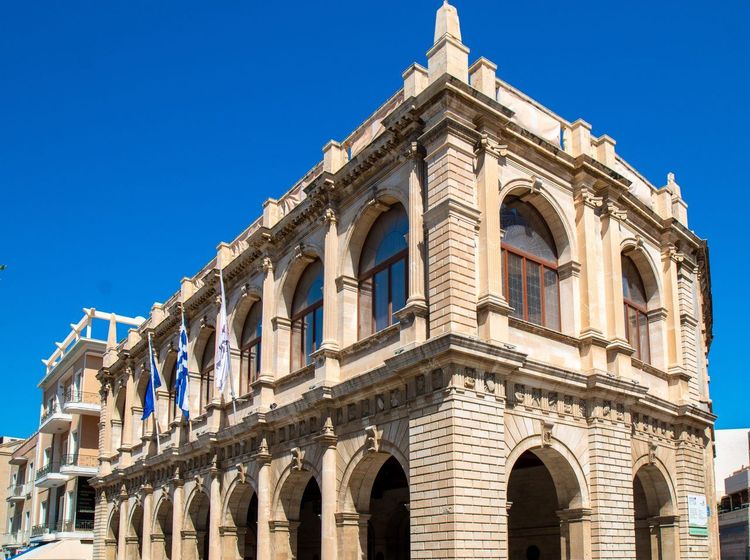
Heading up from the harbor along 25 Avgoustou Street, you emerge onto Eleftherias Square, a vast shaded esplanade where the locals still come for coffee at the end of the day. It is a good landmark for reorienting yourself before diving into the maze of the old town.
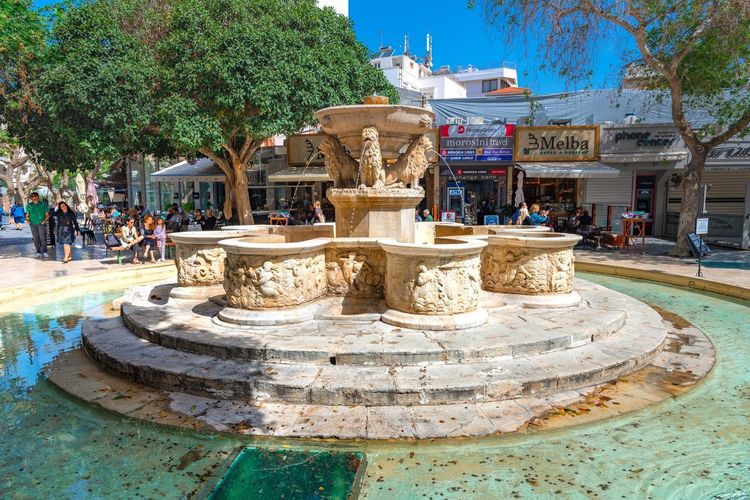
A few steps away, the Venetian loggia surprises with its elegance: this 17th-century arcaded building, rebuilt identically after the Second World War, served as a meeting place for the Venetian nobility and now houses the town hall. Right opposite, the Morosini Fountain and its four sculpted lions, inaugurated in 1628, marks the entrance to the pedestrian Dedalou Street.
Heraklion's fortifications stretch for about 4.5 km: punctuated by seven heart-shaped bastions, they still encircle the whole historic center. The Martinengo Bastion, at the southern corner of the walls, shelters the tomb of the Cretan writer Níkos Kazantzákis, with his famous epitaph: "I hope for nothing, I fear nothing, I am free." The panorama over the city and Mount Iouktas is worth the extra 20 minutes of walking.
The Iconic Churches: St. Mark's Basilica, Agios Titos and Agios Minas Cathedral
Three religious buildings concentrate most of the city's spiritual heritage. St. Mark's Basilica, the first Venetian church in Heraklion (13th century), now turned into an exhibition hall, hosts cultural events beneath its arcades.
The Agios Titos church, dedicated to the first bishop of Crete, keeps the saint's skull in a reliquary, brought back from Venice in 1966. It remains an active place of worship despite having served as a mosque under Ottoman rule.
The Agios Minas Cathedral (Odos Agiou Minas, 71202 Heraklion, rated 4.7/5 on Google from 4,919 reviews), often presented as St. Minas Cathedral, is one of the largest Orthodox churches in Greece: its massive dome can be spotted from afar above the old town. Right next door, the small church of the same name, built in 1735, deserves a glance for the contrast in scale and its gilded wooden iconostasis.
To link these three places without getting lost in the alleys, our Ryo audio guide to Heraklion routes its path through the Venetian harbor, the Koules fortress, the loggia and this cluster of churches in the historic center, with an anecdote at each stop to listen to as you walk.
The Must-See Museums of the Historic Center
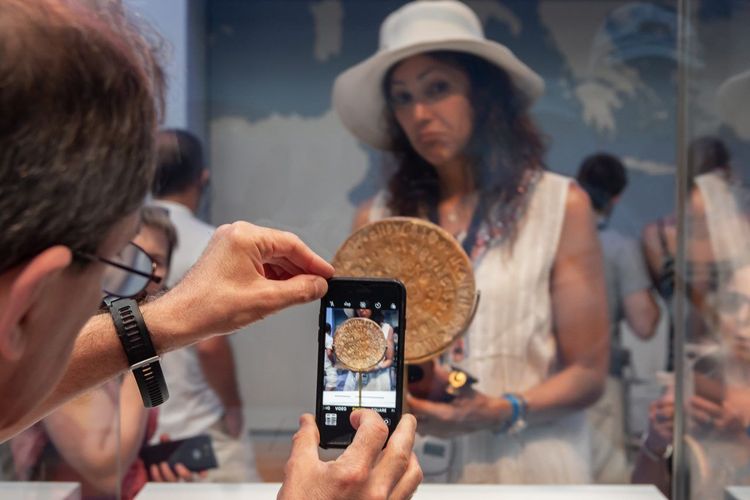
While day 1 is devoted to outdoor monuments, it also leaves room for two or three museum visits, essential for understanding 4,000 years of Cretan history in just a few hours.
The Heraklion Archaeological Museum, One of the Richest in Greece
The Heraklion Archaeological Museum houses the world's most important collection of Minoan art: the Phaistos Disc and its still undeciphered signs, the bull's-head rhyton, the snake goddesses, the original frescoes from the Palace of Knossos and the painted Agia Triada sarcophagus.
A full visit takes between 1.5 and 2 hours, more if you are passionate about archaeology. The ground floor follows the chronology from the Neolithic to the Roman era, while the upper floor gathers the Minoan frescoes, from the "Parisienne" to the famous bull-leaping scene. In 2026, the full-price ticket costs €20, to be bought separately from the Knossos one: combined tickets have disappeared.
Coming here before Knossos, not after, completely changes how you read the site: the original frescoes displayed in the museum give meaning to the pieces of the palace, which only keeps copies. It is a visiting order that many paper guidebooks forget to mention, but which the Ryo audio-guided tour of Heraklion marks as a stop in its own right, with the story of the discovery of the Minoan collections told in front of the building.
The Natural History Museum of Crete and the Historical Museum
The Natural History Museum of Crete, housed in a former power plant restored on the waterfront, stands out for its family-friendly approach: a reconstruction of a deinotherium, a prehistoric proboscidean 4.5 m tall, an earthquake simulator and a live animal section make it a stop children enjoy.
The Historical Museum of Crete (Lysimachou Kalokairinou 7, 71202 Heraklion, rated 4.6/5 on Google from 2,158 reviews), more discreet, covers the Byzantine period up to the Second World War and holds the only two El Greco paintings kept on his native island: "View of Mount Sinai" and "The Baptism of Christ." Kazantzakis's reconstructed study completes the visit. Allow an hour for each of the two museums if time permits; otherwise, the Archaeological Museum remains your absolute priority.
Markets, Bazaars and Shopping in the City Center
Between visits, Heraklion's city center is also experienced at stall level. 1866 Street, the city's central market, lines up grocers, cheesemongers and herb sellers between Lions Square and Kornarou Square.
You will find thyme honey, olive oil pressed in the hinterland, graviera (Cretan sheep's cheese) and malotira herbal teas, the mountain tea, at prices that can't be compared with the harbor shops. Heraklion's markets and bazaars are not limited to this one street: the delicatessens of Dedalou Street and the craft shops around Eleftherias Square complete the offer if you are looking for a souvenir that isn't a fridge magnet.
For more classic shopping, the pedestrian Dedalou Street and Chandakos Street concentrate fashion and ceramics shops. The Ryo audio-guided tour passes right through the 1866 Street market (Odos 1866, 71202 Heraklion, rated 4.4/5 on Google from 1,536 reviews), and one of the stops tells of neighborhood life as it still unfolds every morning among the stalls, a moment the audio guide lets you savor without hurrying.
A little timing tip: come between 9:00 and 11:00, when the merchants set up their stalls and the locals do their shopping. In the early afternoon, many shops close for the break, and on Sundays most stay shut. If you are taking oil or raki home by plane, pack them in your checked luggage.
Day 2: The Palace of Knossos and the Archanes Wine Region
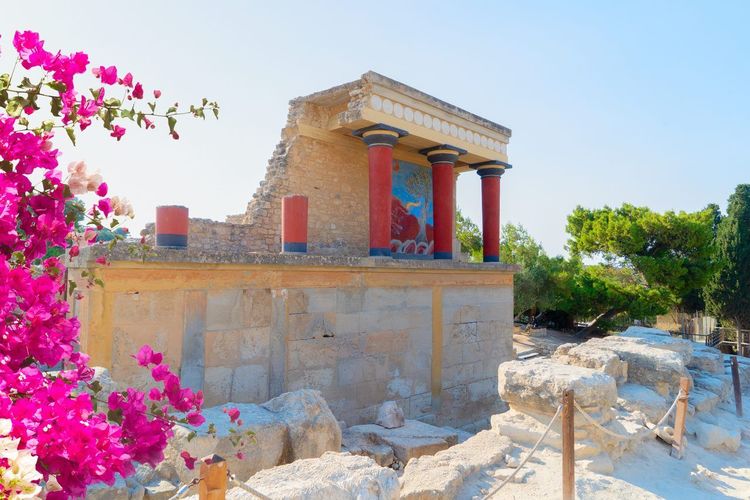
The second day completely changes the scenery: you leave the Venetian maze for the Cretan countryside, heading to the island's most visited archaeological site and then the wine-growing hills that surround it.
The Palace of Knossos, Cradle of Minoan Civilization
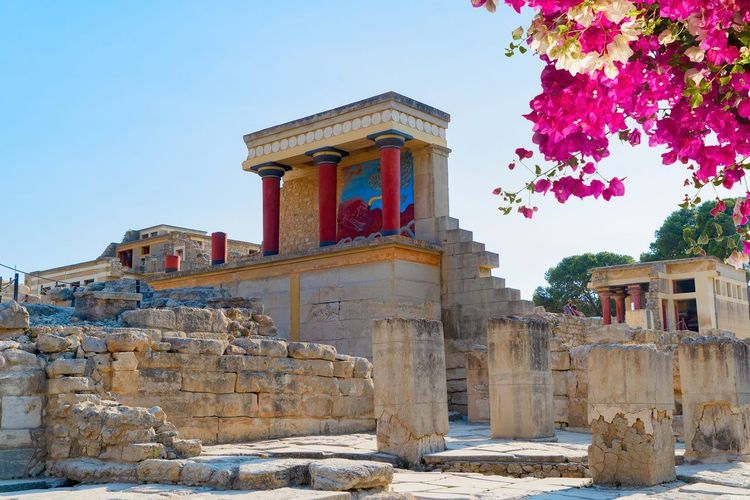
The Palace of Knossos, about 5 km from the city center, was the heart of Minoan civilization between 1900 and 1350 BCE. The ruins of the Palace of Knossos cover more than 20,000 m² and include hundreds of rooms arranged around a central courtyard, a maze of corridors that largely fueled the legend of the labyrinth and the Minotaur.
The British archaeologist Arthur Evans, who excavated the site in the early 20th century, had some parts rebuilt in painted concrete, an approach that is controversial today but at least lets you visualize the scale of the original palace. Arrive at opening time, at 8:00, to avoid both the heat and the cruise ship groups that flock in by the hundreds around 10:30.
On site, don't miss the throne room and its alabaster seat, the grand staircase of the royal apartments, the Queen's Megaron and its dolphin fresco (a copy, the original is in the museum), nor the north entrance dominated by the charging bull fresco. In 2026, entry costs €20 full price (€10 reduced rate); a timed ticket bought online on the ministry's official website saves you the queue. City bus no. 2 connects the central bus station to the site in about twenty minutes.
Allow 2 hours for the visit. Myth has it that King Minos locked the Minotaur there in a labyrinth built by Daedalus: a story that the Ryo audio-guided tour tells on site, stop after stop, so you can explore the site without relying on a paper guide or a group tour.
Archanes and the Vineyards of the Heraklion Region
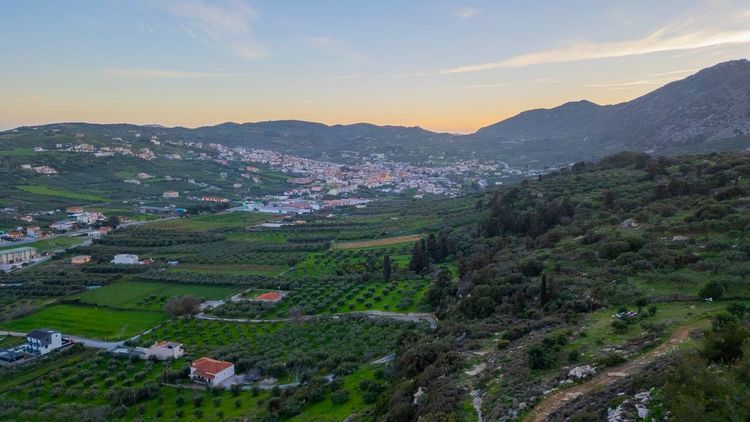
About fifteen minutes' drive south of Knossos, the village of Archanes (Archanes, 70100, rated 4.6/5 on Google from 400 reviews) is worth the detour if you have rented a car. Its neoclassical houses repainted in bright colors, its shaded square and its tourist-free tavernas offer a welcome counterpoint after the crowds of Knossos.
The Heraklion wine region extends around Archanes and Peza, where several estates offer tastings of local grape varieties such as Vilana (white) or Kotsifali (red). Two or three hours are enough to visit an estate, have lunch on site and head back to Heraklion in the late afternoon. Archaeology enthusiasts will push on to the Minoan sanctuary of Anemospilia, on the slopes of Mount Iouktas, far less crowded than Knossos.
Afternoon: CRETAquarium or Relaxing at Ammoudara Beach
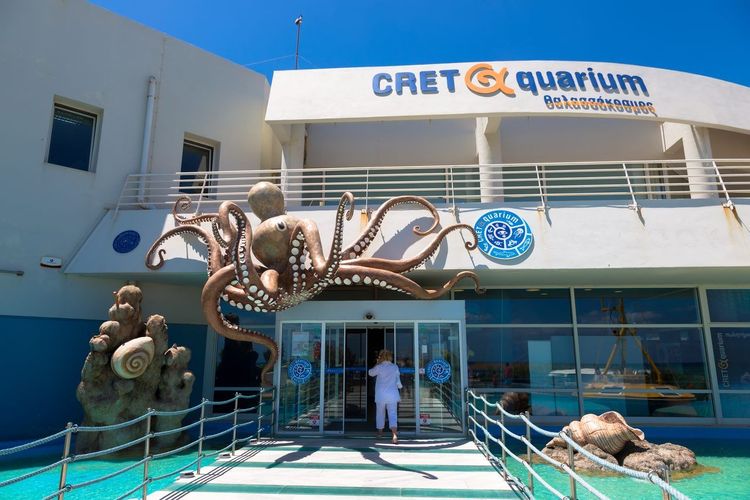
If the day 2 program ends earlier than planned, two very different options are available for the afternoon: one family-friendly and indoors, the other facing the sea.
Visiting the CRETAquarium with the Family
The CRETAquarium, set up on the former American military base of Gournes, about fifteen kilometers east of Heraklion, presents more than 2,500 marine animals of about 250 Mediterranean species spread across 61 tanks, including sharks and loggerhead turtles. Visiting the CRETAquarium takes 1.5 hours on average, and the air conditioning makes it a welcome escape during the hottest summer afternoons. Plan on around €12 to €15 per adult, half price for children.
Ammoudara Beach and Karteros Beach
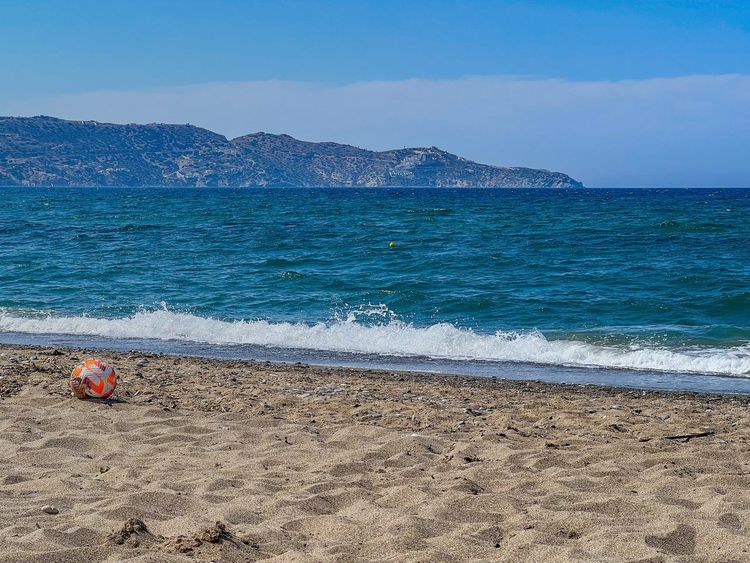
The Ammoudara beach, west of the city, stretches for several kilometers of fine sand lined with hotels, reachable by local bus from the center in about twenty minutes. The shallow water and gentle slope make it a beach popular with families.
To the east, near the airport, Karteros beach (Karteros, 71601 Heraklion, rated 4.3/5 on Google from 1,559 reviews) attracts a more local crowd, with less infrastructure but a much more relaxed atmosphere. Come rather at the end of the day, when the light skims the bay and the beachfront tavernas start grilling the catch of the day.
Evening: Heraklion's Nightlife
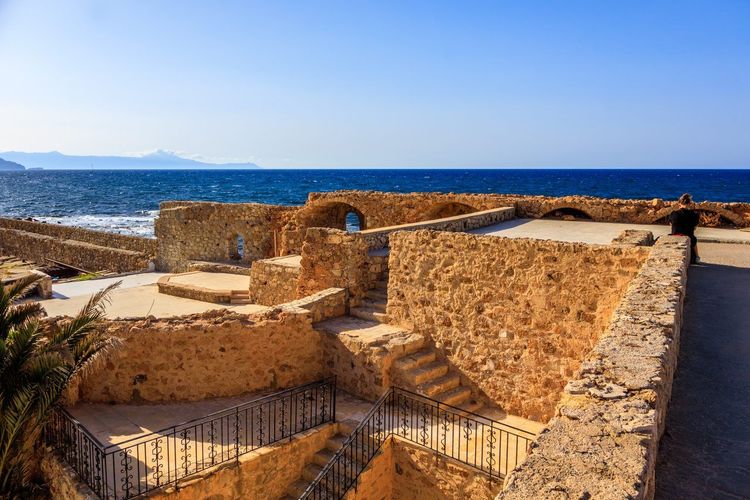
Heraklion's nightlife is concentrated in two distinct areas. Around the Venetian harbor, bar terraces overlook the illuminated fortress, in a rather hushed atmosphere, ideal for a last drink after a day of walking.
Inside the old town, the little Korai Street and its surroundings gather most of the cocktail bars, frequented by students from the local university. The atmosphere picks up noticeably after midnight, especially on weekends.
Between the two, the traditional tavernas around Daskalogiannis Square offer a calmer option, where you linger at the table late without necessarily looking for a party. It is often the best compromise if your day 2 is busy with the Knossos visit.
In summer, Cretans dine late, rarely before 9 p.m.: if you book a table at 7 p.m., you risk finding yourself alone in the room. Conversely, between late October and April, some of the harbor bars cut their hours, and the nightlife retreats to the student cafés of the old town. For a more musical evening, look out for posters of Cretan lyra concerts, the three-stringed instrument that accompanies village festivals and which some tavernas program at the end of the week.
Water and Unusual Activities: Boat, Dia Island and Quad Biking
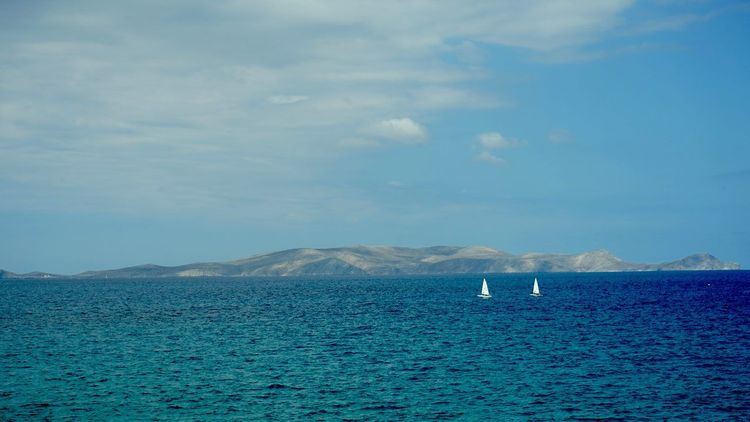
If you have an extra half day, two activities step outside the classic city-trip framework and deserve to be slipped in between visits.
Boat Trip, Boat Rental and Excursion to Dia Island
A boat trip from the Venetian harbor lets you sail along the coast and see the city from offshore, a perspective few visitors take the time to adopt. To go further, the excursion to Dia Island, about 13 km north of Heraklion, combines snorkeling in secluded coves and light hiking on this uninhabited island, a Natura 2000 site known for its wild kri-kri goats.
Renting a boat in Heraklion is still possible without a license for small, low-powered motorboats, with a deposit and a safety briefing at the port. Allow half a day to a full day for the organized excursion to Dia, with a meal on board often included.
Quad Biking in the Hinterland
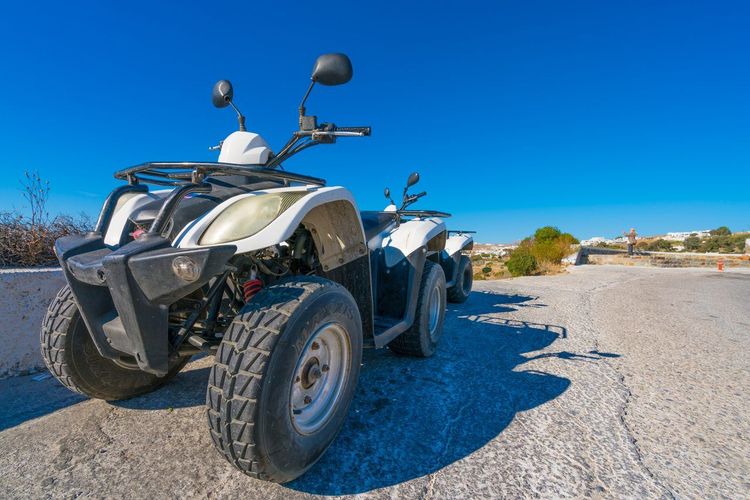
A quad bike ride in the Heraklion hinterland takes you to the wine villages of Peza and Archanes at your own pace, far from the main roads. Agencies rent quads by the half day or the day, with routes that often climb toward Mount Iouktas, from where the panorama takes in Heraklion, the north coast and, in clear weather, the Psiloritis massif.
Tasting Cretan Cuisine and Where to Eat in Heraklion
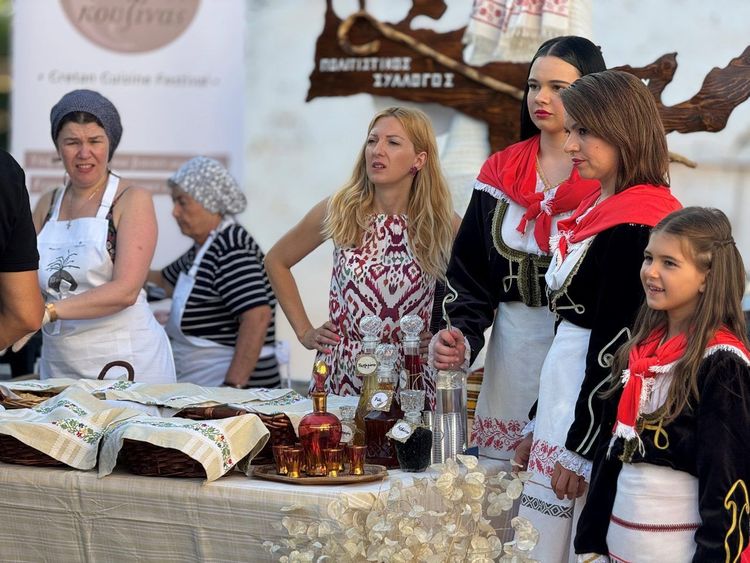
Tasting the local cuisine is an integral part of the visit. Cretan cooking stands out for its generous use of olive oil, wild herbs and goat and sheep cheeses, far from the clichés of mainland Greek cuisine.
Dakos, a barley rusk topped with grated tomato, mizithra or feta and oregano, is the emblematic dish to order as a starter. Kalitsounia, small sweet or savory cheese pastries, often come with a glass of raki offered at the end of the meal, an almost systematic gesture of hospitality in family-run tavernas. For breakfast, try the Heraklion bougatsa, flaky and filled with cream or cheese, a local specialty served from 7 a.m. near Lions Square.
Where to eat in Heraklion? The alleys around Venizelou Square and Korai Street have many decent tavernas, but often geared toward tourists. For more authentic cooking, move slightly away from the port toward the residential neighborhoods, where prices drop noticeably without losing quality.
As for main dishes, look for gamopilafo, wedding rice cooked in meat broth and enriched with sheep butter, chochlioi boubouristi (snails pan-fried with rosemary and vinegar), or lamb with artichokes and wild fennel. Tavernas also serve staka, a sheep butter cream that accompanies eggs or potatoes: hearty, but typically Cretan.
One last tip: be wary of restaurants whose menu is displayed in six languages with laminated photos. It is often, but not always, a sign of cooking designed for groups rather than for locals.
Extending Your Stay: Excursions and Additional Stops Around Heraklion
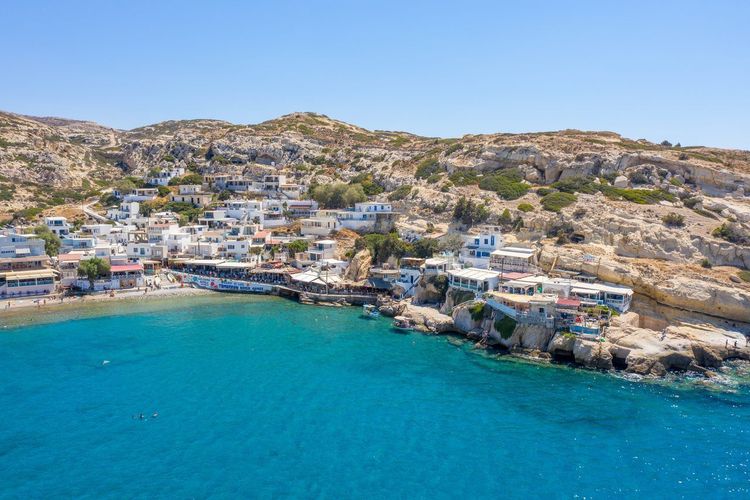
Two days cover the essentials, but Crete deserves much more time if you have the possibility. Visiting Heraklion in 3 days lets you add a full excursion to the south coast, to Matala and its caves carved into the cliff, passing by the Minoan site of Phaistos.
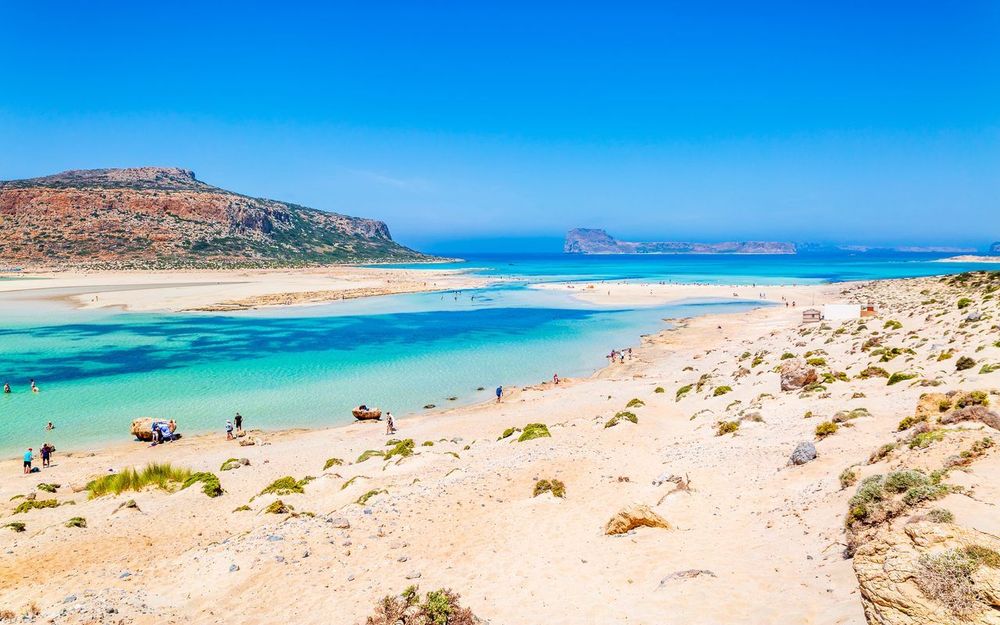
For a stay of 4, 5 days or a week, the program expands: Samaria Gorge in the west of the island (a very long day from Heraklion, better to sleep in Chania), an excursion to the Balos lagoon, in the far west, for its turquoise waters often compared to the Caribbean, or a day at Vai beach, bordered by the largest natural palm grove in Europe.
Visiting Santorini from Heraklion is also a frequent option, thanks to fast ferry connections. Allow a day for the round trip by high-speed catamaran (about 2 hours each way), more if you want to spend the night to enjoy the sunset over the caldera.
Other excursions to do around Heraklion include the Zaros gorges, the mountain villages of Psiloritis or Preveli beach, further south. None of these sites can be visited in half a day from Heraklion, which makes them good arguments for turning a weekend into a week.
Map and Neighborhoods of Heraklion to Get Organized
The tourist map of Heraklion reveals a rather compact city, whose historic heart forms a triangle bounded by the ramparts and the sea. The city center, inside the walls, can be crossed entirely on foot in less than half an hour.
The harbor district, around the Koules fortress, concentrates the tourist activity: cafés, bike rental shops and the departure point for boat excursions. Just above, the market district of 1866 Street and Dedalou mixes local shops and boutiques for visitors.
Further west, toward Ammoudara, extends the seaside hotel zone, more recent and more spread out, designed for beachfront stays rather than the historic center. Note this layout in advance: it will spare you many unnecessary back-and-forths.
A few easy-to-remember landmarks: Lions Square (Venizelou) serves as the central pivot, Eleftherias Square marks the eastern corner, near the Archaeological Museum, while the Chania Gate opens the old town to the west. Between these three points, almost everything in this itinerary can be reached in under ten minutes' walk, which makes a paper map almost unnecessary once you have these landmarks in mind.
How to Get to Heraklion: Plane, Ferry and Connections from Crete
The means of access depends mostly on your starting point. Two main solutions exist, each with its constraints.
By Plane
Nikos Kazantzakis International Airport is only 5 km from the city center, about fifteen minutes by taxi or city bus. It receives direct flights from most major European cities in season, from April to October, with a much reduced offering in winter, when you often have to go through Athens.
By Ferry
By sea, overnight ferries from Piraeus, the port of Athens, reach Heraklion in an 8 to 9 hour crossing, with berth cabins to travel overnight without losing a day of sightseeing. Fast connections also exist with the Cyclades, notably Santorini, in 2 to 3 hours.
How to Get Around Heraklion: Car, Bus and Rental
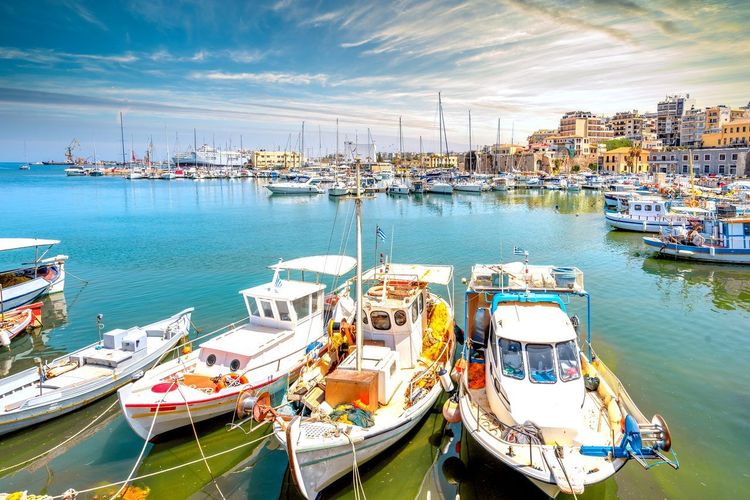
Once there, the historic center is explored entirely on foot, and a car is more of a handicap than an asset given how narrow the streets are and how limited the parking is.
For Knossos, Archanes or the more distant beaches, renting a car in Heraklion remains the most flexible solution. Rental agencies, numerous near the airport and the port, offer rates that drop noticeably off-season, between November and March.
Without a car, Heraklion's city buses efficiently serve Knossos, Ammoudara and the airport, while the intercity KTEL buses leave from the bus station near the port for Archanes, Matala or Chania. It is the most economical option for a two-day stay.
Taxis remain affordable for short trips, notably between the airport and the center or to reach Knossos at opening time, before the first bus. If you rent a car, park it in a paid car park outside the ramparts rather than looking for a spot in the old town, where pedestrian streets and one-way systems quickly complicate traffic.
Where to Stay in Heraklion: The Best Neighborhoods for Your Profile
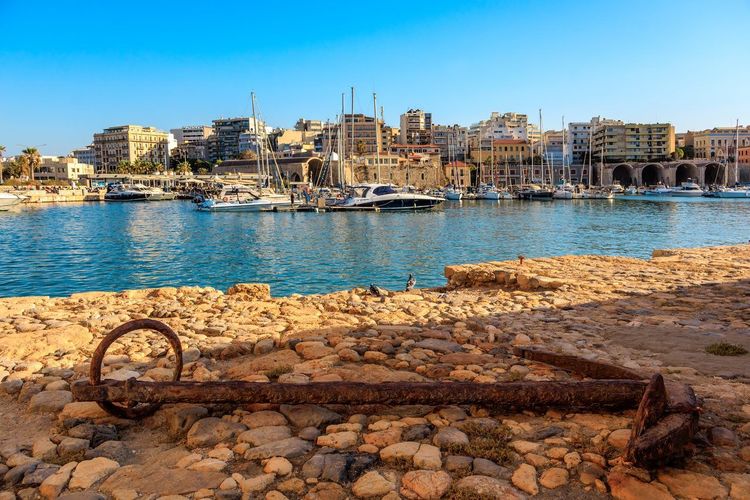
It all depends on the type of stay you are looking for. For a cultural city trip, the Venetian harbor district and its adjacent alleys let you reach all the monuments on foot, at the price of a bit more night noise on weekends.
As a couple or a family with young children, the Ammoudara area, about twenty minutes by bus from the center, combines beaches and hotels with pools, while staying within reasonable distance of the sights.
For small budgets, the streets around Kornarou Square and toward the Chania Gate, inside the ramparts but away from the waterfront, offer much cheaper apartments and guesthouses, without sacrificing proximity to the historic center.
Finally, if you are heading to Knossos or Archanes first thing in the morning, accommodation near the southern exit of the city, toward the Fortetsa district, avoids crossing the whole center at rush hour.
Budget, Weather and Best Time to Visit Heraklion
The budget varies greatly depending on the season and the level of comfort you are looking for. On average, allow €15 to €25 per meal in a decent taverna, €40 for the two major Minoan sites (Knossos and the Archaeological Museum at €20 each in 2026), and an accommodation budget that easily doubles between July-August and the shoulder-season months.
Heraklion's weather remains mild for much of the year, with temperatures regularly exceeding 30 °C in July and August, sometimes grueling for a full day of walking in town. Rain is concentrated in winter, when temperatures drop to around 12 to 15 °C.
The best time to visit Heraklion is between April and June, or between September and late October: sites like Knossos are less crowded, temperatures remain pleasant for walking and accommodation prices drop compared with the height of summer. Note that from November to March, archaeological sites close earlier in the afternoon.


FAQ
How many days do you really need to visit Heraklion?
Two full days are enough to cover the historic center, the major museums and the Palace of Knossos. Three days or more leave time to add Archanes, a beach or a longer excursion such as Matala or Santorini.
Do you need to book in advance to visit the Palace of Knossos?
Booking a timed-entry ticket online avoids the queue at the entrance, especially between June and September when cruise ship groups arrive mid-morning. Arriving at opening time remains the best alternative if you haven't booked.
What budget should you plan for 2 days in Heraklion?
Excluding flights or ferry, a budget of €150 to €250 per person covers accommodation, meals and visits for two days in the shoulder season, and more with a boat excursion or a car rental.
Can you visit Heraklion without a car?
Yes. The historic center can be explored entirely on foot. For Knossos, city bus no. 2 is enough; for Archanes, KTEL buses or an organized excursion effectively replace a rental on a short stay.
What is the best time to visit Heraklion?
Spring (April-June) and early autumn (September-October) offer the best compromise between pleasant weather, reasonable crowds and moderate accommodation prices.
How much time should you allow for visiting the Palace of Knossos?
Allow 1.5 to 2 hours for a full visit with a guide or an audio guide, a little less for a quick self-guided visit. Allow more in high season to cope with the crowds.
Conclusion: Two Days to Capture the Soul of Heraklion
Two days in Heraklion are enough to understand what makes the city unique: a Venetian old town that is still alive, a Minoan palace that continues to fuel archaeologists' debates and a wine-growing hinterland twenty minutes by road. Save the Archaeological Museum for the day before Knossos, book your tickets online in summer, and leave an evening free for the tavernas of Daskalogiannis Square.
To effortlessly link the harbor, the museums, the market and the churches of the center, the Ryo audio-guided tour of Heraklion remains the simplest companion to slip into your pocket: you walk, it tells the story.