© Shutterstock
 Votre guide Ryo
Visiting Marseille in 3 Days: The Complete 2026 Itinerary
In Marseille, the sea starts right outside the Vieux-Port metro, and it is likely the only place in France where you can combine a national museum, a virtual dive into a prehistoric cave and a swim in a protected calanque, all in a single day. The second largest city in France by population, it remains one of the most misunderstood: visitors come for a weekend and leave feeling they have missed the essentials. Visiting Marseille in 3 days without missing anything important is precisely the purpose of this complete itinerary, from the Vieux-Port to the calanques of Sormiou, taking in the ochre alleyways of Le Panier and the heights of Notre-Dame de la Garde. To find your way around, the Ryo audio-guided tour of Marseille marks out exactly this same route, neighbourhood by neighbourhood.
Over three days, you will have time to visit a 17th-century fort transformed into a free seaside promenade, to digitally dive 37 metres underwater into a replica of a 27,000-year-old decorated cave, to climb up to a basilica perched 154 metres above the city where the Bonne Mère keeps watch, and to swim in a calanque accessible only on foot or by boat. We also detail how to adapt the itinerary for 1, 2, 4 or 5 days, where to stay according to your budget, and how to get around without a car once you are there.
Day 1: Vieux-Port, Le Panier and the Mucem
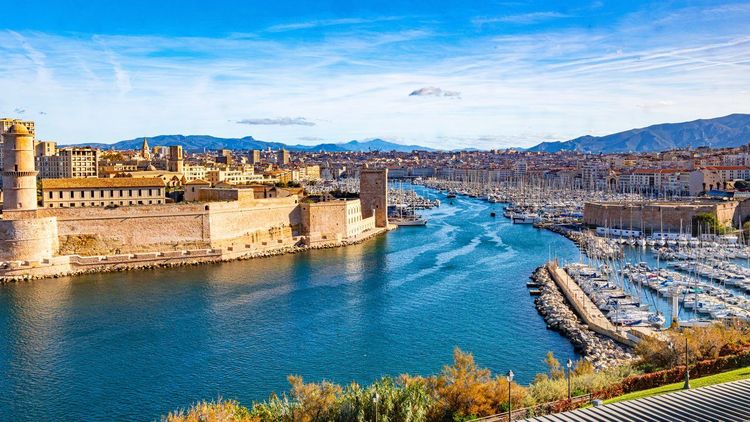
This first day traces a simple axis: from the historic port to the quays of the future, with Le Panier in the middle as a timeless breathing space.
The Vieux-Port and Its Surroundings, an Essential Starting Point
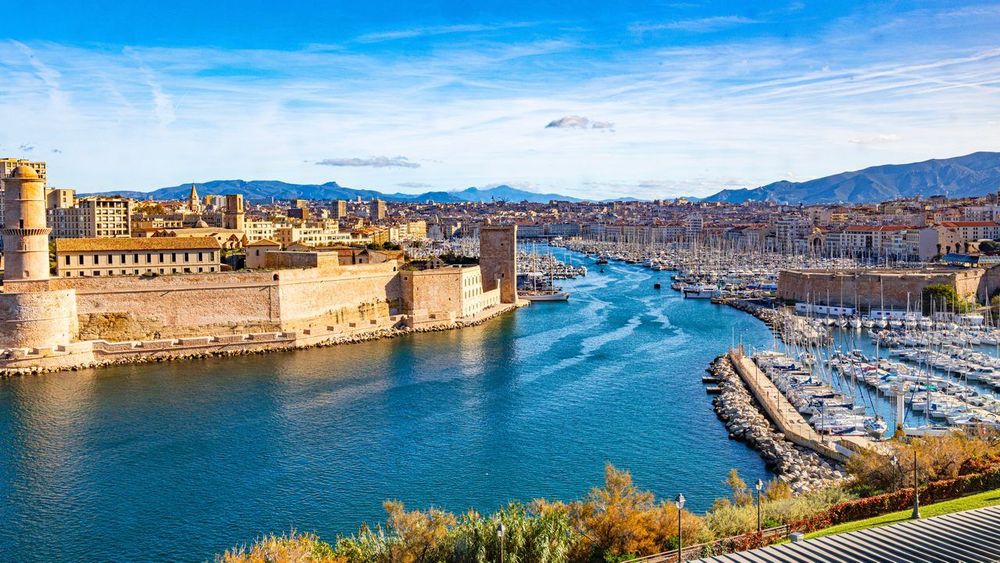
Start where Marseille began more than 2,600 years ago. The Vieux-Port already concentrates the essence of local identity: the pointus moored to stone rings, the fish market on the Quai des Belges, and the terraces that come to life from 9am.
The fish market, once a daily event, now takes place only occasionally, but the fishmongers on the quay keep the tradition alive all year round. Look out for the Ombrière, the giant mirror designed by Norman Foster installed in 2013 that reflects the sky and passers-by: it has become, almost in spite of itself, one of the most shared photo spots in the city. Opposite, the Hôtel de Ville retains its 17th-century façades, one of the few port buildings to have escaped the destruction of 1943.
Allow one hour for this first exploration, longer if you plan to take a boat trip to the Frioul islands (covered on day 3). The morning remains the most pleasant time: raking light on the water, fishing boats still returning from the night, and far fewer people than in the late afternoon.
Cross the port in two minutes on the ferry-boat, a shuttle service that has existed since 1880 and costs less than one euro: it is the most Marseillais way to get from one bank to the other.
Le Panier, Marseille's Oldest Neighbourhood
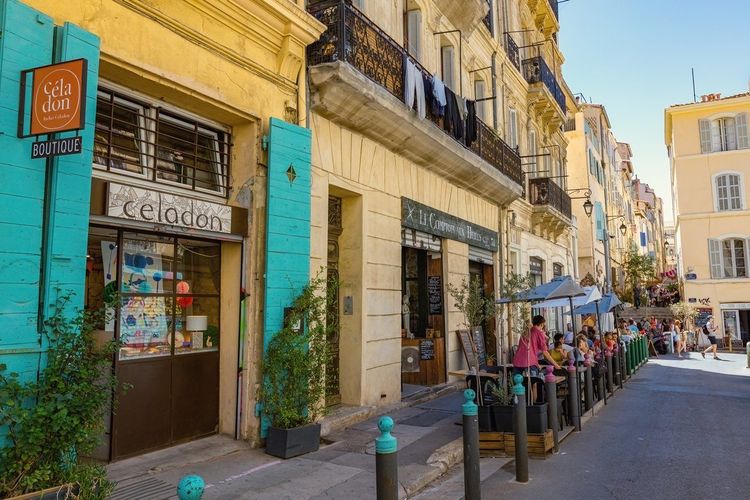
Head up next to Le Panier, the oldest neighbourhood in the city, where the Ryo guide to the Le Panier neighbourhood details a step-by-step itinerary through this maze of painted alleyways. Here, ochre and blue façades follow one another, laundry still hangs from windows, and every street corner hides a mural or an artist's studio.
The Vieille Charité, a former 17th-century hospice transformed into a cultural centre, deserves a stop for its arcaded inner courtyard, one of the finest Baroque compositions in the city.
Artisans' workshops (ceramicists, soap-makers, illustrators) occupy a large number of the neighbourhood's ground floors: several offer one-hour introductory sessions if you want to bring back more than a postcard from your visit. Get deliberately lost in the small streets between the Vieille Charité and the Montée des Accoules: that is where Le Panier shows itself at its best, far from the tourist routes of the Vieux-Port. Allow an hour and a half, a little more if you stop for a coffee on the terrace at Place de Lenche, the oldest square in Marseille. The neighbourhood climbs steeply in places: opt for comfortable shoes rather than sandals.
The Mucem, Fort Saint-Jean and Cosquer Méditerranée
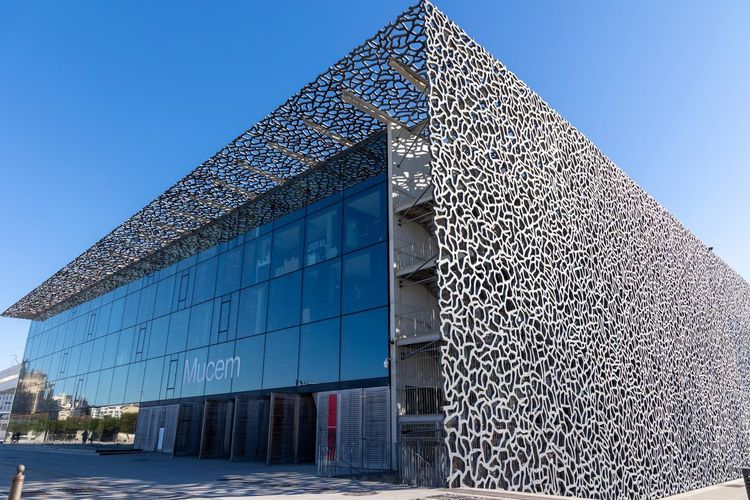
Head back down to the J4 esplanade for the most spectacular part of the day. The Mucem (Museum of European and Mediterranean Civilisations), with its fibre-reinforced concrete lattice designed by Rudy Ricciotti, has established itself since its opening in 2013 as one of the most visited museums in France outside Paris.
The permanent collections trace the history of Mediterranean civilisations across three floors, but many visitors come above all for the suspended footbridge linking the museum to Fort Saint-Jean: free to access, it offers one of the finest panoramas over the entrance to the Vieux-Port. For practical planning, the Ryo practical guide to visiting the Mucem answers the most common questions.
Fort Saint-Jean, built in the 17th century by Louis XIV, officially served to defend the city but also, local historians note, to keep watch over a Marseille population considered too independent. Its Mediterranean gardens and rampart walk can be visited free of charge, making it one of the rare high-quality experiences that requires no entrance ticket.
Right next door, the Cosquer Méditerranée Cave (Promenade Robert Laffont, 13002 Marseille, rated 4.7/5 on Google based on 7,526 reviews) recreates an exact replica of a decorated cave discovered in 1985 by a diver off the Cap Morgiou, whose entrance now lies 37 metres below sea level. Immersive pods take visitors past bison, horses and negative handprints painted approximately 27,000 years ago: a sufficiently unique experience to justify booking in advance, especially during peak season.
Allow half a day for these three sites if you want to enjoy each one without rushing. Book your Mucem and Cosquer tickets online: queues on the spot can easily exceed 45 minutes in summer.
Day 2: Notre-Dame de la Garde, Cours Julien and Endoume
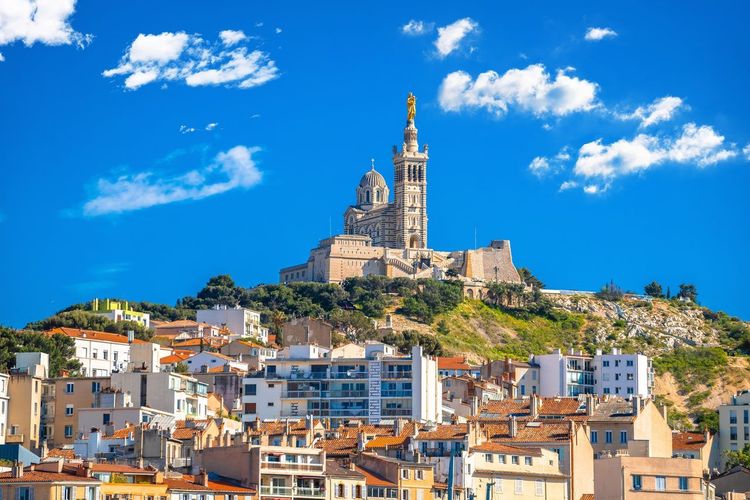
The second day shifts in pace: gain height in the morning, come back down to the city's lively arteries in the afternoon, before ending the day facing the sea.
Notre-Dame de la Garde and the Best Viewpoints over the City
Notre-Dame de la Garde dominates Marseille from a height of 154 metres, a 19th-century basilica crowned by a gilded statue of the Virgin that the people of Marseille affectionately call the Bonne Mère. Along with the Vieux-Port, it is the most reproduced image of the city.
The basilica itself blends Romanesque and Byzantine styles, with a characteristic alternation of white stone from La Couronne and green stone from Florence on its façades. Its Romanesque crypt, carved into the rock during construction in the 19th century and often overlooked by visitors in a hurry, recalls the chapel founded as early as 1214 on this promontory, the origin of the entire sanctuary.
Go up early, before 9:30am if possible: the tourist train and tour groups arrive in numbers from 10am onwards, and the forecourt becomes difficult to photograph without a hundred heads in the frame. The interior, adorned with Byzantine mosaics and ex-votos offered by generations of sailors, is free to visit.
For a less crowded viewpoint over the same bay, the park of the Palais du Pharo, at the seaward entrance to the Vieux-Port, offers an unobstructed perspective over the Frioul islands and Fort Saint-Jean, without the stairs or the crowds of the basilica.
Bus 60 connects the Vieux-Port to the sanctuary in about fifteen minutes, a considerably more comfortable option than the thirty-minute climb on foot from the port, the last section of which runs along the Rue Cherchell.
Cours Julien, Street Art and Local Life
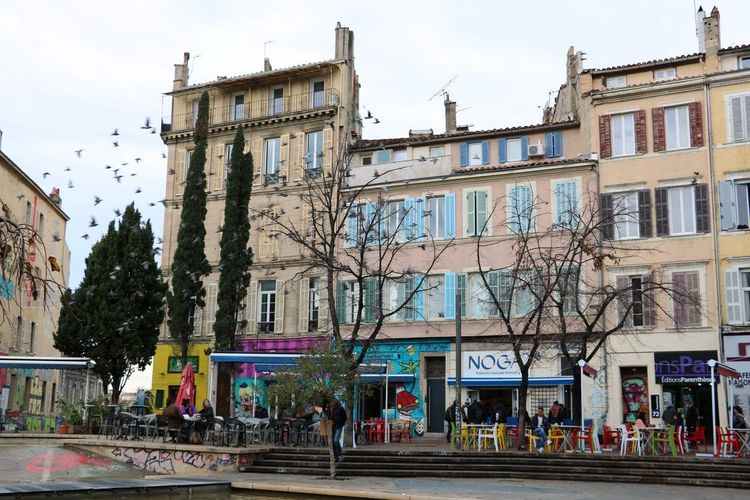
Head back down to Cours Julien, Marseille's most street-art-saturated neighbourhood, where murals change with each new creation or paint-over, making it impossible for any guide to maintain a definitive list.
The atmosphere here is completely different from the Vieux-Port: vintage clothing shops, record stores, world cuisine restaurants and natural wine bars share the same pedestrianised streets. Rues Pastoret, Crudère and Vian concentrate the highest density of murals, regularly painted over and replaced by new artists, both local and international. In the evening, the terraces of Place Notre-Dame du Mont and Cours Julien itself are among the liveliest in the city, making them a good option for dinner before heading back.
The organic farmers' market on Cours Julien, held on Wednesday mornings, pairs nicely with a stroll through the neighbourhood, as do the antique dealers and second-hand booksellers who regularly set up on the central strip at weekends. Allow an hour and a half to wander without a specific aim: it is the best way to discover it.
Endoume and the Corniche Kennedy Facing the Sea
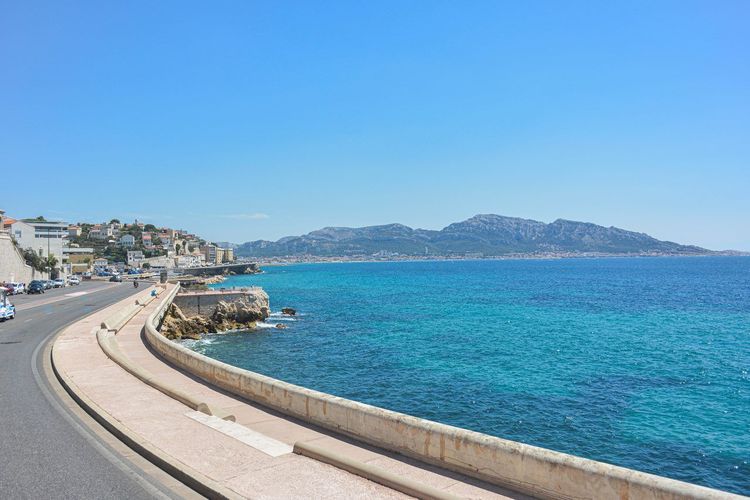
End the day facing the sea, on the Endoume side, a former fishing village absorbed by the city that has kept its distinctive character: narrow alleyways, steps down to the water, and a late-afternoon light that is quite spectacular.
The Vallon des Auffes (Vallon des Auffes, 13007 Marseille, rated 4.7/5 on Google based on 800 reviews), a tiny cove of colourful fishing huts nestled just beneath the Corniche Kennedy bridge, remains one of the most photographed spots in the city, yet many passing visitors never see it simply because they do not look for it.
Several fish restaurants line the small harbour of the Vallon des Auffes, well known for their traditional bouillabaisse, a dish that generally requires ordering 24 hours in advance at the most reputable establishments. Book a table on the terrace if you want to pair this dinner with the sunset over the Corniche: the golden light on the colourful fishing huts is one of the most photogenic moments of the stay.
Continue on foot along the Corniche Kennedy heading south: the promenade follows the sea for several kilometres, with stopping points to watch the waves strike the rocks, especially when the mistral blows and the sea becomes spectacular. To discover more of Marseille's most unusual neighbourhoods, the Ryo ranking of Marseille's most beautiful neighbourhoods complements this stage nicely.
Day 3: Calanques, Frioul Islands and Southern Beaches
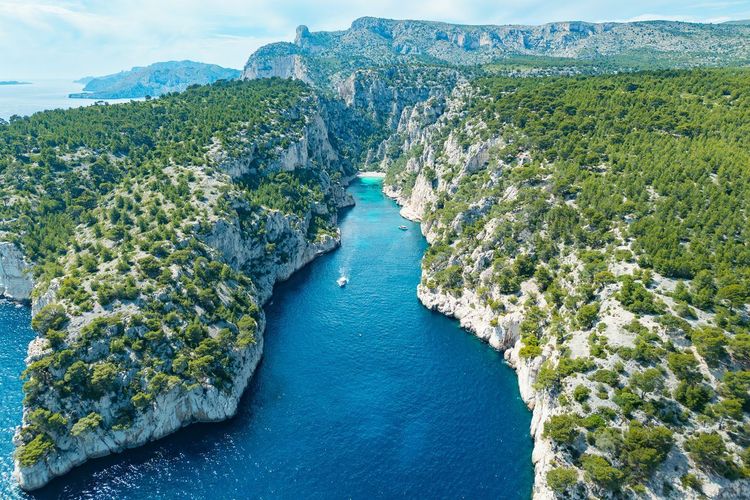
The final day heads south, between limestone rock and turquoise water: this is the most physical part of the stay, and often the most memorable.
The Parc National des Calanques and the Calanque de Sormiou
The Parc National des Calanques, created in 2012, protects 20 kilometres of rocky coastline between Marseille and Cassis, a landscape of white ridges plunging directly into turquoise water that is more reminiscent of the Cyclades than of the mainland.
Two ways to enjoy it in a morning: hiking, free but demanding (allow a minimum of 1h30 return to the nearest accessible calanque), or a boat trip from the Vieux-Port, more comfortable and allowing you to pass several calanques without walking.
The calanque de Sormiou, the largest and one of the most accessible, combines a sandy and pebbly beach, clear water and a small village of fishermen's huts that gives the impression of stepping back several decades. Be aware of access by car: the road down to the calanque is closed to traffic for much of the summer, except for those with a reservation at one of the site's restaurants. From the upper car park, allow around thirty minutes of downhill walking, and the same on the way back up, in full sun.
If you would rather avoid this summer constraint, the calanques of Morgiou and Sugiton, accessible on foot from Luminy in 45 minutes to 1h15 of walking depending on the path chosen, offer a wilder experience. In summer, access to Sugiton and En-Vau now requires a free online reservation on the national park website, to be made a few days in advance, a measure introduced to limit overcrowding.
Bring water, sunscreen and closed-toe shoes: there are no refreshment points on the trails, and the white limestone reflects the light intensely in summer. Also check the previous evening whether the massifs are accessible: in the event of high wildfire risk, the trails may be closed for the entire day.
Château d'If and the Frioul Islands
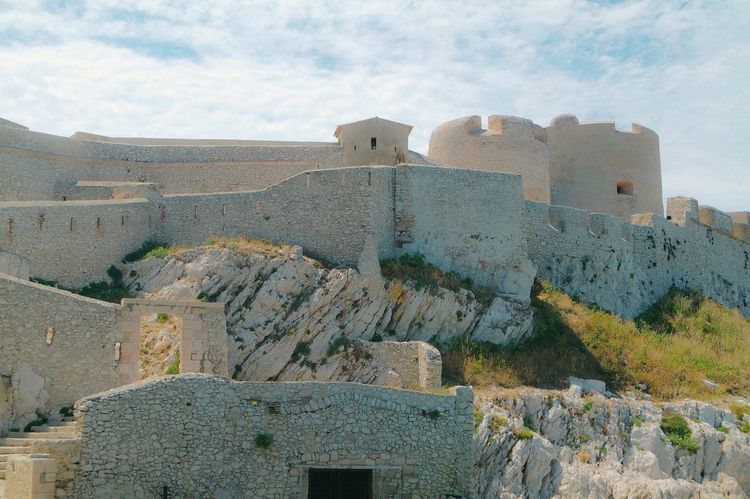
From the Vieux-Port, regular shuttles reach the Château d'If in twenty minutes, a 16th-century fortress made world-famous by Alexandre Dumas, who imprisoned his hero Edmond Dantès there in The Count of Monte Cristo.
The site owes much of its fame to Dumas's novel, but the château has a history of its own: a state prison for more than three centuries, it held political and religious prisoners before being listed as a historic monument in 1926. Visiting the dungeons and ramparts takes about an hour, but many visitors extend with a one-way trip to the Frioul islands, a further five minutes by shuttle: two islands linked by a dyke, with waters of an almost Caribbean blue and virtually deserted outside July and August.
Crossings depart from the Quai des Belges every 30 to 45 minutes in season, slightly less frequently off-season: it is worth checking the day's schedule before heading down to the port, especially if the mistral is blowing, as sailings may be suspended for safety reasons. To plan this double visit, the Ryo guide to the Frioul islands details the options. Allow a full half-day for both sites, a little more if you want to have lunch on the island.
The Southern Beaches and Les Goudes, Marseille's End of the World
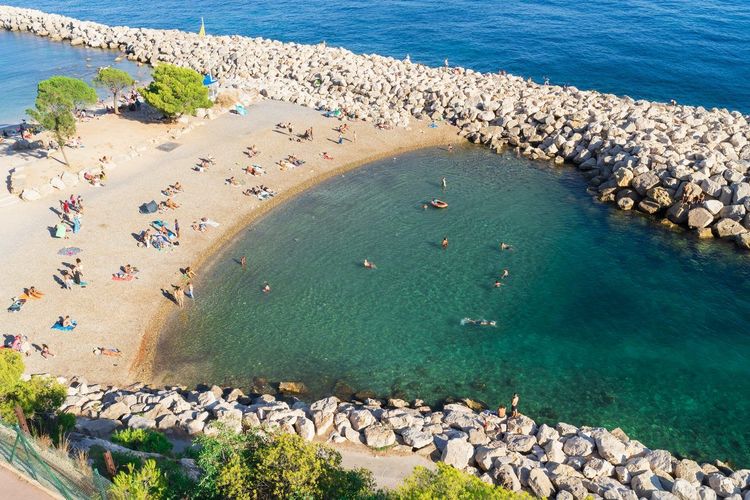
End the stay the way many people from Marseille end their weekends: by heading south. The Plage du Prado, the largest and most well-equipped beach in the city (a series of artificial beaches created in the 1970s using spoil from the metro construction), remains a reliable choice for an easy late afternoon.
Between the Prado and Les Goudes (Les Goudes, 13008 Marseille, rated 4.6/5 on Google based on 2,300 reviews), several smaller and more discreet beaches are worth a stop if time allows: the Plage du Prophète, tucked between two apartment buildings with a direct view of the Frioul, or the Anse de Malmousque, accessible only on foot from the Corniche and closer to a wild cove than a developed beach. These quieter spots remain far less crowded than the Prado, especially during the week, making them good options for ending the stay in peace rather than on a packed terrace.
Continue on to Les Goudes, a former fishing village that has become the southernmost point of the city accessible by bus (line 19 from the Castellane metro, then a connection at Madrague de Montredon to reach the village), where the tarmac road literally ends at the rocks. The atmosphere here is rawer than at the Prado: no sand, but coves of white and ochre rock, fishing huts, and a surprisingly end-of-the-world feeling for a city of over 800,000 inhabitants.
A sunset at Les Goudes, with the silhouettes of the Frioul and the Château d'If in the background, is the ideal way to close these three days. To find the best beaches for your profile (family-friendly, sporty, wild), the Ryo ranking of Marseille's most beautiful beaches is a good reference before you go.
Day Trips from Marseille: Cassis, Aix-en-Provence and the Luberon
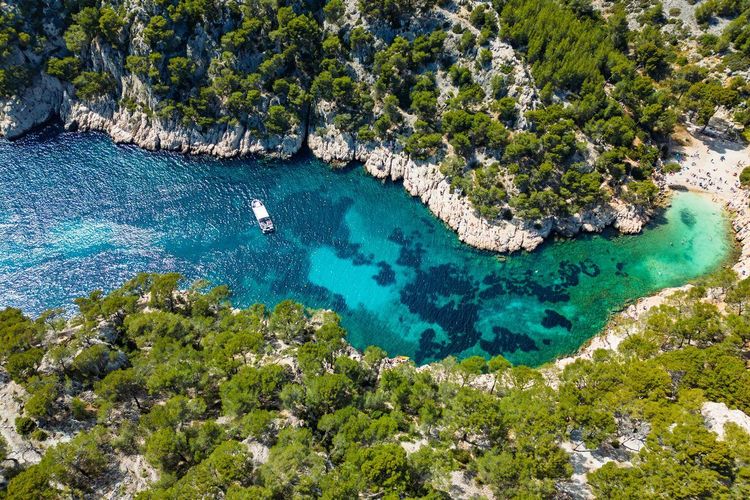
If your stay extends beyond three days, or if you prefer to dedicate a full day to leaving the city, two excursions complement the Marseille programme particularly well.
Cassis and the Calanques by Boat
About thirty minutes away by car or train (Cassis station then a shuttle), Cassis offers a more intimate version of the calanques, with a colourful port and a designated wine appellation whose vineyards run right down to the sea's edge, a fairly rare occurrence in France.
From the port, boat tours (departing throughout the day in season) allow you to see three to five emblematic calanques in one hour, including Port-Miou, Port-Pin and En-Vau, often considered the most spectacular in the park. To compare options (boat, hiking, kayak) and prices, the Ryo guide to the beaches of Cassis details each alternative.
If you have a car, the Route des Crêtes, which links Cassis to La Ciotat while overlooking the Cap Canaille, the highest sea cliff in France at 394 metres, perfectly rounds off the visit: several designated viewpoints allow you to stop safely and photograph the bay of Cassis. The road is closed in strong winds or when there is a wildfire risk, a frequent occurrence in summer: check whether it is open on the morning of your visit.
Book your boat slot the evening before in peak season: departures sell out early in the morning in July and August. A full day is enough for Cassis, with a return to Marseille in the late afternoon.
Road Trip to the Alpilles and the Luberon (Les Baux-de-Provence, Saint-Rémy, Gordes)
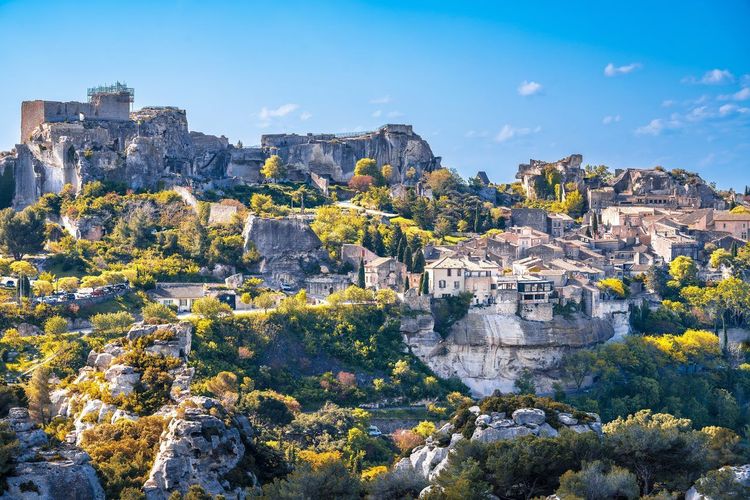
For a longer excursion, allow a full day by car heading inland, towards Aix-en-Provence and then the Alpilles. The full route (Marseille, Aix, Les Baux, Saint-Rémy, return) covers around 180 kilometres, manageable in a day if you set off early.
A one-hour stop in Aix-en-Provence along the way allows you to see the Cours Mirabeau and a few iconic fountains without lingering: the city would deserve a full day in its own right, which this road trip does not allow.
Les Baux-de-Provence, a medieval village perched on a rocky spur of the Alpilles, deserves a two to three-hour stop: its château ruins command a 360-degree view over the plain, and the Carrières des Lumières, a few hundred metres away, project immersive art exhibitions inside former white limestone quarries.
Saint-Rémy-de-Provence, fifteen minutes by road, retains traces of Vincent van Gogh's stay, when he voluntarily committed himself to the Saint-Paul-de-Mausole monastery between May 1889 and May 1890, as well as the ancient site of Glanum, one of the best-preserved Roman ruins in the region.
If time allows, push on to Gordes (Village de Gordes, 84220 Gordes, rated 4.7/5 on Google based on 15,000 reviews), in the Luberon, one of the most photographed hilltop villages in France, about 45 minutes from Saint-Rémy. The late-day light on its dry-stone houses alone justifies the detour.
Ideally set off before 8:30am to have any hope of seeing all four stops without returning too late, and be prepared to drop Gordes if the programme falls behind: the first three stops remain more content-dense. This excursion requires a car: public transport links between these villages are rare. If driving on these small country roads does not appeal, several organised excursions departing from Marseille cover all or part of this itinerary by minibus, with a guide, for a full day without worrying about navigation or parking, which can be complicated in the most popular villages like Gordes at the height of the season. For more ideas for outings from Marseille, the Ryo guide to the must-sees of Provence-Alpes-Côte d'Azur completes this list.
How to Get to Marseille and Get Around
Two practical questions come up systematically before any trip: how to reach the city, and how to get around once you are there.
Getting to Marseille (Train, Plane, Car)
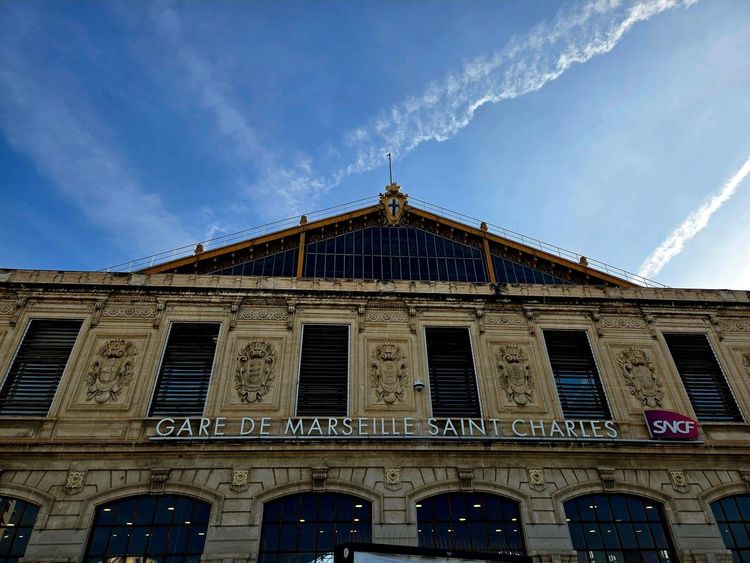
By train, Marseille-Saint-Charles station is served by direct TGV from Paris (around 3h15), Lyon (1h40) or Nice (2h30), with a central station fifteen minutes on foot from the Vieux-Port.
By plane, Marseille-Provence Airport, at Marignane, is around 25 kilometres from the city centre. The bus shuttle connects the airport to Gare Saint-Charles in about thirty minutes for around €10. For visitors arriving by cruise ship, the terminal is located at the Môle Léon Gourret, about 20 minutes by shuttle from the Vieux-Port. Between the airport and the city centre, expect around €45 to €50 by taxi or ride-hailing service compared with €10 for the bus shuttle, for a journey that is generally faster during off-peak hours.
By car, Marseille is 3 hours from Lyon and 3h30 from Barcelona by motorway. Bear in mind, however, that parking in the city centre is expensive and limited, and peak-hour traffic can turn a ten-minute journey into three-quarters of an hour. For a three-day stay focused on the city centre and neighbourhoods accessible by public transport, a car is not essential.
Getting Around Marseille (Metro, Bus, on Foot)
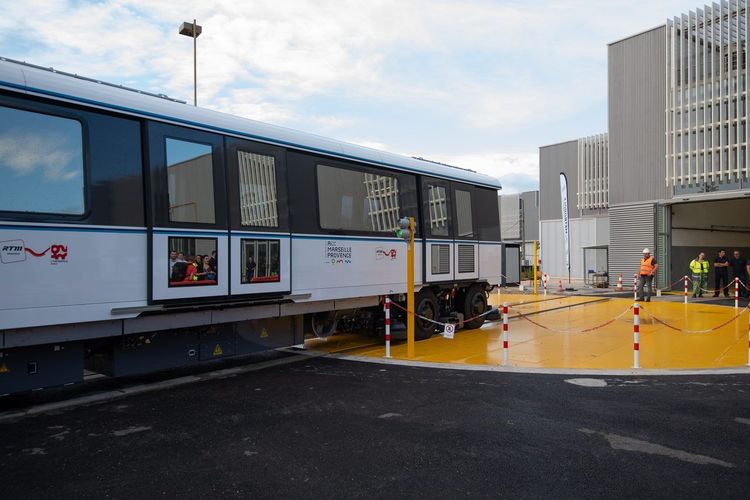
The RTM network (metro, tram, bus) covers the city centre and main tourist areas well: two metro lines, three tram lines and a dense bus network. A single ticket costs around €2, a day pass around €5.50.
For the Vieux-Port, Le Panier, the Mucem, Notre-Dame de la Garde and Cours Julien, walking is often the best option: the distances are short and the city is best discovered by wandering. For the calanques and the southern beaches, on the other hand, the bus (19, 20, 22) or the boat from the Vieux-Port become necessary.
If you do arrive by car, it is better to park immediately on the outskirts of the centre (around €15 to €20 per day) rather than looking for a space in the city centre, where paid parking extends until 7pm on most streets. Several park-and-ride facilities, combined with the metro, allow you to leave the car on the outskirts for around €3.50 per day, including the metro journey.
The bike-sharing service Le Vélo is a good complement for slightly longer trips, such as between the Vieux-Port and Cours Julien (around 15 minutes by bike versus 25 on foot). Bear in mind, however, that Marseille climbs steeply as soon as you move away from the port, and the ascent to Notre-Dame de la Garde or Cours Julien is better done on foot or by bus. Before setting off, download something to help you navigate without relying on a mobile signal: the Marseille audio-guided tour works offline and follows exactly the route of these three days, neighbourhood by neighbourhood.
Where to Stay in Marseille for 3 Days
The choice of neighbourhood depends above all on your priorities: immediate proximity to the sites, a lively nightlife, or a sea view when you wake up.
Vieux-Port and City Centre, for Being Close to Everything
Staying around the Vieux-Port puts everything within walking distance: Le Panier, the Mucem and a good selection of restaurants and bars. It is also the most touristy area, and therefore the most expensive and sometimes the noisiest in the evening, especially on the Quai de Rive Neuve side.
If you are sensitive to noise, avoid addresses directly facing the Quai de Rive Neuve or the Rue Saint-Saëns, which are particularly lively late into the night at weekends: opt instead for the small perpendicular streets two or three minutes' walk from the port, where hotels and apartments remain considerably quieter without sacrificing proximity.
Expect between €90 and €180 per night for a mid-range hotel in this area, more for a direct port view. It is the simplest choice for a first visit, particularly if you plan to explore mainly on foot.
Cours Julien and Notre-Dame du Mont, a Lively Neighbourhood
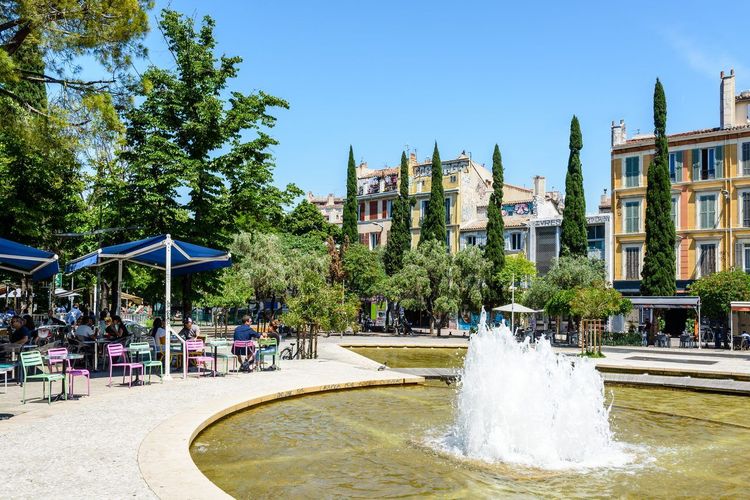
The Cours Julien and Notre-Dame du Mont neighbourhood just above offers a more local and generally less expensive alternative, with a dense nightlife (bars, small restaurants, concerts) and quick access to the rest of the city by metro or on foot.
You will find more short-term rental apartments here than traditional hotels, often in 19th-century buildings with a certain character. Expect €70 to €120 per night for a studio or one-bedroom apartment, an interesting option for a three-day stay if you prefer to cook occasionally rather than eat out for every meal. This is the neighbourhood to choose if you want to experience everyday Marseille rather than the postcard version of the Vieux-Port, even if it means walking a little further to reach the sites from day one.
Endoume and the Beaches, for Waking Up by the Sea
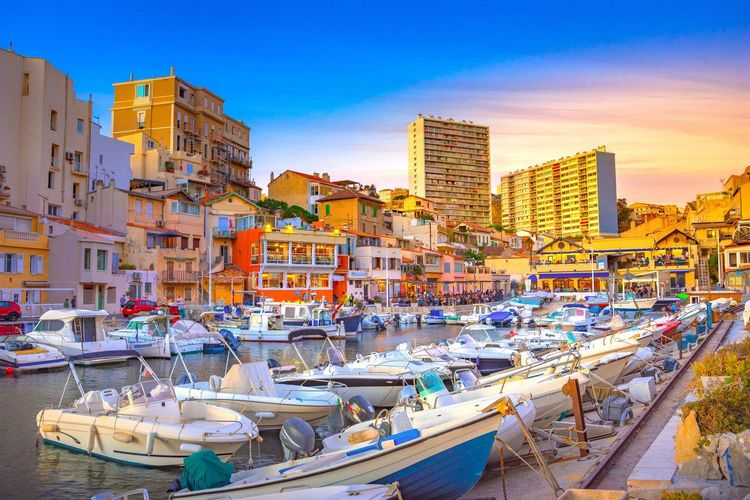
For a stay centred on the sea, the Endoume and Corniche neighbourhoods offer sea-view accommodation, usually apartments rather than traditional hotels, a few minutes' walk from the Vallon des Auffes and the Plage des Catalans.
Several addresses with terraces or sea views have opened in recent years along the Corniche Kennedy and around the Plage des Catalans, with prices that rise quickly in peak season (€150 to €250 per night). This is the best choice if you want to start and end each day with a view of the Mediterranean rather than a city street.
The drawback: the relative distance from the Vieux-Port and Le Panier, fifteen to twenty minutes by bus. The Marseille audio-guided tour is useful for visualising the real distances between your accommodation and the main points on the itinerary before you book. Whatever area you choose, ideally book two to three months in advance for a stay between June and September: Marseille fills up quickly in summer and during the Marseille Jazz des Cinq Continents festival in July.
When to Visit Marseille
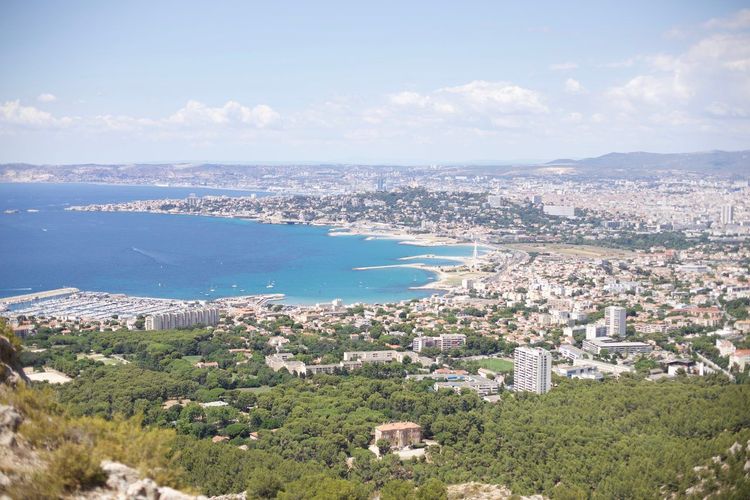
Marseille can be visited year-round, but spring (April to June) and early autumn (September–October) remain the best windows: pleasant temperatures between 18 and 25°C, a sea that is already or still swimmable, and tourist numbers significantly lower than in summer.
Summer (July–August) offers the best beach weather, with temperatures regularly exceeding 30°C, but also the highest visitor numbers: fully booked hotels, queues at the Mucem and packed shuttles to the islands. It is also the season when the calanques massifs are most frequently closed due to wildfire risk. The mistral, a northern wind that can gust above 100 km/h, is unpredictable throughout the year and can cancel boat crossings to the Frioul or the Château d'If.
Winter (November to March) remains mild compared with the rest of France (around 12°C during the day), with particularly clear light after the mistral passes. It is the period to choose for visiting without crowds, even if it means forgoing a swim. Marseille enjoys around 300 days of sunshine per year, one of the best weather records among France's major cities.
On the rainfall side, Marseille is one of the least rainy cities in France with around 550 mm of precipitation per year, concentrated mainly between October and December in sometimes violent Mediterranean episodes, when the equivalent of several weeks of rain can fall in a few hours. For the rest of the year, showers generally remain brief.
How Many Days to Plan: Adapting the Itinerary for 1, 2, 4 or 5 Days
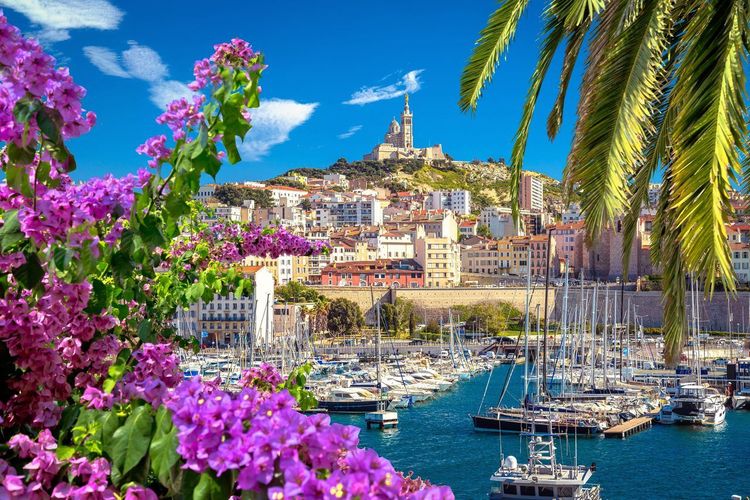
Three days remains the most balanced duration for covering Marseille without rushing, but the itinerary can easily be condensed or extended depending on the time available.
In 1 day, focus on the historic centre: Vieux-Port, Le Panier and the Mucem in the morning, Notre-Dame de la Garde in the late afternoon for the view. You will have to forgo the calanques and the islands, each of which requires half a day in its own right. It is a tight format but achievable if you start early in the morning: most cruise ship visitors follow this same pattern.
In 2 days, add either the calanques (Sormiou as a priority, accessible without a boat) or the Château d'If and the Frioul islands, depending on whether you prefer hiking or sailing. This is the format most often used by standard travel guides and by visitors who are combining two cities in the same trip. If time allows, slip in an hour at Cours Julien at the end of the day: it is the quickest complement to the historical programme.
In 4 days, the programme in this article fits comfortably, with an extra day for the excursion to Cassis or for a slower pace, with unscheduled afternoons in Le Panier or Cours Julien. It is also the most comfortable duration for visiting with children, alternating full-on days with quieter ones by the sea.
In 5 days, add the road trip to the Alpilles and the Luberon on top of Cassis, or explore the calanques more thoroughly on foot (Morgiou, En-Vau, Sugiton), accessible only by hiking and largely overlooked by passing visitors. At this pace, a half-day excursion to Aix-en-Provence, thirty minutes away by road, also becomes feasible.
This breakdown remains a guide: a visitor who likes to take their time will need the equivalent of 4 days for what this guide proposes in 3, while a traveller used to fast city trips can compress the programme into 2 full days, sacrificing one of the three thematic days according to their priorities. For a stay combined with a broader trip through Provence, many travellers pair 3 days in Marseille with 2 days in Aix-en-Provence or the Camargue. The most common mistake remains trying to fit everything into 2 days: the bus or boat journey to the calanques and the islands alone takes up a large part of a day, leaving little room for the historic centre if the programme is not carefully planned in advance.
What Budget to Plan for 3 Days in Marseille
A three-day stay in Marseille costs, excluding transport to reach the city, between €250 and €600 per person depending on the level of comfort you are looking for, accommodation and meals included.
On a tight budget, allow around €80 to €100 per day: a hostel or budget hotel (€35–45 per night), simple meals or a picnic by the sea (€15–20 per day), travel on foot or by public transport (€5.50 for a day pass), and a focus on free sites: Vieux-Port, Le Panier, Notre-Dame de la Garde, Fort Saint-Jean, beaches.
On a comfortable budget, allow rather €150 to €200 per day: a mid-range hotel (€100–130 per night), restaurants with a view (€30–40 per meal), a full-access Mucem ticket (around €12) combined with a Cosquer Méditerranée entry (around €20), and a boat excursion to the islands or calanques (€30–50).
A few easy savings: Marseille's municipal museums, including the Musée d'Histoire and the Vieille Charité, are free on the first Sunday of each month, access to Fort Saint-Jean, its gardens and the Mucem footbridge is free all year round, and the beaches, of course, never cost anything. Over three full days, therefore, plan a total budget, excluding flights or train, ranging from €240 in economy mode to over €600 for a stay in a charming hotel with all excursions included.
By way of comparison, a three-day stay in Marseille generally works out less expensive than an equivalent stay in Nice or in the villages of the Luberon, particularly on accommodation, which makes it a practical base if you then want to explore Cassis or the Alpilles without blowing the overall budget. Do not forget to set aside a small allowance for boat crossings (Frioul, Château d'If, Cassis), which are often the first significant expense after accommodation: between €15 and €35 per crossing depending on the destination and the company chosen. Tipping is not compulsory in France but is appreciated at a restaurant, around 5 to 10% of the bill if you were happy with the service.
Visiting Marseille with a Family or without a Car
Getting by without a car for three days poses no real difficulty for the bulk of the programme: the Vieux-Port, Le Panier, the Mucem, Notre-Dame de la Garde, Cours Julien and Endoume can all be covered comfortably on foot or by public transport. The calanques and the islands remain accessible by bus or boat from the Vieux-Port, without needing to drive.
The only real limitation concerns the excursion to Les Baux-de-Provence, Saint-Rémy and Gordes, which is difficult to do by public transport: without a car, it is better to stick to Cassis, accessible by train then shuttle, or to book an organised excursion with transport included.
A three-day stay with the family works particularly well thanks to the mix of city and beach: children generally enjoy the Mucem and its interactive spaces, the Château d'If (which has a slight adventure feel), and above all beach afternoons at the Prado or Sormiou.
For families with young children, the calanque de Sormiou is more suitable than Morgiou or En-Vau: outside the summer season, you can park a few minutes from the beach, avoiding a walk of over an hour with small children. The Plage du Prado, with its shallow areas and lifeguard supervision in season, is a good complement to the programme for a relaxed afternoon.
On the transport side, young children travel free on the RTM network, and family tickets offered by the Mucem or the Château d'If often allow a small saving compared with individual tickets bought separately. For teenagers, Cours Julien and its murals, or a snorkelling session in a calanque, generally work better than a full morning in a museum: think about varying the formats rather than imposing the same pace on the whole family.
Adapt the pace by avoiding two back-to-back intensive days: fit in a beach morning between the cultural visits. To find other activities suitable for children around the city, the Ryo guide to activities around Marseille lists several complementary options. Pushchairs manage generally well in the city centre, with the exception of the cobbled and steep alleyways of Le Panier, where a baby carrier is more practical.



FAQ
How many days do you need to visit Marseille?
Three full days are enough to cover the essentials: the historic centre, Notre-Dame de la Garde, and at least one excursion to the calanques or the Frioul islands. Allow five days to add Cassis and a trip to the Alpilles and the Luberon.
Can you visit Marseille without a car?
Yes, the majority of the itinerary can be done on foot, by metro, by bus or by boat from the Vieux-Port. Only the excursion to Les Baux-de-Provence and the Luberon requires a vehicle or an organised tour.
What is the best neighbourhood to stay in Marseille?
The Vieux-Port is the most convenient for a first visit, Cours Julien offers a more local and lively nightlife atmosphere, and Endoume is ideal if you want to wake up facing the sea.
What is the best time of year to visit Marseille?
Spring and early autumn offer the best balance between pleasant weather, swimmable sea and moderate crowds. Summer guarantees the warmest water but also the highest visitor numbers, and the massifs are sometimes closed due to wildfire risk.
Is Marseille in 3 days suitable for a family trip?
Yes, as long as you alternate cultural days with beach afternoons. The Mucem, the Château d'If and the beaches of Prado or Sormiou are among the most popular stops for children.
What should you do in Marseille if you only have one day?
Focus on the Vieux-Port, Le Panier and the Mucem in the morning, then head to Notre-Dame de la Garde in the late afternoon to enjoy the light and the view over the city.
What budget should you plan for a 3-day stay in Marseille?
Budget between €250 and €600 per person excluding transport to the city, depending on your accommodation comfort level and the number of paid excursions included in the itinerary.
Three days in Marseille are enough to understand why the city holds up so well against the clichés attached to it from Paris: between the Vieux-Port, the alleyways of Le Panier, the view from Notre-Dame de la Garde and an afternoon in a calanque, the balance between heritage, nature and local life is rarely so accessible elsewhere in France. Keep in mind that this itinerary is a solid base, not a rigid framework: the city lends itself well to improvisation, whether that means an unexpected detour down a Panier back street or a last-minute swim at Les Goudes. That is also what sets it apart from more formulaic destinations: it rewards those who take the time to step slightly off the planned route.
Whether you stick to this classic format or extend your trip towards Cassis and the Luberon, the Ryo audio-guided tour of Marseille remains the simplest companion for following this itinerary without juggling multiple maps and paper guides.
À lire également