© Shutterstock
 Votre guide Ryo
Cassis Beach in 2026: the Complete Guide to Coves and Calanques
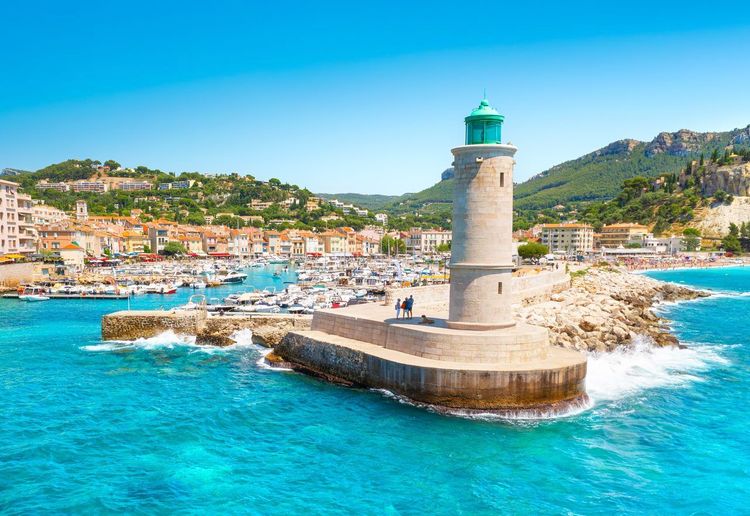
The first instinct upon arriving at the port of Cassis on a summer morning is to look for the beach and not find it right away. Many people search "cassis beach" in their search engine hoping for a simple answer, but the village's geography decides otherwise: unlike the long seaside resorts of the Mediterranean coast, the beach at Cassis is tucked away in pockets, wedged between the historic centre and the first cliffs of the Calanques massif.
This guide details the seven beaches and coves accessible around Cassis: where fine sand gives way to pebbles, which inlets remain quiet even in August, how to reach the calanques of Port-Miou, Port-Pin and En-Vau on foot or by boat, and why some visitors end up pushing on to La Ciotat. You will also find shuttle timetables, the time slots when the evening light makes the cliffs glow for your photos, and the right reflexes to avoid losing an hour in the car park in July. To extend the discovery beyond the coastline, our Ryo guide to the must-sees of Cassis completes this selection with the old port and the heights of the village.
La Grande Mer Beach, the Town Centre's Meeting Point
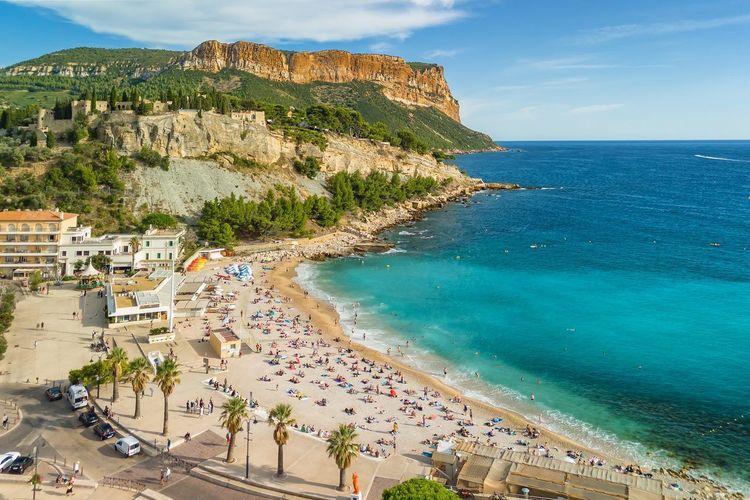
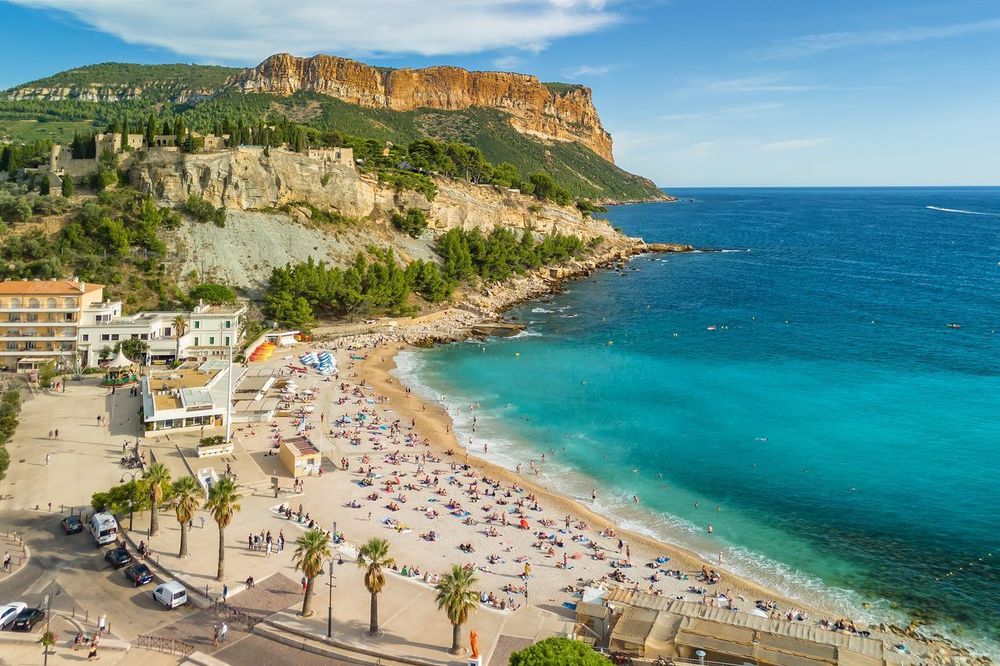
This is the beach you see first from the promenade, and the one most visitors choose by default. La Grande Mer (Avenue du Amiral Ganteaume, 13260 Cassis, rated 4.3/5 on Google with 557 reviews) stretches right at the foot of the town centre, between the seafront and the first buildings, with a mix of sand and fine gravel that becomes softer at low tide.
Its main advantage lies in its accessibility: ten minutes on foot from the nearest seafront car park, showers, public toilets and a lifeguard post staffed by the municipality on weekends from early May to mid-September, then every day from 15 June to 1 September. In return, it absorbs the bulk of the summer crowds. Arriving before 9:30 a.m., you can lay down your towel without negotiating space with your neighbour; after 11 a.m. in peak season, the strip of pebbles becomes noticeably tighter.
Two snack bars line the back of the beach and offer paid sun lounger areas, a practical option if you are travelling light. Families with young children appreciate the gently sloping entry into the water, unlike the neighbouring calanques where the seabed drops quickly. In the evening, when groups head back to the port restaurants, the raking light on cap Canaille transforms the same beach into a completely different place, almost deserted, just a stone's throw from the aromas of bouillabaisse already rising from the terraces.
Bestouan Beach, in the Shadow of the Castle
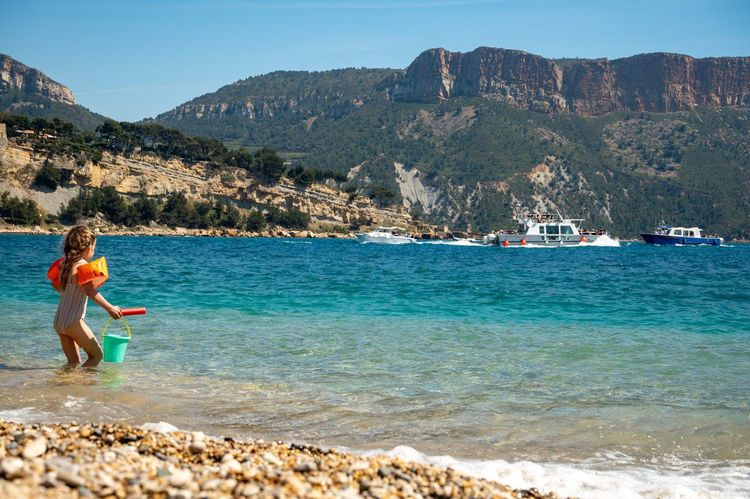
A ten-minute walk to the west, Bestouan beach (13260 Cassis, rated 4.5/5 on Google with 2,664 reviews) is a completely different experience. Smaller and almost entirely made up of pebbles, it nestles at the foot of the Cassis castle and a cliff that partly shields it from the easterly wind. It also benefits from lifeguard cover in season, over the same periods as La Grande Mer.
Visitor numbers here remain noticeably lower than at La Grande Mer, partly because parking in the immediate vicinity is limited to a few dozen spaces. Regulars arrive early or walk from the centre, a pleasant stroll that follows the fishing boats moored along the quay.
The water is noticeably clearer than in the town centre, a detail that attracts snorkelling enthusiasts keen to observe small shoals of fish near the rocks. There is also a seasonal refreshment stand that rents kayaks, an interesting option for then heading to the calanque de Port-Miou without taking the road. Sand is virtually non-existent here: bring water shoes if your feet are sensitive, as the small pebble beach can get very hot under the July sun.
Anse de l'Arène, the Cove That Keeps Its Cool
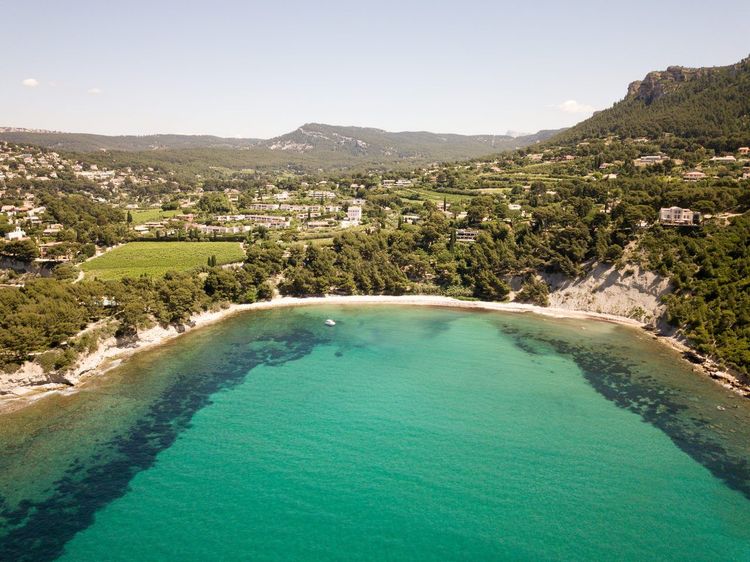
Continuing westward, beyond the campsite of the same name, Anse de l'Arène (13260 Cassis, rated 4.9/5 on Google with 23 reviews) offers a wilder setting. Less well known to passing visitors, this pebble cove lined with pine trees is frequented mainly by campers in the area and a few locals.
Access is via a shaded path from the Route des Calanques, about ten minutes on foot. There is neither a refreshment stand nor a permanent lifeguard post, which partly explains its relative tranquillity even in the height of summer. For an afternoon away from the crowds without giving up the proximity of the village, it is often the safest option.
Swimming takes place in clear water, with a seabed that drops off fairly quickly from the first few metres: the cove is better suited to confident swimmers than to very young children used to the gentle slope of La Grande Mer. The pine trees lining it provide natural shade, invaluable when the temperature climbs. Bring your own picnic, water and sun protection, as there is nothing available on site, and slip a pair of water shoes into your bag: the pebbles are large in places and getting into the water is far more comfortable with them.
Anse du Corton, Between Peninsula and Quarries
A little further along the coastal path, Anse du Corton (13260 Cassis, rated 4.6/5 on Google with 1,712 reviews) stands out for its mineral setting: former cut-stone quarries frame turquoise water, with a direct view of the first cliffs of the Parc national des Calanques.
The quarries that dominate it supplied the famous Cassis stone, a hard white limestone exported in the 19th century to build quays and monuments well beyond the region. This industrial past gives the site a mineral character found nowhere else along the Cassis coastline. The cove is small, rocky in places, and requires good footwear to access. It appeals mainly to swimmers comfortable in deep water and photographers in search of a setting different from classic sandy beaches. In low season, you can find yourself almost alone there on a Tuesday afternoon, which is no longer really the case in the height of summer. As with l'Arène, no shops serve the cove: bring everything you need, and bear in mind that the return is along the same path, which is a little steep under the afternoon sun.
The Calanques of Cassis: Port-Miou, Port-Pin and En-Vau
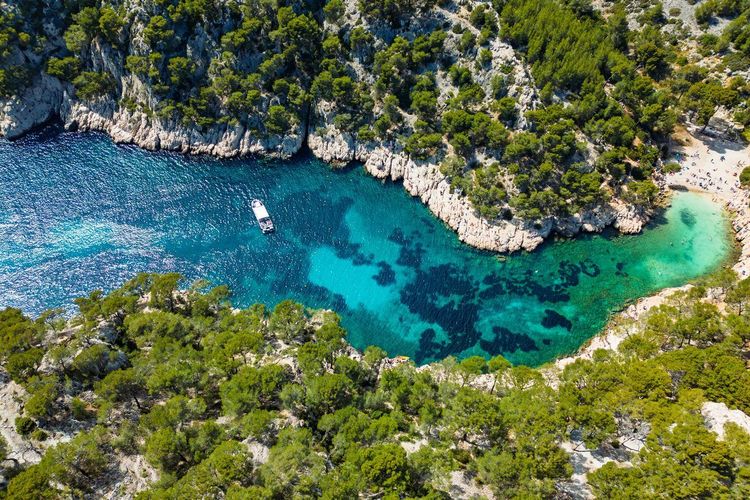
Talking about the beach at Cassis without mentioning the calanques would mean ignoring the very essence of what draws visitors every year. The massif begins literally at the exit of the port, and three calanques account for the majority of visits: Port-Miou, Port-Pin and En-Vau (13260 Cassis, rated 4.8/5 on Google with 3.5K reviews).
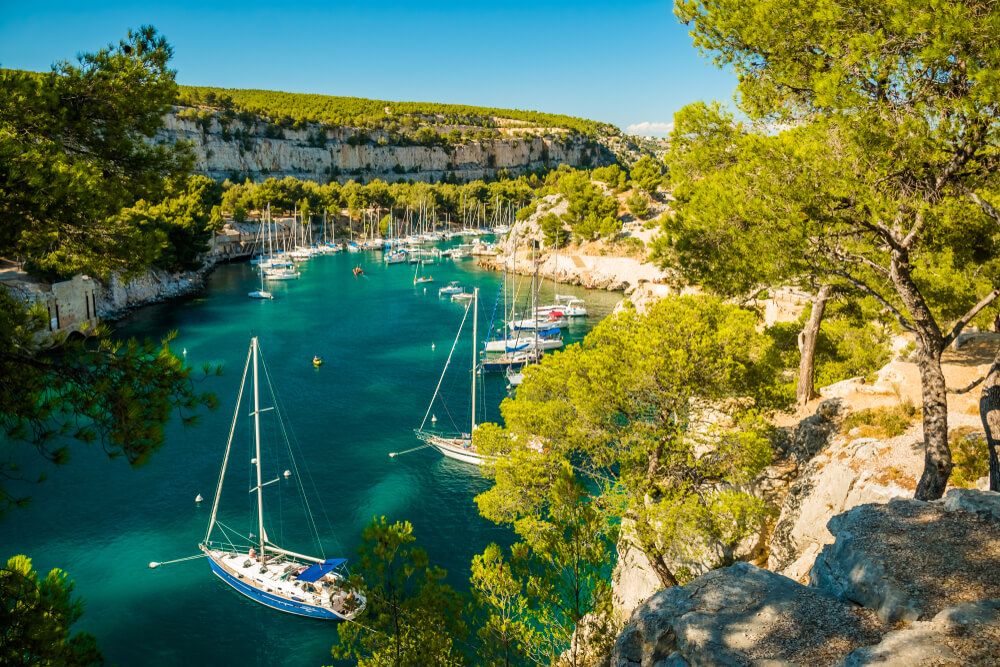
Port-Miou is the most accessible: a flat path runs alongside the former stone quarry converted into a marina, walkable in twenty minutes from the town centre. It does not have a proper beach, but serves as a departure point for boats and kayaks. Port-Pin, a further thirty minutes on foot along a more uneven trail, offers a genuine small beach of pebbles and coarse sand, framed by Aleppo pines that provide welcome shade in the middle of the day.
En-Vau remains the most spectacular, with its white walls plunging directly into water of an almost unreal blue. The walk on foot takes a good hour from Cassis, with a final downhill section equipped with chains that discourages the less adventurous. Most visitors prefer to reach it by boat from the port, an option that saves the effort but means dealing with the crowds on shuttle services in summer.
In summer, on-foot access to the Calanques massif is regulated every day according to fire risk: visitor numbers may be restricted, or the massif entirely closed on days of strong mistral and intense heat, to protect the particularly flammable Mediterranean vegetation. Always check the daily access map on the Parc national des Calanques website, published in the late afternoon for the following day, before setting out. Note: the mandatory online reservation only applies to the calanque de Sugiton on the Marseille side, not to the calanques of Cassis, where access depends solely on this daily map. To plan a complete itinerary taking in the coves of Cassis and those of Marseille, our Ryo article on the most beautiful calanques of Marseille and Cassis details the trails, boat timetables and kayak alternatives.
Diving, Snorkelling and Boat Trips
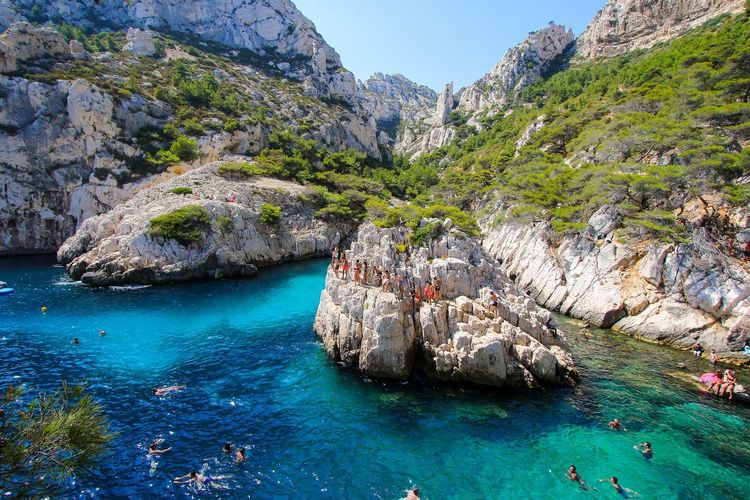
The clear waters of Cassis are among the most appreciated by divers in the region, and for good reason: the rocky drop-offs at the foot of the cliffs shelter groupers, wrasse and gorgonians just a few metres below the surface. Several clubs based on the port organise beginner dives as well as guided outings to deeper sites, off cap Canaille or at the entrance to the calanques.
For a first experience without a tank, snorkelling is more than sufficient: le Bestouan and Anse du Corton offer visible seabeds from three or four metres down, perfect for observing coastal wildlife with a simple mask and snorkel. Renting a kayak or paddleboard at le Bestouan or on the port allows you to combine exercise and swimming: heading to Port-Miou by sea, skirting the cliff faces and anchoring in a cove inaccessible on foot remains one of the great pleasures of a day in Cassis.
Fine Sand or Pebbles: What to Expect on the Beaches of Cassis
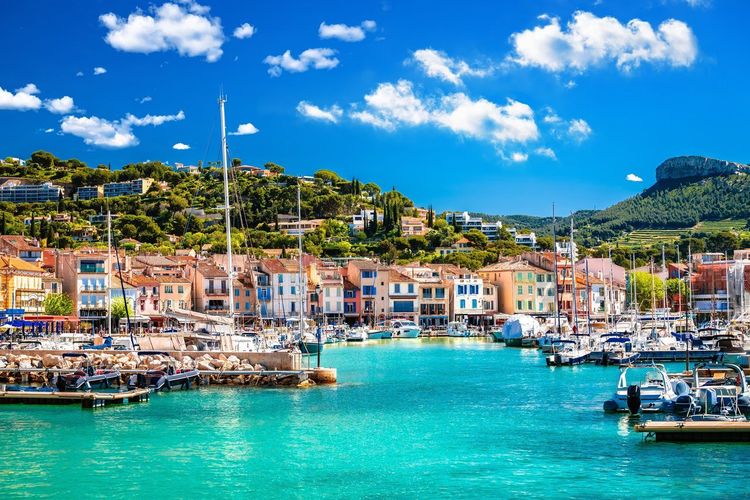
The question comes up constantly: is the beach at Cassis sand or pebbles? The answer is mixed. La Grande Mer, in the town centre, combines fine sand and gravel, especially on the eastern side. All the others — Bestouan, Arène, Corton and the calanques — are mostly made up of pebbles, sometimes large rocks. Bring water sandals if you plan to explore beyond the centre.
In practice, only a strip of La Grande Mer on the eastern side offers the fine sand that many people imagine when booking. Everywhere else, pebbles dominate — sometimes flat and comfortable, sometimes in large blocks near the rocks. Two accessories really make a difference to the day: water sandals for walking without wincing, and a thick mat or inflatable mattress, far more comfortable than a plain towel laid on the stones.
Family Swimming: the Best Beaches for Children
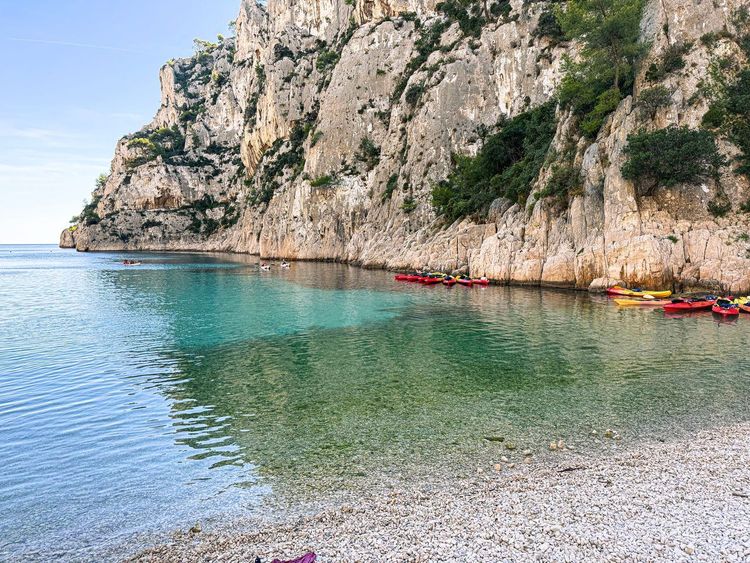
Not all beaches in Cassis are equal when travelling with young children. La Grande Mer remains the safe bet: a gently sloping entry into the water, a seasonal lifeguard post, showers, toilets and snack bars within easy reach of your towel. Le Bestouan suits slightly older children already comfortable with pebbles and water that deepens more quickly.
By contrast, Anse de l'Arène, Anse du Corton and the calanques, with their rocky boulders and plunging seabeds, are poorly suited to toddlers and the logistics of a well-equipped family outing. If your priority is sand and space to set up a parasol and beach toys, the day tilts clearly towards neighbouring La Ciotat, whose large supervised beaches simplify everything from parking to pushchairs. Once the swimming is done, neighbouring Marseille's audio-guided tour offers another way to make the most of the day.
What Is the Most Beautiful Beach in Cassis?
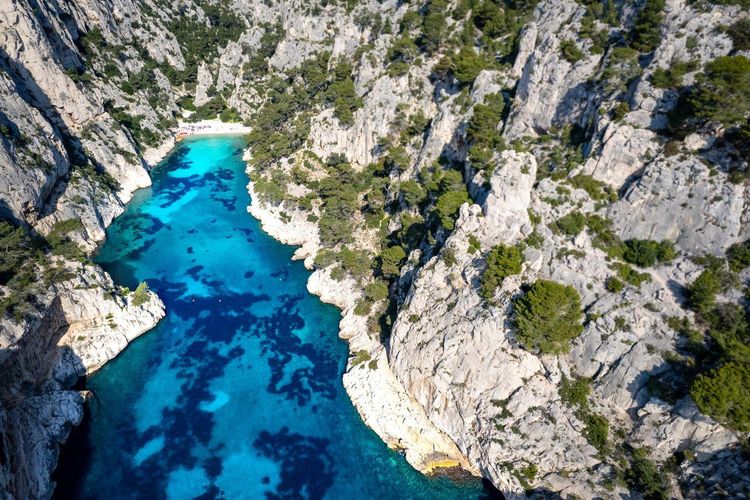
It is hard to give a definitive answer, and the response depends above all on what you are looking for. For a relaxed family swim with easy access, La Grande Mer remains unbeatable despite its crowds. For scenic beauty, the prize goes without much debate to the calanque d'En-Vau and its white cliffs, even if the effort required to reach it puts off some visitors.
Those looking for a compromise between calm and accessibility often turn to Port-Pin, less photogenic than En-Vau but far simpler to reach on foot. The Ryo app also lists reviews and peak-time data for each of these spots, a useful way to make your choice based on the season and the time of your visit rather than a single photo found online.
Ultimately, the "most beautiful beach" in Cassis changes depending on whether you prioritise ease, scenery or tranquillity, and regulars often end up alternating between several coves throughout their stay.
Private Beaches, Sun Loungers and Paddleboarding
Cassis does not operate like the resorts of the Côte d'Azur where private beaches occupy the entire shoreline. Here, only a few beach huts offer paid sun loungers at La Grande Mer, generally around 15 to 20 euros per day. Paddleboard and kayak rentals are available mainly at le Bestouan and on the port during high season.
In practice, you will not find in Cassis those rows of coordinated sun loungers and parasols that privatise the shoreline elsewhere on the coast. The beach huts at La Grande Mer rent a few rows of mattresses and serve drinks and light refreshments, but the vast majority of the coastline, calanques included, remains public, free and without spot reservations. For paddleboarding and kayaking, expect to pay around 15 euros per hour or around thirty euros for a half-day depending on the rental operator, with a surcharge in the middle of August.
Cassis or La Ciotat: Which Beach to Choose for the Day
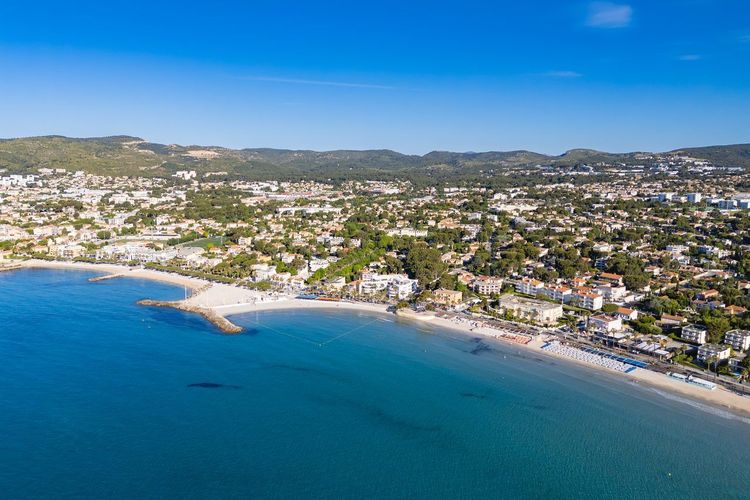
Twenty minutes away by road, La Ciotat offers a different seaside experience, with longer sandy beaches such as plage Lumière and plage du Liouquet. The question "Cassis or La Ciotat" comes up frequently among holidaymakers staying between the two towns.
In Cassis, you come above all for the scenery: a fishing village with cliffs and calanques within walking distance. In La Ciotat, the available space is considerably greater, with fine sandy beaches that more easily accommodate large families and supervised water sports. Ryo users regularly compare the two destinations before choosing their cove for the day, and many end up combining both: the morning in Cassis for the atmosphere of the port, the afternoon in La Ciotat for the expanse of sand.
If your priority is photography and the authenticity of the village, Cassis wins hands down. If you are travelling with young children and bulky beach equipment, La Ciotat clearly simplifies the logistics.
Getting There, Parking and the Shuttle
Parking remains the number one friction point in Cassis in summer. The car park closest to La Grande Mer, by the seafront, is generally full before 10:30 a.m. in July and August. Park-and-ride lots on the outskirts of the village, connected to the centre by a regular shuttle in high season, offer a far more reliable alternative to driving around in circles in the heart of the village.
For the calanques, parking on the road itself is prohibited in high season: it is better to park in the car park at the entrance to the calanques trail, or opt directly for a boat from the port if you are visiting in the height of summer. By bicycle, the Route des Calanques is manageable out of season, but becomes risky in July and August with the heavy traffic.
The Best Spots to Photograph the Beach at Cassis
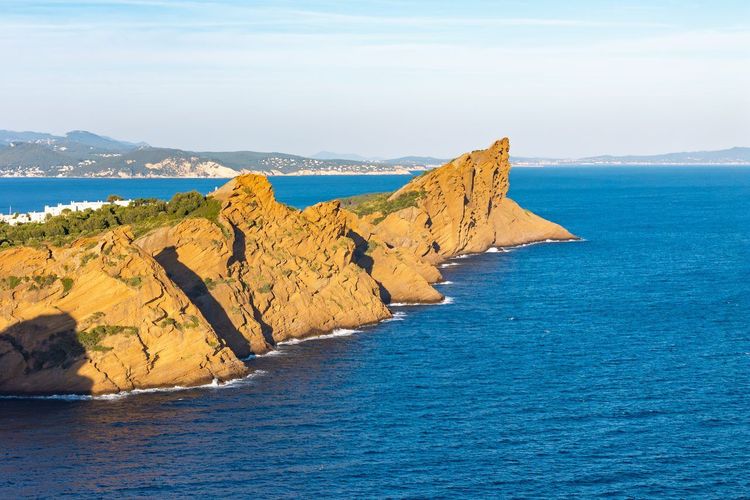
The viewpoint at cap Canaille, accessible by car, offers the most spectacular view of the entire Cassis coastline, with La Grande Mer below and the calanques stretching out on the horizon. The morning light, between 7 a.m. and 8:30 a.m., avoids the heat haze that often blurs shots taken in the middle of the day.
From the port, quai Barthélemy allows you to frame the colourful boats with the castle in the background, a classic that works at any hour. For the calanques, the view from the trail above Port-Pin, just before the descent towards En-Vau, captures the contrast between the white cliffs and the deep blue water better than any viewpoint accessible by car.
When to Go to the Beach in Cassis: Season, Crowds and Flags
Municipal lifeguard cover on the beaches generally runs from June to mid-September, with a flag system (green, orange, red) displayed daily according to sea conditions. July and August concentrate the bulk of the crowds, particularly at weekends when visitors from Marseille and Aix-en-Provence swell the ranks of tourists already present.
May, June and September offer a noticeably more comfortable compromise: water already warm enough for swimming, pleasant temperatures and far less crowded coves. The Cassis Infoplages app, set up by the municipality, allows you to check the crowd levels at each beach in real time before heading there, a valuable tool in the height of summer to avoid unpleasant surprises.
A word about the wind: the mistral can whip up a short swell and lower the water temperature by several degrees in a single night, even in the height of summer. On mistral days, west-facing beaches such as le Bestouan remain better sheltered than La Grande Mer, which faces due south. On the temperature front, the water rarely exceeds 20 °C before mid-June, but stays above 23 °C from July to September, with cold-water upwellings always possible after a strong bout of wind.


FAQ
What is the most beautiful beach in Cassis?
It depends on your criteria. La Grande Mer wins for accessibility and family comfort, while the calanque d'En-Vau remains the benchmark for scenery, with its white cliffs plunging into turquoise water. Port-Pin is often the best compromise between the beauty of the setting and ease of access on foot.
Are the beaches in Cassis sandy or pebbly?
Mostly pebbles. Only La Grande Mer, in the town centre, mixes fine sand and gravel. Le Bestouan, l'Arène, le Corton and the three main calanques are composed of pebbles, sometimes large rocks, which is why it is worth bringing water shoes if you plan to explore beyond the town centre.
Are there private beaches in Cassis?
Not in the way you would find on the Côte d'Azur. Only a few beach huts at La Grande Mer offer paid sun loungers by the day. The rest of the coastline, including the calanques, remains entirely public and free, with no spot reservations possible.
Cassis or La Ciotat: which beach is better?
Cassis charms with its fishing village atmosphere and the immediate proximity of the calanques, while La Ciotat offers wider sandy beaches better suited to families with bulky equipment. Many visitors combine both destinations in a single day.
Do you need to book to access the calanques of Cassis in summer?
No. Unlike the calanque de Sugiton on the Marseille side, the calanques of Cassis (Port-Miou, Port-Pin, En-Vau) do not require an online reservation. However, on-foot access to the massif is regulated every day from June to September based on fire risk: you must check the daily access map from the Parc national des Calanques before setting out, as the massif can be completely closed on days of strong mistral. Boat access from the port is not affected.
Where should you park to go to the beach in Cassis in summer?
The closest car park to La Grande Mer fills up quickly in high season. Park-and-ride lots on the outskirts, served by a regular shuttle, are the most reliable option to avoid driving around in circles looking for a space in the middle of August.
Cassis does not offer one single vast beach, but a mosaic of coves each with its own rhythm, from the lively La Grande Mer in the town centre to the silent cliffs of En-Vau. Taking the time to compare these options before you leave avoids many disappointments, especially in the height of summer when parking and crowds often dictate the day's schedule.
To extend your visit beyond the coastline and discover the village that inspired so many painters, the Ryo guide to Cassis remains the most comprehensive resource for putting together a stay that goes beyond a beach towel, taking in the old port, the appellation vineyards and the viewpoints of cap Canaille.
À lire également