© Shutterstock
 Votre guide Ryo
Specialties of Spain: The Gourmet Guide to Regional Flavors (2026)
Looking for a specialty in Spain is like opening a gourmet atlas: this country is one of the few where eating badly is almost impossible — not because every restaurant is starred, but because the culture of the table has been structurally serious here for centuries. A good Spanish specialty is not ordered: it is found, in the right city, at the right counter, sometimes without a menu or price list. From the jamón ibérico hanging from the ceilings of Madrid's bars to the thick salmorejo that grandmothers from Córdoba pour out, every region has developed its own codes, its own products, its own mealtimes. This guide covers Spanish gastronomy region by region, with concrete facts: the authentic paella from Valencia has never contained seafood, Andalusian gazpacho was historically served as a drink, and the pintxos of San Sebastián boast one of the highest bar densities in Europe. To explore these cities through the eyes of a local, the Ryo audio guide of Madrid or the road trip Andalusia offer a guiding thread between heritage and the table.
Tapas and Pintxos: The Art of Eating Standing Up
The tapa was born of a practical legend: in the 19th century, innkeepers would place a slice of bread or cured meat on top of wine glasses to keep flies out. "Tapar" means to cover. Whether true or not, this story says something essential: the tapa is not a dish — it is a convivial gesture.
Today, the word covers a very diverse reality depending on the region. In Madrid, a tapa still often comes with a drink at no extra charge in certain bars in the La Latina neighbourhood. In Granada, the tradition is even more generous: ordering a drink earns you a free plate, sometimes a substantial one. In Barcelona and the major cities along the Catalan coast, the tapa is more of a paid, elaborate starter served in shot glasses or on slate boards.
Pintxos (pronounced "pintchos") are the Basque version of the tapa and deserve their own category. The word comes from "pinchar", to pierce, as each preparation is held by a toothpick or skewer on a slice of bread. In San Sebastián (Donostia), the concentration of pintxos bars in the old quarter is such that locals practise the "txikiteo": a one-hour bar crawl where you move from bar to bar, a glass of txakoli in one hand and a pintxo in the other.
The most iconic preparations: gildas (anchovies, green olive, guindilla pepper), pan-fried foie gras pintxos, stuffed mushrooms, crispy bacalà bites. The quality of Basque pintxos has helped make San Sebastián one of the cities with the highest number of Michelin stars per capita in the world. For a traveller, the best approach is never to sit down: the counter is where quality is freshest and prices are lowest. Arrive between 1 pm and 2:30 pm, or between 8 pm and 10 pm. Outside these windows, the pintxos have been sitting on the bread too long.
The difference between tapas and pintxos is also geographic. In Andalusia, the tapa is a gesture of hospitality. In the Basque Country, the pintxo is a demonstration of technique. Two philosophies of the small plate, two ways of entering the local culture.
Paella and Valencian Rice Dishes
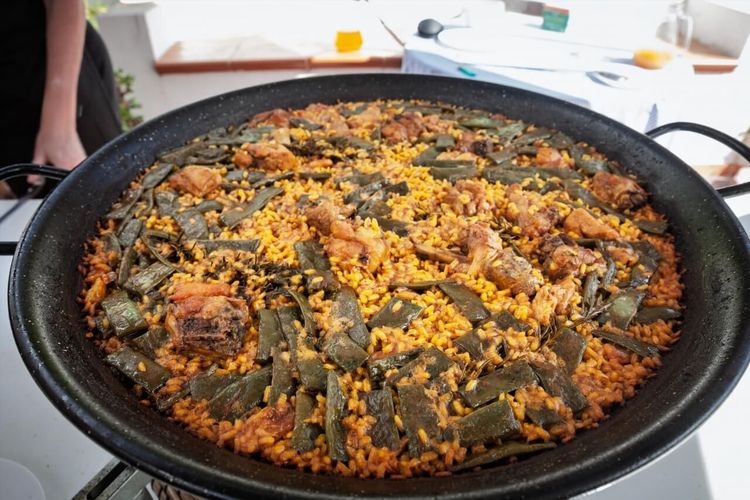
Let us settle this once and for all: paella valenciana does not contain seafood. The original, as it has been prepared in the villages of the Albufera south of Valencia since the 16th century, is made with chicken, rabbit, flat green beans (ferraura), lima beans (garrofó), tomato, olive oil, saffron and rosemary. Seafood is a tourist-driven adaptation — admittedly tasty — but it goes by another name: paella de mariscos.
What distinguishes a good paella from a poor one is the socarrat: the thin caramelised crust that forms on the bottom of the pan once the rice has absorbed all the broth. A Valencian cook judges their work by this crispy brown layer. If the paella you are eating has no socarrat, you are most likely in a tourist restaurant.
Valencia offers far more than paella. Arroz a banda is a fishermen's rice cooked in a concentrated fish stock, served with aioli. Arroz negro gets its colour and briny flavour from squid ink. Fideuà replaces rice with thin vermicelli noodles, toasted dry before cooking — an invention attributed to a cook at the port of Gandia who, legend has it, ran out of rice one evening in 1915.
To eat an honest paella in Valencia, avoid the waterfront restaurants displaying laminated photos. Head instead to the Ruzafa neighbourhood or seek out the villages of the Albufera — El Palmar in particular — where families serve the ancestral recipe in undecorated dining rooms. The Ryo audio guide of Valencia covers the historic centre with 26 audio tracks over 7.1 km — an efficient way to absorb the local culture before choosing your restaurant.
The paella pan ranges from 30 cm for two people to over 1 metre for Sunday family gatherings. It is an outdoor cooking utensil par excellence: orange-wood fires are traditional in the Comunitat Valenciana and give the dish a subtle smoky, slightly sweet note that is impossible to replicate on an electric hob.
Gazpacho and Salmorejo: Andalusia in a Bowl
Two cold preparations, two different philosophies. Gazpacho is a liquid soup — almost a drink: tomato, cucumber, green pepper, onion, garlic, sherry vinegar, olive oil. Chilled and poured into a glass or cup, it is drunk in one go like a vegetable juice. In the Andalusian countryside, agricultural workers used to carry it in flasks to cope with the summer heat. It was liquid nutrition before it became a restaurant starter.
Salmorejo is a different matter entirely. Thicker, richer, almost creamy. It has been made in Córdoba for centuries with ripe tomatoes, day-old stale bread, raw garlic and a generous pour of olive oil. The result resembles a thick purée of deep red, garnished with thin strips of jamón ibérico and crumbled hard-boiled egg. It is one of the most satisfying preparations in Spanish cuisine — simple in appearance, unforgiving when it comes to ingredient quality.
Córdoba is the capital of salmorejo. The best version you will find in this city will most likely be in an unpretentious bar in the Judería quarter, not in the restaurants around the Plaza. The audio-guided tour of Córdoba, "the city of three cultures", offers 23 audio tracks over 8.2 km — an ideal introduction to the history of this city and an explanation of why its cuisine, like its architecture, blends Arab, Jewish and Christian influences.
A lesser-known variation: ajoblanco, a cold soup made from white almonds, garlic, bread and muscat grapes to sweeten. Originally from Granada and Málaga, it is white as plant-based milk and served with grapes or melon slices. Not to be missed in September, when the vines of the Granada vega are at their best.
Spanish Cured Meats: Jamón, Chorizo, Morcilla
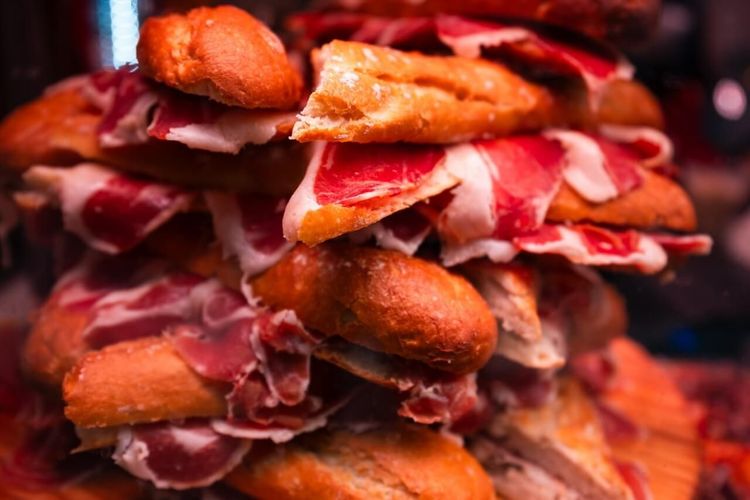
Spain produces the two most distinct ham legs in the world: jamón serrano and jamón ibérico. The former is a mountain-style ham made from white pork, air-dried for 8 to 24 months at altitude in naturally ventilated curing rooms. The latter is of an entirely different nature: the Iberian pig is a distinct breed, raised semi-wild in the dehesa (cork oak forest), fed on acorns (bellotas) during the final months before slaughter. Jamón ibérico de bellota, the highest category, can be cured for up to 48 months.
How to read a label? Spanish regulations (Real Decreto 4/2014) have classified jamón ibérico into four categories since 2014: negro (100% Iberian, acorn-fed), rojo (Iberian, acorn-fed), verde (Iberian, mixed diet), blanco (Iberian, grain-fed only). The black tag on the animal's leg indicates breed purity and an acorn diet. It is the absolute benchmark, with prices exceeding €200 per kilogram.
The main production areas: Jabugo in Andalusia (province of Huelva), Guijuelo in Castile and León, Los Pedroches in Córdoba. Each has its own protected designation of origin and its own flavour characteristics. A ham from Jabugo and a ham from Guijuelo do not taste the same on the plate, even if they share the same bellota label. This cured meat remains one of the most sought-after Spanish specialties among travellers.
Chorizo is not a generic spicy sausage: it is a cured sausage made from minced pork seasoned with pimentón de la Vera (smoked paprika from Extremadura) and garlic. It comes in a sweet (dulce) and a spicy (picante) version. Morcilla (black pudding) also varies by region: in Burgos it is made with blood, rice and onion; in Andalusia it incorporates raisins and almonds. Both cured meats feature in the composition of almost all traditional slow-cooked Spanish dishes.
Spanish Cheeses: Manchego, Idiazabal and the Others
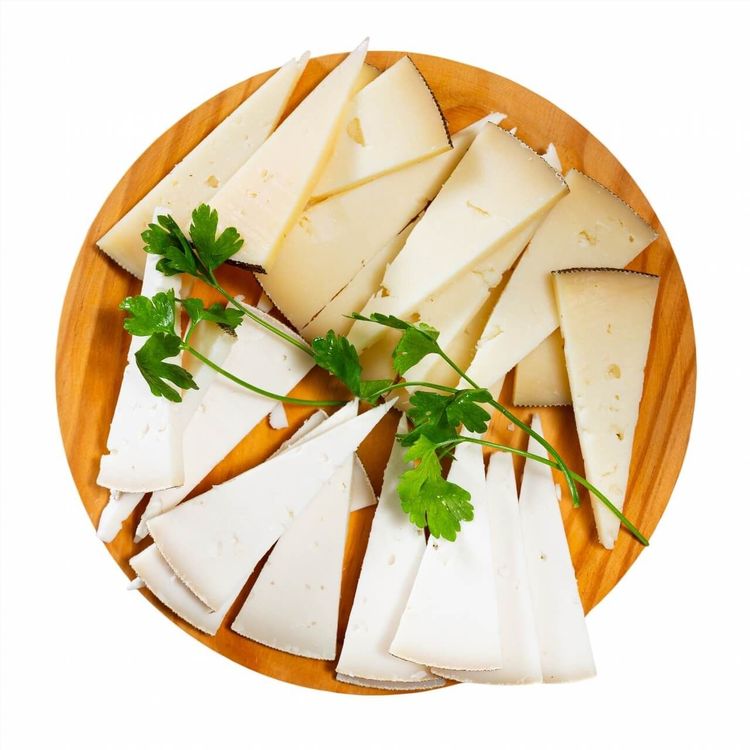
The most exported Spanish cheese is manchego, made from manchega ewe's milk in the La Mancha region. Its characteristic rind bears the woven imprints of the traditional esparto-grass mould. It comes in several ageing stages: fresco (a few weeks), semicurado (3 months), curado (6 months), viejo (up to 2 years). The texture ranges from supple and mild to grainy and sharp. Curado manchego paired with quince jelly (membrillo) is one of the most successful sweet-savoury pairings in Iberian cuisine.
From the Basque Country, idiazabal is a smoked ewe's milk cheese using cherry or beech wood, with a firm paste and a mildly peaty flavour. It features in sauces and pintxos but is also eaten on its own with a glass of txakoli. Tetilla from Galicia is the opposite: mild, breast-shaped (hence the name), made from the milk of Galician cows in a region that resembles Ireland more than Andalusia.
What strikes you about the Spanish cheese landscape is the diversity that goes unnoticed beyond its borders. There are more than 150 cheeses recorded by the Spanish Ministry of Agriculture, around thirty of which hold a protected designation. Most never leave their province. Cabrales from Asturias, a blue cheese aged in natural caves in the Picos de Europa massif, is the equal of any roquefort. Roncal from Navarre, the first Spanish cheese to obtain a PDO in 1981, is too rarely mentioned in general-interest guides.
Seafood and Cocina de Mar
Spain has 4,964 km of coastline between the Atlantic and the Mediterranean, and this geography is directly reflected on the plate. Spanish seafood cuisine is not a single tradition: it is several overlapping coastal cuisines depending on the region.
In Galicia, in the Atlantic northwest, the specialties revolve around shellfish. Percebes (goose barnacles) are crustaceans harvested by hand from wave-lashed rocks, at great cost (between €40 and €80 per kilo depending on the season) and at risk of life for the percebeiros. Pulpo a feira is boiled octopus cut into rounds, drizzled with olive oil and pimentón on a wooden board. It is a festive dish in Galicia, served at fairs on outdoor trestle tables.
In Andalusia, fried fish reigns supreme: pescaíto frito from Cádiz is a specialty of small fish (boquerones, squid, cuttlefish) coated in flour and fried in boiling olive oil. The lightness of the fry comes from the special flour and the oil temperature. The best bars in Cádiz turn out crispy fish that leaves no grease on your fingers.
Along the Catalan Costa Brava, suquet de peix is a fish stew in a tomato and ground-almond broth — a typically Catalan binding technique called picada. The gastronomy of Barcelona extends well beyond tourism. The audio walking tour of Barcelona, with 26 audio tracks over 6.4 km, helps you locate markets, neighbourhood bars and addresses off the commercial tourist trail.
Slow-Cooked Dishes from Central Spain: Cocido Madrileño and Fabada Asturiana
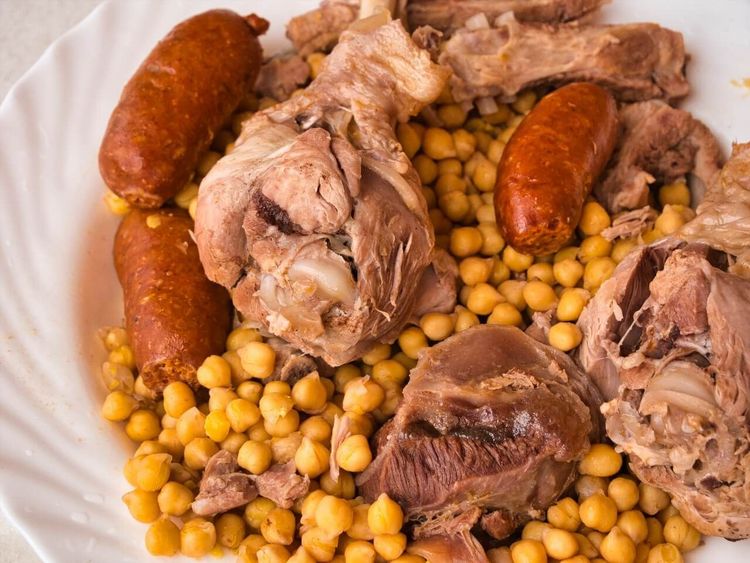
The cuisine of central Spain — Castile, Extremadura, Madrid — is a cuisine built to withstand the cold. Winters are harsh on the central plateau, and the dishes born there are caloric powerhouses designed to keep you on your feet for a full day's work.
Cocido madrileño is Madrid's unofficial national dish. A Spanish pot-au-feu served in three successive courses: first the broth with thin vermicelli (la sopa), then the vegetables (chickpeas, potatoes, cabbage), and finally the meats (beef shank, chorizo, morcilla, tocino, marrow bone, chicken). It simmers for several hours over a low heat. Cocido is traditionally eaten on Wednesdays in classic Madrid restaurants — a tradition all the more alive as families still prepare it at home on weekends.
To find a good cocido in Madrid, look for restaurants that serve it only at lunchtime, list it as the sole daily special or require a reservation made the week before. These are signs they make it themselves rather than reheating it. Casa Carola in the Chamberí neighbourhood and Malacatín near La Latina are local references with no international pretensions.
Fabada asturiana is different in its philosophy: a northern-style cassoulet made with fabes (large white Asturian beans), chorizo, morcilla and lacón (salted pork shoulder). Asturias is Spain's most humid and forested region; its dishes reflect an Atlantic rurality that has nothing in common with Andalusia. Fabada is best enjoyed alongside a sidra (Asturian cider) poured from a height to aerate it — a ritual gesture that Asturians perform with disarming nonchalance.
Extremadura produces two of the finest ingredients in Spanish cuisine: pimentón de la Vera and jamón ibérico de Guijuelo. The city of Mérida, whose Roman centre is covered by the Ryo audio-guided tour of Mérida in 18 audio tracks, offers authentic gastronomy ranging from Extremaduran migas (breadcrumbs sautéed with cured meats) to cordero a la miel (lamb with dehesa wildflower honey).
Desserts and Sweet Treats: Churros, Ensaimada, Tarta de Santiago
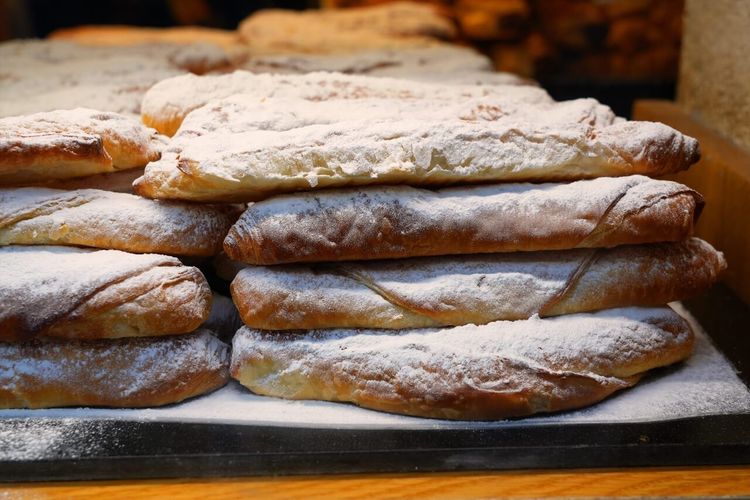
Spanish pastry is less codified than French pastry, yet it is deeply rooted in very strong regional traditions — often of monastic origin. The nuns of Spanish convents played a decisive role in preserving ancient recipes, some of which were inherited from medieval Arab cuisine.
Churros are the most globally recognised sweet specialty. In Spain, they are eaten at breakfast, dipped in a thick hot chocolate called chocolate a la taza — not as a theme-park snack. Madrid's churros are thin and elongated; porras are thicker, crispy on the outside and soft inside. The Chocolatería San Ginés (Pasadizo de San Ginés 5, 28013 Madrid, rated 4.3/5 on Google with 71,240 reviews) in Madrid has been open since 1894, 24 hours a day, drawing Sunday-morning families and 4 am night owls in equal measure. It is an institution that says something about the place of sugar in Madrid life.
Ensaimada is a spiral brioche originating from Majorca. Its name comes from "saïm", the lard that soaks into it and gives it that simultaneously stringy and light texture. It comes plain or filled with cream, napolitanas (pumpkin jam) or sobrassada (Majorcan red pork sausage). Authentic ensaimadas are bought in pastisseries in Palma de Majorca, packaged in their distinctive round boxes for the journey home — one of the best Spanish specialties to bring back.
Tarta de Santiago is Galicia's defining cake: flour-free, made solely from ground almonds, eggs and sugar, with a fine Saint James cross in icing sugar on the surface. Its first written mention dates to the 16th century and it has held a protected geographical indication since 2006. Its dense, moist texture bears no resemblance to the dry versions found elsewhere.
Other regional sweets worth highlighting: pestiños from Andalusia (honey-and-cinnamon fritters eaten during festive periods), crema catalana (predating French crème brûlée according to Catalan historians, with the first mention dating to 1324), yemas de Ávila (egg yolks candied in sugar, sold in small round wooden boxes), and polvorones from Castile (crumbly shortbreads with cinnamon and toasted almonds, ubiquitous at Christmas). In Madrid, many of them are best tracked down on foot, along the twenty stops of our audio-guided tour between the Puerta del Sol and the Prado.
Drinks: Horchata, Cava, Txakoli and Wines
Horchata de chufa is a Valencian drink widely misunderstood outside Spain. Chufa is not a nut: it is a tuber (tiger nut), cultivated in the Valencia region since the Middle Ages. The resulting horchata is a naturally sweet plant-based milk, served chilled with fartons (elongated brioche rolls for dipping). In Valencia, horchaterías are taken as seriously as Viennese coffee houses. Some families have been running their establishments for three generations.
Catalan cava meets the same traditional method requirements as Champagne but uses local grape varieties (xarel·lo, parellada, macabeu). Produced mainly in the Penedès area around Barcelona, it ranges from Brut Nature (very dry, zero dosage) to Dulce. The best organic cavas from small producers are beginning to rival entry-level Champagnes at a fraction of the price.
Rioja produces some of the world's most respected age-worthy reds. The Spanish ageing classification — Crianza (minimum 2 years), Reserva (3 years), Gran Reserva (5 years) — is more readable than the Bordeaux classification system. The dominant grape is tempranillo, sometimes blended with garnacha or graciano. Wines from Ribera del Duero in Castile have been challenging Rioja since the 1990s for lovers of powerful reds.
Basque txakoli is a very dry, lightly sparkling white wine at low alcohol (9–11%), poured from a height to create a froth and release the aromas. It is inseparable from the pintxos of San Sebastián. Manzanilla and fino from Jerez (dry sherry) are always served chilled alongside seafood and tapas in Cádiz and Seville. These two wines, biologically aged under a layer of yeast called flor, have nothing in common with the dusty image of port that many tourists associate with sherry.
Markets: Where to Buy Spanish Specialties to Take Home
Every major Spanish city has its covered market, and these markets are among the best places to buy a specialty in Spain to take home in your suitcase. Here are the most interesting ones by city.
Madrid: the Mercado de San Miguel (a stone's throw from Plaza Mayor) has become touristy but remains useful for high-quality preserves, oils and spices. The Mercado de Maravillas in the Cuatro Caminos neighbourhood is the real local market — more authentic and cheaper.
Barcelona: the Boqueria on the Ramblas is overrun with tourists, but the charcuterie and cheese stalls remain excellent if you arrive before 10 am. The Mercat de Santa Caterina and the Mercat de l'Abaceria (Gràcia) are the local alternatives.
Seville: the Mercado de Triana (Calle San Jorge 6, 41010 Sevilla, rated 4.4/5 on Google with 11,115 reviews) on the left bank of the Guadalquivir brings together fine food shops, marinated olives and Andalusian preserves you will not find anywhere else.
For purchases to bring back from any city: vacuum-packed sliced jamón ibérico (3 months refrigerated shelf life), vacuum-packed Iberian chorizo or salchichón, pimentón de la Vera in a hermetically sealed metal tin, extra-virgin DOP olive oil from Andalusia or Catalonia, Cantabrian anchovy preserves (Ortiz or Solano Arriola from fine food shops), aged manchego under vacuum, and a bottle of Brut Nature cava from a small Penedès producer. Quality turrón from Alicante is only sold between November and January.
Valencia: the Mercado Central is one of the most beautiful covered markets in Europe, housed in an Art Nouveau building dating from 1928. Go for fresh horchata, Valencia oranges (December to March), Valencia DOP rice and locally marinated olives.
Unusual Regional Specialties: What Few Guides Mention
Beyond the classics, Spanish gastronomy holds preparations that even specialist guides often overlook.
Migas is one of the oldest dishes in Spain — literally stale bread crumbs sautéed with oil, garlic, chorizo and sometimes raisins or anchovies. Found across the peninsula in local variations (migas extremeñas, migas manchegas, migas de pastor), it is proof that poverty cooking becomes heritage. In the villages of the Sierra Nevada around Granada, migas are served on Sunday mornings after Mass, accompanied by a glass of aguardiente.
Pisto manchego (a cousin of ratatouille) is made from tomatoes, peppers, courgettes and onions slowly simmered in olive oil. It is served hot with a fried egg on top or cold as a sauce to accompany meat. The best versions are found in ventas (roadside inns) in La Mancha, along the secondary roads between Madrid and Córdoba.
Cochinillo segoviano, roast suckling pig from Segovia, is a specialty that borders on ritual. The animal, less than 21 days old and weighing under 5 kilos, is carved with a ceramic plate — not a knife — to demonstrate the tenderness of the meat. In Segovia's traditional restaurants, this tableside performance is as much of an attraction as the meal itself.
Angulas (baby eels) are Spain's most expensive seafood, fetching between €800 and €1,200 per kilo in season. Transparent, cooked for 30 seconds in olive oil with garlic and chilli, they do not justify their luxury reputation through flavour (neutral and gelatinous) but through absolute scarcity. The season runs from November to February in the estuaries of the northern Cantabrian coast.
Mojo canario is the emblematic sauce of the Canary Islands: it comes in two versions — mojo rojo (red chilli, cumin, garlic, paprika, vinegar) and mojo verde (coriander or parsley, garlic, cumin). Both accompany papas arrugadas, potatoes cooked whole in heavily salted water until the skin wrinkles and crystallises. This dish symbolises Canarian cuisine better than anything else. To explore the authenticity of Tenerife's villages, the audio-guided tour of La Orotava offers 16 audio tracks along the mountain slopes.
Finally, Galician empanadas — savoury pies filled with tuna, octopus or meat depending on the season — are sold by the slice in Galician bakeries like pizza. Their pastry is made from corn or wheat flour, thin and crispy. The version with octopus and caramelised onion is particularly remarkable.
Where to Eat by City: Addresses and Practical Tips
Spain is best explored when you know where to eat in each city. Here are practical pointers by destination, with the neighbourhoods to prioritise and the pitfalls to avoid.
Madrid: the capital brings together all of Spain's regional cuisines under one roof. For authentic cocido madrileño: look for restaurants in La Latina or Lavapiés that serve it only at lunchtime, as the sole daily special. For quality tapas: Calle de la Cava Baja and its surroundings are a safe bet, but the lesser-known parallel streets offer better value for money. For the market: Mercado de Vallehermoso (Calle Vallehermoso 36, 28010 Madrid, rated 4.4/5 on Google with 6,795 reviews) (Chamberí) is more local than San Miguel. The Ryo audio guide of Madrid covers 23 audio tracks between the Royal Palace and the La Latina neighbourhood, a route that passes several historic addresses.
Seville: the Andalusian capital is better for casual tapas than for fine dining. The local institution: Bar El Rinconcillo (1670, the oldest bar in Seville), where the waiter tallies the bill in chalk on the counter. For seafood: the bars of Triana. For jamón ibérico: the fine food shops on Calle Sierpes. The audio-guided tour of Seville helps you scout the neighbourhoods before choosing your bar.
Barcelona: Barcelona's gastronomy is diverse and rarely disappoints. The Gràcia and Poble Sec neighbourhoods offer the best value for money. Restaurants in Born or Sant Pere are more refined but pricier. For authentic Catalan tapas (pa amb tomàquet, croquetas, patatas bravas with aioli): look for bars that have no English-language menu. The audio walking tour of Barcelona guides you through the alleyways of the Barri Gòtic.
Bilbao: after San Sebastián, the Basque capital is the most serious dining city in Spain. The Ensanche neighbourhood (right bank) concentrates the high-end pintxos bars. The Casco Viejo (old town) is more popular and affordable. The audio-guided tour of Bilbao covers 21 audio tracks over 7.3 km to help you navigate between the different neighbourhoods.
Málaga: less well-known than Seville or Granada at the table, Málaga deserves more attention. Its espetos (sardines grilled on bamboo skewers on the beaches of Pedregalejo) are a unique experience in Spain. The local wine, vino de Málaga, pairs beautifully with marinated anchovies. The audio-guided tour of Málaga is the ideal starting point to explore the city: 24 audio tracks over 5.3 km.
Granada: the only city in Spain where a tapa is still given free with your drink. The bar of the Antigua Castañeda in the Albaicín, the bars on Calle Navas and the small bars in the streets around Plaza Nueva remain the best options for quantity-to-quality ratio. The culinary specialties of Granada are covered in a dedicated article on the Ryo blog.
Valencia: for Valencia's culinary specialties in context, the article top 10 culinary specialties in Valencia covers local addresses and products in depth.

FAQ
What is the most famous culinary specialty of Spain?
Paella valenciana is arguably the most internationally recognised, but Spaniards themselves would more likely cite jamón ibérico or tapas as the national emblem. Paella is first and foremost a regional specialty of the Comunitat Valenciana; its worldwide reputation far exceeds its actual geographic spread within the country. The tortilla española, for its part, is the true everyday dish found in every home and every bar in Spain.
What do people eat as a starter in Spain?
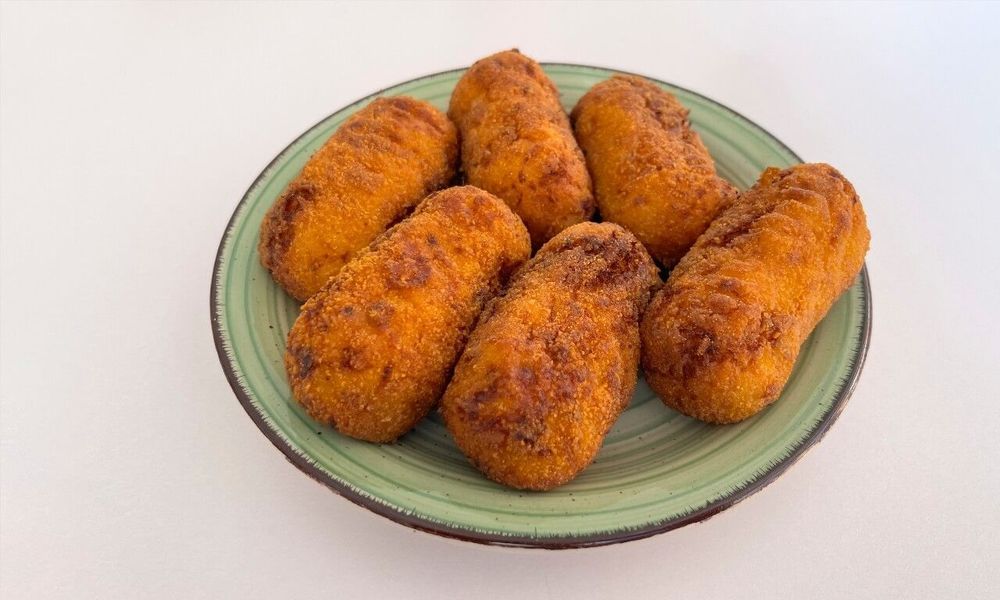
In Spain, the structure of a meal differs from that of France. 'Starters' are often eaten in the form of tapas or raciones (half-portions) shared among diners. A traditional meal might begin with jamón, croquetas de jamón or bacalà, a tomato salad, garlic-sautéed mushrooms, or Galician-style octopus. Escabeches (oil and vinegar marinades) and ensaladas variadas are also common starters on the lunchtime menu.
Which Spanish specialties can you bring back home?
The easiest products to transport and the most worthwhile to bring back: vacuum-packed sliced jamón ibérico (3 months refrigerated shelf life), vacuum-packed Iberian chorizo or salchichón, pimentón de la Vera in a hermetically sealed metal tin, extra-virgin DOP olive oil from Andalusia or Catalonia, Cantabrian anchovy preserves, aged manchego under vacuum, a bottle of Brut Nature cava from Penedès, and turrón from Alicante (only from November to January, or vacuum-packed year-round).
What is the sweet specialty you absolutely must try in Spain?
Answers vary radically by region. In Madrid: churros dipped in thick hot chocolate at the Chocolatería San Ginés. In Galicia: tarta de Santiago, a flour-free almond cake. In Majorca: ensaimada filled with sobrassada. In Catalonia: crema catalana. In Toledo: hand-crafted mazapanes. Every city has its signature pastry, and that is precisely what makes Spanish gastronomy so rewarding to explore.
What is the difference between tapas and pintxos?
Tapas are small portions served throughout Spain, sometimes free with a drink (in Andalusia), sometimes paid for separately. They have no fixed form. Pintxos (or pinchos) are a Basque and Navarrese specialty: a preparation held on a slice of bread by a toothpick, sold individually, with the price generally displayed on a chalkboard. The difference is as much geographic as formal; expect around 2 to 3 euros per pintxo in ordinary bars in San Sebastián, up to 5 to 7 euros in gastronomic establishments.
Where can you eat the best paella in Spain?
In Valencia, in the villages of the Albufera (El Palmar, El Saler) rather than on the tourist waterfront. Restaurants that cook over orange-wood fires are the most authentic. In Madrid, some Valencian restaurants offer a respectable paella. Avoid any paella mixing seafood and chicken in the same pan — that is a commercial signal, not a regional recipe.
Can you eat well as a vegetarian in Spain?
It is possible but requires vigilance. Spanish cuisine is structurally meat-based (meat-based broths, charcuterie in vegetables, jamón in salads). However, naturally vegetarian options do exist: pisto manchego, gazpacho, salmorejo without jamón, tortilla española, arroz con verduras, croquetas de queso, patatas bravas, Catalan pan con tomate. In major cities (Madrid, Barcelona, Seville), vegetarian and vegan restaurants have multiplied since 2015 and offer creative cuisine without compromise.
To Pack in Your Suitcase
A specialty in Spain never exists in the singular: Spanish gastronomy is a mosaic of regional traditions built in parallel over five centuries of separate kingdoms. The jamón of Extremadura, the rice of Valencia, the Basque pintxo and the salmorejo of Córdoba share nothing in common except olive oil and a certain religion of ingredient quality. Understanding this diversity is also understanding why Spain is such a rewarding country to travel through — every region is another culinary journey.
To explore these cities with an informed eye, the road trip Andalusia covers the key stops of the south with an audio-guided approach that connects heritage and the table. The audio-guided tours of Barcelona, Madrid, Valencia, Córdoba, Málaga and Seville are all available on the Ryo app — a way to locate markets, historic neighbourhoods and food addresses before you even step off the plane.
À lire également