© Shutterstock
 Votre guide Ryo
Visiting Madrid for the First Time: The Complete 2026 Itinerary
Visiting Madrid for the first time means rethinking your usual travel rhythm: here, lunch starts at 2 pm, dinner after 9:30 pm, and the terraces of the Plaza Mayor are still buzzing on a Tuesday night in January. The Spanish capital packs into a few square kilometers a royal palace with 3,418 rooms, three major museums lined up within less than a kilometer, and a park of nearly 120 hectares in the heart of the city. To get your bearings from the very first hours, the Ryo audio-guided tour of Madrid links the Royal Palace, the Almudena Cathedral and the La Latina neighborhood on foot, without having to open a map every five minutes.
This guide answers a very practical question: how many days to plan, and in what order to tackle historic Madrid, the art triangle, the day trips to Toledo or Segovia, and the flamenco shows that often don't start until after 10 pm? We also add the neighborhoods to explore on foot, the covered markets, the best places to go with children and the real budget for a stay in Madrid.
How Much Time to Plan for Visiting Madrid for the First Time
To visit Madrid for the first time, two days are enough to tick off the essentials: the Royal Palace, the Plaza Mayor, a museum of your choice and a flamenco evening. This is the format covered by our guide to visiting Madrid in 2 days, designed for a short stopover or an extended weekend.
Three to four days change everything. You gain the time to visit the three museums of the art triangle without rushing through them, to stroll through Retiro Park for a whole afternoon, and to add a day trip to Toledo or Segovia. This is the rhythm followed by this itinerary, organized into three full days in the city, extended by an optional day trip. If your stay lasts more than a week, nothing stops you from spreading this program out further and adding a second excursion, or an extra evening in a neighborhood like Malasaña.
For the daily rhythm, plan one morning per major monument or museum, a late lunch around 2 pm, then a freer afternoon devoted to a neighborhood. This is wide enough to visit Madrid without rushing, while leaving room for the unexpected: a terrace that makes you want to linger, a queue at the Prado that is longer than expected.
Day 1: Historic Madrid, from the Royal Palace to the Plaza Mayor
The first day sets the scene: this is where Madrid grew up, between a palace still used for official ceremonies and a square that has seen bullfights, auto-da-fés and public executions. Start early, before the groups fill the morning rooms.
Royal Palace and Almudena Cathedral
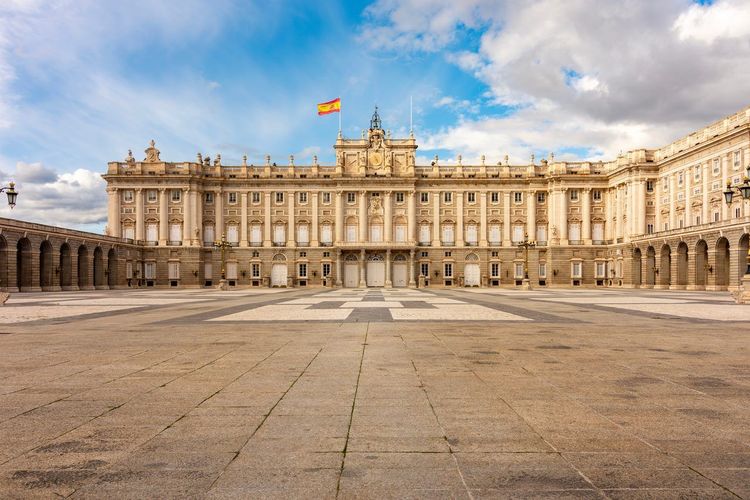
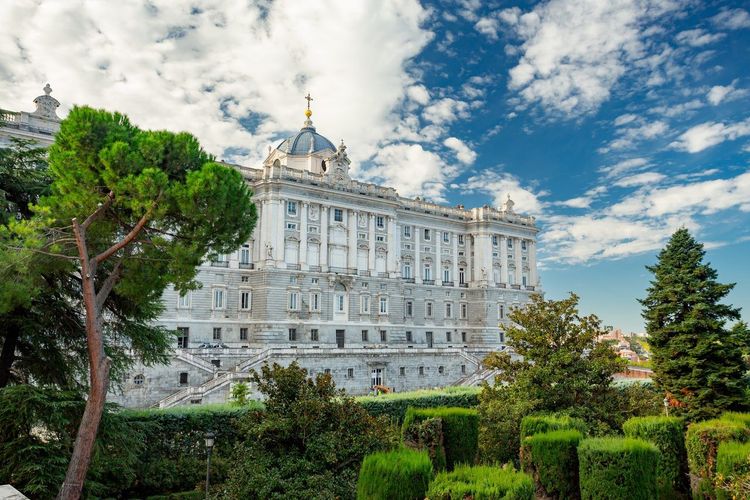
The Royal Palace (Palacio Real) impresses with its numbers even before its decor: 3,418 rooms, 135,000 m², and yet only about fifty can be visited. The throne room and the hall of mirrors are worth the guided tour, which lasts about 1.5 hours. Book a skip-the-line ticket if you go in high season, as the queue easily exceeds 45 minutes from 10 am. The solemn changing of the guard takes place on the first Wednesday of the month at noon (except in high summer and on days of official events), a ritual few guides mention and one that is worth a detour if your dates match.
On your way out, the Almudena Cathedral stands just opposite, on the Plaza de la Armería. Its neoclassical façade, facing the palace, hides a neo-Gothic interior with brightly painted ceilings, a contemporary touch that surprises: the building was only consecrated in 1993, by John Paul II, after more than a century of interrupted construction. Entry is free (a donation is suggested) and the visit takes 20 minutes, making it an easy stop to slot in between the palace and the rest of the program.
Many first-time visitors stop there. Yet just below the palace, on the Paseo de la Virgen del Puerto side, the Campo del Moro garden offers a rarely photographed view of the back of the palace, with fewer people than at the front.
Plaza Mayor and the Habsburg Quarter
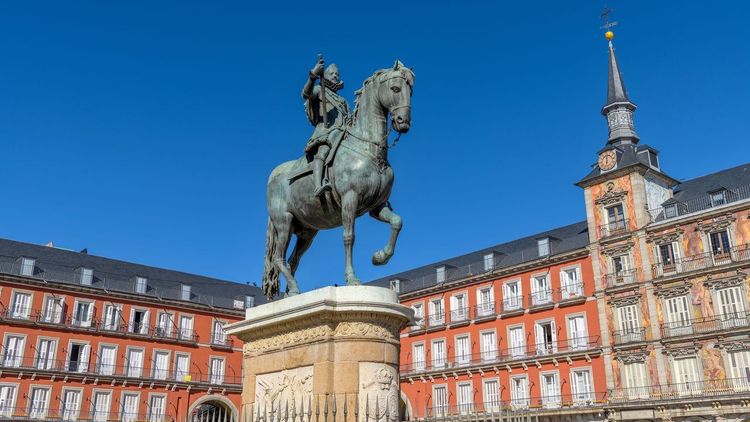
Heading back east, a twenty-minute walk leads to the Plaza Mayor, the heart of Habsburg Madrid. Completed in 1619, this rectangular square lined with arcades has hosted bullfights, Inquisition trials and flea markets before becoming one of the most photographed places in the city. The terraces here are expensive and average in quality; it's better to stop for the photo and save lunch for an adjacent street. The Mercado de San Miguel is a two-minute walk away, on the northwest corner of the square, but it deserves a full meal of its own, covered later in this guide, rather than a quick pass-through.
The surrounding neighborhood, the Barrio de los Austrias, deserves to be explored without a precise itinerary. Its cobbled alleys, sometimes barely three meters wide, are packed with centuries-old taverns and 17th-century façades. The Calle Cava Baja (Calle de la Cava Baja, 28005 Madrid, rated 4.7/5 on Google from 568 reviews), just to the south, lines up about twenty tapas bars that fill up from 8 pm.
To link these two hubs without zigzagging, the short version of the Ryo audio-guided tour, centered on the heart of historic Madrid, traces a continuous loop between the Royal Palace, the cathedral and the Plaza Mayor, with commentary triggered at each stop. Handy for not missing an architectural detail while walking with your head in your phone looking for an address.
To end this first day, opt for a late dinner in the Barrio de los Austrias rather than on the Plaza Mayor itself: prices drop by a good third as soon as you move 100 meters away from the square, for often better quality. Save some energy if you plan to follow up with a flamenco show, covered later in this guide: most tablaos begin their first service around 8:30 pm.
Day 2: Art, Retiro and the Literary Quarter
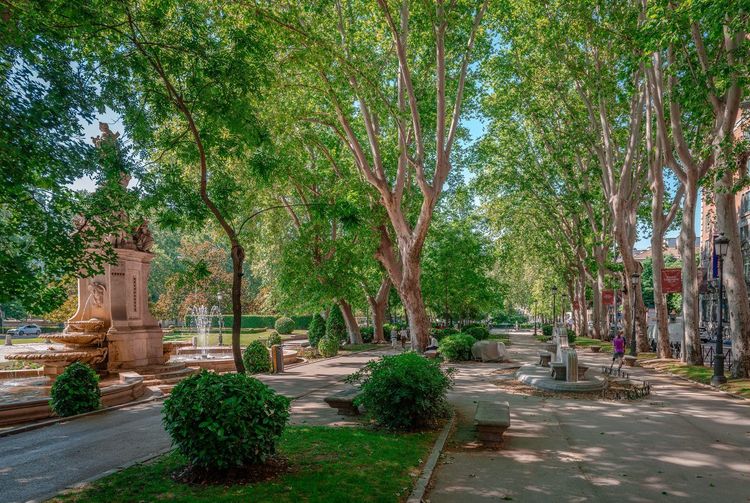
The second day changes register: fewer façades, more collections. Madrid lines up three museums along the Paseo del Prado in less than a kilometer, any one of which would be enough to fill most European capitals on its own.
The Art Triangle: Prado, Reina Sofía and Thyssen
The Prado opens the ball with a collection of nearly 8,000 paintings, only a small part of which, around 1,500 canvases, is on display at any given time. Velázquez, Goya and Hieronymus Bosch occupy the busiest rooms: allow at least 2.5 hours for a visit that isn't just a sprint past Las Meninas.
Ten minutes away on foot, the Reina Sofía takes over with 20th-century art and Picasso's Guernica, displayed in a room of its own since 1992. Entry is free on Mondays and from Wednesday to Saturday from 7 pm to 9 pm, as well as on Sundays from 12:30 pm to 2:30 pm; note that the museum is closed on Tuesdays. A detail that changes the budget of a trip if you schedule your visit late in the day.
The Thyssen-Bornemisza closes this triangle with a private collection acquired by the Spanish state in 1993, which fills the chronological gaps left by the other two museums, from Italian Gothic to pop art. The three museums line the same boulevard, the Paseo del Prado, nicknamed the Paseo del Arte, which you can walk in its entirety in less than 20 minutes.
The Abono Paseo del Arte, a combined ticket for the three museums, costs 32.80 euros in 2026, 20% less than tickets bought separately. Remember to book it online: the Prado's time slots fill up quickly in the morning. Visiting all three museums on the same day is possible but exhausting: it's better to choose two and keep the third for a future return, or for late afternoon if your travel pace can still handle exhibition rooms after lunch.
Retiro Park and the Barrio de las Letras
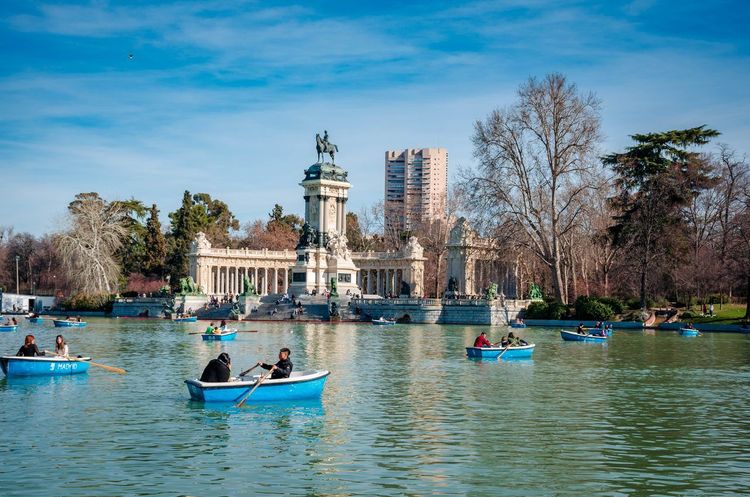
On leaving the Thyssen, Retiro Park opens up five minutes' walk away. Its roughly 118 hectares once housed the private gardens of the Spanish monarchy, open to the public since 1868. The central pond, where you can rent a rowboat for 45 minutes (about 6 euros on weekdays, a little more on weekends), and the Crystal Palace, a metal greenhouse from 1887 used by the Reina Sofía for its contemporary art exhibitions, draw most of the visits. Check whether the greenhouse is open before you go: it closes occasionally for works or between two exhibitions. South of the pond, the Rosaleda gathers more than 4,000 rose bushes in full bloom from May to June, a corner of the park that most hurried visitors completely overlook.
Just west of the Prado, the Barrio de las Letras (Calle de Huertas, 28014 Madrid) changes tone again. This neighborhood owes its name to Cervantes, Lope de Vega and Quevedo, who lived a few streets from one another; Cervantes is in fact buried in the Convent of the Trinitarians, on Calle Lope de Vega, and Lope de Vega's house can be visited free of charge by reservation. The sidewalks are engraved with excerpts from their writings, and the tapas bars here close later than in the rest of the city, often after 1 am on weekends.
The Ryo audio-guided tour The Landscape of Light runs along the Paseo del Prado and borders the Retiro: 19 audio stops over 7.3 km and about 3 hours, centered on this museum district. A good option for linking the three institutions without wasting time finding your way between the entrances.
Day 3: Gran Vía, Plaza de España and Modern Madrid
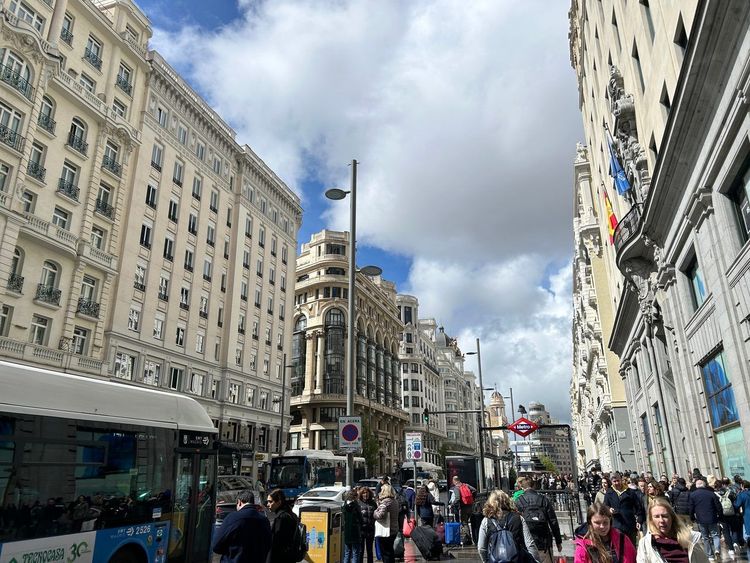
The third day leaves the heritage register for a more 20th-century Madrid, where Belle Époque façades stand alongside bank headquarters and luxury boutiques.
It all usually begins at the Plaza de Cibeles, where the fountain dedicated to the goddess of the same name stands, which has become the rallying point for Real Madrid supporters after every title. Just behind it rises the Palacio de Cibeles, a former post office converted into a city hall and cultural center, whose viewpoint, accessible for a few euros, offers one of the most underrated views in the city.
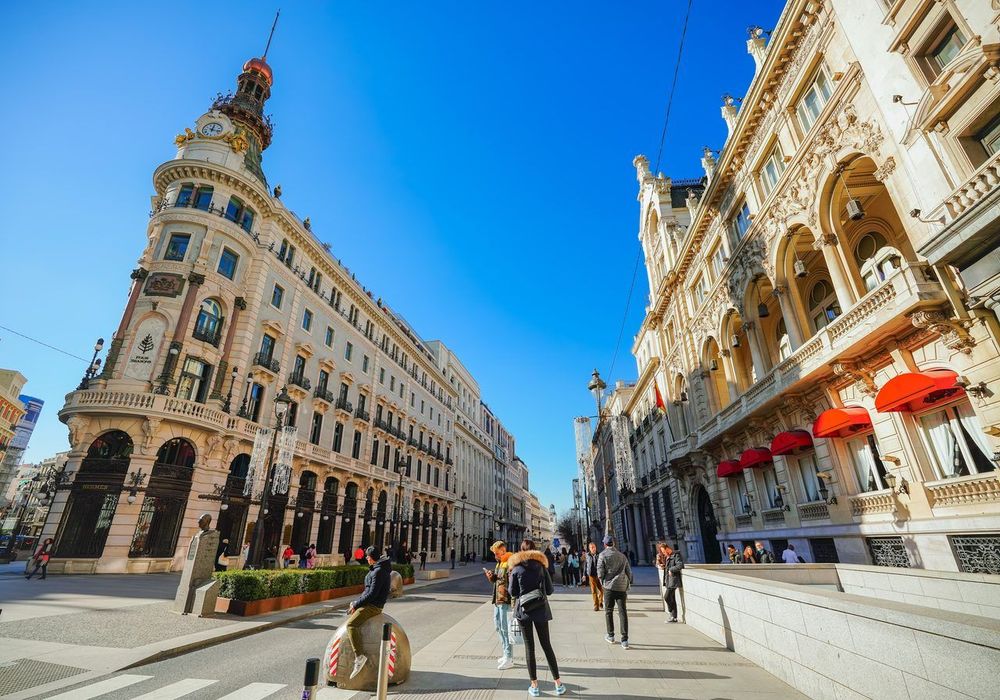
From there, the Gran Vía stretches for 1.3 kilometers, cut between 1910 and 1929 through a maze of medieval alleys to create the shopping and theater artery it has remained. The buildings lining it, like the Edificio Metrópolis with its golden dome, blend French, Viennese and New York influences, earning the street its nickname of the "Madrid Broadway." If you followed the Ryo audio-guided tour between the Royal Palace and La Latina the day before, the Gran Vía offers the perfect counterpoint: three centuries separate the alleys of the Austrias from these façades born in the 20th century. At number 28, the Telefónica building was among the first skyscrapers in Europe when it was completed in 1929, with 89 meters that seem almost modest today; it now houses a free exhibition space on the ground floor, a welcome cool break in high summer.
At the end of the Gran Vía, the Plaza de España (Plaza de España, 28008 Madrid, rated 4.5/5 on Google from 70K reviews) reopened in 2021 after a complete renovation that doubled its green spaces and buried part of the car traffic. The statue of Don Quixote and Sancho Panza remains the must-have photo spot, with the Torre de Madrid and Edificio España, two skyscrapers from the 1950s, as a backdrop.
For the afternoon, two directions are open to you depending on your mood. The Salamanca district, to the northeast, lines up luxury boutiques and late 19th-century bourgeois architecture. Malasaña, by contrast, cultivates an alternative spirit inherited from the Movida of the 1980s, with its vintage shops and cocktail bars that never empty after 11 pm. Football fans can also devote their morning to the Santiago Bernabéu stadium, whose visit is detailed in the section on families further down in this guide. For dinner, avoid the restaurants right next to the Gran Vía metro stops, which are noticeably more expensive and touristy than those two streets further toward Chueca, where menus change every week and prices stay reasonable. The Gran Vía also concentrates most of Madrid's musical offerings, often adapted from English-language productions and performed in Spanish: an evening accessible even without mastering the language, carried by the sets and music more than by the text.
Madrid Neighborhoods to Explore on Foot
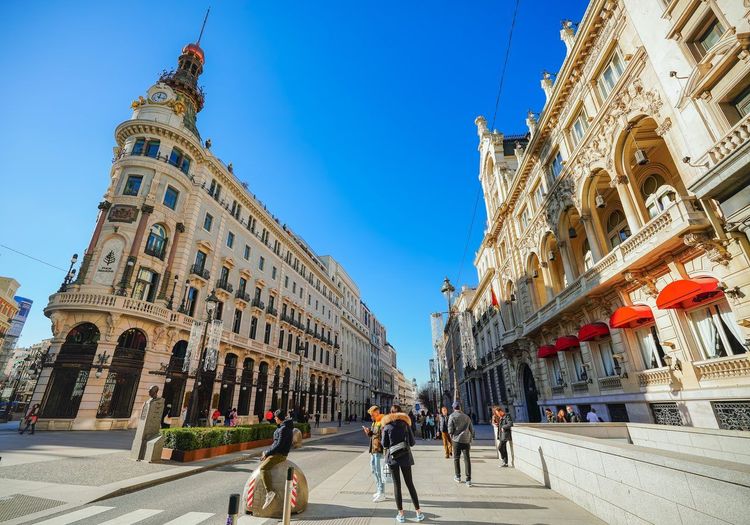
Beyond the day-by-day itinerary, Madrid can also be discovered neighborhood by neighborhood, over an afternoon with no particular goal.
La Latina comes alive mostly on Sundays, the day of the El Rastro flea market, which has been spreading its stalls over more than a kilometer since 1740. The rest of the week, its sloping streets hold a record density of tapas bars, ideal for an aperitif that stretches into dinner.
Just to the south, Lavapiés carries the legacy of several successive waves of immigration, Senegalese, Bangladeshi, then South American. The result can be read in the storefronts: grocery stores from all over the world, restaurants with dishes under 10 euros, vintage shops and independent art galleries follow one another over a few hundred meters.
To the north, Chueca and Malasaña merge without a clear boundary. Chueca remains the historic neighborhood of Madrid's LGBTQ+ community, with a nightlife that starts late and doesn't fade before 3 am on weekends. Malasaña, more bohemian, is home to vintage shops and old-fashioned cafés converted into trendy spots.
We also need to name a less appealing reality: some neighborhoods strongly feel the pressure of tourism, particularly the historic center and part of La Latina, where rents have climbed with the proliferation of short-term rentals. Nothing alarming for a passing visitor, but a good reason to spread your spending across several neighborhoods rather than concentrating everything around the Plaza Mayor.
For a greener breather, the Casa de Campo (Paseo Puerta del Ángel 1, 28011 Madrid, rated 4.5/5 on Google from 40K reviews) remains largely ignored by hurried visitors. This park of about 1,700 hectares, more than ten times larger than the Retiro, is home to the arrival point of a cable car that connects it to the Paseo del Pintor Rosales in about ten minutes and offers an unobstructed view of the Royal Palace from the other bank of the Manzanares river.
With its 23 audio stops over 2.5 hours of walking, from the Royal Palace to La Latina, the Ryo audio-guided tour lets you link the center and this neighborhood without pulling out a paper guide at every intersection. To explore each neighborhood in more depth, our article dedicated to Madrid's neighborhoods details more specific itineraries, from the El Rastro market to the nightlife spots of Malasaña.
Day Trips from Madrid: Toledo, Segovia and Beyond
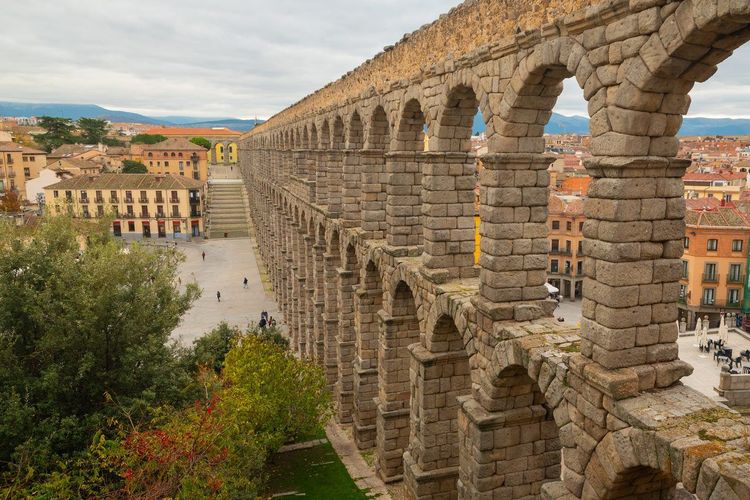
Madrid also serves as a base camp for several day trips, reachable in less than an hour by high-speed train.
Toledo, the City of Three Cultures
Toledo can be visited in one full day, ideally as day 4 if your stay in Madrid goes beyond the short format. Perched on a bend of the Tagus, the former Spanish capital long sheltered Christian, Muslim and Jewish communities side by side, a coexistence still evidenced by the primatial cathedral, the Mosque of Cristo de la Luz and two preserved medieval synagogues, among the few in Spain to have survived the expulsion of 1492.
The high-speed train links Madrid-Atocha to Toledo in 33 minutes, a journey short enough to spend the day there without feeling the travel time weigh on the schedule. Allow about 6 to 7 hours on site to see the essentials without rushing, ending with a sunset from the Mirador del Valle, on the other side of the river. If only one excursion fits into your program, Toledo remains the most versatile choice for a first trip: accessible, rich in heritage and easy to visit without prior booking, apart from the train ticket. Book the latter at least a week in advance in high season through Renfe, as trains are full on some summer Saturdays.
Segovia, El Escorial and Aranjuez
Three other destinations fall under the somewhat vague heading of "most beautiful palaces and historic towns around Madrid." Segovia combines a Roman aqueduct still intact after almost 2,000 years and an Alcázar whose silhouette is said to have inspired Disney's Snow White castle. Roast suckling pig (cochinillo) is a culinary institution here that you won't find anywhere else with the same reputation.
The Monastery of El Escorial, 50 km northwest of Madrid, instead imposes its austerity: a royal residence and necropolis built on the orders of Philip II from 1563, it brings together a basilica, a library and a pantheon of the kings of Spain in a single building of gray granite.
Aranjuez, finally, changes register entirely with its UNESCO-listed royal gardens and its summer palace built on the banks of the Tagus, surrounded by orchards that once supplied the royal table with asparagus and strawberries. Aranjuez even offers its own railway curiosity: the Tren de la Fresa (strawberry train), a vintage train that runs on spring and autumn weekends, with a strawberry tasting offered on board. In short, allow 33 minutes to Toledo, around 30 minutes to Segovia by high-speed train from Chamartín station, 50 minutes by road to El Escorial and a little under an hour to Aranjuez: all easily doable as a round trip on the same day.
Flamenco in Madrid: Where to See a Show
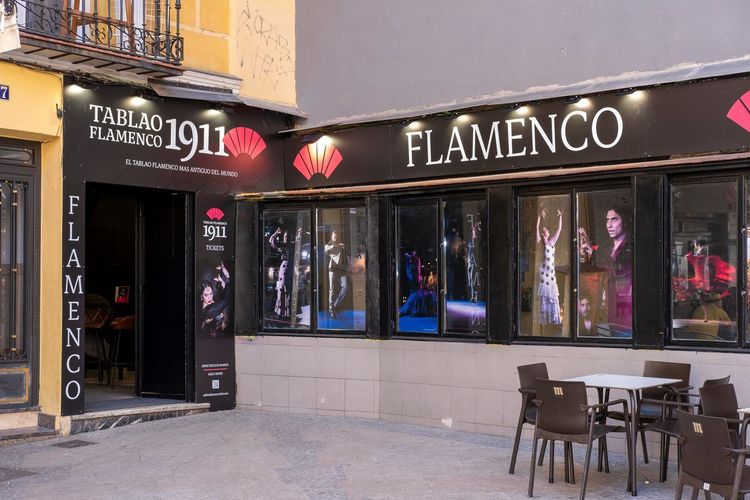
Contrary to popular belief, flamenco was not born in Madrid but in Andalusia. The capital nonetheless remains one of the best cities in Spain to see a quality show, thanks to a handful of renowned tablaos.
The Corral de la Morería (Calle de la Morería 17, 28005 Madrid, rated 4.4/5 on Google from 4,521 reviews), open since 1956, is among the most famous tablaos in the world: dancers who have become international references have performed on its stage, and its gastronomic restaurant has even earned a Michelin star. The title of oldest goes rather to Villa Rosa, opened in 1911 on the Plaza de Santa Ana, whose azulejo façade is already worth the detour. The classic formula combines a show and dinner, for a budget that often exceeds 80 euros per person.
For a more intimate format, some venues organize small-group flamenco shows, limited to about thirty spectators, where you can feel the vibrations of the zapateado on the wooden floor more strongly. Allow 35 to 45 euros for the show alone, drink included.
The choice between a dinner show and a show alone depends mainly on budget and available time. A dinner show easily stretches over 2.5 to 3 hours, whereas a show alone is often limited to one hour, followed or preceded by a cheaper dinner elsewhere. Performances rarely start before 8:30 pm and the last service may begin after 10:30 pm, a schedule that surprises travelers used to dining earlier. Book at least 48 hours in advance during the summer months, and aim for seats in the lower room, closer to the stage: the difference in experience is clear, even if prices rise accordingly. Most tablaos ban photos during the performance, to preserve the artists' concentration as much as the atmosphere of the room.
For a tighter budget, some neighborhood bars host free or pay-what-you-want flamenco evenings, generally less technical but more spontaneous, often announced only on the day itself on the venues' social media.
What to Do in Madrid with Children
Madrid is among the easiest European capitals to visit as a family, with a notable cultural tolerance toward children, even late at night on a terrace.
Football fans can devote a morning to the Santiago Bernabéu stadium, whose guided tour includes access to the locker room, the players' tunnel and a museum displaying the European Cups of the club, the Champions League record holder. Audio guides are available in several languages, including French, and the visit is done at your own pace in a little over an hour.
For a more physical day, Parque Warner Madrid, about thirty minutes from the center, offers roller coasters and themed areas dedicated to the Warner Bros studios, with attractions suitable from age 4 in some areas.
The Madrid Zoo Aquarium (Casa de Campo s/n, 28011 Madrid, rated 4.2/5 on Google from 42,027 reviews), located in the Casa de Campo mentioned above, combines a classic zoo, an aquarium and a dolphinarium on a single site, accessible by cable car or by direct metro from the center.
Evenings lend themselves well to the musicals performed on the Gran Vía, an option that works even with children who don't speak Spanish: the music and sets carry most of the show. In terms of logistics, the Madrid metro is accessible to strollers on most of its recent lines, even if some historic stations in the center still have stairs. Allow an extra 20 to 30 minutes per journey if you are traveling with young children and luggage.
Add to that a city that readily welcomes dogs on terraces and in most public transport, and Madrid becomes a surprisingly easy family destination to organize, even for a first stay. Retiro Park, already mentioned for the second day, also works very well with family: boat rentals, scattered playgrounds and roaming ice cream vendors make it a free or almost free option, to slot in between two more structured visits. Our article on Madrid with the family details additional addresses, meals included.
Covered Markets and Madrid Cuisine
Madrid cuisine is enjoyed as much on the street as in Michelin-starred restaurants, and the covered markets offer the best entry point to discover both registers in a single outing.
The Mercado de San Miguel, a stone's throw from the Plaza Mayor, remains the most touristy but also the most spectacular, under its iron and glass structure from 1916, listed as a historic monument. About thirty stalls offer tapas, wines, oysters and hand-sliced Iberian ham, at prices that remain higher than in a typical neighborhood bar.
For a more local atmosphere and gentler prices, the Mercado de San Fernando, in the Lavapiés neighborhood, or the Mercado de los Mostenses, near the Plaza de España, appeal with their mix of fresh produce and small eateries, frequented as much by locals as by curious travelers.
As for typical tapas, a few dishes appear without exception on Madrid menus: tortilla de patatas, bellota Iberian ham, croquetas (often ham or cod), cocido madrileño (a stew of chickpeas, meats and vegetables, mostly served in winter), and fried calamari, often enjoyed in a bocadillo near the Plaza Mayor. Each of these specialties deserves a full meal rather than a hurried tasting between two visits.
For a more gastronomic experience, Madrid has about twenty Michelin-starred restaurants, from the contemporary bistro to the two-star table. DiverXO, with three stars, has a waiting list of several months for a reservation, while other, more discreet starred venues remain accessible with two to three weeks' notice.
Mealtimes remain the classic trap for first-time visitors: a restaurant still serving lunch at 1:30 pm will often have its door closed at 1:45 pm, with service resuming only after 8:30 pm in the evening. In between, the vermouth hour, generally between noon and 2 pm on weekends, is a Madrid institution in its own right, accompanied by olives and patatas bravas.
For breakfast or a late break after an evening out, churros con chocolate are a tradition not to be skipped, particularly at the Chocolatería San Ginés (Pasadizo de San Ginés 5, 28013 Madrid, rated 4.3/5 on Google from 73,312 reviews), open 24 hours a day since 1894 a stone's throw from the Puerta del Sol.
In terms of budget, a full meal with a drink costs around 12 to 18 euros in a neighborhood bar, compared with 35 to 50 euros for a more refined table, excluding Michelin-starred restaurants.
The Best Places to Take Photos in Madrid
Beyond the monuments already mentioned, a few viewpoints offer the best photo ratio for minimal effort.
The Faro de Moncloa (Avenida del Arco de la Victoria 2, 28040 Madrid, rated 4.4/5 on Google from 4,375 reviews), a 92-meter telecommunications tower converted into a viewing platform, offers a 360-degree view of the city, with the Sierra de Guadarrama as a backdrop on clear days. The elevator climbs in a few seconds, and attendance remains much lower than on the terraces in the center.
The Palacio de Cibeles, already mentioned for the third day, also offers a paid but accessible viewpoint, ideal in the late afternoon when the light skims the façades of the Gran Vía. And for a more unusual photo, the terrace of the Círculo de Bellas Artes, a stone's throw from Cibeles, remains one of the cheapest rooftops in the center, with access for just a few euros.
Where to Stay in Madrid According to Your Budget and Preferences
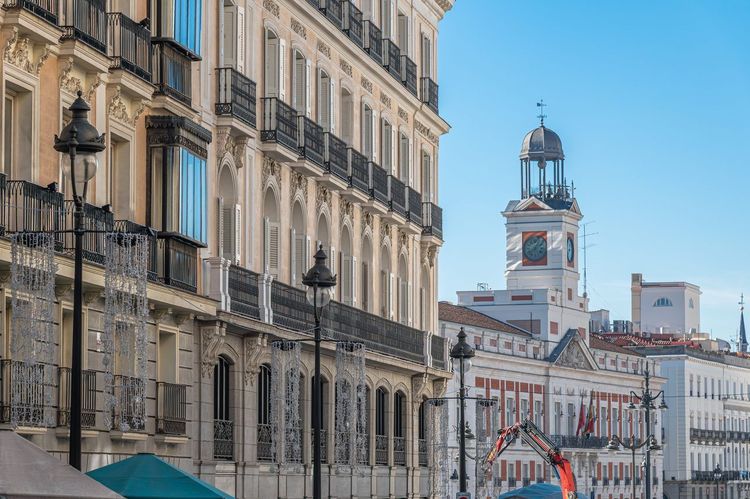
The choice of neighborhood matters as much as the choice of hotel itself, as the atmospheres differ so much from one end of the center to the other.
For a first stay, the historic center (Sol, Plaza Mayor, Barrio de los Austrias) remains the most practical option: everything is done on foot, but nights are noisier and prices climb as you approach the Puerta del Sol. Allow from 90 euros a night for a decent hotel in high season.
The Salamanca district, to the northeast, suits a calmer and more upscale stay: luxury boutiques, bourgeois buildings and a handful of 5-star hotels that regularly exceed 300 euros a night, in exchange for a much quieter neighborhood in the evening.
Malasaña and Chueca appeal to travelers who want to stay close to the nightlife without lodging in the most touristy part of the historic center. The places here are younger, often in the form of apart-hotels or upscale hostels, at rates between those of the center and Salamanca.
Budget travelers tend to look toward Atocha or Lavapiés, where well-rated hostels offer dorm beds from 20 euros a night, without being too far from public transport to the center. Book at least a month in advance if your stay falls during a major sporting event or during the San Isidro festivities in mid-May, a period when prices can double across the entire city center.
In recent years the city has tightened the rules governing short-term rentals, echoing the tourism pressure mentioned earlier regarding certain neighborhoods in the center. The concrete result for a visitor: the supply of entire apartments has tightened, which means booking earlier than a few years ago.
To sum up by profile: a short first stay will favor the historic center for convenience, a trip as a couple or with an extended family will benefit from looking at Salamanca for the quiet, and a stay focused on nightlife will find what it needs in Malasaña or Chueca. Our article on the neighborhood to stay in Madrid details these options with example addresses at every budget.
How to Get to Madrid and Get Around
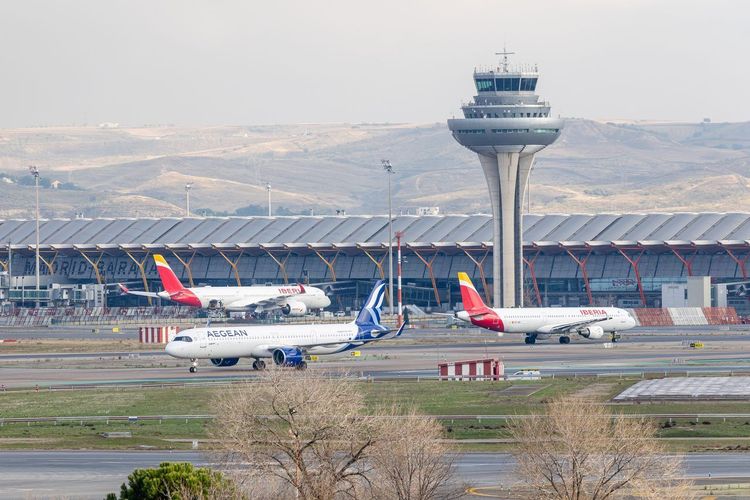
If you arrive by plane, Adolfo Suárez Madrid-Barajas airport is located about fifteen kilometers northeast of the center. From the airport, opt for the commuter train (Cercanías line C1, departing from terminal T4, toward Atocha and Chamartín), the metro (line 8 to Nuevos Ministerios) or the 24-hour express bus at 5 euros, rather than a taxi, whose fixed fare to the center is around 33 euros.
Once in the city, most of the historic center can be covered on foot, with the main attractions within 25 minutes' walk of one another. For longer distances, toward the Bernabéu stadium or the outlying neighborhoods, the metro remains the fastest solution: 12 lines plus a short branch, a dense network, and a single ticket around 1.50 to 2 euros, with a 3-euro supplement for the airport stations.
The Madrid City Card bundles unlimited transport and access to several museums in a 1 to 5-day formula, worthwhile only if you plan to visit several paid museums in a short time; for a more classic program centered on walking, it doesn't always pay for itself.
The Cabify and Uber apps work normally throughout the city and often show lower fares than traditional taxis for short evening trips, an option to keep in mind after a flamenco show that ends after midnight. The BiciMAD bike-sharing system complements the offering well for trips of 2 to 4 kilometers, notably between the center and the Retiro or the Casa de Campo, provided you accept the sometimes steep terrain of certain neighborhoods like La Latina.
Note that the airport has four terminals spread across two distinct zones, connected by a free shuttle: check your arrival terminal before heading to the train or bus station, so you don't needlessly cross the entire site.
As soon as you leave the metro, our 6.1 km Ryo audio-guided tour starts from the center and guides you step by step, useful for finding your way without a paper map while discovering the history of the places you pass through over the 23 audio stops.
What Is the Best Time to Visit Madrid
Madrid changes radically with the season, with temperature swings among the most pronounced in Europe for a capital.
Madrid summers regularly climb above 35 degrees in July and August, with nights that stay warm until late. Locals compensate by shifting their rhythm: a siesta in the afternoon, going out after 9 pm. For a first stay, this dry heat is manageable as long as you alternate morning visits with afternoons in the shade or in an air-conditioned museum.
Spring (April to June) and autumn (September to October) remain the most comfortable seasons for walking all day, with mild daytime temperatures and evenings that can still surprise with their coolness: pack a light sweater, even in May.
Madrid winters often surprise visitors who expect Mediterranean mildness: nights regularly drop below 0 degrees in January, as the city sits at more than 650 meters above sea level on the Castilian plateau. In return, queues at the major museums shorten noticeably, and hotel prices fall outside the end-of-year holidays. For a first stay, spring remains the safest compromise between pleasant weather and moderate crowds.
Budget and Practical Tips for a First Stay in Madrid
A first stay in Madrid raises a series of recurring practical questions, best settled before leaving rather than once on site.
Is Madrid an expensive city? Less so than Paris or London on most common expenses: accommodation, neighborhood meals and public transport remain affordable. The touristy restaurants of the historic center and the hotels of Salamanca, however, pull prices upward, hence the value of spreading your outings across several neighborhoods.
Tipping is not mandatory in Spain, unlike other destinations where its absence can be poorly perceived. Rounding up the bill by a few euros is appreciated in restaurants, but no one will take offense if you don't.
Tap water is drinkable everywhere in Madrid and even recognized for its good quality, thanks to groundwater from the Sierra de Guadarrama. A reusable bottle is more than enough, with no need to buy bottled water.
Madrid is a noisy city, particularly the historic center and the lively neighborhoods like Malasaña or Chueca, where terraces stay busy until late. For quieter nights, it's better to aim for accommodation away from the liveliest streets, or to pack earplugs.
Young Madrileños often speak English, especially in the central and touristy neighborhoods, which greatly eases everyday exchanges, even if a few words of Spanish are always appreciated by older shopkeepers.
Public displays of affection surprise no one in Madrid: kissing or holding hands in the street is perfectly commonplace, including for same-sex couples, in a city that is generally very tolerant in this respect.
Watch out for pickpockets, particularly in the metro at rush hour, around the Puerta del Sol and in the queues for major attractions. Pickpocketing remains the main risk for a tourist, far more than any form of assault.
Is Madrid a safe city for tourists? Generally yes: violent crime remains rare, and most incidents reported by travelers are limited to discreet thefts rather than assaults. Basic precautions, bag worn in front in crowds, phone watched on a terrace, are more than enough to get through a stay without incident.
One last point that pleasantly surprises many visitors: Madrid loves children and dogs, who are accepted almost everywhere, from restaurant terraces to public transport, with a tolerance rarely matched elsewhere in Europe. Taken together, these practical details paint a city that is generally easy to live in for a first stay, provided you keep an eye on your belongings in the crowd and accept a rhythm of life that is out of sync with the rest of Europe.
Souvenirs and Shopping: What to Bring Back from Madrid
When it's time to pack your bags, a few typically Madrid souvenirs avoid the traditional pointless fridge magnet.
Vacuum-packed bellota Iberian ham remains the absolute classic, sold in most of the covered markets already mentioned, with whole legs for the most motivated or packets of slices for lighter luggage. Spanish olive oil, often cheaper and just as high-quality as its French or Italian equivalents, rounds out this gourmet selection nicely.
As for the official store, both Real Madrid and Atlético offer their official merchandise near their respective stadiums, with personalized jerseys topping the list for football fans. For a more artisanal souvenir, hand-painted fans and Talavera ceramics, sold in several shops in the historic center, move away from the mass-market souvenir without blowing the budget.


FAQ
How many days do you need to visit Madrid for the first time?
Two days cover the essentials of the historic center, but three to four days let you add the art triangle, Retiro Park and a day trip to Toledo or Segovia without rushing the schedule.
What is the best time to visit Madrid?
Spring (April to June) and autumn (September to October) offer the best balance between pleasant temperatures and moderate crowds, while avoiding the heat peaks of July and August and the dry cold of January.
Is Madrid an expensive city?
Generally not for a neighborhood meal, a standard hotel or public transport, but prices climb noticeably around the Plaza Mayor, in Salamanca and in the most touristy restaurants in the center.
What is the best neighborhood to stay in Madrid?
The historic center is best for a first stay because of its proximity to the monuments, Salamanca suits travelers looking for quiet, and Malasaña or Chueca suit those who prioritize nightlife.
Is Madrid a safe city for tourists?
Yes, overall: violent crime remains rare. The main risk is pickpocketing in the metro and around heavily visited sites, which is easily avoided with the usual precautions.
What typical tapas should you try in Madrid?
Tortilla de patatas, bellota Iberian ham, croquetas, cocido madrileño in winter and fried calamari in a bocadillo are among the classics to try on a first trip.
A first stay in Madrid ultimately comes down to a fairly simple balance: enough time for the Royal Palace, the Plaza Mayor and the art triangle, some room to get lost in La Latina or Malasaña, and if possible a day trip to Toledo or Segovia to get outside the city limits. Practical details, such as transport from the airport, the real budget and safety questions, matter as much as the list of monuments for a trip that goes smoothly.
To connect all these places without wasting time finding your way, the Ryo audio guide to Madrid remains the most direct solution: 23 commented stops over 6.1 kilometers, from the Royal Palace to La Latina, to follow at your own pace, headphones on, between two tapas stops. A great way to turn a slightly intimidating first trip into a gradual discovery, neighborhood after neighborhood.
À lire également