
Créé par Emilie, le 20 juin 2026
Votre guide Ryo
35 Things to Do in Madrid, The 2026 Guide to Spain's Capital
© Shutterstock
Madrid hits differently from every other European capital. It is the highest capital city on the continent, sitting at 657 metres above sea level, and its light is genuinely unlike anywhere else, sharper in winter, golden and lingering in summer evenings that stretch past 10 pm. There are three world-class art museums within a 15-minute walk of each other, a royal palace larger than Buckingham Palace, and a Sunday flea market that has been running continuously since the 17th century. If you want to explore the city at your own pace with expert commentary in your ear, the Ryo audio guide for Madrid covers 23 highlights across a 6.1 km route, all without joining a group tour.
This list of 35 things to do in Madrid goes well beyond the predictable postcard stops. You will find a 3,500-year-old Egyptian temple reassembled stone by stone in a city park, a chocolate shop that has been open every night since 1894, rooftops above Gran Vía where the skyline unfolds in three directions, and two day trips, Toledo and Segovia, that each pack more history into a single afternoon than most cities manage in their entire old town. Whether you have two days or two weeks, Madrid rewards the curious visitor who looks past the surface.
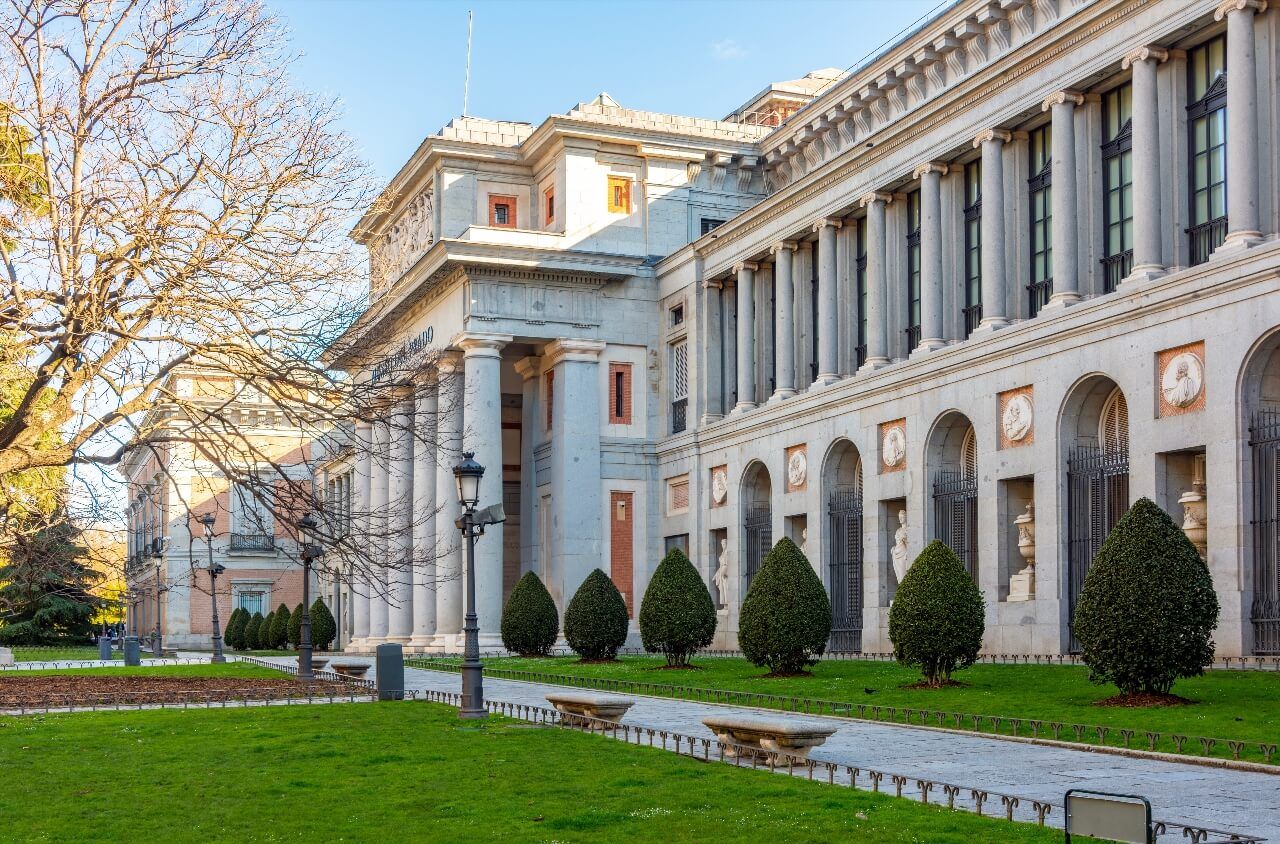
1. Prado Museum
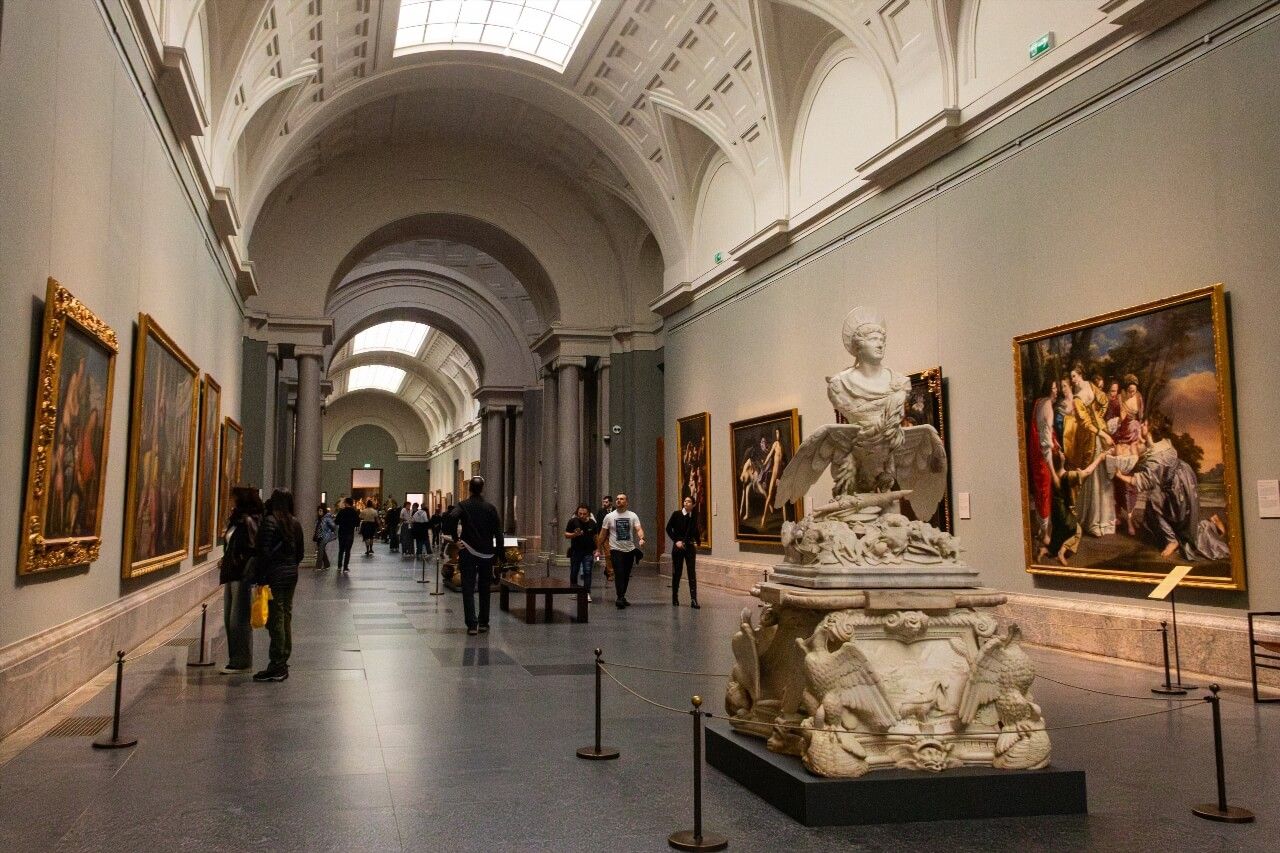
The Museo del Prado (Paseo del Prado, 28014 Madrid, rated 4.7/5 on Google (152 100 avis)) is not simply one of the world's great art museums, it is the argument for why Madrid exists as a cultural capital. Opened to the public in 1819, it houses over 8,000 paintings, of which roughly 1,300 are on permanent display across three floors. The sheer density of the collection is disorienting at first: you round a corner expecting a corridor and instead find a room lined floor to ceiling with Velázquez.
The non-negotiable works are well known, Velázquez's Las Meninas, Goya's Saturn Devouring His Son and the two Majas, the Bosch triptych The Garden of Earthly Delights. But the Prado rewards a slower approach. Give yourself at least three hours, and start in the Flemish galleries before the crowds arrive. The museum opens at 10 am, and the first 90 minutes on a weekday morning are significantly calmer than any other window.
Admission is €15 for adults; free entry runs from 6 pm to 8 pm Monday through Saturday and from 5 pm to 7 pm on Sundays and public holidays, but these slots are crowded. Book a timed entry online to skip the queue entirely. The Prado's permanent collection alone justifies a trip to Madrid. Plan for it.
2. El Retiro Park
Parque del Buen Retiro (Plaza de la Independencia, 28001 Madrid, rated 4.8/5 on Google (211 041 avis)) covers 125 hectares in the heart of Madrid, a few minutes' walk from the Prado. Originally the private retreat of the Spanish royal family, it was opened to the public in 1868 and has been the city's central lung ever since. On weekend mornings, Madrid comes here in its entirety: joggers, families, chess players, street musicians, couples in rowing boats on the central lake.
The park contains more than most visitors expect. The Palacio de Cristal, a 19th-century iron-and-glass pavilion built for the Philippine Exposition of 1887, now serves as an exhibition space for the Reina Sofía museum and is free to enter. The Palacio de Velázquez hosts temporary shows nearby. The Rose Garden (La Rosaleda) peaks in May with over 4,000 rose bushes. There is also the curious Monument to the Fallen Angel, one of the few public sculptures in the world depicting Satan, completed in 1878.
Row a boat on the lake, pack a picnic, or simply walk the long central avenue lined with stone statues of Spanish kings. Retiro is free to enter every day and is busiest Saturday and Sunday from 11 am onward. Go on a weekday morning if you want the quieter version.
3. Royal Palace of Madrid
The Palacio Real de Madrid (Calle Bailén, 28071 Madrid, rated 4.7/5 on Google (128 585 avis)) is the largest royal palace in Western Europe by floor area, 135,000 square metres, with 3,418 rooms, though only around 50 are open to visitors. It was built in the 18th century on the orders of Philip V, who wanted something that would announce Spanish ambition to the world. The building achieved exactly that. Its western facade overlooks a wide esplanade and, beyond it, the Casa de Campo and the distant Sierra de Guadarrama mountains.
The official tour route takes visitors through the Royal Armoury (one of the most complete collections of armour and weapons in the world), the Throne Room with its ceiling fresco by Tiepolo, the Royal Chapel, the Banquet Hall, the largest single room in the palace, and a sequence of state rooms decorated with tapestries, frescoes and furniture assembled over four centuries. The Stradivarius Collection in the palace's music room contains five instruments still played at state concerts today.
Tickets cost €18 for adults (self-guided) or €26 with a guided tour. Arrive early: queues form quickly from 10 am onward. The Changing of the Guard takes place every Wednesday and Saturday from 11 am to 2 pm in the main courtyard (shifted to 10 am to noon in July and August due to the heat). The Solemn Changing of the Guard, a more elaborate ceremony, takes place on the first Wednesday of most months. Both are free to watch from the esplanade. Book tickets online to avoid losing the first hour of your morning to the queue.
The Sabatini Gardens to the north are free, open to the public, and offer one of the better exterior views of the palace. Even if you skip the interior, walking the gardens and the esplanade is worth the 30 minutes.
4. Plaza Mayor
Plaza Mayor has been the symbolic centre of Madrid since Philip II ordered its construction in the late 16th century. Completed in 1619, the rectangular arcaded square measuring 129 × 94 metres served successively as a market, a bullfighting ring, a public execution ground, and the stage for royal proclamations. Today it is full of outdoor café tables and tourists taking photographs of the equestrian statue of Philip III at its centre.
Come for the architecture rather than the cafés, which are expensive by Madrid standards. The best time is early morning, before 9 am on a weekday, when the square is nearly empty and the light catches the ochre facades cleanly. The nine gateways leading into the square each open onto different corners of the city centre; the Arco de Cuchilleros to the southwest leads down a stairway into a street lined with some of the oldest taverns in Madrid.
The Christmas market in December transforms the square into one of the city's most atmospheric seasonal events, with stalls selling ornaments, nativity figures and roasted chestnuts from late November through January 5th.
5. Reina Sofía Museum
The Museo Reina Sofía (Calle Santa Isabel, 28012 Madrid, rated 4.5/5 on Google (69 735 avis)) is Spain's national museum of modern and contemporary art, and it houses one of the most politically charged paintings in the world: Picasso's Guernica, painted in 1937 in response to the Nazi bombing of the Basque town of that name. The canvas is enormous, 3.49 metres tall and 7.76 metres wide, and standing in front of it is a genuinely affecting experience, even if you have seen it reproduced hundreds of times in books.
The museum's permanent collection ranges from early 20th-century Spanish avant-garde through to contemporary installation art. The Dalí rooms, particularly the Surrealist works from the 1920s and 1930s, and the extensive holdings of Joan Miró are highlights beyond Guernica. The building itself is interesting: the original 18th-century hospital has been extended by a modern annex by Jean Nouvel, opened in 2005, which houses temporary exhibitions and the library.
Admission to the permanent collection is €12; free entry runs from 7 pm to 9 pm Monday and Wednesday through Saturday, and from 12:30 pm to 2:30 pm on Sundays. The museum is closed on Tuesdays. The Guernica room fills up at any hour of the day, but the surrounding galleries are generally calm enough to take your time.
6. Gran Vía
Madrid's Gran Vía (Gran Vía, 28013 Madrid, rated 4.8/5 on Google (10 240 avis)) was carved through the old city centre between 1910 and 1931 and is the closest thing the Spanish capital has to a grand Haussmann-style boulevard. The architecture is emphatically early 20th century: beaux-arts facades, ornamental towers, terracotta detailing. Walk it from east to west, starting at the Metrópolis building (its dome and bronze figures are the backdrop of half the Instagram posts tagged Madrid), and work your way toward the Edificio España and the open views at the western end.
At street level it is a busy commercial strip with the usual international chains. The interest is overhead and on the upper floors, many of the buildings have been converted into hotels whose rooftop terraces are open to non-guests for drinks. The view from the Hotel Riu Plaza España rooftop bar sweeps across the Gran Vía below and reaches the Sierra de Guadarrama on a clear day.
7. Thyssen-Bornemisza Museum
The third side of Madrid's so-called Golden Triangle of Art, along with the Prado and the Reina Sofía, the Museo Thyssen-Bornemisza (Paseo del Prado 8, 28014 Madrid, rated 4.7/5 on Google (46 892 avis)) displays a private collection assembled by the Thyssen-Bornemisza family across three generations. Unlike the Prado's Spanish-heavy holdings or the Reina Sofía's focus on modernism, the Thyssen fills the gaps: it is the place to see early Flemish painting, Dutch Golden Age masters, 19th-century American landscapes, and Impressionist and Expressionist works all under one roof.
The collection spans eight centuries, from medieval panels to late 20th-century works. The Carmen Thyssen Collection, housed in an annex, adds a further layer of Impressionist and Post-Impressionist painting. Regular visitors to Madrid treat the Thyssen as a local resource, less crowded than the Prado, with a layout that allows unhurried looking. Admission is €13; free on Mondays from noon.
8. Puerta del Sol
Puerta del Sol is the geographic and symbolic heart of Spain, the point from which all distances on the national road network are measured. A bronze plaque set into the pavement marks Kilómetro Cero. The square is functional rather than beautiful: it is a transit hub surrounded by shops, perpetually crowded, and not particularly atmospheric during the day. Come at midnight on New Year's Eve to understand its cultural weight, the entire country watches the clock tower here to count the twelve strokes while eating a grape per stroke, a tradition going back to the early 20th century.
9. Palacio de Cibeles
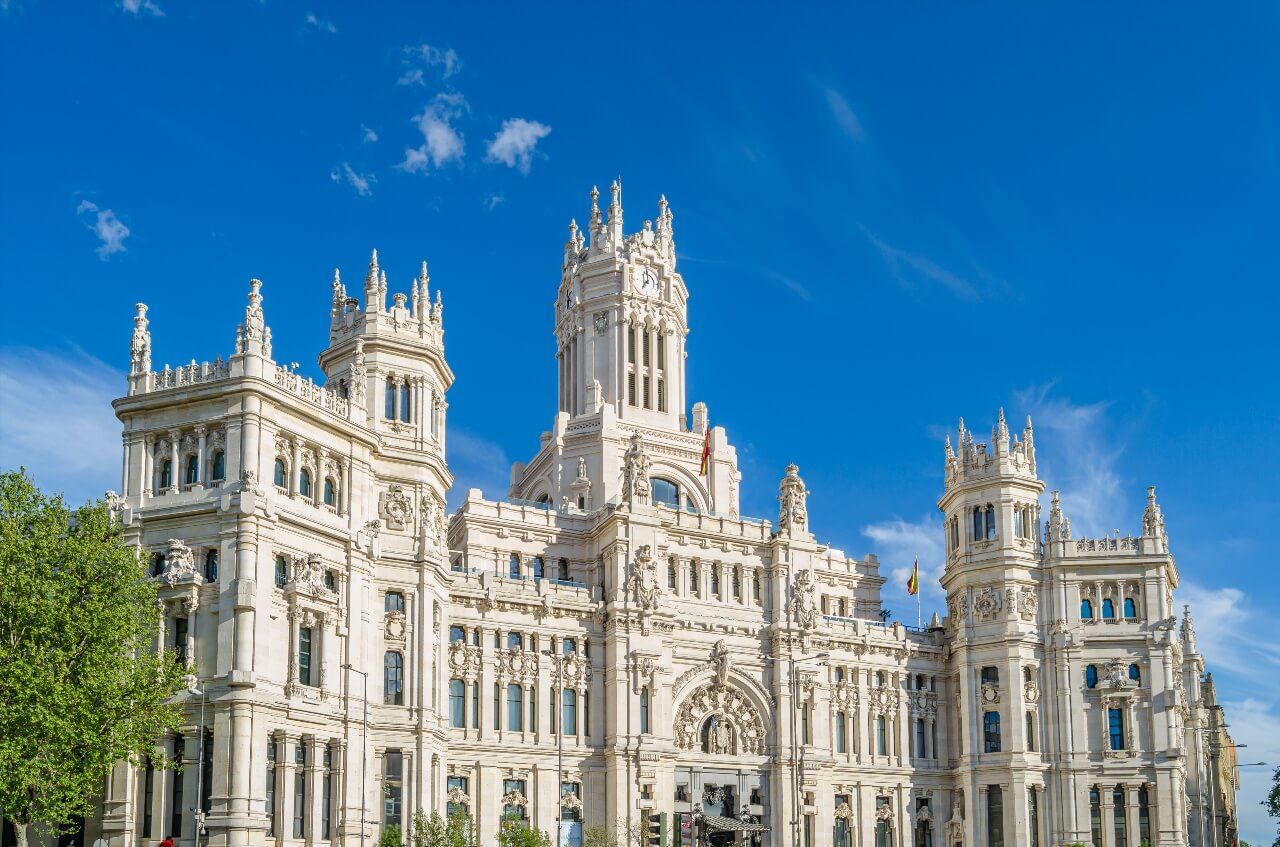
The Palacio de Cibeles (Plaza de Cibeles 1, 28014 Madrid, rated 4.7/5 on Google (901 avis)) was built between 1909 and 1917 as Madrid's central post office, and it is one of the most extravagant civic buildings in Spain. The white-stone facade with its elaborate towers would not look out of place in a fantasy novel. Today the building serves as Madrid's city hall, and its upper floors house a free cultural centre with rotating exhibitions and a public rooftop terrace.
The rooftop at the CentroCentro (the cultural facility inside the palace) offers a panoramic view over the Paseo del Prado axis and the Fountain of Cybele directly below, the monument where Real Madrid fans gather to celebrate league titles. Access to the mirador costs €3 and is consistently underrated as an affordable viewpoint. The building's interior atrium alone is worth a quick visit.
10. El Rastro Flea Market
El Rastro (Calle Ribera de Curtidores, 28005 Madrid, rated 4.4/5 on Google (553 avis)) claims to be one of the oldest flea markets in Europe, with roots going back to the 16th century when slaughterhouses in the La Latina neighbourhood left a trail (rastro) of blood down to the river. Today it operates every Sunday and on public holidays from approximately 9 am to 3 pm, spreading across the Calle de la Ribera de Curtidores and surrounding streets in La Latina.
The market has around 3,500 stalls at peak season, selling antiques, vintage clothing, tools, ceramics, vinyl records, furniture, and plenty of tourist merchandise. The antique shops (anticuarios) lining the street are permanent; the stalls are temporary. Serious buyers arrive before 10 am. Everyone else arrives after 11 am and navigates the crowd with a café con leche.
Go for the atmosphere as much as the shopping. After the market, the bars and terraces of La Latina fill up for Sunday lunch, the tradition of spending the afternoon eating and drinking after El Rastro is as much a part of the experience as the market itself.
11. Temple of Debod
The Temple of Debod is an authentic Egyptian temple dating back to the 2nd century BC, built near Aswan to honour the god Amon. When the construction of the Aswan High Dam threatened to flood the area, UNESCO oversaw a massive rescue of Nubian monuments. Egypt donated the Temple of Debod to Spain in 1968 in recognition of Spanish engineers' contribution to the rescue operation. The temple was dismantled, shipped, and re-erected stone by stone in the Parque del Oeste, where it has stood since 1972.
You can visit the interior for free; it contains three small rooms with original reliefs still visible on the walls. But the exterior setting is the real draw. The temple stands at the edge of a reflecting pool, and at sunset, roughly 45 minutes before the official closing time, the light turns orange over the Casa de Campo beyond the park, and the reflection shimmers in the water. It is one of Madrid's most photographed moments, and deservedly so.
Arrive 30 to 45 minutes before sunset for the best light. The temple itself closes earlier than the surrounding park; check current hours on the Madrid city website.
12. Madrid Río Park
When Madrid buried the M-30 motorway underground in 2007, it freed up 10 kilometres of riverbank along the Manzanares. What followed was one of Europe's more successful urban regeneration projects: Madrid Río (Paseo de la Virgen del Puerto, 28005 Madrid, rated 4.7/5 on Google (3 219 avis)), a continuous linear park connecting the south of the city to the centre, with cycle paths, playgrounds, outdoor pools (open in summer), beach areas, and a series of architectural bridges designed by the firm Dominique Perrault.
The park is entirely free and used heavily by local families on weekends. From the centre, the easiest entry point is near the Puente del Rey behind the Palacio Real, the walk through Madrid Río from there toward the Puente de Segovia offers a view of the Royal Palace from below that most visitors never see.
13. Malasaña Neighbourhood
Malasaña (Plaza del Dos de Mayo, 28004 Madrid, rated 4.4/5 on Google (12K avis)) is the neighbourhood where Madrid's counter-culture took root during the Movida Madrileña, the explosion of artistic and social freedom that followed Franco's death in the late 1970s and continued through the 1980s. The district still carries that energy. Streets lined with independent record shops, vintage stores, tattoo studios, craft beer bars and small music venues converge around Plaza del Dos de Mayo, which is named for the 1808 uprising against Napoleon's forces.
Spend an afternoon wandering from Calle Fuencarral through to the narrower streets behind the plaza. The coffee shops are good; the evening bar scene is loud and densely packed. Malasaña stays busy until late, this is one of the few neighbourhoods in Madrid where restaurants fill up after midnight and bars keep going until dawn without any sense of occasion.
14. Mercado de San Miguel
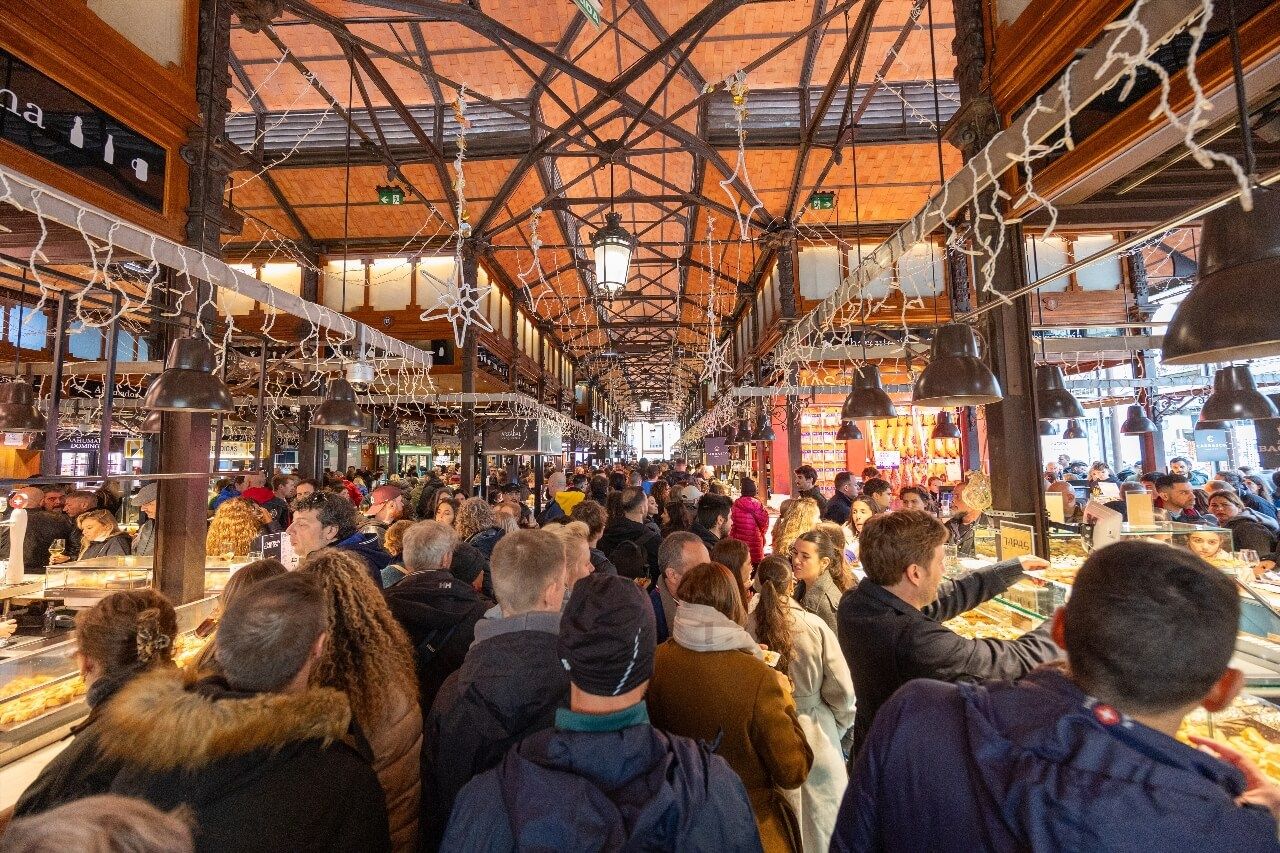
Mercado de San Miguel (Plaza de San Miguel, 28005 Madrid, rated 4.4/5 on Google (159 495 avis)) sits just off Plaza Mayor in a cast-iron market hall built in 1916. It was restored and reopened in 2009 as a gourmet food market, and while it leans unashamedly toward the tourist end of the spectrum, the quality of what is on offer is genuinely good. Stalls sell jamón ibérico carved to order, fresh oysters, vermouth, pintxos, anchovies, croquetas, and sweet pastries.
Go between noon and 2 pm on a weekday if you want space to eat at the high tables inside the hall. It is packed beyond comfort on weekend evenings. Prices are higher than a neighbourhood bar, budget €15-20 for a reasonable selection of snacks and a glass of wine, but the setting inside the iron-and-glass structure is genuinely attractive.
15. Flamenco Show
Flamenco is not from Madrid. It is rooted in the Andalusian south, Seville, Jerez, Cádiz, and the art form developed from the folk traditions of the Romani, Moorish and Jewish communities of that region. But Madrid has been a centre for professional flamenco performance since the early 20th century, when the city's tablao scene drew the best performers from across Spain. A serious flamenco evening in Madrid remains one of the most powerful live performance experiences on the continent.
The distinction that matters is between tablaos (dedicated flamenco performance venues with small stages and intimate seating) and dinner-show packages aimed at tour groups. The former are worth paying for; the latter are not. The most respected tablaos in Madrid include Las Tablas on Plaza de España, Corral de la Morería (Calle Morería 17, 28005 Madrid, rated 4.4/5 on Google (4 278 avis)) in La Latina, which opened in 1956 and has hosted Lorca-era performers' descendants, and Torres Bermejas near Gran Vía.
Shows typically run 90 minutes and cost between €30 and €50 depending on the venue and whether you add dinner or drinks. Book at least a day in advance for weekend shows; the best tablaos have limited seating. What you should expect: the cante (singing) is often the most emotionally intense element, not the footwork. The guitar and the singing carry the performance; the dancing is the physical translation.
If you want context before attending, the Museo del Flamenco in the Barrio de las Letras offers a solid introduction to the history and geography of the form.
16. Bernabéu Stadium
The Estadio Santiago Bernabéu (Av. de Concha Espina 1, 28036 Madrid, rated 4.6/5 on Google (164 788 avis)) is the home of Real Madrid and one of the most famous sports venues in the world. Rebuilt between 2019 and 2023 in a €900 million renovation, it now has a retractable roof, a 360-degree exterior screen, and capacity for 81,044 spectators. The renovation placed it among the most technically advanced football stadiums in Europe.
You do not need to attend a match to visit. The Bernabéu Tour runs daily and takes you through the changing rooms, the press room, the trophy exhibition, the pitch-level tunnel, and the stands. Tickets cost €25 and the tour takes around 90 minutes. The trophy room, displaying 15 UEFA Champions League trophies, more than any club in history, is the natural centrepiece.
For live matches, the home season runs September through May. Tickets are available through the official Real Madrid website; La Liga matches start from around €40, while Champions League nights command significantly higher prices and sell out weeks in advance.
17. La Latina Neighbourhood
La Latina is the oldest continuously inhabited part of Madrid, occupying the hill above the Manzanares river where the city's Moorish predecessor, Mayrit, was originally settled in the 9th century. The neighbourhood is now best known for its Sunday afternoon culture, after El Rastro, locals converge on the bars along Calle Cava Baja and Calle Cava Alta for vermouth, tapas and conversation that stretches through the afternoon into evening.
The area around Plaza de la Paja, a quiet medieval square that once served as the city's main market, rewards exploration at any hour. The Basilica of San Francisco el Grande nearby has a neoclassical facade and a series of paintings by Goya in its chapels. La Latina also anchors one end of the Ryo audio walking route through Madrid, which links the neighbourhood's historic layers from the Moorish walls to the Habsburg street grid.
18. Casa de Campo
At roughly 1,700 hectares, the Casa de Campo (Paseo Puerta del Ángel, 28011 Madrid, rated 4.5/5 on Google (52 120 avis)) is the largest urban park in Madrid, approximately 14 times the size of El Retiro. It was a royal hunting ground until 1931, when the Second Spanish Republic opened it to the public. The park contains a lake, a cable car (the Teleférico) connecting it to the Parque del Oeste, a zoo, an amusement park, and extensive paths through scrub pine and oak.
Most visitors who venture this far do so for the Teleférico, the cable car gives one of the best aerial views of the Royal Palace and central Madrid available without paying for a helicopter. The ride is 11 minutes each way.
19. Palacio de Linares
The Palacio de Linares (Paseo de Recoletos 2, 28001 Madrid, rated 4.6/5 on Google (2 004 avis)) is one of Madrid's most ornate 19th-century palaces, built between 1873 and 1900 for the Marquis of Linares. The building stands on the corner of Calle Alcalá and the Paseo de los Recoletos, opposite the Palacio de Cibeles. Today it houses the Casa de América, a cultural centre dedicated to Ibero-American art and thought, and is open to the public for guided tours and temporary exhibitions.
The interior, particularly the ballroom and the private apartments, retains much of its original gilded decoration. A local legend holds that the palace is haunted by the ghost of a daughter of the Marquis, a story Madrid's tabloid press ran with at length in the 1980s. The guided tour addresses the legend without fully settling it.
20. Chueca Neighbourhood
Chueca is Madrid's LGBTQ+ neighbourhood and one of the liveliest parts of the city centre. The central square, Plaza de Chueca, is lined with terrace bars that fill up from early evening. The neighbourhood is also home to good independent restaurants, vintage clothing stores and the city's best selection of natural wine bars. Madrid Pride (Orgullo), held in late June and early July, centres on Chueca and draws over a million people, one of the largest Pride events in Europe.
21. Matadero Madrid
Matadero Madrid (Paseo de la Chopera 14, 28045 Madrid, rated 4.7/5 on Google (118 avis)) is a contemporary arts centre occupying the city's former municipal slaughterhouse and livestock market in the Arganzuela district, near Madrid Río. The complex, a series of brick pavilions dating from the early 20th century, was converted from 2006 onward into exhibition halls, theatre spaces, a cinema, a design library and a large outdoor plaza used for concerts and events.
Entry to most of the permanent spaces is free, and the programme covers everything from architecture installations to contemporary dance. The setting, industrial brick halls with high ceilings, is excellent for large-scale visual art. It is not a place that attracts large tourist crowds, which makes it one of the more relaxed venues for contemporary culture in the city.
22. Faunia Nature Park
Faunia (Av. de las Comunidades 28, 28032 Madrid, rated 4.1/5 on Google (25 276 avis)) is Madrid's nature park, located in the southeast of the city near the Valdebernardo district. Unlike a conventional zoo, Faunia organises its animals into ecosystem zones, tropical forest, savanna, wetlands, polar environments, that house more than 4,000 animals from around 400 species. The penguin colony and the bat caves are particular highlights for families with children.
Tickets cost approximately €26 for adults and €20 for children. It is a full-day attraction; allow at least four hours.
23. Sorolla Museum
Joaquín Sorolla (1863 : 1923) is the Spanish painter most associated with Mediterranean light, his large-format beach scenes and garden paintings are studies in colour saturation and the physics of bright sun on white linen and salt water. The Museo Sorolla (Paseo del General Martínez Campos 37, 28010 Madrid, rated 4.7/5 on Google (21 423 avis)) is his former home and studio in the Almagro district, preserved almost exactly as he left it at his death, with his finished and unfinished canvases on the walls, his paints still in their trays, and his private garden intact.
The museum holds over 1,000 works, including the largest collection of his paintings anywhere in the world. It is consistently undervisited given its quality. Admission is €3; free on Saturday afternoons and Sundays. Give it an unhurried two hours.
24. Lázaro Galdiano Museum
The Museo Lázaro Galdiano (Calle Serrano 122, 28006 Madrid, rated 4.7/5 on Google (1 521 avis)) is one of Madrid's best-kept secrets in the decorative arts. José Lázaro Galdiano, a wealthy publisher and collector, spent his life assembling a collection of over 13,000 objects: medieval ivories, Renaissance clocks, Celtic gold, Flemish enamels, Spanish paintings by El Greco and Goya, English portraits by Constable and Romney. He bequeathed the entire collection and his villa to the Spanish state in 1948.
Few visitors make the journey to the Castellana district for it, which means the galleries are almost always quiet. Admission is €7; free on Sunday afternoons.
25. Real Jardín Botánico
The Real Jardín Botánico de Madrid (Plaza de Murillo 2, 28014 Madrid, rated 4.4/5 on Google (36 478 avis)) was founded in 1755 by Ferdinand VI and contains around 5,000 plant species across its three terraced levels. The garden sits adjacent to the Prado, making it a natural first or last stop on a museum day. It is calm, shaded, and rarely as crowded as the surrounding attractions. Admission is €3; the rose and bonsai collections are highlights, and the greenhouse contains tropical species from the former Spanish colonial territories.
26. Chocolatería San Ginés
Chocolatería San Ginés (Pasadizo de San Ginés 5, 28013 Madrid, rated 4.3/5 on Google (70 829 avis)), tucked into the passage between the Gran Vía and Plaza Mayor, has been serving churros con chocolate since 1894. The formula is unchanged: loops of fried dough (porras or churros) served with a cup of thick, dark, barely sweetened drinking chocolate for dipping. The chocolate is dense enough to hold a churro upright.
San Ginés never closes. It operates 24 hours a day, 365 days a year, originally to serve the city's nightclubs as they closed in the early hours, a function it still performs. The ceramic-tiled interior is old and unpretentious. A serving of churros with chocolate costs around €4.50. This is not breakfast food in Madrid; it is a post-midnight ritual. Go between 2 am and 4 am on a Saturday night for the full experience.
27. Tapas Tour in La Latina
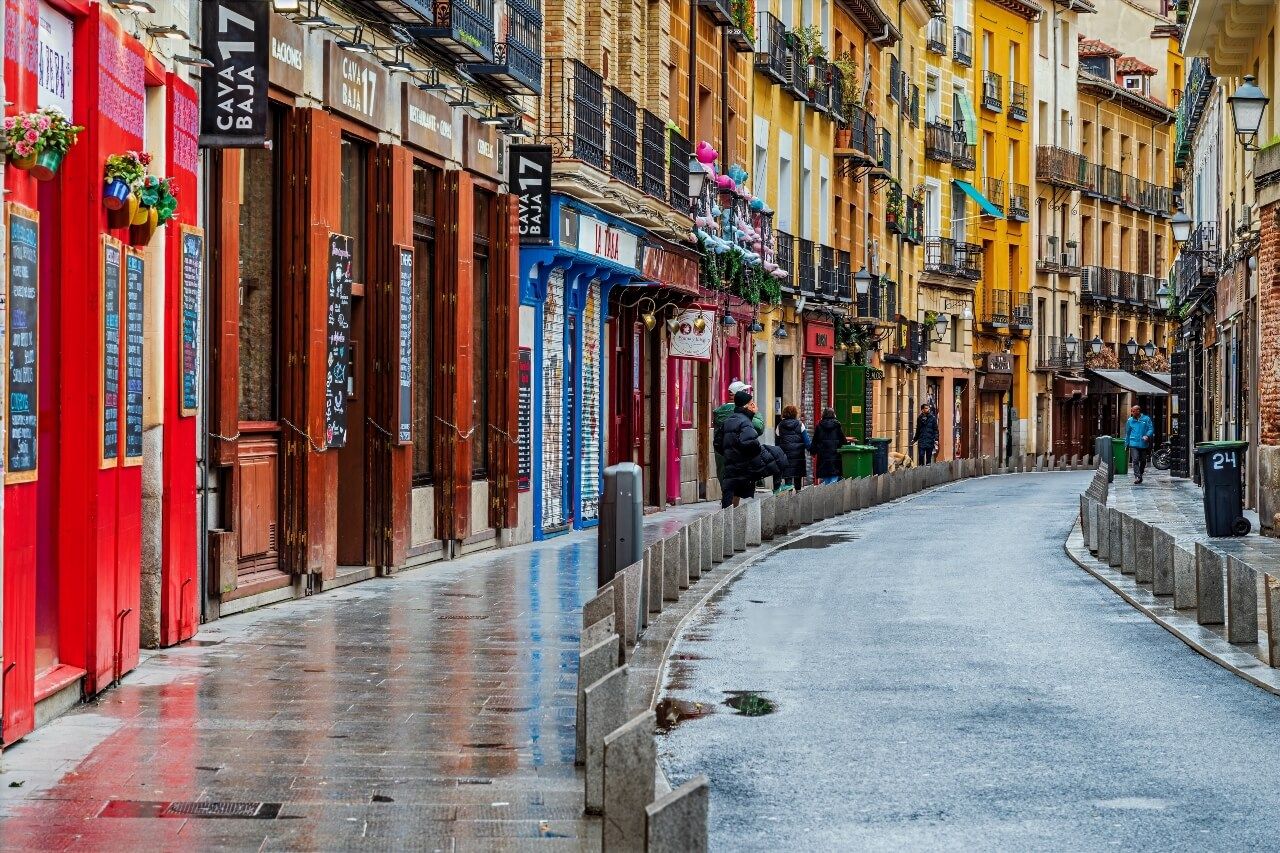
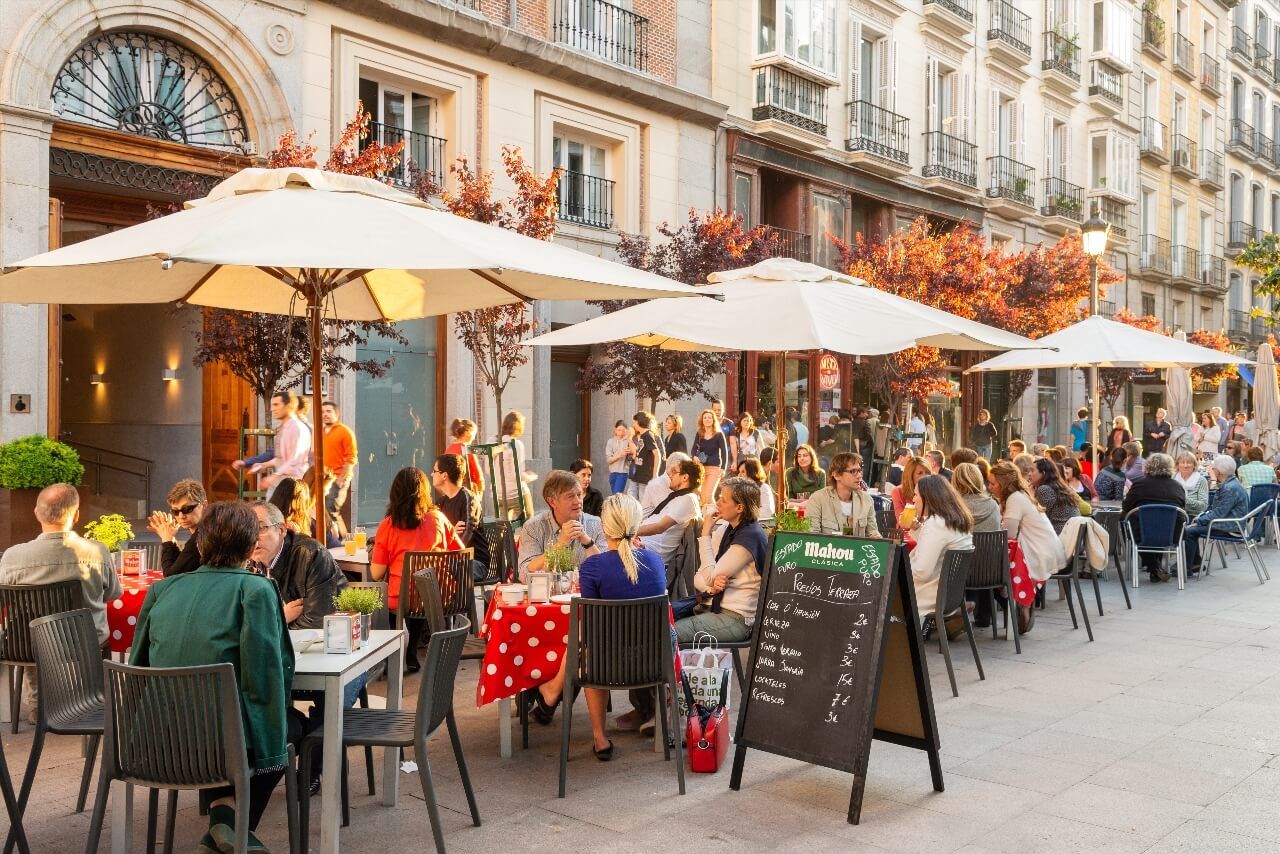
Madrid's tapas culture is not the complimentary bite-with-a-beer tradition of Andalusia or Granada. Here, tapas are ordered and paid for, and the culture is built around ir de tapas, moving between bars, eating a dish or two at each one, staying nowhere for more than 45 minutes. La Latina is the neighbourhood where this practice is most concentrated and most pleasurable.
A reasonable route starts at El Viajero on Plaza de la Cebada for a drink, moves to Juana La Loca (known for its tortilla de patatas topped with caramelised onion and brie) on Calle Puerta de Moros, then along Calle Cava Baja (Calle Cava Baja, 28005 Madrid, rated 4.7/5 on Google (518 avis)) past a dozen traditional taverns toward Casa Lucas for cold cuts and cheese. The whole circuit takes two to three hours and costs around €25-35 per person including drinks. Sunday afternoon, starting around 1 pm, is the classic time.
28. Rooftop Bars
Madrid's elevation and its relatively dry climate make rooftop bars genuinely enjoyable for much of the year. The best views are concentrated around Gran Vía and the Malasaña/Chueca axis.
The Hotel Riu Plaza España rooftop is the most dramatic: on the 26th floor of a building at the western end of Gran Vía, it offers an unobstructed 360-degree panorama that takes in the city centre, the Casa de Campo, and the mountains. The Círculo de Bellas Artes (Calle de Alcalá 42, 28014 Madrid, rated 4.4/5 on Google (33 421 avis)) terrace on Calle Alcalá charges a small entry fee (currently €4) but delivers a central view over the rooftops toward the Prado axis. For something less crowded, The Hat Madrid in the La Latina area has a smaller terrace with a direct sightline to the dome of the Basilica of San Francisco el Grande. Most rooftop bars operate from late spring through early autumn; some remain open year-round with heat lamps.
29. Parque del Oeste
The Parque del Oeste (Paseo Moret, 28008 Madrid, rated 4.5/5 on Google (30 439 avis)) stretches along the western edge of central Madrid from Moncloa down toward Casa de Campo, bordering the university campus and the Rosaleda rose garden. It is quieter and less visited than Retiro, and contains the Temple of Debod. The Ruta de la Memoria, a path through the park's southern edge, marks the frontline of the Battle of Madrid in 1936, where the Republican forces held the city against Franco's army for nearly three years. Information panels in Spanish and English explain the significance of the terrain.
30. CaixaForum Madrid
CaixaForum Madrid (Paseo del Prado 36, 28014 Madrid, rated 4.5/5 on Google (23 911 avis)) opened in 2008 in a former power station from 1900, converted by architects Herzog & de Meuron. The project involved lifting the entire industrial brick building off the ground, it appears to float above the pavement, and installing a vertical garden designed by Patrick Blanc on the adjacent wall: 15,000 plants across 460 square metres, climbing six stories. It is one of the more striking architectural moves in the city.
The centre hosts major temporary exhibitions, typically international touring shows of modern and contemporary art, and charges around €6 for admission. The permanent building and the vertical garden are free to observe from the street and are worth stopping for on any walk down the Paseo del Prado.
31. Barrio de las Letras
The Barrio de las Letras (Calle de las Huertas, 28012 Madrid, rated 4.5/5 on Google (7K avis)), the Literary Quarter, occupies the streets between the Prado and the Atocha station. In the 16th and 17th centuries, this was where Cervantes, Lope de Vega, Quevedo and Calderón de la Barca lived and wrote, often within a few streets of each other. The neighbourhood's streets are paved with engraved quotations from their works.
The Casa de Lope de Vega on Calle Cervantes is the preserved home of the playwright Lope de Vega, maintained as it appeared in the early 17th century, his garden, his study, his theatre scripts. Admission is free. The surrounding streets are now full of good restaurants, wine bars and small theatres that continue the neighbourhood's literary and theatrical tradition. This is one of the better areas in central Madrid for dinner, with a higher concentration of locally owned restaurants per block than most other districts.
32. Day Trip to Toledo
Toledo sits 73 kilometres south of Madrid and is one of the best-preserved medieval walled cities in Europe. It was the capital of Spain before Madrid, and for several centuries in the early Middle Ages it functioned as a city where Christian, Jewish and Muslim communities coexisted in the same streets, patronising the same craftsmen and sharing the same urban fabric. That history is legible in the architecture: a Gothic cathedral, a dozen Romanesque churches, the remains of a major synagogue, a mosque.
The Toledo Cathedral took over 250 years to complete (1226 : 1493) and contains paintings by El Greco, Goya and Rubens in its sacristy. The Monastery of San Juan de los Reyes, built to commemorate the victory at the Battle of Toro in 1476, has one of the most ornate Gothic cloisters in Spain. El Greco lived and worked in Toledo for most of his adult life; the Museo del Greco in the Jewish quarter houses a major collection of his work.
The practical details: trains run from Madrid Atocha to Toledo in 33 minutes and cost around €13.70 each way. The city is compact enough to walk in a single day; the old town sits on a hill surrounded on three sides by the Tajo river. Climb to the Mirador del Valle on the south bank in the late afternoon for the classic panoramic view of the city.
One caution: Toledo gets extremely crowded on summer weekends. A weekday visit, arriving on the first train and leaving on an afternoon service, avoids the worst of it.
33. Day Trip to Segovia
Segovia (Plaza del Azoguejo 1, 40001 Segovia, rated 4.8/5 on Google (22K avis)) is 92 kilometres northwest of Madrid and contains two monuments of such different historical periods that visiting them back to back requires a small mental adjustment. The Roman Aqueduct of Segovia, which carried water from the mountains to the city, was built around the end of the 1st century AD and remains standing without mortar: 20,400 granite blocks, 728 metres long, rising to 28.5 metres at its highest arch. It is one of the best-preserved Roman engineering projects in the world and it sits, entirely unenclosed, in the centre of the modern city.
At the other end of the old town, the Alcázar of Segovia, a castle built on a rocky spur above the confluence of two rivers, served as one of the residences of the monarchs of Castile and later as the inspiration (allegedly) for Walt Disney's Cinderella Castle. The interior displays medieval armour, thrones and painted ceilings. Admission is €9.
Between these two monuments, Segovia's old town holds the Cathedral of Segovia (the last Gothic cathedral built in Spain, completed in 1577), a dozen Romanesque churches, and a strong culinary tradition centred on cochinillo asado, roast suckling pig, which by law must be carvable with the edge of a plate. The restaurant Mesón de Cándido, beside the aqueduct, has been serving it since 1931.
Trains run from Madrid Chamartín to Segovia in 27 minutes on the high-speed line; tickets cost around €13 each way.
34. Flamenco Museum
The Museo del Flamenco (Calle Álvarez Gato 4, 28012 Madrid, rated 4.6/5 on Google (3 743 avis)) in the Barrio de las Letras covers the history, geography and technique of flamenco through photographs, instruments, costumes and audiovisual material. It is small, a single floor, but well organised, and serves as a useful primer before attending a tablao performance. Admission is around €10. The museum also offers introductory flamenco workshops for those who want to go beyond watching.
35. The Landscape of Light, Ryo Audio Tour
Madrid is a city that repays close looking, and the Ryo audio guide The Landscape of Light is built around exactly that premise. The route covers 7.3 kilometres across 19 audio stops, tracing the visual and architectural logic of the city from the Prado axis through the Retiro and into the Bourbon-era streets. The name comes from the particular quality of Madrid's light, documented by landscape painters and photographers for three centuries, and the route uses specific viewpoints and angles to illustrate why painters kept returning to the city.
The format is an independent audio guide accessible on the Ryo app: no group, no set departure time, no guide to keep up with. Each stop delivers roughly three to five minutes of expert commentary drawing on art history, urban history and the visual analysis of the city's public spaces. The route passes the Prado, the Retiro, the Casón del Buen Retiro, the Botanical Garden, the Cibeles fountain and the stretches of the Paseo del Prado that were redesigned by Ricardo Bofill and reopened in 2022 following a major renovation.
It pairs well with a morning at the Prado, start the museum at 10 am when it opens, give it three hours, then begin the route. By the time you reach the Retiro in early afternoon, the park will have settled into its comfortable midday rhythm.
FAQ
How many days do you need in Madrid?
Three full days cover the main sites, the Prado, the Royal Palace, the Reina Sofía, Retiro, and the key neighbourhoods, without rushing. Add a fourth day for a day trip to Toledo or Segovia. A week gives you time for smaller museums, the Bernabéu, flamenco, and a slower exploration of Malasaña and La Latina. Shorter visits of two days are possible but require prioritising ruthlessly.
What is the best time of year to visit Madrid?
Spring (April : June) and autumn (September : October) offer the most comfortable temperatures for walking. Summers are hot, July and August regularly exceed 35°C, and many Madrileños leave the city in August. Winters are dry and cold but rarely extreme, and the city is significantly less crowded. December is particularly pleasant around the Christmas market in Plaza Mayor.
Is Madrid expensive?
Madrid is one of the more affordable major European capitals. A good set lunch menu (menú del día) at a neighbourhood restaurant costs €12 : 16 with wine included. Public transport is cheap; a ten-trip metro card (Metrobús) costs around €12.20. The biggest costs are the major museums (€12 : 15 each), but most have free entry windows in the late afternoon or on Sundays.
How do you get around Madrid?
The metro is fast, extensive and cheap, the network covers virtually every site mentioned in this guide. Taxis are metered and reliable. The central area between the Prado and the Royal Palace is walkable in under 30 minutes. For the day trips to Toledo and Segovia, regional and high-speed trains from Atocha and Chamartín stations are the simplest option.
Is Madrid safe for tourists?
Madrid is generally safe and is ranked among the safer large European cities. Standard urban precautions apply: be aware of pickpockets in El Rastro, around Puerta del Sol and on the metro during rush hours. The tourist-heavy areas around Plaza Mayor see petty theft; keep bags closed and in front of you in crowds.
What language is spoken and do locals speak English?
Spanish (Castilian) is the official language. In tourist areas, major museums and larger hotels, English is widely spoken. In neighbourhood restaurants and bars away from the centre, less so, but a willingness to use basic Spanish phrases, or a translation app, covers most situations comfortably.
Madrid is the kind of city that builds on itself: the more you know about what you are looking at, the more it gives back. The audio route The Landscape of Light on the Ryo app is one of the most effective ways to develop that knowledge while you walk, 19 stops across 7.3 kilometres that reframe familiar monuments and show you angles of the city that most visitors walk straight past. Book the Prado, get out into La Latina on Sunday, and let the rest of the list take shape around those anchors.