
Créé par Romane, le 15 mai 2026
Votre guide Ryo
© Shutterstock
Edinburgh doesn't ease you in. The moment you step off the train at Waverley, a medieval fortress perched on a volcanic plug is staring you down, and that's before you've had your first whisky. When it comes to fun things to do in Edinburgh, Scotland's capital is one of those rare cities where dramatic scenery, layered history, and genuinely odd local culture all arrive at once, without needing to search for them. Whether you have two days or two weeks, the challenge isn't finding something interesting to do; it's deciding what to leave out.
This list goes well beyond the usual suspects. You'll find an underground city still frozen beneath the Old Town, a distillery that opened its doors less than a decade ago, a beach that Edinburghers treat as their own secret, and a Victorian gothic tower you can climb for views that put every rooftop bar in Europe to shame. The Ryo audio walking tour of Edinburgh, Between Myth and Reality, covering 8.3 km of the city in 3h30 with 24 narrated stops, is an excellent companion for your first full day on foot. Here are 45 experiences that make Edinburgh worth the journey.
1. Edinburgh Castle
Edinburgh Castle sits on Castle Rock, a basalt plug formed by volcanic activity around 350 million years ago. The site has been occupied continuously since at least the 2nd century AD, making it one of the oldest fortified sites in Europe. The current complex of buildings spans several centuries, from the 12th-century St Margaret's Chapel, the oldest surviving structure in Edinburgh, to the 20th-century Scottish National War Memorial.
The main draw for most visitors is the Crown Room, which houses the Honours of Scotland: the crown, sceptre, and sword of state collectively dating back to the early 16th century, alongside the Stone of Destiny, returned from Westminster Abbey in 1996 after 700 years. The One O'Clock Gun, fired every day except Sunday, Good Friday, and Christmas Day, has been a city institution since 1861, it was originally a time signal for ships in the Firth of Forth.
Plan at least two and a half hours. Book tickets in advance, queues at the gate can run 45 minutes in summer. The esplanade hosts the Edinburgh Military Tattoo every August, with over 200,000 spectators attending across its three-week run.
2. Arthur's Seat
At 251 metres, Arthur's Seat (Holyrood Park, Edinburgh EH8 8HG, rated 4.9/5 on Google (4 690 avis)) is the highest point in Edinburgh and the remains of a volcano that last erupted roughly 350 million years ago. The hike from Holyrood Park takes between 45 minutes and an hour depending on your route, and the views from the summit take in the Firth of Forth, the Pentland Hills, the city skyline, and on clear days, the mountains of the Southern Highlands.
The most popular ascent follows the path from St Margaret's Loch up the valley known as the Gutted Haddie, a route that opens up into a broad saddle before the final rocky push to the top. Go early on a weekday to avoid the crowds that gather by midmorning on weekends. Wear proper footwear: the path turns slippery after rain, which in Edinburgh happens fairly often.
3. The Royal Mile
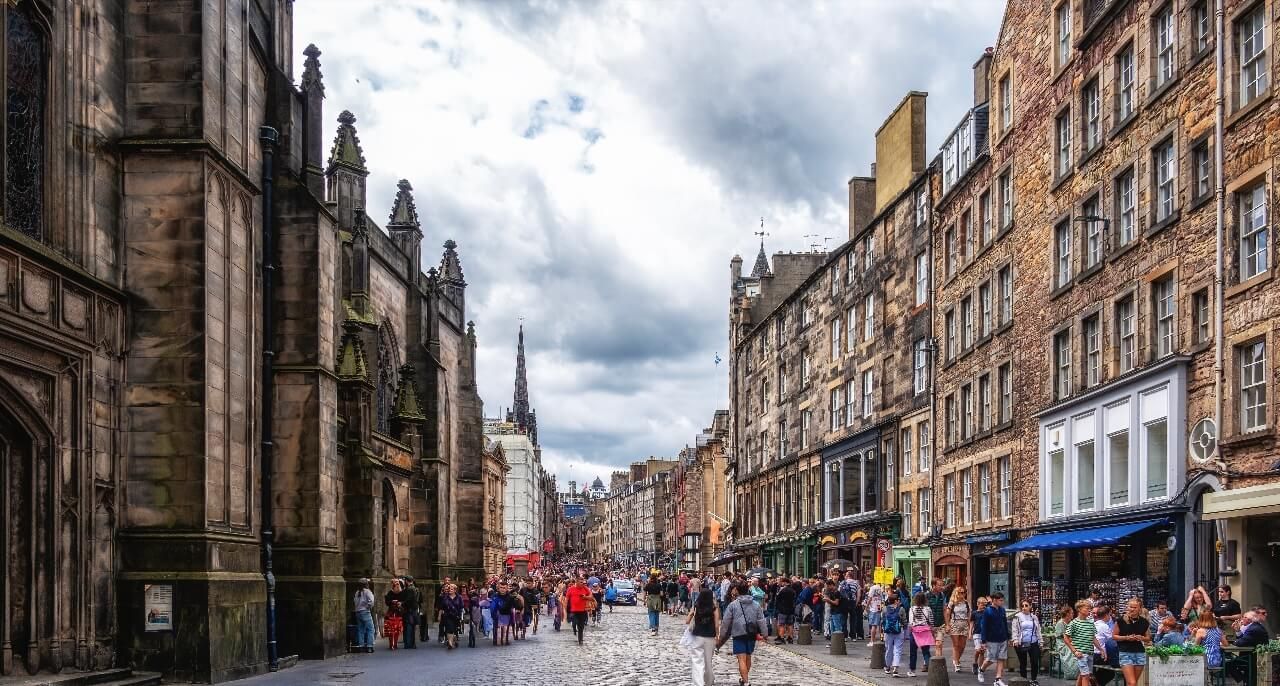
The Royal Mile is the central artery of Edinburgh's Old Town, stretching roughly 1.8 km (one historic Scots mile) from the Castle Esplanade at the top to the Palace of Holyroodhouse at the bottom. It passes through four named sections, Castlehill, Lawnmarket, High Street, and Canongate, each with its own character and layers of history compressed into close-packed closes and wynds running off either side.
The street is tourist-heavy, especially in summer, but dismissing it entirely would mean missing some of the city's most compelling stops. The Museum of Edinburgh in the Canongate Tolbooth is free and unexpectedly absorbing. The closes leading off the Mile, Brodie's Close, Advocate's Close, White Horse Close, are worth poking your nose into just for the atmosphere. Allow a morning to walk it properly from top to bottom, stopping along the way rather than marching straight through.
4. Palace of Holyroodhouse
The Palace of Holyroodhouse is the official residence of the monarch in Scotland, used by the Royal Family for a week each summer during Holyrood Week. For the rest of the year, it's open to visitors. The palace grew around the ruins of Holyrood Abbey, founded in 1128 by King David I, and the oldest surviving sections of the building date to the early 16th century.
The State Apartments are lavishly furnished and used for formal occasions, but the most atmospheric part of the visit is the historic apartments of Mary, Queen of Scots, where in 1566 her secretary David Rizzio was stabbed 56 times in what many historians read as a political assassination. The audio guide does an excellent job of disentangling the intrigue. The gardens, open to the public on most days, offer an unusual perspective on the palace walls against the volcanic backdrop of Arthur's Seat.
5. Calton Hill
Calton Hill rewards a short, easy climb with one of the most photographed panoramas in Scotland. The summit holds a collection of monuments that feel intentionally theatrical: the incomplete National Monument (modelled on the Parthenon, abandoned in 1829 when funds ran out and now known locally as Scotland's Disgrace), the Nelson Monument, the City Observatory, and the Dugald Stewart Monument.
The hill is free to access at all hours, which makes it a popular sunrise and sunset spot. The views north towards the Firth of Forth and east towards Arthur's Seat are arguably better than from the castle, and unlike the castle, they cost nothing.
6. Real Mary King's Close
Below the Royal Mile, beneath the foundations of the Royal Exchange building (now the City Chambers), lies a warren of 17th-century closes sealed off and built over during Edinburgh's rapid expansion. The Real Mary King's Close (2 Warriston's Close, Edinburgh EH1 1PG, rated 4.6/5 on Google (17 612 avis)) takes visitors underground through these preserved streets on a guided tour lasting roughly an hour.
The experience is theatrical by design, actors bring historical figures to life at various points, but the architecture itself is the genuinely compelling part. You're walking through rooms that were abandoned mid-life in the 1750s, with original floor levels, fireplaces, and in one case, a child's toys that visitors have left over decades as a kind of informal memorial. The close dates to the 1630s, named after a prominent female merchant, Mary King, which in itself was unusual for the period.
Book in advance, especially from May to September. The tours sell out days ahead during festival season in August. The temperature underground stays at around 10°C year-round, bring a layer even in summer.
7. National Museum of Scotland
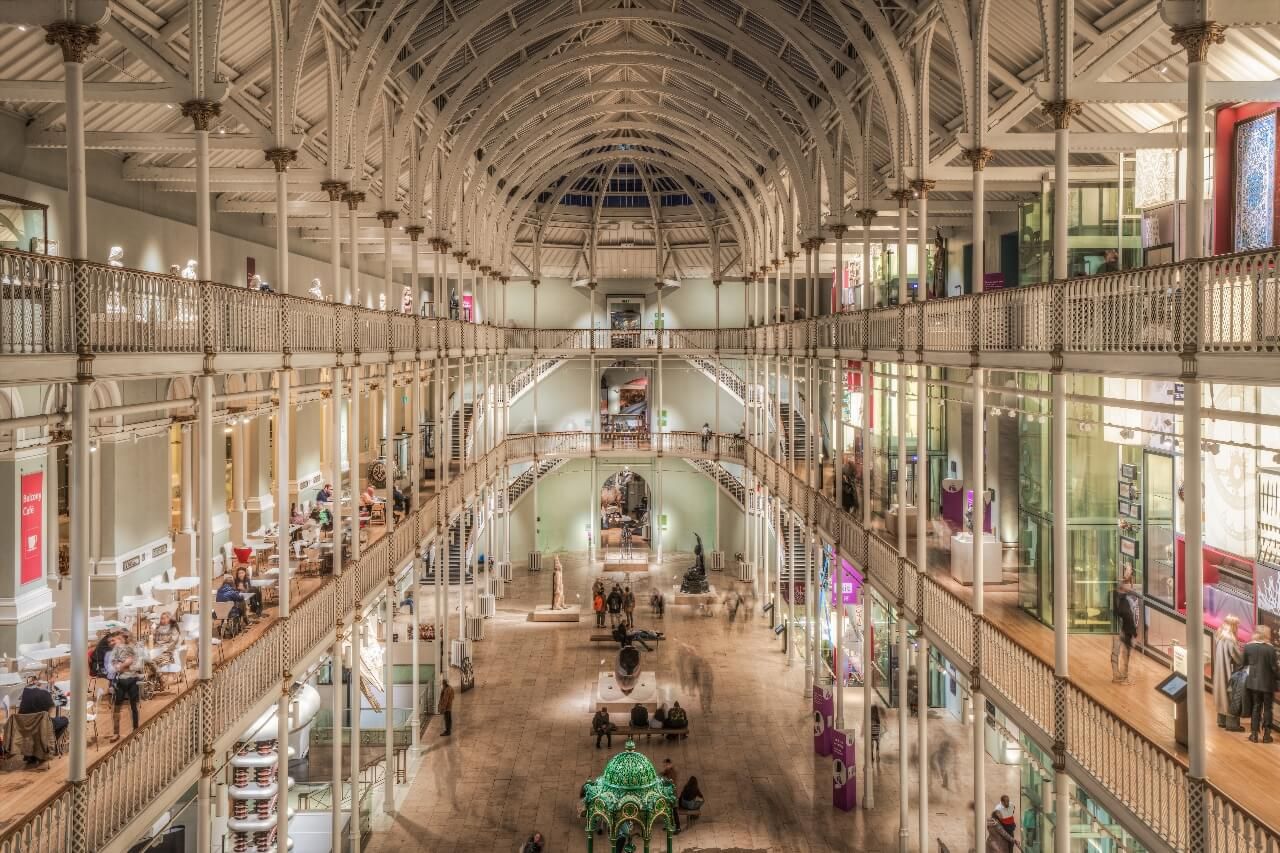
The National Museum of Scotland (Chambers Street, Edinburgh EH1 1JF, rated 4.8/5 on Google (57 202 avis)) is free to enter and covers roughly 20,000 years of Scottish history across six floors. The Victorian Grand Gallery, a soaring iron-and-glass atrium, forms the heart of the building, with the modern Scottish history galleries branching out from it. Dolly the sheep, the first cloned mammal, is here on permanent display, as is the Lewis Chessmen, a collection of 12th-century chess pieces carved from walrus ivory discovered on the Isle of Lewis in 1831.
Allow two to three hours for a meaningful visit. The rooftop terrace, accessible via the tower in the corner of the building, offers a free panoramic view of the Old Town that rivals anything on the Edinburgh tourist circuit. The café on the ground floor is reliable for a coffee break.
8. The Scotch Whisky Experience
Located immediately below the castle on the Royal Mile, The Scotch Whisky Experience (354 Castlehill, Edinburgh EH1 2NE, rated 4.7/5 on Google (11 176 avis)) offers a range of tasting sessions and tours. The Silver Tour, the entry-level option, includes a barrel ride through the production process and a tasting of one whisky from each of Scotland's five producing regions. The Gold Tour goes further, including three drams and access to a collection of over 3,500 bottles, one of the largest Scotch whisky collections in the world.
This is a good introduction if you're new to Scotch. The staff know their subject and the format is more educational than gimmicky. For something more immersive, the Platinum Tour includes bespoke blending under the guidance of a whisky specialist. Booking ahead is strongly recommended, sessions fill up fast, particularly on weekends.
9. Greyfriars Kirkyard
Greyfriars Kirkyard (Greyfriars Place, Edinburgh EH1 2QQ, rated 4.7/5 on Google (2 014 avis)) is one of Edinburgh's most storied cemeteries, established in the 1560s as the city's first post-Reformation burial ground. The churchyard contains the graves of several notable Scots, including the poet Allan Ramsay and the founder of the Bank of Scotland, John Holland. It was also here, in 1638, that the National Covenant was signed, a document that triggered decades of religious conflict.
For most visitors, though, the main attraction is the grave of John Gray, whose dog Greyfriars Bobby allegedly stood guard over his master's plot for 14 years after Gray's death in 1858. The story has become one of Edinburgh's most enduring legends. The churchyard also features prominently in Harry Potter-related tourism, with Tom Riddle's grave among the headstones.
10. Victoria Street
Victoria Street (Edinburgh EH1 2HE, rated 4.7/5 on Google (9K reviews)) is a curved, two-tier street that winds down from George IV Bridge to the Grassmarket. The lower level is lined with independent shops painted in a sweep of vivid colours, blues, reds, and oranges, that have made it one of the most photographed streets in Scotland. J.K. Rowling reportedly used it as inspiration for Diagon Alley.
The shops themselves are worth browsing: a specialist map shop, a tartan outfitter, an old-fashioned sweetie store, and several independent boutiques cluster along its short stretch. Early morning or late afternoon offers the best light for photographs and the fewest people in the frame.
11. Camera Obscura & World of Illusions
At the top of the Royal Mile, Camera Obscura (Castlehill, Edinburgh EH1 2ND, rated 4.6/5 on Google (15 712 avis)) has been operating in some form since 1853, making it one of Edinburgh's oldest attractions. The camera itself, a Victorian optical device that projects a live, moving image of the city onto a table in a darkened rooftop chamber, remains the centrepiece and is genuinely impressive, particularly on a clear day.
The floors below have been expanded into a World of Illusions, with five floors of optical tricks, holography, and interactive exhibits. It's unashamedly family-oriented but entertaining for adults who don't take themselves too seriously. The rooftop terrace also offers a strong 360-degree view of the Old Town. Plan an hour to an hour and a half.
12. Scottish National Gallery
The Scottish National Gallery sits between the Old Town and New Town at the foot of the Mound. The permanent collection is free and covers European painting from the Renaissance to the early 20th century, with particular strength in Dutch Golden Age works and an outstanding collection of Scottish painting. Highlights include Velázquez's « An Old Woman Cooking Eggs, » Botticelli's « The Virgin Adoring the Sleeping Christ Child, » and a room dedicated to Raeburn's portraits.
The gallery is rarely crowded outside major exhibitions, which makes it a pleasant alternative to the castle queues. The adjoining Royal Scottish Academy hosts changing exhibitions throughout the year.
13. Royal Yacht Britannia
The Royal Yacht Britannia (Ocean Drive, Edinburgh EH6 6JJ, rated 4.7/5 on Google (13 451 avis)) is moored at the Ocean Terminal shopping centre in Leith, a 20-minute bus ride from the city centre. Launched in 1953 and decommissioned in 1997, Britannia served as the Royal Family's floating home and diplomatic venue for 44 years, travelling over a million nautical miles and visiting 135 countries.
The self-guided tour covers five decks, from the crew quarters below waterline (which housed a complement of 240 Royal Yachtsmen) to the Queen's private apartments and the State Dining Room where dignitaries including Nelson Mandela, Bill Clinton, and countless heads of state were entertained. The level of preservation is exceptional, the Queen's own bedroom looks exactly as it did the day she disembarked for the last time. The sun lounge, with its original 1950s furniture and fittings, gives an unexpectedly intimate sense of how the Royal Family spent their time at sea.
Allow two hours. The audio guide included with the ticket is narrated in part by former crew members, which adds a human dimension the physical exhibits alone can't provide. Arrive by midday to avoid the afternoon rush during peak season.
14. Princes Street Gardens
Princes Street Gardens (Princes Street, Edinburgh EH2 2HJ, rated 4.7/5 on Google (26 925 avis)) occupies the valley between the Old Town and New Town, in the bed of what was once the Nor Loch, a pestilent body of water drained in the 18th century during the construction of the New Town. The park is split into East and West sections by the Mound. Both are free to enter.
The west gardens house the Ross Bandstand, which stages free outdoor concerts in summer and becomes the focal point of Edinburgh's Hogmanay celebrations on New Year's Eve, one of the world's largest outdoor New Year's parties, with ticketed events drawing over 100,000 people.
15. Edinburgh Vaults
The Edinburgh Vaults (South Bridge, Edinburgh EH1 1LL, rated 4.7/5 on Google (54 avis)) are a series of chambers built into the arches of the South Bridge, constructed between 1785 and 1788. For roughly thirty years after construction, the vaults were used as workshops and storage spaces. As the conditions deteriorated, they flooded regularly and had no ventilation, they became home to some of Edinburgh's poorest residents, and by the mid-19th century had been abandoned entirely.
Today, two main operators run guided tours through the vaults: Mercat Tours and Auld Reekie Tours. The tours are atmospheric and historically grounded, covering everything from the social history of the closes to the body-snatching trade that flourished in early 19th-century Edinburgh to supply the anatomy schools on Surgeon's Row. The ghost-hunting angle is played up somewhat, but the underlying history is genuinely absorbing regardless of your view on the paranormal.
Book in advance. Evening tours are more dramatic but morning tours allow you to hear the guide more clearly without the theatrical additions.
16. Holyrood Park
Holyrood Park (Queen's Drive, Edinburgh EH8 8HG, rated 4.8/5 on Google (19K reviews)) is a 263-hectare royal park in the heart of the city, managed by Historic Environment Scotland. Unlike most urban parks, it contains genuine wilderness: volcanic crags, lochs, wetlands, and moorland within walking distance of the Scottish Parliament. Arthur's Seat (item 2 in this list) sits at its centre, but the park offers several walking circuits that don't require reaching the summit.
The Radical Road, built along the base of the Salisbury Crags in 1820 on the orders of Sir Walter Scott to provide work for unemployed weavers, is one of the most dramatic low-level paths in the city. The Duddingston Loch at the park's eastern edge is a designated Site of Special Scientific Interest and a reliable spot for winter wildfowl. If you want context on the volcanic geology and the layered history of the surrounding city as you walk, the Ryo Edinburgh Ryocity audio guide picks up several of these threads from the Holyrood side and is worth queuing on your phone before you set out.
17. Scott Monument
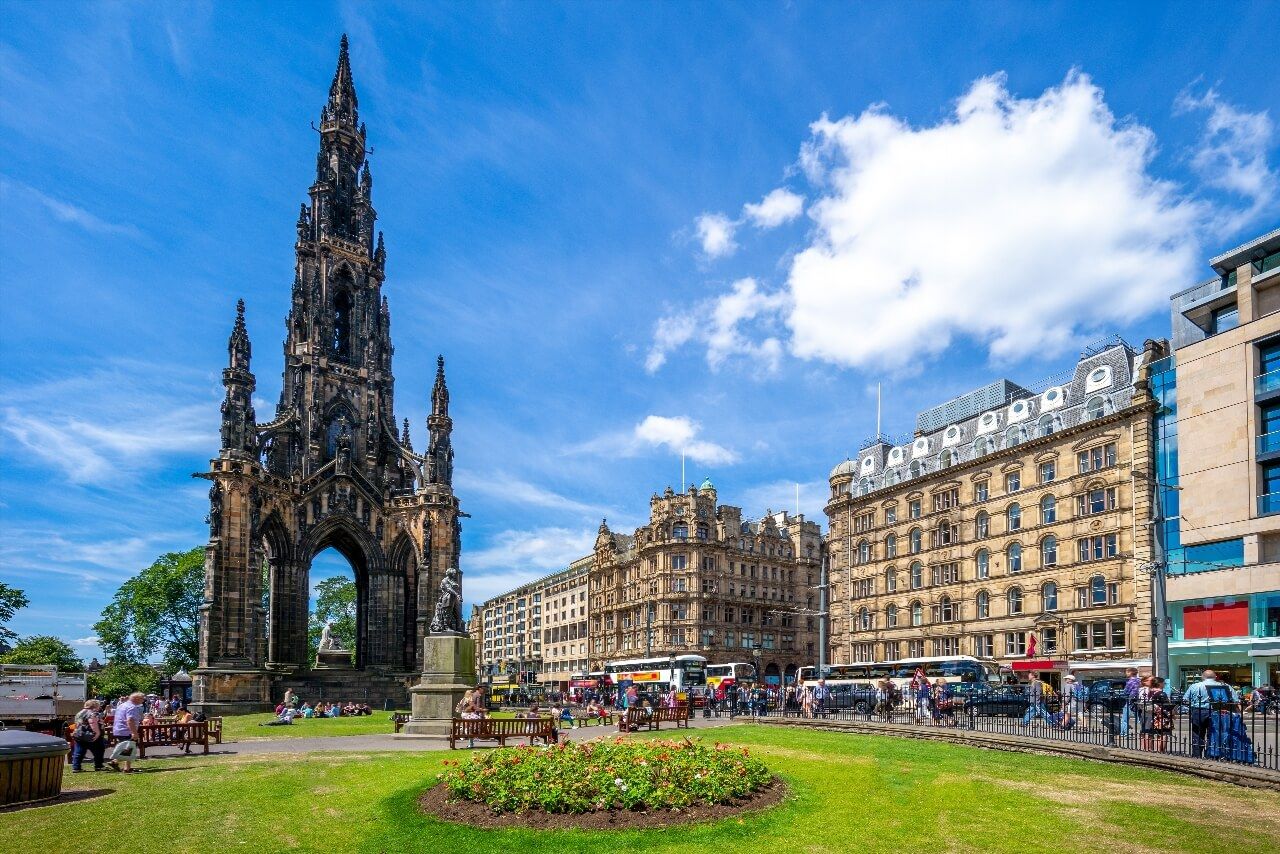
The Scott Monument on Princes Street is the second-largest monument to a writer in the world (after the José Martí memorial in Havana), a 61.1-metre Victorian Gothic spire built between 1840 and 1846 in honour of Sir Walter Scott. It contains a small museum about Scott's life and works, and 287 steps lead to four viewing platforms at successive heights, the uppermost offering a near-vertical view down into Princes Street Gardens.
The climb is claustrophobic in the upper sections, the staircase narrows to single-file, but the views from the top are worth the effort. Tall visitors should note the ceiling in the upper section is low. Tickets are reasonably priced and the queues are shorter than at most Edinburgh landmarks.
18. Grassmarket
The Grassmarket is one of Edinburgh's most historically layered public spaces. A market square since medieval times, it was also the site of public executions until the early 18th century, the gallows stood at the eastern end, and the Last Drop pub on the square takes its name from that history. The cobbled square is framed by the Castle Rock on one side and the Old Town tenements on the other.
Today it's a lively area of independent restaurants, bars, and boutique shops. The weekend farmers' market brings locals out in force. The cluster of pubs, Maggie Dickson's (named after a woman hanged here in 1724 who survived and was allowed to go free), the White Hart Inn (where Robert Burns and William Wordsworth both drank), and several others, make it a natural stopping point for an afternoon drink.
19. Greyfriars Bobby Statue
The Greyfriars Bobby statue (Candlemaker Row, Edinburgh EH1 2QE, rated 4.7/5 on Google (2 579 avis)), a small bronze terrier on a granite pedestal at the corner of Candlemaker Row and George IV Bridge, is one of Edinburgh's most photographed landmarks. The dog the statue honours, a Skye terrier, allegedly stood guard over his master John Gray's grave in nearby Greyfriars Kirkyard for fourteen years after Gray's death in 1858, until his own death in 1872. The statue itself was commissioned by Baroness Burdett-Coutts and unveiled in 1873, with the bronze terrier cast by sculptor William Brodie.
The tradition of rubbing his nose for good luck has worn it to a golden shine, though the local council has periodically asked visitors to stop, the wear is damaging the original surface and frequent repainting has been required. Brief, charming, and directly en route between the National Museum and Greyfriars Kirkyard, it takes less than two minutes to visit and is entirely free, the kind of quick photo stop that fits naturally into a morning walk through the Old Town. The plaque at the base provides the bare facts; the longer version, including the historical questions about how literally the loyalty story should be taken, is worth reading before you go.
20. Portobello Beach
Portobello is Edinburgh's seaside suburb, about 4 km east of the city centre and accessible by bus in under 20 minutes. The beach stretches for roughly 2 km of sandy shoreline along the Firth of Forth, backed by a Victorian promenade with an old-fashioned amusement arcade, ice cream shops, and a heated outdoor swimming pool open in summer.
Edinburghers treat Portobello as their local beach and the atmosphere is accordingly relaxed, more picnic blankets and labradors than beach clubs and selfie sticks. The water temperature in the Firth of Forth peaks at around 15°C in August, which the locals consider perfectly adequate for swimming. The Sunday market in the Portobello Town Hall is worth combining with a beach walk.
21. Scottish National Portrait Gallery
The Scottish National Portrait Gallery (1 Queen Street, Edinburgh EH2 1JD, rated 4.7/5 on Google (5 654 avis)) on Queen Street is free to enter and housed in a magnificent red sandstone Gothic building completed in 1889. The collection spans six centuries of Scottish history told through portraiture, from Mary, Queen of Scots to contemporary figures, and the building itself is as interesting as the art. The entrance hall is ringed by a frieze of 156 figures from Scottish history, painted in a style influenced by the Italian Pre-Raphaelites.
The photography galleries on the upper floors are consistently strong, and the special exhibitions (ticketed) have in recent years focused on subjects ranging from Scottish fashion to the Highland diaspora. Allow 90 minutes for a relaxed visit.
22. Johnnie Walker Princes Street
Johnnie Walker Princes Street (145 Princes Street, Edinburgh EH2 4BL, rated 4.7/5 on Google (4 582 avis)) opened in 2021 as an eight-floor visitor experience dedicated to Scotch whisky in one of the most spectacular locations in Edinburgh, occupying a converted Victorian department store overlooking Princes Street Gardens and the castle. The experience is more polished and design-forward than the Scotch Whisky Experience on the Royal Mile, with branded storytelling and theatrical tasting rooms themed around the whisky-producing regions of Scotland.
The rooftop bar on the seventh floor, 1820 Bar, serves cocktails and light food with a panoramic view of the Edinburgh skyline. Even if the ticketed whisky experiences aren't your priority, the bar is accessible without booking a tour and ranks among the better views in the New Town. Tasting experiences range from 45 minutes to two hours and must be booked in advance.
23. Edinburgh Dungeon
The Edinburgh Dungeon (31 Market Street, Edinburgh EH1 1DF, rated 4.5/5 on Google (6 653 avis)) is an unashamedly theatrical attraction that takes visitors through re-enacted scenes from Edinburgh's most gruesome history, plague, body snatching, witch trials, and the crimes of Burke and Hare, with live actors, special effects, and a couple of ride elements. It sits somewhere between museum and haunted house, with eleven shows linked into a single 75-minute walk-through that drops you into a different era every few minutes.
The acting quality is consistently strong, the actors interact with the audience, pick on the brave-looking ones at the front, and use enough genuine historical detail to keep the experience above the level of pure novelty. The Burke and Hare sequence, set in a recreated anatomy theatre, is the most historically grounded part of the route. It's not for the faint-hearted or very young children, but for anyone who appreciates dark history delivered with a degree of showmanship, it's efficiently entertaining. Book online for a discount over the door price, and arrive a few minutes early to read the queue-line wall panels, which give you the historical context the show itself skims past.
24. Harry Potter Sights
Edinburgh has a genuine claim as one of the cities most closely associated with the creation of Harry Potter. J.K. Rowling wrote significant portions of the early books while living in the city, and several Edinburgh locations have direct or indirect connections to the series that go beyond the merely speculative.
Victoria Street is widely cited as an influence on Diagon Alley. The Elephant House café (21 George IV Bridge, Edinburgh EH1 1EN, rated 3.9/5 on Google (4 346 avis)) on George IV Bridge is where Rowling wrote in the early days, and the toilets (accessible to customers) still have fans' messages covering every surface. In Greyfriars Kirkyard, the gravestone of Thomas Riddell is a reliably visited spot, as is that of William McGonagall. The Edinburgh Central Library has a small Rowling-related display. Spoon café on Nicholson Street, where Rowling also wrote, is less publicised and therefore less crowded.
Several operators run dedicated Harry Potter walking tours lasting around two hours, which provide context and some locations that aren't obvious without guidance. Sandyford's and Sandemans both run well-regarded versions. The tours depart from the Royal Mile and cost around £15-£18 per person.
25. Dynamic Earth
Dynamic Earth (Holyrood Road, Edinburgh EH8 8AS, rated 4.4/5 on Google (2 135 avis)) is a science visitor attraction at the foot of Salisbury Crags, using displays, films, and immersive environments to tell the story of the planet's geological history from the Big Bang to the present. The building itself, a white tensile-structure tent designed by Michael Hopkins, is a landmark of late 1990s Scottish architecture.
The experience is aimed primarily at families and school groups but holds up well for curious adults. The time travel through geological periods, particularly the deep ocean and ice age sections, are genuinely impressive. Allow 90 minutes to two hours.
26. Leith & The Shore
Leith is Edinburgh's port district, separated from the city for most of its history and absorbed only in 1920. In recent decades it has gone through significant regeneration and is now home to the highest concentration of restaurants and bars in the city outside the Old Town, with a particular strength in seafood.
The Shore (Shore Place, Edinburgh EH6 6QN) is the quayside area along the Water of Leith, lined with converted warehouse buildings housing restaurants, wine bars, and independent shops. The Kitchin, Martin Wishart, and Nautilus (fish and chips) are among the most recommended. The area is also the departure point for boat trips on the Firth of Forth and within walking distance of the Royal Yacht Britannia. An afternoon in Leith followed by a long dinner is one of the most satisfying ways to spend a day in Edinburgh.
27. Rose Street Pub Crawl
Rose Street (Edinburgh EH2 2PR, rated 4.4/5 on Google (4K reviews)) runs parallel to Princes Street in the New Town, invisible from the main shopping drag but packed with pubs along its length. The unofficial tradition of drinking in every pub on the street has been a local rite of passage for decades, there are roughly 18 establishments depending on how you count them, which makes a full crawl ambitious by any standard.
For a more selective approach, the Abbotsford at the eastern end is a Victorian island-bar pub with a serious whisky selection; the Kenilworth in the middle retains its original 19th-century island bar and tiled interior; and the Rose Street Brewery at the western end serves its own ales on tap. A half-dozen pubs between them gives a good cross-section of Edinburgh pub culture without the morning-after consequences of the full crawl.
28. Surgeons' Hall Museums
The Surgeons' Hall Museums (Nicolson Street, Edinburgh EH8 9DW, rated 4.7/5 on Google (4 459 avis)) on Nicolson Street form one of Edinburgh's most unusual attractions: three interconnected museums in the Georgian headquarters of the Royal College of Surgeons of Edinburgh, covering the history of surgery, dentistry, and pathology with a collection that includes items not for the squeamish. The Wohl Pathology Museum contains over 3,000 anatomical and pathological specimens, displayed in the original 19th-century cabinets where they have sat, in some cases, for more than 150 years.
The History of Surgery Museum covers four centuries of surgical practice, including the Edinburgh-specific horrors of the Burke and Hare era, the two Irishmen who, between 1827 and 1828, murdered at least sixteen people in the West Port and sold the bodies to the anatomist Robert Knox for dissection. A pocketbook bound in Burke's own skin is among the more confronting exhibits. Joseph Lister's instruments and the early experiments in antiseptic surgery are also part of the collection, the kind of object that turns an abstract piece of medical history into something specific and unsettling.
Free for Edinburgh residents, paid entry for visitors. Allow 90 minutes, and steel yourself: this is one of the more visceral museum experiences in the city.
29. Dean Village
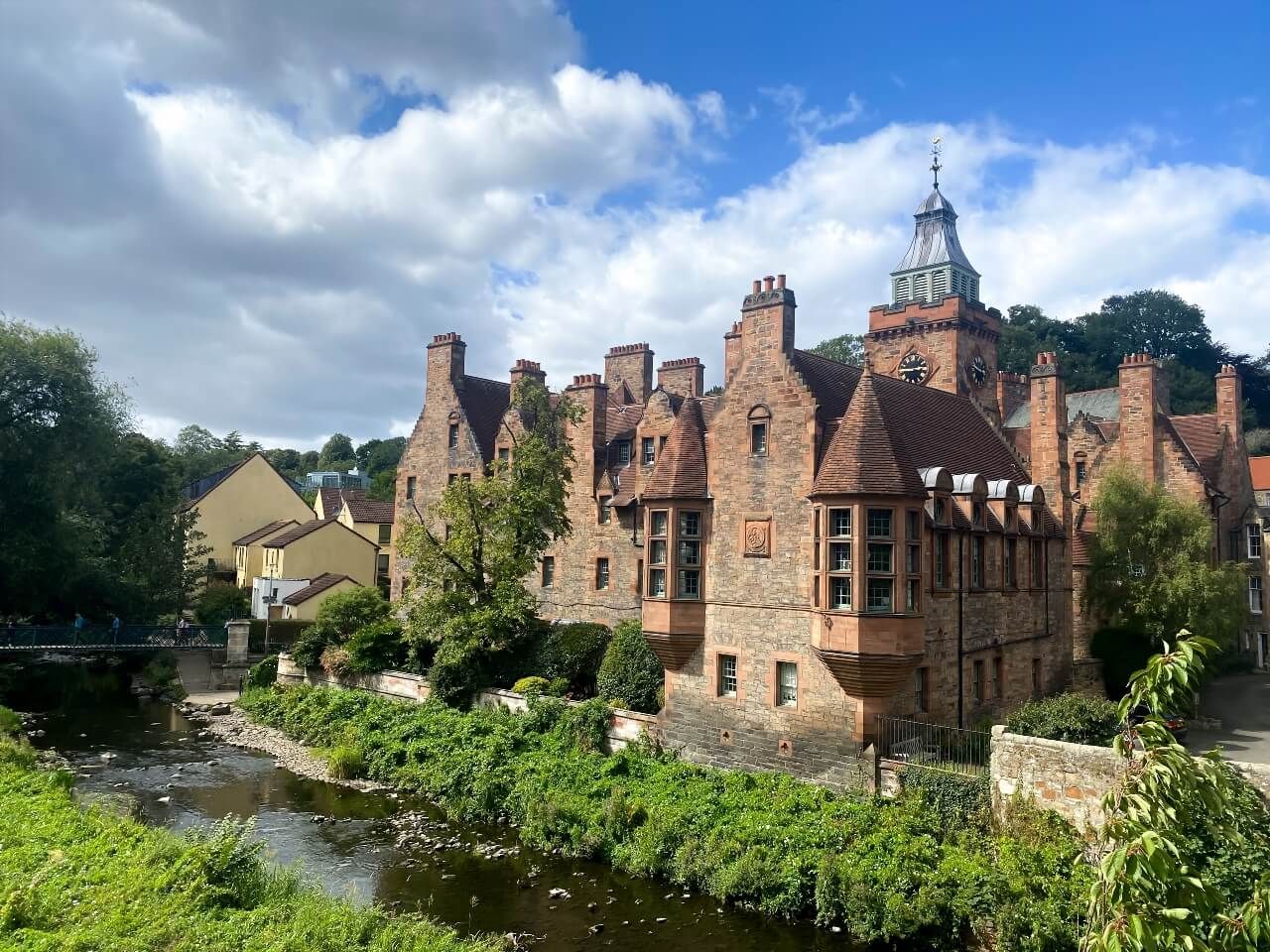
Dean Village (Bell's Brae, Edinburgh EH4 3BJ, rated 4.8/5 on Google (77 avis)) sits in the Water of Leith gorge, about ten minutes' walk from the west end of Princes Street, and feels entirely disconnected from the city around it. The village was a milling community from the 12th century until the late 19th, and the surviving mill buildings, converted to flats but retaining their stone facades, give the area a quality that is wholly unlike the rest of Edinburgh.
The most striking viewpoint is from Dean Bridge, built by Thomas Telford in 1832, which provides an elevated view down into the gorge. The Water of Leith Walkway passes through the village, connecting it to Stockbridge and the Scottish National Gallery of Modern Art to the west. The village itself has no shops or restaurants, it's purely for walking through and photographing.
30. Water of Leith Walkway
The Water of Leith Walkway (Belford Road, Edinburgh EH4 3DS, rated 4.7/5 on Google (1 194 avis)) is a 12-mile path following the river from Balerno in the Pentland Hills to the Firth of Forth at Leith. The urban section running from Dean Village through Stockbridge to the National Gallery of Modern Art and onward is the most accessible and the most varied, passing through a sequence of environments, steep gorge, Victorian gardens, gallery grounds, and waterfront regeneration, within a 3-4 km stretch.
The walkway is well-maintained and mostly level, making it suitable for most fitness levels. The Gallery of Modern Art at the western end of the urban section is free to enter and worth adding to the route, the grounds include outdoor sculptures and a café with terrace seating in summer.
31. The Chocolatarium
The Chocolatarium (11-15 Cranston Street, Edinburgh EH8 8AZ, rated 4.9/5 on Google (2 916 avis)) on Cranston Street offers guided chocolate-making workshops in which participants learn the history of Scottish chocolate, taste single-origin bars, and create their own pralines or tablets to take home. The workshop lasts about 75 minutes and is run by a chocolatier with a particular focus on Scottish ingredients and flavour combinations.
It's an unpretentious, hands-on experience that works well for adults as much as for children. The tasting component alone covers six to eight different chocolates. Book well in advance, sessions are capped at small groups and sell out consistently, particularly at weekends. A solid option for a wet Edinburgh afternoon.
32. Scottish Parliament Building
The Scottish Parliament building at the foot of the Royal Mile is one of the most controversial pieces of architecture in recent Scottish history, commissioned in 1997, it opened in 2004, three years late and at a final cost of £414 million, roughly ten times the original budget. Designed by Enric Miralles, the building is a complex assembly of concrete, steel, oak, and granite that draws on imagery from the Scottish landscape.
Free guided tours run on most non-sitting days and provide access to the debating chamber and committee rooms. It's genuinely interesting as architecture regardless of your politics, though visitors with strong political opinions in either direction tend to be well served by the experience.
33. Waverley Bridge & Station
Edinburgh Waverley Station is one of the most dramatically positioned railway stations in the world, sunk into the valley between the Old Town and New Town, with the castle visible from the platforms and the Scott Monument framing the eastern exit. The station opened in 1846 and takes its name from Walter Scott's Waverley novels.
Waverley Bridge, directly above the station, offers one of the best street-level views of the castle and the Old Town skyline, particularly in the late afternoon when the light falls from the west. It costs nothing and takes less than five minutes, the kind of viewpoint that most visitors walk straight past without realising what they're missing.
34. The Elephant House Café
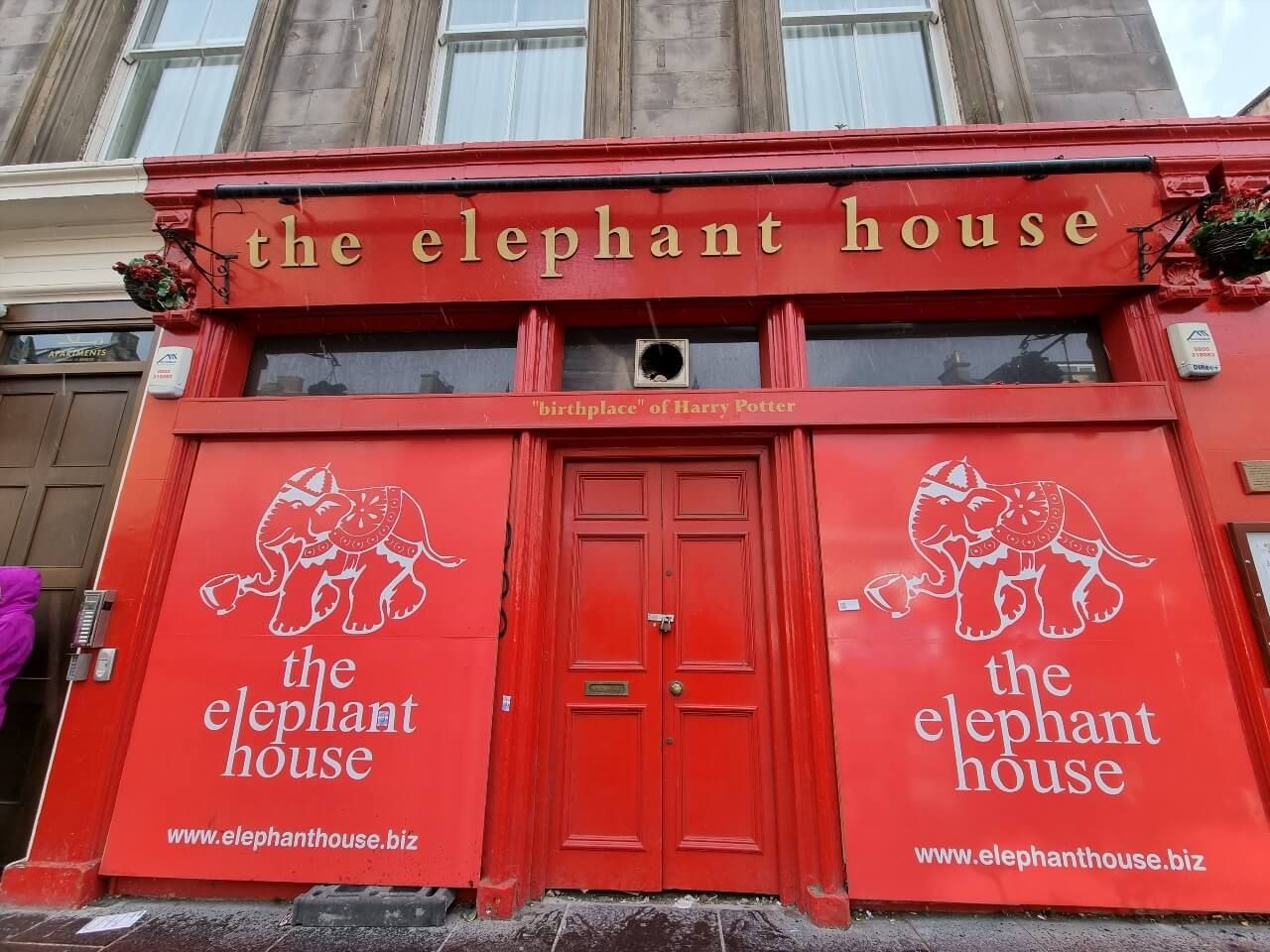
The Elephant House (21 George IV Bridge, Edinburgh EH1 1EN, rated 3.9/5 on Google (4 346 avis)) on George IV Bridge is a café of genuine historical significance for anyone interested in J.K. Rowling's biography. She wrote the early chapters of the Harry Potter series here in the 1990s, using the back room with its view of Greyfriars Kirkyard and the Castle. The café was damaged by a fire in 2021 but reopened in 2023 after restoration.
It's a pleasant enough café for coffee and cake regardless of the association, though the queues for photos in the back room can be lengthy during peak hours. Go in the morning if you want a table.
35. Holyrood Distillery
Holyrood Distillery (19 St Leonard's Lane, Edinburgh EH8 9SH, rated 4.8/5 on Google (1 745 avis)) opened in 2019 as Edinburgh's first single malt whisky distillery in nearly a century, the city's last operational single malt, the Caledonian site having closed back in 1988. The distillery is located in a converted Victorian railway engine shed near the Palace of Holyroodhouse and offers guided tours, tasting experiences, and direct access to casks in the warehouse.
The tour covers the full production process from malting to maturation and includes a tasting of three expressions. What distinguishes it from other whisky experiences in the city is the freshness of the operation, you're tasting whisky that's still finding its character, and the staff are deeply involved in the ongoing experiment of defining what an Edinburgh malt should taste like.
36. Tantallon Castle Day Trip
If Edinburgh has you hooked on medieval fortifications, Tantallon Castle (Tantallon Road, North Berwick EH39 5PN, rated 4.7/5 on Google (2 685 avis)) on the East Lothian coast, 30 km east of the city, is one of the most dramatically situated castles in Scotland. Perched on a headland above the Firth of Forth with views to Bass Rock, a 107-metre volcanic plug that hosts one of the world's largest northern gannet colonies, the castle was a stronghold of the powerful Douglas family from the 14th century.
The ruin is substantial and largely unenclosed, which allows for a more exploratory visit than most managed castle sites. Getting there: the X7 bus from St Andrew Square takes about 45 minutes, with a 10-minute walk to the castle from the village of North Berwick. Combining Tantallon with a walk along the East Lothian Coastal Path and lunch in North Berwick makes for a full and worthwhile day out.
37. Rosslyn Chapel
Rosslyn Chapel (Chapel Loan, Roslin EH25 9PU, rated 4.7/5 on Google (9 815 avis)) is a 15th-century collegiate church in the village of Roslin, 11 km south of Edinburgh, that became internationally famous after featuring in Dan Brown's novel The Da Vinci Code. The actual building is extraordinary regardless of its association with conspiracy theories: the interior stonework is among the most densely carved of any medieval church in Britain, with an estimated 213 faces, 110 Green Man figures, and decorative motifs that include what many scholars believe are representations of plants from the Americas, carved decades before Columbus's voyage.
The Apprentice Pillar at the east end is the most celebrated element, a column of writhing stone serpents and foliage of such technical virtuosity that the medieval legend attributed it to a master craftsman's apprentice, who was subsequently murdered by his jealous teacher. Whether or not that story is true, the quality of the carving is remarkable.
Regular buses from Edinburgh city centre reach Roslin in about 40 minutes. Allow 90 minutes for the chapel and grounds.
38. Scottish Storytelling Centre
The Scottish Storytelling Centre (43-45 High Street, Edinburgh EH1 1SR, rated 4.7/5 on Google (695 avis)) on the Royal Mile is a venue dedicated to oral and literary traditions in Scotland, with a programme of performances, readings, and events year-round. The John Knox House, incorporated into the building, is one of the oldest surviving domestic buildings in Edinburgh, dating to the mid-15th century and associated with the Protestant reformer who shaped modern Scotland's religious identity.
The centre runs free open sessions, storytelling events for children and adults, and hosts some of the most interesting smaller performances during the Edinburgh Festival. The café in the atrium is a calm stop on an otherwise crowded street.
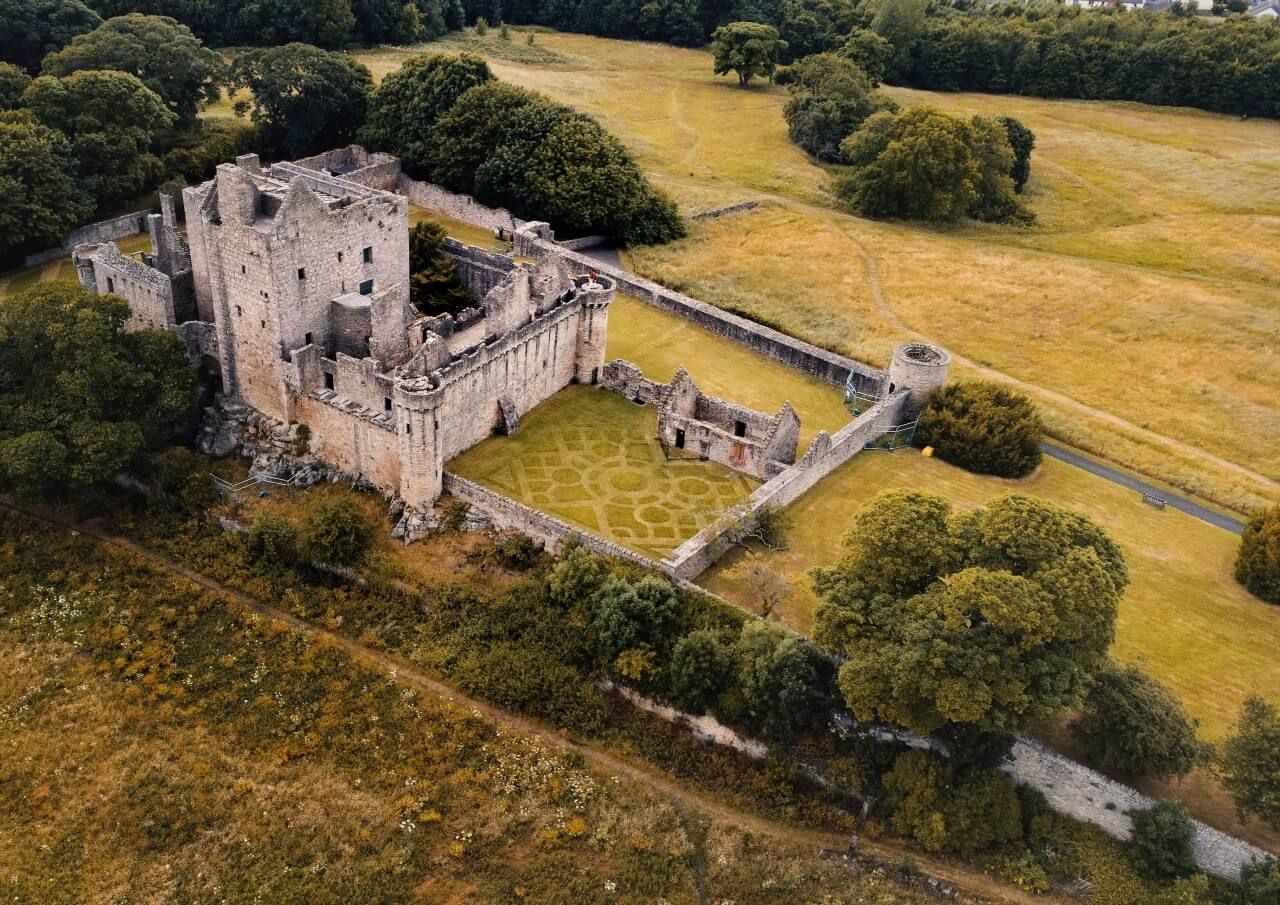
39. Craigmillar Castle
Craigmillar Castle (Craigmillar Castle Road, Edinburgh EH16 4SY, rated 4.7/5 on Google (2 995 avis)) sits on a low hill about 5 km south-east of Edinburgh city centre and is one of the best-preserved late medieval tower houses in Scotland. While not as famous as Edinburgh Castle, it receives a fraction of the visitors and allows for a far more independent exploration of the structure. Mary, Queen of Scots retreated here after the murder of David Rizzio and spent several weeks within its walls in 1566.
The site is managed by Historic Environment Scotland and is accessible by bus from the city centre. The combination of substantial surviving architecture, good interpretation panels, and relative quiet makes it a strong choice for anyone interested in Scottish history who has already ticked off the main castle.
40. Museum of Childhood
The Museum of Childhood (42 High Street, Edinburgh EH1 1TG, rated 4.3/5 on Google (2 199 avis)) on the Royal Mile is one of the oldest museums devoted to the history of childhood in the world, opened in 1955 by Edinburgh councillor Patrick Murray, a man who famously claimed to dislike children but devoted decades to building a serious collection of the objects of their lives. The museum spreads across five galleries on multiple floors and is stuffed with toys, games, dolls' houses, school equipment, and ephemera from the last two centuries.
It's free to enter, takes roughly an hour, and manages to be genuinely interesting for adults rather than just for children. The social history embedded in the collections, from Victorian educational equipment, slates and prim alphabet primers, through interwar tin toys and 1950s teddy bears, to 1980s action figures and early electronic games, reads as a more absorbing record of social change than many dedicated history museums. Particularly affecting are the cases dealing with childhood during wartime, including evacuee tags and ration-book ephemera. Visit early in the day to avoid school groups, which arrive in waves during term time.
41. National War Museum
Located within the precincts of Edinburgh Castle, the National War Museum (Edinburgh Castle, Edinburgh EH1 2NG, rated 4.5/5 on Google (1 280 avis)) covers Scotland's military history from the 17th century to the present day across seven galleries. It's included in the castle admission price, which most visitors don't realise until they've already spent an hour queuing and entering, so plan time for it as part of your castle visit rather than treating it as an afterthought.
The collections are strong on personal stories alongside the equipment and uniforms, and the section on Scottish soldiers in the First World War is particularly affecting. Allow 45-60 minutes within the castle visit.
42. Edinburgh Festival Fringe
If your trip to Edinburgh falls in August, the Edinburgh Festival Fringe transforms the city on a scale that's difficult to overstate. With over 3,800 shows across more than 300 venues in a single month, it's the largest arts festival in the world. Comedians, theatre companies, dance performers, street artists, and experimental musicians occupy every available space, pubs, car parks, university halls, and purpose-built temporary venues across the Old and New Towns.
The Fringe runs alongside several other festivals simultaneously: the Edinburgh International Festival (classical music and theatre), the Edinburgh International Book Festival (in Charlotte Square Gardens), and the Edinburgh Art Festival. Together they attract around 3 million visits over August. Free shows on the Royal Mile run continuously throughout the day, this is often where new comedians and breakthrough acts can be seen before they become famous.
Accommodation in Edinburgh in August costs roughly three times the off-peak rate and must be booked months in advance. If you're considering a visit during this period, treat the logistics as seriously as the programme.
43. Cat Café Edinburgh
Cat Café Edinburgh (1 Antigua Street, Edinburgh EH1 3NH, rated 4.5/5 on Google (1 689 avis)) on Antigua Street in the New Town offers an hour in the company of around a dozen resident rescue cats with coffee and snacks on the side. Sessions are ticketed and timed, with a maximum of around 15 people per session to avoid stressing the animals, and the cats have full freedom of movement, so the quality of interaction varies entirely by individual feline temperament.
The café operates on a rescue-and-rehome model: most of the resident cats came from local shelters and several are available for adoption to suitable homes, with staff happy to talk through the process if you're seriously interested. Booking is essential and weekends fill up days in advance. A pleasant hour off your feet, particularly on a rainy afternoon, and one of the more genuinely relaxed ways to take a break from the relentless climb of Edinburgh's cobbled streets.
44. Edinburgh's New Town Architecture
Edinburgh's New Town is one of the best-preserved examples of Georgian urban planning in the world, built between 1765 and 1850 to a grid plan designed to relieve overcrowding in the medieval Old Town. The formal layout of George Street, Queen Street, and Princes Street, connected by Charlotte Square at one end and St Andrew Square at the other, was laid out according to a plan by 22-year-old James Craig in 1766.
Charlotte Square, designed by Robert Adam in 1791, is the architectural high point. The Georgian House on its north side, maintained by the National Trust for Scotland, recreates a 1790s interior in complete detail, kitchen, parlour, bedroom, and servants' quarters, and is open to the public. Walking the New Town with attention to its architecture, which most visitors ignore entirely in the rush toward the Old Town, is one of the most rewarding free activities Edinburgh offers.
45. Free Walking Tours
Edinburgh's free walking tour scene is well-developed, with multiple operators running daily departures on tipping-model tours. The best concentrate on the Old Town and cover the historical arc from the medieval city through the Enlightenment to the 19th century in about two and a half hours. Sandemans Free Walking Tour is the most established and departs from the Royal Mile at set times throughout the day.
For a self-guided alternative, the Ryo audio tour Between Myth and Reality covers 8.3 km across 24 narrated stops, available on your phone. The depth of historical narration on specific sites, the Castle, the closes, the New Town streets, is considerably richer than most live guides can provide in a group format, and you move at your own pace. It's the closest thing Edinburgh has to having a knowledgeable local walking beside you.
FAQ
How many days do you need in Edinburgh?
Two full days covers the major landmarks comfortably, Edinburgh Castle, the Royal Mile, a museum or two, Holyrood Park or Arthur's Seat, and an evening in the Grassmarket or Leith. Three days allows you to add the Royal Yacht Britannia, the underground vaults, Portobello Beach, and one day trip. For a relaxed visit without feeling rushed, four days is ideal, particularly in summer when the longer daylight hours make late afternoon walks especially rewarding.
What is the best time of year to visit Edinburgh?
May, June, and September offer the best combination of reasonable weather, long daylight hours, and manageable crowds. July and August bring the festivals, which are extraordinary but also push accommodation prices and street congestion to extremes. December is popular for its Christmas markets. Winter visits, November through February, offer the city largely to yourself, at the cost of short days and a higher chance of rain.
Is Edinburgh expensive to visit?
It depends on your approach. The major free attractions, the National Museum, the Scottish National Gallery, the Portrait Gallery, Princes Street Gardens, Calton Hill, Holyrood Park, and the New Town, are genuinely excellent and cost nothing. Edinburgh Castle and the Royal Yacht Britannia are expensive by UK standards (around £18-£22 per adult). Restaurants in Leith and the New Town are priced on par with major UK cities outside London. Budget visitors can have a rich experience spending relatively little.
What is Edinburgh famous for?
The city is internationally known for Edinburgh Castle, the annual Fringe Festival (the world's largest arts festival), Scotch whisky, the Old Town's medieval architecture, and its connection to Scottish Enlightenment thinkers including David Hume and Adam Smith. It's also closely associated with Robert Louis Stevenson, Arthur Conan Doyle, and J.K. Rowling, all of whom lived and wrote in the city. Arthur's Seat and the volcanic landscape give Edinburgh a visual drama unusual for a capital city.
Is Edinburgh good for families with children?
Very much so. Dynamic Earth, the Museum of Childhood, Camera Obscura, the National Museum, the Edinburgh Dungeon (for older children), the Edinburgh Zoo, and Arthur's Seat are all well-suited to visiting with children. The Real Mary King's Close and the Edinburgh Vaults are appropriate for children aged around 10 and over. In summer, Portobello Beach and the outdoor programme at the Fringe add further options.
Can you do Edinburgh without a car?
Edinburgh is one of the most walkable capitals in Europe. The Old Town, New Town, Grassmarket, Calton Hill, and Holyrood Park are all reachable on foot from the city centre. Leith is a short bus or tram ride. Portobello is 20 minutes by bus. Day trips to Rosslyn Chapel, Tantallon Castle, and North Berwick all have reliable public transport links. The Edinburgh Trams line connects the airport to the city centre and runs through the New Town. A car is unnecessary and, given the parking constraints, a positive hindrance.
Edinburgh rewards the curious and punishes the rushing. The city's layers, volcanic, medieval, Georgian, literary, contemporary, open up progressively the more time you give them. Start with the castle and the Royal Mile for orientation, then let the side streets, the water routes, and the hilltops carry you further. For a narrative thread that ties the Old Town's stories together into a coherent walk, the Ryo Ryo's edinburgh audio guide is the most efficient way to move through the city's history on your own terms, 24 stops, 3h30, and enough material to keep you engaged long after you've put your phone away.