





Walk
Between Ancient Shadows and Hilltop Views
Gjirokastër, Albania
Walk
Between Ancient Shadows and Hilltop Views
Gjirokastër, Albania
2.2 km
Distance
1h00
Durée
21
Audios
Loop
Parcours
Shutterstock
The Ethnographic Museum of Gjirokastër presents the traditional way of life of the region, in a house modelling the local architecture. The Gjirokastër audio-guided tour stops here to evoke this place dedicated to the heritage and the traditions of the stone town.
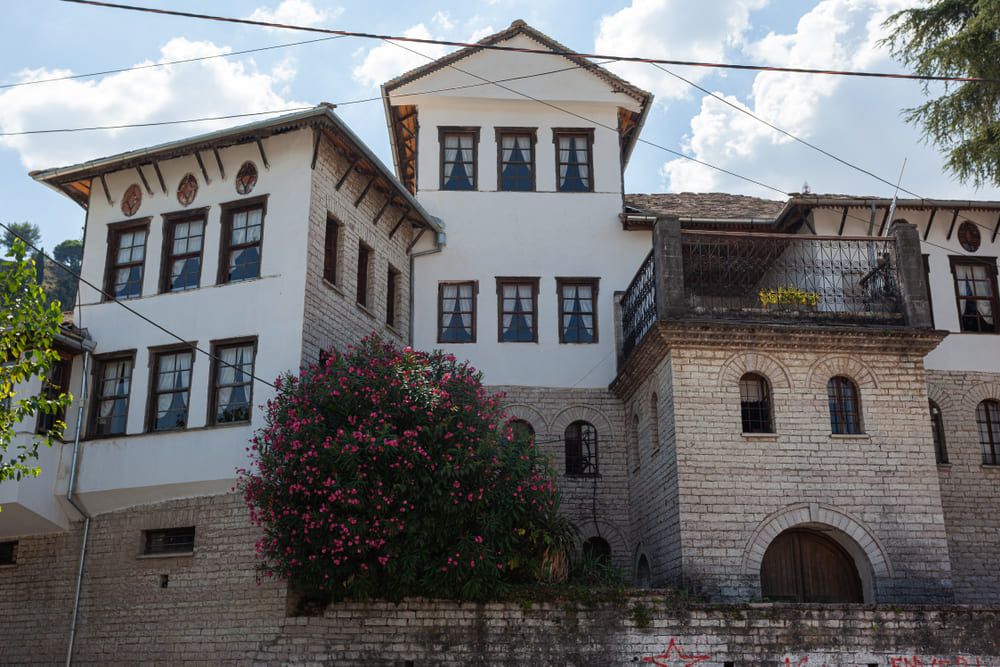
The Ethnographic Museum of Gjirokastër occupies a house rebuilt in the 1960s, designed as a model of the traditional architecture of the town in the nineteenth century. It presents all its characteristic elements: stone walls on the ground floor, wooden upper floors, small windows and a roof covered with stone slabs, the famous flagstones that earn Gjirokastër its nickname of stone town. Inside, the museum reconstructs the living environment of a well-off family of the past and presents a rich collection of everyday objects: traditional costumes, textiles, utensils, furniture and crafts. It is an essential stop to understand the way of life and the traditions of the region.
Here you discover the house modelling the traditional architecture of Gjirokastër, with stone walls, wooden floors and a stone-slab roof, and the rich collection of everyday objects: costumes, textiles, utensils, furniture and crafts, which reconstruct the life of the past. The Ethnographic Museum reveals the traditions of the region. It is a stop for those curious about culture, to be explored on foot.
The Ethnographic Museum lies in the old town of Gjirokastër, reachable on foot by sloping alleys. The visit follows its own hours and conditions, which vary with the season. It is best to check the arrangements before coming.
The way of life and the traditions of the region, in a house modelling the traditional architecture of the town, with a rich collection of everyday objects: costumes, textiles, utensils, furniture and crafts.
In the old town of Gjirokastër, in Albania.
Aucun avis pour le moment
