





Walk
Where colours reinvent history
Tirana, Albania
Walk
Where colours reinvent history
Tirana, Albania
5 km
Distance
2h00
Durée
22
Audios
Loop
Parcours
Shutterstock
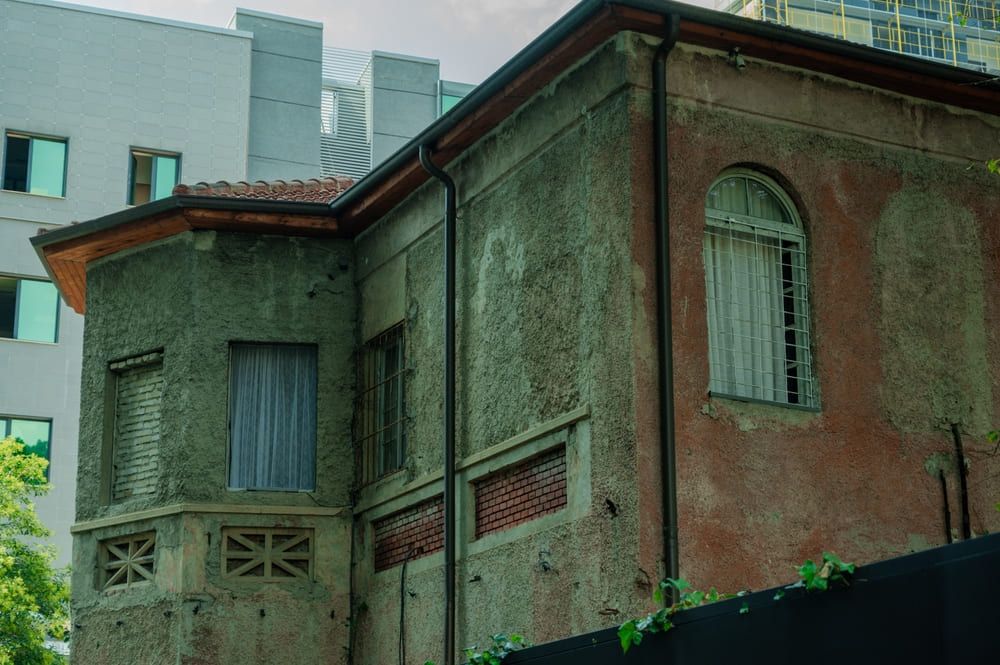
Discreet behind its cloak of vegetation, this building hides a story far darker than its appearance. The House of Leaves is today the museum of secret surveillance, devoted to the Albanian communist dictatorship. The Tirana audio-guided tour stops here to address a painful but essential page of the country's recent history.
Built in 1931 as an obstetrics clinic, the villa was requisitioned during the Second World War, then became, from 1944 and for about forty-five years, one of the most sensitive places of the communist regime: a surveillance centre of the secret police, the Sigurimi. Wiretapping, spying and control of the population were organised there. The museum, opened in 2017, brings this chilling past back to life.
The museum presents the regime's surveillance methods: listening equipment, spying devices, hidden microphones and documents that tell of daily life under control. The route, at once instructive and moving, helps you understand the mechanisms of a police state. It is one of the most striking places to grasp twentieth-century Albania, a stone's throw from the centre.
The House of Leaves lies in the centre of Tirana, near the Orthodox cathedral and not far from Skanderbeg Square, reachable on foot. A national museum devoted to the communist period, it can be visited; as its opening hours and prices may vary with the season, it is best to check them before coming. Allow some time to go through the whole museum route.
The building is largely covered with vegetation, hence its name; this peaceful appearance contrasts with its past as a surveillance centre of the communist secret police.
The surveillance and spying methods of the Sigurimi under the communist dictatorship: listening equipment, hidden microphones and documents retracing the control of the population.
Aucun avis pour le moment
