





Walk
Between Ancient Shadows and Hilltop Views
Gjirokastër, Albania
Walk
Between Ancient Shadows and Hilltop Views
Gjirokastër, Albania
2.2 km
Distance
1h00
Durée
21
Audios
Loop
Parcours
Shutterstock
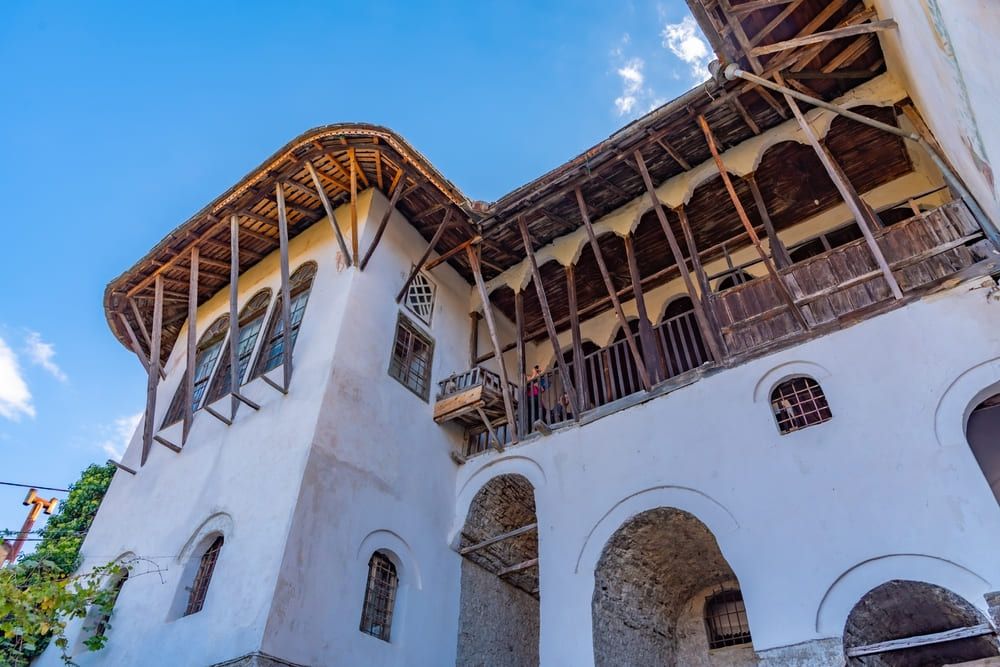
The Kadare House is the house-museum dedicated to Ismail Kadare, the most famous Albanian writer, born in Gjirokastër. The Gjirokastër audio-guided tour stops here to evoke this residence, a place of memory of a great figure of literature.
The Kadare House is the residence dedicated to Ismail Kadare, the most famous Albanian writer, born in Gjirokastër in 1936. A major figure of world literature, translated into numerous languages and several times tipped for the Nobel Prize, Kadare made his native town the setting of several of his works, including his famous novel inspired by his childhood in the stone town. The house, located in the old town, perpetuates his memory and that of his literary universe. It also illustrates the traditional architecture of Gjirokastër. A place of memory and culture, the Kadare House is a stop dear to lovers of literature and a tribute to one of the greatest children of the town.
Here you discover the house-museum dedicated to Ismail Kadare, the most famous Albanian writer born in Gjirokastër, who made his native town the setting of several of his works, in a residence illustrating the traditional architecture of the town. The Kadare House is a place of literary memory. It is a stop for lovers of literature, to be explored on foot.
The Kadare House lies in the old town of Gjirokastër, reachable on foot by sloping alleys. The visit follows its own hours and conditions, which vary with the season. It is best to check the arrangements before coming.
The most famous Albanian writer, born in Gjirokastër in 1936, a major figure of world literature translated into numerous languages; he made his native town the setting of several of his works.
In the old town of Gjirokastër, in Albania.
Aucun avis pour le moment
