




Walk
Where colours reinvent history
Tirana, Albania
Walk
Where colours reinvent history
Tirana, Albania
5 km
Distance
2h00
Durée
22
Audios
Loop
Parcours
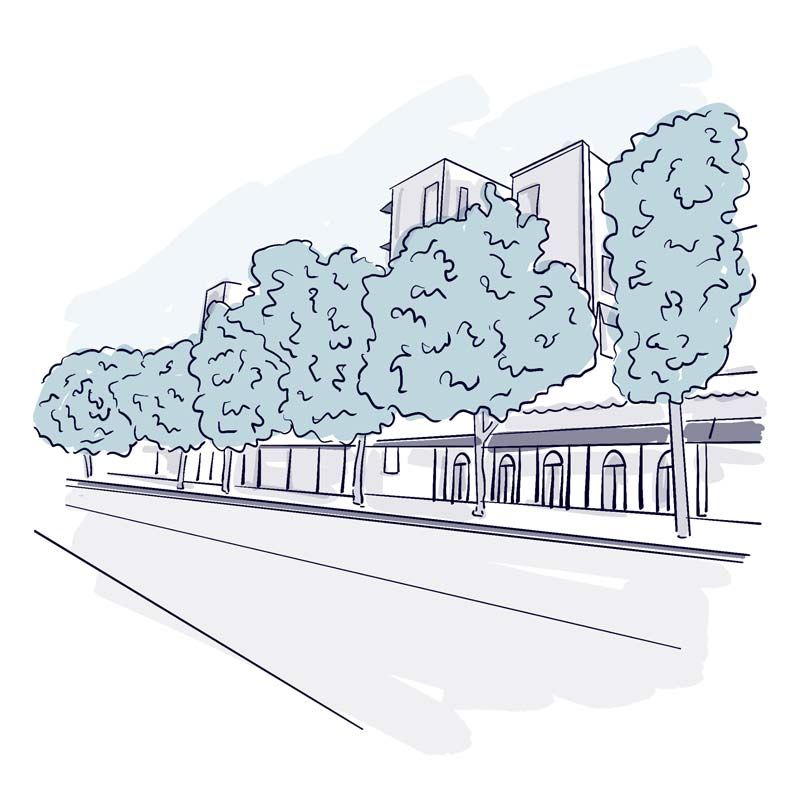
In the heart of Tirana, near the New Bazaar, Rruga Luigj Gurakuqi unfolds a lively atmosphere, lined with shops and cafés. It bears the name of a great figure of the Albanian national movement. The Tirana audio-guided tour takes it to link the country's history to the daily life of its capital, between shops, passers-by and urban murals.
The street pays tribute to Luigj Gurakuqi, a writer, educator and statesman, engaged early in the Albanian national movement. He played a key role in the National Renaissance, the Rilindja Kombëtare, and was one of the signatories of Albania's declaration of independence in 1912. Giving his name to a lively street in the centre inscribes the memory of independence in the heart of residents' daily life.
People come here above all to feel the pulse of the city: shops, cafés and urban art give the street a typically Tiranan energy. Very close to the Pazari i Ri, it is ideal for linking the bazaar to the other sites of the centre. It is an artery where you observe everyday Tirana, at once popular and creative, beyond the great monuments alone.
Rruga Luigj Gurakuqi lies in the centre of Tirana, near the New Bazaar and Skanderbeg Square, and is freely explored on foot. It is a lively shopping artery, with no ticket office, where walking remains the most pleasant way to get around. Broadly flat, it is easy to access and lends itself well to a stroll between two visits.
A writer, educator and statesman, he was a figure of the Albanian National Renaissance and one of the signatories of Albania's declaration of independence in 1912.
A lively shopping artery in the centre, lined with shops, cafés and urban art, very close to the New Bazaar of Tirana.
Aucun avis pour le moment
