





Walk
Between Ancient Shadows and Hilltop Views
Gjirokastër, Albania
Walk
Between Ancient Shadows and Hilltop Views
Gjirokastër, Albania
2.2 km
Distance
1h00
Durée
21
Audios
Loop
Parcours
Shutterstock
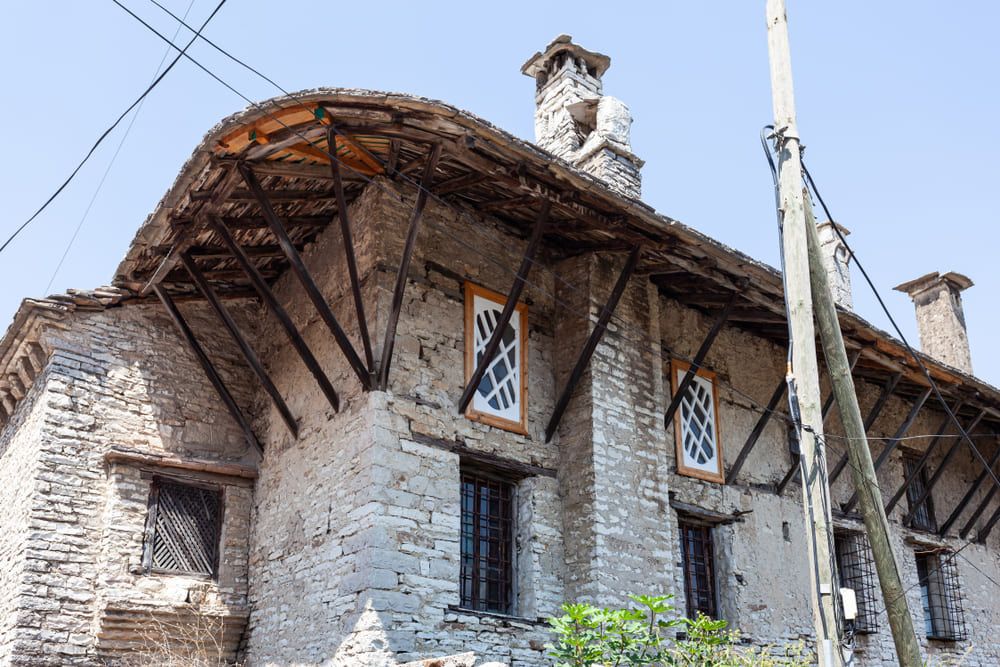
The Skënduli House is considered the best-preserved residence of the old town of Gjirokastër. The Gjirokastër audio-guided tour stops here to evoke this superb Ottoman tower-house, a model of the architecture of the stone town.
The Skënduli House is considered the best-preserved residence of the old town of Gjirokastër. It is a perfect example of the great Ottoman tower-houses that make the singularity of the stone town, listed as world heritage. This vast residence, which belonged to a great local family, develops over several floors and counts numerous rooms, some reserved for men, others for women and family life. There you admire magnificent carved wooden ceilings, worked fireplaces, niches, mashrabiyas and traditional furniture. A true testimony of the refined way of life of the notables of Gjirokastër in the time of the Ottoman Empire, the Skënduli House is one of the finest stops of the visit.
You admire the best-preserved great Ottoman tower-house of the town, its numerous rooms over several floors, its magnificent carved wooden ceilings, its worked fireplaces, its niches and its traditional furniture, witnesses of the way of life of the notables. The Skënduli House is a model of the architecture of Gjirokastër. It is a must-see stop, to be explored on foot.
The Skënduli House lies in the old town of Gjirokastër, reachable on foot by sloping alleys. The visit of the residence follows its own hours and conditions, which vary with the season. It is best to check the arrangements before coming and to bring good shoes.
It is the best-preserved residence of the old town, a perfect example of the great Ottoman tower-houses, with its numerous rooms, its carved wooden ceilings, its worked fireplaces and its traditional furniture.
In the old town of Gjirokastër, in Albania.
Aucun avis pour le moment
