


Walk
The Fiery City
Liège, Belgium
Walk
The Fiery City
Liège, Belgium
5.5 km
Distance
2h30
Durée
31
Audios
Loop
Parcours
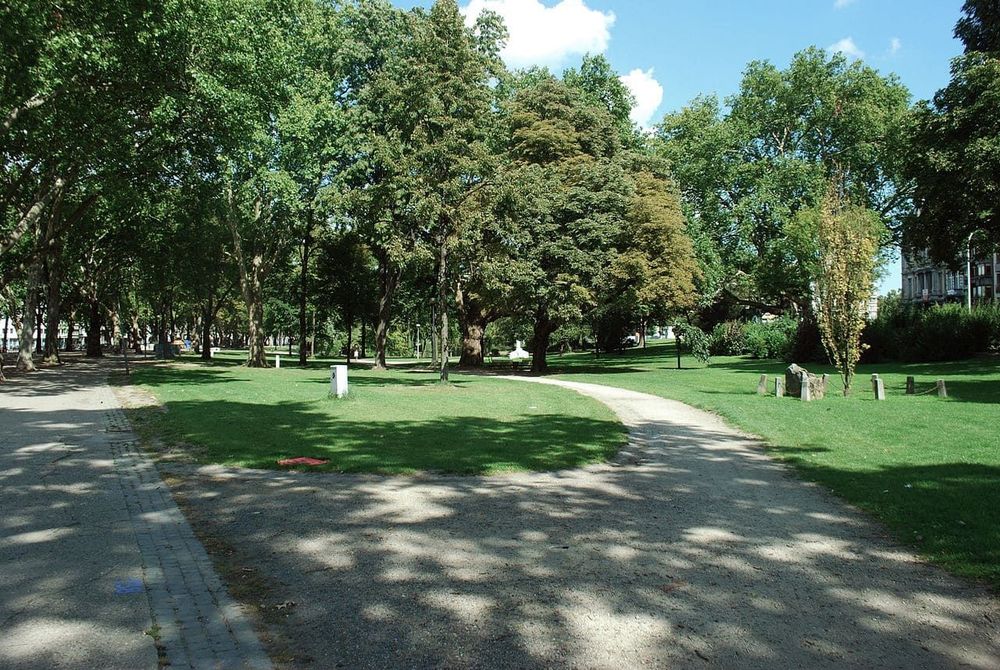
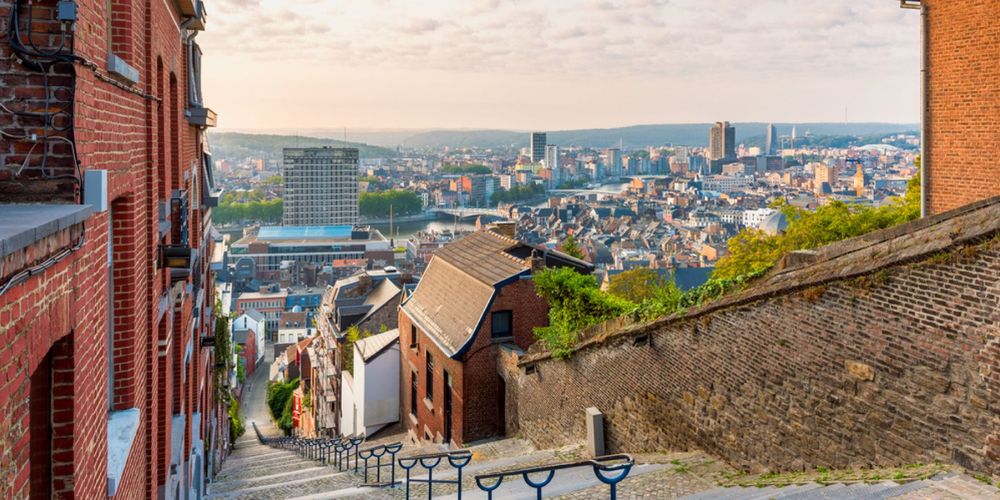
©Jean Housen CC BY-SA 3.0. <https://creativecommons.org/licenses/by-sa/3.0/deed.fr>via Wikipedia Commons
The Liège audio-guided tour invites you to discover Parc d'Avroy, one of the finest green spaces in the city centre. It is hard to imagine that an arm of the Meuse once flowed here: the pond that remains at the heart of the park is its last witness.
This five-hectare setting is today at once a place for walking, remembrance and culture for the people of Liège. Laid out after the filling-in of an arm of the river, it includes a pond, a bandstand and many monuments and statues spread along the paths. The park naturally links the lively boulevards of the centre to the quieter spaces of the Terrasses d'Avroy.
Once inside, you quickly come upon the Trinkhall Museum, set in a former Moorish-style pavilion and devoted to outsider art. Further on, the pond, the bandstand and the sculptures punctuate the walk. It is a place enjoyed by families, ideal for strolling and resting between two stages of a tour of the centre.
Parc d'Avroy stretches through central Liège, along Boulevard d'Avroy and Boulevard Piercot. Access is free and on the level via the paths; the Trinkhall Museum, located in the park, keeps its own opening hours. The park lends itself to walking in every season.
The park has a pond, a bandstand, many monuments and statues, as well as the Trinkhall Museum, devoted to outsider art and set in a former Moorish-style pavilion.
The pond is the last vestige of a former arm of the Meuse that flowed at this spot. The park was laid out after this arm of the river was filled in.
Aucun avis pour le moment