





Walk
The Fiery City
Liège, Belgium
Walk
The Fiery City
Liège, Belgium
5.5 km
Distance
2h30
Durée
31
Audios
Loop
Parcours
On the Liège audio-guided tour, here you stand before the Fountain of the Virgin, one of the finest witnesses of Liège baroque. Created in 1696 by the great sculptor Jean Del Cour, it occupies the widest part of the Vinâve d'Île, in the heart of the shopping district.
The fountain comprises a large square basin adorned with four bronze lions, and a central pillar crowned by a life-size, gilt-bronze Virgin and Child. Affectionately nicknamed the femme Marie, the work has had an eventful history: during the Revolution there were plans to melt it down for cannon, but it was preserved thanks to the protests of the inhabitants. Originally on Cathedral Square, it was moved here in 1854.
Listed as a historic monument, the fountain was fully restored in 2016, with particular care given to the bronzes and the stone steps. Take time to study the delicacy of the Virgin and Child and the expression of the four lions. Around it, the Vinâve d'Île, a lively pedestrian street, gives the whole a vibrant atmosphere while respecting the sacred character of the subject.
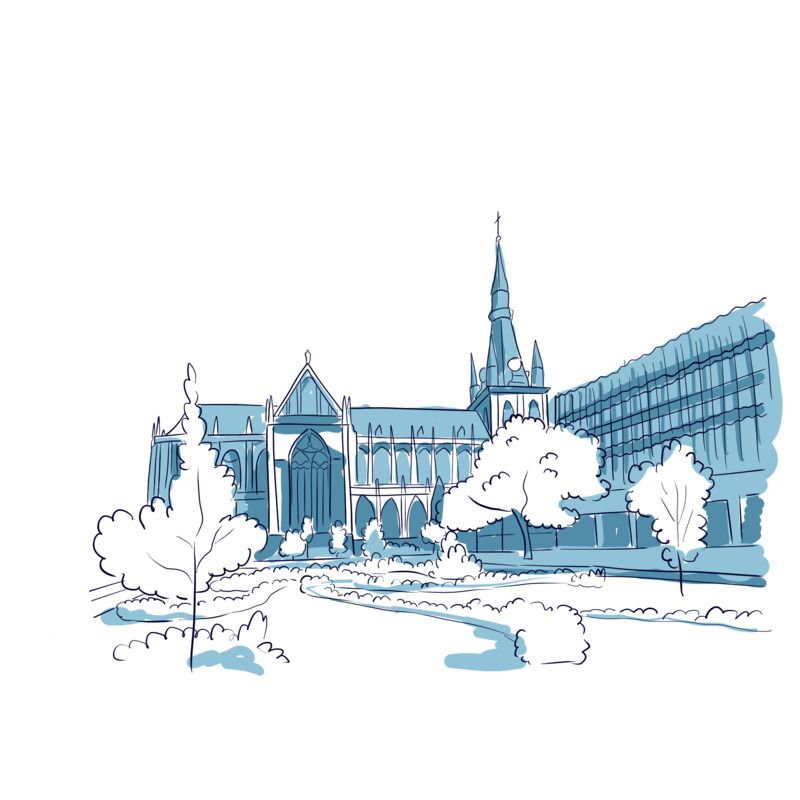
The Fountain of the Virgin stands on the Vinâve d'Île, a pedestrian street in central Liège, freely accessible at all hours. The approach is on the level. The district is close to Saint-Paul Cathedral and the Galeries Saint-Lambert.
It is the work of the great Liège baroque sculptor Jean Del Cour, who created it in 1696. The Virgin and Child crowning it is a life-size gilt-bronze cast.
It is the affectionate nickname the people of Liège gave the Virgin and Child of the fountain. This attachment also explains why it was saved from being melted down during the Revolution.
Aucun avis pour le moment
