





Walk
The Fiery City
Liège, Belgium
Walk
The Fiery City
Liège, Belgium
5.5 km
Distance
2h30
Durée
31
Audios
Loop
Parcours
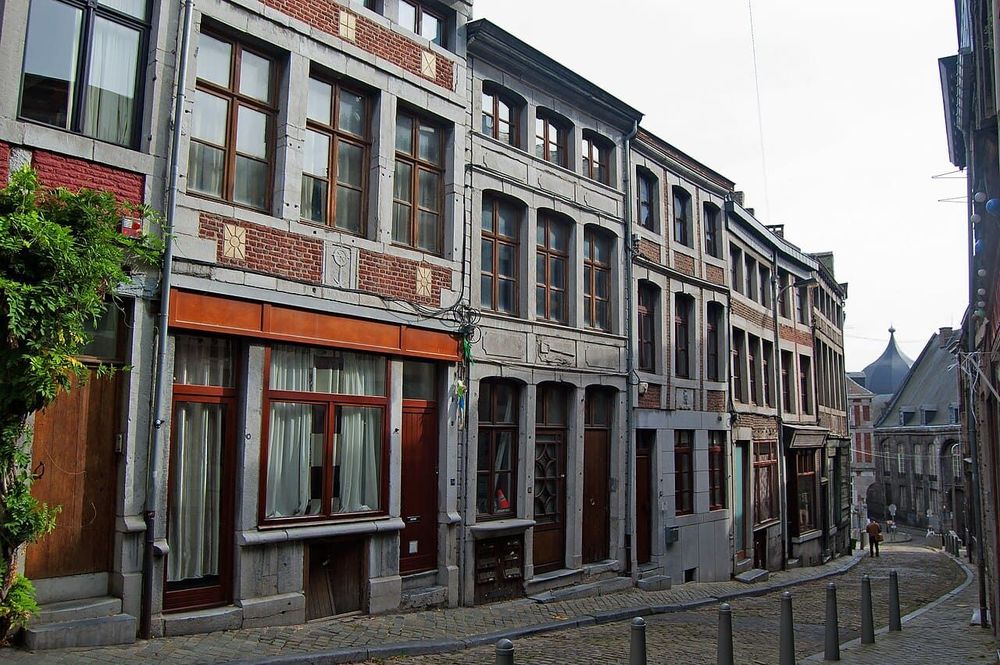
©Ralf Roletschek CC BY-SA 3.0. <https://creativecommons.org/licenses/by-sa/3.0/deed.fr>via Wikipedia Commons
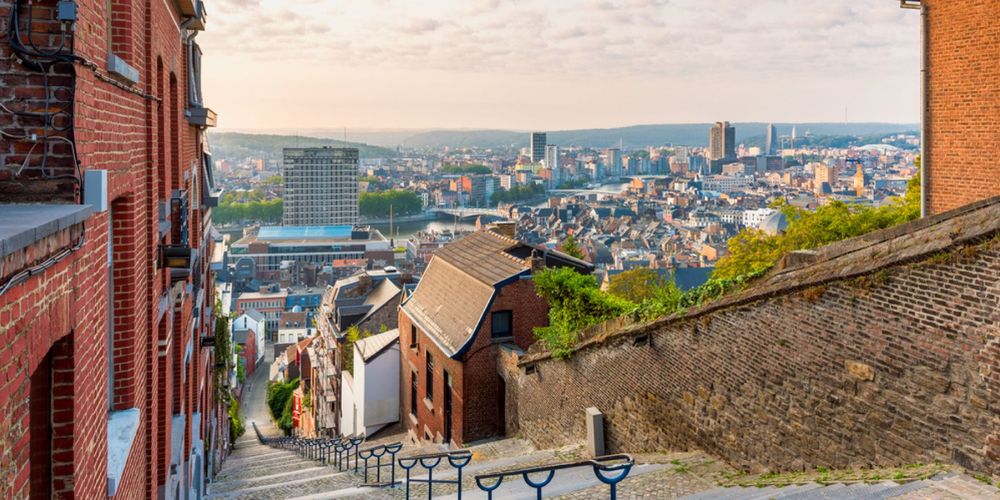
The Liège audio-guided tour lets you discover the Pierreuse district, one of the oldest in the city. Behind the former palace of the prince-bishops, it climbs towards the Citadel along a street attested as early as the eighth century, once the starting point of the road to Tongeren.
Its name comes from the hill rich in sandstone and coal shale, materials worked from the Middle Ages and used by Prince-Bishop Notger to fortify the city. With its fourteen-percent slope, Pierreuse was long a difficult way, paved with stone to control mudslides and once lined with vineyards. It was also here that Charles V entered Liège in 1520. Over the centuries the street filled with craftsmen, then with a working and cosmopolitan population.
Pierreuse has kept its working-class and picturesque character, with its old houses, dead-ends and staircases clinging to the hillside. The district, nestled at the foot of the Coteaux de la Citadelle, offers original views over the city. It is a lively place, valued for its atmosphere and its modest but authentic heritage.
The Pierreuse district lies at the foot of the Coteaux de la Citadelle, in central Liège. The steep street can be walked freely at all hours; good shoes are advised. The area gives access to the paths of the Coteaux.
It comes from the hill rich in sandstone and coal shale, stones worked from the Middle Ages, used in particular to fortify the city under Notger.
It was by this street that Emperor Charles V entered Liège in 1520, which shows the old importance of this route.
Aucun avis pour le moment
