





Walk
The Fiery City
Liège, Belgium
Walk
The Fiery City
Liège, Belgium
5.5 km
Distance
2h30
Durée
31
Audios
Loop
Parcours
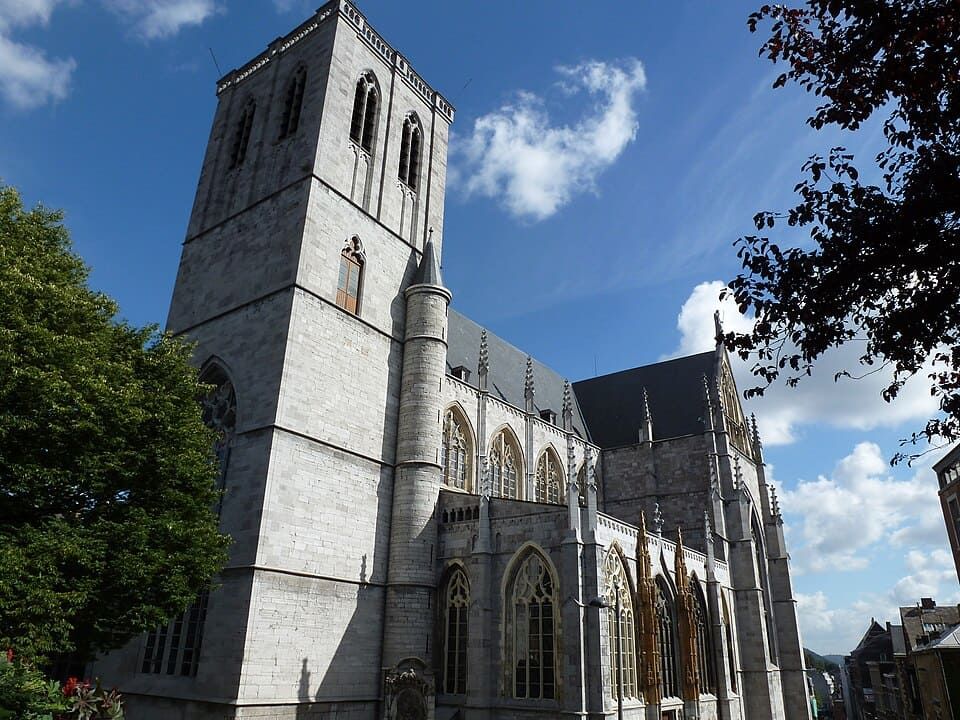
The Liège audio-guided tour brings you before one of the great ladies of the city: Saint-Martin basilica. Set on the Publémont, the promontory that overlooks the city, it has watched over Liège for more than a thousand years and deserves to be approached with quiet respect.
Its history begins in the tenth century, under Bishop Éracle. Healed after a pilgrimage to the tomb of Saint Martin in Tours, he decided in 962 to build a church here in the saint's honour. The building, first conceived as a cathedral, was turned into a collegiate church by his successor Notger. Saint-Martin holds a unique place: it was here that Corpus Christi was born, in 1246, through the visions of Saint Juliana of Cornillon and the support of Eve of Saint-Martin.
Listed as a minor basilica, the church raises its tall Gothic silhouette at the top of the Publémont. Inside, take time to study the vaults, the stained glass and the features recalling the birth of Corpus Christi. The place, still dedicated to worship, calls for silence and respect. From the forecourt, the eye takes in part of the city below.
Saint-Martin basilica stands on Mont Saint-Martin, in Liège. An active place of worship, it can be visited with respect for silence and services; opening times may vary with celebrations and the season. Access is by a climb towards the top of the Publémont.
It was in this church that Corpus Christi was born in 1246, following the visions of Saint Juliana of Cornillon. This celebration later spread throughout Christendom.
Bishop Éracle ordered its construction in 962, in honour of Saint Martin, after being healed during a pilgrimage to Tours. It was later made a collegiate church by Notger.
Aucun avis pour le moment
