




Walk
The City in the Sky
La Paz, Bolivie
Walk
The City in the Sky
La Paz, Bolivie
Distance
2.7 kmDurée
1h15Audios
16Parcours
Loop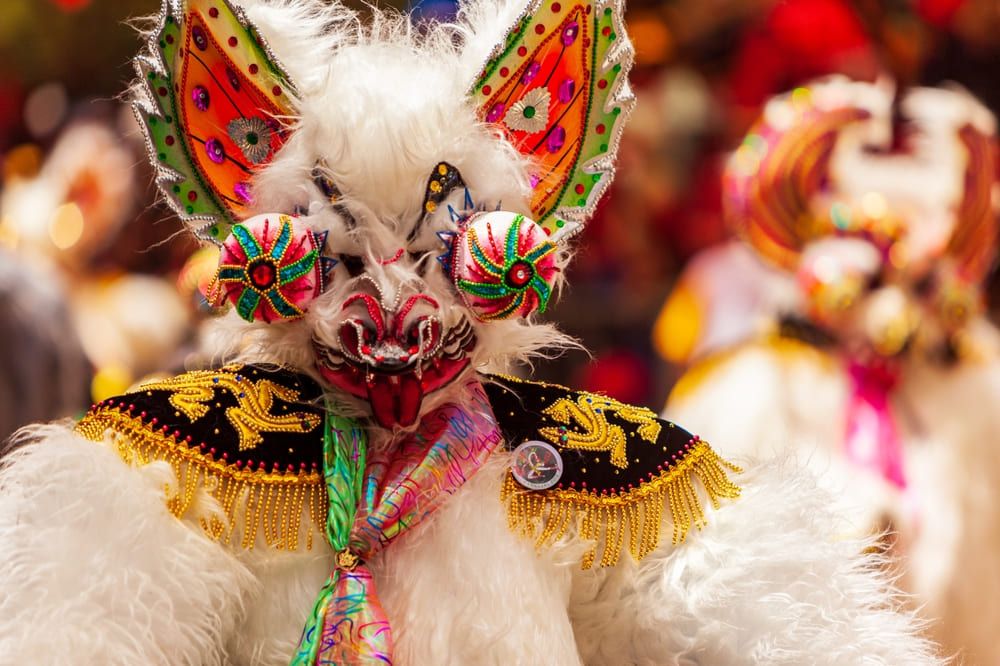
Shutterstock
This former palace of the Marquises of Villaverde, built in 1730, now houses one of Bolivia’s most fascinating museums: the National Museum of Ethnography and Folklore. Step inside this colonial residence to discover the country’s popular cultures and Indigenous peoples. It’s also the perfect place to challenge a common misconception about the famous chola paceña, the Andean women whose distinctive style is instantly recognizable. Their iconic outfit — consisting of a pollera, a full, multi-layered skirt, a manta, a silk shawl, and the famous bowler hat — is not a pre-Columbian Indigenous outfit. It originated as clothing imposed by the Spanish Crown in the 17th century to mark the social status of Indigenous populations. But with a sharp sense of irony, Andean women reclaimed the clothing as their own. Today, the pollera has become a powerful symbol of economic success and cultural pride. In fact, the pollera is far more than a traditional skirt: for women of the Altiplano, it can be both a form of portable savings and a statement of status. Long excluded from the banking system, many women merchants turned their clothing into a form of wearable wealth. A silk or velvet pollera, paired with gold jewelry and the famous vicuña-fiber shawl, can be worth several thousand dollars. In the markets of La Paz and El Alto, wearing such an expensive outfit signals the financial success of the woman who wears it. It is also a symbol of pride: rather than abandoning their origins in order to rise socially, these women chose to succeed while remaining visibly connected to their heritage. From university classrooms to government offices, television studios, and fashion runways, the cholita in her pollera has increasingly claimed her place in spaces of power, transforming clothing once associated with colonial humiliation into a symbol of empowerment. But back to the museum! If you go inside, don’t miss its centerpiece: the Mask Room. It brings together dozens of ritual masks from across Bolivia. These masks are not seen as simple costumes. They are sacred objects believed to capture a spirit, transform the person wearing them, and give physical form to the myths of the famous Oruro Carnival. Among them, you’ll see a frightening mask with twisted horns, bulging eyes, and a snarling jaw. This is a Diablada mask, representing Tío Supay, the Andean deity of the underworld. For miners who descend deep into the earth, this devil is both a feared and protective spirit, to whom offerings of coca and alcohol are made. Further along, the exaggerated features and protruding tongues of the Morenada masks also recall the deportation of enslaved Africans to work in the mines. In short, MUSEF is a treasure trove for discovering Bolivia’s cultural soul from the inside out — and you won’t be disappointed!
Aucun avis pour le moment
