






Walk
The City of Contrasts
Shanghai, China
Walk
The City of Contrasts
Shanghai, China
7.1 km
Distance
3h00
Durée
23
Audios
Loop
Parcours
Shutterstock
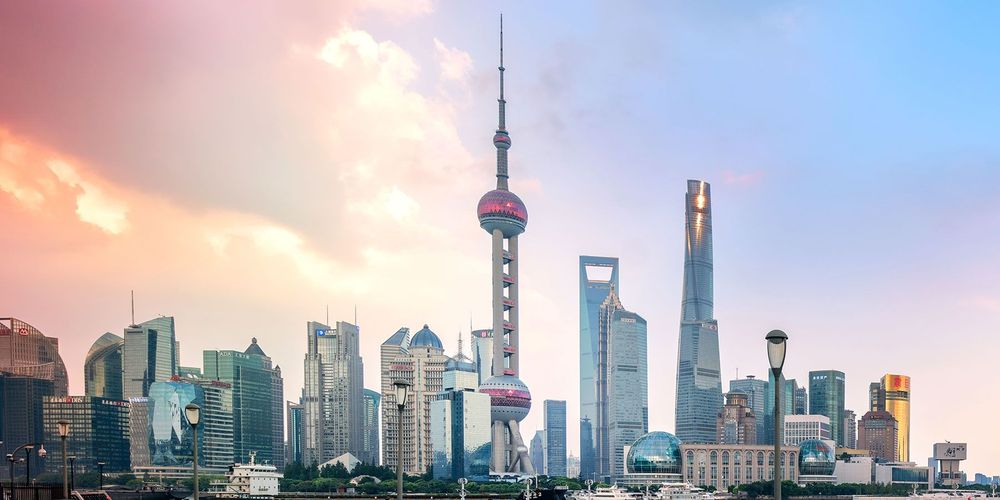
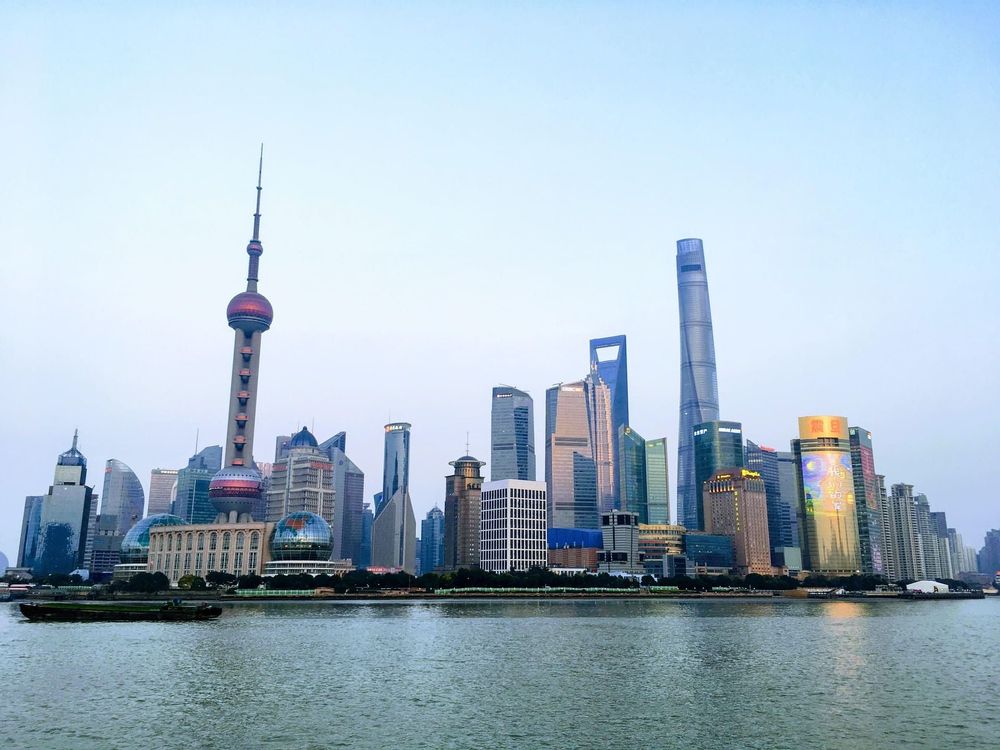
The Bund is the great promenade that runs along the Huangpu river, a true open-air museum of architecture lined with former seats of foreign banks and companies. The Shanghai audio-guided tour stops here to evoke this emblematic place, heart of the former concessions, nicknamed the Paris of the Orient, facing the futuristic skyline of Pudong.
You walk on one of the most emblematic places of China: the Bund, the great promenade that runs along the Huangpu river. This avenue of about one and a half kilometres forms a true open-air museum of architecture, where former seats of British, French or Japanese banks stand side by side, witnesses of the international past of Shanghai. In the nineteenth century, the Bund was the heart of the foreign concessions: after the Opium War and the forced opening of the port, the Western powers established there their consulates, banks and trading companies. It is here that the nickname of Paris of the Orient was born, that of a cosmopolitan town where money, culture and power mingled in a unique effervescence. In the 1920s, the promenade knew its golden age, lined with neoclassical and Art Deco buildings rivalling in prestige, among which the Customs House and its clock, the former seat of the HSBC or the Peace Hotel. Today restored and illuminated, the Bund offers a striking face-to-face: on one side, the patinated stones of old colonial Shanghai; on the other, beyond the river, the futuristic skyscrapers of Pudong. A favourite promenade of the Shanghainese as of the visitors, it is walked by day for its architecture and by night for its spectacular illuminations. A historic riverfront and a balcony over modernity, the Bund is a fine stop of the discovery of Shanghai.
Here you discover the great promenade of about one and a half kilometres that runs along the Huangpu river, a true open-air museum of architecture lined with former seats of foreign banks and companies of the 1920s, including the Customs House, the former HSBC and the Peace Hotel; heart of the concessions nicknamed the Paris of the Orient, it faces the futuristic skyline of Pudong and lights up at night. The Bund is an emblematic place of Shanghai. It is a fine stop, to be explored on foot.
The Bund lies along the Huangpu river, in the Huangpu district, to the east of the Nanjing Road, reachable on foot and by metro. It is an open-air promenade freely accessible, magnificent by day as by night, particularly during the evening illuminations. You walk along it on foot beside the river.
Because this promenade along the Huangpu river forms an open-air museum of architecture, lined with former seats of foreign banks and companies of the 1920s, including the Customs House, the former HSBC and the Peace Hotel; heart of the concessions nicknamed the Paris of the Orient, it today faces the futuristic skyline of Pudong and offers spectacular night illuminations.
Along the Huangpu river, in the Huangpu district, to the east of the Nanjing Road, in Shanghai, in China.
Aucun avis pour le moment
