





Walk
Between Marble and the Mediterranean
Split, Croatia
Walk
Between Marble and the Mediterranean
Split, Croatia
2 km
Distance
1h00
Durée
18
Audios
Loop
Parcours
Shutterstock
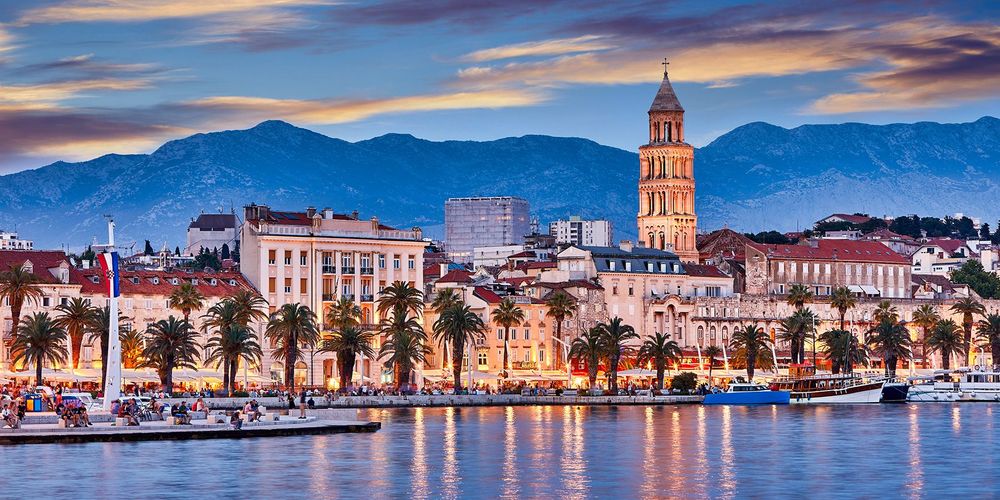
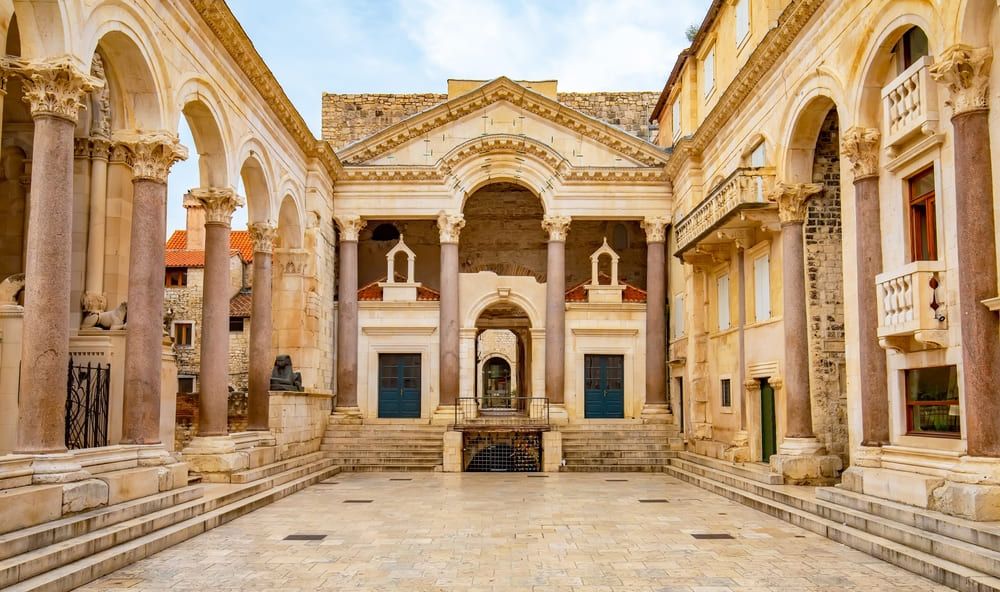
The Split audio-guided tour has you enter the Palace of Diocletian, an immense fortified Roman complex that forms the living heart of the city.
More than a palace, it is an immense fortified complex, half imperial residence, half barracks, built at the turn of the fourth century of our era. It was commissioned by the emperor Diocletian, one of the few to have abdicated voluntarily, who chose to return to his native region to spend his retirement at the edge of the Adriatic. Covering nearly forty thousand square metres, the palace was surrounded by twenty-metre ramparts, sixteen defensive towers and monumental gates. Of Roman plan, a rectangle crossed by two perpendicular axes, it housed a mausoleum, become today the cathedral, temples, baths, imperial apartments and a vast basement. Still today, inhabitants live and work there, making the palace a living district.
The Palace of Diocletian fascinates with its scale, its ramparts, its monumental gates, its peristyle and its basements, but above all with the fact that it has remained inhabited for seventeen centuries. One wanders there between ancient vestiges, lanes, shops and terraces, in an atmosphere unique in the world. Listed on the UNESCO heritage, it is one of the most extraordinary Roman sites of the Mediterranean.
The Palace of Diocletian occupies the heart of the old town of Split. An inhabited and living district, it can be walked freely on foot at all hours; some interior monuments, like the cathedral or the basements, can be visited according to hours and conditions to be checked on site.
The Roman emperor Diocletian, at the turn of the fourth century, to spend his retirement at the edge of the Adriatic.
The fact that it has remained inhabited for seventeen centuries: people still live and work there today.
Aucun avis pour le moment
