





Walk
The Museum City
Trogir, Croatia
Walk
The Museum City
Trogir, Croatia
1.4 km
Distance
1h00
Durée
19
Audios
Loop
Parcours
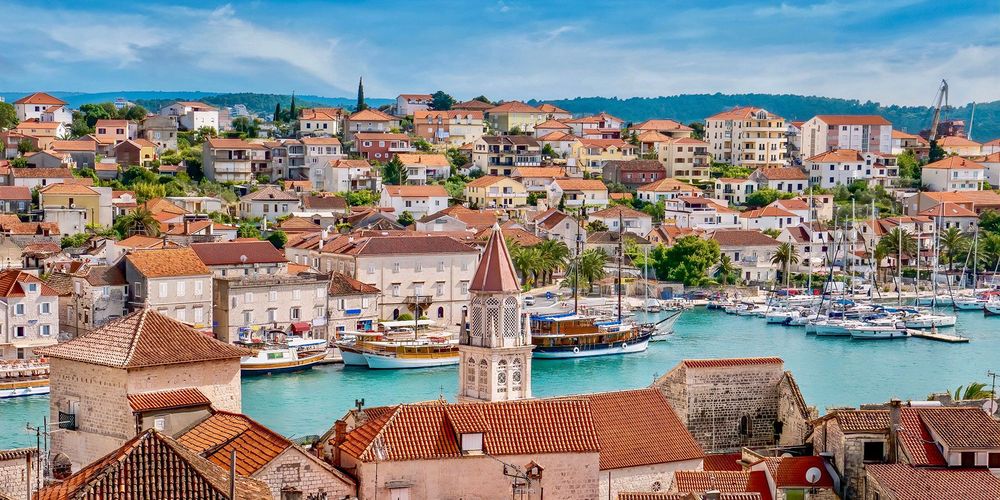
Let’s pause here in the heart of the city to step back in time and uncover the history of what is now called the “Museum City.” At first glance, Trogir looks like a small Dalmatian town, perched on its stone islet between the mainland and the island of Čiovo. But hidden behind its cobbled lanes are more than two thousand years of history. It all began in the 3rd century BC, when Greek settlers from the island of Vis founded a town here called Tragurion, meaning “the place of goats.” The settlement quickly took on the Hellenistic grid plan, with two main axes: the cardo and the decumanus.
The Romans later arrived and developed the city, which remained modest in size but strategically important along the Adriatic coast. In the Middle Ages, Trogir flourished into a prosperous town, surrounded by walls and filled with churches and palaces. Its autonomy drew the attention of greater powers: the Byzantines, the Hungarians, and especially the Republic of Venice, which established control in 1420.
For nearly four centuries, Trogir lived under Venetian rule, a legacy still visible today in its Gothic and Renaissance buildings. After Venice fell in 1797, the city passed under Austrian influence, saw a brief French interlude under Napoleon, then returned to the Habsburg Empire. Despite these changes in sovereignty, Trogir always preserved its own identity, carried by its noble families, artisans, and sailors.
In 1997, UNESCO recognized the unique value of its historic center, one of the best preserved on the Adriatic. As you stroll through its streets, you’re walking through a city that has lasted more than two millennia without ever losing its soul.
Aucun avis pour le moment
