





Walk
The pearl of the Adriatic
Dubrovnik, Croatia
Walk
The pearl of the Adriatic
Dubrovnik, Croatia
2.5 km
Distance
1h00
Durée
19
Audios
Loop
Parcours
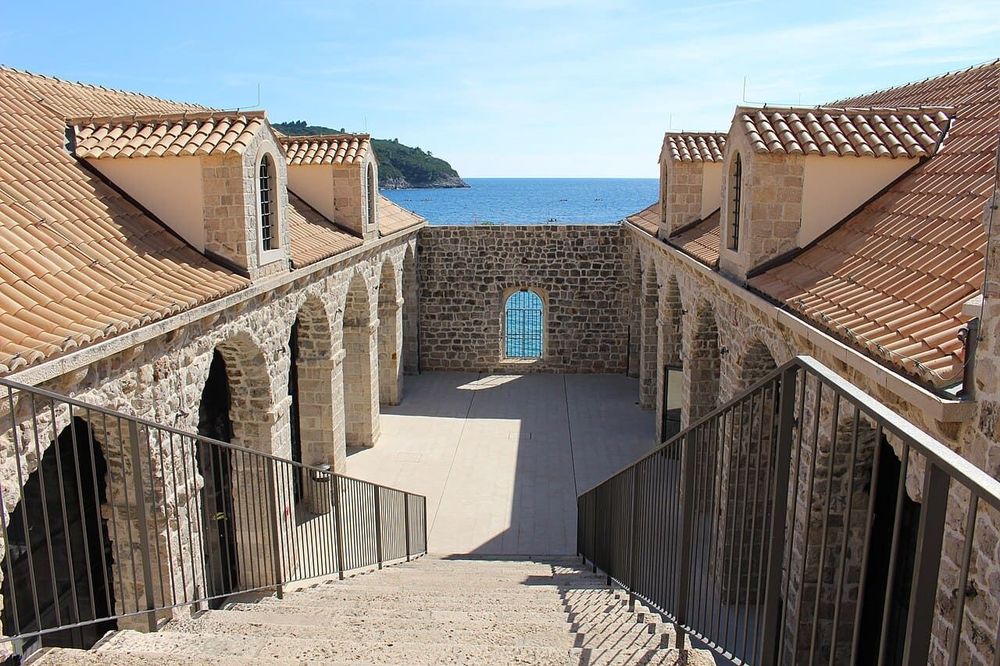
©Marko Jukić -Majkl CC BY-SA 4.0. <https://creativecommons.org/licenses/by-sa/4.0/deed.fr>via Wikipedia Commons
The Dubrovnik audio-guided tour presents you with the Lazarettos, vast stone warehouses of the Ploče district, which once served as a quarantine zone for travellers and goods.
To protect the city from the risks of epidemics coming from outside, a quarantine was established from the fourteenth century: the sick or suspect persons were first sent to the neighbouring islands of Lokrum or Mrkan. At the start of the seventeenth century, with the rise of trade, the Republic of Ragusa built the Lazarettos as one sees them today at Ploče: a permanent and well-organised complex, able to accommodate in quarantine travellers, crews and goods. Entirely of stone and aligned with each other, these ten immense warehouses isolated the transit passengers coming from the East. One of the best-organised quarantine sites of the Mediterranean in the seventeenth century, they today host cultural and leisure activities.
The Lazarettos impress with their alignment of ten vast stone warehouses, witnesses of the sanitary organisation of the former Republic of Ragusa. Become places of culture, commerce and entertainment, they combine historical memory and contemporary life. It is an original stage to understand how Dubrovnik protected itself from epidemics while remaining a great commercial crossroads.
The Lazarettos are in the Ploče district, to the east of the old town of Dubrovnik. Their spaces host various cultural and leisure activities, whose hours and programming are to be checked on site.
To isolate in quarantine the travellers, crews and goods arriving in Dubrovnik, to prevent epidemics.
Ten vast aligned stone warehouses, among the best-organised quarantine sites of the Mediterranean in the seventeenth century.
Aucun avis pour le moment
