





Walk
El Vedado: Between Elegance and Revolution
Havana, Cuba
Walk
El Vedado: Between Elegance and Revolution
Havana, Cuba
8 km
Distance
3h15
Durée
20
Audios
Loop
Parcours
Shutterstock
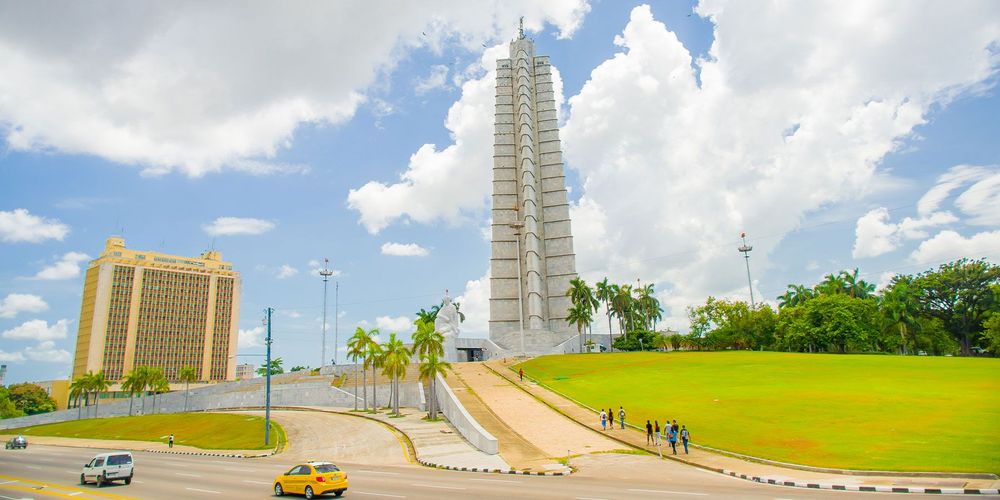
The Havana audio-guided tour invites you to quiet contemplation before the José Martí memorial, which dominates the Plaza de la Revolución. It honours one of the most venerated national figures of the island.
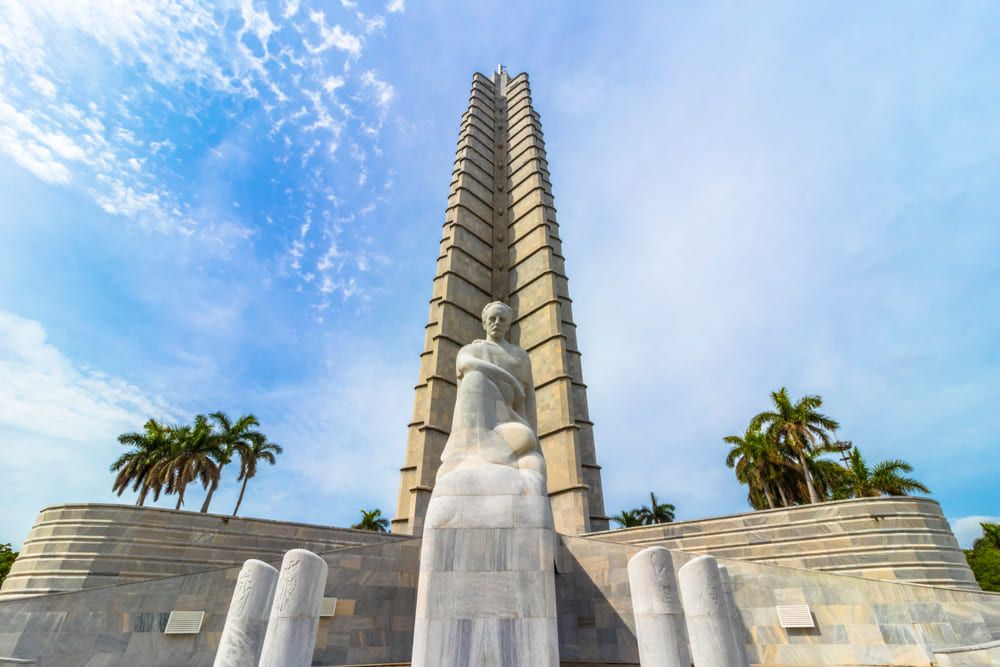
Writer, poet, essayist and philosopher, José Martí was a major figure of Cuban independence. His pen gave birth to great patriotic writings. Having died in 1895, before the end of the war and before the proclamation of the Republic in 1902, he would not see his country free. His memory is honoured by the one-peso note bearing his effigy, by a day of commemoration and by this imposing monument inaugurated in 1958: a tower of one hundred and nine metres in the shape of a five-pointed star, symbol of the Cuban flag, and a white marble statue representing him seated, as a thinker.
The memorial houses a small museum devoted to the writings of José Martí, and its tower ends with a panoramic terrace from which the view embraces all of Havana: the Malecón, the old town and the Caribbean Sea. It is the highest point of the capital and a high place of memory, to be discovered with respect.
The José Martí memorial dominates the Plaza de la Revolución, in the Vedado district, in Havana. The museum and access to the panoramic terrace are charged, according to their own hours, liable to vary. It is advisable to check the conditions of access before the visit.
A writer, poet and philosopher, a major figure of Cuban independence, nicknamed the "apostle of Liberty", who died in 1895.
A tower of one hundred and nine metres in the shape of a five-pointed star and a white marble statue representing him seated; it houses a museum and a panoramic terrace.
Aucun avis pour le moment
