





Walk
El Vedado: Between Elegance and Revolution
Havana, Cuba
Walk
El Vedado: Between Elegance and Revolution
Havana, Cuba
8 km
Distance
3h15
Durée
20
Audios
Loop
Parcours
©Happypepe CC BY-SA 4.0 <https://creativecommons.org/licenses/by-sa/4.0/deed.fr>via Wikipedia Commons
The Havana audio-guided tour has you discover the Vedado, the most recent face of the capital, a residential and commercial district very different from the other sectors of the city.
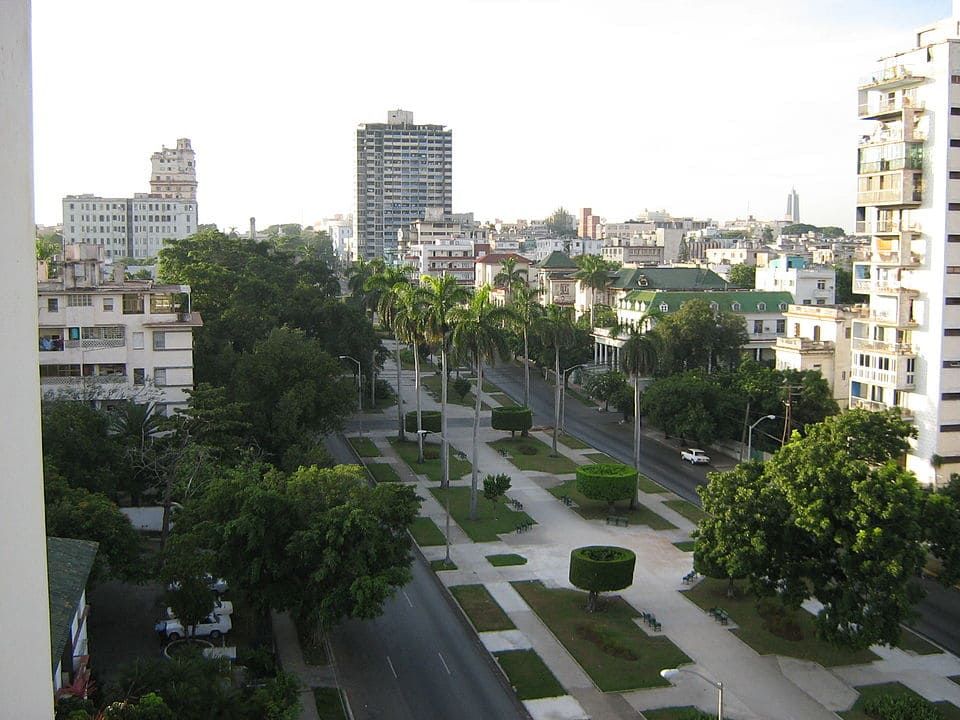
Built mainly between the 1920s and 1950s, the Vedado rises on a former forest domain long forbidden to construction, hence its name, which means "forbidden". Gridded with large arteries and punctuated with skyscrapers, it can evoke North American cities, which is not surprising when one knows how closely Cuba and the United States maintained ties before the Revolution. A refuge of part of the American underworld at that time, the district is today a green and lively ensemble.
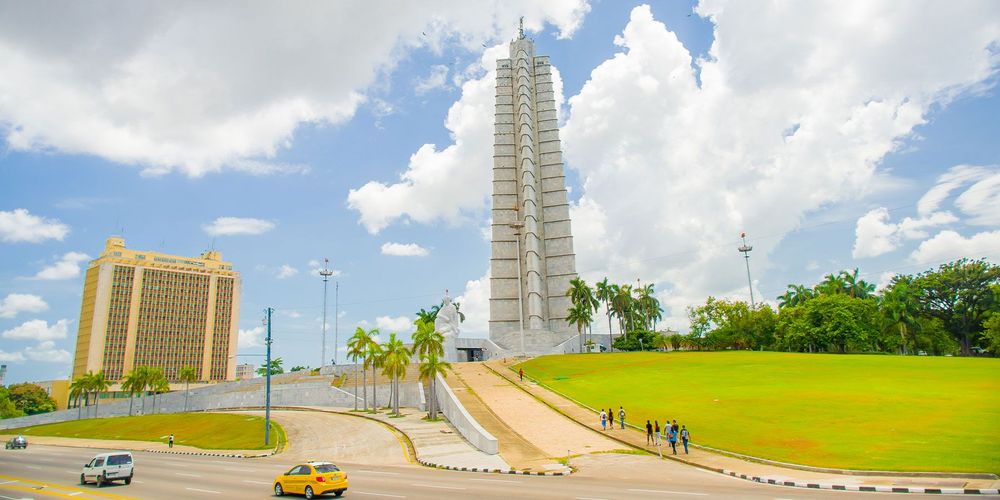
The Vedado unfolds its wide avenues, its skyscrapers, its former palaces and its green spaces. One finds there the Plaza de la Revolución, the university, great historic hotels and numerous museums and emblematic buildings. It is a district where locals and visitors cross paths, ideal for grasping the modern face and the recent history of Havana.
The Vedado district extends to the west of Old Havana, along the Malecón. It can be walked freely on foot at all hours and on the level. Museums, hotels and institutions that punctuate it follow their own hours.
"Forbidden", in reference to the former forest domain long closed to construction on which the district was built.
Mainly between the 1920s and 1950s; it is the most recent face of Havana, marked by the ties of the time with the United States.
Aucun avis pour le moment
