




Walk
Lost in the Andes
Quito, Ecuador
Walk
Lost in the Andes
Quito, Ecuador
5.2 km
Distance
2h05
Durée
20
Audios
Loop
Parcours
Shutterstock
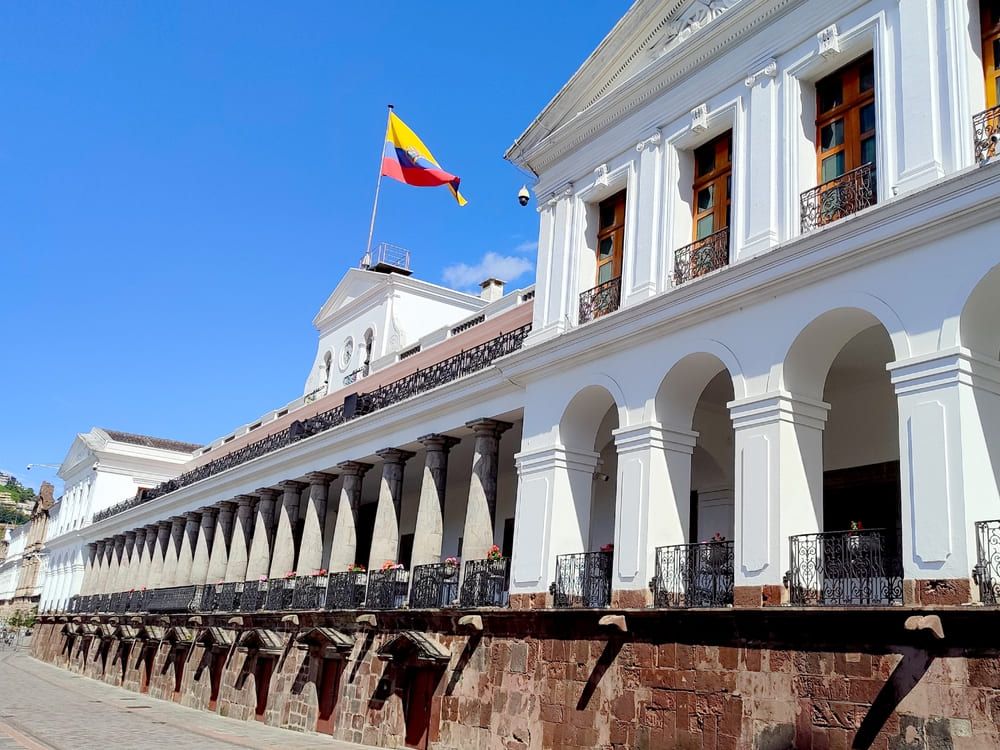
The Carondelet Palace is the seat of the government of Ecuador, on the Plaza Grande of Quito. The Quito audio-guided tour stops here to evoke this presidential palace, the heart of power within the historic centre.
Located in the historic centre of the capital, on Plaza de la Independencia, the Carondelet Palace is the seat of the government of Ecuador and the official residence of the president. A fine building with a neoclassical façade and balconies overlooking the square, it occupies a place full of history since the colonial era. The heart of the political power of the country, it is one of the most emblematic buildings of Quito.
You admire the neoclassical façade and the balconies of the presidential palace, overlooking the Plaza Grande, the heart of Ecuadorian power. The Carondelet Palace is one of the emblematic buildings of Quito. It is a major stop for lovers of history and politics, in the heart of the historic centre.
The Carondelet Palace lies on Plaza de la Independencia, in the heart of the historic centre of Quito, reachable on foot. The façade can be freely admired from the square; tours of the building may be offered, according to their own hours and conditions, which vary. It is best to check the arrangements before coming.
The seat of the government of Ecuador and the official residence of the president, on the Plaza Grande, in the heart of the historic centre of Quito.
On Plaza de la Independencia, in the heart of the historic centre of Quito.
Aucun avis pour le moment
