





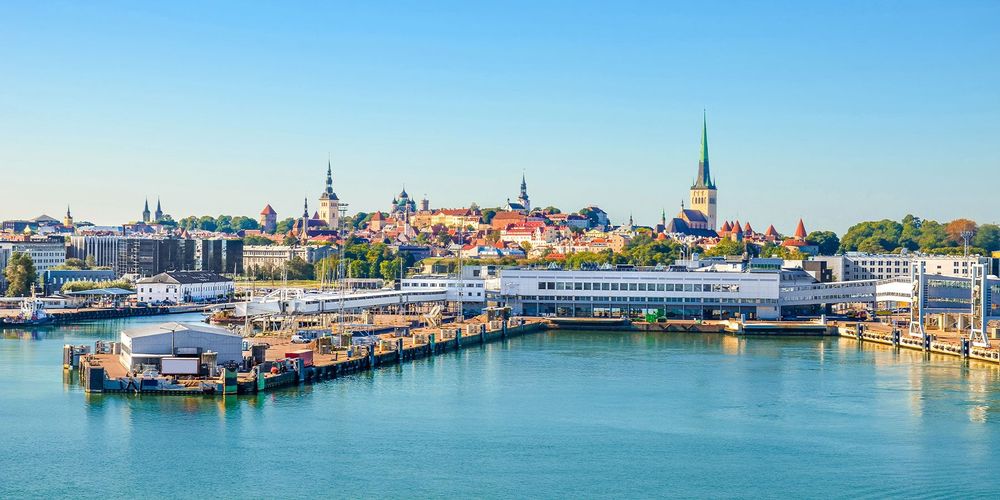
Walk
A Medieval Gem on the Baltic Sea
Tallinn, Estonia
Walk
A Medieval Gem on the Baltic Sea
Tallinn, Estonia
4.1 km
Distance
1h40
Durée
22
Audios
Loop
Parcours

The KGB Museum of Tallinn reveals the secret surveillance exercised during the Soviet period, on the hidden floor of a great hotel. The Tallinn audio-guided tour stops here, with respect for the memory of this era, to evoke this testimony of a past of control and repression.
In Tallinn, few are those who ignore the existence of the KGB Museum and the history that it reveals. This place of memory is located in a great hotel of the Soviet era, whose top floor sheltered, unbeknownst to the clients, a secret installation of the intelligence services of the USSR, the KGB. During the decades when Estonia was occupied and integrated into the Soviet Union, against the will of its people, the surveillance of the population and the foreign visitors was omnipresent. From this concealed floor, the agents listened to and spied on the rooms of the hotel, particularly frequented by Western tourists and foreign delegations. The museum has kept this lair in its state, with its listening equipment, its devices and its documents, testifying to the methods of control and the fear that reigned under the regime. It recalls, with gravity, this dark page of Estonian history, until the return of independence. A duty of memory and a historical testimony, the KGB Museum is discovered with respect.
Here you discover, with respect, the secret floor of a great hotel where the KGB, the Soviet intelligence services, spied unbeknownst to them on the clients during the occupation of Estonia; kept in its state with its listening equipment, its devices and its documents, this place of memory testifies with gravity to the methods of control and the fear of the regime, until the return of independence. The KGB Museum is a duty of memory in Tallinn. It is a stop to be discovered with respect.
The KGB Museum lies in a great hotel of Tallinn, reachable on foot. The visit, often guided, follows its own hours and conditions, which vary; booking may be necessary. It is best to check them before coming and to approach this place of memory with respect.
The secret floor of a great hotel where the KGB, the Soviet intelligence services, spied unbeknownst to them on the clients during the occupation of Estonia by the USSR; kept with its listening equipment and its documents, it testifies with gravity to the methods of surveillance and the fear that reigned under the regime.
In a great hotel of Tallinn, in Estonia.
Aucun avis pour le moment
