





Walk
The Royal City of Horses
Saumur, France
Walk
The Royal City of Horses
Saumur, France
3.2 km
Distance
1h30
Durée
19
Audios
Loop
Parcours
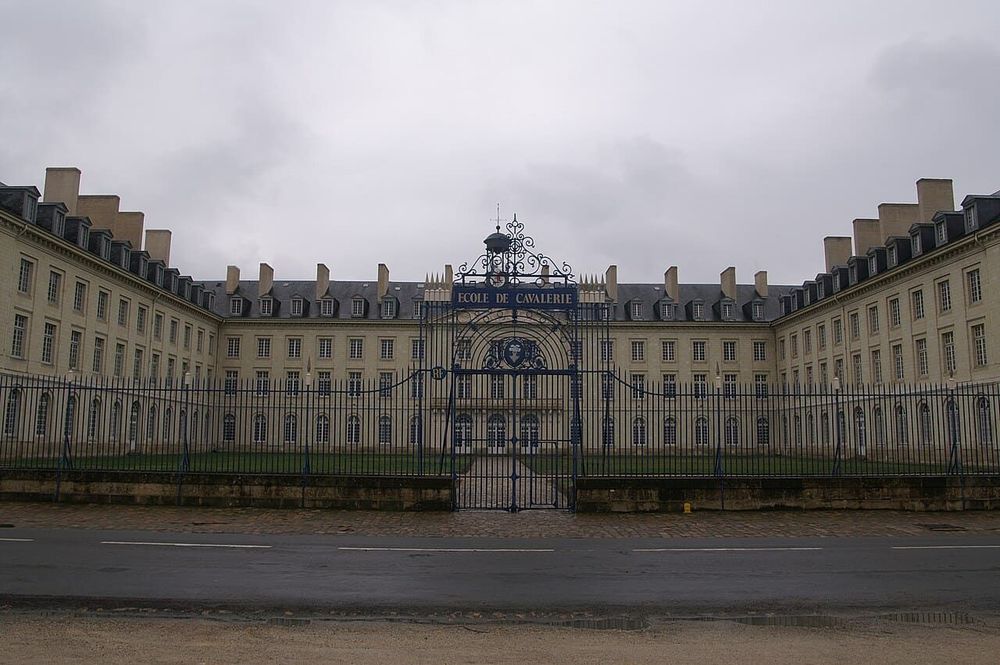
©Pymouss CC BY-SA 3.0. <https://creativecommons.org/licenses/by-sa/3.0/deed.fr>via Wikipedia Commons
The Cavalry School is one of the most emblematic places of Saumur, the cradle of prestigious French horsemanship. The Saumur audio-guided tour stops here to evoke this military institution, linked to the famous Cadre Noir.
The Cavalry School of Saumur, whose history begins in the eighteenth century, is one of the high places of equestrian art in France. It is in Saumur that the tradition of the Cadre Noir is perpetuated, a school of excellence renowned throughout the world for the finesse of its horsemanship. Located in vast buildings and surrounded by riding halls and parade grounds, the institution has deeply marked the identity of the city, become the capital of the horse, and illustrates a know-how recognised as heritage of humanity.
You admire the vast buildings of the institution, witnesses of the prestige of French equestrian art, and you evoke the tradition of the Cadre Noir, renowned throughout the world. The Cavalry School made Saumur the capital of the horse. It is a major stop for lovers of history and horsemanship.
The Cavalry School lies in Saumur, reachable on foot and by public transport. You mainly admire its buildings from the public space; the visits, demonstrations and performances of the Cadre Noir follow their own programme and access conditions, which vary. It is best to check the agenda before coming.
The school of excellence of French horsemanship, perpetuated at the Cavalry School of Saumur, renowned throughout the world for the finesse of its equestrian art.
In Saumur, in the Maine-et-Loire.
Aucun avis pour le moment
