





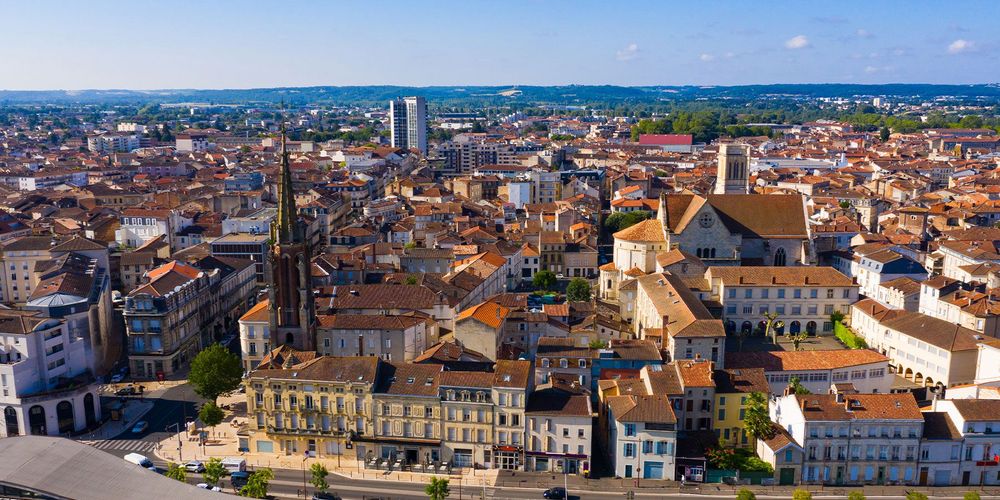
Walk
City of Prunes and Heritage
Agen, France
Walk
City of Prunes and Heritage
Agen, France
3.1 km
Distance
1h15
Durée
20
Audios
Loop
Parcours
Shutterstock
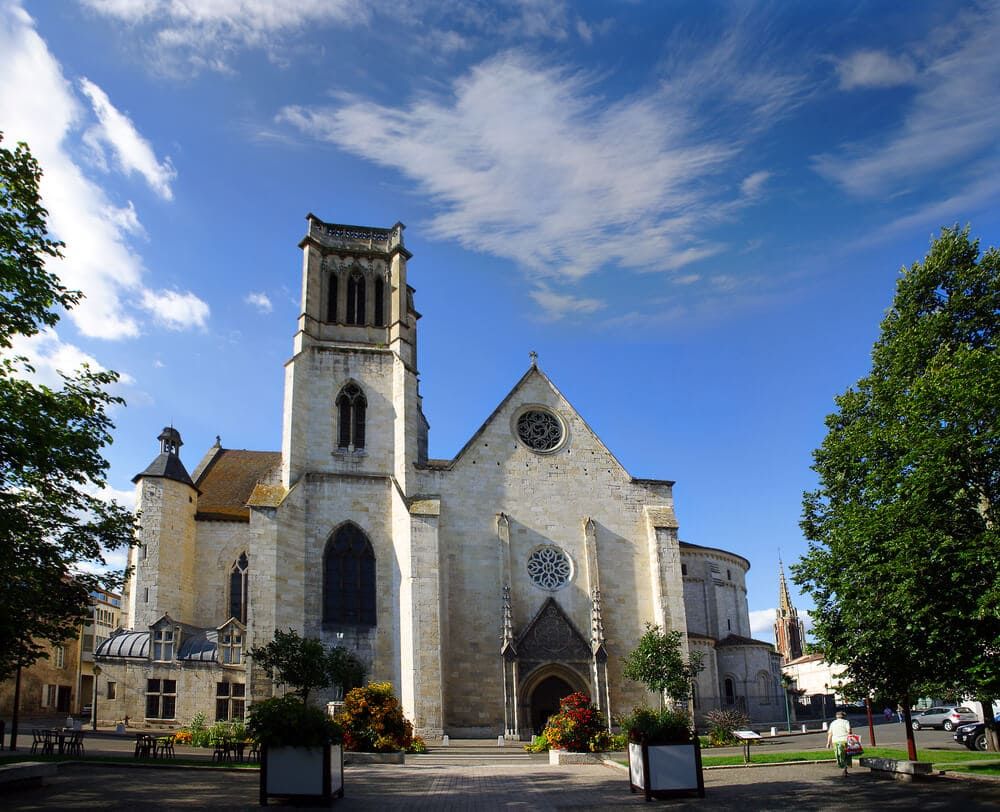
The Agen audio-guided tour invites you to quiet contemplation before Saint-Caprais cathedral. Far from imposing itself by its size, it charms with its composite architecture, which holds the gaze of visitors emerging onto Place du Maréchal-Foch.
Dedicated to Saint Caprais, venerated in Agen, the cathedral unfolds across its whole structure several styles, from Romanesque to the various declensions of Gothic. This heterogeneity, fruit of centuries of successive constructions and alterations, makes all its singularity. Each part of the building tells of a period, and the whole forms a precious testimony of the religious history of the city.
Inside, the visitor discovers with respect a nave marked by the diversity of periods, vaults and decors that invite to calm. The cathedral remains a living place of worship and a landmark of the historic centre of Agen. Its façade and its apse can be contemplated from Place du Maréchal-Foch, which serves as its setting.
Saint-Caprais cathedral is on Place du Maréchal-Foch, in the heart of Agen. A place of worship in activity, it can generally be visited during the day, with respect for services, the hours possibly varying according to the season. Access is on the level. Appropriate dress and silence are expected.
To Saint Caprais, venerated in Agen; the cathedral is one of the high spiritual places of the city.
It mingles several styles, from Romanesque to the various declensions of Gothic, the fruit of centuries of successive alterations.
Aucun avis pour le moment
