





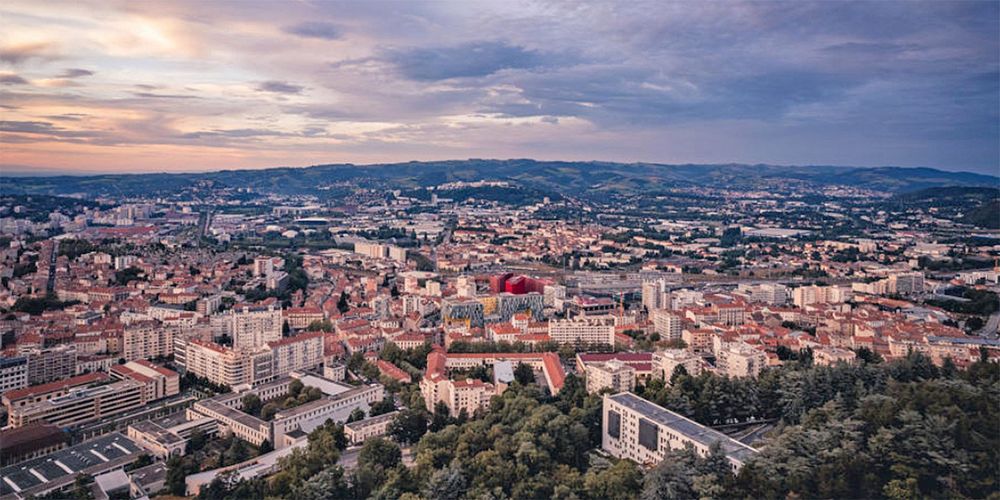
Walk
Behind the Scenes of the City That Invented Everything
Saint-Étienne, France
Walk
Behind the Scenes of the City That Invented Everything
Saint-Étienne, France
3.6 km
Distance
1h30
Durée
20
Audios
Loop
Parcours
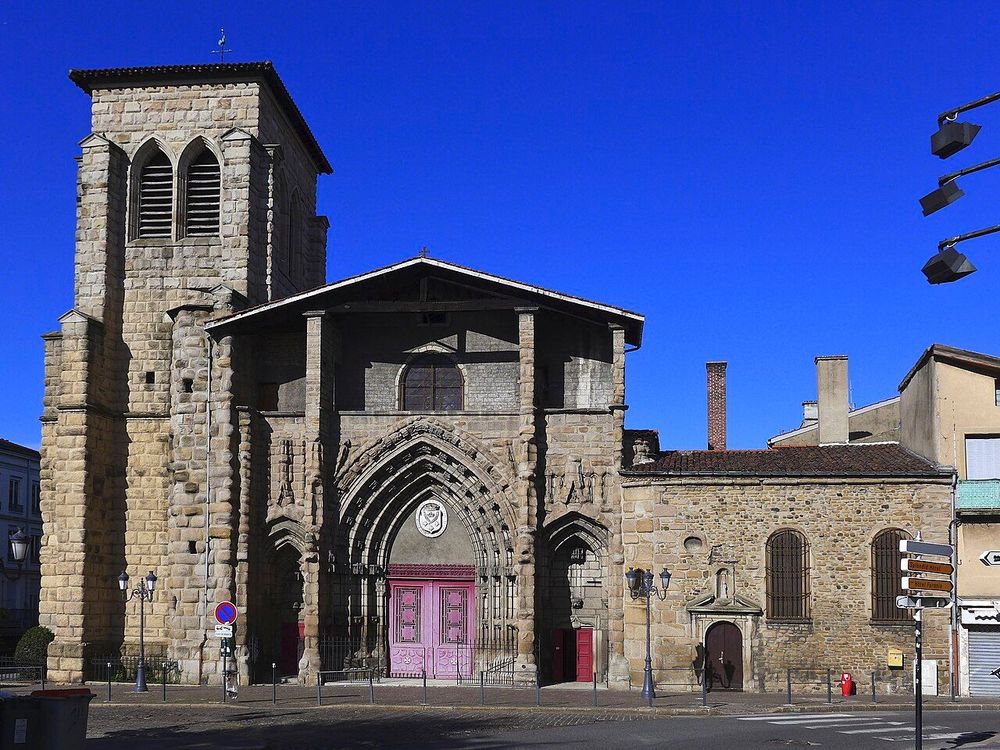
©Aubry Françon CC BY-SA 3.0.
Saint-Étienne-Saint-Laurent Church, called the Grand'Église, is the oldest place of worship of Saint-Étienne. The Saint-Étienne audio-guided tour stops here, with respect, to evoke this sanctuary, the religious cradle of the city.
Saint-Étienne-Saint-Laurent Church, better known as the Grand'Église, is the oldest religious building of Saint-Étienne and the historic heart from which the city developed. Of medieval origin and remodelled over the centuries, it keeps a rich heritage and testifies to the origins of the city, well before its industrial rise. Listed in the Supplementary Inventory of Historic Monuments, it remains a major religious and heritage landmark of old Saint-Étienne.
You admire the architecture of medieval origin and the rich heritage of the Grand'Église, the oldest religious building of Saint-Étienne, in an atmosphere of contemplation. It is the historic cradle of the city. It is a major stop to be discovered with respect, in the heart of old Saint-Étienne.
Saint-Laurent Church, the Grand'Église, lies in the heart of old Saint-Étienne, reachable on foot. A working place of worship, it can be visited with respect for services; entry is generally free, but hours vary with celebrations. It is best to check them before coming and to respect the sacred character of the place.
Because it is the oldest and the main historic religious building of Saint-Étienne, the cradle from which the city developed.
In the heart of old Saint-Étienne, in the Loire.
Aucun avis pour le moment
